Artificial Intelligence

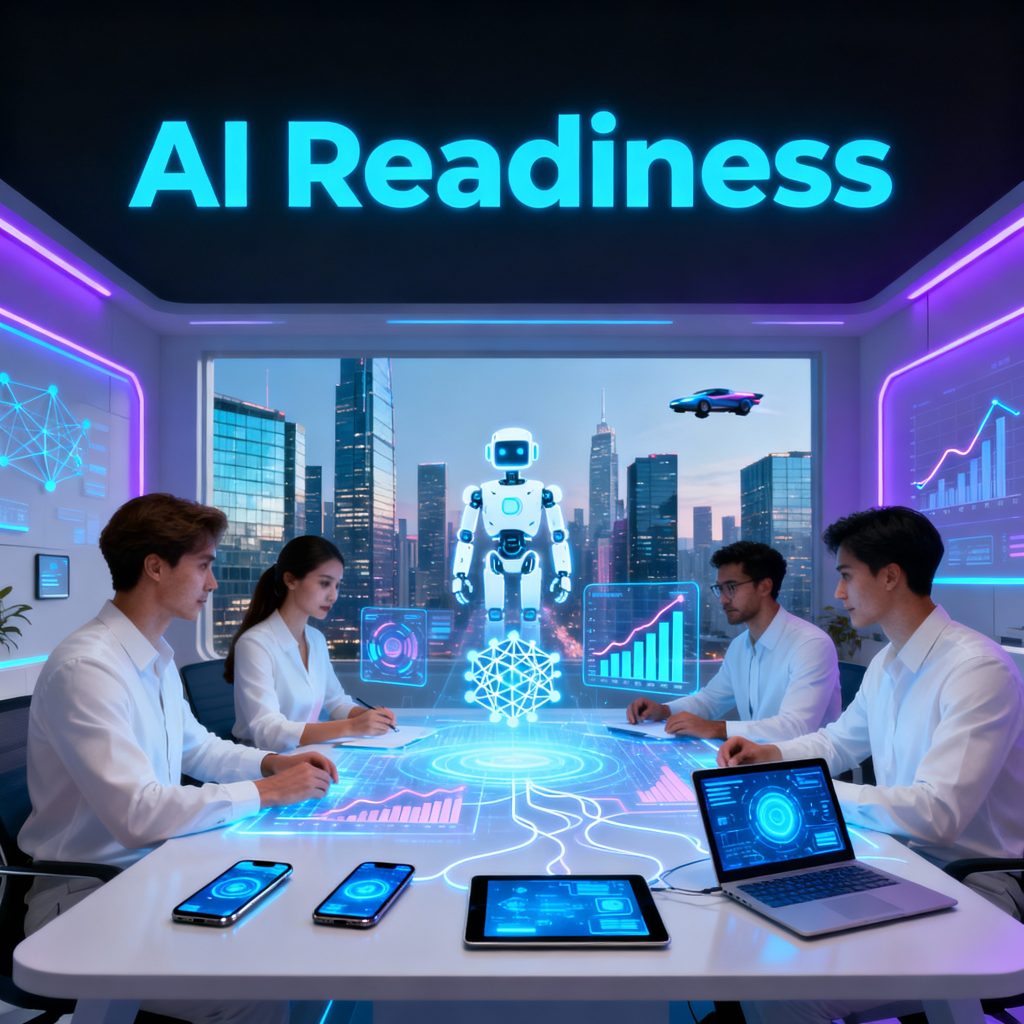
Futuristic business setting showing a diverse team collaborating around digital devices, surrounded by AI icons, smart data graphs, and a city skyline with the blog title “AI Readiness” prominently displayed(see the generated image above).
Artificial Intelligence

AI Readiness: The Foundation for Successful AI Integration

Introduction AI readiness is quickly becoming essential for businesses navigating the future of digital transformation. Organizations in every sector want to harness artificial intelligence (AI) to streamline processes, unlock strategic insights, and stay ahead of competitors. Yet, success is determined not by enthusiasm alone, but by how thoroughly an organization prepares for effective AI adoption. This blog explores what AI readiness means, why it matters, and how to chart a clear path toward responsible, scalable, and profitable AI initiatives.​   What Is AI Readiness? AI readiness measures an organization’s preparedness to implement and scale AI technologies effectively across its operations.​ It goes beyond having advanced technology—encompassing data management, infrastructure, workforce skills, ethical governance, and change management.​ Achieving readiness means developing a strategic vision, clarifying objectives, and building a roadmap that aligns AI projects with core business goals.​ Key Components of AI Readiness Strategy and Objectives Define clear business challenges and goals for AI initiatives. Align AI projects with overall corporate strategy and measurable KPIs.​ Secure leadership buy-in for long-term success.​ Data and Infrastructure Ensure high-quality, accessible data with strong governance and security.​ Upgrade technical infrastructure to support AI workloads (processing power, storage, network capabilities).​ Talent and Culture Invest in workforce training—AI skills, change management, and digital literacy.​ Foster a culture that welcomes innovation and adapts to new technologies.​ Governance and Risk Management Create policies for ethical, legal, and regulatory compliance in AI usage.​ Embed monitoring and feedback mechanisms to manage risks and ensure responsible AI deployment.​ How AI Readiness Drives Business Value Enhanced Efficiency: Automating repetitive tasks and leveraging AI for data analysis improves productivity and decision-making.​ Smarter Investments: Readiness assessments help businesses target high-impact projects and avoid costly missteps.​ Reduced Risks: Careful planning and training minimize failures and ensure robust, secure implementations.​ Competitive Advantage: Organizations ready for AI gain insights faster and innovate more effectively than competitors.​ Practical Steps For Building AI Readiness Conduct an AI readiness assessment to identify strengths and gaps.​ Implement the 11-step AI readiness checklist: Establish clear objectives Map current capabilities Develop an AI strategy and roadmap Improve data foundations Upgrade infrastructure Set governance policies Invest in talent and culture Pilot targeted projects Measure and iterate Engage leadership and stakeholders Ensure continuous learning and adaptation.​ Leverage real-world examples: Shell uses AI-driven predictive analytics for drilling optimization. IBM Watson analyzes healthcare data to guide treatment decisions.​ Retailers optimize inventory and supply chains with AI-powered demand forecasting.​ Conclusion AI readiness is the cornerstone of successful and sustainable AI transformation. By preparing across strategy, infrastructure, people, and governance, businesses unleash AI’s full potential—while mitigating risks and maximizing returns. Start by assessing your organization’s readiness, implementing targeted improvements, and fostering a future-ready culture. Ready to future-proof your business through AI? Begin your AI readiness assessment today and accelerate your journey to digital leadership! Flutter vs React Native — Which Framework Should You Choose in 2025? FAQ 1. What is an AI readiness assessment? An AI readiness assessment evaluates your organization’s strength across strategy, data, infrastructure, talent, culture, and governance to identify areas for improvement before adopting AI technologies.​ 2. Why should businesses focus on AI readiness? AI readiness prevents costly failures, boosts ROI, and enables responsible, scalable adoption—helping businesses realize the full value of AI investments.​ 3. What’s the most common barrier to AI readiness? Weak data infrastructure and insufficient workforce skills are frequent obstacles. Addressing these challenges is critical for smooth and effective AI integration.​ 4. Can small and medium businesses benefit from AI readiness? Yes. Clear objectives, practical assessments, and phased implementation plans help businesses of any size capitalize on AI opportunities.​ 5. How does AI readiness impact compliance and ethical use? Robust governance ensures AI systems are deployed responsibly, minimizing regulatory risk and building stakeholder trust.  

Machines that mimic human gestures and expressions
Uncategorized

The Future of Automation and Robotics: Transforming Industries and Everyday Life

Introduction Automation and robotics are no longer futuristic ideas—they’re a living, breathing reality that’s reshaping industries, transforming workplaces, and redefining how humans interact with machines. From self-driving cars to automated manufacturing lines, robots and intelligent systems are now embedded in nearly every sector. As we enter a new era of Industry 5.0, the collaboration between humans and robots is becoming the cornerstone of innovation. Automation is not just about replacing human labor but about enhancing efficiency, safety, and precision while freeing people for more creative and strategic work. What is Automation and Robotics? Automation refers to the use of technology to perform tasks with minimal human intervention. It involves systems or machines that follow predefined instructions or adapt based on data input.Example: Automated billing systems, robotic assembly lines, and smart home devices. Robotics is a specialized branch of engineering that deals with designing, constructing, and operating robots — machines capable of carrying out complex actions autonomously or semi-autonomously.Example: Industrial robots assembling cars, surgical robots in hospitals, and drones for logistics. When combined, automation and robotics create a powerful synergy that drives speed, accuracy, and cost-effectiveness across industries. Applications Across Industries 1. Manufacturing and Industry 4.0 Robotics in manufacturing has been a game-changer. Automated robotic arms, precision sensors, and AI-powered quality checks ensure products are made faster, safer, and with fewer defects. Example: Car manufacturers like Tesla and Toyota use fully automated production lines with minimal human supervision. Impact: Reduced labor costs, enhanced production rates, and consistent quality. 2. Healthcare and Surgery In healthcare, robotic automation enables precision and minimal invasiveness. Example: The Da Vinci Surgical System assists surgeons with high-precision movements. Impact: Shorter recovery times, smaller incisions, and greater surgical accuracy. 3. Agriculture Robotics is revolutionizing agriculture with smart drones and automated harvesters. Example: Drones monitor crop health, soil quality, and irrigation. Impact: Higher yields, reduced waste, and optimized resource usage. 4. Logistics and Warehousing Automated guided vehicles (AGVs), conveyor systems, and robotic sorters manage large warehouses like those of Amazon or Flipkart. Impact: Improved delivery speed, error reduction, and 24/7 operations. 5. Retail and Customer Service From robotic baristas to self-checkout counters and chatbots, automation is enhancing customer experience and operational efficiency. Example: Walmart uses robots to scan shelves and track inventory. 6. Defense and Security Autonomous drones and surveillance robots are improving national security and battlefield safety. Impact: Risk reduction for soldiers and enhanced decision-making through real-time data analysis. AI and Machine Learning in Robotics Modern robotics heavily relies on Artificial Intelligence (AI) and Machine Learning (ML) to learn from data and make decisions. Robots can now adapt to changing environments and perform complex cognitive tasks like facial recognition or navigation. Collaborative robots (cobots) work safely alongside humans, learning through continuous feedback loops. This integration of AI allows robots to go beyond repetitive tasks and step into roles that demand problem-solving and adaptability. Benefits of Automation and Robotics ✅ Increased productivity and operational efficiency ✅ Reduced human error ✅ Enhanced workplace safety ✅ Lower operational costs ✅ 24/7 operation capability ✅ Consistent quality and output Challenges and Concerns Job Displacement:Automation can replace certain repetitive or manual jobs, leading to workforce restructuring. High Initial Costs:Robotics systems require significant capital investment for setup and maintenance. Cybersecurity Risks:Connected robots can be vulnerable to hacking and data theft. Ethical Dilemmas:The growing autonomy of robots raises questions about accountability, privacy, and human control. The Future of Automation and Robotics The next decade will see humans and robots working together in harmony. Robots will become more intelligent, intuitive, and emotionally aware through AI-driven empathy and neural interfaces. Key Emerging Trends: Humanoid Robots: Machines that mimic human gestures and expressions (e.g., Sophia the Robot). Soft Robotics: Robots made with flexible materials for delicate tasks like food handling. Autonomous Vehicles: Self-driving logistics fleets reducing delivery times and accidents. Industry 5.0: Human-centric automation, where technology empowers—not replaces—humans. The goal is no longer full automation but collaboration, enabling people to focus on creativity, innovation, and decision-making while robots handle the repetitive groundwork. Conclusion Automation and robotics represent the backbone of future innovation. While challenges remain—like cost, ethics, and employment shifts—the benefits are undeniable.Industries that embrace this transformation will thrive in speed, safety, and scale, while those resisting it risk falling behind. The ultimate vision?A world where robots and humans work side-by-side, leveraging each other’s strengths to achieve unprecedented progress. FAQs Q1. How is automation different from robotics?Automation refers to using technology to perform tasks with minimal human input, while robotics specifically involves machines that can execute those tasks physically or intelligently. Q2. Will automation lead to job loss?While some repetitive roles may be automated, new opportunities are emerging in robot maintenance, programming, and AI management. Q3. What are the main industries using robotics today?Manufacturing, logistics, healthcare, agriculture, and defense are leading adopters of robotics technology. Q4. What is the role of AI in modern robotics?AI enables robots to learn from data, adapt to environments, and make intelligent decisions — making them more autonomous and useful across diverse tasks. Q5. What does Industry 5.0 mean?Industry 5.0 focuses on collaboration between humans and robots, emphasizing creativity, personalization, and sustainability rather than full automation.

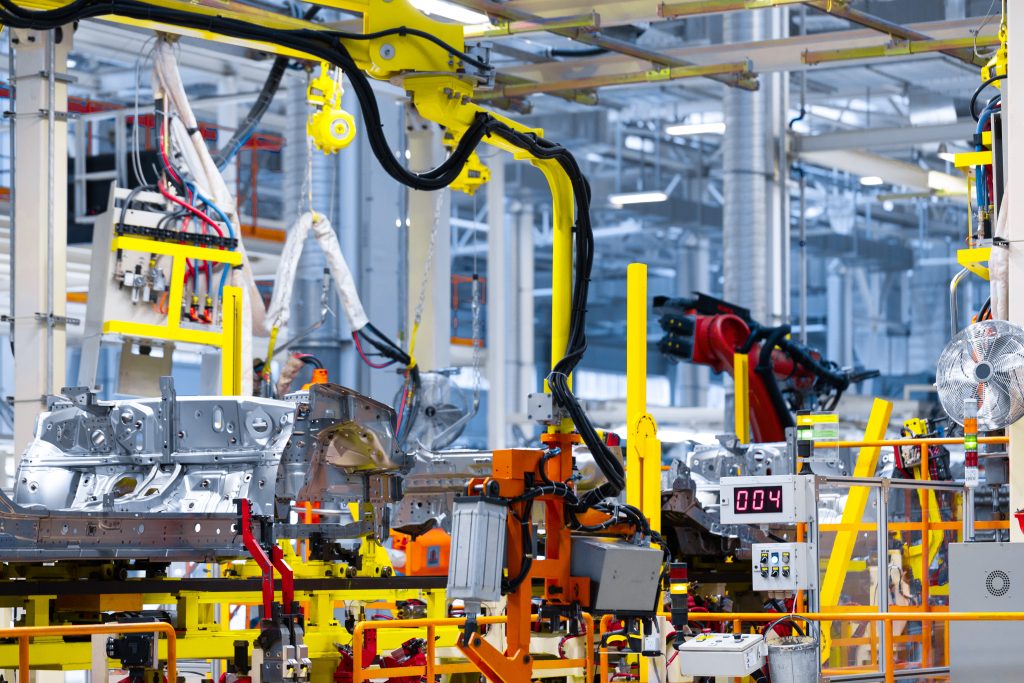
Industrial robotic arms assembling components in a smart factory.
Artificial Intelligence, machine learning

Automation and Robotics: Powering the Future of Work and Industry

Introduction Imagine a world where machines can think, learn, and perform tasks faster, safer, and more accurately than humans. That world isn’t science fiction — it’s happening right now, thanks to automation and robotics. From factory floors to hospitals, logistics hubs to your kitchen, robots and automation systems are revolutionizing how we live and work. They don’t just improve productivity — they redefine what’s possible. This blog explores how automation and robotics are driving innovation, reshaping industries, and creating a future where humans and machines collaborate seamlessly. What Is Automation? Automation refers to the use of technology to perform tasks without human intervention. It’s about replacing repetitive, rule-based processes with smart systems that can work independently — reducing errors and improving speed.  Types of Automation Fixed Automation:Used in mass production lines (e.g., car manufacturing). High volume, low flexibility. Programmable Automation:Machines can be reprogrammed for different tasks. Used in batch production industries. Flexible Automation:Systems quickly adapt to new products or processes. Ideal for industries with frequent design changes. Cognitive Automation (AI-driven):Integrates machine learning and AI for decision-making and self-improvement. Used in customer service bots, predictive maintenance, and data analysis. What Is Robotics? Robotics is a branch of engineering that designs, builds, and operates robots — programmable machines that perform tasks automatically or semi-automatically. Robots combine mechanical components, sensors, actuators, and AI to perform physical actions and make intelligent decisions.  Types of Robots Industrial Robots: Perform assembly, welding, or packaging in factories. Service Robots: Used in healthcare, hospitality, or home cleaning. Autonomous Robots: Navigate environments independently (e.g., drones, self-driving vehicles). Collaborative Robots (Cobots): Work safely alongside humans. Humanoid Robots: Mimic human gestures and expressions. Automation and Robotics in Industry Automation and robotics are the cornerstone of Industry 5.0, the new era of intelligent manufacturing focused on human-machine collaboration.  Manufacturing Robots handle repetitive tasks like assembly, painting, and quality inspection. AI-driven automation predicts equipment failures before they happen. Cobots work side by side with human operators, enhancing safety and precision. Example:Companies like Tesla and BMW use robotic arms for car assembly, improving speed and accuracy. Healthcare Robots assist doctors in surgeries and automate hospital logistics. Surgical robots perform precise operations with minimal invasion. Delivery robots transport medicines and supplies. AI automation manages patient data and diagnostics. Example: The da Vinci Surgical System enables surgeons to perform complex procedures remotely with robotic precision. Logistics and Supply Chain Automation powers warehouse management and delivery systems. Automated Guided Vehicles (AGVs) move materials. Drones deliver goods efficiently. AI systems optimize inventory and routes. Example:Amazon’s fulfillment centers use robots to pick, pack, and ship millions of products daily. Finance and Business Robotic Process Automation (RPA) automates repetitive office tasks like data entry, report generation, and compliance checks. Saves time and reduces human error. Frees employees for higher-value work. Example:Banks use RPA to process loan approvals, detect fraud, and manage accounts. Home and Daily Life From vacuuming robots like Roomba to voice-controlled assistants like Alexa, automation is making homes smarter and lives easier. Smart appliances can learn user habits and operate efficiently, saving energy and effort. The Fusion of AI and Robotics When Artificial Intelligence (AI) meets robotics, machines gain the ability to learn, adapt, and make decisions. Computer vision enables robots to “see” and analyze surroundings. Machine learning helps them improve performance over time. Natural language processing allows them to interact with humans conversationally. Example:Boston Dynamics’ robots like “Atlas” and “Spot” combine AI and robotics to perform complex tasks like running, climbing, and opening doors. Benefits of Automation and Robotics Benefit Description Increased Efficiency Machines can operate 24/7 without fatigue. Precision & Consistency Reduced errors and high-quality output. Safety Robots perform dangerous tasks, reducing workplace injuries. Cost Savings Long-term operational savings after initial setup. Innovation Enables new forms of production and services. Challenges in Automation and Robotics Despite the advantages, challenges exist: Job Displacement: Automation can replace routine tasks. High Initial Investment: Robots and automation systems are costly to deploy. Complex Integration: Requires skilled professionals and system compatibility. Cybersecurity Risks: Connected robots can be vulnerable to hacking. Ethical Dilemmas: Balancing human employment and machine efficiency. However, the Industry 5.0 model focuses on collaboration, not replacement — using robots to assist humans, not eliminate them. The Future of Automation and Robotics The next decade will see automation evolve from mechanical efficiency to intelligent collaboration. Key Future Trends: Cobots in every industry AI-driven autonomous systems Robotics-as-a-Service (RaaS) business models Sustainable automation for green manufacturing Emotional and social robots for healthcare and education Automation and robotics will become integral to every aspect of life — not just replacing humans but enhancing human potential. Conclusion Automation and robotics represent the next leap in human innovation — merging intelligence, precision, and reliability to reshape the future of work. As we enter the Industry 5.0 era, the goal isn’t to remove humans from the equation but to empower them with intelligent machines that amplify creativity, safety, and productivity. The future is not man versus machine — it’s man with machine, building a smarter, more efficient world together. FAQs 1. What is the main difference between automation and robotics?Automation refers to using systems for automatic operations, while robotics involves machines physically performing tasks. 2. What industries use robotics the most?Manufacturing, logistics, healthcare, agriculture, and defense are leading sectors. 3. Will robots take over human jobs?They’ll replace repetitive tasks but also create new roles in programming, maintenance, and AI system design. 4. What are collaborative robots (cobots)?Cobots are robots designed to work safely alongside humans without barriers. 5. How is AI used in robotics?AI helps robots learn, make decisions, and interact naturally with humans and their environment.

Abstract visualization of artificial intelligence and machine learning networks.
Artificial Intelligence, machine learning

Artificial Intelligence and Machine Learning in Everyday Life

Introduction Artificial Intelligence (AI) and Machine Learning (ML) are no longer futuristic concepts — they’re part of our daily reality. Whether it’s unlocking your phone with facial recognition, getting directions from Google Maps, or streaming personalized shows on Netflix, AI and ML are silently working behind the scenes. These technologies have become the backbone of modern innovation, revolutionizing industries, improving decision-making, and enhancing user experiences everywhere. In this article, we’ll explore how AI and ML are reshaping the way we live, work, and interact with technology. Understanding AI and ML Artificial Intelligence (AI) AI refers to the simulation of human intelligence in machines. It enables computers to perform tasks like thinking, learning, problem-solving, and decision-making. Machine Learning (ML) ML is a subset of AI that allows systems to learn from data and improve automatically without being explicitly programmed. In simple words:AI = The brain that makes decisions.ML = The process that helps the brain learn from experience. How AI and ML Work Together AI uses algorithms and models developed through ML to process vast amounts of data and identify patterns. The more data they process, the smarter they become. For instance, when you shop online and see product recommendations, that’s ML analyzing your behavior, and AI deciding what to show you next. AI and ML in Everyday Life Here are some real-world examples of how these technologies impact our daily routines: 1. Smartphones and Personal Assistants Voice assistants like Siri, Google Assistant, and Alexa use AI for voice recognition, natural language processing (NLP), and smart decision-making. AI helps understand your voice commands. ML learns your preferences over time. Combined, they make your device more intuitive and efficient. Example: Predictive text suggestions, camera scene detection, and smart replies in messaging apps. Social Media Platforms AI powers everything from your feed recommendations to face tagging. Facebook/Instagram: Recognize faces in photos using ML models. Twitter/X: Filters spam and offensive content automatically. TikTok/YouTube: Recommend videos based on user behavior patterns. AI learns what you enjoy, keeping your feed relevant and engaging. Healthcare and Medicine AI is saving lives by improving diagnostics and personalizing treatments. Early Disease Detection: ML models detect cancer or heart disease earlier than humans. Drug Discovery: AI accelerates the process of finding new medicines. Virtual Nurses: Chatbots assist patients with reminders and consultations. Example: IBM Watson assists doctors by analyzing patient data for accurate diagnoses. 4. Transportation and Navigation From Google Maps to self-driving cars, AI and ML make transportation smarter. Navigation apps use ML to analyze traffic patterns and suggest the fastest routes. Autonomous vehicles like Tesla’s Autopilot use sensors and AI to drive safely. Impact: Reduced traffic congestion, fewer accidents, and improved travel efficiency. 5. Banking and Finance AI enhances fraud detection, risk management, and personalized banking. Detects unusual transactions in real time. Analyzes spending behavior to prevent fraud. Provides AI-based financial advice and budgeting tools. Example: Chatbots like HDFC’s “EVA” or SBI’s “SIA” answer customer queries instantly. 6. Education and E-Learning AI personalizes learning for students based on strengths and weaknesses. Adaptive learning platforms adjust content difficulty automatically. Virtual tutors provide 24/7 assistance. ML helps educators predict student performance. Example: Duolingo uses ML to personalize language lessons for every learner. 7. Entertainment and Streaming Platforms AI decides what you watch next! Netflix, Spotify, and YouTube use ML algorithms to study your history and recommend similar content. AI improves sound and video quality using enhancement algorithms. Example: Netflix’s recommendation engine reportedly saves the company over $1 billion per year by retaining users through personalized suggestions. 8. Smart Homes and IoT Devices AI-powered home devices such as Nest Thermostats, Smart Lights, and Security Cameras learn your habits to optimize comfort and energy use. Adjusts lighting and temperature automatically. Detects intrusions using ML-based image recognition. Saves energy with predictive scheduling. 9. Customer Service Chatbots Businesses now use AI chatbots to handle thousands of customer queries efficiently. Provides 24/7 instant support. Understands natural language queries. Reduces wait time and operational costs. Example: ChatGPT-powered bots are now integrated into customer service systems globally. 10. Retail and E-Commerce AI and ML personalize your shopping journey. Product recommendations Dynamic pricing (adjusts prices based on demand) Predictive inventory management Example: Amazon’s “Just Walk Out” technology uses AI to automatically bill customers as they leave the store. Behind the Scenes: Technologies That Power AI and ML Technology Function Neural Networks Mimic the human brain to identify complex patterns. Natural Language Processing (NLP) Enables machines to understand human speech/text. Deep Learning Learns from massive data sets with minimal human supervision. Computer Vision Allows systems to interpret visual data (images, videos). Reinforcement Learning Systems learn by trial and error through rewards and penalties. These technologies together enable machines to see, understand, and respond intelligently — shaping our digital world. Advantages and Challenges of AI in Daily Life Advantages Saves time and increases efficiency Reduces human error Enables predictive analytics Improves personalization and user experience Enhances safety and convenience Challenges Data privacy concerns Job automation and workforce displacement Algorithmic bias High implementation cost for small businesses The Future of AI and ML The next decade will witness AI becoming even more integrated into our personal and professional lives. Future Trends: AI-powered healthcare diagnostics Fully autonomous transportation systems Emotion-recognizing AI for human-machine interaction AI-driven education personalization Smarter robotics for home and industry AI is moving from automation to augmentation — not replacing humans, but empowering them to achieve more. Conclusion AI and ML have become invisible assistants guiding our daily decisions — what we buy, how we travel, what we learn, and even how we stay healthy. Their true magic lies not in replacing humans, but in enhancing human potential — making life smarter, faster, and more connected than ever before. The era of intelligent machines has begun — and it’s already in your pocket. FAQs 1. What is the difference between AI and ML?AI is the broader concept of intelligent machines; ML is a subset that allows machines to learn from data. 2. How is AI used in daily

Business Intelligence dashboard visualizing big data analytics trends
Business Intelligence

Big Data Analytics and Business Intelligence: Turning Information into Insight

Introduction In today’s hyper-connected digital world, data is the new oil — a powerful asset that drives innovation, strategy, and growth. Every second, billions of data points are generated from online transactions, social media, IoT devices, and business operations. But raw data is meaningless unless it’s analyzed, interpreted, and used to make informed decisions. That’s where Big Data Analytics and Business Intelligence (BI) come into play. Together, they empower organizations to uncover hidden trends, improve efficiency, and gain a competitive edge in the marketplace. What Is Big Data Analytics? Big Data Analytics is the process of examining large, complex datasets to discover hidden patterns, correlations, market trends, and customer preferences. Unlike traditional data analysis, Big Data Analytics can handle massive volumes (terabytes or petabytes) of structured and unstructured data at lightning speed.  The 5 Vs of Big Data: Volume – Massive amount of data generated daily Velocity – Speed at which data is created and processed Variety – Different formats (text, images, videos, logs, etc.) Veracity – Accuracy and reliability of data Value – Insights gained from analysis By leveraging technologies like Hadoop, Spark, and NoSQL databases, businesses can process and analyze enormous data efficiently. What Is Business Intelligence (BI)? Business Intelligence is a technology-driven process for analyzing data and presenting actionable insights to help executives, managers, and employees make informed business decisions. BI systems typically use dashboards, reports, and visualization tools like: Power BI Tableau QlikView Google Data Studio BI tools collect data from multiple sources, integrate it, and display results through interactive visual dashboards, making insights accessible to everyone. Big Data Analytics vs. Business Intelligence Aspect Big Data Analytics Business Intelligence (BI) Purpose Predict future outcomes Analyze past & present performance Data Type Structured + Unstructured Mostly structured data Tech Used Hadoop, Spark, Machine Learning Power BI, Tableau, SQL Output Predictive & prescriptive insights Descriptive & diagnostic insights Focus Exploration & forecasting Reporting & visualization In short, Big Data Analytics predicts what’s coming next, while Business Intelligence explains what’s happening now. Together, they create a 360° view of the organization, enhancing data-driven strategies. How Big Data and BI Work Together When integrated, Big Data and BI enable organizations to: Collect vast amounts of real-time data Process and store it efficiently Visualize complex patterns Support strategic business decisions Example:A retail company can use Big Data Analytics to predict customer purchase trends and then use BI dashboards to visualize which products are performing best in real-time. Key Components of Big Data and BI Ecosystem 1. Data Collection Data is gathered from multiple sources — sensors, CRM systems, web logs, transactions, and social media. 2. Data Storage Tools like Hadoop Distributed File System (HDFS), Amazon S3, or Google Cloud Storage store massive data volumes securely. 3. Data Processing Frameworks such as Apache Spark and Flink process the data for analysis. 4. Data Analysis Machine learning algorithms and statistical models identify patterns and trends. 5. Data Visualization BI tools like Power BI or Tableau present the results in interactive dashboards and graphs. Applications of Big Data and BI in Industries  1. Retail & E-Commerce Personalized product recommendations Dynamic pricing based on demand Customer behavior tracking Example:Amazon uses predictive analytics to recommend products, improving sales and customer engagement.  2. Healthcare Predictive diagnosis and treatment plans Disease outbreak tracking Patient data management Example:Hospitals use BI tools to monitor patient recovery and resource allocation. 3. Finance Fraud detection using real-time analytics Credit risk assessment Algorithmic trading Example:Banks use Big Data to identify suspicious transactions within seconds. 4. Manufacturing Predictive maintenance of equipment Supply chain optimization Quality control automation 5. Education Performance analytics for students Personalized learning paths Data-driven decision-making in administration Emerging Trends in Big Data and BI Artificial Intelligence Integration:Machine learning models now automate insights generation. Real-Time Analytics:Instant decision-making with live data streaming. Data Democratization:BI tools make analytics accessible to non-technical users. Augmented Analytics:Combines AI and natural language processing (NLP) for smarter reports. Edge Analytics:Data processing closer to the source for faster outcomes. Data Governance and Privacy:Ensuring compliance with regulations like GDPR and HIPAA. Benefits of Big Data Analytics and BI Benefit Impact Informed Decision-Making Data-backed strategic planning Cost Optimization Identify inefficiencies Customer Insights Understand preferences & behaviors Predictive Capabilities Anticipate future trends Competitive Advantage Gain market leadership Operational Efficiency Automate and streamline workflows Challenges in Big Data and BI Implementation Data quality and integration issues High storage and processing costs Security and privacy risks Shortage of skilled data professionals Over-dependence on tools without clear strategy However, with cloud-based solutions and AI-powered platforms, these challenges are becoming easier to overcome. Conclusion In the digital era, data is the foundation of success — but only when it’s analyzed effectively. Big Data Analytics gives organizations predictive power, while Business Intelligence delivers clarity and visibility. Together, they transform information into strategic insight, fueling smarter, faster, and data-driven decision-making. Companies embracing this synergy are not just surviving — they’re leading the future of business innovation. FAQs 1. What is the main difference between Big Data Analytics and Business Intelligence?Big Data focuses on analyzing large datasets for predictive insights, while BI focuses on reporting and visualizing historical data. 2. Why are Big Data and BI important?They help businesses make informed decisions, improve efficiency, and predict market trends. 3. What tools are used in Big Data Analytics?Hadoop, Spark, Hive, and Flink are commonly used tools. 4. What are popular BI tools?Power BI, Tableau, QlikView, and Google Data Studio are top BI tools. 5. What skills are needed for Big Data and BI?Data analysis, SQL, Python, visualization tools, and knowledge of databases.

Artificial intelligence network scanning for cyber threats and data protection.
Artificial Intelligence, cybersecurity

The Role of Artificial Intelligence in Cybersecurity

Introduction In a world where cyberattacks are growing more sophisticated by the day, traditional defense systems are no longer enough. Businesses, governments, and individuals face threats ranging from phishing scams to ransomware and identity theft. To combat this, Artificial Intelligence (AI) has emerged as a game-changing weapon in the field of cybersecurity. By combining machine learning (ML), predictive analytics, and automation, AI helps security teams identify, prevent, and respond to attacks — often before they occur. As per IBM’s Cost of a Data Breach Report 2025, organizations using AI-driven cybersecurity tools save an average of $3 million per breach compared to those without it. Clearly, the future of cybersecurity is AI-powered. What Is AI in Cybersecurity? Artificial Intelligence in Cybersecurity involves using algorithms and machine learning models to analyze data, detect anomalies, and automatically respond to threats. Unlike traditional security systems that rely on pre-defined rules, AI systems learn and adapt to new threats dynamically — making them ideal for handling today’s complex digital environments.     Core Functions: Real-time threat detection Automated response and mitigation Behavioral analysis Network monitoring Predictive analytics Why AI Is Essential in Cybersecurity Traditional cybersecurity relies on human experts and static rule-based systems. However, with billions of daily data points and evolving attack patterns, humans alone can’t keep up. AI brings: Speed: Instantly processes large datasets to identify threats. Accuracy: Reduces false positives compared to manual analysis. Scalability: Monitors thousands of endpoints simultaneously. Adaptability: Learns from new data and evolving attacks. AI acts as a force multiplier — enhancing human intelligence rather than replacing it. Key Applications of AI in Cybersecurity 1. Threat Detection and Prediction AI systems analyze historical attack data to predict potential threats. By learning patterns, AI can detect zero-day vulnerabilities that traditional systems might miss. Example: Darktrace uses AI to continuously learn an organization’s network behavior and identify anomalies in real-time. 2. Behavioral Analytics AI monitors user and system behavior to detect suspicious activities such as unauthorized access or data transfers. Example: If an employee’s account suddenly downloads huge amounts of data at odd hours, AI can flag and isolate that activity. 3. Automated Incident Response AI can automate the initial response to threats — such as isolating infected devices or blocking suspicious IP addresses — reducing the time between detection and action. Example: SOAR (Security Orchestration, Automation, and Response) platforms use AI to streamline security workflows. 4. Phishing and Email Security Machine learning models analyze email content, sender patterns, and URLs to detect phishing attacks before they reach users’ inboxes. Example: Google’s Gmail AI blocks over 100 million phishing emails daily using ML filters. 5. Malware Detection AI-powered systems can detect new malware strains by studying code structure and execution patterns — even if the malware hasn’t been seen before. Example: Cylance uses AI models trained on millions of malicious files to predict threats in real-time. 6. Network Security and Monitoring AI helps track massive network traffic volumes, identifying abnormalities that might signal cyberattacks like DDoS (Distributed Denial of Service). Example: AI tools detect unusual spikes in network activity and alert administrators instantly. 7. Fraud Detection Banks and e-commerce companies use AI to analyze user transactions and detect fraudulent behavior. Example: Mastercard’s Decision Intelligence uses AI to evaluate transaction risks within milliseconds.  Advantages of Using AI in Cybersecurity Advantage Impact Speed & Efficiency Real-time threat detection and mitigation Improved Accuracy Fewer false alarms and better prioritization Cost Reduction Reduced operational costs and data breach impact Predictive Capabilities Prevents attacks before they occur 24/7 Monitoring Continuous protection without downtime Adaptive Learning Evolves with emerging cyber threats Challenges and Limitations While AI offers immense potential, it’s not without challenges. 1. Adversarial AI Attacks Hackers use AI to create smarter malware or bypass security systems by mimicking legitimate behavior. 2. High Implementation Costs Building and training AI models require significant investment in infrastructure and expertise. 3. False Positives Poorly trained AI systems may still misclassify safe activities as threats, leading to unnecessary alerts. 4. Data Privacy Concerns AI models need large datasets to train — which sometimes include sensitive user data. 5. Skill Gap The shortage of AI and cybersecurity professionals makes it difficult for many organizations to deploy AI effectively. The Future of AI in Cybersecurity The next era of cybersecurity will be autonomous, predictive, and intelligent. Key Trends to Watch: AI + Blockchain Integration: For tamper-proof data verification. Quantum AI Security: Defending against quantum computing-based attacks. Self-Healing Systems: Networks that can automatically detect, isolate, and repair vulnerabilities. Edge AI: Real-time protection for IoT and edge devices. AI-driven Cyber Threat Intelligence (CTI): Collaborative global databases for predictive defense. By 2030, AI will be the central pillar of all major cybersecurity infrastructures — empowering organizations to respond to threats faster than hackers can act. Real-World Case Studies IBM Watson for Cybersecurity Uses natural language processing and machine learning to analyze millions of security reports, helping security teams make faster decisions. Capital One Implements AI to monitor billions of transactions in real time, protecting customers from credit card fraud and identity theft. Healthcare Networks Hospitals use AI-based security tools to protect sensitive patient records and detect ransomware attacks. Conclusion The rise of Artificial Intelligence has redefined the battle against cybercrime. From predictive threat detection to automated defense mechanisms, AI enables businesses to stay one step ahead of hackers. As digital transformation accelerates, the fusion of AI and cybersecurity will become the cornerstone of trust and resilience in the online world. However, with great power comes responsibility — ensuring AI is used ethically, transparently, and securely will be crucial for a safer digital future. In short, AI is not just defending the digital world — it’s redefining it. FAQs 1. How is AI used in cybersecurity?AI analyzes patterns, detects anomalies, and automates responses to identify and mitigate cyber threats in real time. 2. Can AI prevent cyberattacks completely?AI reduces risks and improves detection, but human oversight remains essential for complex decision-making. 3. What are the main benefits of AI in cybersecurity?Faster detection, improved accuracy,

Digital cloud network symbolizing data storage and online connectivity.
Cloud Computing and Technology

The Role of Cloud Computing in Digital Transformation

Introduction In today’s rapidly evolving digital world, cloud computing has emerged as the foundation of transformation across industries. From startups to Fortune 500 companies, organizations are migrating their systems, applications, and data to the cloud to unlock agility, scalability, and innovation. Digital transformation is not merely about adopting technology — it’s about reimagining how a business operates, delivers value, and interacts with customers. Cloud computing makes this possible by providing on-demand access to computing resources that drive automation, data analytics, and artificial intelligence — without the constraints of physical infrastructure. This blog explores how cloud computing is shaping the digital era, its benefits, key technologies, challenges, and its indispensable role in driving business modernization. What is Cloud Computing? Cloud computing refers to the delivery of computing services — such as servers, storage, databases, networking, software, and analytics — over the internet (“the cloud”). Instead of owning and maintaining hardware, organizations rent access from cloud providers like Amazon Web Services (AWS), Microsoft Azure, and Google Cloud Platform (GCP). Cloud computing enables flexibility, cost-efficiency, and scalability, making it easier for companies to innovate and compete globally. The Three Main Types of Cloud Computing Infrastructure as a Service (IaaS):Provides virtualized computing resources like servers, storage, and networking.Example: AWS EC2, Google Compute Engine. Platform as a Service (PaaS):Offers a platform for developers to build, run, and manage applications without managing infrastructure.Example: Microsoft Azure App Service, Heroku. Software as a Service (SaaS):Delivers software applications via the internet on a subscription basis.Example: Google Workspace, Salesforce, Zoom. Cloud Deployment Models Public Cloud: Services offered over the internet, accessible to multiple users. (e.g., AWS, Azure) Private Cloud: Dedicated cloud infrastructure for a single organization, offering greater control and security. Hybrid Cloud: A combination of public and private clouds for flexibility and workload optimization. Multi-Cloud: Using multiple cloud providers to avoid vendor lock-in and improve resilience. The Role of Cloud Computing in Digital Transformation 1. Enabling Agility and Innovation Cloud platforms allow businesses to deploy and scale applications instantly. Developers can test new ideas faster without waiting for physical infrastructure, fostering a culture of innovation. 2. Empowering Data Analytics and AI Cloud computing provides scalable storage and computational power for big data analytics, machine learning, and AI-driven insights.Companies can analyze massive datasets in real-time to improve decision-making and customer personalization. 3. Enhancing Collaboration and Productivity Cloud tools like Google Workspace, Microsoft 365, and Slack enable real-time collaboration across teams worldwide, boosting productivity and connectivity. 4. Strengthening Cybersecurity Modern cloud platforms offer advanced encryption, identity management, and AI-powered threat detection to protect sensitive data.For example, Microsoft Azure Security Center continuously monitors cloud environments for vulnerabilities. 5. Cost Efficiency and Scalability Cloud computing eliminates the need for large upfront hardware investments. Businesses pay only for the resources they use, scaling up or down as demand changes. 6. Supporting Remote Work The pandemic accelerated the shift to remote work — and cloud-based tools made it possible. Employees can securely access applications and files from anywhere, anytime. 7. Business Continuity and Disaster Recovery Cloud providers offer redundancy and backup solutions, ensuring business continuity even in the face of system failures or disasters. Real-World Examples of Cloud-Driven Digital Transformation 1. Netflix Netflix uses AWS to stream video content globally. Cloud scalability allows it to handle millions of users simultaneously while analyzing viewing patterns for recommendations. 2. Airbnb Airbnb relies on cloud computing for hosting its marketplace, managing bookings, and processing real-time analytics to enhance user experiences. 3. NASA NASA uses the cloud to store and share space exploration data securely and efficiently across research teams worldwide. 4. Spotify Spotify leverages Google Cloud for AI-driven music recommendations, improving user engagement and retention. Benefits of Cloud Computing in Digital Transformation Scalability: Easily adjust computing resources based on demand. Flexibility: Deploy applications and services faster across multiple regions. Innovation: Accelerates AI, IoT, and data analytics capabilities. Reduced Costs: Cuts hardware and maintenance expenses. Security and Compliance: Offers robust security frameworks with global compliance standards. Sustainability: Cloud providers use energy-efficient data centers, reducing carbon footprints. Challenges in Cloud Adoption Data Privacy and Compliance: Handling sensitive information across borders can raise legal issues. Vendor Lock-In: Dependence on one provider may limit flexibility. Downtime and Service Reliability: Internet outages can disrupt access to cloud services. Security Risks: Misconfigurations or weak access controls may lead to breaches. Cost Management: Unmonitored usage can lead to unexpected expenses. Emerging Trends in Cloud Computing 1. Multi-Cloud Strategies Organizations are increasingly adopting multi-cloud environments to avoid dependence on a single provider and enhance resilience. 2. Edge Computing Integration Combining cloud and edge computing allows data to be processed closer to the source for faster response times. 3. Serverless Architecture Developers can deploy code without managing servers, improving scalability and reducing operational costs. 4. Cloud-Native Applications Microservices and containerization (via Docker and Kubernetes) enable faster, more agile software development. 5. AI-Driven Cloud Management AI helps optimize cloud performance, automate resource allocation, and detect security threats proactively. Cloud Computing and Sustainability Cloud computing is playing a crucial role in achieving green IT goals. Major providers are investing in renewable energy and energy-efficient data centers.For example, Google Cloud aims to run entirely on carbon-free energy by 2030, setting a benchmark for sustainable digital transformation. Conclusion Cloud computing is the backbone of digital transformation — enabling businesses to become more agile, data-driven, and customer-focused.It breaks traditional IT barriers, accelerates innovation, and empowers organizations to adapt to rapidly changing markets. As companies continue to embrace cloud-based ecosystems, the future will belong to those who combine the power of cloud, AI, and edge technologies to deliver smarter, faster, and more sustainable digital solutions. FAQs 1. What role does cloud computing play in digital transformation? Cloud computing provides flexible, scalable, and cost-effective IT infrastructure that enables digital transformation across industries. 2. How does cloud computing improve business efficiency? It automates operations, enhances collaboration, and allows rapid deployment of applications without large capital investment. 3. What are examples of cloud-based tools used in business? Google Workspace, AWS, Microsoft Azure, Salesforce, and Slack

Data analytics dashboard displaying visual graphs and metrics for business performance.
Big Data

Big Data Analytics: Powering Smarter Decisions in the Digital Age

Introduction In the modern world, data is often referred to as the “new oil” — a resource that drives innovation, business growth, and strategic decision-making. However, unlike oil, data’s value depends on how effectively it is analyzed and interpreted. This is where Big Data Analytics comes into play. From personalized recommendations on Netflix to predictive maintenance in manufacturing, Big Data has transformed the way organizations operate. By turning massive volumes of raw data into actionable insights, companies can make faster, smarter, and more confident decisions. In this blog, we’ll explore what Big Data Analytics is, its key components, real-world applications, benefits, challenges, and the future trends shaping this powerful field. What is Big Data Analytics? Big Data Analytics is the process of examining large and complex data sets — often too vast for traditional processing systems — to uncover hidden patterns, correlations, trends, and insights. It involves using advanced technologies like machine learning, artificial intelligence (AI), cloud computing, and data visualization to make sense of massive data generated every second. The 5Vs of Big Data: Volume: The huge amount of data generated from sources like social media, IoT devices, and transactions. Velocity: The speed at which new data is created and needs to be processed. Variety: The different formats of data — structured, semi-structured, and unstructured. Veracity: The reliability and accuracy of data. Value: The insights and business impact derived from analyzing the data. Types of Big Data Analytics Descriptive Analytics: Answers “What happened?” by summarizing historical data (e.g., monthly sales reports). Diagnostic Analytics: Answers “Why did it happen?” by identifying causes and relationships. Predictive Analytics: Answers “What might happen?” using statistical models and forecasting. Prescriptive Analytics: Answers “What should we do next?” by recommending actions based on predictive insights. Together, these analytics types empower organizations to move from hindsight to foresight, enabling smarter business strategies. How Big Data Analytics Works The process involves several key steps: Data Collection: Gathering data from sources such as IoT devices, social media, transactions, and sensors. Data Storage: Using platforms like Hadoop, Apache Spark, or cloud databases to store massive datasets. Data Processing: Cleaning and transforming raw data into usable formats. Data Analysis: Applying algorithms and tools like Python, R, or Power BI to extract insights. Visualization: Presenting data through dashboards and reports to support decision-making. Real-World Applications of Big Data Analytics 1. Healthcare Hospitals and research institutions use Big Data to predict disease outbreaks, personalize treatment plans, and improve patient care.Example: Analyzing patient histories and genetics helps doctors prescribe customized medicines for better outcomes. 2. Retail Retail giants like Amazon and Walmart use analytics to track customer preferences, optimize inventory, and personalize shopping experiences.Example: Big Data predicts buying behavior, allowing targeted ads and product recommendations. 3. Finance Banks and financial institutions use Big Data to detect fraud, assess credit risk, and enhance customer engagement.Example: Real-time fraud detection systems analyze thousands of transactions per second to flag anomalies. 4. Manufacturing Predictive analytics helps manufacturers forecast equipment failures and perform maintenance before breakdowns occur.Example: GE uses Big Data in its “Industrial Internet” to monitor and optimize production equipment globally. 5. Transportation Public and private transport companies analyze data from GPS, sensors, and ticketing systems to improve route efficiency and reduce congestion.Example: Uber uses real-time analytics to match drivers with passengers and set dynamic pricing. 6. Education Educational institutions use data analytics to track student performance, improve learning outcomes, and design adaptive learning programs. Benefits of Big Data Analytics Better Decision-Making: Real-time insights support quick and accurate strategic choices. Operational Efficiency: Identifies inefficiencies and optimizes workflows. Enhanced Customer Experience: Personalizes services based on data-driven behavior analysis. Fraud Detection: Monitors unusual activities and reduces financial risks. Innovation and Competitive Edge: Uncovers new opportunities and emerging market trends. Challenges in Big Data Analytics Data Privacy and Security: Managing sensitive information securely is a major concern. Data Quality Issues: Incomplete or inaccurate data leads to misleading insights. Integration Difficulties: Combining data from multiple systems and formats can be complex. Skill Gaps: There’s a shortage of skilled data analysts and data scientists. Infrastructure Costs: Building and maintaining large-scale data systems can be expensive. Emerging Technologies Shaping the Future of Big Data 1. Artificial Intelligence (AI) and Machine Learning AI automates data processing and enables predictive modeling with higher accuracy. 2. Edge Computing Brings data processing closer to the data source, reducing latency and bandwidth usage. 3. Cloud Analytics Cloud-based solutions make Big Data Analytics more scalable and accessible for businesses of all sizes. 4. Real-Time Analytics Organizations can now act instantly on insights — from fraud detection to dynamic pricing. 5. Data Fabric and Integration Platforms These unify disparate data sources, enabling seamless data sharing across departments. Big Data and Ethics As organizations handle massive amounts of user data, ethical considerations become essential. Businesses must ensure transparency, consent, and fairness in how they collect and analyze data. Implementing strong data governance frameworks and adhering to privacy laws like GDPR and CCPA are vital to maintaining public trust. Conclusion Big Data Analytics is revolutionizing industries, empowering organizations to make data-driven decisions that lead to innovation, efficiency, and growth. As AI, machine learning, and cloud technologies evolve, data analytics will become even more intelligent and accessible. However, success lies in balancing technology with ethical responsibility, ensuring that the power of data serves humanity positively. In the coming years, companies that embrace Big Data Analytics will not just predict the future — they’ll help create it. FAQs 1. What is Big Data Analytics used for? It’s used to analyze large datasets to uncover insights, trends, and patterns that help organizations make better decisions. 2. Which industries use Big Data Analytics the most? Healthcare, finance, retail, manufacturing, and transportation are leading sectors using Big Data for innovation and optimization. 3. How does Big Data improve business performance? It helps companies understand customer behavior, reduce costs, detect fraud, and predict future trends for better strategic planning. 4. What are the main tools for Big Data Analytics? Popular tools include Apache Hadoop, Spark, Tableau, Power

Aerial view of a modern smart city connected through digital IoT networks and data visualization.
Internet of Things

Internet of Things (IoT) in Smart Cities: Building the Future of Urban Living

Introduction Cities around the world are becoming smarter — not just in infrastructure but in the way they collect, process, and use data to improve citizens’ lives. At the heart of this revolution lies the Internet of Things (IoT), a network of interconnected devices that communicate in real-time to make urban environments more efficient, sustainable, and livable. From intelligent traffic lights that ease congestion to connected sensors that monitor air quality, IoT is transforming urban life into a seamless, data-driven ecosystem. By 2025, the global smart city market is projected to surpass $1 trillion, with IoT technologies leading the charge. This blog explores how IoT is powering smart cities, its applications, benefits, challenges, and what the future holds for this transformative technology. What is the Internet of Things (IoT)? The Internet of Things refers to a network of physical objects — devices, vehicles, sensors, and appliances — connected via the Internet to exchange and process data automatically. In smart cities, IoT devices play a crucial role in collecting real-time data on parameters such as traffic, energy usage, air pollution, water quality, and public safety. This data is then analyzed to improve city management and deliver better public services. Example:Smart waste bins equipped with IoT sensors notify municipal authorities when they’re full, optimizing garbage collection routes and saving resources. How IoT is Transforming Smart Cities 1. Smart Traffic Management Traffic congestion is one of the biggest challenges for urban areas. IoT-enabled intelligent traffic systems use sensors, cameras, and GPS data to monitor road conditions and traffic density in real-time. These systems automatically adjust traffic lights, reroute vehicles, and provide live traffic updates to commuters via apps like Google Maps or Waze. Result: Reduced travel time, lower fuel consumption, and fewer emissions. 2. Smart Energy and Utilities IoT-based smart grids and energy meters optimize electricity consumption across cities. Sensors track energy usage patterns, detect power outages, and balance supply and demand more efficiently. Example:Streetlights embedded with motion sensors automatically adjust brightness based on movement, saving up to 60% in energy costs. In addition, smart water meters help detect leaks early, reducing water waste — a critical advantage for cities facing water scarcity. 3. Waste Management and Sanitation IoT sensors in waste bins monitor fill levels and send alerts when collection is required. This eliminates unnecessary trips, reduces fuel consumption, and ensures cleaner urban environments. Example:Barcelona’s smart waste management system uses IoT-enabled vacuum tubes that automatically transport garbage to central collection points. 4. Public Safety and Surveillance IoT-powered CCTV networks, smart streetlights, and emergency response systems help enhance public safety. Real-time monitoring enables faster response to crimes, accidents, or natural disasters. Example:Smart cameras can detect unusual behavior or abandoned objects in crowded areas, alerting authorities instantly. 5. Smart Buildings and Infrastructure IoT sensors make buildings more energy-efficient and comfortable. Smart HVAC systems automatically adjust temperature based on occupancy, while predictive maintenance tools detect potential equipment failures before they occur. In addition, IoT-enabled elevators, lighting, and water systems help reduce operational costs and enhance sustainability. 6. Smart Mobility and Public Transport Public transport systems in smart cities are integrated with IoT for real-time tracking, contactless payments, and route optimization. Example:Singapore’s public transport uses IoT data to adjust bus frequencies based on passenger demand and traffic flow, improving efficiency and reducing waiting times. 7. Environmental Monitoring IoT sensors track air quality, noise levels, and water contamination, helping cities identify pollution hotspots and enforce environmental regulations. Example:In Copenhagen, smart air quality sensors installed on lampposts continuously measure CO₂ and particulate matter levels to promote cleaner air initiatives. Benefits of IoT in Smart Cities Improved Efficiency: Automated systems optimize resource usage and reduce human error. Enhanced Quality of Life: Citizens experience smoother transportation, better safety, and cleaner environments. Cost Savings: Real-time data allows cities to reduce energy, labor, and maintenance expenses. Sustainability: IoT solutions support eco-friendly policies by reducing waste and emissions. Data-Driven Governance: Governments can make smarter decisions based on real-time analytics. Challenges in Implementing IoT for Smart Cities While IoT offers immense benefits, several challenges must be addressed: Data Security and Privacy: IoT devices collect massive amounts of personal data, raising concerns about unauthorized access. Interoperability: Integrating devices from multiple manufacturers remains complex. Infrastructure Costs: Upgrading legacy systems for IoT compatibility requires significant investment. Network Reliability: IoT depends heavily on stable, high-speed connectivity — something still lacking in many regions. Data Overload: Managing and analyzing terabytes of data daily demands powerful computing resources and AI tools. The Role of AI and Edge Computing in Smart Cities To process the massive data generated by IoT, AI and edge computing are becoming vital. AI (Artificial Intelligence): Helps interpret data patterns to predict issues, optimize energy usage, or improve traffic flow. Edge Computing: Processes data closer to where it’s generated, reducing latency and bandwidth costs while ensuring real-time decisions. Together, they create an intelligent ecosystem capable of self-regulation and autonomous decision-making. The Future of IoT in Smart Cities By 2030, IoT will be deeply integrated into urban life: Autonomous vehicles will communicate with smart infrastructure. AI-driven city dashboards will predict and prevent issues before they occur. Blockchain technology may secure IoT data sharing across government agencies. Digital twins — virtual models of cities — will simulate real-time urban dynamics for better planning. Smart cities will evolve into living digital organisms, constantly learning, adapting, and improving based on citizen needs. Conclusion The Internet of Things is not just shaping smart cities — it’s redefining urban living altogether. As sensors, AI, and edge computing unite, cities will become more connected, sustainable, and responsive than ever before. However, success depends on balancing innovation with data privacy, security, and inclusive governance. The true vision of a smart city is one where technology empowers people — not the other way around. FAQs 1. What is the role of IoT in smart cities? IoT connects devices and sensors across a city to collect data, automate systems, and improve efficiency in areas like traffic, energy, and safety. 2. How does IoT improve urban sustainability?

5G network tower with digital signal visualization representing next-generation wireless technology.
telecom

The Future of 5G and Connectivity

Introduction The world is becoming increasingly connected, and 5G technology stands at the center of this transformation. As the fifth generation of wireless communication, 5G promises to revolutionize the way people and devices interact. It offers lightning-fast speeds, ultra-low latency, and the capacity to support billions of connected devices simultaneously. From smart cities and autonomous vehicles to remote surgeries and immersive AR/VR experiences, the potential of 5G extends far beyond mobile networks. This blog explores the future of 5G and connectivity, how it differs from previous generations, its applications across industries, the challenges ahead, and how it will shape the digital world in the coming decade. What is 5G and How Does It Work? 5G is the fifth generation of cellular network technology, succeeding 4G LTE. It is designed to deliver: Higher data speeds (up to 100x faster than 4G) Lower latency (as low as 1 millisecond) Greater network reliability Increased capacity to connect multiple devices simultaneously 5G networks operate on three frequency bands: Low-band: Wide coverage but lower speed (similar to 4G). Mid-band: Balanced speed and coverage, ideal for cities. High-band (mmWave): Extremely fast but limited coverage — perfect for high-density areas like stadiums or urban centers. This combination ensures a flexible, scalable network that can adapt to different environments and user demands. Key Features of 5G Technology Ultra-Low Latency: Enables real-time communication, crucial for remote surgeries or autonomous vehicles. Massive Device Connectivity: Supports the Internet of Things (IoT) ecosystem, connecting sensors, wearables, and smart home devices seamlessly. Enhanced Speed and Bandwidth: Delivers gigabit-level download and upload speeds. Energy Efficiency: Uses advanced network slicing and intelligent routing to reduce power consumption. Network Slicing: Allows telecom providers to create customized virtual networks for specific industries — e.g., healthcare, logistics, or gaming. How 5G Will Transform Industries 1. Healthcare 5G will redefine telemedicine, remote patient monitoring, and robotic surgeries. Doctors can perform procedures remotely with near-zero latency. Real-time data sharing between medical devices will improve diagnostics and treatment accuracy. 2. Manufacturing Through smart factories, 5G enables machine-to-machine communication, real-time analytics, and predictive maintenance. This leads to reduced downtime, increased productivity, and improved worker safety. 3. Transportation 5G supports autonomous vehicles by enabling real-time communication between cars, infrastructure, and cloud systems. It ensures faster decision-making and enhances traffic management, making roads safer and more efficient. 4. Entertainment and Gaming Ultra-fast speeds and minimal lag will revolutionize online gaming, virtual reality (VR), and augmented reality (AR) experiences. Cloud gaming platforms like NVIDIA GeForce NOW and Xbox Cloud Gaming will perform seamlessly on 5G networks. 5. Smart Cities From intelligent traffic control to real-time surveillance and energy management, 5G will power smart city infrastructures, improving the quality of life for citizens and reducing environmental impact. 6. Agriculture 5G-powered drones and IoT sensors can monitor soil, crops, and livestock health. Real-time data analysis helps farmers optimize irrigation, reduce waste, and boost yield efficiency. The Role of 5G in Global Connectivity 5G is not just about speed — it’s about empowering connectivity across regions that were previously underserved. Rural areas will gain better internet access, enabling remote learning, telehealth, and small business growth. Moreover, 5G will pave the way for global IoT networks, connecting billions of smart devices — from wearables to industrial robots — enabling a fully digital ecosystem. Challenges in 5G Implementation Despite its potential, 5G faces several challenges: High Infrastructure Costs: Setting up 5G networks requires new base stations and fiber optics, which are expensive. Limited Coverage: High-frequency bands have shorter ranges, demanding dense network deployment. Security Concerns: With increased connectivity, the risk of cyber threats and data breaches rises. Energy Consumption: While efficient, the initial rollout phase requires more power to support dense network nodes. Regulatory and Spectrum Issues: Allocation of 5G spectrum bands varies across countries, slowing global adoption. Future Trends and Innovations in 5G 6G on the Horizon: Expected around 2030, 6G will build on 5G with speeds up to 1 Tbps and integration of AI-driven communication. AI and Edge Computing Integration: 5G will combine with edge computing to process data closer to the source, minimizing latency further. Extended Reality (XR): 5G will enable ultra-realistic AR/VR experiences in education, design, and remote collaboration. Autonomous Ecosystems: Smart logistics, drone deliveries, and automated vehicles will flourish under reliable 5G networks. Sustainable Networks: Energy-efficient 5G infrastructure and renewable-powered data centers will help reduce carbon footprints. Conclusion The future of 5G and connectivity promises a hyperconnected world where speed, intelligence, and reliability converge. As industries adopt this next-gen technology, we’ll witness new innovations that reshape how we live, work, and communicate. While challenges like cost and infrastructure remain, the benefits of 5G will far outweigh them — ushering in an era of digital transformation, real-time interaction, and limitless possibilities. FAQs 1. What makes 5G different from 4G? 5G offers much faster speeds, lower latency, and higher connection density than 4G, enabling real-time communication and smart device integration. 2. How will 5G affect everyday users? Consumers will experience faster downloads, smoother streaming, and improved mobile gaming, along with better connectivity for IoT devices. 3. Which industries will benefit the most from 5G? Healthcare, manufacturing, transportation, entertainment, and smart city infrastructure will see the most transformative effects from 5G. 4. What are the security concerns in 5G networks? Since 5G connects more devices, it increases the attack surface for hackers, making data encryption and network monitoring critical. 5. When will 5G become mainstream globally? By 2027–2030, 5G is expected to become widely available worldwide as infrastructure expands and device compatibility improves.

Scroll to Top