LexMate
An AI document assistant for legal teams and law firms. It automates contract drafting, document review, clause extraction and compliance checking using natural language processing over legal content.
Read the case studyAI for legal and compliance
Law firms, in-house counsel, CA and CS practices and compliance officers use the software we build to get through the first pass on a document in minutes, and to know what they have agreed to across every contract they hold.
You leave the call with a scope and a timeline, whether or not you work with us.
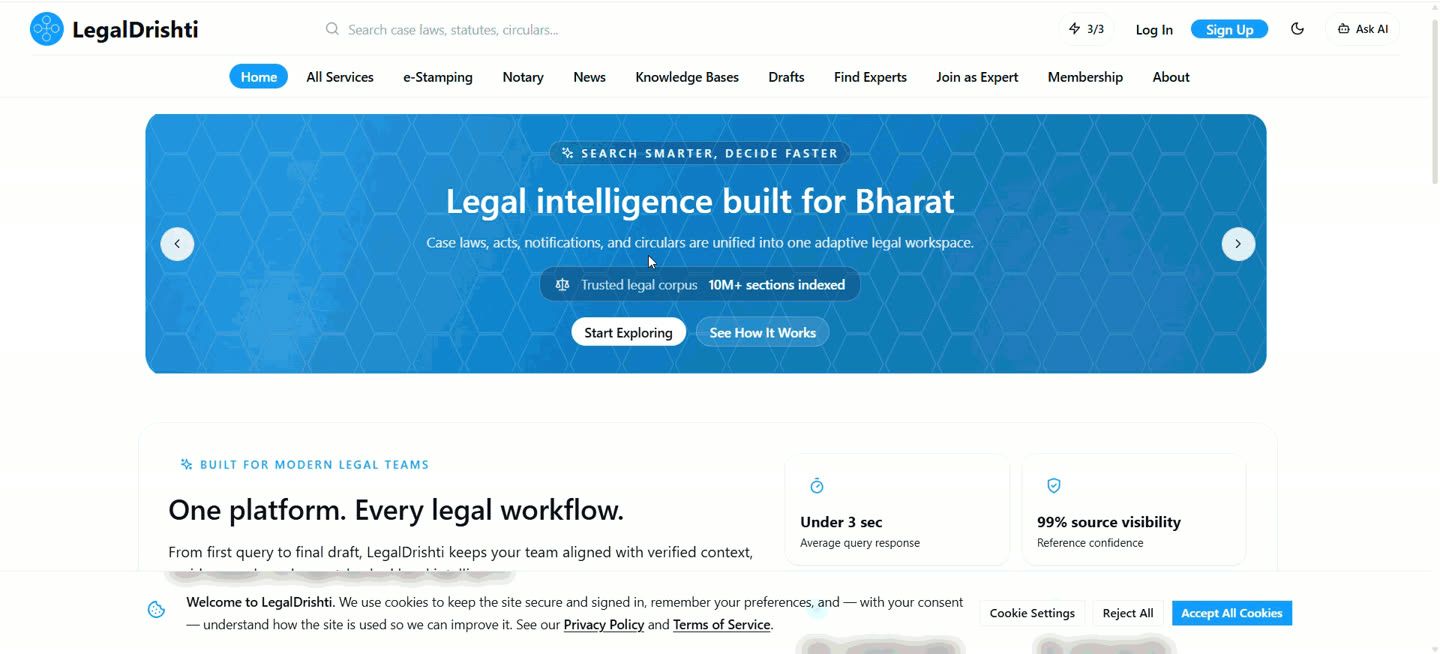
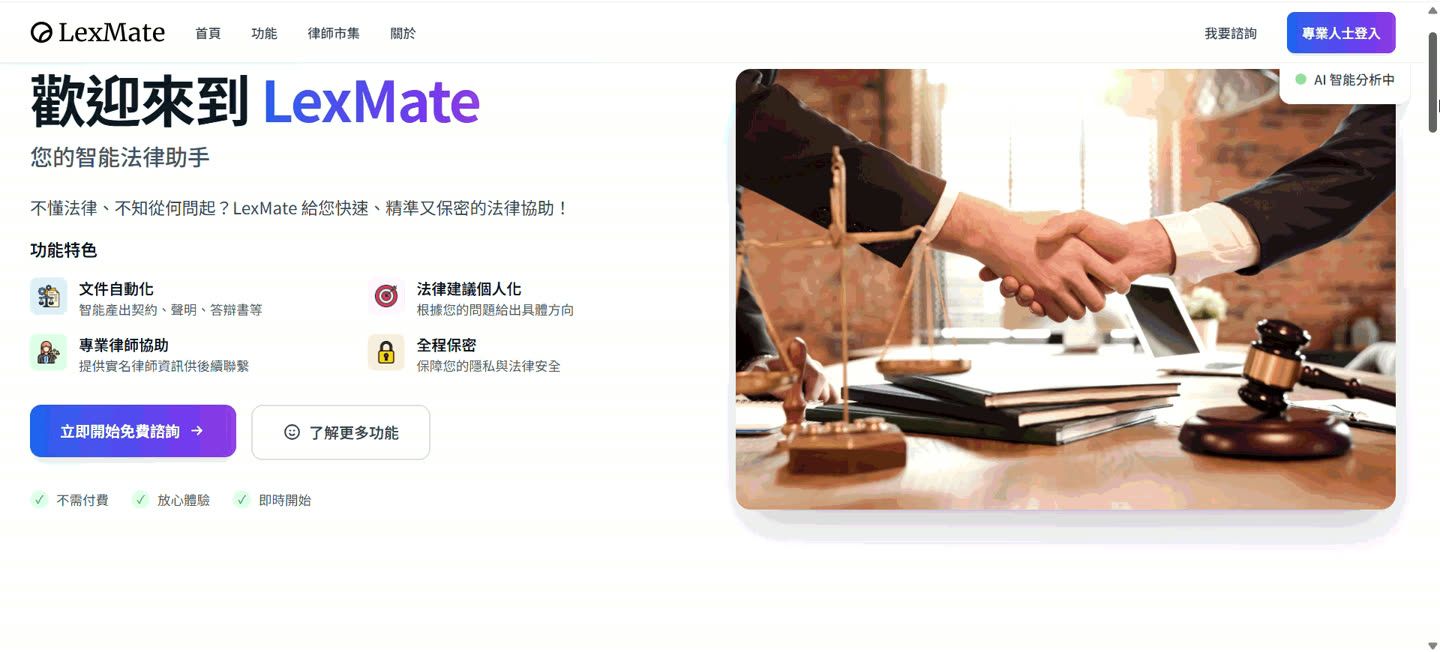
Legal and compliance platforms we have built
First-pass review is mechanical work done by expensive people. The queue builds, the business chases, and the risk is that something gets waved through because there was no time.
Obligations, renewal dates and liability caps sit inside PDFs across a shared drive. Answering a board question means someone opening contracts one at a time.
Filings, registrations and statutory obligations are tracked by hand. When that person is on leave, the organisation is exposed and nobody knows it until a notice arrives.
Systems that draft from your own templates and precedent, and flag where a document departs from your standard position.
Lawyers spend their time on judgement, not on reading the same paragraph again.
Every contract parsed into the terms that matter — parties, renewal dates, liability caps, termination rights — and kept searchable.
You can answer “what did we agree to?” across the whole portfolio in one query.
Deadlines, documents, approvals and status in one place, with the audit trail a regulator or auditor will ask for.
Compliance stops depending on one person remembering.
Directories that verify credentials, route enquiries and manage engagement end to end — the pattern behind Legal Drishti and Medykeep.
Clients reach the right professional, and every step is recorded.
Four platforms we designed, built and shipped.
An AI document assistant for legal teams and law firms. It automates contract drafting, document review, clause extraction and compliance checking using natural language processing over legal content.
Read the case studyA legal document processing platform. It reads a document to establish what the matter actually is, then matches it to a professional who handles that kind of work — two steps that were previously done by reading everything by hand and asking around.
Read the case studyA POSH compliance platform helping Indian organisations meet their obligations under the Sexual Harassment of Women at Workplace Act, 2013, with awareness training and ICC member certification.
See the project1 to 2 weeks
We sit with the people doing the reviewing and filing, map how a document actually moves today, and agree what accuracy has to look like before anything is trusted. You get a written scope, architecture and estimate.
6 to 12 weeks, depending on scope
Two-week increments with something working at the end of each, tested against your own documents on a staging environment that mirrors production.
1 week
We run alongside your existing process until the outputs agree, then cut over. Rollback is planned before we start.
Ongoing
Monitoring, an agreed response time for incidents, and a monthly review of accuracy and what to change next.
Your documents stay in infrastructure you own or control, in the region you choose. Access is role-based and every read is logged, so you can show an auditor who opened what. We do not train models on your data.
This is the question we get asked first, and it is a question for your counsel rather than for us. What we control is the exposure: we can keep privileged material out of third-party model calls entirely by running retrieval against your own store, redacting before any external call, or using a model deployed inside your own tenancy. We agree which of those applies during discovery, in writing.
We ground every output in your own documents rather than the model's memory, and each answer links back to the clause it came from, so a reviewer can check it in one click. We agree an accuracy threshold during discovery and test against your real documents before anything reaches live work.
No. It removes the mechanical first pass so qualified people spend their time on judgement. Every system we build assumes a human approves before anything leaves the building, and records who did.
We quote a fixed scope and price after discovery, so you are not signing a blank cheque. Discovery is a paid, standalone piece of work and its output is yours whether or not you continue.
You do. Source, infrastructure definitions and documentation are handed over in your repositories from the first commit, not at the end.
Thirty minutes with the people who would actually build it. You leave with a scope and a timeline, whether or not you work with us.
Or call +91 87008 55689 · info@techotd.com · All AI services