startup

App Development, startup, Technology, Technology & Innovation

I Have an Idea for an App, But I Don’t Know Where to Start: The 2026 Founder’s Roadmap

Introduction The “Million-Dollar” Dilemma We’ve all been there. You’re standing in line at a coffee shop, or perhaps you’re stuck in traffic, and suddenly—it hits you. A solution to a problem you’ve faced a dozen times. You think, “There should be an app for this.” By the time you get home, the excitement is bubbling over. But then, the reality of the “Blank Canvas” sets in. You aren’t a coder. You don’t have a million dollars in VC funding. You don’t even know if someone else has already built it. The gap between a great idea and a great app is where most dreams go to die. But in 2026, the barriers to entry have never been lower. You don’t need to be a technical genius to start; you just need a repeatable process. Here is how you bridge that gap. 1. Phase One: The Cold Hard Truth (Validation) Before you spend a single rupee or hour on development, you must prove that your idea solves a problem people are willing to pay for. The “Mom Test”: Don’t ask your friends if your idea is good—they’ll lie to be nice. Ask them about their problems. If they’ve already tried to solve the problem with a clunky workaround, you have a winner. Competitive Analysis: If there are other apps in the space, that’s actually good news. It proves there is a market. Your job is to find the “Gap.” Read the one-star reviews of your competitors. What are users complaining about? That complaint is your first feature. The Landing Page Test: Create a simple one-page website describing the app with a “Join the Waitlist” button. If you can get 100 strangers to give you their email address, you have validated demand. 2. Phase Two: Blueprinting the Experience (UX & Wireframing) An app isn’t a collection of code; it’s a collection of screens. You need to map out the journey. User Personas: Who is “Sarah”? Why is she opening your app at 8:00 PM? Is she stressed? Bored? In a rush? Defining the user’s emotional state dictates the design. Low-Fidelity Wireframes: Grab a piece of paper. Draw a rectangle. That’s your phone screen. Now, draw where the buttons go. Do this for the login, the home screen, and the primary action screen. The Power of No-Code Prototyping: In 2026, tools like Figma or even AI-assisted design prompts allow you to create a “clickable” version of your app without writing code. This allows you to feel the flow before building it. 3. Phase Three: The MVP (Minimum Viable Product) The biggest mistake new founders make is trying to build the “Final Version” first. You don’t need a social network with 50 features. You need one feature that works perfectly. The “Must-Have” vs. “Nice-to-Have”: If your app is a food delivery service, the “Must-Have” is ordering food. The “Nice-to-Have” is a dark mode or a loyalty points system. Cut everything that isn’t a “Must-Have.” Choosing Your Stack: In 2026, you have three main paths: Native Development: Best for high performance (iOS/Android). Cross-Platform (Flutter/React Native): One codebase for both stores. No-Code (Bubble/FlutterFlow): Best for rapid testing and non-technical founders. 4. Phase Four: Finding Your “Builders” Unless you are a developer, you will eventually need help. You have three options: The Technical Co-Founder: Someone who believes in the vision and works for equity. Hard to find, but best for long-term growth. Freelancers: Great for specific tasks, but requires you to act as the Project Manager. Development Agencies: The most expensive option, but provides a full team (Designer, Developer, QA) to ensure a professional launch. 5. Phase Five: The Launch and the Pivot Launch day is not the finish line; it’s the starting gun. Once your app is in the App Store, your real job begins: Listening. Analytics: Use tools to see where users are getting stuck. If 50% of people drop off at the “Sign Up” page, your sign-up process is too long. Feedback Loops: Talk to your first 100 users. Ask them what they hate. Be prepared to “Pivot”—changing a core feature based on how people actually use the app, not how you thought they would use it. Conclusion: The First Step is the Hardest The world doesn’t need another “good idea.” It needs people who are brave enough to execute them. Starting an app in 2026 isn’t about having the most features; it’s about having the most empathy for your user’s problems. Don’t wait for the “perfect time” or the “perfect developer.” Start with a piece of paper and a conversation. Every giant tech company you use today started exactly where you are right now: with a single idea and a lot of questions. Navigating the 7 Hidden Limitations of AI Programming


Digital Transformation, Frontend Developer, startup, Technology & Business

The “Solo-Studio” Era: How AI Made the Full-Stack Dev a One-Person Agency

Introduction For years, the dream of the “solopreneur” usually came with a massive asterisk. You could have a great idea, but unless you were a coding prodigy, a UI/UX expert, a DevOps wizard, and a marketing specialist all rolled into one, you eventually hit a wall. You needed a team. You needed capital. You needed time. Fast forward to 2026, and that wall hasn’t just been lowered—it’s been demolished. We’ve entered the era of the Solo-Studio. Today, a single developer with a clear vision can outpace a mid-sized software house from five years ago. This isn’t just about “coding faster”; it’s about a fundamental shift in what it means to be a creator in the digital age. From “Syntax Writer” to “Product Architect” The old way of web development was heavy on syntax. We spent 40% of our time fighting CSS alignment, 30% writing boilerplate API calls, and maybe 30% actually solving the user’s problem. In the Solo-Studio era, AI handles the syntax. Tools like Cursor and GitHub Copilot have evolved from simple autocomplete to full-blown pair programmers that understand your entire codebase. You no longer ask “how do I write a map function?”; you tell the AI, “Build a secure checkout flow that integrates with Stripe and updates my Supabase database,” and it generates the architecture. This shifts the developer’s value. Your worth is no longer measured by how many languages you know, but by your ability to architect a product that solves a real-world problem. The Rise of the “One-Person Agency” Why do we call it a “Solo-Studio”? Because the modern full-stack dev is no longer just handling the backend and frontend. With AI-assisted design tools like v0.dev or Figma’s AI features, developers are now producing high-fidelity UI/UX that looks like it came from a dedicated design team. Furthermore, DevOps—once the scariest part of a launch—has been abstracted away. With the “Backendless” and “Edge” technologies we’ve discussed previously, a solo dev can deploy a globally distributed app in minutes. You aren’t just a coder; you are the CTO, the Lead Designer, and the Head of Infrastructure, all powered by a single keyboard. The Human Element: Why Vision Still Wins There is a common fear that AI will make developers obsolete. In reality, AI is making the uninspired obsolete. AI can write a function, but it can’t tell you why a user feels frustrated with your onboarding flow. It can’t spot a gap in the market for a specific niche tool. The “Solo-Studio” thrives because the human at the center provides the empathy, the taste, and the strategic direction. The AI is simply the most powerful intern in human history. The Tech Stack of the Solo-Studio If you’re looking to transition into this one-person agency model, your 2026 stack likely looks like this: Editor: Cursor or VS Code with heavy AI integration. Frontend: Next.js or Astro for speed and SEO. Backend/Database: Supabase for instant Auth and DB. Design: v0.dev for generating React components from plain English. Deployment: Vercel or Netlify for zero-config scaling. Conclusion: It’s Time to Build We are living through a “Renaissance” of individual creativity. The barriers to entry have vanished. The cost of failure is lower than ever, and the speed of execution is at an all-time high. The “Solo-Studio” isn’t just a trend; it’s the future of how software is built. You don’t need a boardroom full of people to change an industry anymore. You just need a laptop, a few AI agents, and the courage to hit npm run dev. How to Study Smarter, Not Harder, Using Online Education Apps

Startup team brainstorming ideas
startup

The Power of Startups: Turning Ideas Into Impact

Introduction In today’s fast-paced digital world, startups have become the heart of innovation. From redefining industries to creating entirely new markets, startups prove that with the right idea, team, and mindset, even small beginnings can lead to massive change. What is a Startup? A startup is more than just a new business — it’s an organization built to grow fast. Startups focus on innovation, solving real-world problems, and scaling quickly using technology, creativity, and strategic execution. Why Startups Matter Innovation: Startups bring new ideas to life — from fintech apps to AI-driven healthcare solutions. Job Creation: They generate employment and attract global talent. Economic Growth: Startups stimulate competition, productivity, and technological advancement. Empowerment: They give individuals a platform to turn passion into purpose. Key Traits of Successful Startups Visionary Leadership: Founders who dream big and inspire others. Adaptability: The ability to pivot quickly based on market needs. Strong Team: Collaboration and shared values are crucial. Customer Focus: Understanding and solving customer pain points. Smart Funding: Balancing innovation with financial discipline. Tips to Start Your Own Startup Identify a Problem: Every great startup starts with solving a real problem. Validate Your Idea: Talk to potential users, build an MVP (Minimum Viable Product). Build a Team: Choose people who complement your skills. Secure Funding: Look for angel investors, venture capital, or bootstrapping. Market Strategically: Leverage social media and digital marketing. Keep Learning: The startup world evolves rapidly — adaptability is key. Famous Startup Success Stories Airbnb: Started as a simple idea to rent air mattresses — now a global hospitality leader. Paytm: Revolutionized digital payments in India. SpaceX: Elon Musk’s mission to make space travel accessible and sustainable. Conclusion Startups are not just about making money — they’re about making change. Whether it’s a tech innovation or a social impact idea, every startup begins with courage, creativity, and a desire to make the world better. If you’ve ever dreamed of starting something new, now is the perfect time to begin.  

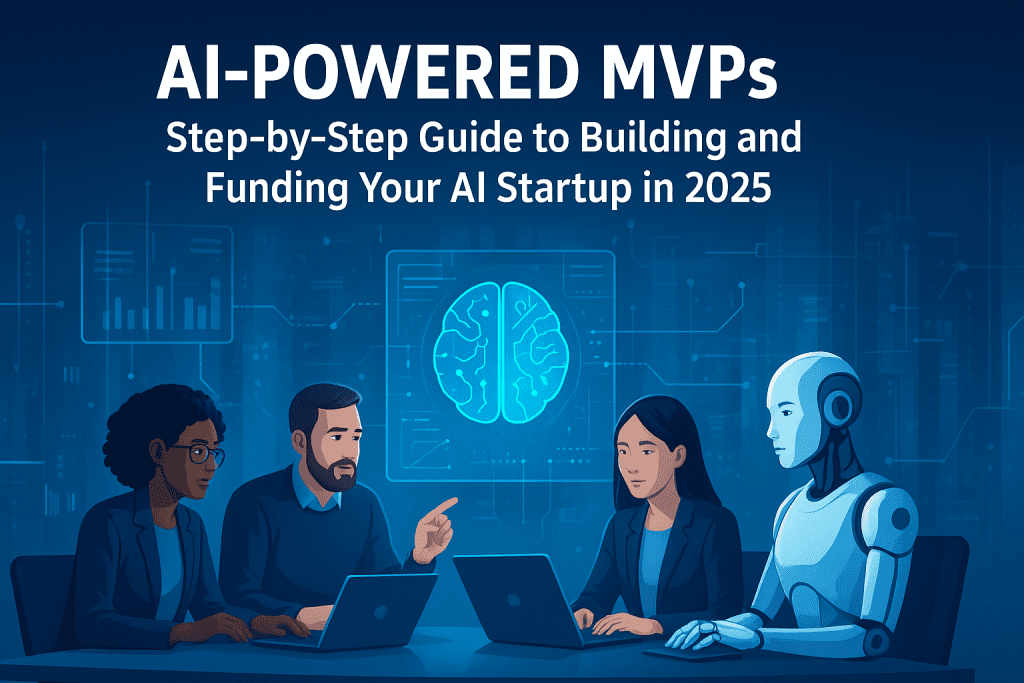
A diverse team of professionals and a humanoid robot collaborate in a futuristic office surrounded by holographic AI visuals and digital data charts, symbolizing innovation, technology, and AI-driven startup development.
Artificial Intelligence, startup

Step-by-Step Guide to Building and Funding Your AI Startup

Introduction Artificial Intelligence (AI) is the driving force behind the most exciting AI startup trends of 2025. From generative models to predictive analytics, AI is fueling a new generation of innovation across industries. For emerging startups, building an AI MVP (Minimum Viable Product) is the smartest way to test ideas and attract early investors. This guide will walk you through the step-by-step process of AI MVP development, explore AI funding strategies, and highlight artificial intelligence innovation that can turn your idea into a real-world business success. Step-by-Step Guide to Building Your MVP 1. Identify the Problem and Validate the IdeaStart with a real-world problem AI can solve. For example, automating resume screening, predicting health outcomes, or optimizing logistics. Conduct market research and user interviews to confirm demand before writing a single line of code. 2. Define Core Features (Keep It Lean)Focus on the one AI-driven feature that delivers the most value. Instead of building everything at once, design a prototype that showcases the core intelligence of your product — like a chatbot, image recognizer, or recommendation engine. 3. Choose the Right Tech StackSelect reliable tools for faster MVP development: Backend: Python (FastAPI, Flask) or Node.js Frontend: React.js or Next.js AI/ML Tools: TensorFlow, PyTorch, OpenAI API, Hugging Face Database: MongoDB, PostgreSQL Hosting: AWS, Google Cloud, or Azure 4. Build and Test IterativelyDevelop your MVP in short sprints. Gather feedback from beta testers and iterate quickly. Use analytics to understand user behavior and improve AI performance. 5. Launch and Collect DataOnce launched, track user engagement, model accuracy, and overall experience. The insights you gather will help refine your AI model and product roadmap. How to Raise Funding for Your MVP in 2025 1. Create a Compelling Pitch DeckHighlight your AI’s unique edge — what problem it solves and how it uses data intelligently. Investors want to see impact + scalability. 2. Showcase Early TractionEven small user metrics, pilot results, or demo videos can prove your MVP’s value. Show that your AI works and users love it. 3. Target the Right InvestorsReach out to AI-focused venture funds, tech accelerators, and angel investors who understand machine learning and automation potential. Examples: Sequoia India, Accel, Y Combinator, Techstars AI Track. 4. Emphasize Ethical AI and Data PrivacyIn 2025, investors are more cautious about AI ethics and compliance. Mention fairness, transparency, and responsible data handling in your pitch. 5. Use Funding PlatformsExplore modern fundraising options like: AngelList (for pre-seed rounds) Y Combinator’s Startup School PitchBook & Crunchbase (for investor connections) Crowdfunding with AI-based prototypes (Kickstarter, Indiegogo) Pro Tips  Start with No-Code or Low-Code AI Tools: Use platforms like Bubble, Builder.ai, or Lobe.ai to test MVP ideas quickly.  Focus on Data Quality: Your AI is only as smart as the data you train it on.  Leverage Open Source Models: Fine-tune pre-trained models instead of building from scratch.  Prioritize User Feedback: Iteration is your best teacher.  Integrate Ethics and Transparency: Build user trust through explainable AI features. Conclusion The AI boom of 2025 offers endless opportunities for innovative startups. Building a smart, efficient MVP is the best way to validate your idea and attract funding. By staying lean, focusing on real problems, and emphasizing responsible AI practices, you can turn your concept into a market-ready product. Remember — in AI startups, speed and adaptability matter more than perfection.   ❓ FAQ 1. What is an AI MVP?An AI MVP (Minimum Viable Product) is a lightweight version of an AI-based product built to test market demand and gather user feedback before full-scale development. 2. How long does it take to build an AI MVP?Typically 4–12 weeks, depending on complexity, data availability, and team size. 3. How much funding do AI startups usually raise initially?AI startups usually raise between $50,000 – $250,000 in seed or pre-seed rounds for MVP development. 4. What’s the best AI tech stack for startups in 2025?Python (for AI/ML), React (for frontend), and AWS or Google Cloud for deployment are the most popular combinations. 5. Can I build an AI MVP without coding?Yes! Tools like Lobe.ai, Peltarion, and Builder.ai allow non-technical founders to prototype AI solutions quickly. How to Build a Minimal Viable Product (MVP) and Raise Funding in 2025

startup

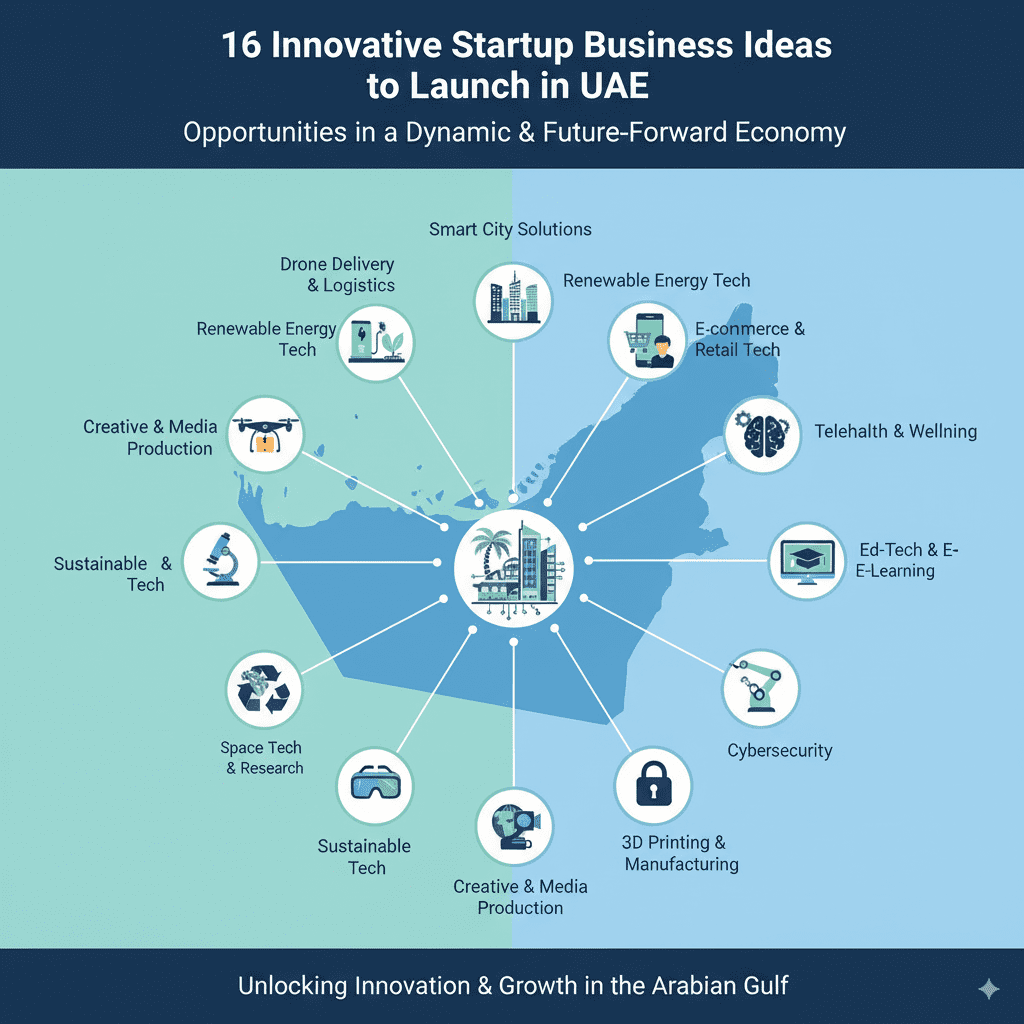
16 Innovative Startup Business Ideas to Launch in UAE

Introduction The United Arab Emirates (UAE) continues to cement its position as a global innovation hub, attracting entrepreneurs and investors keen on capitalizing on its strategic location, business-friendly policies, and rapidly evolving digital economy. With Expo 2020 and Vision 2030 initiatives accelerating economic diversification, the UAE presents fertile ground for startups across multiple sectors. This blog explores 16 innovative startup business ideas that are primed for success in the UAE’s vibrant market. These ideas span technology, healthcare, retail, and sustainable development, aligning with local market needs and global trends. For cutting-edge technological insights and startup strategies, explore TechOTD’s AI-driven services at TechOTD AI Solutions and their comprehensive technology blog. Top 16 Innovative Startup Ideas to Launch in UAE 1. AI-Powered Healthcare Solutions Leverage AI to develop telehealth platforms, predictive diagnostics, and personalized treatment plans. The UAE’s healthcare modernization opens significant opportunities. 2. Sustainable Technologies Create startups focused on renewable energy, waste management, and water conservation aligning with UAE’s sustainable development goals. 3. Fintech Innovations Disrupt banking with blockchain payments, AI-based credit scoring, and personalized financial management tools adapted to the region’s regulatory landscape. 4. E-commerce Marketplaces Develop niche or localized marketplaces offering curated products, integrating AI-driven recommendations and advanced logistics services. 5. Smart City Solutions Launch services that enable IoT-enabled public infrastructure management, traffic monitoring, and smart utilities in metro hubs like Dubai and Abu Dhabi. 6. Digital Education Platforms Create EdTech apps incorporating AR/VR, AI tutors, and personalized learning paths to meet growing demand from students and professionals. 7. FoodTech and Cloud Kitchens Innovate in food delivery with cloud kitchen models combined with AI-based demand forecasting and efficient order management. 8. Real Estate Tech Simplify property buying and rental with virtual tours, AI-driven pricing tools, and blockchain-powered transaction transparency. 9. Logistics and Supply Chain Tech Optimize last-mile delivery and warehouse management through AI analytics and automation tailored for the UAE market. 10. Cybersecurity Services Offer managed security services and AI-driven threat detection for businesses adopting cloud and digital technologies. 11. Renewable Energy Consulting Help companies and governments meet sustainability targets with specialized renewable energy system design and deployment. 12. Virtual and Augmented Reality Experiences Develop immersive VR/AR content for tourism, education, and retail sectors capturing UAE’s innovative spirit. 13. Personalized Fitness and Wellness Apps Capitalize on growing health consciousness by offering AI-personalized workout plans, nutrition tracking, and virtual coaching. 14. Green Finance Startups Provide sustainable investment platforms and green bonds focusing on environmentally responsible projects and businesses. 15. AI-Driven Customer Experience Solutions Design AI chatbots, sentiment analysis, and predictive service platforms for UAE businesses enhancing consumer engagement. 16. Blockchain-Based Supply Chain Transparency Develop blockchain applications to create tamper-proof records for industries like food, pharmaceuticals, and luxury goods. Discover Blockchain’s transformative potential here: How Blockchain Integration Is Optimizing Business Processes in Dubai. Why Startups Thrive in the UAE Access to a world-class digital infrastructure and smart city initiatives. Government support through funding, incubators, and regulatory frameworks. Strategic position bridging Asia, Europe, and Africa. Diverse multicultural population fostering innovation and market variety. Leveraging Technology and AI for Startup Growth Startups succeed faster by harnessing AI, data analytics, cloud services, and modern development frameworks. Partnering with technology providers such as TechOTD enables rapid prototyping, agile development, and market deployment. Explore more: TechOTD’s AI and Mobile App Services. Conclusion The UAE’s dynamic business ecosystem rewards innovation and agility. Entrepreneurs ready to launch startups in emerging technology and sustainable development sectors will find a supportive environment with immense growth potential. Evaluating market needs, leveraging cutting-edge technology, and aligning with national strategies like UAE Vision 2021 and Expo 2020 are keys to unlocking startup success. Get inspired and prepared by exploring TechOTD’s insights and services as you embark on your entrepreneurial journey. Visit TechOTD Blog for the latest trends and expert advice. FAQs Q1: What sectors show the most potential for startups in UAE? Healthcare, fintech, sustainable technologies, education tech, and smart city solutions. Q2: How important is government support for startups in UAE? Very important; numerous grants, accelerators, and regulatory support are available. Q3: Can AI help startups succeed faster? Yes, AI enables better market analysis, product personalization, and operational efficiency. Q4: What challenges do startups face in UAE? Market competition, cultural adaptation, and regulatory compliance are common challenges. Q5: How can TechOTD support startups? TechOTD offers AI-driven analytics, agile software development, and custom mobile app solutions tailored to your needs.

startup

How to Create a Mobile App Startup: Analyzing Strategies for Success

Introduction The mobile app industry continues to grow exponentially, offering unprecedented opportunities for entrepreneurs to launch startups that disrupt traditional markets and create new value. However, building a successful mobile app startup requires more than a great idea—it demands strategic planning, deep market understanding, agile development, and effective user acquisition tactics. This blog explores critical strategies for launching a profitable mobile app startup, drawing from industry best practices, real-world examples, and technology trends. For comprehensive guidance on app development technologies and market adoption, discover TechOTD’s AI-driven mobile solutions and browse their latest tech blog. Key Strategies for Creating a Successful Mobile App Startup 1. Conduct Thorough Market Research Identify target customer segments, pain points, and gaps in existing app offerings. Analyze competitors to differentiate your solution with unique value propositions. Validate your app idea using surveys, focus groups, or MVP testing. 2. Define a Clear Business Model Decide on revenue streams such as subscriptions, in-app purchases, advertising, or freemium features. Ensure your value delivery aligns with profitable monetization methods. 3. Focus on User Experience (UX) and Design Prioritize intuitive navigation, fast load times, and responsive design across devices. Use data-driven UX improvements and personalization powered by AI. Explore design best practices here: React Native vs Swift for App Development. 4. Build an MVP Quickly and Iterate Develop a minimum viable product (MVP) with essential features to launch early and gather user feedback. Use agile development cycles to refine functionality and fix bugs based on real data. 5. Assemble a Skilled Development & Marketing Team Hire or partner with experienced developers, UI/UX designers, and marketers who understand mobile platforms and customer acquisition. Collaborate with partners like TechOTD for expert technology consulting and development: TechOTD Mobile Apps Services. 6. Plan an Effective Marketing and User Acquisition Strategy Leverage digital marketing, influencer partnerships, app store optimization (ASO), and social campaigns. Focus on building a loyal user base with retention strategies like rewards or community features. 7. Leverage Analytics and AI for Growth Utilize predictive analytics and AI models to understand user behavior and personalize experiences. Continuously analyze engagement metrics to inform product and marketing decisions. Learn more about predictive analytics benefits: Predictive Analytics Software Development. 8. Ensure Scalability and Security Build on scalable cloud architectures to handle rapid growth. Implement stringent security protocols to protect user data and build trust. Challenges Commonly Faced by Mobile App Startups Intense market competition requiring continuous innovation. Balancing time-to-market with product quality. Retaining users in a highly saturated app ecosystem. Managing costs while sustaining growth and customer support. Real-Life Examples of Mobile App Startup Success Startups that focused on niche markets and personalized experiences tend to outperform broad-spectrum apps. Agile iteration based on user data accelerates product-market fit and scaling. Using AI to automate workflows and enhance user personalization is a proven growth accelerator. Conclusion Launching a successful mobile app startup involves a mix of strategic market understanding, targeted product development, savvy marketing, and data-driven optimizations. Partnering with technology experts and leveraging AI-powered solutions can shorten time to market and increase your chances of success. Begin your startup journey with trusted technology partners like TechOTD and stay updated with evolving best practices from their innovation-packed technology blog. FAQs Q1: What is an MVP and why is it important? A minimal viable product with key features enables quick market entry and user feedback collection. Q2: How do AI and analytics support startup growth? They personalize user experiences, optimize marketing, and predict trends to inform business decisions. Q3: How critical is user acquisition strategy? Effective user acquisition drives early traction, essential for startup sustainability. Q4: Should startups build native or cross-platform apps? It depends on budget and target audience; cross-platform reduces costs, native offers better performance. Q5: How to ensure app security from the start? Implement encryption, secure authentication, and comply with privacy regulations to protect users.

How would you like me to respond?

Select a personality for your AI assistant

Normal
Happy
Sad
Angry

Your selection will affect how the AI assistant responds to your messages

Chat Assistant

Let's discuss your project!

Hear from our clients and why 3000+ businesses trust TechOTD

Tell us what you need, and we'll get back with a cost and timeline estimate

Scroll to Top