Internet of Things

Big Data, data science, Digital Transformation, Internet of Things, Technology & Innovation

Digital Farmers: Why Data is the New Seed for Harvesting Superior Results

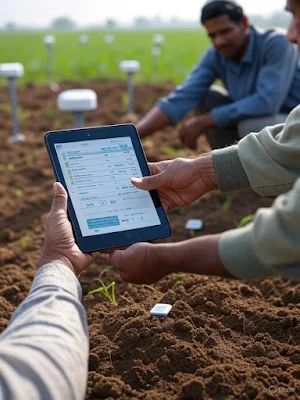
Digital Farmers: Why Data is the New Seed for Harvesting Superior Results For generations, farming was a game of intuition, tradition, and a fair bit of gambling with the weather. A farmer knew their land by the feel of the soil between their fingers and the color of the horizon at sunset. While that ancestral wisdom remains the heartbeat of agriculture, a new “crop” is being planted in fields across the globe: Data. The rise of the Digital Farmer isn’t about replacing the human element; it’s about empowering it. By harvesting billions of data points—from soil moisture levels to satellite imagery—modern growers are achieving results that were once considered impossible. The Dawn of the Data-Driven Acre In the past, if a field was thirsty, the whole field got water. If a pest was spotted in the north corner, the entire farm was sprayed with pesticides. This “blanket approach” was the only way to manage large-scale operations, but it was incredibly inefficient. Digital farming, or Precision Agriculture, changes the script. It allows farmers to treat every square meter of their land as an individual unit. By using sensors and GPS-guided machinery, a digital farmer can apply the exact amount of water, fertilizer, or seed needed for a specific spot. Why Data Matters More Than Ever We are currently facing a global challenge: feeding a population expected to reach 10 billion by 2050 while using less water and land than ever before. Data is the bridge. It allows for: Predictive Analysis: Knowing a drought is coming before the first leaf wilts. Resource Optimization: Reducing chemical runoff by only spraying where necessary. Yield Maximization: Finding the “sweet spot” for planting density. The Digital Toolkit: How Data is Collected To harvest results, you first have to harvest information. Digital farmers use a sophisticated ecosystem of tools to get a 360-degree view of their operations. 1. IoT Sensors (The Nervous System) Internet of Things (IoT) sensors are the “eyes and ears” on the ground. These small, rugged devices are buried in the soil or mounted on equipment to monitor: Soil Moisture: Preventing over-irrigation and saving millions of gallons of water. Nutrient Levels: Tracking Nitrogen, Phosphorus, and Potassium (NPK) in real-time. Temperature and Humidity: Predicting the risk of fungal outbreaks. 2. Satellite Imagery and Drones (The View From Above) High-resolution satellite data allows farmers to see “invisible” problems. Using Normalized Difference Vegetation Index (NDVI) imaging, farmers can spot areas where crops are stressed long before the human eye can detect a change in color. Drones take this a step further, providing centimeter-level accuracy for spot-spraying or counting livestock. 3. Telematics and Smart Machinery Modern tractors are essentially moving computers. They collect data on fuel consumption, engine health, and planting depth. When synced with the cloud, this data helps farm managers optimize their fleet’s performance and reduce downtime. From Big Data to Big Decisions: The Human Element Having data is one thing; knowing what to do with it is another. This is where the “humanized” side of digital farming shines. AI-driven platforms take the “noise” of raw data and turn it into Actionable Insights. Instead of looking at a spreadsheet of soil pH levels, a farmer receives a notification on their smartphone: “Zone B4 needs 5% more lime to reach peak yield potential. Schedule application for Tuesday before the rain?” This shift moves the farmer from a laborer to a Data Strategist. It reduces the crushing stress of uncertainty, allowing for a better work-life balance and more predictable financial outcomes. Overcoming the “Digital Divide” Transitioning to digital farming isn’t without its hurdles. For many, the “Data Harvest” feels out of reach due to: High Initial Costs: Smart machinery and sensor networks require significant upfront investment. Connectivity Issues: Many rural areas still lack the high-speed internet required to sync heavy data loads to the cloud. The Learning Curve: Farmers are experts in biology and mechanics, not necessarily data science. However, the industry is pivoting. Open-source data platforms and “as-a-service” models are making tech more accessible to small-scale farmers, ensuring that the digital revolution doesn’t leave the family farm behind. The Future: AI and Autonomous Harvests As we look toward the next decade, data will move from being a “tool” to being the “operator.” We are already seeing the rise of autonomous tractors and robotic weeders that identify and pluck weeds without a drop of herbicide. The goal isn’t a “farmer-less” world, but a world where the farmer is free to focus on the high-level health of the ecosystem, while the data handles the repetitive, granular tasks. Conclusion: Harvesting a Greener Tomorrow The digital farmer is a steward of both the land and the cloud. By embracing data, they are not just harvesting better results for their bank accounts; they are harvesting a more sustainable future for the planet. In the world of modern agriculture, the most valuable tool in the shed isn’t the plow—it’s the insight. When is the Best Time to Source On-Demand Developers? A Strategic 2026 Guide

Aerial view of a modern smart city connected through digital IoT networks and data visualization.
Internet of Things

Internet of Things (IoT) in Smart Cities: Building the Future of Urban Living

Introduction Cities around the world are becoming smarter — not just in infrastructure but in the way they collect, process, and use data to improve citizens’ lives. At the heart of this revolution lies the Internet of Things (IoT), a network of interconnected devices that communicate in real-time to make urban environments more efficient, sustainable, and livable. From intelligent traffic lights that ease congestion to connected sensors that monitor air quality, IoT is transforming urban life into a seamless, data-driven ecosystem. By 2025, the global smart city market is projected to surpass $1 trillion, with IoT technologies leading the charge. This blog explores how IoT is powering smart cities, its applications, benefits, challenges, and what the future holds for this transformative technology. What is the Internet of Things (IoT)? The Internet of Things refers to a network of physical objects — devices, vehicles, sensors, and appliances — connected via the Internet to exchange and process data automatically. In smart cities, IoT devices play a crucial role in collecting real-time data on parameters such as traffic, energy usage, air pollution, water quality, and public safety. This data is then analyzed to improve city management and deliver better public services. Example:Smart waste bins equipped with IoT sensors notify municipal authorities when they’re full, optimizing garbage collection routes and saving resources. How IoT is Transforming Smart Cities 1. Smart Traffic Management Traffic congestion is one of the biggest challenges for urban areas. IoT-enabled intelligent traffic systems use sensors, cameras, and GPS data to monitor road conditions and traffic density in real-time. These systems automatically adjust traffic lights, reroute vehicles, and provide live traffic updates to commuters via apps like Google Maps or Waze. Result: Reduced travel time, lower fuel consumption, and fewer emissions. 2. Smart Energy and Utilities IoT-based smart grids and energy meters optimize electricity consumption across cities. Sensors track energy usage patterns, detect power outages, and balance supply and demand more efficiently. Example:Streetlights embedded with motion sensors automatically adjust brightness based on movement, saving up to 60% in energy costs. In addition, smart water meters help detect leaks early, reducing water waste — a critical advantage for cities facing water scarcity. 3. Waste Management and Sanitation IoT sensors in waste bins monitor fill levels and send alerts when collection is required. This eliminates unnecessary trips, reduces fuel consumption, and ensures cleaner urban environments. Example:Barcelona’s smart waste management system uses IoT-enabled vacuum tubes that automatically transport garbage to central collection points. 4. Public Safety and Surveillance IoT-powered CCTV networks, smart streetlights, and emergency response systems help enhance public safety. Real-time monitoring enables faster response to crimes, accidents, or natural disasters. Example:Smart cameras can detect unusual behavior or abandoned objects in crowded areas, alerting authorities instantly. 5. Smart Buildings and Infrastructure IoT sensors make buildings more energy-efficient and comfortable. Smart HVAC systems automatically adjust temperature based on occupancy, while predictive maintenance tools detect potential equipment failures before they occur. In addition, IoT-enabled elevators, lighting, and water systems help reduce operational costs and enhance sustainability. 6. Smart Mobility and Public Transport Public transport systems in smart cities are integrated with IoT for real-time tracking, contactless payments, and route optimization. Example:Singapore’s public transport uses IoT data to adjust bus frequencies based on passenger demand and traffic flow, improving efficiency and reducing waiting times. 7. Environmental Monitoring IoT sensors track air quality, noise levels, and water contamination, helping cities identify pollution hotspots and enforce environmental regulations. Example:In Copenhagen, smart air quality sensors installed on lampposts continuously measure CO₂ and particulate matter levels to promote cleaner air initiatives. Benefits of IoT in Smart Cities Improved Efficiency: Automated systems optimize resource usage and reduce human error. Enhanced Quality of Life: Citizens experience smoother transportation, better safety, and cleaner environments. Cost Savings: Real-time data allows cities to reduce energy, labor, and maintenance expenses. Sustainability: IoT solutions support eco-friendly policies by reducing waste and emissions. Data-Driven Governance: Governments can make smarter decisions based on real-time analytics. Challenges in Implementing IoT for Smart Cities While IoT offers immense benefits, several challenges must be addressed: Data Security and Privacy: IoT devices collect massive amounts of personal data, raising concerns about unauthorized access. Interoperability: Integrating devices from multiple manufacturers remains complex. Infrastructure Costs: Upgrading legacy systems for IoT compatibility requires significant investment. Network Reliability: IoT depends heavily on stable, high-speed connectivity — something still lacking in many regions. Data Overload: Managing and analyzing terabytes of data daily demands powerful computing resources and AI tools. The Role of AI and Edge Computing in Smart Cities To process the massive data generated by IoT, AI and edge computing are becoming vital. AI (Artificial Intelligence): Helps interpret data patterns to predict issues, optimize energy usage, or improve traffic flow. Edge Computing: Processes data closer to where it’s generated, reducing latency and bandwidth costs while ensuring real-time decisions. Together, they create an intelligent ecosystem capable of self-regulation and autonomous decision-making. The Future of IoT in Smart Cities By 2030, IoT will be deeply integrated into urban life: Autonomous vehicles will communicate with smart infrastructure. AI-driven city dashboards will predict and prevent issues before they occur. Blockchain technology may secure IoT data sharing across government agencies. Digital twins — virtual models of cities — will simulate real-time urban dynamics for better planning. Smart cities will evolve into living digital organisms, constantly learning, adapting, and improving based on citizen needs. Conclusion The Internet of Things is not just shaping smart cities — it’s redefining urban living altogether. As sensors, AI, and edge computing unite, cities will become more connected, sustainable, and responsive than ever before. However, success depends on balancing innovation with data privacy, security, and inclusive governance. The true vision of a smart city is one where technology empowers people — not the other way around. FAQs 1. What is the role of IoT in smart cities? IoT connects devices and sensors across a city to collect data, automate systems, and improve efficiency in areas like traffic, energy, and safety. 2. How does IoT improve urban sustainability?

Internet of Things

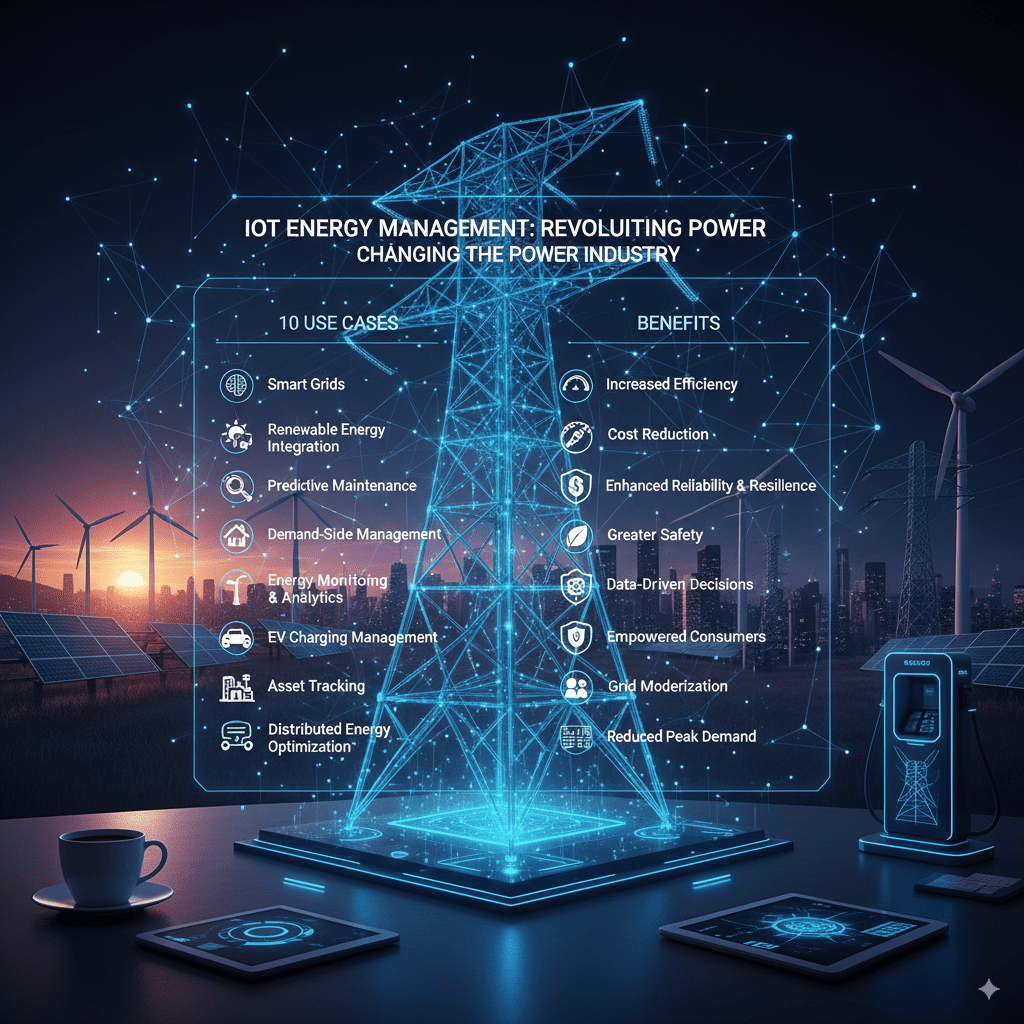
10 Use Cases and Benefits of IoT Energy Management Changing the Power Industry

Introduction The adoption of Internet of Things (IoT) technology is revolutionizing energy management across industries. By enabling real-time monitoring, automation, and data-driven optimization, IoT solutions help reduce costs, increase efficiency, and support sustainability goals. In the dynamically evolving power industry, IoT is a game-changer, transforming how energy is generated, distributed, and consumed. Here are 10 impactful IoT use cases in energy management and the benefits that are reshaping the power landscape in 2025. 1. Smart Commercial Buildings IoT devices optimize lighting, HVAC systems, and energy consumption based on occupancy and time of day. Automated control reduces unnecessary energy use and cuts costs in offices, warehouses, and retail spaces. 2. Smart Metering and Real-Time Energy Monitoring IoT-enabled smart meters provide granular usage data for consumers and utilities. This helps track energy consumption patterns, detect inefficiencies, and optimize demand response strategies. 3. Predictive Maintenance for Energy Assets IoT sensors monitor equipment health indicators such as temperature and vibration to anticipate failures before they occur, reducing downtime and maintenance costs. 4. Automated Energy Optimization By analyzing real-time data on environmental conditions and usage, IoT systems can dynamically adjust energy consumption, such as dimming lights or modulating HVAC, resulting in efficient resource use. 5. Integration of Renewable Energy Sources IoT manages and monitors solar panels, wind turbines, and other green energy assets. It enables smarter distribution, load balancing, and storage, supporting grid stability and sustainability. 6. Demand Response Management Utilities leverage IoT data to adjust supply dynamically in response to consumer demand spikes, minimizing blackouts and optimizing grid performance. 7. Energy Theft and Fault Detection IoT sensors detect anomalies indicating theft or faults in the grid infrastructure, improving security and reducing revenue losses. 8. Grid Automation and Remote Control IoT-enabled automation allows utilities to remotely monitor and manage substations, transformers, and distribution networks, improving reliability and reducing operating costs. 9. Asset Lifecycle Management IoT tracks energy infrastructure usage metrics and conditions to optimize replacements, upgrades, and budgeting, extending asset life and enhancing ROI. 10. Enhanced Consumer Engagement Consumers receive actionable insights through IoT-powered apps and devices, promoting energy-saving behaviors and enabling participation in energy markets (e.g., trading surplus solar energy). Benefits Cost Savings: Reduced energy waste cuts operational expenses. Energy Efficiency: Optimized consumption and supply balancing enhance system performance. Sustainability: Supports green energy adoption and reduces carbon footprint. Operational Transparency: Real-time data improves decision-making and regulatory compliance. Improved Reliability: Predictive maintenance and fault detection minimize outages. User Empowerment: Engages consumers in managing their energy usage actively. Conclusion IoT energy management is a cornerstone of the future power industry—creating smarter, cleaner, and more resilient energy ecosystems. Businesses, utilities, and consumers alike stand to benefit from adopting connected energy solutions and leveraging data-driven insights. For expert guidance on integrating IoT and AI into energy management, explore TechOTD AI Services and stay updated with innovations on the TechOTD Blog. Would you like a detailed technical overview or case studies illustrating IoT impact in energy?# 10 Use Cases and Benefits of IoT Energy Management Changing the Power Industry Introduction The adoption of Internet of Things (IoT) technology is revolutionizing energy management across industries. By enabling real-time monitoring, automation, and data-driven optimization, IoT solutions help reduce costs, increase efficiency, and support sustainability goals. In the dynamically evolving power industry, IoT is a game-changer, transforming how energy is generated, distributed, and consumed. Here are 10 impactful IoT use cases in energy management and the benefits that are reshaping the power landscape in 2025. 1. Smart Commercial Buildings IoT devices optimize lighting, HVAC systems, and energy consumption based on occupancy and time of day. Automated control reduces unnecessary energy use and cuts costs in offices, warehouses, and retail spaces. 2. Smart Metering and Real-Time Energy Monitoring IoT-enabled smart meters provide granular usage data for consumers and utilities. This helps track energy consumption patterns, detect inefficiencies, and optimize demand response strategies. 3. Predictive Maintenance for Energy Assets IoT sensors monitor equipment health indicators such as temperature and vibration to anticipate failures before they occur, reducing downtime and maintenance costs. 4. Automated Energy Optimization By analyzing real-time data on environmental conditions and usage, IoT systems can dynamically adjust energy consumption, such as dimming lights or modulating HVAC, resulting in efficient resource use. 5. Integration of Renewable Energy Sources IoT manages and monitors solar panels, wind turbines, and other green energy assets. It enables smarter distribution, load balancing, and storage, supporting grid stability and sustainability. 6. Demand Response Management Utilities leverage IoT data to adjust supply dynamically in response to consumer demand spikes, minimizing blackouts and optimizing grid performance. 7. Energy Theft and Fault Detection IoT sensors detect anomalies indicating theft or faults in the grid infrastructure, improving security and reducing revenue losses. 8. Grid Automation and Remote Control IoT-enabled automation allows utilities to remotely monitor and manage substations, transformers, and distribution networks, improving reliability and reducing operating costs. 9. Asset Lifecycle Management IoT tracks energy infrastructure usage metrics and conditions to optimize replacements, upgrades, and budgeting, extending asset life and enhancing ROI. 10. Enhanced Consumer Engagement Consumers receive actionable insights through IoT-powered apps and devices, promoting energy-saving behaviors and enabling participation in energy markets (e.g., trading surplus solar energy). Benefits Cost Savings: Reduced energy waste cuts operational expenses. Energy Efficiency: Optimized consumption and supply balancing enhance system performance. Sustainability: Supports green energy adoption and reduces carbon footprint. Operational Transparency: Real-time data improves decision-making and regulatory compliance. Improved Reliability: Predictive maintenance and fault detection minimize outages. User Empowerment: Engages consumers in managing their energy usage actively. > Conclusion IoT energy management is a cornerstone of the future power industry—creating smarter, cleaner, and more resilient energy ecosystems. Businesses, utilities, and consumers alike stand to benefit from adopting connected energy solutions and leveraging data-driven insights. For expert guidance on integrating IoT and AI into energy management, explore TechOTD AI Services and stay updated with innovations on the TechOTD Blog.

Internet of Things, Uncategorized

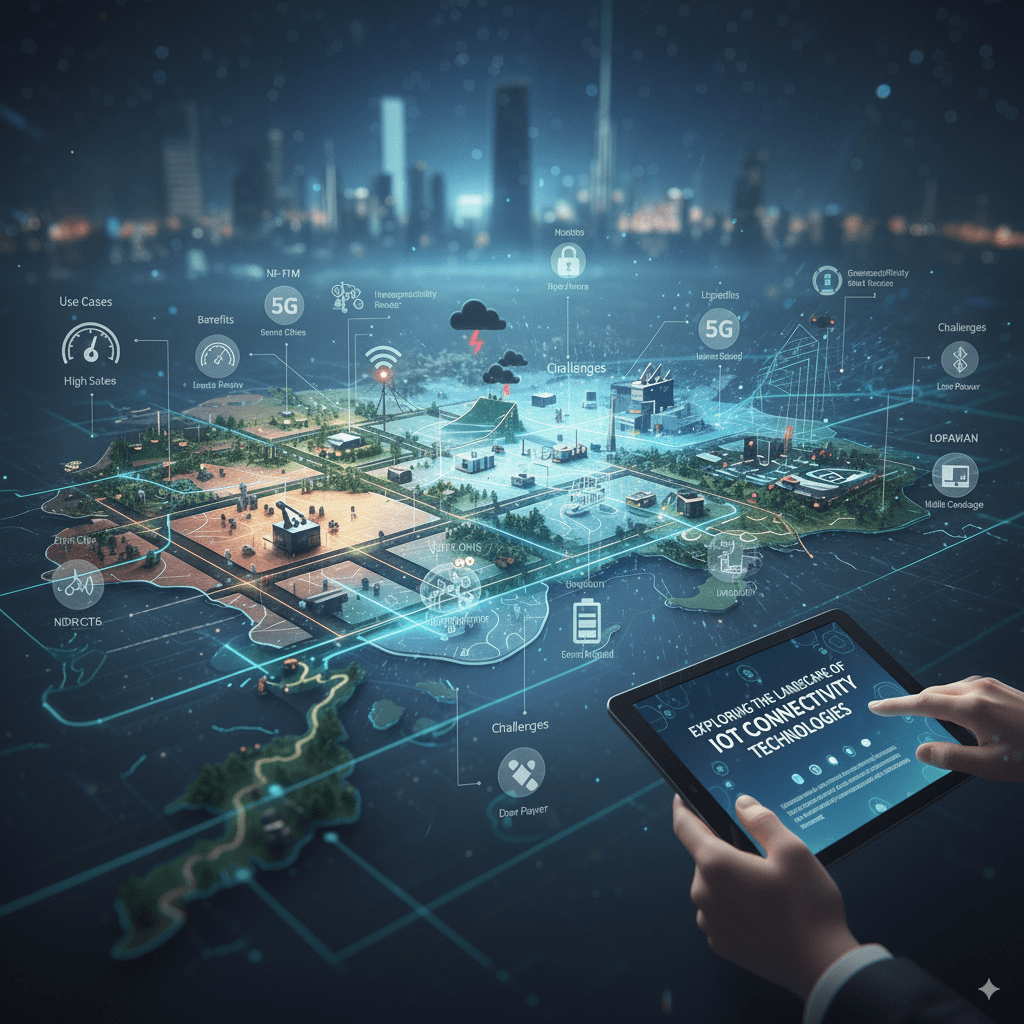
Exploring the Landscape of IoT Connectivity Technologies: Benefits, Use Cases, and Challenges

Introduction The Internet of Things (IoT) is no longer a future vision—it’s an essential driver of digital transformation in 2025, fueling everything from smart homes to smart cities, factories, healthcare, and more. At the heart of IoT’s growth lies connectivity—the bridge between billions of devices sensing, sharing, and acting on data. The choice of IoT connectivity technology profoundly shapes project costs, speed, coverage, scalability, and security. Let’s explore the main categories of IoT connectivity, their benefits, real-world use cases, and the critical challenges organizations face while deploying at scale. Types of IoT Connectivity Technologies Technology Range Power Usage Speed Typical Use Cases Wi-Fi Short-Medium High High Smart homes, offices, retail systems Bluetooth Short Low Moderate Wearables, medical sensors, asset tags Zigbee/Z-Wave Short Very low Low Smart homes, automation, lighting Cellular (2G-5G) High Moderate-High High Vehicles, public infrastructure LPWAN (LoRaWAN, NB-IoT) Long Ultra-low Low-Moderate Agriculture, utilities, remote assets Satellite Global High Moderate Remote monitoring, maritime, aviation Ethernet Local Low Very High Industrial, manufacturing plants RFID/NFC Ultra-short Low Low Inventory tracking, access control Benefits of IoT Connectivity Technologies Seamless Data Exchange: IoT connectivity enables always-on, real-time data transfer—powering automation and intelligent decisions. Interoperability: Modern standards like Wi-Fi, Bluetooth, and LPWAN protocols allow devices from various manufacturers to collaborate across industries. Scalability: Cellular and LPWAN technologies support millions of simultaneous device connections, vital for smart cities and industrial IoT. Remote Management: Satellite, LPWAN, and cellular make it possible to manage assets far from conventional networks, unlocking new remote and global applications. Energy Efficiency: Protocols like Zigbee, Bluetooth Low Energy, and LoRaWAN are optimized for low power, making battery-powered sensor networks practical. Practical Use Cases Across Industries Smart Cities: Traffic lights, surveillance cameras, air quality sensors, and public safety systems use cellular, LPWAN, and Wi-Fi to create intelligent, responsive cities—like Seoul’s AI-based traffic management. Manufacturing & Industry (IIoT): Predictive maintenance, robotics, and digital twins use Ethernet, Wi-Fi, and increasingly 5G for real-time machine status, cutting downtime and increasing efficiency. Healthcare: Wearable medical devices and patient monitoring rely on Bluetooth, Wi-Fi, and cellular for constant health updates and remote diagnostics. Agriculture: LoRaWAN and NB-IoT connect soil sensors, weather stations, and livestock trackers across wide expanses, enabling precision farming and livestock management. Automotive: Cellular and satellite enable fleet tracking, vehicle telemetry, and autonomous driving features, supporting safety and optimal logistics. Retail & Logistics: RFID, NFC, and Wi-Fi drive inventory management, cashless payments, and supply chain transparency. Key Challenges in IoT Connectivity Security & Privacy: With so many endpoints and constant data transfer, IoT is a high-value target for cyberattacks. Securing the pipeline, authenticating devices, and safeguarding sensitive data are top priorities. Interoperability: Diverse protocols, proprietary systems, and inconsistent standards can make large-scale integration complex and costly. Power Management: Many IoT devices are deployed in inaccessible locations. Ensuring sufficient battery life or energy harvesting is a technical hurdle. Scalability and Cost: Cellular and satellite offer global range but often with higher subscription and operational costs. Scaling networks without excessive costs requires careful planning. Network Congestion & Latency: As millions of devices transmit simultaneously, ensuring low-latency, reliable communication—especially in mission-critical scenarios—can be difficult. The rollout of 5G and AI-enhanced traffic management are addressing these challenges. Conclusion The evolving IoT landscape in 2025 is powered by a diverse suite of connectivity technologies—each with unique trade-offs. Organizations planning IoT deployments should assess their use case requirements for scale, range, energy, and cost, then select the right connectivity mix. Despite challenges, the benefits—greater efficiency, actionable insight, seamless automation, and new business models—are transforming industries and daily life. FAQs Q1: What’s the best IoT connectivity technology for smart agriculture? LPWAN technologies like LoRaWAN and NB-IoT offer long range and low energy use, ideal for fields and remote sites. Q2: Are 5G and IoT linked? Yes. 5G’s speed and low latency are unlocking real-time, large-scale IoT, such as connected vehicles and smart cities. Q3: What is the main security concern with IoT connectivity? The vast attack surface created by billions of endpoints, making robust network security essential. Q4: Can IoT devices work offline? Some do, but most applications require regular connectivity for updates, control, or analytics. Q5: Which technology is most energy-efficient for battery-powered IoT sensors? LoRaWAN, Zigbee, and Bluetooth LE are top choices due to their low-power protocols.

Internet of Things

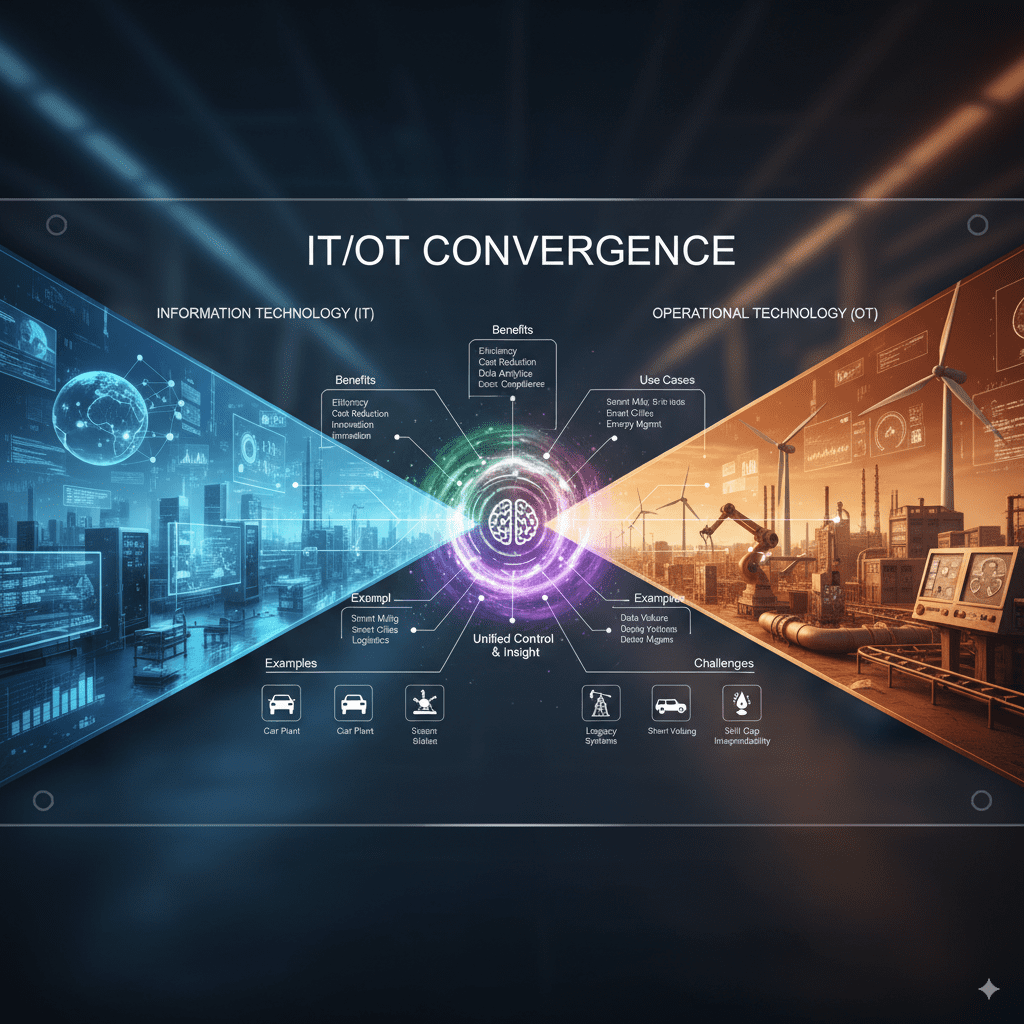
IT/OT Convergence: Benefits, Use Cases, Examples, and Challenges

Introduction The digital transformation wave has brought about the critical integration of Information Technology (IT) and Operational Technology (OT), commonly referred to as IT/OT Convergence. IT encompasses enterprise systems, software applications, and data centers, focusing on business and information processing. OT, on the other hand, involves hardware and software that monitor or control physical devices in industries such as manufacturing, energy, utilities, and transportation. Bringing IT and OT together unlocks tremendous value, yet requires overcoming unique challenges linked to security, culture, interoperability, and operational continuity. This blog provides an in-depth exploration of IT/OT convergence, outlining its benefits, key use cases across industries, real-life examples, and challenges to anticipate. Understanding IT and OT: The Basics Information Technology (IT): Includes systems like ERP, CRM, cybersecurity, cloud computing, and data analytics platforms that manage organizational information assets. Operational Technology (OT): Encompasses devices and systems such as PLCs (Programmable Logic Controllers), SCADA (Supervisory Control and Data Acquisition), sensors, and industrial control systems that manage physical processes. Historically, IT and OT operated in isolation with distinct goals and technologies, but the rising demand for real-time insights, automation, and efficiency drives their integration. Benefits of IT/OT Convergence 1. Enhanced Operational Efficiency Integrating IT data analytics with real-time OT sensor data provides end-to-end visibility of operations, enabling smarter decision-making and process optimization. 2. Improved Asset Management Unified IT/OT data facilitates predictive maintenance, reducing downtime and extending equipment lifespan. Real-time monitoring coupled with AI-powered analytics from TechOTD AI Services enhances asset performance. 3. Increased Agility and Innovation Converged infrastructures support rapid prototyping, automation, and deployment of innovative services that boost competitiveness. 4. Strengthened Security Posture Coordinated IT and OT cybersecurity strategies bolster defense against evolving cyber threats targeting critical infrastructure. 5. Cost Reduction Automation and data-driven optimizations lead to reduced energy consumption, minimized waste, and workforce efficiencies. 6. Better Compliance and Reporting Unified data streams simplify adherence to regulatory standards and enable accurate, timely compliance reporting. Use Cases of IT/OT Convergence Across Industries Manufacturing Smart factories leverage IT/OT convergence for connected supply chains, real-time quality control, and adaptive production lines. AI-driven defect detection and robotic process automation (RPA) improve throughput. Energy & Utilities Grid digital twins combine OT sensor data with IT analytics for real-time monitoring and predictive grid maintenance. Renewable energy integration benefits from converged data to optimize resources and demand response. Transportation & Logistics Fleet management and intelligent transport systems blend IT and OT to optimize routing, vehicle health monitoring, and safety systems. Healthcare Medical device monitoring and hospital IT systems converge to enable continuous patient monitoring and asset tracking. Smart Cities Integrated control of utilities, traffic, and public safety managed through IT/OT networks improves citizen services and sustainability. Real-Life Examples of IT/OT Convergence Siemens Smart Factory: Siemens integrates IT ERP systems with OT manufacturing execution systems for improved productivity and transparency. Duke Energy Smart Grid: Utilizes IT-OT integration for real-time power management and outage prediction. Shell Digital Oilfields: Combines geological sensor OT data with IT analytics to optimize extraction and predictive maintenance. TechOTD AI Solutions: Employ advanced AI models that leverage IT/OT data convergence to enhance operational efficiency, predictive analytics, and blockchain-enabled security (TechOTD Blockchain Integration). Challenges in IT/OT Convergence Cultural Differences: IT and OT departments often have different mindsets and priorities, complicating collaboration. Security Risks: OT devices may lack robust security, making integration a potential vulnerability. Legacy Systems: Older OT equipment can be difficult to integrate with modern IT architectures. Data Silos: Disparate data formats and systems hinder seamless data sharing. Compliance Complexity: Multiple regulatory frameworks require unified strategies. Skill Gaps: Bridging skills between IT and OT domains demands investment in training and recruitment. Strategies for Successful IT/OT Convergence Foster a unified governance structure involving cross-functional teams. Invest in scalable, interoperable technology platforms. Prioritize cybersecurity frameworks addressing both IT and OT risks. Implement advanced AI and predictive analytics tools, such as those featured at TechOTD AI Services. Employ blockchain for secure, auditable data sharing (TechOTD Blockchain Integration). Train employees and promote a culture of collaboration. Partner with experienced technology consultancies focused on IT/OT synergy (How We Work). The Future of IT/OT Convergence Technologies like 5G, edge computing, digital twins, and large language models (LLMs in Finance) will accelerate IT/OT integration. The fusion of AI-powered customer journey analytics (Seamless Customer Journeys) and IoT with blockchain-backed security and transparency will shape the next phase of digital enterprise and industrial innovation. Conclusion IT/OT convergence is no longer optional but essential for organizations aiming to compete, innovate, and operate efficiently in the digital age. Despite inherent challenges, its benefits—from improved efficiency to enhanced security—are driving adoption globally. For best practices, AI-enabled optimization, blockchain integration, and expert guidance, partner with TechOTD AI Services and stay updated with the latest in digital innovation on the TechOTD Blog.

Internet of Things

How IoT is Powering the Future of Telecommunications: Opportunities and Challenges

How IoT is Powering the Future of Telecommunications: Opportunities and Challenges The telecommunications industry has always been at the forefront of technological innovation. From the days of landline telephones to the rise of mobile networks, telecom has continuously evolved to meet the growing demands of consumers and enterprises. Today, the Internet of Things (IoT) is driving the next big transformation. By connecting billions of devices, IoT is reshaping how telecom companies deliver services, optimize operations, and create new revenue models. In this article, we will explore how IoT is revolutionizing the telecommunications sector, the opportunities it presents, the challenges to overcome, and what the future holds. Understanding IoT in Telecommunications The Internet of Things (IoT) refers to a vast ecosystem of interconnected devices that communicate and exchange data over the internet. In telecommunications, IoT extends beyond smartphones to include smart home devices, industrial sensors, healthcare monitors, autonomous vehicles, and more. Telecom companies serve as the backbone of this ecosystem, providing the connectivity that allows IoT devices to function seamlessly. With the rollout of 5G networks, telecom operators can now deliver ultra-low latency, high bandwidth, and massive device connectivity — all of which are crucial for IoT adoption. This makes telecom not just a service provider but also a key enabler of smart ecosystems across industries. Opportunities for Telecommunications through IoT 1. New Revenue Streams IoT opens up multiple monetization opportunities for telecom providers: IoT Data Plans: Similar to mobile plans, telecoms can provide subscription-based IoT connectivity packages for enterprises. Managed IoT Services: Offering end-to-end solutions like device management, analytics, and security. Vertical-Specific Solutions: From smart cities to healthcare and logistics, telecom companies can tailor IoT services to industry needs. 2. Enhanced Network Efficiency IoT helps telecom companies monitor and optimize their own infrastructure. For example: Sensors can detect network congestion in real time. Predictive maintenance reduces downtime of critical network equipment. Automated traffic management improves service quality. 3. Smart Cities and Infrastructure Telecom providers can partner with governments to implement smart city projects powered by IoT: Smart lighting and waste management systems. Intelligent traffic management. Energy-efficient utilities. 4. Enterprise Solutions IoT-enabled telecom services offer businesses the ability to: Track assets in logistics. Monitor industrial equipment remotely. Enhance customer service with connected products. 5. 5G and IoT Synergy 5G networks amplify IoT’s potential by providing faster connectivity and supporting millions of devices simultaneously. This opens opportunities for: Autonomous vehicles. Remote surgeries in healthcare. Real-time industrial automation. Challenges of IoT in Telecommunications Despite the opportunities, telecom operators face significant hurdles in implementing IoT effectively: 1. Security Risks IoT devices often have weak security protocols, making them vulnerable to cyberattacks. Telecom providers must ensure robust network and data security to protect consumers and enterprises. 2. Scalability As billions of devices connect to networks, scalability becomes a challenge. Telecoms need to ensure their infrastructure can handle massive amounts of data without service degradation. 3. Interoperability With numerous device manufacturers, ensuring seamless communication between different IoT devices and platforms remains a challenge. 4. High Implementation Costs Deploying IoT infrastructure, upgrading networks, and managing devices require significant investment, which can be a barrier for smaller telecom operators. 5. Regulatory and Compliance Issues Different regions have varied rules about data privacy, security, and network management. Telecom providers must navigate this complex regulatory environment. Real-World Applications of IoT in Telecom Smart Homes: Telecom operators provide IoT-powered home automation solutions, including connected cameras, thermostats, and energy management systems. Healthcare: IoT enables remote patient monitoring and telemedicine, supported by telecom infrastructure. Automotive: Connected vehicles rely on telecom networks for real-time navigation, safety alerts, and predictive maintenance. Industrial IoT (IIoT): Telecom companies support factories with connected machinery, reducing downtime and improving efficiency. The Future of IoT in Telecommunications Looking ahead, IoT will continue to redefine telecom. Key trends include: Edge Computing: Moving data processing closer to devices to reduce latency. AI Integration: Leveraging artificial intelligence to analyze IoT data and automate decisions. Blockchain for IoT Security: Securing IoT networks through decentralized technology (see our article on Blockchain Integration in Business). Industry-Specific IoT Platforms: Telecom companies may develop dedicated platforms for industries like healthcare, finance, and logistics. FAQs on IoT in Telecommunications Q1. What role does 5G play in IoT adoption? 5G provides ultra-fast connectivity, low latency, and massive device support, which are critical for IoT applications like autonomous driving, smart cities, and remote healthcare. Q2. Is IoT secure enough for telecom use? IoT security is a concern, but with advanced encryption, blockchain integration, and continuous monitoring, telecom companies can significantly reduce risks. Q3. How can telecom companies monetize IoT? They can introduce IoT-specific data plans, offer managed services, and create tailored solutions for industries like logistics, healthcare, and retail. Q4. What industries benefit most from IoT-powered telecom? Healthcare, automotive, smart cities, manufacturing, and logistics are among the industries seeing the most significant benefits. Q5. What is the biggest challenge for IoT in telecom? Scalability and security remain the biggest hurdles, especially as billions of devices connect simultaneously. Conclusion The Internet of Things is more than just a technological buzzword; it is the driving force behind the future of telecommunications. While challenges such as security, scalability, and interoperability remain, the opportunities far outweigh the risks. Telecom operators that strategically embrace IoT will not only enhance their infrastructure but also unlock new revenue streams and play a central role in shaping a smarter, more connected world. To explore more about how emerging technologies are reshaping industries, visit our blogs on AI in Customer Journeys, Predictive Analytics, Technology in Education, and React Native vs Swift. You can also learn more about our approach at How We Work, explore Mobile App Services, or read our latest updates on the TechOTD Blog. For more tech insights, check our second page here and explore the article on Best Gadgets for Programmers in 2025. By strategically leveraging IoT, the telecom industry will not just power connections but also shape the digital future.

Internet of Things

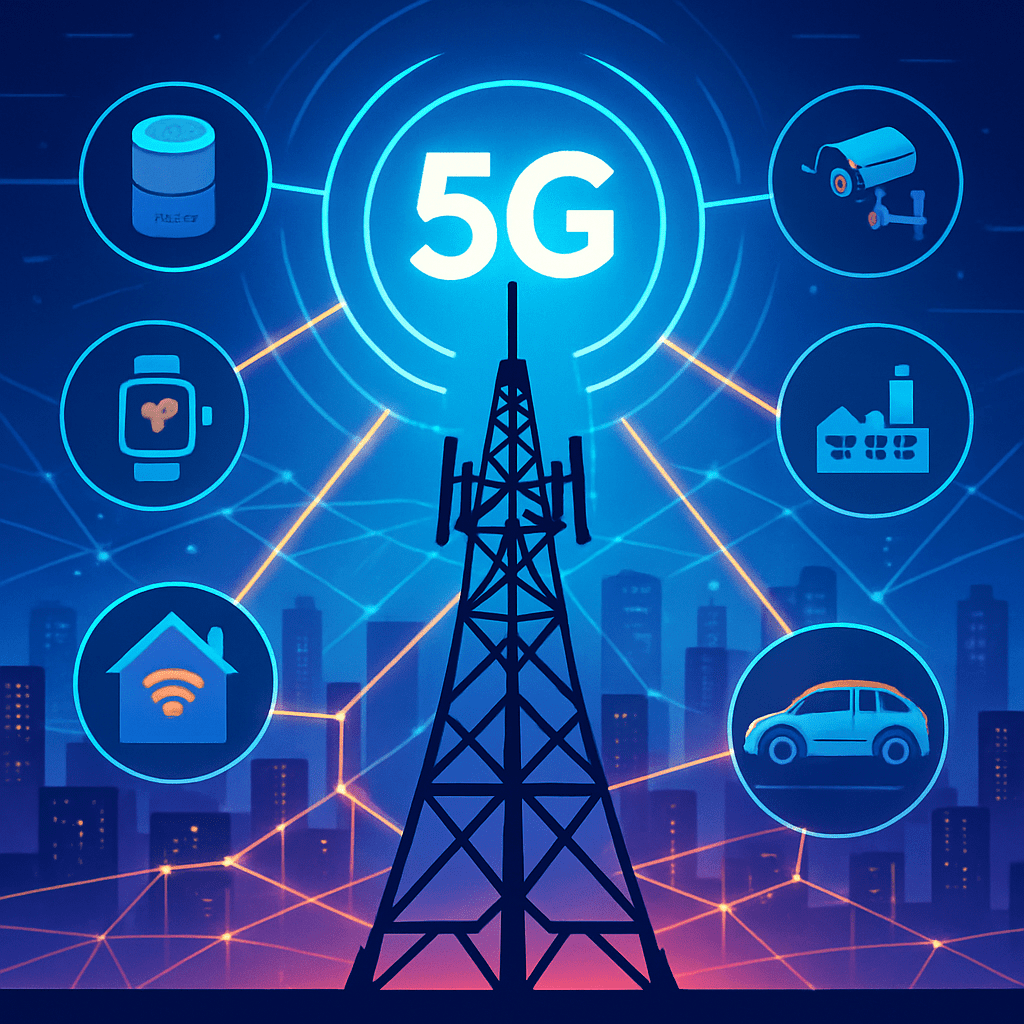
IoT in Telecom: From Smart Networks to 5G-Powered Innovation

Introduction The convergence of Internet of Things (IoT) with telecom infrastructure is transforming communication networks into intelligent, responsive ecosystems. As billions of connected devices rise worldwide, telecom providers are evolving to support smart networks empowered by 5G technology. This fusion is ushering in an era of real-time data exchange, ultra-low latency, and unprecedented connectivity that fuels innovations across industries. This blog explores how IoT reshapes telecom from traditional connectivity to intelligent, automated networks, the role of 5G in powering this evolution, and emerging opportunities for businesses adapting to this technology wave. This discussion reflects insights from leading AI and telecom research, drawing on resources like TechOTD’s AI services and industry trends from their tech blog. What is IoT in Telecom? IoT in telecom refers to the vast network of connected devices communicating over telecom infrastructure to exchange data and automate processes. This goes beyond traditional smartphones to include sensors, wearables, smart meters, connected vehicles, and more. Telecom operators provide the backbone connectivity ensuring these devices remain online with reliable bandwidth, security, and management. Key features include: Massive device connectivity: Efficiently connecting billions of IoT endpoints. Low latency communication: Supporting real-time applications like autonomous vehicles and remote surgery. Network slicing: Custom virtual networks tailored to specific IoT use cases. IoT transforms telecom from a simple communication provider to a platform operator enabling intelligent services. The Role of Smart Networks Smart networks integrate AI, machine learning, and automation into telecom infrastructure, optimizing performance and enabling new intelligent applications. Some important capabilities include: Dynamic network management: AI algorithms monitor network health to predict failures and optimize routing. Automated provisioning: Devices and connections are configured on-demand without manual intervention. Enhanced security: AI-driven threat detection protects IoT endpoints against increasingly complex cyber-attacks. Smart networks elevate the telecom role, powering innovations like smart cities, Industrial IoT (IIoT), and connected healthcare. Explore AI’s role in telecom innovations at Seamless Customer Journeys with AI. 5G: The Catalyst for IoT Growth in Telecom 5G technology revolutionizes telecom’s capacity to support and scale IoT applications by offering: Higher bandwidth: Up to 100x faster data speeds enable rich media streaming and instantaneous data exchange. Ultra-low latency: End-to-end latency as low as 1 ms supports mission-critical applications. Massive IoT connections: Network efficiency accommodates 1 million+ devices per square kilometer. Improved energy efficiency: Prolongs battery life for IoT devices enhancing deployment feasibility. With 5G, telecom networks become an engine for smart industries, cities, and daily life integration. Discover 5G-powered software insights in TechOTD’s mobile solutions here: Mobile Apps Services. Use Cases: How IoT and 5G Transform Telecom Solutions 1. Smart Cities and Infrastructure IoT sensors integrated with 5G networks deliver real-time monitoring and automation for public services such as traffic management, waste disposal, and environmental sensing. Cities benefit from optimized resource usage and reduced operational costs. 2. Connected Healthcare Remote patient monitoring devices continuously send health data over secure, low-latency 5G telecom networks to hospitals, enabling early interventions and ongoing care without hospital visits. 3. Industrial Automation (IIoT) Factories deploy IoT-enabled machines connected through 5G, allowing predictive maintenance, enhanced safety, and streamlined supply chains powered by real-time data analytics and AI. 4. Autonomous Vehicles and Transport 5G’s ultra-low latency supports vehicle-to-everything (V2X) communication, enabling autonomous cars to interact safely with surrounding traffic, infrastructure, and pedestrians. Challenges and Opportunities in Implementing IoT in Telecom Challenges Security: IoT devices increase the attack surface, necessitating robust AI-powered security measures. Interoperability: Diverse device standards require unified telecom protocols and advanced integration frameworks. Data Management: Massive data flows demand scalable analytics platforms with edge computing. Opportunities Telecom providers can expand beyond voice/data services into managed IoT solutions and AI-powered analytics offerings. AI consulting and custom models help optimize IoT network deployment and predictive maintenance. Telecom’s integration with blockchain enhances IoT data transparency and security, as seen in Dubai’s pioneering projects. Learn more about this integration: How Blockchain Integration Is Optimizing Business Processes in Dubai Integrating AI and Analytics in IoT Telecom Networks AI technologies embedded within telecom IoT frameworks enable predictive analytics, anomaly detection, and operational automation that deliver superior network performance. Examples include: Trend analysis to predict network congestion before it happens. Risk assessment for IoT endpoint security vulnerabilities. Sentiment analysis based on user data to customize telecom service offerings. TechOTD’s AI consulting and custom solution development empower telecom businesses to fully leverage IoT insights: TechOTD AI Services. How Telecom Businesses Can Prepare for IoT and 5G Evolution Invest in AI-powered workflow automation and process monitoring to manage complex IoT ecosystems. Design custom AI models for network optimization and customer experience enhancement. Collaborate with technology partners skilled in AI, cloud, and telecom integration—such as TechOTD’s expert teams. Develop secure, compliant IoT solutions with real-time analytics capabilities. Learn about the structured approach TechOTD follows for AI and IoT integration here: How We Work at TechOTD. The Future: IoT, Telecom, AI, and Beyond The future is bright for IoT-enabled telecom, with innovations accelerating thanks to AI advancements, scalable cloud computing, and increasing 5G adoption. Areas to watch include: Integration of Large Language Models (LLMs) for enhanced telecom customer support and predictive maintenance. See examples in this domain: Large Language Models in Finance: Benefits and Applications IoT empowerment for education technology, blending AR and immersive learning via 5G networks. Learn more about tech impact on education: Technology Impact on Education: An Ultimate Guide Adoption of smart gadgets designed for telecom programmers and IoT developers to streamline innovation. Check out the latest tools: Best Gadgets for Programmers in 2025. Conclusion IoT’s integration in telecom networks, supercharged by 5G and AI, is not just futuristic—it is already revolutionizing connectivity paradigms across industries. Smart networks enable new service models, cost efficiencies, and personalized experiences, while AI and blockchain ensure security and scalability. Telecom operators embracing this transformation will lead in the next digital wave. To explore practical AI, cloud, and IoT solutions tailored for telecom, connect with TechOTD’s experts today for a free consultation: TechOTD Mobile Apps & AI Services For deeper insights across related domains, visit TechOTD’s extensive blog library: TechOTD Tech and Innovation Blog. FAQs Q1: What role does 5G play in IoT telecom innovation? 5G provides ultra-fast speeds, massive connectivity, and low latency essential for supporting

Internet of Things

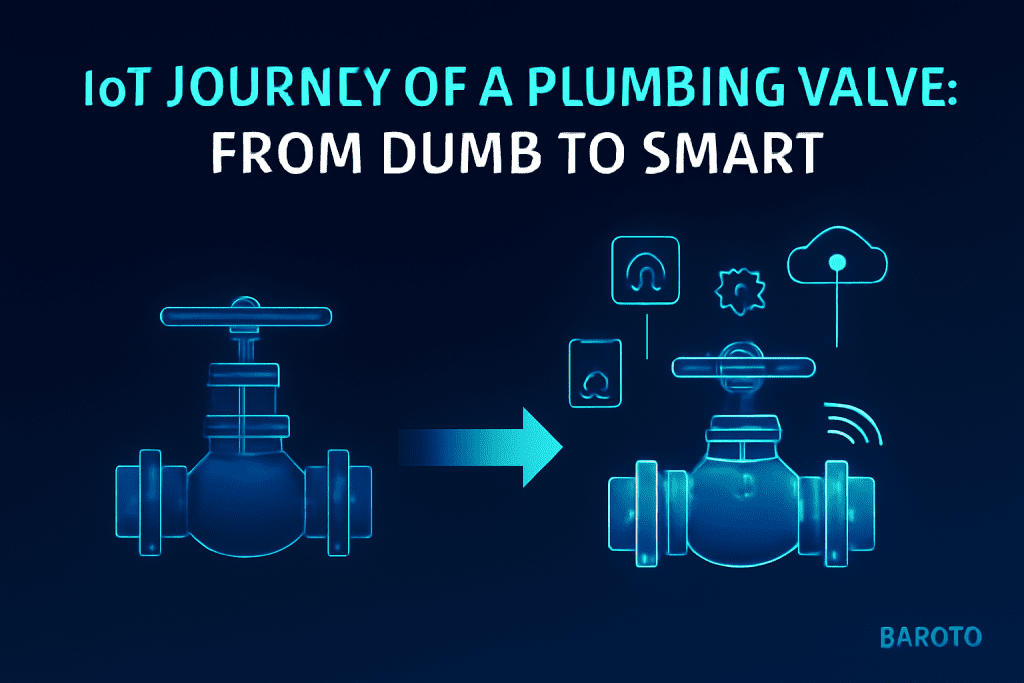
IoT Journey of a Plumbing Valve: From Dumb to Smart—A Hardwork Product Story

Introduction Traditionally, plumbing valves were mere mechanical switches—simple, robust, and entirely manual. But with the rise of the Internet of Things (IoT), these “dumb” products are undergoing a spectacular digital transformation, turning into intelligent, connected, and self-optimizing components of modern water systems. In this blog, we chronicle the real-world journey of a plumbing valve—from initial concept to becoming a smart hardware product—and show how the convergence of sensors, cloud connectivity, and data analytics enables new levels of efficiency, sustainability, and value. 1. Phase One: The Age of Dumb Valves Manual operation: Requires on-site access, often leading to delayed response for leaks or issues. Lack of data: No usage tracking, failure prediction, or remote diagnostics. Constant supervision: Human monitoring needed to ensure systems function as intended. Maintenance challenges: Failures are often detected late, causing water loss or property damage. 2. The Trigger: What Problems Spark Smart Plumbing Innovation? Water wastage and costly leaks: Manual valves can’t respond instantly to unexpected bursts or inefficiencies. Regulatory pressure and sustainability goals: Cities and organizations demand more visibility and control over water consumption. Labor and maintenance costs: Manual checks are labor-intensive and prone to human error. 3. Reimagining the Valve: Digital Foundations Embedded Sensors: Smart valves are equipped with flow, pressure, and sometimes chemical sensors, enabling real-time monitoring of water conditions at every point in the system. Wireless Connectivity: Modern smart valves feature WiFi, ZigBee, LoRa, or cellular modules that communicate with building management systems or mobile apps. Microcontrollers & Actuators: Allow the valve to be operated remotely and respond autonomously to sensor data (e.g., shutting off when a leak is detected). 4. The IoT Plumbing Valve Solution: Capabilities Unleashed Remote Monitoring & Control: Facility managers and homeowners can check valve status, flow rates, and issue commands from a smartphone or dashboard—anywhere, anytime. Automated Alerts: Receive instant notifications for leaks, excessive flow, or freezing conditions, enabling rapid response and minimizing damage. Predictive Maintenance & Analytics: The combination of usage data and AI analytics supports proactive servicing, optimizing both performance and lifespan of plumbing assets. Integration with Smart Ecosystems: Connect valves to fire suppression, energy management, or home automation platforms for unified, responsive building operations. 5. Real-World Impact Water Utilities: Deploy smart valves to monitor city-wide systems, reduce non-revenue water through early leak detection, and optimize pressure to minimize bursts. Commercial Buildings: Achieve regulatory compliance, reduce operational costs, and deliver greener, more responsive facilities. Residential Homes: Prevent costly flood damage and empower owners to actively manage water usage and conserve resources. 6. The Future: Smarter, Safer, Sustainable AI + Digital Twins: Next-gen smart valves use digital twins and AI to simulate and optimize real-world performance, preempting problems before they happen. Edge Computing: Smart valves are becoming more autonomous, running analytics on-device for instant decision-making. Self-Learning Systems: Over time, smart valves adapt to usage patterns, environmental changes, and unique plumbing demands—delivering truly “intelligent” water management. Conclusion The IoT-driven evolution of plumbing valves is a story of hard work, innovation, and digital transformation. What started as a humble manual component is now central to smart buildings, sustainable utilities, and efficient, resilient infrastructure. Businesses and homeowners ready to harness the full value of IoT plumbing systems—integrating smart sensors, cloud dashboards, and AI analytics—will drive the next phase of efficiency and water wisdom. Interested in building, upgrading, or monitoring your own smart plumbing systems? Partner with the IoT and web development leaders at TechOTD, leverage advanced analytics with AI solutions, or explore industry-specific innovations at Industry Solutions. Discover flexible, scalable, and secure digital plumbing control—start your journey today! FAQ 1. What makes a plumbing valve “smart”? Sensors, actuators, and wireless connectivity allow for real-time data, remote control, and autonomous behavior in response to leaks or usage patterns. 2. What are the biggest benefits of IoT plumbing valves? Instant leak detection, predictive maintenance, water conservation, and remote monitoring/control. 3. Can smart valves integrate with other smart home or building systems? Yes! Modern platforms enable integration with fire, HVAC, and central building management systems for holistic control. 4. Are smart valves cost-effective for small buildings or homes? While initial investment is higher than standard valves, long-term savings from avoided damage, lower labor, and water efficiency justify the expense. 5. How do I get started with smart plumbing technology? Contact experts like Techotd for a tailored solution that fits your property, budget, and sustainability goals.

Scroll to Top