machine learning

Frontend Developer, machine learning, Uncategorized

“Backendless” isn’t a Myth: The Power of Edge Functions

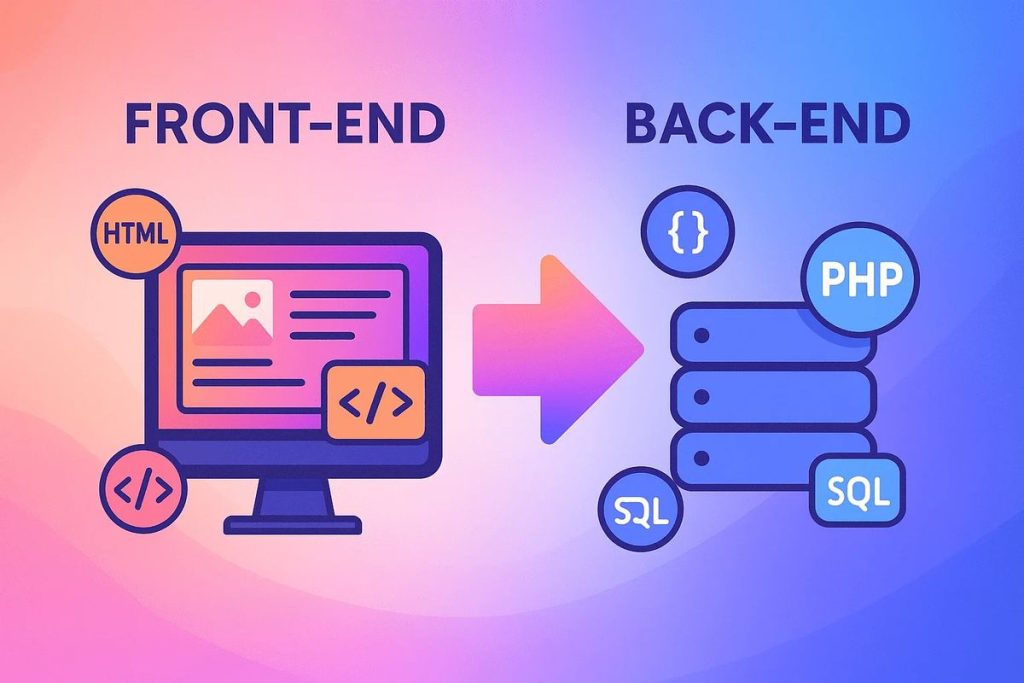
Introduction There was a time, not too long ago, when launching a web app meant wrestling with a giant. You had to provision servers, worry about load balancers, and lose sleep over whether your “US-East-1” instance would lag for a user trying to access your site from London or Mumbai. We eventually moved to “Serverless” (think AWS Lambda), which was a huge step forward. But even then, we were still tethered to specific regions. In 2026, the conversation has shifted again. We’re talking about the Edge. The “Backendless” era doesn’t mean the backend has disappeared—it means the backend has become invisible, lightning-fast, and global by default. What is “The Edge” Anyway? If a traditional server is a massive warehouse in the middle of the country, and Serverless is a local delivery hub, then Edge Computing is like having a tiny, specialized shop on every street corner. Edge Functions (like those from Cloudflare Workers or Vercel) run your code at the “edge” of the network—literally the data center closest to your user. Instead of a request traveling 5,000 miles to a central server and back, it travels 50 miles. We’re talking about cutting response times from seconds to milliseconds. Why “Backendless” is the 2026 Standard For a modern developer, “Backendless” is a philosophy. It’s about focusing on the product, not the plumbing. Here is why this shift is actually happening: The Death of Latency: In the modern web, speed is a feature. If your site takes more than two seconds to load, your conversion rate doesn’t just dip—it craters. Edge functions handle things like authentication, A/B testing, and localization instantly, right at the point of entry. Infinite Scalability (Without the Headache): Because Edge functions are distributed globally, you don’t “scale” them. They are already everywhere. If you go viral and get 1 million hits in an hour, the Edge network handles it without you having to click a single “increase capacity” button. Security by Design: By moving logic to the Edge, you can intercept malicious requests before they ever touch your database. It’s like having a security guard at the front gate instead of at the bedroom door. The Tools Making it Possible You don’t need a PhD in systems architecture to go backendless. The ecosystem in 2026 is incredibly friendly: Supabase & Firebase: These provide the database and auth layers that “just work” with Edge functions. Upstash: For when you need a global Redis database that is as fast as your Edge code. Prisma Accelerate: For connecting your Edge functions to traditional databases without the “cold start” connection lag. A New Way of Thinking The hardest part of going “Backendless” isn’t the code—it’s the mindset shift. You have to stop thinking about your app as a “thing” sitting on a server in Virginia. Instead, you start seeing it as a living, breathing entity that exists everywhere at once. You spend less time on SSH terminals and more time on user experience. You spend less time on infrastructure and more time on the features that actually make your users’ lives better. The “Cold Start” Killer: Why Edge Wins One of the biggest frustrations with traditional Serverless functions (like standard AWS Lambda) is the “cold start.” This happens when your code hasn’t been run in a while, and the cloud provider has to “wake up” a container to execute it. This can add 2–5 seconds of lag—an eternity in web time. Edge Functions play by different rules. Because they run on lightweight “Isolates” (like the V8 engine that powers Chrome) rather than full virtual machines, they start up in roughly 5 milliseconds. Standard Serverless: Wake up → Load OS → Load Runtime → Run Code = Lag. Edge Functions: Run Code = Instant. In 2026, if you’re building a checkout page or a login redirect, that difference is the gap between a sale and a bounce. Practical Strategies: When to go “Backendless” Going backendless doesn’t mean you have to migrate your entire infrastructure overnight. Most developers are taking a “hybrid” approach. Here is how you can start implementing this today: Dynamic Personalization: Use an Edge Function to check a user’s location or browser language and serve a custom version of your homepage without any “flicker” or layout shift. A/B Testing without the JS Bloat: Traditional A/B testing tools (like Optimizely) often slow down the frontend with heavy scripts. With Edge Functions, you can split traffic at the server level. The user gets exactly what they need, and your Google Lighthouse score stays perfect. Authentication Gates: Instead of checking if a user is logged in at the page level (which shows a “loading” state), check at the Edge. If they aren’t authorized, redirect them before the page even begins to render. The Cost Factor: Is it Cheaper? Usually, yes. Because Edge Functions are so lightweight and run so fast, you aren’t paying for “idle time.” You pay for the execution. For most small to mid-sized apps, the “Free Tier” on platforms like Cloudflare or Vercel is so generous that you might not see a bill for months. However, keep in mind that Edge Functions are meant for fast tasks. If you’re doing heavy video encoding or massive data processing, you might still need a “fat” background worker. The trick is knowing which tool to pick for the job. Conclusion: Focus on What Matters The “Backendless” movement isn’t about the technology being gone; it’s about the technology getting out of your way. By leveraging Edge Functions, we are finally reaching a point where the distance between a developer’s idea and a global, high-performance reality is almost zero. If you’re still managing a fleet of traditional servers for a modern web app, it’s time to ask yourself: Are you building a product, or are you just managing a digital museum? The Edge is calling. It’s time to answer. WebAssembly (Wasm): Bringing Desktop Power to the Browser
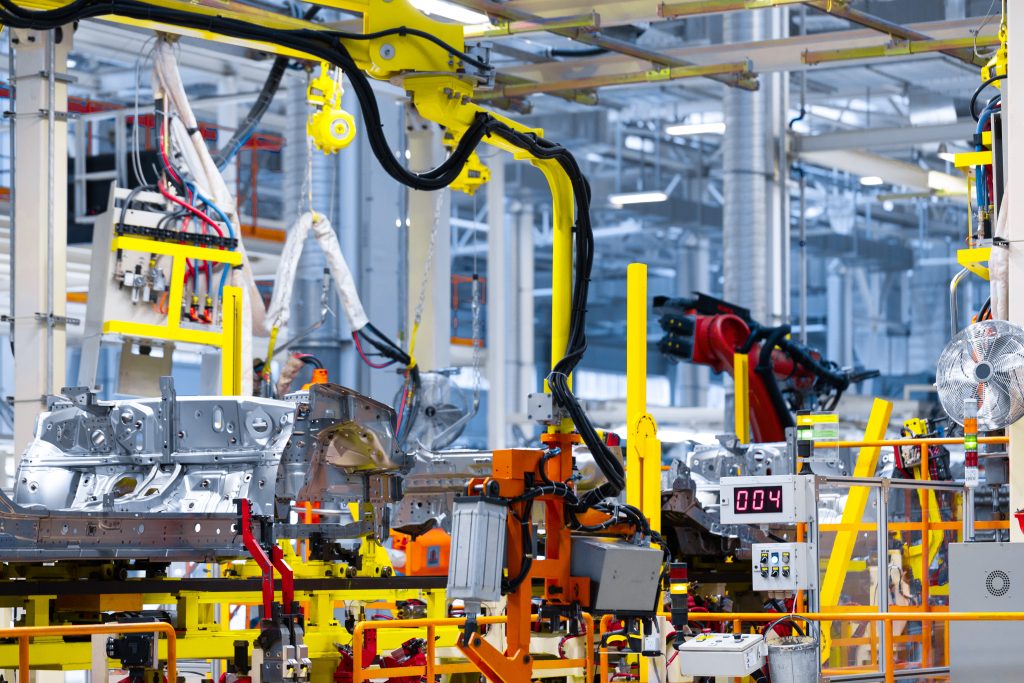

Industrial robotic arms assembling components in a smart factory.
Artificial Intelligence, machine learning

Automation and Robotics: Powering the Future of Work and Industry

Introduction Imagine a world where machines can think, learn, and perform tasks faster, safer, and more accurately than humans. That world isn’t science fiction — it’s happening right now, thanks to automation and robotics. From factory floors to hospitals, logistics hubs to your kitchen, robots and automation systems are revolutionizing how we live and work. They don’t just improve productivity — they redefine what’s possible. This blog explores how automation and robotics are driving innovation, reshaping industries, and creating a future where humans and machines collaborate seamlessly. What Is Automation? Automation refers to the use of technology to perform tasks without human intervention. It’s about replacing repetitive, rule-based processes with smart systems that can work independently — reducing errors and improving speed.  Types of Automation Fixed Automation:Used in mass production lines (e.g., car manufacturing). High volume, low flexibility. Programmable Automation:Machines can be reprogrammed for different tasks. Used in batch production industries. Flexible Automation:Systems quickly adapt to new products or processes. Ideal for industries with frequent design changes. Cognitive Automation (AI-driven):Integrates machine learning and AI for decision-making and self-improvement. Used in customer service bots, predictive maintenance, and data analysis. What Is Robotics? Robotics is a branch of engineering that designs, builds, and operates robots — programmable machines that perform tasks automatically or semi-automatically. Robots combine mechanical components, sensors, actuators, and AI to perform physical actions and make intelligent decisions.  Types of Robots Industrial Robots: Perform assembly, welding, or packaging in factories. Service Robots: Used in healthcare, hospitality, or home cleaning. Autonomous Robots: Navigate environments independently (e.g., drones, self-driving vehicles). Collaborative Robots (Cobots): Work safely alongside humans. Humanoid Robots: Mimic human gestures and expressions. Automation and Robotics in Industry Automation and robotics are the cornerstone of Industry 5.0, the new era of intelligent manufacturing focused on human-machine collaboration.  Manufacturing Robots handle repetitive tasks like assembly, painting, and quality inspection. AI-driven automation predicts equipment failures before they happen. Cobots work side by side with human operators, enhancing safety and precision. Example:Companies like Tesla and BMW use robotic arms for car assembly, improving speed and accuracy. Healthcare Robots assist doctors in surgeries and automate hospital logistics. Surgical robots perform precise operations with minimal invasion. Delivery robots transport medicines and supplies. AI automation manages patient data and diagnostics. Example: The da Vinci Surgical System enables surgeons to perform complex procedures remotely with robotic precision. Logistics and Supply Chain Automation powers warehouse management and delivery systems. Automated Guided Vehicles (AGVs) move materials. Drones deliver goods efficiently. AI systems optimize inventory and routes. Example:Amazon’s fulfillment centers use robots to pick, pack, and ship millions of products daily. Finance and Business Robotic Process Automation (RPA) automates repetitive office tasks like data entry, report generation, and compliance checks. Saves time and reduces human error. Frees employees for higher-value work. Example:Banks use RPA to process loan approvals, detect fraud, and manage accounts. Home and Daily Life From vacuuming robots like Roomba to voice-controlled assistants like Alexa, automation is making homes smarter and lives easier. Smart appliances can learn user habits and operate efficiently, saving energy and effort. The Fusion of AI and Robotics When Artificial Intelligence (AI) meets robotics, machines gain the ability to learn, adapt, and make decisions. Computer vision enables robots to “see” and analyze surroundings. Machine learning helps them improve performance over time. Natural language processing allows them to interact with humans conversationally. Example:Boston Dynamics’ robots like “Atlas” and “Spot” combine AI and robotics to perform complex tasks like running, climbing, and opening doors. Benefits of Automation and Robotics Benefit Description Increased Efficiency Machines can operate 24/7 without fatigue. Precision & Consistency Reduced errors and high-quality output. Safety Robots perform dangerous tasks, reducing workplace injuries. Cost Savings Long-term operational savings after initial setup. Innovation Enables new forms of production and services. Challenges in Automation and Robotics Despite the advantages, challenges exist: Job Displacement: Automation can replace routine tasks. High Initial Investment: Robots and automation systems are costly to deploy. Complex Integration: Requires skilled professionals and system compatibility. Cybersecurity Risks: Connected robots can be vulnerable to hacking. Ethical Dilemmas: Balancing human employment and machine efficiency. However, the Industry 5.0 model focuses on collaboration, not replacement — using robots to assist humans, not eliminate them. The Future of Automation and Robotics The next decade will see automation evolve from mechanical efficiency to intelligent collaboration. Key Future Trends: Cobots in every industry AI-driven autonomous systems Robotics-as-a-Service (RaaS) business models Sustainable automation for green manufacturing Emotional and social robots for healthcare and education Automation and robotics will become integral to every aspect of life — not just replacing humans but enhancing human potential. Conclusion Automation and robotics represent the next leap in human innovation — merging intelligence, precision, and reliability to reshape the future of work. As we enter the Industry 5.0 era, the goal isn’t to remove humans from the equation but to empower them with intelligent machines that amplify creativity, safety, and productivity. The future is not man versus machine — it’s man with machine, building a smarter, more efficient world together. FAQs 1. What is the main difference between automation and robotics?Automation refers to using systems for automatic operations, while robotics involves machines physically performing tasks. 2. What industries use robotics the most?Manufacturing, logistics, healthcare, agriculture, and defense are leading sectors. 3. Will robots take over human jobs?They’ll replace repetitive tasks but also create new roles in programming, maintenance, and AI system design. 4. What are collaborative robots (cobots)?Cobots are robots designed to work safely alongside humans without barriers. 5. How is AI used in robotics?AI helps robots learn, make decisions, and interact naturally with humans and their environment.

Abstract visualization of artificial intelligence and machine learning networks.
Artificial Intelligence, machine learning

Artificial Intelligence and Machine Learning in Everyday Life

Introduction Artificial Intelligence (AI) and Machine Learning (ML) are no longer futuristic concepts — they’re part of our daily reality. Whether it’s unlocking your phone with facial recognition, getting directions from Google Maps, or streaming personalized shows on Netflix, AI and ML are silently working behind the scenes. These technologies have become the backbone of modern innovation, revolutionizing industries, improving decision-making, and enhancing user experiences everywhere. In this article, we’ll explore how AI and ML are reshaping the way we live, work, and interact with technology. Understanding AI and ML Artificial Intelligence (AI) AI refers to the simulation of human intelligence in machines. It enables computers to perform tasks like thinking, learning, problem-solving, and decision-making. Machine Learning (ML) ML is a subset of AI that allows systems to learn from data and improve automatically without being explicitly programmed. In simple words:AI = The brain that makes decisions.ML = The process that helps the brain learn from experience. How AI and ML Work Together AI uses algorithms and models developed through ML to process vast amounts of data and identify patterns. The more data they process, the smarter they become. For instance, when you shop online and see product recommendations, that’s ML analyzing your behavior, and AI deciding what to show you next. AI and ML in Everyday Life Here are some real-world examples of how these technologies impact our daily routines: 1. Smartphones and Personal Assistants Voice assistants like Siri, Google Assistant, and Alexa use AI for voice recognition, natural language processing (NLP), and smart decision-making. AI helps understand your voice commands. ML learns your preferences over time. Combined, they make your device more intuitive and efficient. Example: Predictive text suggestions, camera scene detection, and smart replies in messaging apps. Social Media Platforms AI powers everything from your feed recommendations to face tagging. Facebook/Instagram: Recognize faces in photos using ML models. Twitter/X: Filters spam and offensive content automatically. TikTok/YouTube: Recommend videos based on user behavior patterns. AI learns what you enjoy, keeping your feed relevant and engaging. Healthcare and Medicine AI is saving lives by improving diagnostics and personalizing treatments. Early Disease Detection: ML models detect cancer or heart disease earlier than humans. Drug Discovery: AI accelerates the process of finding new medicines. Virtual Nurses: Chatbots assist patients with reminders and consultations. Example: IBM Watson assists doctors by analyzing patient data for accurate diagnoses. 4. Transportation and Navigation From Google Maps to self-driving cars, AI and ML make transportation smarter. Navigation apps use ML to analyze traffic patterns and suggest the fastest routes. Autonomous vehicles like Tesla’s Autopilot use sensors and AI to drive safely. Impact: Reduced traffic congestion, fewer accidents, and improved travel efficiency. 5. Banking and Finance AI enhances fraud detection, risk management, and personalized banking. Detects unusual transactions in real time. Analyzes spending behavior to prevent fraud. Provides AI-based financial advice and budgeting tools. Example: Chatbots like HDFC’s “EVA” or SBI’s “SIA” answer customer queries instantly. 6. Education and E-Learning AI personalizes learning for students based on strengths and weaknesses. Adaptive learning platforms adjust content difficulty automatically. Virtual tutors provide 24/7 assistance. ML helps educators predict student performance. Example: Duolingo uses ML to personalize language lessons for every learner. 7. Entertainment and Streaming Platforms AI decides what you watch next! Netflix, Spotify, and YouTube use ML algorithms to study your history and recommend similar content. AI improves sound and video quality using enhancement algorithms. Example: Netflix’s recommendation engine reportedly saves the company over $1 billion per year by retaining users through personalized suggestions. 8. Smart Homes and IoT Devices AI-powered home devices such as Nest Thermostats, Smart Lights, and Security Cameras learn your habits to optimize comfort and energy use. Adjusts lighting and temperature automatically. Detects intrusions using ML-based image recognition. Saves energy with predictive scheduling. 9. Customer Service Chatbots Businesses now use AI chatbots to handle thousands of customer queries efficiently. Provides 24/7 instant support. Understands natural language queries. Reduces wait time and operational costs. Example: ChatGPT-powered bots are now integrated into customer service systems globally. 10. Retail and E-Commerce AI and ML personalize your shopping journey. Product recommendations Dynamic pricing (adjusts prices based on demand) Predictive inventory management Example: Amazon’s “Just Walk Out” technology uses AI to automatically bill customers as they leave the store. Behind the Scenes: Technologies That Power AI and ML Technology Function Neural Networks Mimic the human brain to identify complex patterns. Natural Language Processing (NLP) Enables machines to understand human speech/text. Deep Learning Learns from massive data sets with minimal human supervision. Computer Vision Allows systems to interpret visual data (images, videos). Reinforcement Learning Systems learn by trial and error through rewards and penalties. These technologies together enable machines to see, understand, and respond intelligently — shaping our digital world. Advantages and Challenges of AI in Daily Life Advantages Saves time and increases efficiency Reduces human error Enables predictive analytics Improves personalization and user experience Enhances safety and convenience Challenges Data privacy concerns Job automation and workforce displacement Algorithmic bias High implementation cost for small businesses The Future of AI and ML The next decade will witness AI becoming even more integrated into our personal and professional lives. Future Trends: AI-powered healthcare diagnostics Fully autonomous transportation systems Emotion-recognizing AI for human-machine interaction AI-driven education personalization Smarter robotics for home and industry AI is moving from automation to augmentation — not replacing humans, but empowering them to achieve more. Conclusion AI and ML have become invisible assistants guiding our daily decisions — what we buy, how we travel, what we learn, and even how we stay healthy. Their true magic lies not in replacing humans, but in enhancing human potential — making life smarter, faster, and more connected than ever before. The era of intelligent machines has begun — and it’s already in your pocket. FAQs 1. What is the difference between AI and ML?AI is the broader concept of intelligent machines; ML is a subset that allows machines to learn from data. 2. How is AI used in daily

Illustration showing doctors, nurses, and digital AI interfaces analyzing patient data, medical images, and health charts—depicting how machine learning is transforming healthcare
machine learning

Machine Learning in Healthcare

Introduction Machine learning (ML) is redefining the healthcare sector worldwide, enabling medical professionals to deliver smarter, faster, and more personalized care than ever before. By analyzing vast amounts of medical data, ML algorithms are transforming how diseases are diagnosed, how treatments are personalized, and how hospitals operate. With predictions indicating the global healthcare AI market will exceed $600 billion by 2034, there’s no better time to explore how machine learning is reshaping the entire industry. Transformative Applications of Machine Learning in Healthcare Early Disease Detection and Accurate Diagnosis Machine learning’s pattern recognition strength allows it to analyze genetic data, medical images, and electronic health records to detect diseases at earlier stages. Advanced ML models interpret X-rays, MRIs, and CT scans for abnormalities that might escape the human eye, boosting detection rates for cancers, cardiovascular diseases, and neurological disorders. Example: AI-enabled breast cancer risk assessment models can predict malignancy up to 10% more accurately than traditional methods. Impact: Earlier intervention, higher survival rates, and improved patient outcomes. Predictive Analytics for Personalized Treatment By processing a patient’s entire health history, ML identifies patterns that correlate with optimal treatments. This accelerates precision medicine, where therapies are selected based on an individual’s genetic, lifestyle, and environmental factors. Example: Oncora Medical uses ML to tailor cancer treatment regimens, dramatically improving effectiveness. Drug Discovery and Development Acceleration Traditional drug discovery is slow and expensive. ML streamlines the development process by predicting how drugs interact with biological systems, identifying promising compounds, and reducing time to market. This advances new treatments for diseases like cancer, diabetes, and rare disorders. Streamlining Hospital Operations Hospitals are using ML to forecast patient admissions, optimize staff scheduling, manage inventory, and automate billing—improving overall operational efficiency and patient experience. Example: Historical data and ML models help hospitals anticipate patient influx, minimizing wait times and resource shortages. Improving Prescription Accuracy ML-based systems alert clinicians to potential drug interactions, allergies, or risky dosages, reducing adverse drug events and ensuring safer care. Real-Time Patient Monitoring With wearable devices, ML analyzes vital signs and behavioral data, flagging complications and enabling proactive interventions for chronic conditions. Benefits of ML in Healthcare Benefit Description Early Disease Detection Faster, more accurate diagnosis leveraging big data and imaging analytics. Personalized Care Custom treatment plans based on individual patient profiles and predictive modeling. Improved Efficiency Automates repetitive tasks, streamlines hospital ops, reduces costs. Drug Discovery Identifies effective compounds, speeds time to market, lowers R&D expenses. Better Patient Outcomes Enables timely, precise interventions, reducing hospitalizations and improving recovery. Enhanced Data Security ML models anonymize and protect sensitive health data, complying with regulations. Real-World Use Cases Risk Assessment Models: Predict cancer, heart disease, and diabetes risk from diverse health data sources. Optimizing Chemotherapy: AI models recommend optimal cancer treatments, boosting precision and reducing trial-and-error. Wearable Health Tech: Devices monitor patients in real time, alerting caregivers to emergencies or medication needs. Emergency Room (ER) Triage: ML automates prioritization, ensuring the most critical cases are addressed immediately. Virtual Health Assistants: Chatbots collect patient information, provide education, and offer 24/7 support, saving staff time. Predictive Hospital Resource Management: ML tools forecast peak periods, staff needs, and supply demands. Challenges to Adoption Data Privacy & Security: Sensitive medical data requires strict compliance with privacy regulations. Integration: Legacy systems can make incorporating AI and ML difficult for care providers. Bias and Explainability: Ensuring fairness and transparency in predictions remains a developing priority. Skill Gaps: Many providers require new skills and resources to realize ML’s full potential. Conclusion Machine learning is truly shaping the future of healthcare. From detecting diseases earlier to engineering revolutionary drugs and tailoring patient care at the individual level, ML brings innovation and efficiency across the sector. Adoption challenges remain, but its capacity to improve patient outcomes and operational excellence means ML will soon be omnipresent in every healthcare journey. Embracing these digital tools transforms healthcare into a smarter, safer, and more connected industry. FAQ How does ML improve healthcare diagnosis? ML analyzes vast medical datasets and images for patterns, enabling earlier and often more accurate detection of diseases than traditional methods. Can ML help in drug discovery? Yes. ML predicts promising compounds and streamlines R&D, making drug development faster and more cost-effective. What are the benefits of ML for hospitals? It improves efficiency by automating scheduling, billing, and inventory, forecasts patient flow, and enhances resource use. Does ML in healthcare protect patient data? Advanced ML models help anonymize and secure personal data, supporting compliance with HIPAA and GDPR. What is the outlook for ML in healthcare? With ongoing advances, ML will soon underpin everything from diagnostics and operations to personalized medicine—benefitting providers and patients alike.

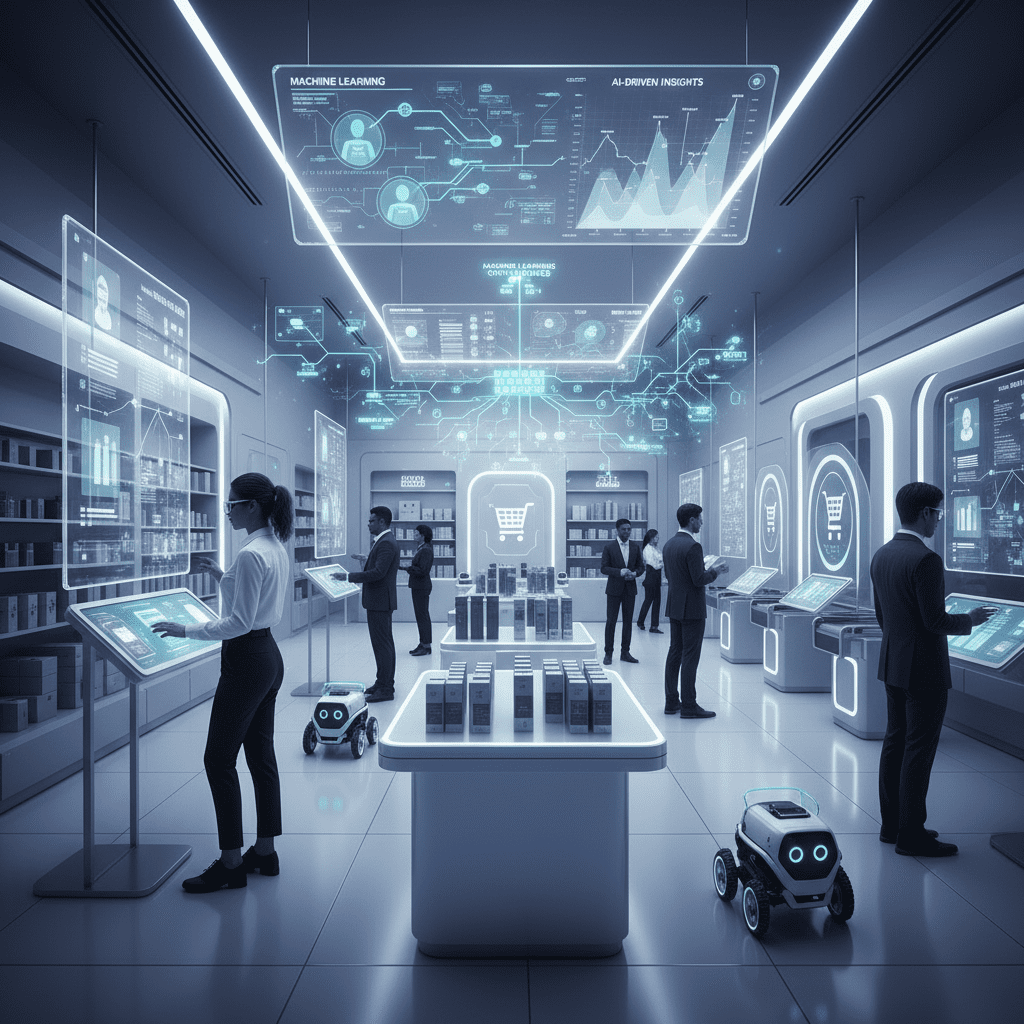
Illustration of a futuristic retail store featuring AI-powered recommendations, automated checkout, and digital data analytics, highlighting how machine learning is transforming the retail sector
machine learning

How Machine Learning in Retail is Redefining the Sector

Introduction The retail sector is undergoing a digital revolution driven by the rapid adoption of machine learning (ML) and artificial intelligence (AI). From dynamic personalization to predictive inventory management, retailers of all sizes are leveraging ML to transform customer experiences, improve operations, and boost profitability. With global AI in retail expected to reach $23.3 billion by 2025 and hyper-personalization becoming a benchmark for success, machine learning is no longer a luxury—it’s a competitive necessity. Hyper-Personalization: The New Retail Standard Machine learning enables retailers to offer deeply personalized shopping experiences. By analyzing massive amounts of data—such as browsing history, purchase patterns, and social media activity—ML models predict consumer preferences before customers even realize them. AI-powered Recommendation Engines: Platforms like Amazon and Netflix use ML to suggest tailored products and content, dramatically increasing engagement and sales. Dynamic Content & Offers: In-store and online, ML customizes promotions and product displays to match individual tastes, driving greater conversion rates. Customer Segmentation: ML clusters shoppers by behavior and interest, enabling more effective targeted marketing. Stat: 75–80% of shoppers are more likely to buy when offered personalized experiences, and brands adopting this approach are seeing customer loyalty and revenue soar. Predictive Analytics Drive Smart Inventory and Dynamic Pricing Gone are the days of manual forecasting. Advanced ML algorithms analyze historical sales, seasonal trends, and even weather patterns to predict demand with remarkable accuracy. Retailers can: Optimize Inventory: Minimize stockouts and reduce excess inventory, cutting costs and increasing fulfillment rates. Dynamic Pricing Engines: Adjust prices in real time based on demand, competition, and buyer behavior, maximizing profits while staying competitive. Case Example: REWE uses AI-driven demand forecasting to fine-tune inventory and reduce waste, while Amazon’s dynamic pricing adapts instantly to market fluctuations. Smarter Fraud Detection and Risk Management Retailers face major challenges from payment fraud and account takeovers. ML continuously analyzes transaction patterns to identify anomalies, stopping fraud in real time. Fraud Detection: Spotting fake transactions and unauthorized activity before losses occur. Reduced False Positives: ML learns over time, minimizing disruptions for genuine shoppers while raising the bar for would-be fraudsters. Enhanced Search, Chatbots, and In-Store Automation Machine learning’s impact goes beyond backend efficiency—it enhances customer engagement at every point. Semantic Search Engines: ML understands context, delivering highly relevant search results and recommendations. Chatbots & Virtual Assistants: 24/7 AI-powered help improves support, provides expert advice, and streamlines online and in-store processes. Staff-less & Automated Stores: Innovations like Amazon Go use ML to enable checkout-free shopping, reshaping the physical retail space. Optimizing Supply Chain and Logistics ML streamlines the complex world of retail logistics: Route Optimization: Reduces delivery times and shipping costs. Demand Forecasting: Predicts regional demand spikes, ensuring the right stock is in the right place. Supplier Collaboration: Shares insights instantly, keeping partners aligned on inventory and fulfillment. Real-World Impact: Retail Success Stories Walmart Realm: Uses AI to adapt virtual stores and enhance the shopping journey for each customer. H&M: Employs ML for demand prediction and store optimization—cutting excess stock by 20% and strategically opening locations. Tesco: Offers healthier food suggestions by analyzing purchase histories, encouraging better choices among shoppers. Key Benefits of Machine Learning in Retail Benefit Description Personalization Tailors recommendations and promotions to individual shoppers. Inventory Optimization Accurately forecasts demand, reducing stockouts and surplus. Dynamic Pricing Updates prices in real time to balance profit and competitiveness. Fraud Prevention Detects and prevents unauthorized transactions. Customer Insights Uncovers deep patterns in buying behavior for targeted marketing. Operational Efficiency Automates repetitive tasks and improves overall workflow. Challenges and Future Trends Challenges: Data Privacy & Security: ML systems handle sensitive customer data, making compliance and security paramount. Integration: Merging new ML tech with legacy retail systems can be complex. Talent Gap: Building in-house ML capabilities remains a challenge for smaller retailers. Trends for 2025 and Beyond: Hyper-personalization will become a baseline, not a differentiator. Voice commerce and conversational AI will drive new user experiences. ML will power sustainability efforts through waste reduction and optimized logistics. Conclusion Machine learning is fundamentally redefining the retail sector—empowering businesses to anticipate trends, create individualized customer journeys, combat fraud, and optimize every step from supply chain to checkout. Retailers that invest in ML-driven transformation today are poised to win tomorrow’s market, building resilience, agility, and customer loyalty in a fiercely competitive landscape. FAQ How does machine learning personalize retail? By analyzing a shopper’s data and behavior, ML models recommend products, tailor offers, and create a seamless, relevant experience—both online and in-store. How does ML help with inventory management? ML uses historical and real-time data to forecast demand, reducing overstock and preventing stockouts. Can machine learning stop fraud in retail? Yes, by monitoring transactions for unusual patterns, ML instantly detects and stops fraudulent behavior, lowering losses. What are the key challenges for adopting ML in retail? Data privacy, system integration with legacy tools, and the shortage of skilled talent are major challenges for many retailers. Is ML only for large retailers? No. While giants lead adoption, scalable ML tools and cloud solutions are available for retailers of all sizes30 tags

machine learning

Machine Learning in Banking – Use Cases and Implementation Process

Introduction The banking industry is rapidly embracing machine learning (ML) to enhance operational efficiency, manage risk, detect fraud, and deliver personalized customer experiences. As financial institutions face increasing competition, regulatory complexities, and evolving customer expectations, ML innovations are becoming central to banking digital transformation. This comprehensive blog explores prominent use cases of machine learning in banking, its business impact, and the structured implementation process, supported by current insights and examples from leading institutions and fintech innovators. Key Use Cases of Machine Learning in Banking 1. Fraud Detection and Risk Management Fraud detection is arguably the most critical application of ML in banking. Machine learning models analyze millions of transactions in real-time, identifying abnormal patterns and preventing unauthorized activities earlier and more accurately than traditional rule-based systems. Behavioral analytics track anomalies like unusual transaction locations or atypical spending. Models dynamically adapt to emerging fraud tactics without explicit reprogramming. Banks like Citi use ML-driven anomaly detection for enhanced transaction security. 2. Personalized Customer Experiences ML enables hyper-personalization by analyzing customer behavior, preferences, and financial histories to tailor products, services, and recommendations. Robo-advisors provide customized investment advice based on risk tolerance. Targeted financial products improve customer engagement and retention. AI-driven virtual assistants offer real-time support and guidance addressing individual needs. 3. Process Automation and Operational Efficiency ML automates back-office processes such as loan underwriting, document verification, compliance monitoring, and reconciliation, reducing human errors and increasing throughput. Optical Character Recognition (OCR) converts handwritten documents for digital processing. Robotic Process Automation (RPA) combined with ML streamlines regulatory compliance tasks. Automation shortens loan approval cycles and improves customer onboarding. 4. Conversational Banking and Virtual Assistants AI-powered chatbots and intelligent virtual assistants enhance customer service by providing 24/7 support for routine inquiries, transaction assistance, and fraud alerts. Natural Language Processing (NLP) allows human-like interactions. Automations reduce call center load and improve response times. Virtual agents assist with bill payments, balance checks, and card controls. 5. Algorithmic Trading and Investment Analysis ML models identify complex market trends using diverse datasets including news sentiment, social media, and historical prices, enabling data-driven trading strategies. High-frequency trading bots optimize transactional timing and portfolio performance. Predictive analytics improve risk forecasting and asset allocation. Fintech firms leverage advanced ML to outperform traditional trading approaches. Business Impact of Machine Learning in Banking Enhanced Security: ML reduces financial crime impact and regulatory penalties. Improved Customer Loyalty: Personalized offerings increase satisfaction and retention. Operational Cost Savings: Automation lowers manual processing costs. Accelerated Innovation: Agile data-driven decision-making supports new product launches. Increased Competitive Advantage: Banks implementing ML lead fintech innovation. Explore advanced AI solutions fostering risk management and customer personalization at TechOTD AI Services. Implementing Machine Learning in Banking: A Structured Process Step 1: Business Needs Assessment Identify critical banking processes that benefit from ML, such as fraud detection or customer segmentation. Define clear goals and success metrics aligned with strategic priorities. Step 2: Data Collection and Evaluation Gather relevant datasets spanning transactions, customer profiles, operational logs, and external market data. Data quality and completeness are paramount for effective ML models. Step 3: Model Development and Training Develop ML models tailored to use cases, including supervised classification for fraud, clustering for customer segmentation, and NLP for chatbots. Choose algorithms suitable for the complexity and dataset size. Employ techniques such as cross-validation and hyperparameter tuning. Leverage cloud platforms to manage computational demands efficiently TechOTD Cloud Solutions. Step 4: Model Testing and Validation Rigorous testing using historical and simulated data ensures models meet accuracy, precision, and fairness criteria before deployment. Step 5: Deployment and Integration Deploy ML models into banking systems, integrated with transactional platforms, CRM, and compliance tools for streamlined workflows. Use APIs for system communication. Ensure real-time inference capability for critical applications. Step 6: Monitoring and Maintenance Continue monitoring model performance, retraining with new data and adapting to evolving patterns such as new fraud tactics or regulatory changes. Challenges and Considerations Data Privacy and Security: Ensuring compliance with regulations like GDPR while leveraging sensitive customer data. Model Interpretability: Addressing regulatory needs for transparent, explainable AI decisions. Legacy Systems Integration: Bridging newer ML systems with traditional banking infrastructure. Organizational Readiness: Cultivating skilled teams and fostering ML adoption culture. Learn about overcoming challenges with expert consulting at TechOTD How We Work. Future Trends in Machine Learning for Banking Agentic AI: Autonomous AI agents driving higher-level decision making. Federated Learning: Enhancing privacy by training models collaboratively without sharing raw data. Continual Learning: Models that adapt continuously with minimal human intervention. Cross-Industry Data Integration: Leveraging diverse data sources for holistic financial insights. Enhanced NLP Capabilities: More sophisticated conversational banking and sentiment analysis. Stay updated on AI and ML advances at the TechOTD Blog. Conclusion Machine learning is revolutionizing banking by enabling data-driven risk management, operational efficiency, and personalized customer journeys. Financial institutions that strategically implement ML processes and technologies stand poised to lead industry innovation, enhance profitability, and improve regulatory compliance.

How would you like me to respond?

Select a personality for your AI assistant

Normal
Happy
Sad
Angry

Your selection will affect how the AI assistant responds to your messages

Chat Assistant

Let's discuss your project!

Hear from our clients and why 3000+ businesses trust TechOTD

Tell us what you need, and we'll get back with a cost and timeline estimate

Scroll to Top