Digital Transformation

Artificial Intelligence, Digital Transformation, Software development, Technology

Navigating the Next Tech Horizon: A Human Guide to the Innovations Reshaping Our Digital World

Introduction:- Remember when “the future” meant having a computer in your pocket? Today, we carry the processing power of a mid-90s supercomputer in our jeans, and yet we find ourselves standing on the precipice of an even more radical shift. The tech world isn’t just evolving; it’s rewriting its foundational code. As we navigate through 2026, the conversations around technology have shifted from basic automation to deep, systemic intelligence. We are no longer just building better tools; we are co-authoring a new reality with our machines. From the way developers write software to how global enterprises secure their data in the cloud, the digital landscape is undergoing a massive paradigm shift. Let’s pull back the curtain on the massive shifts defining the tech world today—broken down not just in code, but in human terms. 1. The Future of AI: Beyond the Chatbot Hype For a couple of years, the world was obsessed with generative AI that could write poems or generate quirky images. But the honeymoon phase is over. The future of AI isn’t about chatbots that mimic human speech; it’s about Agentic AI—autonomous systems capable of reasoning, planning, and executing complex workflows without constant human hand-holding. From Prompting to Partnering Early AI required meticulous prompting. If you didn’t phrase your question perfectly, the output was useless. Today, AI has developed contextual awareness. We are moving from a “command-and-control” dynamic to a truly collaborative partnership. Autonomous Agents: Imagine an AI assistant that doesn’t just book a flight when asked, but monitors your calendar, anticipates a business conflict, negotiates a rescheduled meeting with a client’s AI assistant, and books the optimal flight based on your historical preferences—all in the background. Multimodal Maturity: AI now naturally processes voice, video, text, and physical gestures simultaneously. This has broken down the barriers between digital intent and physical execution. The Human Element: Emotional Intelligence (EQ) Meets AI As AI handles the heavy analytical lifting, the premium on human emotional intelligence has skyrocketed. The most successful implementations of AI aren’t those that replace humans, but those that augment human empathy, creativity, and ethical judgment. We are the directors; AI is the ultimate crew. 2. Next-Gen Software Development: The Democratization of Code The software engineering landscape is experiencing its most significant disruption since the invention of high-level programming languages. Next-gen software development is defined by a symbiosis between human intuition and AI-driven development engines. The Rise of the “Architect” Mindset Writing syntax—the actual typing of loops, brackets, and boilerplate code—is increasingly being handled by AI co-pilots. Does this mean software engineers are obsolete? Absolutely not. Instead, their role has elevated. [Traditional Development] ──> Focus on Syntax, Debugging, & Boilerplate [Next-Gen Development] ──> Focus on Architecture, System Design, & Security Developers are transitioning from code writers to system architects. The value shifts from knowing how to write a function to understanding how systems interact, scale, and remain secure. Low-Code, No-Code, and the Citizen Developer We are seeing a massive democratization of technology. Business analysts, healthcare professionals, and educators are now building sophisticated enterprise applications using natural language interfaces. By bridging the gap between an idea and a working application, innovation is no longer bottlenecked by the availability of software engineering teams. 3. Cloud Computing Trends: The Distributed Cloud and Edge Renaissance The cloud is no longer a distant, centralized data center owned by a tech giant. Current cloud computing trends point toward a hyper-distributed model where data processing happens exactly where it makes the most sense. Edge Computing Comes of Age With the proliferation of IoT devices, smart cities, and autonomous vehicles, sending data back to a central cloud server introduces unacceptable latency. Example: An autonomous vehicle traveling at 60 mph cannot wait 200 milliseconds for a cloud server to process a “stop” command. The decision must happen at the “edge”—directly within the vehicle’s onboard processing unit. Sovereign Clouds and Data Privacy Geopolitics has firmly entered the cloud space. Nations and regions are demanding that their citizens’ data remain within geographical boundaries, governed by local laws. This has led to the rise of sovereign clouds, forcing global enterprises to rethink their infrastructure to ensure compliance without sacrificing performance. 4. Cyber Resilience: Shifting from Defense to Survival In the modern tech ecosystem, a data breach is no longer a matter of if, but when. Because of this harsh reality, the conversation has shifted from traditional cybersecurity (building taller walls) to cyber resilience (how well you can take a punch and keep standing). The Zero Trust Imperative The old security model assumed that everything inside a corporate network was safe. Today’s decentralized workforce has thoroughly shattered that perimeter. “Zero Trust” operates on a simple, human-like skepticism: Never trust, always verify. Every user, device, and connection must continuously prove its identity and authorization. Preparing for the Quantum Leap While practical quantum computers are still on the horizon, the cryptographic threat they pose is already reshaping current security strategies. Bad actors are actively harvesting encrypted data today, intending to decrypt it years later when quantum computing matures. Progressive organizations are already implementing Post-Quantum Cryptography (PQC) to ensure their data remains secure tomorrow. 5. Digital Transformation 2026: The Cultural Revolution True digital transformation 2026 isn’t about buying new software or migrating to the cloud just to tick a box. It is fundamentally a cultural shift that requires organizations to fundamentally reimagine how they deliver value to humans. Breaking Down Silos For decades, IT departments lived in isolation, speaking a language the rest of the business couldn’t comprehend. True digital transformation breaks these walls down. Technology is now deeply woven into every department—from HR using predictive analytics for talent retention, to marketing utilizing real-time AI generation for hyper-personalized campaigns. The Sustainability Metric Modern digital transformation is no longer just measured in ROI (Return on Investment), but also in its environmental impact. Data centers consume massive amounts of electricity and water. Forward-thinking companies are auditing their “digital carbon footprint,” optimizing their code for energy efficiency, and choosing cloud providers that run entirely on renewable

Cloud Computing and Technology, Digital Transformation, Technology, Technology & Innovation

The Future of Web Architecture: Why Edge Computing and Backendless Frameworks Are Redefining Scalability

The Future of Web Architecture: Why Edge Computing and Backendless Frameworks Are Redefining Scalability The internet is undergoing a quiet but radical structural transformation. For decades, the standard blueprint for building a web application followed a predictable, centralized path. A user in Tokyo would open a browser, click a button, and send a request across continents to a massive data center located in Northern Virginia or Ireland. The server would process the request, query a central database, format the data, and send it all the way back. While fiber-optic cables and content delivery networks optimized this journey, the fundamental limitation remained: physical distance equals latency. In a digital economy where a 100-millisecond delay can slash conversion rates by double digits, relying entirely on centralized cloud warehouses is no longer a viable strategy for hyper-scale applications. At the same time, the operational overhead of managing backend infrastructure has become an unnecessary burden for modern development teams. The traditional duties of provision, scaling, patching, and maintaining database connections are increasingly viewed as friction. To solve these compounding challenges, two architectural paradigms have converged to create a new blueprint for the web: Edge Computing and Backendless Frameworks. Together, they are shifting the center of gravity of the internet away from centralized mega-data centers and placing it directly at the perimeter of the network, mere miles—or sometimes millimeters—away from the end user. This is not just an incremental upgrade to server infrastructure; it is a fundamental re-engineering of how data is processed, stored, and delivered across the globe. The Limits of Centralized Cloud Infrastructure To understand where web architecture is going, we must first analyze the breaking points of where it has been. The rise of cloud computing giants in the late 2000s revolutionized the tech industry by turning hardware into software. Instead of buying physical racks, companies rented virtual machines. This centralized model brought unprecedented convenience, but it introduced structural inefficiencies that are now catching up to modern engineering demands. The first issue is the speed of light. Data cannot travel faster than the laws of physics allow. When an application requires complex server-side rendering or dynamic database lookups, a round-trip journey to a central cloud region introduces an unavoidable floor of latency. As applications become more interactive, relying on real-time data streaming, collaborative interfaces, and instant feedback loops, this regional latency becomes a jarring user experience bottleneck. The second bottleneck is data egress and bandwidth congestion. Centralized architectures require that every single interaction, no matter how trivial, be pushed to the core network. As billions of internet-of-things devices, smartphones, and smart appliances flood the internet with telemetry and media data, backhauling this raw information to central data centers creates immense network strain and skyrocketing cloud bills. Finally, centralized systems present a concentrated blast radius for failures. When a primary cloud region experiences a routing misconfiguration or power outage, thousands of dependent services across the globe go dark simultaneously. The internet becomes brittle when its intelligence is concentrated in only a handful of geographic zones. Demystifying Edge Computing Edge computing flips the centralized model on its head by moving compute and storage capabilities out of distant data centers and into localized nodes positioned directly at the network’s perimeter. These nodes are embedded within cellular towers, regional internet service providers, and content delivery network points of presence. Instead of acting as passive pipes that merely cache static images and style sheets, modern edge networks operate as distributed mini-computers capable of executing complex code on the fly. When a user interacts with an edge-native application, their request is intercepted by the physically closest node. If code execution is required, it happens right there. By processing data at the edge, the round-trip time across the backbone of the internet is completely eliminated. Latency drops from hundreds of milliseconds to single digits. Crucially, edge computing changes how we handle data security and compliance. Instead of transmitting sensitive user information across sovereign borders to a centralized server, data can be sanitized, filtered, and anonymized locally at the edge. If local regulations require that citizen data remain within specific geographic boundaries, edge nodes can enforce these compliance rules dynamically, ensuring data sovereignty without sacrificing application performance. The Rise of Backendless and Serverless Frameworks Simultaneously, the development philosophy of “Backendless” architecture has matured from a niche experimental approach into an enterprise-grade standard. To clear up a common misconception: backendless does not mean there is no backend. It means that developers no longer build, manage, or maintain custom backend infrastructure or dedicated server instances. In a traditional setup, an engineering team spends significant time writing boilerplate code for authentication, session management, database scaling, file uploads, and API routing. They must configure load balancers to handle traffic spikes and set up monitoring tools to catch server crashes. Backendless frameworks abstract this entire layer away. Instead of writing a continuous monolithic server application, developers leverage managed, highly specialized micro-utilities and BaaS (Backend-as-a-Service) ecosystems. Authentication is handled by fully managed identity providers; file storage is offloaded to intelligent object storage systems; and custom business logic is broken down into modular, event-driven functions that execute only when explicitly triggered. This shift radically alters the economics of software development. Traditional servers run continuously, charging businesses for idle CPU cycles even when no users are online. Backendless architectures operate on a strict pay-as-you-go model. If an application receives zero traffic overnight, the infrastructure costs zero. When a massive spike of a million concurrent users hits the application, the underlying platform automatically provisions the necessary micro-resources instantly, scaling down just as quickly when the surge subsides. Developers are freed from the anxieties of infrastructure management, allowing them to focus exclusively on refining user experiences and frontend product value. The Convergence: Computational Edge Meets Managed Backends The true magic happens where edge computing and backendless frameworks intersect. For a long time, serverless functions suffered from a major flaw known as “cold starts.” Because cloud providers had to dynamically spin up a virtual container or runtime environment when a

Artificial Intelligence, Business Intelligence, Digital Transformation, Technology

AI Governance in 2026: Balancing Innovation and Regulation

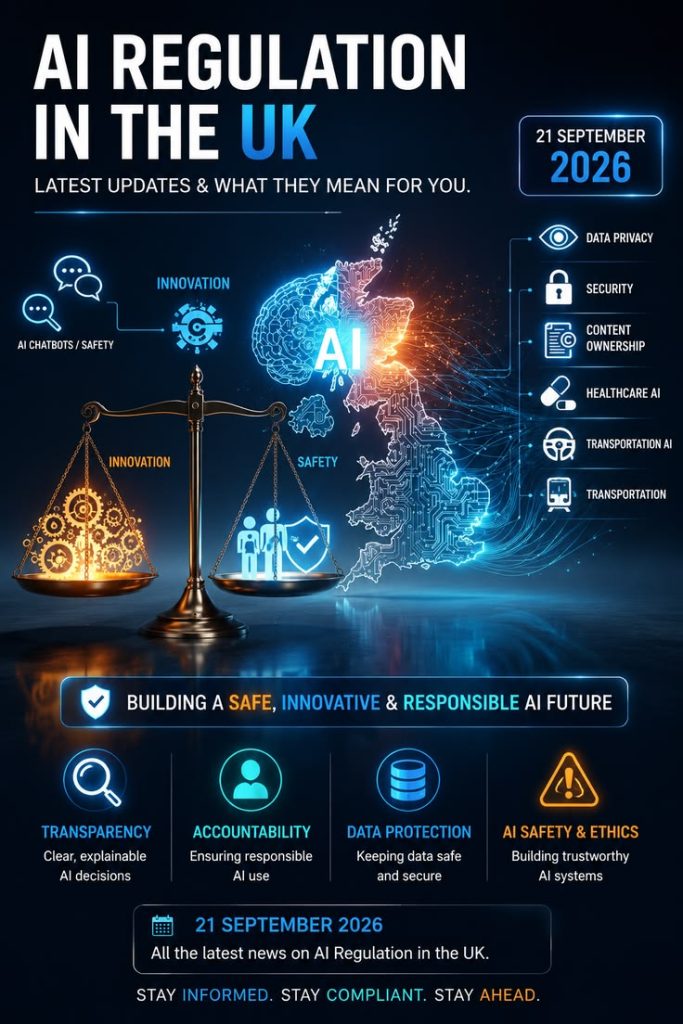
AI Governance in 2026: Balancing Innovation and Regulation Artificial intelligence has rapidly evolved from an emerging technology into a critical business and societal tool. From automating business operations and improving healthcare outcomes to powering advanced research and enhancing customer experiences, AI is transforming nearly every industry. However, as AI systems become more powerful and influential, concerns surrounding transparency, accountability, privacy, bias, and security continue to grow. In 2026, AI governance has become one of the most important topics in the technology landscape. Governments, regulators, technology companies, and enterprises are working together to create frameworks that encourage innovation while ensuring AI is developed and deployed responsibly. The challenge is clear: how can society unlock the enormous benefits of AI without exposing individuals, businesses, and governments to unnecessary risks? The answer lies in effective AI governance. What Is AI Governance? AI governance refers to the policies, standards, regulations, and organizational practices used to guide the development, deployment, and management of artificial intelligence systems. Its primary objectives include: Ensuring AI systems operate ethically Promoting transparency and accountability Protecting user privacy Reducing bias and discrimination Strengthening cybersecurity Maintaining regulatory compliance Building public trust Unlike traditional software governance, AI governance must address unique challenges associated with machine learning, generative AI, autonomous decision-making, and continuously evolving algorithms. As organizations increasingly rely on AI-powered systems for critical decisions, governance frameworks are becoming essential components of modern business operations. Why AI Governance Matters More Than Ever The rapid adoption of generative AI and autonomous systems has dramatically increased the importance of governance. Organizations are now using AI for: Financial decision-making Hiring and recruitment Healthcare diagnostics Customer service automation Cybersecurity monitoring Supply chain optimization Legal research Business intelligence While these applications offer significant benefits, they also introduce potential risks. An AI system that generates inaccurate information can damage a company’s reputation. A biased algorithm can lead to discrimination claims. Weak AI security controls can expose sensitive data to cybercriminals. Without proper governance, AI can become a liability instead of a competitive advantage. Businesses are realizing that governance is not merely about compliance—it is about creating sustainable and trustworthy AI ecosystems. The Global Push for AI Regulation One of the biggest developments in 2026 is the increasing focus on AI regulation worldwide. Governments recognize that artificial intelligence is reshaping economies, national security, labor markets, and public services. As a result, regulators are introducing policies designed to manage AI risks while encouraging innovation. Several key areas are receiving attention: Risk-Based AI Classification Many governments are adopting risk-based approaches to AI oversight. Under this model, AI applications are categorized according to their potential impact. Examples include: Low-Risk Systems Chatbots Recommendation engines Productivity assistants Medium-Risk Systems Customer service automation Business analytics platforms Educational AI tools High-Risk Systems Medical diagnosis systems Financial approval algorithms Law enforcement technologies Critical infrastructure management systems The higher the risk level, the stricter the governance requirements become. This approach helps regulators avoid unnecessary restrictions on innovation while focusing oversight where it is needed most. Transparency Requirements AI transparency has become a major regulatory priority. Users increasingly want to know: How AI systems make decisions What data is being used Whether content was AI-generated How organizations monitor AI outputs Transparency requirements are encouraging businesses to provide clearer explanations of AI-driven decisions and maintain detailed documentation of their AI models. Data Protection and Privacy AI systems require large amounts of data to function effectively. This has raised concerns about: User consent Data ownership Personal information protection Cross-border data transfers Governments are introducing stricter data governance rules to ensure AI systems respect privacy rights while still enabling innovation. Organizations that fail to comply may face significant financial penalties and reputational damage. Enterprise AI Governance Becomes a Strategic Priority In 2026, AI governance is no longer just the responsibility of compliance departments. It has become a boardroom issue. Executives recognize that poorly managed AI initiatives can create legal, financial, and operational risks. As a result, organizations are establishing dedicated AI governance programs that include: AI ethics committees Risk management teams Compliance officers Data governance specialists Cybersecurity professionals Legal advisors These teams work together to ensure AI projects align with business objectives, regulatory requirements, and ethical standards. Companies that implement robust governance frameworks are often able to deploy AI more confidently and at greater scale. Ethical AI Takes Center Stage Ethical AI has become one of the defining themes of AI governance. Businesses understand that compliance alone is not enough. Users expect AI systems to operate fairly, responsibly, and transparently. Ethical AI initiatives focus on several key principles. Fairness AI systems should treat all individuals fairly and avoid discriminatory outcomes. Organizations are investing in bias detection tools and model auditing processes to identify and mitigate unfair decision-making. Accountability There must be clear responsibility for AI-generated outcomes. Businesses are establishing governance structures that define who is accountable when AI systems make errors or produce harmful results. Human Oversight Despite significant advances in automation, human involvement remains critical. Many organizations require human review for high-impact decisions involving: Employment Healthcare Financial services Legal matters This ensures AI supports decision-making rather than replacing human judgment entirely. Transparency Users should understand when they are interacting with AI systems and how important decisions are made. Transparent AI helps build trust and reduces concerns about hidden algorithms influencing outcomes. The Rise of AI Audits Just as financial audits help ensure accountability in business operations, AI audits are becoming increasingly common. AI audits evaluate: Model performance Bias levels Security controls Regulatory compliance Data quality Decision-making processes Organizations are conducting regular assessments to verify that AI systems continue operating as intended. Independent third-party audits are also gaining popularity because they provide additional credibility and transparency. In many industries, AI auditing is becoming a standard governance practice. Managing Generative AI Risks Generative AI remains one of the most transformative technologies of the decade. Businesses are using AI tools to create: Marketing content Software code Product designs Business reports Customer communications Educational materials However, generative AI introduces unique governance challenges. Hallucinations AI models can

Artificial Intelligence, Digital Transformation, Educational Technology

Multimodal AI Explained: The Future of Human-Computer Interaction

Introduction Artificial Intelligence has evolved rapidly over the past decade, moving from simple rule-based systems to highly sophisticated models capable of understanding and generating human-like content. One of the most significant breakthroughs in recent years is the emergence of Multimodal AI, a technology that allows machines to process and understand multiple forms of data simultaneously, including text, images, audio, video, and even sensor inputs. Traditional AI systems typically specialize in a single type of input. For example, a chatbot processes text, while an image recognition system analyzes pictures. Multimodal AI changes this paradigm by combining different data types into a unified understanding. This advancement is paving the way for a new era of human-computer interaction where technology can communicate more naturally, understand context better, and provide richer experiences. As businesses, developers, and consumers increasingly adopt AI-powered tools, Multimodal AI is expected to become one of the defining technologies of the next decade. From virtual assistants and healthcare applications to autonomous vehicles and smart workplaces, its influence is already being felt across industries. What Is Multimodal AI? Multimodal AI refers to artificial intelligence systems that can process and interpret information from multiple sources or modalities simultaneously. These modalities include: Text Images Audio Video Sensor Data Gestures and Physical Inputs Humans naturally use multiple senses to understand the world. For example, during a conversation, we listen to words, observe facial expressions, and interpret body language at the same time. Multimodal AI aims to replicate this ability by integrating different forms of information into a single intelligent system. Instead of analyzing data in isolation, Multimodal AI combines various inputs to gain a deeper understanding of context and intent. This enables more accurate decision-making and more natural interactions between humans and machines. The Evolution of Human-Computer Interaction Human-computer interaction has undergone several major transformations over the years. Command-Line Interfaces Early computers relied on text-based commands. Users needed technical knowledge to communicate with machines effectively. Graphical User Interfaces The introduction of graphical interfaces made computers more accessible. Users could interact through windows, icons, and menus instead of memorizing commands. Touch-Based Interaction The rise of smartphones and tablets introduced touchscreens, making interaction more intuitive and mobile. Voice Assistants Virtual assistants brought voice recognition into mainstream technology, allowing users to perform tasks through spoken commands. Multimodal Interaction Today, AI systems are moving beyond single-input methods. Users can speak, type, upload images, share videos, and interact naturally with intelligent systems that understand all these inputs together. This shift represents one of the most significant changes in the history of computing. How Multimodal AI Works At its core, Multimodal AI combines information from different data sources and processes them through advanced machine learning models. The process generally involves several steps: Data Collection The AI gathers data from multiple sources such as text documents, images, microphones, cameras, and sensors. Data Processing Each data type undergoes specialized processing: Natural Language Processing for text Computer Vision for images and videos Speech Recognition for audio Sensor Analysis for environmental inputs Data Fusion The processed information is combined into a unified representation that allows the AI to understand relationships between different inputs. Contextual Understanding The AI analyzes the combined information to determine meaning, intent, and context. Response Generation Based on its understanding, the system generates an appropriate output, which could be text, speech, images, recommendations, or actions. This integrated approach enables more intelligent and context-aware interactions. Why Multimodal AI Is Important The significance of Multimodal AI lies in its ability to bridge the gap between human communication and machine understanding. Improved Accuracy Using multiple data sources reduces ambiguity and improves decision-making. For example, a voice command combined with visual context allows an AI assistant to better understand what a user is requesting. Better User Experiences Interactions become more natural because users can communicate in the way that feels most comfortable. Enhanced Context Awareness Multimodal systems understand situations more effectively by considering multiple signals simultaneously. Increased Accessibility People with different abilities can interact with technology using speech, images, gestures, or text. More Human-Like Communication By understanding various forms of input, AI systems can engage in conversations and interactions that closely resemble human communication. Key Technologies Powering Multimodal AI Several advanced technologies contribute to the development of multimodal systems. Natural Language Processing NLP enables machines to understand, interpret, and generate human language. Computer Vision Computer vision allows AI systems to analyze images, videos, objects, faces, and environments. Speech Recognition Speech technologies convert spoken language into machine-readable formats. Deep Learning Neural networks help identify complex patterns across multiple data types. Generative AI Models Modern generative models can create text, images, audio, and video content from various inputs. Large Language Models Advanced language models provide the reasoning and contextual understanding necessary for multimodal applications. Together, these technologies create AI systems capable of understanding and generating rich, multi-format content. Real-World Applications of Multimodal AI Healthcare Healthcare organizations are using Multimodal AI to analyze medical records, diagnostic images, laboratory reports, and physician notes simultaneously. Benefits include: Faster diagnosis Improved treatment planning Better patient monitoring Enhanced medical research Doctors can receive more comprehensive insights by combining information from multiple sources. Customer Service Businesses are implementing AI-powered support systems that understand: Customer messages Voice conversations Uploaded screenshots Product photos This allows customer service teams to resolve issues faster and improve customer satisfaction. Education Educational platforms use Multimodal AI to create personalized learning experiences. Students can: Ask questions verbally Submit handwritten assignments Upload images Receive customized explanations This makes learning more interactive and accessible. Autonomous Vehicles Self-driving vehicles rely heavily on multimodal intelligence. They combine information from: Cameras Radar systems LiDAR sensors GPS data Traffic information This comprehensive understanding helps vehicles navigate safely. Smart Assistants Next-generation AI assistants can process text, voice, images, and video simultaneously. Users may simply take a picture, ask a question, and receive an accurate response without needing to provide detailed descriptions. Retail and E-Commerce Retailers use Multimodal AI for: Visual product searches Personalized recommendations Inventory management Customer behavior analysis Shoppers can upload images of products they like

cybersecurity, Digital Transformation, Educational Technology, enterprise

Zero Trust Security: Why Organizations Are Adopting It Faster Than Ever

Zero Trust Security: Why Organizations Are Adopting It Faster Than Ever Cybersecurity has never been more important than it is today. Organizations across the globe are facing an unprecedented number of cyber threats, ranging from ransomware attacks and phishing campaigns to insider threats and sophisticated nation-state cyber operations. As businesses continue to embrace cloud computing, remote work, digital transformation, and interconnected technologies, traditional security models are proving increasingly inadequate. For decades, organizations relied on perimeter-based security strategies. The assumption was simple: anything inside the corporate network could be trusted, while anything outside should be treated as a potential threat. Firewalls, VPNs, and network segmentation formed the backbone of enterprise security. However, the modern digital environment has fundamentally changed this approach. Employees access company resources from multiple devices and locations. Applications reside in public and private clouds. Third-party vendors require network access. Sensitive data moves continuously between platforms and users. In this new reality, the concept of trust based solely on network location no longer works. This is where Zero Trust Security comes into the picture. Zero Trust has rapidly evolved from a cybersecurity concept into one of the most widely adopted security frameworks worldwide. Organizations of all sizes are investing heavily in Zero Trust architectures to protect their digital assets, strengthen compliance, and reduce cyber risks. But what exactly is Zero Trust Security, and why are organizations adopting it faster than ever before? Let’s explore. Understanding Zero Trust Security Zero Trust Security is a cybersecurity framework built on a simple but powerful principle: “Never Trust, Always Verify.” Unlike traditional security models that automatically trust users and devices inside a corporate network, Zero Trust assumes that every user, device, application, and connection could potentially be compromised. Under a Zero Trust model, no entity receives automatic trust, regardless of whether it is inside or outside the network perimeter. Every access request must be continuously verified before access is granted. This verification process typically includes: Identity verification Device authentication Access control policies User behavior analysis Multi-factor authentication Continuous monitoring The objective is to minimize risk by ensuring that only authorized users can access specific resources under predefined conditions. The Evolution of Cybersecurity Threats One of the biggest reasons organizations are embracing Zero Trust is the dramatic evolution of cyber threats. Modern cybercriminals have become more sophisticated than ever. Today’s attackers use advanced techniques such as: Ransomware-as-a-Service (RaaS) AI-powered phishing attacks Credential theft Supply chain attacks Insider threats Cloud account compromises Social engineering campaigns Many of these attacks bypass traditional security defenses because they exploit trusted accounts and legitimate access credentials. When attackers successfully steal login credentials, they can often move freely across traditional networks without triggering security alerts. Zero Trust eliminates this weakness by requiring verification at every stage of access. Even if an attacker compromises one account, they cannot automatically gain unrestricted access to sensitive systems. This significantly reduces the attack surface and limits potential damage. Why Traditional Security Models Are Failing The traditional “castle-and-moat” approach to cybersecurity was designed for a different era. In the past: Employees worked primarily from offices. Applications were hosted on-premises. Data remained within corporate networks. Devices were company-managed. Today, none of these assumptions consistently apply. Modern enterprises operate in highly distributed environments where: Employees work remotely. Applications run in multiple clouds. Data resides across various platforms. Contractors and vendors require access. Employees use personal devices. As a result, the network perimeter has effectively disappeared. Organizations can no longer rely solely on perimeter defenses because users and data exist far beyond traditional boundaries. Zero Trust addresses this challenge by focusing on identities, devices, and access rather than network location. The Core Principles of Zero Trust Security While Zero Trust implementations vary between organizations, most frameworks follow several key principles. Verify Every User Every user must authenticate before accessing resources. Authentication methods may include: Passwords Biometrics Security tokens Multi-factor authentication Identity verification is performed continuously rather than only during login. Least Privilege Access Users receive only the minimum access necessary to perform their tasks. This approach reduces risk because compromised accounts cannot access systems beyond their authorized permissions. Least privilege significantly limits lateral movement during cyberattacks. Continuous Monitoring Security teams continuously monitor user activities, devices, and network traffic. Behavior analytics help identify unusual patterns that may indicate malicious activity. Suspicious behavior triggers additional verification or access restrictions. Assume Breach Zero Trust operates under the assumption that breaches can occur at any time. Instead of focusing solely on prevention, organizations prioritize detection, containment, and response. This mindset improves resilience against sophisticated attacks. Device Security Verification Access decisions consider device health and security status. Devices may be evaluated based on: Operating system updates Antivirus status Encryption settings Security compliance Compromised or non-compliant devices may be denied access. The Remote Work Revolution Accelerated Adoption The global shift toward remote and hybrid work has dramatically accelerated Zero Trust adoption. Employees now access corporate resources from: Home offices Coffee shops Airports Co-working spaces Mobile devices Traditional VPN-based security approaches struggle to secure this distributed workforce effectively. Organizations need a security framework that protects users regardless of location. Zero Trust enables secure access by verifying users and devices rather than relying on network boundaries. As remote work becomes a permanent part of business operations, Zero Trust continues to gain momentum. Cloud Computing and Zero Trust Cloud adoption is another major driver behind the rise of Zero Trust Security. Modern organizations increasingly rely on: Software-as-a-Service (SaaS) Infrastructure-as-a-Service (IaaS) Platform-as-a-Service (PaaS) Cloud environments introduce new security challenges because resources are distributed across multiple providers and locations. Traditional security architectures often lack visibility and control in these environments. Zero Trust helps organizations secure cloud assets through: Strong identity management Granular access controls Continuous authentication Micro-segmentation Cloud workload protection This approach improves security without sacrificing flexibility. The Role of Multi-Factor Authentication Multi-factor authentication (MFA) has become a cornerstone of Zero Trust Security. Passwords alone are no longer sufficient. Attackers frequently obtain credentials through: Phishing attacks Data breaches Malware Credential stuffing MFA requires users to provide additional verification

Blockchain & Technology, Digital Transformation, Educational Technology, enterprise

Blockchain Beyond Cryptocurrency: Real-World Enterprise Applications

Introduction When most people hear the word blockchain, their minds immediately jump to cryptocurrencies like Bitcoin. While digital currencies played a significant role in introducing blockchain to the world, the technology has evolved far beyond its original purpose. Today, organizations across industries are leveraging blockchain to improve transparency, security, efficiency, and trust in business operations. From managing global supply chains to securing healthcare records and streamlining financial transactions, blockchain is emerging as a powerful tool for enterprise transformation. As businesses continue their digital transformation journeys, blockchain is increasingly becoming a strategic technology rather than merely a foundation for cryptocurrencies. This article explores how blockchain is being applied in real-world enterprise environments, the benefits it offers, the challenges organizations face, and what the future holds for this revolutionary technology. Understanding Blockchain Technology At its core, blockchain is a distributed digital ledger that records transactions across multiple computers. Unlike traditional databases controlled by a central authority, blockchain stores information in a decentralized manner. Each transaction is grouped into a block, and once verified, it becomes linked to the previous block, forming a chain of records. This structure creates an immutable and transparent history of transactions that cannot be altered without consensus from the network. Several characteristics make blockchain particularly valuable for enterprises: Transparency and auditability Enhanced security through cryptography Decentralized data management Reduced risk of fraud Improved trust among stakeholders Automation through smart contracts These capabilities have encouraged organizations to explore blockchain applications beyond digital currencies. Why Enterprises Are Investing in Blockchain Modern businesses operate in increasingly complex ecosystems involving suppliers, customers, partners, regulators, and service providers. Managing information across these networks often creates inefficiencies, duplication, and security risks. Blockchain addresses many of these challenges by providing a shared source of truth that all authorized participants can trust. Organizations are investing in blockchain because it can: Reduce operational costs Improve transaction speed Enhance transparency Strengthen cybersecurity Increase regulatory compliance Eliminate unnecessary intermediaries Improve customer trust As a result, blockchain adoption is growing across various sectors, including finance, healthcare, manufacturing, logistics, retail, and government services. Supply Chain Management and Traceability One of the most successful enterprise applications of blockchain is supply chain management. Traditional supply chains involve multiple parties, including manufacturers, distributors, suppliers, transportation providers, and retailers. Tracking products throughout this journey can be difficult, especially when data is stored in separate systems. Blockchain creates a shared ledger where every participant can record and verify information in real time. Product Traceability Companies can track products from raw material sourcing to final delivery. This visibility helps organizations verify authenticity, prevent counterfeiting, and ensure compliance with industry standards. For example, food producers can trace agricultural products back to their source within seconds. If contamination occurs, affected products can be identified and removed quickly, reducing risks and costs. Improved Transparency Customers increasingly demand information about where products originate and how they are manufactured. Blockchain enables businesses to provide transparent records regarding: Product origins Manufacturing processes Transportation history Sustainability practices Ethical sourcing standards This transparency strengthens consumer confidence and brand reputation. Reduced Fraud Counterfeit goods cost businesses billions of dollars annually. Blockchain records make it significantly more difficult for fraudulent products to enter legitimate supply chains. Smart Contracts and Business Automation Smart contracts are self-executing digital agreements stored on a blockchain. These contracts automatically perform actions when predefined conditions are met, reducing the need for manual intervention. Automating Payments Businesses can automate supplier payments when goods are delivered and verified. This eliminates delays and minimizes administrative overhead. Streamlining Procurement Procurement processes often involve extensive paperwork and approvals. Smart contracts can automatically: Verify purchase orders Confirm deliveries Trigger payments Update inventory systems This automation reduces processing time and human error. Insurance Claims Processing Insurance companies can use smart contracts to automatically process claims when specific conditions are verified. For example, travel insurance policies can issue compensation immediately when a flight delay is confirmed through trusted data sources. Blockchain in Financial Services Although blockchain originated within the financial sector, enterprise applications extend far beyond cryptocurrency trading. Cross-Border Payments Traditional international payments often involve multiple intermediaries and lengthy processing times. Blockchain networks can facilitate faster and more cost-effective cross-border transactions by reducing dependency on intermediary institutions. Trade Finance Trade finance processes frequently rely on paper-based documentation and manual verification. Blockchain helps digitize: Letters of credit Shipping documents Trade agreements Payment records This improves efficiency while reducing fraud and administrative costs. Fraud Prevention Financial institutions are adopting blockchain to strengthen transaction security and reduce fraudulent activities. The technology’s immutable records create reliable audit trails that make unauthorized alterations extremely difficult. Digital Identity Verification Banks and financial organizations can use blockchain-based identity systems to streamline customer verification procedures while enhancing privacy and security. Healthcare and Medical Records Management Healthcare organizations generate massive amounts of sensitive data. Managing patient records securely while ensuring accessibility remains a major challenge. Secure Patient Records Blockchain allows healthcare providers to store and share patient information securely. Authorized medical professionals can access accurate records while maintaining strict privacy controls. Improved Interoperability Medical records are often fragmented across multiple systems and providers. Blockchain can create unified patient histories accessible across healthcare networks, improving care coordination. Drug Supply Chain Verification Counterfeit medications represent a serious global concern. Blockchain enables pharmaceutical companies to track medications throughout the supply chain, ensuring authenticity and patient safety. Clinical Research Researchers can use blockchain to maintain transparent and tamper-proof records of clinical trial data, enhancing trust and regulatory compliance. Digital Identity and Access Management Identity verification is becoming increasingly important in the digital economy. Traditional identity systems often expose users to data breaches and identity theft. Blockchain-based identity solutions allow individuals to maintain greater control over their personal information. Self-Sovereign Identity Users can manage and share verified credentials without relying entirely on centralized databases. Benefits include: Enhanced privacy Reduced identity fraud Simplified verification processes Better user control Enterprise Access Control Organizations can use blockchain to manage employee credentials, system access permissions, and authentication processes more securely. Blockchain in Real Estate Real estate transactions typically

Data Privacy & Security, Digital Transformation, Technology

Digital Sovereignty: Why Countries Want Greater Control Over Their Data

Digital Sovereignty: Why Countries Want Greater Control Over Their Data The digital economy has become one of the most valuable assets of the modern world. Every day, governments, businesses, and individuals generate enormous amounts of data through online transactions, cloud applications, social media platforms, connected devices, and artificial intelligence systems. Data now drives decision-making, economic growth, innovation, and national security. As technology becomes increasingly integrated into every aspect of society, many countries are asking a critical question: Who controls the data? This question has led to the rise of a concept known as digital sovereignty, a growing movement that seeks to give nations greater authority over their digital assets, infrastructure, and data. Governments worldwide are introducing policies and regulations designed to ensure that sensitive information remains protected and accessible according to national laws and interests. In 2026, digital sovereignty is no longer a niche policy discussion. It has become a central issue shaping technology strategies, international relations, cloud computing investments, and cybersecurity initiatives around the globe. What Is Digital Sovereignty? Digital sovereignty refers to a country’s ability to control its digital infrastructure, data, technologies, and online activities according to its own laws and regulations. The concept extends beyond simple data storage. It encompasses: Data ownership and governance Cloud infrastructure control Cybersecurity management Artificial intelligence regulation Digital identity systems Critical technology supply chains National internet policies In practical terms, digital sovereignty means ensuring that a country’s most important digital resources are not entirely dependent on foreign companies or governments. As digital technologies become essential to national economies, countries increasingly view data as a strategic resource similar to energy, natural resources, or critical infrastructure. Why Data Has Become a Strategic National Asset For decades, oil was often described as the world’s most valuable resource. Today, many experts argue that data has taken its place. Data powers: Artificial intelligence models Financial systems Healthcare innovation Smart city initiatives National defense systems E-commerce platforms Public services The more data organizations collect, the more effectively they can optimize operations, understand customer behavior, and develop new technologies. Because of its value, governments are becoming increasingly concerned about where data is stored, who has access to it, and how it is used. Countries recognize that losing control over critical data could create economic, political, and security vulnerabilities. The Growing Importance of Data Localization One of the most visible aspects of digital sovereignty is data localization. Data localization policies require certain types of information to be stored and processed within national borders. Governments implement these policies for several reasons: National Security Protection Sensitive government information, military data, and critical infrastructure records must remain protected from external threats. Storing such information domestically allows governments to apply local security standards and oversight. Regulatory Compliance Countries often require businesses to comply with local privacy laws and regulations. Domestic data storage simplifies enforcement and legal accountability. Economic Development Local data centers create jobs, attract technology investments, and strengthen national digital ecosystems. As a result, many nations are investing heavily in domestic cloud infrastructure. Cybersecurity Concerns Are Driving Sovereignty Efforts Cyberattacks continue to grow in both frequency and sophistication. Governments face threats from: State-sponsored hackers Cybercriminal organizations Ransomware groups Espionage operations Supply chain attacks When critical systems rely heavily on foreign technology providers, governments may have limited visibility into potential risks. Digital sovereignty initiatives help countries strengthen cybersecurity by: Building secure national infrastructure Developing local cybersecurity expertise Establishing stronger data protection controls Reducing dependency on external providers As cyber warfare becomes an increasingly important national security issue, governments view digital control as a strategic necessity. The Role of Cloud Computing in Digital Sovereignty Cloud computing has transformed the way organizations store and process data. Major cloud providers offer scalability, reliability, and cost efficiency that many organizations cannot achieve independently. However, cloud adoption has also raised concerns about sovereignty. Many governments worry about: Foreign jurisdiction over stored data Cross-border data transfers Access requests from foreign authorities Dependence on a small number of global providers To address these concerns, cloud vendors are introducing sovereign cloud solutions that provide greater transparency, local control, and compliance capabilities. These offerings are becoming increasingly attractive to governments, healthcare organizations, financial institutions, and regulated industries. Artificial Intelligence and Sovereign Data Artificial intelligence has added a new dimension to digital sovereignty discussions. AI systems rely heavily on data for training and operation. Governments are concerned about several issues: Control of Training Data Countries want assurance that sensitive national data is not being used without permission to train foreign AI models. AI Governance Governments seek to establish rules regarding how AI systems are developed, deployed, and monitored. National Competitiveness Access to high-quality data can influence a country’s ability to compete in AI innovation. As AI becomes a key driver of economic growth, digital sovereignty strategies increasingly include AI infrastructure and data governance frameworks. How Different Regions Are Approaching Digital Sovereignty Countries are pursuing digital sovereignty in different ways based on their priorities and regulatory environments. Europe European nations have emphasized privacy protection, data governance, and regulatory compliance. The region has introduced comprehensive regulations designed to strengthen control over personal data while promoting transparency and accountability. European policymakers often focus on reducing strategic dependence on non-European technology providers. Asia-Pacific Many countries in the Asia-Pacific region are investing heavily in domestic cloud infrastructure, cybersecurity programs, and AI development. Several governments have introduced data localization requirements to enhance national security and economic resilience. North America While cloud adoption remains widespread, discussions around critical infrastructure protection, cybersecurity, and AI governance continue to influence digital sovereignty initiatives. Governments increasingly recognize the importance of maintaining control over strategic digital assets. Middle East The Middle East has become a major hub for digital transformation projects. Many countries are building advanced data centers and cloud ecosystems to support economic diversification and strengthen national digital capabilities. The Economic Impact of Digital Sovereignty Digital sovereignty is creating significant economic opportunities. Growth of Local Data Centers Demand for domestic data storage is driving investments in: Data center construction Renewable energy integration Cloud infrastructure

Artificial Intelligence, Business Analytics, Business Intelligence, Data Privacy & Security, Digital Transformation

AI Agents in 2026: How Autonomous Systems Are Transforming Business Operations

Introduction Artificial Intelligence has moved far beyond simple chatbots and recommendation engines. In 2026, AI agents are becoming one of the most influential technologies shaping modern businesses. These intelligent systems are capable of understanding goals, making decisions, performing tasks, and even coordinating with other software tools with minimal human intervention. What once required teams of employees and multiple software platforms can now be managed by autonomous AI systems that work continuously and efficiently. The rise of AI agents marks a significant shift in how organizations approach productivity, operations, and decision-making. Rather than serving only as assistants, AI systems are increasingly acting as digital workers that can execute complex workflows, analyze large volumes of information, and adapt to changing business conditions in real time. As companies continue to invest in automation and digital transformation, AI agents are emerging as a critical component of business strategy. Their ability to reduce operational costs, improve efficiency, and accelerate innovation is changing the way organizations operate across industries. What Are AI Agents? AI agents are autonomous software systems designed to perform tasks on behalf of users or organizations. Unlike traditional automation tools that follow predefined rules, AI agents can understand context, learn from interactions, make decisions, and take actions to achieve specific objectives. These systems combine advanced artificial intelligence technologies such as large language models, machine learning, natural language processing, and workflow automation. They can interact with applications, access databases, communicate with users, and execute tasks without requiring constant human supervision. For example, an AI agent can receive a request to prepare a market research report, gather information from multiple sources, analyze trends, generate insights, create a presentation, and deliver the final report automatically. Instead of performing one isolated function, it manages an entire process from start to finish. This capability is what makes AI agents fundamentally different from conventional software automation solutions. Why AI Agents Are Gaining Momentum in 2026 Several factors are contributing to the rapid adoption of AI agents across industries. Businesses are generating more data than ever before, creating a growing need for systems that can process and interpret information quickly. At the same time, organizations face increasing pressure to improve efficiency while reducing operational costs. Advancements in generative AI and large language models have significantly improved the reasoning and decision-making abilities of AI systems. Modern AI agents can understand complex instructions, maintain context across multiple tasks, and interact naturally with both humans and software applications. Cloud computing infrastructure has also made it easier for businesses to deploy and scale AI-powered solutions. Organizations no longer need extensive hardware investments to access advanced AI capabilities. The combination of these technological developments has created an environment where AI agents can deliver measurable business value across a wide range of functions. How AI Agents Work At their core, AI agents operate through a cycle of perception, reasoning, action, and learning. First, the agent gathers information from its environment. This may include user requests, business data, emails, documents, databases, or external sources. Next, the system analyzes the information and determines the best course of action based on predefined objectives. Advanced reasoning models help the agent evaluate different possibilities and choose appropriate responses. Once a decision is made, the AI agent executes the required actions. This may involve sending emails, updating records, generating reports, scheduling meetings, processing transactions, or interacting with other software systems. Finally, the agent learns from outcomes and feedback to improve future performance. Over time, this continuous learning process helps the system become more effective and accurate. This ability to independently manage workflows makes AI agents particularly valuable in complex business environments. Transforming Customer Service Operations Customer service is one of the areas experiencing the most significant impact from AI agents. Traditional customer support often involves long wait times, repetitive inquiries, and high operational costs. AI agents are helping organizations overcome these challenges by providing instant, personalized, and scalable support. Modern AI customer service agents can understand customer questions, access relevant information, resolve issues, process requests, and escalate complex cases when necessary. They operate around the clock, ensuring customers receive assistance whenever needed. Beyond answering questions, AI agents can proactively identify potential issues, recommend solutions, and follow up with customers to ensure satisfaction. Businesses using AI-powered customer support systems are reporting faster response times, improved customer experiences, and reduced service costs. Revolutionizing Human Resources Management Human Resources departments are increasingly adopting AI agents to streamline administrative tasks and improve employee experiences. Recruitment is one area where these systems are delivering significant benefits. AI agents can screen resumes, schedule interviews, communicate with candidates, and identify suitable applicants based on specific job requirements. Employee onboarding processes are also becoming more efficient. AI agents can guide new hires through documentation, answer common questions, provide training materials, and ensure compliance requirements are completed. In addition, AI systems can assist with performance evaluations, workforce planning, employee engagement initiatives, and professional development recommendations. By automating routine administrative work, HR teams can focus more on strategic initiatives and employee relationships. Enhancing Sales and Marketing Performance Sales and marketing teams are using AI agents to improve customer engagement, generate leads, and optimize campaigns. AI-powered sales agents can identify potential customers, analyze purchasing behavior, personalize outreach efforts, and recommend next steps for sales representatives. These capabilities help organizations improve conversion rates and accelerate revenue growth. Marketing teams benefit from AI agents that can create content, monitor campaign performance, analyze audience behavior, and adjust strategies based on real-time insights. For example, an AI agent may automatically identify underperforming advertisements, suggest improvements, allocate budgets more effectively, and generate detailed performance reports. This level of automation allows businesses to respond more quickly to market changes and customer preferences. Improving Financial Operations Financial management is another area where AI agents are creating substantial value. Organizations handle large volumes of financial data every day, making accuracy and efficiency critical. AI agents can automate invoice processing, expense management, budgeting, forecasting, and financial reporting. These systems can identify unusual transactions, detect potential fraud, and alert financial teams to

Digital Transformation, enterprise, Technology

The Role of Digital Trust in Modern Enterprise Technology

Introduction In today’s hyperconnected digital world, technology has become the foundation of almost every business operation. Organizations rely on cloud platforms, artificial intelligence, automation, data analytics, and digital communication tools to improve efficiency and deliver better customer experiences. While these technologies offer tremendous opportunities, they also introduce new challenges related to security, privacy, transparency, and accountability. As a result, digital trust has emerged as one of the most important assets for modern enterprises. Digital trust refers to the confidence that customers, employees, partners, and stakeholders place in an organization’s ability to protect data, secure systems, and use technology responsibly. It goes beyond traditional cybersecurity and encompasses ethical technology practices, transparent data management, regulatory compliance, and reliable digital experiences. In an era where data breaches, cyberattacks, and privacy concerns regularly make headlines, organizations that establish strong digital trust gain a significant competitive advantage. Modern consumers are more informed than ever before. They expect businesses to handle their personal information responsibly and provide secure digital interactions. A single security incident can damage a company’s reputation, reduce customer loyalty, and lead to substantial financial losses. On the other hand, organizations that prioritize trust can strengthen relationships, improve customer retention, and accelerate digital transformation initiatives. Understanding Digital Trust Digital trust is the assurance that technology systems, processes, and organizations operate securely, reliably, and ethically. It is built through a combination of technological safeguards, transparent business practices, and consistent user experiences. When customers interact with a company’s website, mobile application, or digital service, they expect their data to remain protected. They want to know how their information is collected, stored, and used. Similarly, employees rely on secure digital environments to perform their work effectively, while business partners need confidence that shared information will remain protected. Digital trust is not created overnight. It requires continuous investment in cybersecurity, data governance, compliance programs, and ethical technology practices. Organizations must demonstrate that they are committed to safeguarding stakeholder interests while leveraging technology for innovation and growth. Why Digital Trust Matters More Than Ever The rapid expansion of digital technologies has significantly increased the volume of sensitive information being generated and processed. Businesses collect customer data, financial records, operational metrics, and proprietary intellectual property on a massive scale. As digital ecosystems become more interconnected, the risks associated with data misuse and cyber threats continue to grow. Several factors have contributed to the growing importance of digital trust: Rising Cybersecurity Threats Cybercriminals are constantly developing sophisticated attack methods targeting businesses of all sizes. Ransomware attacks, phishing campaigns, identity theft, and data breaches have become common challenges across industries. Organizations that fail to implement adequate security measures risk losing customer confidence and facing severe financial consequences. Increasing Privacy Expectations Consumers are becoming more aware of how companies collect and use their personal information. They expect transparency and control over their data. Businesses that respect privacy preferences and communicate their practices clearly are more likely to earn customer trust. Expansion of Artificial Intelligence Artificial intelligence is transforming decision-making processes across industries. However, concerns about algorithmic bias, transparency, and accountability have raised questions about how AI systems should be deployed responsibly. Trustworthy AI practices are becoming essential for maintaining stakeholder confidence. Regulatory Compliance Requirements Governments and regulatory bodies worldwide have introduced stricter regulations related to data protection and cybersecurity. Compliance is no longer optional. Organizations must demonstrate responsible data management practices to avoid legal penalties and reputational damage. Remote and Hybrid Work Models The rise of remote work has expanded digital attack surfaces. Employees access corporate systems from multiple locations and devices, increasing security risks. Building digital trust requires ensuring secure access and protecting sensitive information regardless of where work takes place. Key Pillars of Digital Trust Building digital trust requires a comprehensive approach that addresses multiple aspects of enterprise technology. Cybersecurity Cybersecurity forms the foundation of digital trust. Organizations must protect their systems, networks, and data from unauthorized access and malicious attacks. This includes implementing advanced security technologies such as multi-factor authentication, endpoint protection, encryption, and continuous monitoring. A strong cybersecurity strategy not only reduces risk but also demonstrates a company’s commitment to protecting stakeholder information. Data Privacy Privacy has become a major concern for consumers and regulators alike. Businesses must clearly explain how data is collected, stored, shared, and processed. Transparent privacy policies and user consent mechanisms help establish confidence and foster trust. Organizations should adopt privacy-by-design principles, ensuring that privacy considerations are integrated into technology development from the beginning. Transparency Trust grows when organizations are open about their practices and decision-making processes. Transparency involves communicating clearly about data usage, security measures, AI-driven decisions, and incident response procedures. When issues occur, transparent communication helps maintain credibility and demonstrates accountability. Reliability and Performance Customers expect digital services to be available, responsive, and dependable. Frequent system outages, technical failures, or poor user experiences can quickly erode trust. Modern enterprises must invest in infrastructure resilience, disaster recovery planning, and performance optimization to ensure consistent service delivery. Ethical Technology Use The ethical use of technology is becoming increasingly important. Organizations must ensure that AI systems, automation tools, and analytics platforms operate fairly and responsibly. Ethical technology practices include addressing algorithmic bias, ensuring explainability, and preventing misuse of customer data. Businesses that prioritize ethics strengthen their reputation and foster long-term trust. The Relationship Between Digital Trust and Business Success Digital trust is no longer just a technology concern; it is a business strategy. Organizations that successfully build trust often experience measurable benefits across multiple areas. Enhanced Customer Loyalty Customers are more likely to engage with brands they trust. When users feel confident that their information is secure and handled responsibly, they are more willing to share data and use digital services. Trust creates stronger customer relationships, leading to increased retention and higher lifetime value. Competitive Differentiation In crowded markets, trust can become a powerful differentiator. Organizations that demonstrate superior security, transparency, and ethical practices stand out from competitors. Customers increasingly consider trustworthiness when choosing products, services, and business partners. Accelerated Digital Transformation Digital transformation initiatives

Cloud Computing and Technology, Digital Transformation

How Cloud-Native Technologies Are Accelerating Digital Transformation

How Cloud-Native Technologies Are Accelerating Digital Transformation Digital transformation is no longer just a strategic initiative—it has become a necessity for businesses that want to remain competitive in a rapidly evolving digital landscape. Organizations across industries are continuously seeking ways to improve efficiency, deliver better customer experiences, and adapt quickly to changing market demands. At the center of this transformation lies a powerful approach known as cloud-native technology. Cloud-native technologies are fundamentally changing how businesses develop, deploy, and manage applications. Unlike traditional IT infrastructures that often struggle with scalability and flexibility, cloud-native solutions are designed specifically for modern cloud environments. They allow organizations to innovate faster, respond to customer needs more effectively, and create digital experiences that drive business growth. As companies continue their digital transformation journeys, cloud-native technologies are becoming one of the most important enablers of innovation, agility, and long-term success. Understanding Cloud-Native Technologies Cloud-native technologies refer to a collection of practices, architectures, and tools that enable organizations to build and run applications optimized for cloud environments. Instead of relying on large, monolithic systems, cloud-native applications are built using smaller, independent components that can be developed, deployed, and updated separately. Key cloud-native principles include: Microservices architecture Containerization DevOps practices Continuous Integration and Continuous Deployment (CI/CD) Automation and orchestration Dynamic scalability Resilience and fault tolerance By leveraging these principles, organizations can create highly flexible systems capable of adapting to changing business requirements without disrupting operations. Why Digital Transformation Requires Cloud-Native Approaches Traditional technology infrastructures often create challenges for organizations attempting to modernize their operations. Legacy systems can be expensive to maintain, difficult to scale, and slow to adapt to new opportunities. Digital transformation demands speed, flexibility, and innovation. Businesses need technology environments that support rapid development cycles, seamless integration, and real-time responsiveness. Cloud-native technologies provide these capabilities by enabling organizations to move beyond the limitations of traditional infrastructure. Whether launching a new digital service, expanding into new markets, or improving customer experiences, cloud-native platforms allow businesses to respond faster and more efficiently. Faster Application Development and Deployment One of the most significant advantages of cloud-native technologies is the ability to accelerate software development and deployment. In traditional development environments, releasing new features or updates often requires extensive testing, infrastructure preparation, and lengthy deployment processes. This can delay innovation and reduce an organization’s ability to compete effectively. Cloud-native environments support automated development pipelines through CI/CD practices. Developers can write code, test applications, and deploy updates quickly and reliably. Automated workflows reduce manual effort while minimizing errors. As a result, businesses can: Deliver new features faster Respond quickly to market demands Improve product quality Reduce development bottlenecks Accelerate innovation cycles This speed enables organizations to maintain a competitive advantage in fast-moving industries. Enhanced Scalability for Growing Businesses Modern businesses often experience fluctuating workloads. Traffic spikes during promotional campaigns, seasonal events, or product launches can place enormous pressure on IT infrastructure. Cloud-native technologies address this challenge through dynamic scalability. Resources can automatically scale up or down based on demand, ensuring optimal performance without overprovisioning infrastructure. For example, an e-commerce platform experiencing a surge in online shoppers during a major sale can automatically allocate additional computing resources. Once demand decreases, resources can be scaled back to reduce costs. This flexibility provides several benefits: Improved application performance Better customer experiences Reduced infrastructure costs Efficient resource utilization Support for business growth Scalability becomes a strategic advantage rather than a technical challenge. Improved Business Agility In today’s business environment, agility is critical. Organizations must quickly adapt to changing customer expectations, market conditions, and technological advancements. Cloud-native architectures support agility by enabling independent development and deployment of services. Teams can update specific components without affecting the entire application. This modular approach allows businesses to: Experiment with new ideas faster Launch products more quickly Implement changes with minimal risk Respond rapidly to customer feedback Adapt to market opportunities Greater agility empowers organizations to innovate continuously rather than relying on lengthy development cycles. The Role of Microservices in Digital Transformation Microservices have become a cornerstone of cloud-native development. Instead of building a single large application, organizations divide applications into smaller, specialized services. Each service performs a specific function and operates independently. This architecture offers numerous advantages: Easier maintenance Faster development Better scalability Improved fault isolation Greater flexibility For example, an online banking application may have separate microservices for account management, payments, authentication, and customer support. Updates to one service can occur independently without impacting the others. This approach significantly enhances an organization’s ability to innovate and evolve digital services. Containerization Simplifies Modern Application Management Containers are another key component of cloud-native technology. Containerization packages applications along with their dependencies into lightweight, portable units that can run consistently across different environments. Benefits of containerization include: Faster deployment Consistent performance Improved portability Efficient resource usage Simplified infrastructure management Containers eliminate many of the compatibility issues that traditionally occur when moving applications between development, testing, and production environments. Popular orchestration platforms help organizations manage large numbers of containers efficiently, enabling reliable operation at scale. Strengthening DevOps Culture Digital transformation is not only about technology—it also involves organizational culture and processes. Cloud-native technologies strongly support DevOps practices by encouraging collaboration between development and operations teams. This collaborative approach improves communication, automation, and overall efficiency. Organizations adopting DevOps often experience: Faster release cycles Improved software quality Reduced operational costs Better incident response Higher customer satisfaction By integrating development and operational workflows, businesses can accelerate innovation while maintaining reliability and security. Enhancing Customer Experiences Customer expectations continue to rise in the digital era. Users demand fast, reliable, and personalized experiences across websites, mobile applications, and digital services. Cloud-native technologies help organizations meet these expectations by providing: Faster application performance Higher availability Improved reliability Real-time updates Personalized digital experiences Because cloud-native applications can be updated frequently without significant downtime, businesses can continuously improve user experiences based on customer feedback and analytics. Enhanced customer experiences often lead to greater engagement, loyalty, and revenue growth. Supporting Innovation Through Automation Automation is one of the most powerful drivers

How would you like me to respond?

Select a personality for your AI assistant

Normal
Happy
Sad
Angry

Your selection will affect how the AI assistant responds to your messages

Chat Assistant

Let's discuss your project!

Hear from our clients and why 3000+ businesses trust TechOTD

Tell us what you need, and we'll get back with a cost and timeline estimate

Scroll to Top