Business Intelligence

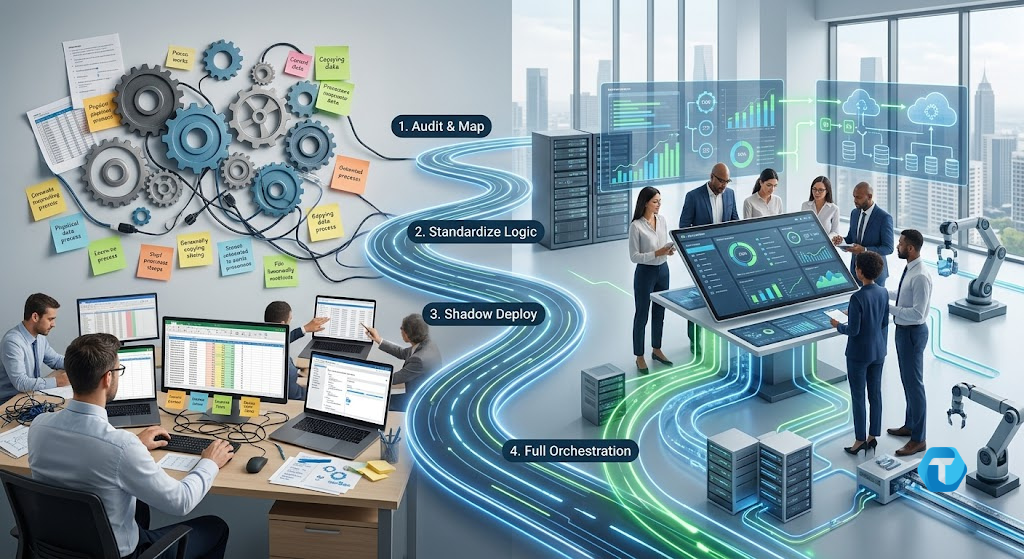
Business team using AI tools to improve productivity, automate tasks, analyze data, and support faster company growth.
Business Intelligence

How AI Can Help Companies Grow Faster

Introduction Artificial intelligence has moved from being a future-facing concept to a practical growth tool for businesses of all sizes. Companies are using AI to automate repetitive work, analyze large volumes of data, personalize customer experiences, and uncover opportunities that would be difficult to spot manually. This makes AI valuable not only for tech companies, but also for retail, finance, healthcare, service businesses, and startups that want to scale more efficiently. AI can help companies grow faster by improving efficiency, boosting customer engagement, and supporting better decisions. When used strategically, it can increase revenue, reduce costs, and shorten the time it takes to move from idea to execution. One of the biggest ways AI helps companies grow faster is by saving time. Tasks like sorting leads, generating reports, responding to common customer questions, and analyzing trends can be handled much more quickly with AI-powered tools. That gives teams more time to focus on strategy, creativity, and high-value work instead of routine operations. AI also improves decision-making by turning raw data into useful insights. Businesses can use predictive analytics to forecast demand, identify customer behavior patterns, and make more informed decisions about pricing, marketing, hiring, and product planning. Instead of relying only on intuition, leaders can act with greater confidence because they have better information at the right time. Another major advantage is customer growth. AI can help companies deliver more relevant recommendations, targeted marketing, faster support, and more personalized communication. When customers feel understood and get faster service, they are more likely to buy again, stay loyal, and recommend the brand to others. AI also supports faster scaling. As companies grow, it becomes harder to manage more customers, more data, and more operations without adding extra strain to the team. AI helps businesses expand without increasing headcount at the same pace by improving productivity and making processes more efficient. At the same time, companies need to use AI carefully. It works best when it supports people rather than replacing judgment, and when leaders pay attention to accuracy, privacy, and ethical use. Businesses that start with clear goals and measurable outcomes are more likely to see real growth from AI. Key benefits Faster automation of repetitive tasks. Better customer targeting and personalization. Smarter forecasting and planning. Improved productivity across teams. More efficient scaling with lower operational strain. Conclusion AI can help companies grow faster by making work more efficient, decisions more accurate, and customer experiences more personalized. The businesses that benefit most are the ones that use AI with a clear purpose and track the results carefully. In the long run, AI is not just a tool for saving time. It is a growth engine that can help companies compete better, respond faster, and scale smarter. FAQ How does AI help a company grow? AI helps companies grow by automating tasks, improving decisions, increasing productivity, and creating better customer experiences. Which business areas benefit most from AI? Marketing, sales, customer service, operations, hiring, and forecasting often see strong benefits from AI. Can small businesses use AI for growth? Yes, small businesses can use AI for content creation, customer support, marketing analytics, and workflow automation. Does AI replace employees? Usually no. AI is more effective when it supports employees and removes repetitive work so they can focus on higher-value tasks. What is the biggest advantage of AI for growth? The biggest advantage is that AI helps companies do more with less time, less waste, and better data. Should businesses start with one AI use case? Yes, starting with one clear business problem is the best way to measure value and reduce risk.

Artificial Intelligence, Business Intelligence, Digital Transformation, Technology

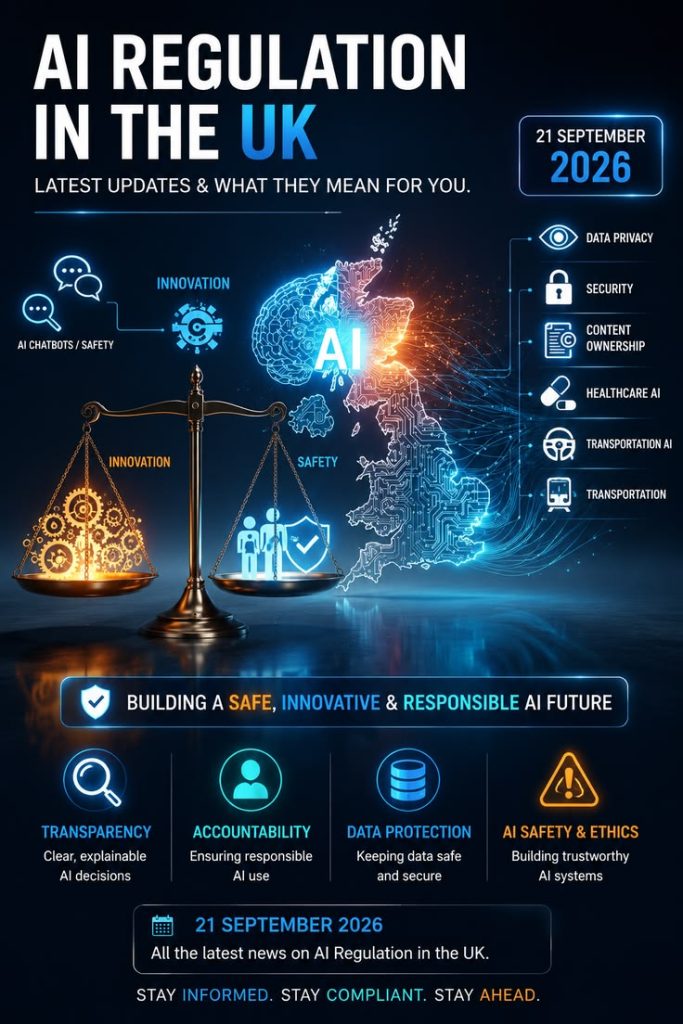
AI Governance in 2026: Balancing Innovation and Regulation

AI Governance in 2026: Balancing Innovation and Regulation Artificial intelligence has rapidly evolved from an emerging technology into a critical business and societal tool. From automating business operations and improving healthcare outcomes to powering advanced research and enhancing customer experiences, AI is transforming nearly every industry. However, as AI systems become more powerful and influential, concerns surrounding transparency, accountability, privacy, bias, and security continue to grow. In 2026, AI governance has become one of the most important topics in the technology landscape. Governments, regulators, technology companies, and enterprises are working together to create frameworks that encourage innovation while ensuring AI is developed and deployed responsibly. The challenge is clear: how can society unlock the enormous benefits of AI without exposing individuals, businesses, and governments to unnecessary risks? The answer lies in effective AI governance. What Is AI Governance? AI governance refers to the policies, standards, regulations, and organizational practices used to guide the development, deployment, and management of artificial intelligence systems. Its primary objectives include: Ensuring AI systems operate ethically Promoting transparency and accountability Protecting user privacy Reducing bias and discrimination Strengthening cybersecurity Maintaining regulatory compliance Building public trust Unlike traditional software governance, AI governance must address unique challenges associated with machine learning, generative AI, autonomous decision-making, and continuously evolving algorithms. As organizations increasingly rely on AI-powered systems for critical decisions, governance frameworks are becoming essential components of modern business operations. Why AI Governance Matters More Than Ever The rapid adoption of generative AI and autonomous systems has dramatically increased the importance of governance. Organizations are now using AI for: Financial decision-making Hiring and recruitment Healthcare diagnostics Customer service automation Cybersecurity monitoring Supply chain optimization Legal research Business intelligence While these applications offer significant benefits, they also introduce potential risks. An AI system that generates inaccurate information can damage a company’s reputation. A biased algorithm can lead to discrimination claims. Weak AI security controls can expose sensitive data to cybercriminals. Without proper governance, AI can become a liability instead of a competitive advantage. Businesses are realizing that governance is not merely about compliance—it is about creating sustainable and trustworthy AI ecosystems. The Global Push for AI Regulation One of the biggest developments in 2026 is the increasing focus on AI regulation worldwide. Governments recognize that artificial intelligence is reshaping economies, national security, labor markets, and public services. As a result, regulators are introducing policies designed to manage AI risks while encouraging innovation. Several key areas are receiving attention: Risk-Based AI Classification Many governments are adopting risk-based approaches to AI oversight. Under this model, AI applications are categorized according to their potential impact. Examples include: Low-Risk Systems Chatbots Recommendation engines Productivity assistants Medium-Risk Systems Customer service automation Business analytics platforms Educational AI tools High-Risk Systems Medical diagnosis systems Financial approval algorithms Law enforcement technologies Critical infrastructure management systems The higher the risk level, the stricter the governance requirements become. This approach helps regulators avoid unnecessary restrictions on innovation while focusing oversight where it is needed most. Transparency Requirements AI transparency has become a major regulatory priority. Users increasingly want to know: How AI systems make decisions What data is being used Whether content was AI-generated How organizations monitor AI outputs Transparency requirements are encouraging businesses to provide clearer explanations of AI-driven decisions and maintain detailed documentation of their AI models. Data Protection and Privacy AI systems require large amounts of data to function effectively. This has raised concerns about: User consent Data ownership Personal information protection Cross-border data transfers Governments are introducing stricter data governance rules to ensure AI systems respect privacy rights while still enabling innovation. Organizations that fail to comply may face significant financial penalties and reputational damage. Enterprise AI Governance Becomes a Strategic Priority In 2026, AI governance is no longer just the responsibility of compliance departments. It has become a boardroom issue. Executives recognize that poorly managed AI initiatives can create legal, financial, and operational risks. As a result, organizations are establishing dedicated AI governance programs that include: AI ethics committees Risk management teams Compliance officers Data governance specialists Cybersecurity professionals Legal advisors These teams work together to ensure AI projects align with business objectives, regulatory requirements, and ethical standards. Companies that implement robust governance frameworks are often able to deploy AI more confidently and at greater scale. Ethical AI Takes Center Stage Ethical AI has become one of the defining themes of AI governance. Businesses understand that compliance alone is not enough. Users expect AI systems to operate fairly, responsibly, and transparently. Ethical AI initiatives focus on several key principles. Fairness AI systems should treat all individuals fairly and avoid discriminatory outcomes. Organizations are investing in bias detection tools and model auditing processes to identify and mitigate unfair decision-making. Accountability There must be clear responsibility for AI-generated outcomes. Businesses are establishing governance structures that define who is accountable when AI systems make errors or produce harmful results. Human Oversight Despite significant advances in automation, human involvement remains critical. Many organizations require human review for high-impact decisions involving: Employment Healthcare Financial services Legal matters This ensures AI supports decision-making rather than replacing human judgment entirely. Transparency Users should understand when they are interacting with AI systems and how important decisions are made. Transparent AI helps build trust and reduces concerns about hidden algorithms influencing outcomes. The Rise of AI Audits Just as financial audits help ensure accountability in business operations, AI audits are becoming increasingly common. AI audits evaluate: Model performance Bias levels Security controls Regulatory compliance Data quality Decision-making processes Organizations are conducting regular assessments to verify that AI systems continue operating as intended. Independent third-party audits are also gaining popularity because they provide additional credibility and transparency. In many industries, AI auditing is becoming a standard governance practice. Managing Generative AI Risks Generative AI remains one of the most transformative technologies of the decade. Businesses are using AI tools to create: Marketing content Software code Product designs Business reports Customer communications Educational materials However, generative AI introduces unique governance challenges. Hallucinations AI models can

Artificial Intelligence, Business Intelligence, Data Analytics

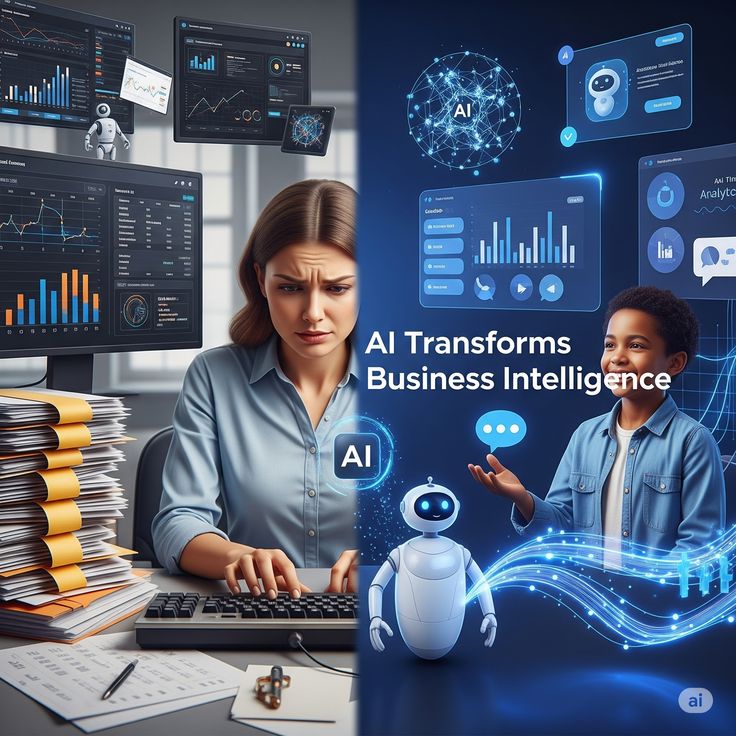
How AI Is Revolutionizing Business Intelligence and Analytics

Introduction In today’s digital economy, businesses generate massive amounts of data every second. From customer interactions and sales transactions to website activity and operational metrics, organizations have access to more information than ever before. However, collecting data alone is not enough. The real challenge lies in transforming that data into actionable insights that drive better business decisions. This is where Artificial Intelligence (AI) is changing the landscape of Business Intelligence (BI) and analytics. Traditional BI systems helped organizations analyze historical data and create reports. AI-powered BI takes this a step further by uncovering hidden patterns, predicting future outcomes, automating analysis, and providing real-time recommendations. As companies strive to remain competitive in rapidly changing markets, AI-driven business intelligence is becoming a critical tool for growth, efficiency, and innovation. What Is Business Intelligence? Business Intelligence refers to the technologies, processes, and strategies used to collect, analyze, and visualize business data. The primary goal of BI is to help organizations make informed decisions based on accurate information. Traditional BI solutions typically focus on: Data collection and storage Reporting and dashboards Performance monitoring Historical data analysis Trend identification While these capabilities remain valuable, modern businesses require deeper insights and faster decision-making. AI addresses these needs by enhancing the capabilities of conventional BI platforms. The Growing Role of AI in Business Intelligence Artificial Intelligence enables machines to analyze data, learn from patterns, and make predictions with minimal human intervention. When integrated with business intelligence systems, AI helps organizations move from descriptive analytics to predictive and prescriptive analytics. Instead of simply answering questions like: “What happened?” AI-powered systems can answer: “Why did it happen?” “What is likely to happen next?” “What actions should we take?” This shift allows businesses to become more proactive rather than reactive. Automated Data Analysis One of the biggest advantages of AI in business intelligence is automation. Traditional data analysis often requires teams of analysts to collect data, clean datasets, create reports, and identify trends manually. This process can take hours or even days. AI-powered analytics platforms can automate many of these tasks by: Cleaning and organizing data Detecting anomalies Identifying trends Generating reports Highlighting important insights Automation reduces human error and enables organizations to analyze larger volumes of data much faster. For example, a retail company can automatically monitor thousands of products and instantly identify unusual changes in sales patterns without requiring manual investigation. Predictive Analytics: Looking Into the Future Predictive analytics is one of the most impactful applications of AI in business intelligence. Using historical data and machine learning algorithms, AI can forecast future outcomes with impressive accuracy. Businesses use predictive analytics to: Forecast sales demand Predict customer behavior Estimate inventory requirements Identify market trends Reduce operational risks For instance, an e-commerce company can predict which products will experience increased demand during upcoming seasons and adjust inventory levels accordingly. This proactive approach helps organizations improve efficiency and reduce costs. Real-Time Decision Making Modern businesses operate in fast-moving environments where decisions often need to be made instantly. Traditional BI systems typically rely on periodic reports, which may already be outdated by the time they are reviewed. AI-driven analytics platforms continuously process incoming data and provide real-time insights. Benefits include: Faster response to market changes Improved customer service Immediate detection of operational issues Better financial monitoring Enhanced risk management For example, financial institutions can detect suspicious transactions in real time and prevent fraudulent activities before significant damage occurs. Enhanced Data Visualization Data visualization is a core component of business intelligence. AI is making dashboards smarter and easier to understand by automatically identifying key insights and presenting them in visually meaningful ways. Advanced BI tools can: Highlight critical trends automatically Generate dynamic charts and graphs Explain data patterns in plain language Customize dashboards for different users Instead of manually searching through hundreds of charts, decision-makers receive instant summaries of the most important business developments. This significantly improves productivity and decision quality. Natural Language Queries One of the most user-friendly innovations in AI-powered business intelligence is Natural Language Processing (NLP). NLP allows users to interact with BI systems using everyday language. Rather than writing complex database queries, users can simply ask questions such as: “What were our top-selling products last month?” “Why did sales decline in the northern region?” “Which customer segment generated the highest revenue?” The system then analyzes data and provides answers instantly. This capability makes data analysis accessible to employees without technical expertise, promoting a stronger data-driven culture throughout the organization. Improving Customer Insights Understanding customer behavior is essential for business success. AI-powered analytics helps organizations gain deeper insights into customer preferences, buying patterns, and engagement trends. Businesses can analyze: Purchase history Website interactions Social media activity Customer feedback Support requests By combining these data sources, AI creates a comprehensive customer profile that enables personalized experiences. Organizations can use these insights to: Improve marketing campaigns Increase customer retention Enhance product recommendations Deliver personalized services As a result, businesses can strengthen customer relationships and drive higher revenue. Fraud Detection and Risk Management Many industries face increasing challenges related to fraud and risk. AI significantly improves risk management by continuously monitoring transactions and identifying suspicious behavior. Machine learning algorithms can detect unusual patterns that may indicate: Financial fraud Cybersecurity threats Compliance violations Operational risks Unlike traditional rule-based systems, AI continuously learns and adapts to emerging threats. This capability helps organizations reduce financial losses and improve security. Supply Chain Optimization Supply chain management generates enormous amounts of operational data. AI-powered business intelligence solutions help companies optimize supply chains through advanced analytics and forecasting. Key benefits include: Demand prediction Inventory optimization Supplier performance monitoring Logistics planning Cost reduction For example, manufacturers can predict supply shortages before they occur and take preventive action to avoid production delays. This leads to greater efficiency and improved customer satisfaction. Personalized Business Strategies Every business operates under unique conditions and objectives. AI enables organizations to develop personalized strategies based on their specific data and performance metrics. Instead of relying solely on industry averages, companies can make decisions based on:

Artificial Intelligence, Business Intelligence

The Rise of AI Employees: Will Digital Workers Become Mainstream?

The Rise of AI Employees: Will Digital Workers Become Mainstream? Artificial Intelligence has already transformed the way businesses operate, from automating repetitive tasks to enhancing customer experiences. However, a new evolution in AI technology is beginning to reshape workplaces on a much larger scale: AI employees. Unlike traditional software tools that assist workers with specific tasks, AI employees are designed to function more like digital coworkers. They can manage workflows, communicate with customers, analyze data, make recommendations, and even execute complex business processes with minimal human intervention. As organizations continue to seek greater efficiency, lower operational costs, and improved productivity, AI employees are rapidly moving from experimental projects to practical business solutions. Technology leaders, startups, and enterprise organizations are investing heavily in AI-powered agents that can perform roles traditionally handled by humans. This shift raises important questions. Will digital workers become a standard part of every organization? How will they impact jobs and workplace dynamics? What benefits and challenges do they bring? Understanding the rise of AI employees provides valuable insight into the future of work and the next phase of digital transformation. Understanding AI Employees The term “AI employee” refers to an artificial intelligence system capable of performing work-related tasks autonomously or semi-autonomously. These systems go beyond simple automation tools because they can understand context, learn from interactions, make decisions, and adapt to changing business requirements. AI employees often leverage advanced technologies such as machine learning, natural language processing, large language models, and workflow automation platforms. They can interact with humans through chat interfaces, email, voice communication, and enterprise software systems. Unlike traditional automation software, AI employees can handle more dynamic responsibilities, including: Responding to customer inquiries Scheduling meetings Managing project workflows Conducting research Generating reports Processing business documents Supporting sales operations Assisting human resources teams Monitoring cybersecurity threats Managing inventory and supply chains The growing capabilities of AI systems are enabling businesses to treat them as active contributors rather than passive tools. Why Businesses Are Adopting AI Employees Organizations face increasing pressure to remain competitive while controlling costs and improving operational efficiency. AI employees offer several advantages that make them attractive to businesses of all sizes. Increased Productivity One of the primary reasons companies adopt AI employees is productivity improvement. Digital workers can operate continuously without breaks, allowing organizations to complete tasks faster and maintain around-the-clock operations. Routine administrative activities that once consumed significant employee time can now be handled automatically, enabling human workers to focus on strategic and creative responsibilities. Cost Efficiency Hiring, training, and retaining employees involves substantial expenses. While AI systems require investment, they can significantly reduce operational costs over time by automating repetitive processes and minimizing manual workloads. For businesses managing large volumes of customer interactions, transactions, or documentation, AI employees can provide substantial financial benefits. Faster Decision-Making AI employees can process vast amounts of data within seconds. This capability enables organizations to make informed decisions more quickly than traditional methods. From analyzing market trends to identifying operational bottlenecks, AI-powered systems can generate insights that help leaders respond to opportunities and challenges in real time. Improved Customer Service Modern consumers expect instant responses and personalized experiences. AI employees can deliver both. Digital customer service agents can answer questions, resolve common issues, and guide customers through processes at any time of day. This enhances customer satisfaction while reducing the workload on support teams. Scalability Human teams often require significant resources to expand operations. AI employees can scale much more efficiently. Whether a company experiences seasonal demand spikes or rapid business growth, AI-powered systems can often adapt without requiring large increases in staffing. The Evolution from Chatbots to Digital Workers Many people associate AI in business with chatbots, but AI employees represent a major advancement beyond traditional conversational systems. Early chatbots followed scripted workflows and could only answer predefined questions. Their capabilities were limited and often frustrating for users. Today’s AI employees can: Understand complex requests Maintain conversational context Access multiple business systems Complete multi-step tasks Generate original content Learn from interactions Collaborate with human employees This evolution has transformed AI from a customer support tool into a versatile workforce solution capable of contributing across entire organizations. Industries Leading the Adoption of AI Employees Several industries are already embracing AI employees and demonstrating how digital workers can create measurable value. Customer Service Customer support remains one of the largest areas for AI adoption. AI employees can manage inquiries, process requests, provide technical assistance, and resolve common issues without human intervention. This reduces response times and improves service availability. Healthcare Healthcare organizations use AI employees to support administrative operations, appointment scheduling, patient communication, and medical documentation. These systems help reduce administrative burdens and allow healthcare professionals to focus more on patient care. Financial Services Banks and financial institutions increasingly rely on AI employees for fraud detection, risk analysis, compliance monitoring, and customer assistance. The ability to analyze large datasets quickly makes AI particularly valuable in the financial sector. Human Resources Recruitment and employee management involve many repetitive tasks that AI employees can handle efficiently. Digital workers assist with resume screening, candidate communication, interview scheduling, onboarding, and employee support. Marketing Marketing teams are leveraging AI employees to create content, analyze campaign performance, conduct audience research, and personalize customer engagement strategies. These capabilities help organizations improve marketing effectiveness while reducing manual effort. Manufacturing Manufacturers use AI employees to monitor equipment performance, optimize production schedules, predict maintenance needs, and improve supply chain operations. The result is greater operational efficiency and reduced downtime. How AI Employees Are Changing Workplace Roles The introduction of AI employees does not necessarily mean the elimination of human workers. Instead, it often changes how work is performed. Employees increasingly spend less time on repetitive administrative tasks and more time on activities that require creativity, critical thinking, emotional intelligence, and strategic planning. Many organizations are adopting a collaborative model where humans and AI employees work together. For example: Sales representatives use AI to analyze customer data. Marketers use AI to generate campaign ideas. Project managers use

Artificial Intelligence, Business Analytics, Business Intelligence, Data Privacy & Security, Digital Transformation

AI Agents in 2026: How Autonomous Systems Are Transforming Business Operations

Introduction Artificial Intelligence has moved far beyond simple chatbots and recommendation engines. In 2026, AI agents are becoming one of the most influential technologies shaping modern businesses. These intelligent systems are capable of understanding goals, making decisions, performing tasks, and even coordinating with other software tools with minimal human intervention. What once required teams of employees and multiple software platforms can now be managed by autonomous AI systems that work continuously and efficiently. The rise of AI agents marks a significant shift in how organizations approach productivity, operations, and decision-making. Rather than serving only as assistants, AI systems are increasingly acting as digital workers that can execute complex workflows, analyze large volumes of information, and adapt to changing business conditions in real time. As companies continue to invest in automation and digital transformation, AI agents are emerging as a critical component of business strategy. Their ability to reduce operational costs, improve efficiency, and accelerate innovation is changing the way organizations operate across industries. What Are AI Agents? AI agents are autonomous software systems designed to perform tasks on behalf of users or organizations. Unlike traditional automation tools that follow predefined rules, AI agents can understand context, learn from interactions, make decisions, and take actions to achieve specific objectives. These systems combine advanced artificial intelligence technologies such as large language models, machine learning, natural language processing, and workflow automation. They can interact with applications, access databases, communicate with users, and execute tasks without requiring constant human supervision. For example, an AI agent can receive a request to prepare a market research report, gather information from multiple sources, analyze trends, generate insights, create a presentation, and deliver the final report automatically. Instead of performing one isolated function, it manages an entire process from start to finish. This capability is what makes AI agents fundamentally different from conventional software automation solutions. Why AI Agents Are Gaining Momentum in 2026 Several factors are contributing to the rapid adoption of AI agents across industries. Businesses are generating more data than ever before, creating a growing need for systems that can process and interpret information quickly. At the same time, organizations face increasing pressure to improve efficiency while reducing operational costs. Advancements in generative AI and large language models have significantly improved the reasoning and decision-making abilities of AI systems. Modern AI agents can understand complex instructions, maintain context across multiple tasks, and interact naturally with both humans and software applications. Cloud computing infrastructure has also made it easier for businesses to deploy and scale AI-powered solutions. Organizations no longer need extensive hardware investments to access advanced AI capabilities. The combination of these technological developments has created an environment where AI agents can deliver measurable business value across a wide range of functions. How AI Agents Work At their core, AI agents operate through a cycle of perception, reasoning, action, and learning. First, the agent gathers information from its environment. This may include user requests, business data, emails, documents, databases, or external sources. Next, the system analyzes the information and determines the best course of action based on predefined objectives. Advanced reasoning models help the agent evaluate different possibilities and choose appropriate responses. Once a decision is made, the AI agent executes the required actions. This may involve sending emails, updating records, generating reports, scheduling meetings, processing transactions, or interacting with other software systems. Finally, the agent learns from outcomes and feedback to improve future performance. Over time, this continuous learning process helps the system become more effective and accurate. This ability to independently manage workflows makes AI agents particularly valuable in complex business environments. Transforming Customer Service Operations Customer service is one of the areas experiencing the most significant impact from AI agents. Traditional customer support often involves long wait times, repetitive inquiries, and high operational costs. AI agents are helping organizations overcome these challenges by providing instant, personalized, and scalable support. Modern AI customer service agents can understand customer questions, access relevant information, resolve issues, process requests, and escalate complex cases when necessary. They operate around the clock, ensuring customers receive assistance whenever needed. Beyond answering questions, AI agents can proactively identify potential issues, recommend solutions, and follow up with customers to ensure satisfaction. Businesses using AI-powered customer support systems are reporting faster response times, improved customer experiences, and reduced service costs. Revolutionizing Human Resources Management Human Resources departments are increasingly adopting AI agents to streamline administrative tasks and improve employee experiences. Recruitment is one area where these systems are delivering significant benefits. AI agents can screen resumes, schedule interviews, communicate with candidates, and identify suitable applicants based on specific job requirements. Employee onboarding processes are also becoming more efficient. AI agents can guide new hires through documentation, answer common questions, provide training materials, and ensure compliance requirements are completed. In addition, AI systems can assist with performance evaluations, workforce planning, employee engagement initiatives, and professional development recommendations. By automating routine administrative work, HR teams can focus more on strategic initiatives and employee relationships. Enhancing Sales and Marketing Performance Sales and marketing teams are using AI agents to improve customer engagement, generate leads, and optimize campaigns. AI-powered sales agents can identify potential customers, analyze purchasing behavior, personalize outreach efforts, and recommend next steps for sales representatives. These capabilities help organizations improve conversion rates and accelerate revenue growth. Marketing teams benefit from AI agents that can create content, monitor campaign performance, analyze audience behavior, and adjust strategies based on real-time insights. For example, an AI agent may automatically identify underperforming advertisements, suggest improvements, allocate budgets more effectively, and generate detailed performance reports. This level of automation allows businesses to respond more quickly to market changes and customer preferences. Improving Financial Operations Financial management is another area where AI agents are creating substantial value. Organizations handle large volumes of financial data every day, making accuracy and efficiency critical. AI agents can automate invoice processing, expense management, budgeting, forecasting, and financial reporting. These systems can identify unusual transactions, detect potential fraud, and alert financial teams to

Artificial Intelligence, Business Intelligence, Cloud Computing and Technology

AI-Powered Customer Experience: The Next Evolution of Personalization

Introduction Customer expectations have changed dramatically over the past decade. Modern consumers no longer want generic interactions, mass marketing campaigns, or one-size-fits-all services. They expect businesses to understand their preferences, anticipate their needs, and deliver personalized experiences across every touchpoint. In an increasingly digital world, personalization has become a key factor that influences purchasing decisions, customer loyalty, and brand perception. This shift in expectations has created new opportunities and challenges for organizations. While traditional personalization methods relied on basic customer data and manual segmentation, they often struggled to keep pace with evolving customer behaviors. Today, Artificial Intelligence (AI) is revolutionizing how businesses interact with customers by enabling real-time, intelligent, and highly personalized experiences at scale. AI-powered customer experience is no longer a futuristic concept. It is already transforming industries such as retail, banking, healthcare, telecommunications, travel, and e-commerce. From personalized recommendations and intelligent chatbots to predictive analytics and sentiment analysis, AI is helping organizations create deeper customer relationships while improving operational efficiency. As businesses compete for customer attention in an increasingly crowded marketplace, AI-driven personalization is becoming one of the most important competitive advantages. Organizations that successfully leverage AI can deliver experiences that feel more human, relevant, and valuable than ever before. Understanding AI-Powered Customer Experience AI-powered customer experience refers to the use of artificial intelligence technologies to enhance interactions between businesses and customers. These technologies analyze vast amounts of customer data, identify patterns, learn from user behavior, and generate insights that help organizations provide more personalized services. Unlike traditional systems that rely on predefined rules, AI continuously learns and adapts based on customer interactions. This allows businesses to deliver recommendations, support, and communications that align with individual customer preferences. The foundation of AI-powered customer experience includes technologies such as: Machine Learning Natural Language Processing (NLP) Predictive Analytics Computer Vision Generative AI Conversational AI Sentiment Analysis Together, these technologies enable businesses to understand customers more accurately and respond more effectively. Why Personalization Matters More Than Ever Customers today interact with brands through multiple channels including websites, mobile applications, social media platforms, emails, and physical stores. They expect seamless experiences regardless of where and how they engage with a business. Research consistently shows that customers are more likely to purchase from brands that provide personalized experiences. Personalized interactions make customers feel valued, understood, and appreciated, leading to stronger emotional connections and long-term loyalty. Some key benefits of personalization include: Increased customer satisfaction Higher conversion rates Improved customer retention Stronger brand loyalty Better customer engagement Increased revenue opportunities However, delivering personalized experiences to millions of customers simultaneously would be nearly impossible without AI. How AI Is Revolutionizing Personalization Intelligent Product Recommendations One of the most visible applications of AI is personalized product recommendations. AI systems analyze customer browsing history, purchase behavior, preferences, and interactions to suggest products that align with individual interests. Instead of showing the same products to every visitor, AI creates unique experiences for each customer. This not only improves user satisfaction but also increases sales and average order value. Modern recommendation engines can consider hundreds of variables simultaneously, allowing businesses to provide highly accurate suggestions that feel relevant and timely. Predictive Customer Insights AI enables businesses to move from reactive customer service to proactive customer engagement. By analyzing historical and real-time data, AI can predict: Future purchasing behavior Customer churn risks Product preferences Service requirements Potential complaints Customer lifetime value These insights allow businesses to take preventive actions before issues arise, improving overall customer satisfaction. For example, a subscription-based company can identify customers likely to cancel their membership and offer personalized incentives to retain them. Conversational AI and Virtual Assistants Customer support has undergone significant transformation through AI-powered chatbots and virtual assistants. Modern conversational AI systems can: Answer customer questions instantly Provide product recommendations Process transactions Resolve common issues Guide users through complex processes Offer multilingual support Unlike traditional support systems that require customers to wait for human agents, AI assistants provide immediate responses around the clock. As Natural Language Processing continues to improve, these interactions are becoming increasingly natural and human-like. Hyper-Personalized Marketing Campaigns Traditional marketing often targets broad audience segments. AI takes personalization much further by enabling one-to-one marketing. AI analyzes customer behavior, demographics, interests, and engagement patterns to create highly targeted campaigns. Businesses can automatically personalize: Email content Website experiences Product recommendations Promotional offers Social media advertisements Mobile app notifications This level of personalization significantly increases engagement rates while reducing marketing waste. Sentiment Analysis and Emotional Intelligence Understanding customer emotions has always been challenging for businesses. AI is changing that through sentiment analysis. AI systems can analyze: Customer reviews Social media posts Survey responses Support conversations Online feedback By identifying positive, negative, or neutral sentiments, businesses gain valuable insights into customer perceptions and experiences. This helps organizations respond quickly to emerging issues, improve services, and strengthen customer relationships. The Rise of Generative AI in Customer Experience Generative AI has become one of the most transformative technologies in recent years. Unlike traditional AI systems that primarily analyze data, generative AI can create content, conversations, recommendations, and solutions. Businesses are increasingly using generative AI to: Generate personalized email responses Create customized product descriptions Provide intelligent customer support Develop personalized shopping experiences Produce tailored content recommendations Customers benefit from faster responses and more relevant interactions, while organizations achieve greater efficiency and scalability. Generative AI also helps customer service teams by summarizing conversations, suggesting responses, and providing real-time assistance during customer interactions. Omnichannel Personalization Powered by AI Modern customers expect consistent experiences across multiple channels. They do not want to repeat information every time they switch from a website to a mobile app or contact customer support. AI enables omnichannel personalization by creating a unified customer profile that integrates data from various sources. This allows businesses to: Recognize customers across channels Maintain conversation continuity Deliver consistent recommendations Provide context-aware support Improve customer journey management As a result, customers experience smoother and more personalized interactions regardless of where they engage with a brand. AI and Customer Journey Optimization Every customer

Artificial Intelligence, Business Intelligence

AI Agents in the Workplace: From Assistants to Autonomous Decision Makers

AI Agents in the Workplace: From Assistants to Autonomous Decision Makers Artificial Intelligence has already transformed the way businesses operate, but a new generation of AI technology is pushing workplace innovation even further. While most people are familiar with AI assistants that answer questions, schedule meetings, or help draft emails, today’s AI agents are becoming capable of much more. They can analyze information, make decisions, execute tasks, and continuously learn from outcomes with minimal human intervention. The shift from AI assistants to autonomous AI agents represents one of the most significant technological developments of the decade. Organizations across industries are exploring how these intelligent systems can streamline operations, improve customer experiences, and increase efficiency while reducing operational costs. As businesses continue their digital transformation journeys, AI agents are quickly becoming valuable team members rather than just software tools. Understanding how AI agents work, what benefits they offer, and the challenges they present is essential for organizations looking to remain competitive in an increasingly AI-driven world. Understanding AI Agents Traditional AI assistants are designed to respond to user requests. They wait for instructions, process queries, and provide outputs based on predefined interactions. Examples include virtual assistants that answer customer questions, generate content, or help employees find information. AI agents, however, take things a step further. Instead of simply responding to commands, they can independently plan, execute, monitor, and optimize tasks to achieve specific objectives. These systems are goal-oriented and capable of making decisions based on real-time data and changing circumstances. An AI agent typically combines several capabilities: Natural language understanding Data analysis and interpretation Decision-making logic Task execution Continuous learning and adaptation Integration with business systems and applications This combination allows AI agents to function more like digital coworkers than traditional software applications. The Evolution of Workplace AI The journey of workplace AI has evolved through several distinct phases. Initially, businesses used rule-based automation systems to handle repetitive tasks. These systems followed fixed instructions and could not adapt to unexpected situations. The next phase introduced AI-powered assistants capable of understanding human language and providing intelligent responses. These tools improved productivity by helping employees access information more efficiently. Today, AI agents represent the latest stage of this evolution. Rather than simply assisting users, they can independently complete complex workflows that previously required human involvement. This transition is changing how organizations think about productivity, workforce management, and operational efficiency. Businesses are moving from asking, “How can AI help employees?” to asking, “Which tasks can AI complete on its own?” How AI Agents Are Transforming the Workplace AI agents are being deployed across various departments and business functions. Their ability to operate autonomously enables organizations to automate increasingly sophisticated processes. Customer Service and Support Customer service is one of the areas experiencing the greatest impact from AI agents. Traditional chatbots could answer basic questions, but modern AI agents can handle entire customer interactions from start to finish. They can: Understand customer intent Access customer records Resolve issues automatically Process refunds Escalate complex cases when necessary Follow up after resolution This reduces response times while improving customer satisfaction and lowering operational costs. Human Resources HR departments are increasingly using AI agents to manage administrative tasks and improve employee experiences. AI agents can: Screen resumes Schedule interviews Answer employee questions Assist with onboarding Track compliance requirements Generate HR reports By automating routine activities, HR professionals can focus on strategic initiatives such as talent development and employee engagement. Sales and Marketing Sales and marketing teams generate large amounts of data daily. AI agents help transform this data into actionable insights. These systems can: Identify sales opportunities Qualify leads Personalize marketing campaigns Monitor customer behavior Predict purchasing trends Optimize advertising strategies As a result, businesses can improve conversion rates and create more targeted customer experiences. Finance and Accounting Financial operations require accuracy, speed, and compliance. AI agents are becoming valuable assets in managing these responsibilities. Applications include: Invoice processing Expense management Financial forecasting Fraud detection Budget analysis Regulatory compliance monitoring By automating these tasks, organizations reduce errors and improve financial decision-making. IT Operations and Cybersecurity Modern IT environments are highly complex, making them ideal candidates for AI-driven automation. AI agents can: Monitor networks continuously Detect anomalies Respond to security threats Troubleshoot system issues Manage software updates Optimize infrastructure performance This proactive approach helps organizations strengthen security and minimize downtime. The Rise of Autonomous Decision-Making One of the most transformative aspects of AI agents is their growing ability to make decisions independently. Autonomous decision-making does not mean replacing human judgment entirely. Instead, AI agents handle routine and data-intensive decisions while humans maintain oversight of strategic and high-risk choices. For example, an AI agent managing inventory can automatically reorder products when stock levels fall below predefined thresholds. It can analyze sales trends, supplier performance, and seasonal demand to determine the optimal purchasing strategy without requiring constant human intervention. Similarly, in customer service environments, AI agents can decide the best course of action for resolving common issues based on historical outcomes and customer preferences. As AI systems become more sophisticated, their decision-making capabilities will continue expanding across industries. Benefits of AI Agents in the Workplace Organizations adopting AI agents are experiencing a wide range of benefits that extend beyond simple automation. Increased Productivity AI agents work around the clock without breaks, allowing businesses to complete tasks faster and more consistently. Employees spend less time on repetitive work and more time on high-value activities. Improved Accuracy Human errors can lead to costly mistakes, especially in areas such as finance, compliance, and data management. AI agents help reduce errors by following standardized processes and analyzing data systematically. Faster Decision-Making Businesses generate enormous volumes of data every day. AI agents can process this information in real time, enabling quicker and more informed decisions. Cost Reduction Automating routine tasks reduces labor costs and improves operational efficiency. Organizations can achieve more with existing resources while maintaining service quality. Enhanced Customer Experiences Customers increasingly expect instant responses and personalized interactions. AI agents can deliver consistent, high-quality

Artificial Intelligence, Business Intelligence, Digital Transformation, enterprise

Agentic AI: How Autonomous AI Agents Are Changing Business Workflows

Agentic AI: How Autonomous AI Agents Are Changing Business Workflows Artificial Intelligence has rapidly evolved from being a futuristic concept to becoming a critical component of modern business operations. Over the past few years, organizations have adopted AI-powered tools to automate repetitive tasks, improve customer experiences, and enhance decision-making. However, the latest advancement in this technological journey is Agentic AI—a new generation of AI systems capable of acting autonomously, making decisions, and completing complex workflows with minimal human intervention. Unlike traditional AI systems that require continuous prompts and instructions, Agentic AI can independently analyze situations, plan actions, execute tasks, and adapt based on outcomes. This shift represents one of the most significant developments in business technology, offering organizations unprecedented levels of efficiency, productivity, and scalability. As businesses face increasing competition and growing operational complexity, Agentic AI is emerging as a powerful solution capable of transforming how work gets done. From customer service and sales to software development and project management, autonomous AI agents are redefining business workflows across industries. In this article, we’ll explore what Agentic AI is, how it works, its business applications, benefits, challenges, and why it is poised to become a cornerstone of future enterprise operations. Understanding Agentic AI Agentic AI refers to artificial intelligence systems designed to operate as autonomous agents. These agents can perceive their environment, understand goals, create plans, make decisions, and take actions without requiring constant human supervision. Traditional AI tools generally perform specific tasks based on direct user input. For example, a chatbot may answer questions, or an AI image generator may create images based on prompts. Agentic AI goes several steps further. Instead of merely responding to commands, autonomous AI agents can: Understand objectives Break down complex tasks into smaller actions Gather necessary information Make decisions based on available data Execute workflows independently Learn from outcomes and adjust strategies This capability transforms AI from a passive assistant into an active digital worker capable of managing entire business processes. The Evolution from Traditional AI to Agentic AI The development of Agentic AI represents the next stage in the evolution of artificial intelligence. Traditional Automation Early automation systems followed predefined rules. They could execute repetitive tasks but lacked flexibility and intelligence. Examples include: Email automation Data entry automation Scheduled reporting systems Machine Learning Systems Machine learning introduced predictive capabilities. These systems could identify patterns and make recommendations based on data. Examples include: Recommendation engines Fraud detection systems Predictive analytics tools Generative AI Generative AI expanded AI capabilities by creating content such as text, images, code, and videos. Examples include: AI writing assistants Image generation platforms Coding assistants Agentic AI Agentic AI combines reasoning, planning, memory, and action capabilities. Instead of assisting users with individual tasks, autonomous agents can complete entire workflows from start to finish. This progression marks a fundamental shift from AI tools that simply respond to requests toward AI systems that actively pursue objectives. How Agentic AI Works To understand its business value, it’s important to know how Agentic AI functions. 1. Goal Understanding An AI agent begins by understanding the objective provided by the user or organization. For example: “Generate a market research report for the healthcare industry.” The agent interprets the request and identifies the required steps. 2. Planning The system creates a strategic plan to accomplish the objective. This may involve: Researching industry data Gathering competitor information Analyzing trends Creating visual reports Drafting conclusions 3. Execution The AI agent performs tasks independently using available tools and resources. It may: Search databases Access internal documents Analyze spreadsheets Generate reports Send notifications 4. Monitoring Throughout execution, the agent evaluates progress and adjusts actions when necessary. 5. Learning Advanced agents continuously improve performance by learning from previous experiences and outcomes. This combination of reasoning, planning, execution, and adaptation enables Agentic AI to handle increasingly sophisticated business processes. Why Businesses Are Embracing Agentic AI Organizations worldwide are investing heavily in Agentic AI because of its ability to improve operational efficiency while reducing costs. Several factors are driving adoption: Growing Data Volumes Businesses generate enormous amounts of data daily. Human teams often struggle to process and analyze this information efficiently. Agentic AI can monitor, analyze, and extract insights from large datasets in real time. Need for Faster Decision-Making Competitive markets require rapid responses. Autonomous agents can process information and make recommendations significantly faster than traditional workflows. Workforce Productivity Employees spend substantial time on repetitive administrative tasks. AI agents can automate these activities, allowing workers to focus on strategic and creative responsibilities. Cost Optimization Reducing manual effort leads to lower operational expenses while maintaining high levels of productivity. Business Applications of Agentic AI Agentic AI is transforming numerous departments across organizations. Customer Support Customer service is one of the most impactful areas for AI adoption. Autonomous agents can: Handle customer inquiries Resolve common issues Process refunds Escalate complex cases Provide 24/7 support This improves customer satisfaction while reducing support costs. Sales and Lead Generation Sales teams spend considerable time identifying prospects and nurturing leads. AI agents can: Research potential customers Qualify leads Schedule meetings Send follow-up emails Generate sales insights As a result, sales professionals can focus on closing deals rather than administrative work. Marketing Automation Marketing departments can leverage Agentic AI for: Content creation Campaign optimization Audience segmentation Competitor analysis Social media management AI agents continuously monitor performance and make adjustments to improve results. Human Resources HR teams are increasingly using AI agents to streamline recruitment and employee management. Applications include: Resume screening Candidate ranking Interview scheduling Employee onboarding Performance tracking This reduces hiring time and improves recruitment efficiency. Software Development Agentic AI is making a major impact in software engineering. AI agents can: Write code Detect bugs Conduct testing Generate documentation Monitor system performance Development teams benefit from faster release cycles and improved software quality. Finance and Accounting Financial departments use autonomous AI agents for: Invoice processing Expense tracking Financial forecasting Fraud detection Compliance monitoring These capabilities reduce errors and improve financial accuracy. Benefits of Agentic AI for Businesses Increased Productivity

Business Analytics, Business Intelligence, Data Analytics, Digital Transformation

The Role of Data Analytics in Business Growth and Decision-Making

The Role of Data Analytics in Business Growth and Decision-Making For generation after generation, the ultimate business icon was the “gut-instinct executive.” We’ve all seen this character celebrated in business memoirs and biographies—the visionary leader who walks into a high-stakes boardroom, ignores the paperwork, listens to their inner voice, and makes a massive, multi-million-dollar gamble that somehow pays off perfectly. It was a romantic, thrilling way to think about entrepreneurship. But if you peel back the curtain on the businesses that are consistently dominating their industries today, you’ll find that the era of relying entirely on blind gut feelings is officially over. Running a business in 2026 without data analytics is the equivalent of flying a commercial airliner in a dense storm with the windshield blacked out and the dashboard instruments turned off. You might feel like you’re moving in the right direction, but you are structurally blind to the terrain around you. Data analytics isn’t about burying your company under cold, intimidating mountains of mathematical equations or sterile code blocks. At its heart, data analytics is a deeply human pursuit: it is the act of turning raw, chaotic digital footprints into clear, actionable stories. It is the compass that takes the terrifying guesswork out of scaling a business. Let’s dive deep into the real-world role of data analytics, how it reshapes corporate decision-making, and how your enterprise can leverage it to fuel sustainable growth. 1. The Maturity Curve: Moving Beyond the Rearview Mirror Many organizations believe they are practicing data analytics simply because they review a monthly financial statement or track basic website traffic hits. But data analytics isn’t a single, static task; it is a progressive maturity curve. To truly unlock business growth, an organization must transition from looking backward to looking forward. ┌─────────────────────────────────────────┐ │ THE DATA ANALYTICS CONTINUUM │ └────────────────────┬────────────────────┘ │ ┌───────────────────┬─────────────┴─────────────┬───────────────────┐ ▼ ▼ ▼ ▼ ┌─────────────────┐ ┌─────────────────┐ ┌─────────────────┐ ┌─────────────────┐ │ Descriptive │ │ Diagnostic │ │ Predictive │ │ Prescriptive │ │ Analytics │ │ Analytics │ │ Analytics │ │ Analytics │ ├─────────────────┤ ├─────────────────┤ ├─────────────────┤ ├─────────────────┤ │ “What happened?”│ │ “Why did it │ │ “What is likely │ │ “How can we │ │ (The Past) │ │ happen?” │ │ to happen?” │ │ make it happen?”│ └─────────────────┘ └─────────────────┘ └─────────────────┘ └─────────────────┘ Phase 1: Descriptive Analytics (“What happened?”) This is the foundational baseline. It compiles historical data to show you the past. It looks like your basic QuickBooks reports, monthly sales totals, or social media engagement tallies. It tells you the state of the union, but it doesn’t explain the underlying mechanics. Phase 2: Diagnostic Analytics (“Why did it happen?”) This phase digs below the surface to uncover anomalies and correlations. If your sales suddenly dropped by 15% in May, diagnostic analytics isolates the variables: it cross-references the drop with a simultaneous technical glitch on your checkout page or a aggressive ad campaign launched by a direct competitor. Phase 3: Predictive Analytics (“What is likely to happen?”) This is where data begins to actively drive growth. By feeding historic patterns and current market variables into statistical models, businesses can forecast future consumer trends, seasonal demand spikes, and inventory constraints with incredible precision. Phase 4: Prescriptive Analytics (“How can we make it happen?”) The absolute peak of the curve. Prescriptive analytics doesn’t just predict a future scenario; it acts as an automated strategic advisor, testing thousands of simulations to recommend the exact business moves, pricing adjustments, or supply chain changes required to optimize your profit margin. 2. Transforming the Boardroom: From Loudest Opinion to Hard Truths We’ve all sat in business meetings that quickly devolved into an exhausting shouting match. The marketing director is convinced the company needs to spend more money on video ads because of a trend they saw online. The sales director insists that discounting the product tier is the only way to hit quarterly targets. Traditionally, the tie-breaking vote went to the HIPPO—the Highest Paid Person’s Opinion. Data analytics completely re-engineers this toxic cultural dynamic. When an organization embraces data fluency, decisions are democratized and stripped of personal ego. Instead of debating unverified assertions, team members bring clean, cross-verified data dashboards to the table. You no longer argue about whether a marketing campaign is “good” or “bad” based on subjective aesthetics. Instead, you look directly at your Customer Acquisition Cost (CAC), Lifetime Value (LTV) ratios, and drop-off points in the sales funnel. Data shifts the corporate focus away from who is right, and centers it squarely on what is right for the customer and the bottom line. 3. The Core Engines of Growth Driven by Analytics When deployed intentionally, data analytics operates as a high-powered engine that accelerates growth across three foundational pillars of your enterprise: Pillar 1: Radical Customer Closeness and Personalization In modern commerce, consumers leave a rich trail of digital breadcrumbs wherever they go. Analytics aggregates these touchpoints—what time they open your emails, how long they hover over a pricing tier, what questions they type into your support chat—to build highly accurate behavioral archetypes. Instead of treating your audience as a single, generic demographic block, you can dynamically tailor your web copy, product bundles, and outreach timing to match an individual’s exact position in the buying journey. This hyper-personalization builds deep customer loyalty and drastically drives up retention rates. Pillar 2: Identifying Hidden Operational Leaks Growth isn’t just about bringing more revenue in through the front door; it’s about stopping capital from quietly leaking out the back door. Operational data analytics continuously audits your internal workflows. It flags delivery trucks that are wasting fuel on inefficient routes, spots manufacturing machinery that is showing signs of mechanical wear before it suffers a costly breakdown, and highlights customer service issues that take up disproportionate team time. Cleaning up these quiet internal inefficiencies instantly maximizes your net margins. Pillar 3: Risk Mitigation and Market Navigation Expanding into a new market, launching a new product line, or altering your pricing strategy is inherently risky. Data analytics functions as a low-cost testing

Artificial Intelligence, Business Intelligence, cybersecurity, data science, Digital Transformation, Education

The Digital Colleague: How Agentic AI Will Work as a Coworker Alongside Your Team

The Digital Colleague: How Agentic AI Will Work as a Coworker Alongside Your Team The Great Shift: From Tools to Teammates For years, we’ve treated Artificial Intelligence like a high-powered calculator or a sophisticated filing cabinet. We gave it a command, it gave us an output. But as we move through 2026, that relationship is fundamentally changing. We are no longer just “using” AI; we are “working with” it. Enter Agentic AI. Unlike the generative AI of 2023 or 2024, which waited for a prompt to act, Agentic AI has agency. It understands goals, plans multi-step processes, and executes them with minimal hand-holding. It doesn’t just write an email; it researches the recipient, checks your calendar for meeting times, drafts the invite, and follows up if there’s no response. This isn’t just automation—it’s a new kind of social contract in the workplace. It’s about moving from “Software as a Service” to “Service as a Colleague.” 1. Understanding the “Agency” in Agentic AI To work effectively with a new coworker, you have to understand how they think. Agentic AI operates on a loop of Reasoning, Planning, and Execution. Reasoning: If you tell a digital colleague, “We need to prep for the Q3 board meeting,” it doesn’t just search for “Q3.” It reasons that a board meeting requires financial reports, project updates, and a slide deck. Planning: It breaks the massive goal into bite-sized tasks. First, it pings the finance agent for the latest spreadsheets. Second, it summarizes the last three months of Jira tickets. Execution: It uses tools. It opens PowerPoint, populates the charts, and leaves a draft in your inbox with a note: “I’ve noticed a slight dip in August productivity—should I add a slide exploring why?” This level of initiative is what transforms AI from a “search bar” into a “seat at the table.” 2. The Human-AI Handshake: Who Does What? The most common fear is replacement, but the reality of 2026 is Augmentation. Think of your team as an orchestra. In the past, the human was the conductor and every single musician. Now, the Agentic AI takes over the “rhythm section”—the repetitive, high-volume, and data-heavy tasks—leaving the human to be the true conductor, focusing on interpretation, emotion, and strategy. Human Strengths (The “Director”): Contextual Nuance: Knowing that a client is going through a merger and needs a softer tone. Ethical Judgment: Deciding if a specific data-driven decision aligns with the company’s core values. Empathy: Managing the morale of the human team. AI Strengths (The “Operator”): Data Synthesis: Reading 1,000 pages of legal documents in seconds to find a single conflict. 24/7 Monitoring: Checking supply chains for disruptions while the rest of the team sleeps. Pattern Recognition: Identifying that a specific software bug always appears when three specific conditions are met. 3. Real-World Scenarios: A Day in the Life of a Hybrid Team Imagine a Marketing Team in 2026. Instead of a manager spending six hours a week on “admin,” they have an AI Agent named “Link.” 9:00 AM: Link scans the morning’s industry news and identifies a trending topic relevant to the brand. 9:30 AM: Link drafts three social media posts and a brief blog outline based on the trend. 10:00 AM: The Human Creative Director reviews Link’s work. They like the data but find the “voice” a bit dry. They ask Link to “Make it more adventurous and focus on the sustainability angle.” 10:05 AM: Link regenerates the content perfectly. It then schedules the posts and begins monitoring engagement in real-time. 4. The Architecture of Trust: How Teams Manage Autonomous Agents One of the biggest hurdles in integrating a digital coworker is the “Trust Gap.” If an agent can make decisions, how do we ensure it doesn’t go rogue or misinterpret a brand’s values? In 2026, this is managed through Instructional Guardrails and Feedback Loops. Defining the Sandbox: Just as you wouldn’t give a new human intern the keys to the corporate bank account on day one, Agentic AI operates within a defined “sandbox.” Managers set spending limits, API access permissions, and approval triggers. The “Human-in-the-Loop” (HITL) Model: This is the gold standard for coworker collaboration. The agent performs the heavy lifting—researching, drafting, and organizing—but pauses for a “Human Handshake” before any external-facing action. Transparent Reasoning: Modern agents now provide a “Chain of Thought.” Instead of just delivering a finished report, your AI coworker can show its work: “I prioritized Project X over Project Y because the Q2 deadline is closer and the resource gap is 15% higher.” This transparency is the foundation of a healthy team dynamic. 5. Re-architecting the Workflow: From “Doing” to “Reviewing” The arrival of Agentic AI requires a fundamental shift in how we structure our workdays. We are moving from a Task-Based Economy to an Outcome-Based Economy. In a traditional setup, a worker’s value was often measured by the hours spent “doing”—typing, coding, or filing. With an agentic coworker, the human’s value shifts toward: Objective Setting: Clearly defining what “success” looks like for the agent. Strategic Refinement: Taking the 80% finished work from the AI and adding the final 20% of “human soul”—the creativity, the empathy, and the unique brand voice. Cross-Functional Orchestration: Coordinating between different AI agents and human departments to ensure everyone is moving toward the same North Star. 6. Overcoming the “Black Box” and Ethical Challenges We cannot talk about AI coworkers without addressing the elephant in the room: Accountability. When an AI agent makes a mistake—perhaps it accidentally uses copyrighted material or misinterprets a data privacy regulation—who is responsible? The 2026 workplace solves this through Algorithmic Accountability Frameworks. Companies are now appointing “AI Orchestrators”—humans whose entire job is to audit, tune, and mentor the company’s fleet of AI agents. This ensures that while the AI has agency, the human remains the ultimate moral and legal authority. 7. The Socio-Economic Impact: Will We Work Less? The goal of the agentic coworker isn’t necessarily to make us work fewer hours, but to make those hours more meaningful. By offloading

How would you like me to respond?

Select a personality for your AI assistant

Normal
Happy
Sad
Angry

Your selection will affect how the AI assistant responds to your messages

Chat Assistant

Let's discuss your project!

Hear from our clients and why 3000+ businesses trust TechOTD

Tell us what you need, and we'll get back with a cost and timeline estimate

Scroll to Top