app technology comparison

app technology comparison, Digital Marketing

Entity SEO Explained

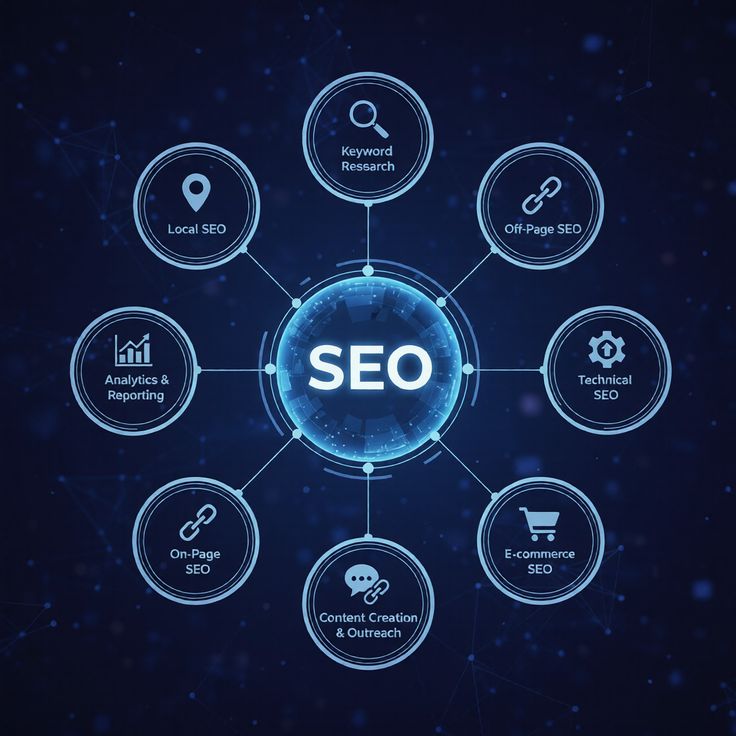
Entity SEO Explained: The Definitve Guide to Concept-Based Optimization For decades, the foundational logic of Search Engine Optimization revolved around a simple premise: matching strings of text. If a user searched for “best cloud storage data security,” search engines scanned their index for pages that repeated that exact phrase, calculating relevance based on keyword density, metadata placement, and inbound backlink anchors. That deterministic, text-matching era is completely over. With the introduction of machine learning algorithms like Hummingbird, RankBrain, and modern transformer-based LLM retrieval layers, search engines no longer see words as isolated text strings. Instead, they look at them as Entities. If you want your content to survive and rank in an ecosystem increasingly dominated by synthesized answers, AI overviews, and semantic knowledge bases, you must stop optimizing for keywords and start optimizing for concepts. This guide breaks down exactly what Entity SEO is, how the search infrastructure interprets it, and how to structure your domain to align with modern semantic search pipelines. 1. What is an Entity? Deconstructing the Semantic Core To understand Entity SEO, you must first understand how Google formally defines an entity. According to Google’s official patent data: An entity is a thing or concept that is singular, unique, well-defined, and distinguishable. It does not need to be a physical object. It can be a person, a place, an organization, a website, a digital tool, a historical event, or an abstract concept. To put this in perspective, think of keywords as the words in a dictionary, while entities are the actual real-world nodes mapped inside an interconnected web. [Entity: Pushkar Pandey] ──(StudentAt)──► [Entity: Amity University] │ ▲ (AuthorOf) │ │ (PublishedOn) ▼ │ [Entity: Entity SEO Explained] ──────────────────┘ In the diagram above, the entities are not merely strings of letters; they are specific data nodes connected by explicit contextual relationships (known as predicates or edges). Traditional SEO view: Sees “Entity SEO Explained” as a 3-word keyword string with a specific monthly search volume. Entity SEO view: Sees a unique content asset, authored by a verified individual writer, associated with a distinct publication domain, covering a core sub-topic of technical digital marketing. 2. The Engine Mechanics: Knowledge Graphs and Vector Embeddings Search engines process entities through two primary technological frameworks: Knowledge Graphs and Vector Spaces. The Knowledge Graph The Knowledge Graph is a massive database that stores semantic data about billions of entities and their relationships. When you execute a search for a prominent figure or organization and see a dedicated informational box on the right side of the SERP, you are looking at a direct visual rendering of Google’s internal Knowledge Graph. The graph allows search engines to understand context instantly without needing explicit keyword repetition. For example, if a page mentions “The Dark Knight,” “Gotham,” and “Christopher Nolan,” the engine automatically resolves the core subject node as Batman, even if the word “Batman” never appears in the body prose. Vector Embeddings and Semantic Distance Modern machine learning algorithms translate web pages and user queries into high-dimensional mathematical coordinates called vector embeddings. Attribute / Metric Keyword-Based Optimization Entity-Based Optimization (GEO) Primary Identifier Text strings and exact character matches Unique machine IDs (e.g., Wikidata URIs) Contextual Analysis Based on keyword density metrics Based on semantic proximity and vector clusters Search Intent Mapping Rigid query-to-document tracking Multi-layered intent and conceptual resolution Algorithmic Focus PageRank and anchor text distributions Topical authority and verification signals In a vector space, concepts that are topically or contextually related are plotted close to one another. The engine determines how thoroughly a page answers a query by measuring the mathematical distance between your content’s vector profile and the target entity cluster. 3. Why Entity SEO is Crucial for AI Search and Overviews The rise of generative AI search has turned Entity SEO from an advanced technical strategy into a mandatory requirement for organic survival. When engines pull data for AI boxes, they rely heavily on Retrieval-Augmented Generation (RAG). The retrieval engine scans the index specifically looking for verified factual units and entity nodes that it can cleanly extract and combine into a summary statement. If your content is built as a disorganized wall of text rather than a structured framework of clearly defined concepts, the AI parsing bots will pass over your domain. They will choose to cite an asset that outlines entity relationships clearly, uses clean data architectures, and supports its claims with strong contextual signals. 4. The Step-by-Step Blueprint to Optimize for Entity SEO Transitioning your domain to an entity-first framework requires adjusting how you write, format, and tag your digital assets. Step 1: Execute Semantic Entity Mapping Before writing a single paragraph, map out the entity ecosystem surrounding your primary subject matter. Identify the top-ranking competitor pages for your target topic. Use natural language processing (NLP) applications to extract the underlying named entities, tools, organizations, and methodologies they mention. Ensure your draft naturally incorporates this broader circle of related concepts to demonstrate complete topical ownership. Step 2: Adopt the “Atomic Definition” Style AI search crawlers favor content layers that can be parsed instantly. Place a highly direct, objective definition block at the immediate start of your core subsections: The Rule: Write a 40-to-60-word declarative summary sentence directly below your primary H2 or H3 heading tags. The Formula: Use a direct copula layout (e.g., “Entity SEO is an advanced optimization methodology that…”). Avoid conversational preambles or marketing fluff. Step 3: Implement Deep Schema Markup (JSON-LD) Structured data schema acts as a clear machine map for search bots, stripping away any potential semantic ambiguity. Use explicit about, mentions, and sameAs tags within your JSON-LD payloads to connect your text directly to recognized global knowledge nodes: JSON { “@context”: “https://schema.org”, “@type”: “TechArticle”, “headline”: “Entity SEO Explained”, “author”: { “@type”: “Person”, “name”: “Pushkar Pandey” }, “about”: [ { “@type”: “Thing”, “name”: “Semantic Search”, “sameAs”: “https://en.wikipedia.org/wiki/Semantic_search” }, { “@type”: “Thing”, “name”: “Knowledge Graph”, “sameAs”: “https://en.wikipedia.org/wiki/Knowledge_Graph” } ] } Step 4: Build Comprehensive Topical Hubs Avoid treating your blog posts as isolated, standalone elements. Group your
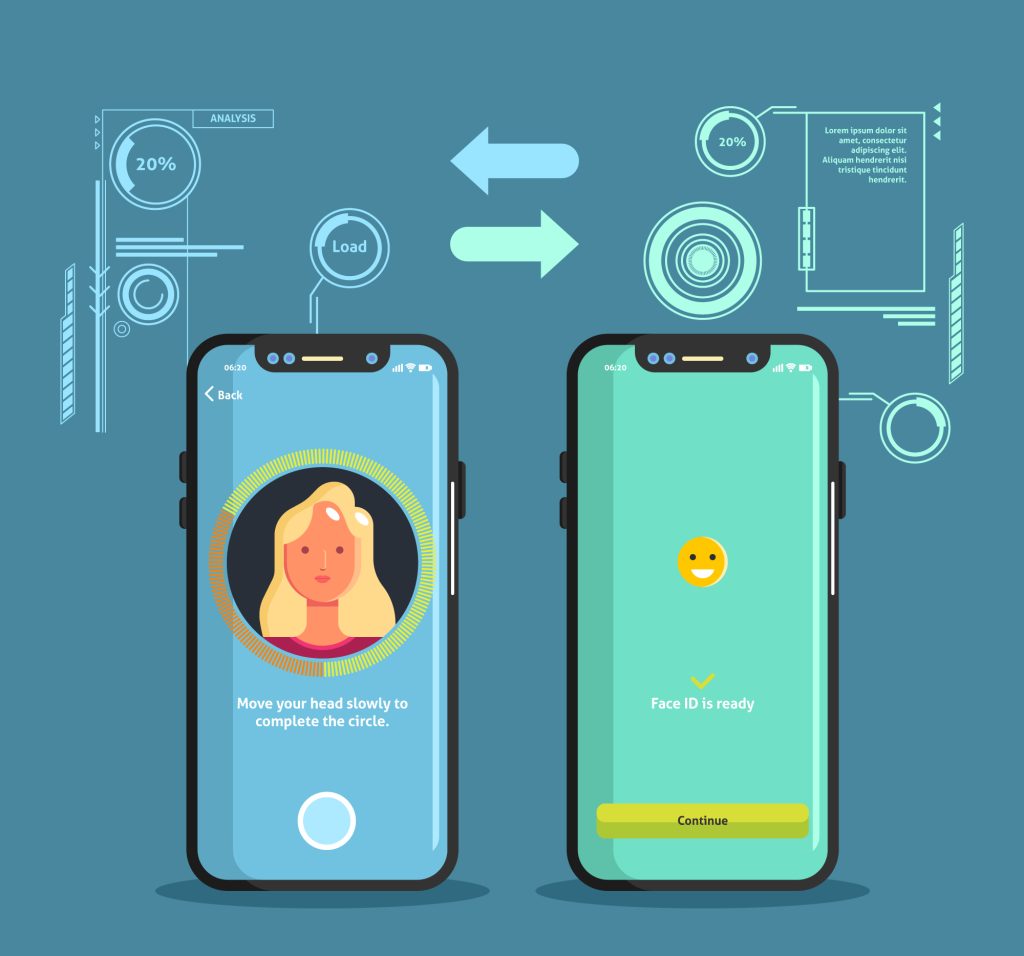
Developer comparing native, hybrid, and web app technologies on laptop screen
app technology comparison

App Technology Comparison: Native vs Hybrid vs Web Apps — Which Is Better?

Native vs Hybrid vs Web Apps: A Comprehensive Technology Comparison Choosing the right technology stack for your mobile application is one of the most critical decisions you’ll make as a developer or business owner. With multiple approaches available, each offering distinct advantages and trade-offs, understanding the landscape of app development technologies is essential for making informed decisions that align with your project goals, budget, and timeline. In this comprehensive guide, we’ll explore the three main approaches to mobile app development: Native Apps, Hybrid Apps, and Progressive Web Apps (PWAs). We’ll examine their technical foundations, performance characteristics, development considerations, and help you determine which approach best suits your needs. Understanding the Three Main Approaches 🚀 Native Apps Native apps are built specifically for a particular operating system using platform-specific programming languages and tools. For iOS, developers use Swift or Objective-C with Xcode, while Android development typically uses Kotlin or Java with Android Studio. ✅ Advantages Superior Performance: Direct access to device hardware and APIs ensures optimal speed and responsiveness. Best User Experience: Follows platform-specific design guidelines for familiar, intuitive interfaces. Full Feature Access: Unrestricted access to all device features including camera, GPS, accelerometer, and more. Offline Functionality: Robust offline capabilities with local data storage. ❌ Challenges Higher Development Costs: Requires separate codebases for iOS and Android, effectively doubling development effort. Longer Time-to-Market: Building and maintaining multiple versions takes more time. Specialized Skills Required: Need platform-specific expertise for each operating system. Update Complexity: Updates must go through app store approval processes. 🔄 Hybrid Apps Hybrid apps combine web technologies (HTML, CSS, JavaScript) with native wrappers that allow them to run on multiple platforms from a single codebase. They use frameworks like React Native, Flutter, or Ionic to bridge the gap between web and native. ✅ Advantages Code Reusability: Write once, deploy everywhere significantly reduces development time and costs. Faster Development: Single codebase means quicker iterations and updates. Cross-Platform Consistency: Maintain uniform user experience across platforms. Access to Native Features: Can utilize device hardware through plugins and bridges. ❌ Challenges Performance Overhead: Additional abstraction layer can impact performance for complex applications. Platform Limitations: May encounter issues with newest platform features or updates. Dependency on Frameworks: Reliant on third-party frameworks and their update cycles. Debugging Complexity: Can be more challenging to debug across different platforms. 🌐 Progressive Web Apps (PWAs) PWAs are web applications that use modern web capabilities to deliver app-like experiences. They run in browsers but can be installed on devices and work offline, blurring the line between web and native apps. ✅ Advantages Universal Compatibility: Works on any device with a modern web browser. No App Store Required: Instant access without installation or approval processes. Easy Updates: Changes go live immediately without user action. Cost-Effective: Single codebase for all platforms reduces development costs. ❌ Challenges Limited Hardware Access: Restricted access to certain device features and APIs. Browser Dependency: Performance and features depend on browser capabilities. Lower Discoverability: Not listed in traditional app stores (though this is changing). Platform Inconsistencies: Different browsers may support features differently. Popular Frameworks and Technologies Hybrid App Frameworks React NativeFacebook’s framework using JavaScript/React. Excellent community support and near-native performance. FlutterGoogle’s UI toolkit using Dart. Fast development with hot reload and beautiful customizable widgets. IonicWeb-based framework using Angular, React, or Vue. Great for teams with web development background. XamarinMicrosoft’s framework using C#. Ideal for teams invested in the .NET ecosystem. Detailed Comparison Matrix Factor Native Apps Hybrid Apps Progressive Web Apps Performance Excellent – Direct hardware access Good – Minor overhead from bridge Varies – Browser dependent Development Cost High – Multiple codebases Medium – Single codebase Low – Web technologies Time to Market Longer – Platform-specific development Medium – Faster with shared code Fastest – No app store approval User Experience Best – Platform-optimized Good – Near-native feel Good – Improving rapidly Hardware Access Full – Unrestricted access Good – Via plugins/bridges Limited – Browser restrictions Offline Capability Excellent – Built-in support Good – With proper implementation Good – Service workers enable offline Maintenance Complex – Multiple codebases Moderate – Single codebase Easy – Centralized updates Distribution App Stores – Approval required App Stores – Approval required Web – Instant access 💡 Industry Statistics According to recent developer surveys, React Native and Flutter have seen significant adoption growth, with Flutter’s popularity increasing by over 200% in the past two years. Meanwhile, PWAs are being adopted by major companies like Twitter, Starbucks, and Uber for their accessibility and cost-effectiveness. Native development still dominates in gaming, augmented reality, and applications requiring intensive graphics or real-time processing, commanding approximately 60% of the mobile app market. Making the Right Choice: Decision Framework Choose Native Apps When: Performance is CriticalGaming, AR/VR applications, or complex animations requiring maximum processing power. Platform-Specific FeaturesNeed deep integration with OS-specific features or latest platform capabilities. Premium User ExperienceBrand requires the absolute best, most polished user experience possible. Budget AllowsResources available for separate iOS and Android development teams. Choose Hybrid Apps When: Cross-Platform PriorityNeed to reach both iOS and Android users with limited resources. Faster Time-to-MarketNeed to launch quickly and iterate based on user feedback. Team ExpertiseDevelopment team skilled in JavaScript, React, or other web technologies. Moderate ComplexityApp requires good performance but not intensive graphics or processing. Choose Progressive Web Apps When: Content-FocusedApplication primarily delivers content rather than complex functionality. Maximum ReachWant to reach users across all platforms including desktop browsers. Limited BudgetNeed cost-effective solution with easy maintenance and updates. No App Store DependencyWant to avoid app store fees and approval processes. Real-World Examples Native Success Stories: Instagram, Spotify, and Pokemon GO leverage native development for their performance-intensive features. These apps require smooth animations, real-time processing, and deep OS integration that native development provides best. Hybrid Success Stories: Airbnb initially used React Native, while Alibaba uses Flutter for parts of their application. Bloomberg’s consumer app is built with React Native, demonstrating that hybrid can work at enterprise scale. PWA Success Stories: Twitter Lite reduced data usage by 70% as a PWA. Starbucks’ PWA is 99.84% smaller than their iOS app. Pinterest rebuilt as a PWA and saw a 60% increase in engagement. Final Thoughts There’s no universal “best” technology for app development. The right

app technology comparison

PHP vs Python

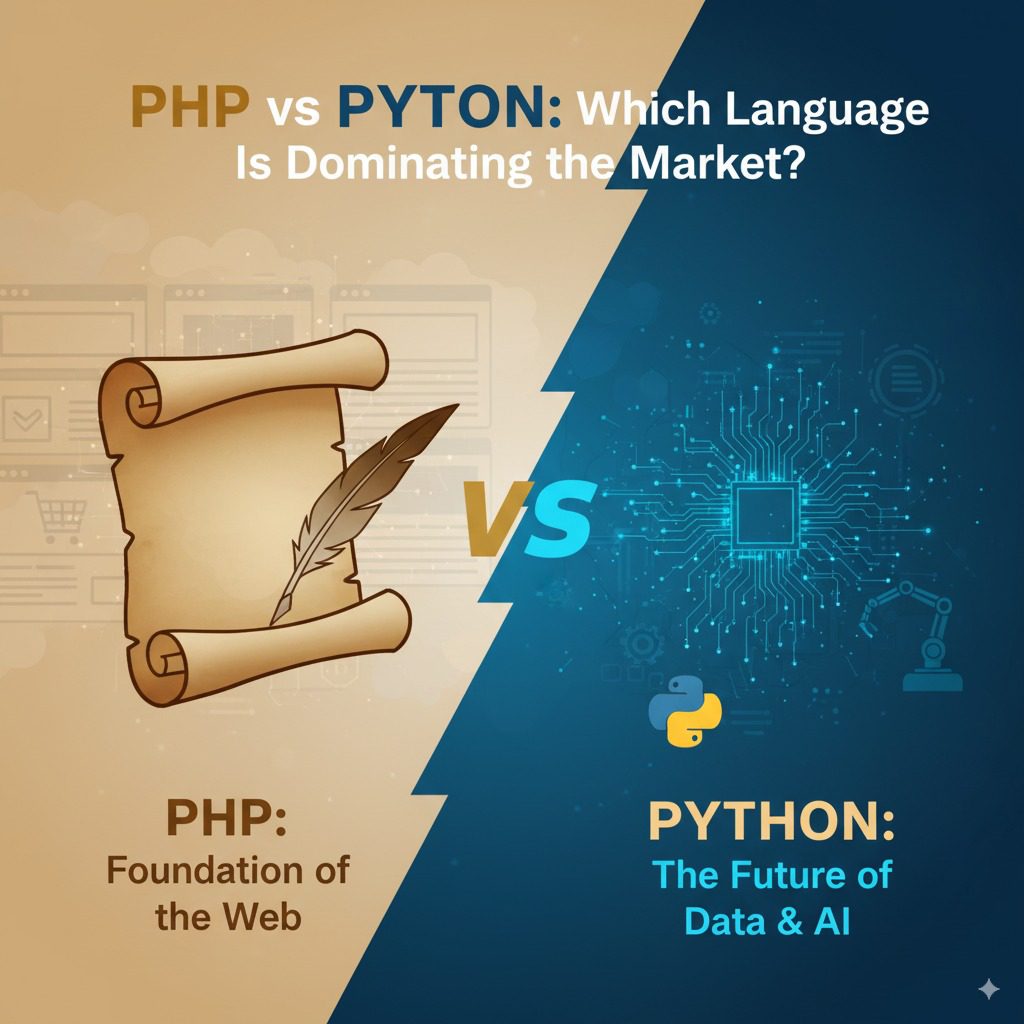
Introduction Choosing the right programming language is a pivotal decision in software development, affecting project outcomes, developer productivity, and long-term maintenance. Among the most widely used programming languages today, PHP and Python spark continuous debates. Both languages have significant market presence, unique strengths, and vibrant communities, but which one is truly dominating the market? This extensive blog dives deep into the technological capabilities, market trends, developer preferences, and industry applications of PHP and Python. It further explores their roles in shaping modern development, backed by insights from AI, blockchain, and analytics innovations featured on TechOTD AI Services and TechOTD Blog. Overview of PHP and Python PHP: The Backbone of Web Development Developed in the mid-1990s, PHP (Hypertext Preprocessor) is a server-side scripting language traditionally used for web development. It powers popular content management systems like WordPress and Drupal and remains a dominant language for building dynamic web pages. Strong integration with HTML and databases. Massive ecosystem of frameworks like Laravel and Symfony. Emphasis on rapid web application development. Python: The Multipurpose Powerhouse Python, created in the late 1980s, has grown into a versatile, general-purpose programming language acclaimed for simplicity and readability. It spans multiple domains including web development, data science, machine learning, automation, and more. Rich standard library and extensive third-party packages. Support for AI, machine learning, data analytics, and more. Popular frameworks like Django and Flask for web. Market Share and Popularity Trends According to industry reports, Python has seen exponential growth over the past decade, emerging as one of the world’s most popular programming languages. PHP retains a strong position in web hosting environments but has experienced slower growth, slightly overshadowed by newer languages. Python ranks consistently high in developer surveys, favored for its ease of learning and broad applicability in AI and analytics fields TechOTD AI Solutions. Technical Strengths and Feature Comparison Feature PHP Python Syntax C-style, relatively straightforward Clean, readable, highly intuitive Web Development Traditionally dominant with LAMP stack Strong with Django, Flask Versatility Mainly web scripting Web, AI, ML, automation, scripting Performance Decent for Web Comparable, with faster implementations possible Learning Curve Moderate Easy for beginners Community & Support Large, mature Diverse, rapidly growing AI & Data Science Limited native support Extensive libraries and frameworks Popular Use Cases CMS, e-commerce, blogging AI, scientific computing, web apps Industry Use Cases Driving Popularity PHP Use Cases Content Management Systems (WordPress, Joomla). E-Commerce platforms (Magento). Small to medium web applications. Legacy system maintenance and integration. Python Use Cases Artificial Intelligence and Machine Learning. Data Science and Analytics. Web Application Development. Scripting and Automation. Emerging blockchain and IoT applications. Developer Experience and Ecosystem PHP offers rich server-side web hosting options and mature tools, but developers sometimes find its ecosystem fragmented. Python’s straightforward syntax attracts beginners and experienced developers alike, fostering faster prototyping and project iterations. Both languages have vibrant communities but Python’s growth is more evident in trending domains like AI and big data Predictive Analytics TechOTD. Market Demand and Career Outlook Python’s versatility creates strong demand across industries from finance to healthcare to tech giants. PHP remains relevant for web-specialized roles, especially in agencies and companies maintaining legacy sites. Demand for Python skills outpaces PHP for new projects, yet PHP skills remain a valuable asset. Integration with Modern Technologies Python leads in AI integration, advanced analytics, and automation, supported by frameworks and cloud services TechOTD AI Blog. PHP is increasingly used alongside JavaScript frameworks for rich web interfaces and integrates with blockchain solutions in niche applications TechOTD Blockchain Integration. Conclusion Python currently holds a dominant position in the global programming landscape, driven by AI, data science, and diverse application domains. Its simplicity, versatility, and growing ecosystem make it a preferred choice for new projects and emerging technologies. PHP remains an indispensable workhorse for web development, powering a significant portion of the internet. It thrives in legacy systems and specialized web applications but faces challenges expanding beyond those niches.

app technology comparison

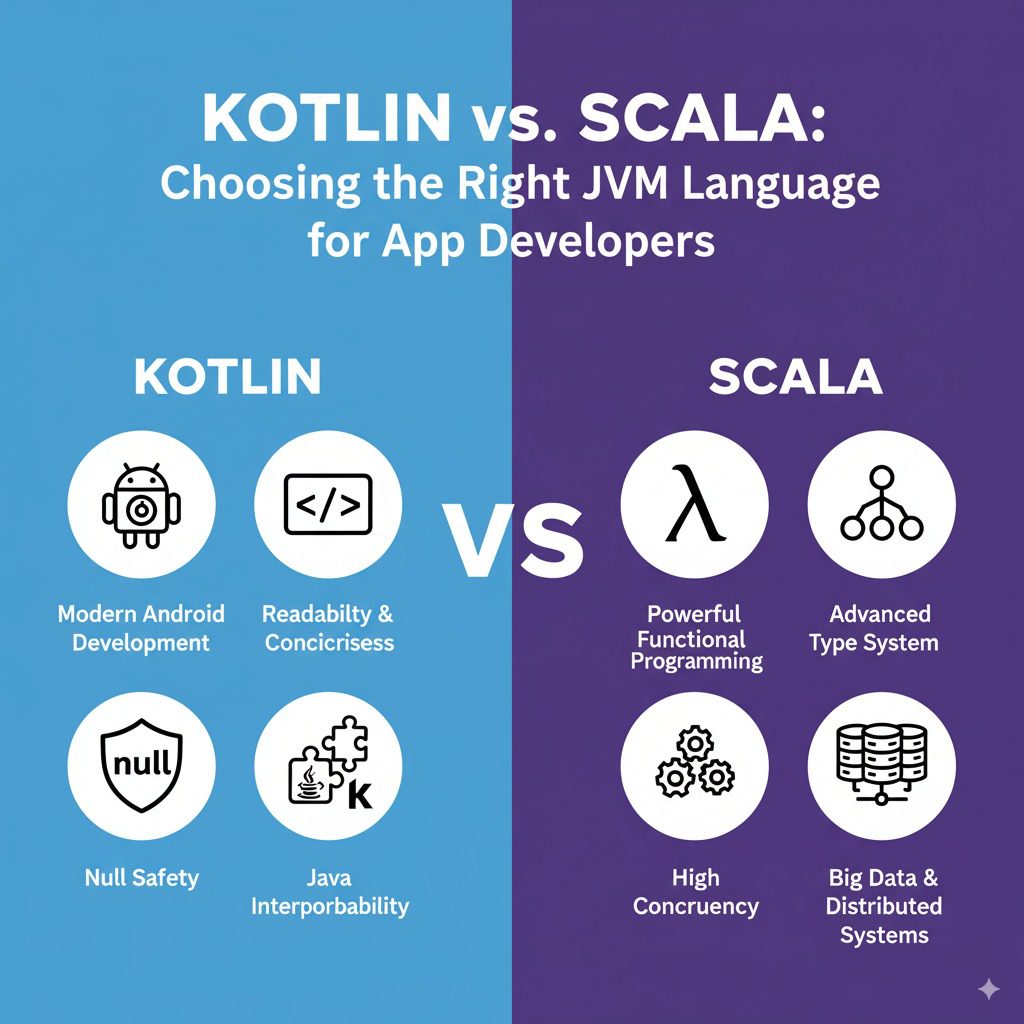
Kotlin vs Scala: Choosing the Right JVM Language for App Developers

Introduction In the diverse and dynamic Java Virtual Machine (JVM) ecosystem, selecting the right programming language is a crucial decision for app developers. Among the premier choices, Kotlin and Scala stand out as powerful JVM languages offering unique features, developer experiences, and application potentials. Businesses and developers often ponder which language better suits their needs—from mobile app development to big data processing and enterprise applications. This extensive blog examines the strengths and considerations of Kotlin and Scala, outlining key differences, industry use cases, community support, and ecosystem compatibility. With integrated insights on advanced technologies such as AI, blockchain, and predictive analytics from TechOTD AI Services, this guide aims to empower app developers and technology leaders to choose the ideal JVM language. Background on JVM Languages The Java Virtual Machine provides a platform-neutral environment enabling various languages to run on multiple operating systems seamlessly. JVM compatibility allows Kotlin, Scala, and Java to interoperate, sharing tooling, libraries, and runtime advantages. Understanding the design philosophy and ecosystem dynamics surrounding Kotlin and Scala is essential for informed decision-making. Learn about AI and JVM language applications at TechOTD AI Blog. Kotlin: Modern, Pragmatic, and Android-Focused Language Overview Developed by JetBrains and officially endorsed by Google for Android, Kotlin is a statically typed language designed to be concise, safe, and fully interoperable with Java. Focus on simplicity and readability. Supports functional programming features alongside object-oriented paradigms. Null safety and coroutines for asynchronous programming improve developer safety and productivity. Strengths of Kotlin Android Excellence: Native support and extensive tooling make Kotlin the preferred choice for Android app development TechOTD Mobile Apps. Concise Syntax: Less boilerplate code than Java, improving maintainability. Strong Tooling Integration: Exceptional support in IntelliJ IDEA, Android Studio, and Gradle. Coroutines: Efficient async programming for responsive UI and backend services. Safety Features: Null safety reduces runtime exceptions. Ideal Use Cases Android application development. Backend services using frameworks like Ktor or Spring Boot. Multiplatform projects targeting iOS, JVM, JavaScript with Kotlin Multiplatform. Data science and scripting through integration with JVM tools. Scala: Powerful, Expressive, and Big Data-Ready Language Overview Scala was created to enrich Java with concise syntax, powerful functional programming capabilities, and advanced type system features, aiming for seamless JVM interoperability. Blends object-oriented and functional programming paradigms. Supports advanced features such as pattern matching, implicits, and macros. Strong presence in big data, distributed computing, and complex backend systems. Strengths of Scala Functional Programming: Modern functional constructs offer flexibility and safety. Rich Type System: Enables precise modeling of domain logic. Big Data Ecosystem: Widely adopted with Apache Spark, Kafka, and Akka for analytics and real-time processing. Conciseness and Expressiveness: Reduces code verbosity with powerful abstractions. Compatibility: Runs on JVM with Java interoperability. Ideal Use Cases Big data and analytics applications. Complex backend systems requiring concurrency and scalability. Distributed systems development. Enterprise applications needing expressive domain modeling. Comparing Kotlin and Scala: A Feature Breakdown Aspect Kotlin Scala Learning Curve Gentler, easier for Java developers Steeper, requires functional paradigm understanding Syntax Complexity Simpler, concise More complex, expressive Performance Comparable to Java Comparable, can optimize with advanced features Functional Programming Supported, but limited Extensive support Android Support Primary JVM language for Android Limited support in Android ecosystem Tooling Fantastic IDE integration Good but occasionally slower builds Community and Ecosystem Rapidly growing, strong in mobile/devops Mature, especially in big data and backend Deployment Size Smaller, better suited for mobile Larger JVM footprints Ecosystem and Community Support Kotlin enjoys strong backing from JetBrains and Google, ensuring ongoing investments and modern tooling TechOTD Blog. Scala has an established base with academic and enterprise support, particularly within big data frameworks like Apache Spark. Both languages benefit from seamless Java interoperability, enabling gradual adoption and integration. Integration with AI, Blockchain, and Predictive Analytics Kotlin, with its modern syntax and multiplatform capabilities, is increasingly used in AI-driven mobile apps and blockchain projects TechOTD AI Services. Scala’s functional programming and big data compatibility make it ideal for building predictive analytics pipelines and blockchain data processing TechOTD Blockchain Integration. Explore predictive analytics development techniques leveraging JVM languages at TechOTD Predictive Analytics. Implementation Best Practices Planning and Skill Assessment Evaluate team expertise and project requirements before choosing. Prototype Development Build small proof-of-concept projects to validate feasibility. Code Quality and Maintenance Prioritize clean, readable, and maintainable code; Kotlin’s simpler syntax may aid this. Testing and CI/CD Leverage JVM testing frameworks and continuous integration for robust delivery. Community Engagement Participate in forums and learn from open-source projects to accelerate learning and troubleshooting. Future Trends in JVM Language Development Kotlin is expanding with multiplatform capabilities supporting iOS, JS, and native apps. Scala continues evolving with Scala 3, simplifying syntax and enhancing language consistency. Both languages are incorporating improved tooling for AI, blockchain, and cloud-native applications. Growing adoption of JVM languages in government, finance, healthcare, and IoT. Conclusion Choosing between Kotlin and Scala depends on project goals, developer expertise, and application needs. Kotlin shines in mobile-first, agile, and straightforward backend apps, while Scala excels in complex, data-intensive, and functional programming domains. Both contribute significantly to modern JVM ecosystems and enable powerful, scalable applications.

How would you like me to respond?

Select a personality for your AI assistant

Normal
Happy
Sad
Angry

Your selection will affect how the AI assistant responds to your messages

Chat Assistant

Let's discuss your project!

Hear from our clients and why 3000+ businesses trust TechOTD

Tell us what you need, and we'll get back with a cost and timeline estimate

Scroll to Top