

enterprice

Artificial Intelligence, Business Analytics, enterprice

The Impact of Agentic AI on Enterprise Productivity

The Impact of Agentic AI on Enterprise Productivity Artificial Intelligence has evolved rapidly over the past few years. What started as chatbots, recommendation engines, and predictive analytics has now entered a new phase known as Agentic AI. Unlike traditional AI systems that primarily respond to commands or analyze data, Agentic AI can independently plan, execute, monitor, and optimize tasks to achieve specific goals. As organizations continue their digital transformation journeys, Agentic AI is emerging as one of the most influential technologies reshaping enterprise productivity. Businesses are no longer looking at AI merely as a tool that assists employees; instead, they are deploying AI agents capable of acting as digital workers that can handle complex workflows with minimal human intervention. From customer service and IT operations to finance, marketing, and supply chain management, Agentic AI is helping enterprises operate more efficiently, reduce costs, improve decision-making, and unlock new levels of productivity. As we move through 2026, companies across industries are recognizing that the future of work will involve close collaboration between humans and autonomous AI agents. Understanding Agentic AI Agentic AI refers to artificial intelligence systems that possess the ability to act autonomously toward achieving predefined objectives. Unlike conventional AI applications that require constant prompts or supervision, Agentic AI can make decisions, initiate actions, adapt to changing environments, and complete multi-step tasks independently. For example, a traditional AI chatbot may answer customer questions based on available information. An Agentic AI system, however, can handle an entire customer support process—from receiving the request and identifying the issue to processing refunds, updating records, and following up with customers. The key capabilities that distinguish Agentic AI include: Goal-oriented decision-making Autonomous workflow execution Continuous learning and adaptation Multi-step task management Context awareness Integration with enterprise systems Proactive problem-solving These characteristics enable Agentic AI to function more like a virtual employee rather than a simple software application. Why Enterprises Are Adopting Agentic AI Organizations are under increasing pressure to improve efficiency, reduce operational expenses, and maintain competitiveness in rapidly changing markets. Traditional automation solutions can handle repetitive tasks, but they often struggle with complex processes that require decision-making and adaptability. Agentic AI fills this gap by bringing intelligence and autonomy to business operations. Several factors are driving enterprise adoption: Growing Operational Complexity Modern businesses manage enormous volumes of data, processes, and interactions. Human teams often struggle to keep up with increasing complexity. Agentic AI can process information at scale and coordinate multiple tasks simultaneously. Demand for Faster Decision-Making Markets move quickly, and delays can be costly. AI agents analyze data in real time and provide immediate actions or recommendations, helping organizations respond more rapidly to opportunities and challenges. Workforce Productivity Challenges Many industries continue to face talent shortages and increasing workloads. Agentic AI helps organizations maximize productivity without significantly expanding headcount. Cost Optimization Businesses are continuously seeking ways to reduce expenses. AI agents can automate labor-intensive processes, reducing operational costs while maintaining service quality. Digital Transformation Initiatives Organizations investing in cloud computing, analytics, and automation increasingly view Agentic AI as a natural extension of their digital transformation strategies. Workflow Automation Beyond Traditional RPA Robotic Process Automation (RPA) has been used for years to automate repetitive tasks. However, RPA systems generally follow predefined rules and struggle when unexpected situations arise. Agentic AI enhances automation by introducing intelligence into workflows. For example, instead of simply processing invoices according to fixed rules, an AI agent can: Identify anomalies Communicate with vendors Request missing information Resolve exceptions Complete approvals automatically This significantly reduces manual intervention and accelerates business processes. Enhanced Employee Productivity One of the most important benefits of Agentic AI is its ability to augment human workers. Employees often spend significant time on administrative tasks such as: Data entry Scheduling Reporting Documentation Research Information retrieval AI agents can handle these responsibilities, allowing employees to focus on strategic, creative, and high-value work. Rather than replacing workers, Agentic AI often acts as a productivity multiplier, enabling teams to accomplish more with the same resources. Faster Decision-Making Data-driven decision-making has become essential for modern enterprises. However, analyzing large datasets can be time-consuming. Agentic AI systems continuously monitor: Market trends Customer behavior Operational performance Financial metrics Supply chain activities They can identify patterns, generate insights, and recommend actions in real time. Executives and managers benefit from faster access to actionable intelligence, improving organizational agility and responsiveness. Improved Customer Service Operations Customer experience has become a major competitive differentiator. Agentic AI is transforming customer support by enabling intelligent automation. AI agents can: Resolve support tickets Handle account updates Process refunds Schedule appointments Escalate complex issues Follow up with customers Because these systems operate around the clock, businesses can provide faster and more consistent service while reducing support costs. Knowledge Management and Information Access Large enterprises often struggle with fragmented information spread across multiple systems. Employees may spend considerable time searching for documents, policies, procedures, and data. Agentic AI can act as an intelligent knowledge assistant that: Retrieves relevant information Summarizes documents Generates reports Provides recommendations Answers internal queries This improves productivity by reducing time spent searching for information. Supply Chain Optimization Supply chain management involves numerous interconnected activities, making it an ideal environment for Agentic AI deployment. AI agents can: Monitor inventory levels Predict demand fluctuations Optimize procurement Coordinate logistics Identify supply chain risks Recommend corrective actions These capabilities help organizations improve efficiency while minimizing disruptions. Financial Operations Efficiency Finance departments often deal with repetitive and time-consuming processes. Agentic AI can streamline activities such as: Invoice processing Expense management Budget forecasting Financial reporting Compliance monitoring Fraud detection As a result, finance teams can focus more on strategic planning and business growth initiatives. IT Operations and Infrastructure Management Enterprise IT environments continue to grow in complexity. Agentic AI is increasingly being used to manage infrastructure and support operations. AI agents can: Detect system anomalies Monitor performance Resolve incidents Apply security updates Allocate resources Predict failures This proactive approach improves system reliability while reducing operational workloads. Marketing and Sales Productivity Marketing and sales teams are
enterprice

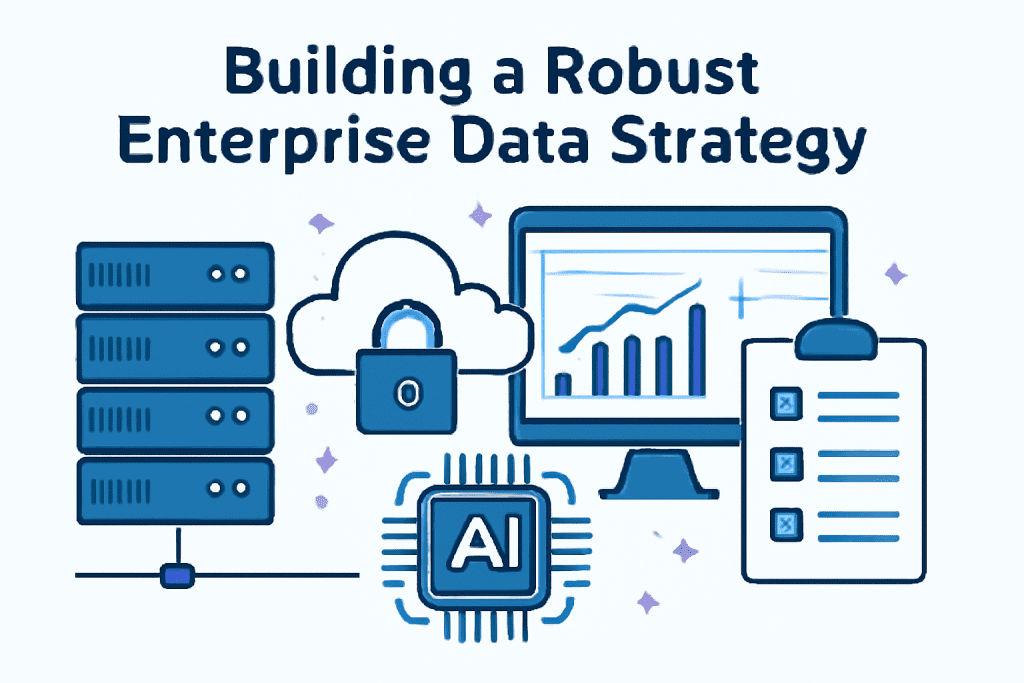
Building a Robust Enterprise Data Strategy: Benefits, Use Cases, Process, Costs & Best Practices

Introduction In today’s data-driven world, a robust enterprise data strategy is essential for organizations seeking to unlock the full potential of their data assets. It provides a comprehensive roadmap for managing, governing, and leveraging data to drive innovation, improve decision-making, ensure compliance, and gain a competitive advantage. This blog explores the benefits, use cases, key processes, costs, and best practices involved in building an effective enterprise data strategy. For further insights into AI-powered data solutions and digital transformation, visit TechOTD’s AI Services and explore their technology blog. Benefits of a Robust Enterprise Data Strategy Informed Decision-Making: Having reliable, consistent data reduces errors and enables rapid, strategic business choices across all organizational levels. Improved Operational Efficiency: Streamlining data access and integration eliminates duplication and redundant manual efforts, allowing employees to focus on value-added tasks. Regulatory Compliance & Risk Management: Implementing governance frameworks ensures compliance with critical regulations such as GDPR, HIPAA, and PCI-DSS, minimizing costly penalties and protecting customer privacy. Enhanced Customer Experience: Organizations gain a 360-degree customer view with unified data, enabling personalization, targeted marketing, and superior service. Data Security and Risk Mitigation: Strong data security policies protect sensitive information from unauthorized access and data breaches. Scalability and Future-Readiness: A good data strategy builds scalable infrastructure that adapts easily to growing data and emerging technologies. Cost Savings: Reducing redundant systems and improving data quality lowers overall IT costs and operational expenses. Use Cases for Enterprise Data Strategy Customer Analytics and Personalization: Tailoring marketing campaigns and services based on unified customer data insights. Fraud Detection and Risk Assessment: Combining real-time data streams across departments for proactive fraud prevention. Predictive Maintenance: Leveraging data to predict failures and reduce downtime in manufacturing and operations. Regulatory Reporting and Audit Readiness: Automated data lineage and governance ensure smooth compliance reporting. Product and Market Innovation: Data-driven R&D accelerates new product development and market adaptation. The Process of Building an Enterprise Data Strategy Planning and Goal Setting: Align data strategy objectives with business goals such as reducing churn, speeding time-to-market, or enhancing customer satisfaction. Current State Assessment: Audit existing data systems to identify redundancies, quality issues, and shadow IT. Future State Vision: Define the ideal “trusted, scalable, and compliant” data environment tailored to business needs. Roadmap Development: Develop structured implementation plans prioritizing quick wins and strategic initiatives. Implementation: Deploy governance, data quality, integration, and security processes aligned with roadmap milestones. Monitoring and Continuous Improvement: Track adoption metrics, data quality, and compliance, refining strategy as business evolves. Cost of Enterprise Data Strategy The investment varies widely based on scale, complexity, industry regulations, and existing infrastructure. Key cost drivers include: Integration and Migration: Consolidating legacy systems and data silos can consume 40-50% of initial budgets. Technology and Tools: Cloud platforms offer flexible spending models; on-premises solutions require higher upfront costs. Governance and Training: Developing policies, training personnel, and managing compliance are ongoing investments. Talent: Skilled data engineers, scientists, and governance experts are essential and can be a significant expense. Many organizations allocate between 3-6% of their IT budget to data strategy-related initiatives. Best Practices Start with High-Value Use Cases: Focus on domains with measurable ROI to build momentum. Invest in Data Lineage Early: Trace and document data origins to boost trust and audit readiness. Integrate Compliance into Pipelines: Address privacy and security during data ingestion, not as an afterthought. Balance Governance with Innovation: Create “innovation zones” for experimental AI or data products without sacrificing control. Prioritize Metadata Management: Catalog and document data thoroughly for easy discovery and security. Measure Adoption, Not Just Implementation: Encourage culture shifts through training, metrics, and leadership incentives. Design for Change: Utilize modular architectures anticipating evolving regulations and technologies. How TechOTD Supports Enterprise Data Strategy At TechOTD, we combine AI expertise, cloud infrastructure, and agile methodologies to build tailored enterprise data strategies that enhance operational resilience and unlock growth opportunities. Learn more about our mobile app and AI services. Conclusion A robust enterprise data strategy is vital to navigate today’s complex data landscape and drive sustainable business success. By aligning data initiatives with business goals, embedding governance and compliance, and prioritizing scalability and adoption, organizations can unlock significant value from their data assets. Partnering with experts like TechOTD ensures a structured, effective implementation that powers innovation and competitive advantage. Explore the latest trends and insights in data strategy and AI on the TechOTD Blog. FAQs Q1: What is an enterprise data strategy? A plan that aligns data management, governance, and analytics capabilities with business objectives to maximize data value. Q2: How does a data strategy improve operational efficiency? By reducing data silos, duplication, and manual errors, enabling faster, informed decision-making. Q3: What industries benefit most from enterprise data strategies? Finance, healthcare, retail, manufacturing, and telecom are leading adopters due to heavy data use and regulation. Q4: Can AI be integrated with an enterprise data strategy? Yes, clean, governed data is essential to drive AI and machine learning initiatives effectively. Q5: How much does an enterprise data strategy cost? The investment varies, but companies typically allocate 3-6% of their IT budgets toward data strategy initiatives.

enterprice

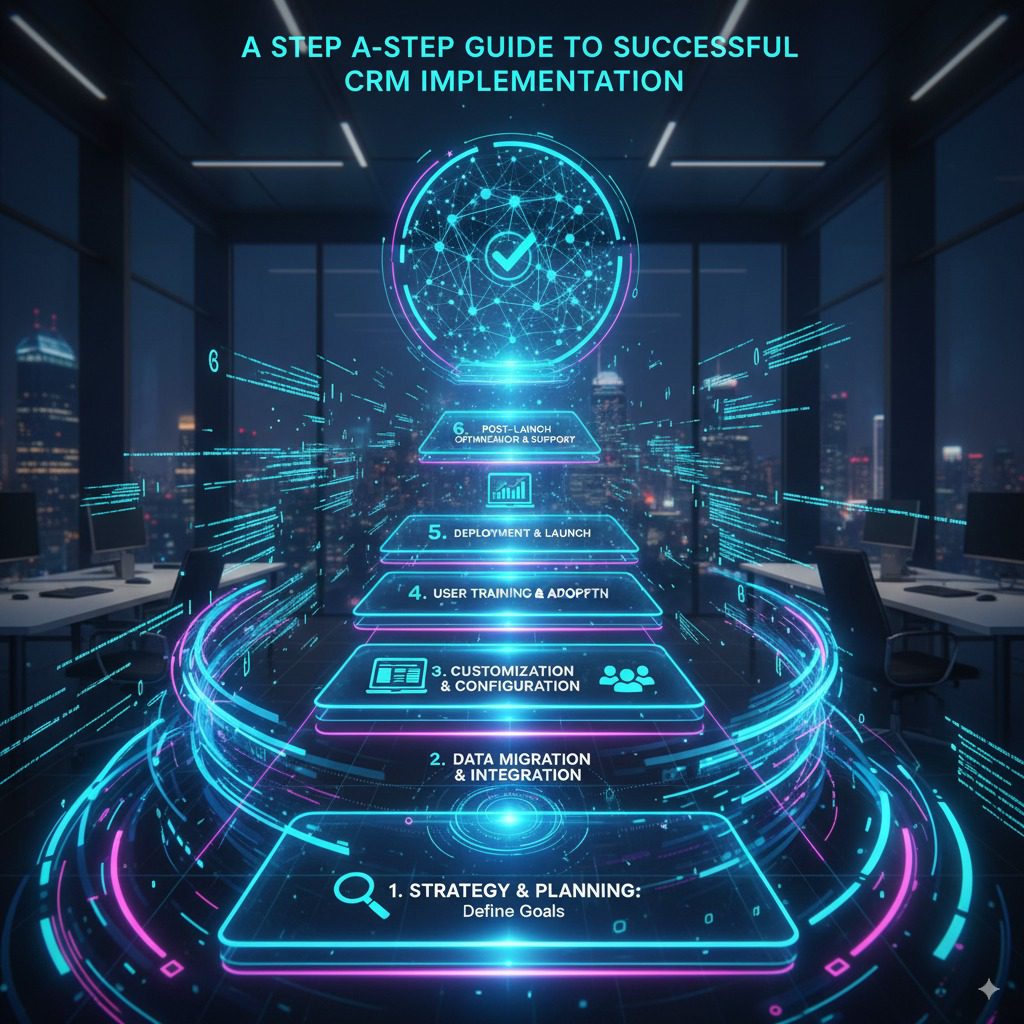
A Step-by-Step Guide to Successful CRM Implementation

Introduction Customer Relationship Management (CRM) implementation has become the backbone of modern businesses aiming to improve customer satisfaction, streamline processes, and boost revenues. However, the success of CRM implementation depends on adopting a structured, step-by-step approach. Without it, CRM projects can lead to cost overruns, poor user adoption, and unrealized business benefits. This blog provides a step-by-step CRM implementation guide, covering best practices, potential challenges, and the role of AI and analytics, with references to TechOTD Blog and TechOTD AI Services. Step 1: Define Clear Objectives and Business Needs Identify the core challenges your CRM should solve — lead management, customer service, or marketing automation. Align CRM implementation goals with overall business strategy. Set measurable KPIs for success. Step 2: Choose the Right CRM Solution Select a CRM platform that fits your business size, industry, and goals. Consider customization, scalability, integrations, and vendor support. Popular choices include Salesforce, HubSpot, Microsoft Dynamics, and Zoho CRM. Step 3: Plan Implementation and Build Your Team Create a detailed project plan with timelines, resources, and budget. Appoint a CRM project manager and cross-functional team. Secure executive sponsors to drive successful CRM implementation. Step 4: Data Preparation and Migration Audit, clean, and standardize customer data for accuracy and completeness. Define migration processes with validation checks. Ensure secure data transfer with minimal downtime. Step 5: Customize and Integrate Configure CRM workflows to match business needs. Integrate with ERP, marketing automation, and support systems. Use APIs and automation to maximize efficiency. Step 6: Training and Change Management Conduct role-based training for different teams. Provide resources and promote a culture of data-driven customer management. Communicate benefits to drive higher adoption. Step 7: Testing and Quality Assurance Test all features before go-live. Perform user acceptance testing (UAT). Ensure compliance with security standards. Step 8: Deployment and Go-Live Choose between phased rollout or full deployment. Provide strong technical support post-launch. Gather user feedback and monitor adoption. Step 9: Continuous Improvement and Optimization Treat CRM implementation as an ongoing process. Regularly analyze KPIs and refine workflows. Leverage AI and predictive analytics with TechOTD AI Solutions for advanced automation. Common Challenges in CRM Implementation and How to Overcome Them Data Silos: Establish strong data governance. User Resistance: Engage users early and show quick wins. Scope Creep: Maintain strict project controls. Technical Issues: Invest in expert consulting and infrastructure. Conclusion A successful CRM implementation requires a strategic blend of technology, people, and processes. By following this step-by-step CRM implementation guide, businesses can avoid pitfalls, improve customer relationships, and achieve sustainable growth. With the power of AI and analytics, organizations can take CRM to the next level and unlock its full potential.

How would you like me to respond?

Select a personality for your AI assistant

Normal
Happy
Sad
Angry

Your selection will affect how the AI assistant responds to your messages

Chat Assistant

Let's discuss your project!

Hear from our clients and why 3000+ businesses trust TechOTD

Tell us what you need, and we'll get back with a cost and timeline estimate

Scroll to Top