Introduction
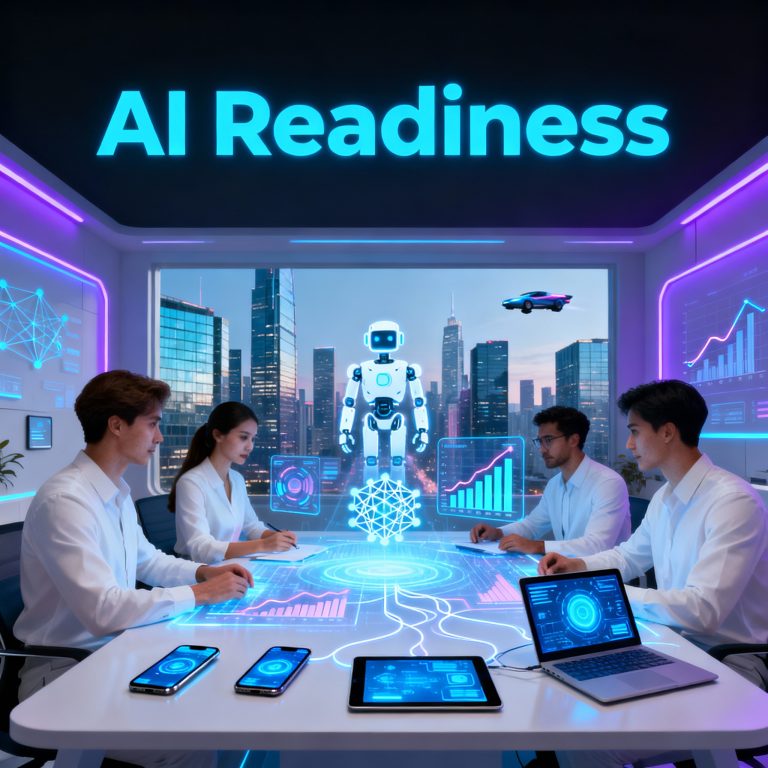
AI readiness is quickly becoming essential for businesses navigating the future of digital transformation. Organizations in every sector want to harness artificial intelligence (AI) to streamline processes, unlock strategic insights, and stay ahead of competitors. Yet, success is determined not by enthusiasm alone, but by how thoroughly an organization prepares for effective AI adoption. This blog explores what AI readiness means, why it matters, and how to chart a clear path toward responsible, scalable, and profitable AI initiatives.

What Is AI Readiness?
-
-
AI readiness measures an organization’s preparedness to implement and scale AI technologies effectively across its operations.
-
-
It goes beyond having advanced technology—encompassing data management, infrastructure, workforce skills, ethical governance, and change management.
-
Achieving readiness means developing a strategic vision, clarifying objectives, and building a roadmap that aligns AI projects with core business goals.
Key Components of AI Readiness
-
Strategy and Objectives
-
Define clear business challenges and goals for AI initiatives.
-
Align AI projects with overall corporate strategy and measurable KPIs.
-
Secure leadership buy-in for long-term success.
-
-
Data and Infrastructure
-
Ensure high-quality, accessible data with strong governance and security.
-
Upgrade technical infrastructure to support AI workloads (processing power, storage, network capabilities).
-
-
Talent and Culture
-
Invest in workforce training—AI skills, change management, and digital literacy.
-
Foster a culture that welcomes innovation and adapts to new technologies.
-
-
Governance and Risk Management
-
Create policies for ethical, legal, and regulatory compliance in AI usage.
-
Embed monitoring and feedback mechanisms to manage risks and ensure responsible AI deployment.
-
How AI Readiness Drives Business Value
-
Enhanced Efficiency: Automating repetitive tasks and leveraging AI for data analysis improves productivity and decision-making.
-
Smarter Investments: Readiness assessments help businesses target high-impact projects and avoid costly missteps.
-
Reduced Risks: Careful planning and training minimize failures and ensure robust, secure implementations.
-
Competitive Advantage: Organizations ready for AI gain insights faster and innovate more effectively than competitors.
Practical Steps For Building AI Readiness
-
Conduct an AI readiness assessment to identify strengths and gaps.
-
Implement the 11-step AI readiness checklist:
-
Establish clear objectives
-
Map current capabilities
-
Develop an AI strategy and roadmap
-
Improve data foundations
-
Upgrade infrastructure
-
Set governance policies
-
Invest in talent and culture
-
Pilot targeted projects
-
Measure and iterate
-
Engage leadership and stakeholders
-
Ensure continuous learning and adaptation.
-
-
Leverage real-world examples:
-
Shell uses AI-driven predictive analytics for drilling optimization.
-
IBM Watson analyzes healthcare data to guide treatment decisions.
-
Retailers optimize inventory and supply chains with AI-powered demand forecasting.
-
Conclusion
AI readiness is the cornerstone of successful and sustainable AI transformation. By preparing across strategy, infrastructure, people, and governance, businesses unleash AI’s full potential—while mitigating risks and maximizing returns. Start by assessing your organization’s readiness, implementing targeted improvements, and fostering a future-ready culture.
Ready to future-proof your business through AI? Begin your AI readiness assessment today and accelerate your journey to digital leadership!
Flutter vs React Native — Which Framework Should You Choose in 2025?
FAQ
1. What is an AI readiness assessment?
An AI readiness assessment evaluates your organization’s strength across strategy, data, infrastructure, talent, culture, and governance to identify areas for improvement before adopting AI technologies.
2. Why should businesses focus on AI readiness?
AI readiness prevents costly failures, boosts ROI, and enables responsible, scalable adoption—helping businesses realize the full value of AI investments.
3. What’s the most common barrier to AI readiness?
Weak data infrastructure and insufficient workforce skills are frequent obstacles. Addressing these challenges is critical for smooth and effective AI integration.
4. Can small and medium businesses benefit from AI readiness?
Yes. Clear objectives, practical assessments, and phased implementation plans help businesses of any size capitalize on AI opportunities.
5. How does AI readiness impact compliance and ethical use?
Robust governance ensures AI systems are deployed responsibly, minimizing regulatory risk and building stakeholder trust.