Artificial Intelligence

Digital lock representing cybersecurity protection and network defense
cybersecurity

Cybersecurity Trends for 2025: Safeguarding the Digital Future

Introduction In the digital age, data is the new currency — and cybercriminals know it. As technology evolves, so do cyber threats, making cybersecurity one of the most critical priorities for businesses, governments, and individuals. With billions of devices connected through 5G, cloud computing, and the Internet of Things (IoT), the attack surface for cybercriminals has expanded like never before. According to industry estimates, global cybercrime costs are projected to reach $10.5 trillion annually by 2025, making cybersecurity not just a technical issue, but a global economic concern. As we step into 2025, the world of cybersecurity is being reshaped by artificial intelligence, automation, and quantum computing — both as tools for protection and as new sources of risk. Let’s dive deep into the trends defining the future of digital defense. Why Cybersecurity Matters More Than Ever Modern businesses operate in an ecosystem of interconnected technologies — from cloud-based services to remote work systems and AI-powered analytics. While these innovations improve efficiency, they also introduce vulnerabilities. Recent high-profile incidents — like ransomware attacks on hospitals, supply chain breaches, and phishing-driven data theft — highlight the urgent need for proactive and adaptive cybersecurity measures. Cybersecurity in 2025 is no longer about building walls; it’s about creating intelligent, self-healing defense systems that can anticipate and neutralize threats in real time. Top Cybersecurity Trends for 2025 1.  AI and Machine Learning in Cyber Defense Artificial Intelligence (AI) and Machine Learning (ML) have become the backbone of modern cybersecurity systems. AI algorithms detect unusual patterns and stop attacks before they happen. ML models learn from previous threats to improve detection accuracy. Predictive analytics help identify potential vulnerabilities in advance. Example:AI-driven tools like Darktrace and CrowdStrike use ML to monitor network traffic and detect anomalies faster than any human analyst could. However, attackers are also using AI — creating “smart malware” capable of adapting to traditional defenses, making this an ongoing technological arms race. 2.  Zero-Trust Architecture (ZTA) Becomes the Standard The Zero-Trust Model operates on one simple rule: “Never trust, always verify.” Instead of assuming internal users or devices are safe, ZTA continuously validates every access request using identity, context, and behavior analysis. By 2025, zero-trust frameworks will become a mandatory standard for enterprises — especially in hybrid work environments where employees connect from multiple devices and locations. Key Components of ZTA: Multi-Factor Authentication (MFA) Continuous user validation Least-privilege access Micro-segmentation of networks 3.  Human-Centered Security Awareness Training Human error remains one of the biggest cybersecurity risks. Phishing emails, weak passwords, and social engineering attacks still cause most data breaches. In 2025, companies are shifting from technical defenses to behavioral cybersecurity training — using gamified learning, simulated attacks, and AI-based education platforms to train employees to recognize threats. Example:Platforms like KnowBe4 and Cofense use real-world simulations to reduce phishing susceptibility by over 70%. 4.  Cloud Security and Shared Responsibility With businesses migrating to cloud-first strategies, the cloud has become both a target and a defense frontier. Cloud providers (like AWS, Azure, and Google Cloud) secure infrastructure, but users are responsible for data protection, access control, and compliance — a concept known as the shared responsibility model. By 2025, we’ll see: Greater use of cloud-native security tools Enhanced data encryption and tokenization Real-time identity and access management (IAM) 5.  Cybersecurity Mesh Architecture (CSMA) Introduced by Gartner, Cybersecurity Mesh Architecture connects security tools through an integrated framework. Instead of isolated systems, it creates a centralized policy layer where all applications, networks, and data points communicate securely. By 2025, over 60% of organizations are expected to adopt CSMA to unify their cybersecurity infrastructure. 6.  Quantum-Resistant Encryption Quantum computing, while promising for research and innovation, poses a serious threat to traditional encryption algorithms like RSA and ECC. To counter this, companies are developing quantum-resistant algorithms that can withstand attacks from future quantum computers. Organizations like NIST are already standardizing Post-Quantum Cryptography (PQC), ensuring data remains secure in a post-quantum era. 7.   Rise of Managed Security Service Providers (MSSPs) As cyber threats grow more complex, small and medium businesses (SMBs) often lack the expertise to handle them. By 2025, the demand for MSSPs — external cybersecurity experts providing 24/7 monitoring, compliance management, and incident response — will skyrocket. This approach offers affordable, scalable protection for companies without building large internal security teams. 8.  Data Privacy Regulations Tighten Worldwide Governments across the world are enforcing stricter data protection laws — like GDPR (Europe), CCPA (California), and DPDP Act (India). By 2025, more nations will introduce regulations demanding transparency in how companies collect, store, and use personal data. Privacy-by-design and encryption-by-default will become standard in all major digital products. 9.  Blockchain for Cybersecurity Blockchain technology is emerging as a powerful tool for cybersecurity. Its decentralized and immutable nature makes it ideal for: Securing identity management Verifying transactions Preventing tampering in data exchanges By 2025, blockchain-based identity verification and supply chain security solutions will see mass adoption across finance, logistics, and healthcare. 10.  Automation and SOAR (Security Orchestration, Automation, and Response) With thousands of alerts generated daily, human analysts can’t keep up. That’s where SOAR platforms come in — automating repetitive tasks like incident classification, response, and reporting. This improves efficiency, reduces human error, and ensures 24/7 vigilance.  Real-World Example: AI-Driven Threat Detection A financial institution in Singapore deployed an AI-based threat monitoring system that analyzes 100 million transactions daily.The system detects fraud within seconds and automatically isolates suspicious accounts — saving millions in potential losses. This case proves how AI, combined with automation, is redefining modern cyber defense. Challenges Ahead Despite advancements, the cybersecurity landscape in 2025 faces several challenges: Evolving threat actors: Hackers use AI and deepfake technology to bypass defenses. Shortage of skilled professionals: The global cybersecurity workforce gap exceeds 3 million experts. Cost of compliance: Meeting international data laws increases financial strain on small firms. Complex multi-cloud environments: Managing security across multiple cloud providers adds complexity. The Future of Cybersecurity Beyond 2025 By the late 2020s, cybersecurity will evolve from being reactive to predictive and autonomous. Emerging
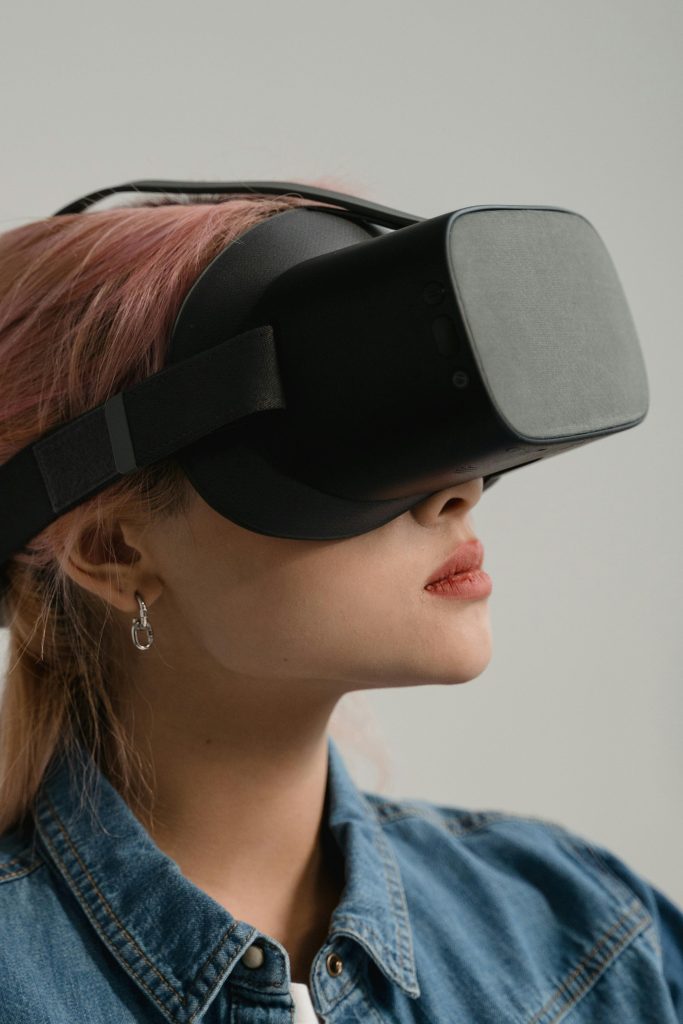
Business professionals collaborating with digital technology, holographic displays, and innovative workspace
Technology & Innovation

The Future of Technology & Innovation: Transforming Tomorrow’s World

Introduction Technology and innovation have become the twin engines driving humanity forward in the 21st century. As we navigate through 2025, the pace of technological advancement shows no signs of slowing down. From artificial intelligence reshaping how we work to quantum computing promising to solve previously unsolvable problems, innovation continues to redefine what’s possible. In this comprehensive guide, we’ll explore the most significant technology trends, understand how innovation is transforming industries, and look ahead at what the future holds for our increasingly digital world. Artificial Intelligence: Beyond the Hype Artificial intelligence has evolved from a buzzword to an essential business tool. In 2025, AI is no longer just about automation—it’s about augmentation, enabling humans to make better decisions and achieve outcomes that were previously impossible. Generative AI’s Maturation Generative AI has moved beyond novelty to become a productivity powerhouse. Organizations are integrating AI assistants into workflows, automating complex tasks, and creating personalized customer experiences at scale. The technology has matured to handle multimodal inputs—text, images, audio, and video—opening new creative and analytical possibilities. AI in Healthcare Medical diagnostics powered by AI are detecting diseases earlier and more accurately than ever before. Machine learning algorithms analyze medical imaging, predict patient outcomes, and even assist in drug discovery, potentially saving millions of lives and billions in healthcare costs. Quantum Computing: The Next Frontier Quantum computing is transitioning from theoretical promise to practical application. While still in its early stages, quantum computers are beginning to tackle problems in cryptography, materials science, and complex optimization that would take classical computers millennia to solve. Major tech companies and research institutions are racing to achieve “quantum advantage”—the point where quantum computers can solve real-world problems faster than traditional computers. This breakthrough could revolutionize fields from climate modeling to financial forecasting. Sustainable Technology: Innovation with Purpose Climate change has made sustainable technology not just desirable but essential. Innovation is increasingly focused on reducing environmental impact while maintaining or improving functionality. Green Energy Solutions Solar and wind technology continues to become more efficient and affordable. Battery storage solutions are solving the intermittency problem, making renewable energy viable for baseload power. Innovations in hydrogen fuel cells and carbon capture technology are addressing hard-to-decarbonize sectors. Circular Economy Tech Technology is enabling circular economy models where waste becomes a resource. IoT sensors track product lifecycles, AI optimizes recycling processes, and blockchain ensures transparency in supply chains, all working together to minimize environmental impact. The Internet of Things (IoT) and Edge Computing The IoT ecosystem has exploded, with billions of connected devices generating unprecedented amounts of data. Edge computing processes this data closer to its source, reducing latency and enabling real-time responses crucial for applications like autonomous vehicles and smart cities. Smart homes, wearable health monitors, industrial sensors, and connected infrastructure are creating a world where physical and digital realms seamlessly integrate. This connectivity is optimizing everything from energy consumption to traffic flow. Blockchain Beyond Cryptocurrency While cryptocurrencies grabbed headlines, blockchain’s real innovation lies in its ability to create trust in trustless environments. In 2025, blockchain is being applied to supply chain transparency, digital identity verification, smart contracts, and decentralized finance (DeFi). Organizations are using blockchain to ensure product authenticity, streamline cross-border transactions, and create tamper-proof records for everything from medical histories to property deeds. Augmented and Virtual Reality: Merging Worlds AR and VR technologies have matured beyond gaming into practical applications across industries. Virtual training environments allow professionals to practice high-risk procedures safely. AR assists technicians with complex repairs by overlaying digital instructions onto physical equipment. The metaverse concept continues evolving, with virtual spaces hosting business meetings, educational experiences, and social interactions that feel increasingly natural and immersive. Biotechnology and Human Enhancement The convergence of technology and biology is opening extraordinary possibilities. CRISPR gene editing, brain-computer interfaces, and personalized medicine are moving from research labs to real-world applications. Wearable technology monitors health metrics in real-time, while implantable devices can restore sight, hearing, and mobility. The ethical implications are profound, but the potential to eliminate diseases and extend healthy lifespans is transforming healthcare. The Innovation Ecosystem True innovation rarely happens in isolation. It emerges from ecosystems where startups, established companies, research institutions, and governments collaborate. Open-source communities, accelerator programs, and venture capital all play crucial roles in bringing innovative ideas to market. The Role of Startups Startups continue to be innovation catalysts, unburdened by legacy systems and willing to take risks. They’re disrupting established industries and creating entirely new markets, from fintech to foodtech. Corporate Innovation Labs Large corporations are establishing innovation labs and partnering with startups to stay competitive. This collaboration combines startup agility with corporate resources and market access, accelerating technology adoption. Challenges and Considerations Innovation brings challenges alongside opportunities. Cybersecurity threats evolve as quickly as the technologies they target. Privacy concerns grow as data collection becomes ubiquitous. The digital divide risks leaving behind those without access to technology or digital literacy. Ethical considerations around AI bias, autonomous weapons, and genetic modification require thoughtful regulation and public discourse. Society must balance innovation’s benefits against potential risks and unintended consequences. Preparing for the Future Organizations and individuals must embrace continuous learning to thrive in this rapidly evolving landscape. Technical skills remain important, but creativity, critical thinking, and adaptability are equally crucial. Investing in STEM education, supporting diverse voices in technology, and fostering cultures of experimentation will determine who leads and who follows in the innovation race. Conclusion Technology and innovation are reshaping every aspect of human existence. From how we work and communicate to how we address global challenges like climate change and healthcare, technological advancement offers unprecedented opportunities. The future belongs to those who embrace change, think creatively, and use technology purposefully. As we stand at the intersection of multiple technological revolutions, the question isn’t whether innovation will transform our world—it’s how we’ll shape that transformation to benefit all of humanity. The most exciting innovations may not yet be invented. The next breakthrough could come from a garage startup, a university lab, or a global corporation. What’s certain is

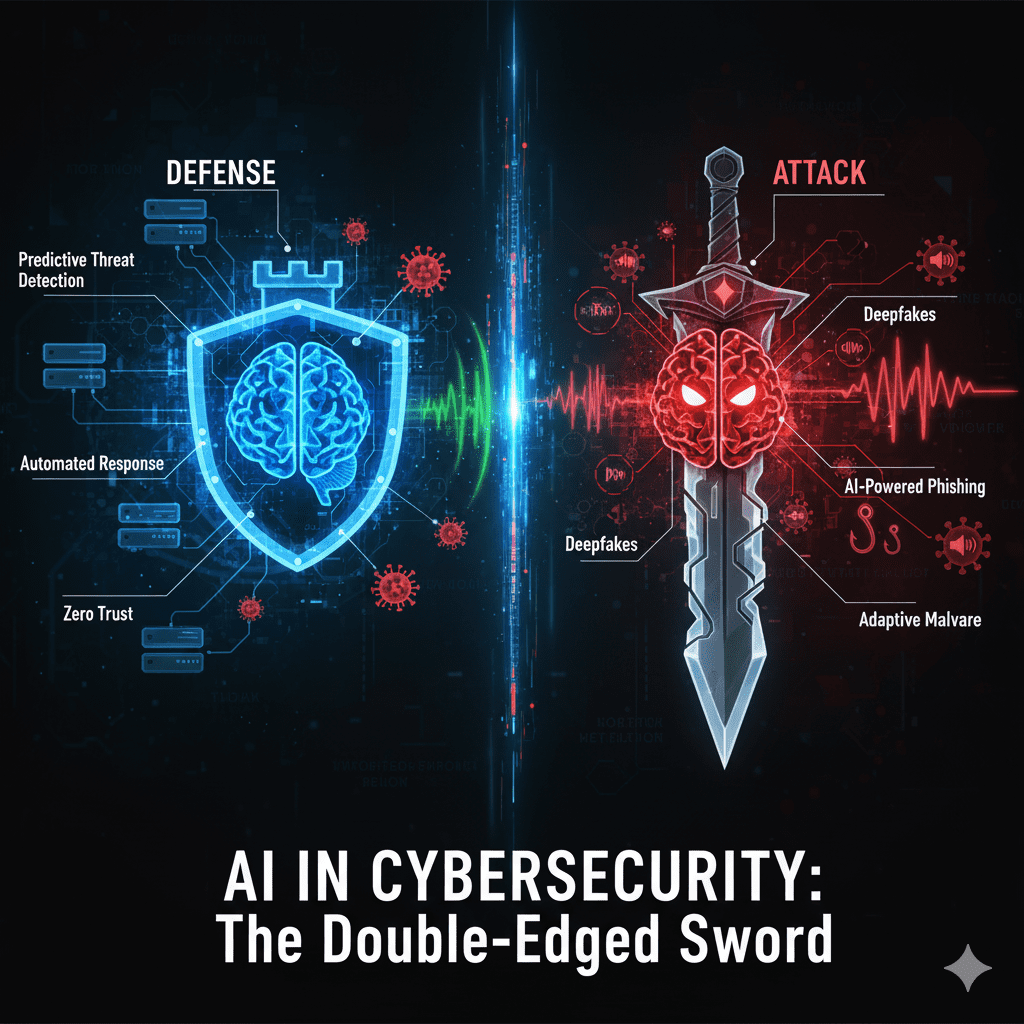
PREDICTIVE THREAT DETECTION and AUTOMATED RESPONSE
cybersecurity

Digital Armor: Defending Against Cyber Threats

Introduction For decades, the world of cybersecurity has been a high-stakes cat-and-mouse game. Security professionals build a wall, and hackers find a way over it. But today, this game is being fundamentally transformed by a powerful new player: Artificial Intelligence. AI is not just another tool; it’s a revolutionary force acting as both the strongest shield and the most dangerous new weapon. This article explores the dual role of AI in Cybersecurity, breaking down how it’s creating unprecedented defenses while simultaneously arming attackers with terrifying new capabilities The New Shield: AI as a Defensive Powerhouse The primary advantage of AI in a defensive role is its ability to process and analyze data at a scale and speed no human team could ever hope to match. While a human analyst sleeps, an AI security model is monitoring billions of events, looking for the one tiny anomaly that signals an attack. 1. Predictive Threat Detection Before AI, most security systems were reactive. They relied on “signatures”—the digital fingerprints of known malware. This meant a virus had to successfully attack someone first before it could be identified and blocked. AI, specifically machine learning, is predictive. It learns the normal, baseline behavior of your network, your users, and your devices. It can then spot suspicious deviations before a full-blown breach occurs. This includes: Behavioral Analysis: Is a user account that normally works from 9-to-5 suddenly trying to access sensitive files at 3:00 AM from a different country? AI flags this instantly. Anomaly Detection: Does a “smart” device like a thermostat suddenly start trying to communicate with an unknown server? AI can see this as a potential IoT (Internet of Things) attack. Pattern Recognition: AI can analyze global threat feeds and identify new attack patterns as they emerge, proactively blocking them before they even reach your network. 2. Automated Incident Response In a cyberattack, every second counts. A ransomware attack can encrypt an entire company’s files in minutes. AI doesn’t need to wait for approval; it can act in milliseconds. This is known as SOAR (Security Orchestration, Automation, and Response). Here’s a typical automated response scenario: Detect: An AI-powered sensor identifies a new, unknown program exhibiting ransomware-like behavior (e.g., rapidly encrypting files) on an employee’s laptop. Isolate: The AI immediately executes a predefined rule: it automatically disconnects that specific laptop from the company network, containing the threat. Investigate: The AI gathers all relevant data—what the program was, where it came from, what files it touched—and creates a report. Alert: It then sends an alert to a human security analyst, presenting the report and the action it took. The threat is neutralized before it could spread. The Future: An AI vs. AI Battleground This leads to an inevitable future: the front line of AI in Cybersecurity will be an AI-versus-AI battle. It will be a silent, high-speed war fought in milliseconds, with defensive AI models trying to detect and stop offensive AI-driven attacks. In this new era, the old security model of “trust but verify” is dead. The new model, which AI is perfect for, is Zero Trust. Zero Trust Architecture means you trust nothing and no one by default. It doesn’t matter if a login request comes from inside the office or outside; it must be verified. AI helps enforce this by continuously analyzing behavior. Just because you entered the right password doesn’t mean you are who you say you are. If your “logged-in” account suddenly starts acting suspiciously, the AI can force you to re-authenticate or block your access. Conclusion AI in Cybersecurity is a revolutionary, double-edged sword. It offers our most powerful hope for a secure digital future, capable of analyzing threats and responding at superhuman speeds. At the same time, it arms our adversaries with tools to create highly deceptive scams and intelligent malware. The key takeaway is that we can’t ignore it. For businesses, investing in modern, AI-powered defensive tools is no longer an option—it’s a necessity for survival. For individuals, it requires a new level of vigilance. In this new world, adaptability is everything. The future of security will be defined by who has the smarter, faster, and more adaptable AI. FAQ Q1: What is AI in Cybersecurity? AI in Cybersecurity refers to the use of artificial intelligence and machine learning to detect, predict, prevent, and respond to cyber threats. It moves beyond traditional, rule-based security by learning from data to identify new and unknown threats based on behavioral anomalies. Q2: Can AI replace human cybersecurity professionals? No, AI is a tool to augment human professionals, not replace them. AI can handle the massive, high-speed data analysis, but it still lacks human intuition, creativity, and strategic decision-making. AI flags the problem and contains it; the human analyst investigates the “why” and “how” to build a stronger long-term strategy. Q3: What is the biggest threat from AI in cyberattacks? Currently, the most accessible and dangerous threat is AI-powered social engineering, including deepfake audio and video. These attacks target the weakest link in any security system—human psychology—and are incredibly difficult to defend against with technology alone. Q4: How can a small business afford AI-powered security? While developing a custom AI model is expensive, most AI-powered security is now sold “as-a-service.” Many modern antivirus, firewall, and email security providers (like Microsoft, Google, and CrowdStrike) have already integrated AI and machine learning into their standard products, making it accessible and affordable for businesses of all sizes.

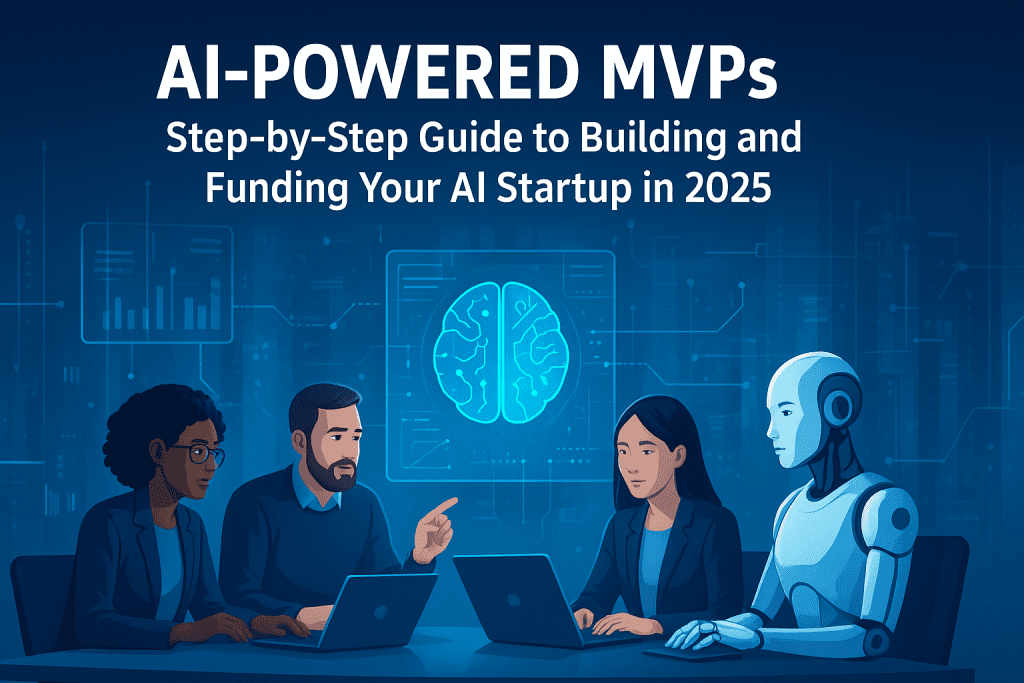
A diverse team of professionals and a humanoid robot collaborate in a futuristic office surrounded by holographic AI visuals and digital data charts, symbolizing innovation, technology, and AI-driven startup development.
Artificial Intelligence, startup

Step-by-Step Guide to Building and Funding Your AI Startup

Introduction Artificial Intelligence (AI) is the driving force behind the most exciting AI startup trends of 2025. From generative models to predictive analytics, AI is fueling a new generation of innovation across industries. For emerging startups, building an AI MVP (Minimum Viable Product) is the smartest way to test ideas and attract early investors. This guide will walk you through the step-by-step process of AI MVP development, explore AI funding strategies, and highlight artificial intelligence innovation that can turn your idea into a real-world business success. Step-by-Step Guide to Building Your MVP 1. Identify the Problem and Validate the IdeaStart with a real-world problem AI can solve. For example, automating resume screening, predicting health outcomes, or optimizing logistics. Conduct market research and user interviews to confirm demand before writing a single line of code. 2. Define Core Features (Keep It Lean)Focus on the one AI-driven feature that delivers the most value. Instead of building everything at once, design a prototype that showcases the core intelligence of your product — like a chatbot, image recognizer, or recommendation engine. 3. Choose the Right Tech StackSelect reliable tools for faster MVP development: Backend: Python (FastAPI, Flask) or Node.js Frontend: React.js or Next.js AI/ML Tools: TensorFlow, PyTorch, OpenAI API, Hugging Face Database: MongoDB, PostgreSQL Hosting: AWS, Google Cloud, or Azure 4. Build and Test IterativelyDevelop your MVP in short sprints. Gather feedback from beta testers and iterate quickly. Use analytics to understand user behavior and improve AI performance. 5. Launch and Collect DataOnce launched, track user engagement, model accuracy, and overall experience. The insights you gather will help refine your AI model and product roadmap. How to Raise Funding for Your MVP in 2025 1. Create a Compelling Pitch DeckHighlight your AI’s unique edge — what problem it solves and how it uses data intelligently. Investors want to see impact + scalability. 2. Showcase Early TractionEven small user metrics, pilot results, or demo videos can prove your MVP’s value. Show that your AI works and users love it. 3. Target the Right InvestorsReach out to AI-focused venture funds, tech accelerators, and angel investors who understand machine learning and automation potential. Examples: Sequoia India, Accel, Y Combinator, Techstars AI Track. 4. Emphasize Ethical AI and Data PrivacyIn 2025, investors are more cautious about AI ethics and compliance. Mention fairness, transparency, and responsible data handling in your pitch. 5. Use Funding PlatformsExplore modern fundraising options like: AngelList (for pre-seed rounds) Y Combinator’s Startup School PitchBook & Crunchbase (for investor connections) Crowdfunding with AI-based prototypes (Kickstarter, Indiegogo) Pro Tips  Start with No-Code or Low-Code AI Tools: Use platforms like Bubble, Builder.ai, or Lobe.ai to test MVP ideas quickly.  Focus on Data Quality: Your AI is only as smart as the data you train it on.  Leverage Open Source Models: Fine-tune pre-trained models instead of building from scratch.  Prioritize User Feedback: Iteration is your best teacher.  Integrate Ethics and Transparency: Build user trust through explainable AI features. Conclusion The AI boom of 2025 offers endless opportunities for innovative startups. Building a smart, efficient MVP is the best way to validate your idea and attract funding. By staying lean, focusing on real problems, and emphasizing responsible AI practices, you can turn your concept into a market-ready product. Remember — in AI startups, speed and adaptability matter more than perfection.   ❓ FAQ 1. What is an AI MVP?An AI MVP (Minimum Viable Product) is a lightweight version of an AI-based product built to test market demand and gather user feedback before full-scale development. 2. How long does it take to build an AI MVP?Typically 4–12 weeks, depending on complexity, data availability, and team size. 3. How much funding do AI startups usually raise initially?AI startups usually raise between $50,000 – $250,000 in seed or pre-seed rounds for MVP development. 4. What’s the best AI tech stack for startups in 2025?Python (for AI/ML), React (for frontend), and AWS or Google Cloud for deployment are the most popular combinations. 5. Can I build an AI MVP without coding?Yes! Tools like Lobe.ai, Peltarion, and Builder.ai allow non-technical founders to prototype AI solutions quickly. How to Build a Minimal Viable Product (MVP) and Raise Funding in 2025

Graphic Designing, Technology

Graphic Designing in the AI World: Creativity Meets Automation

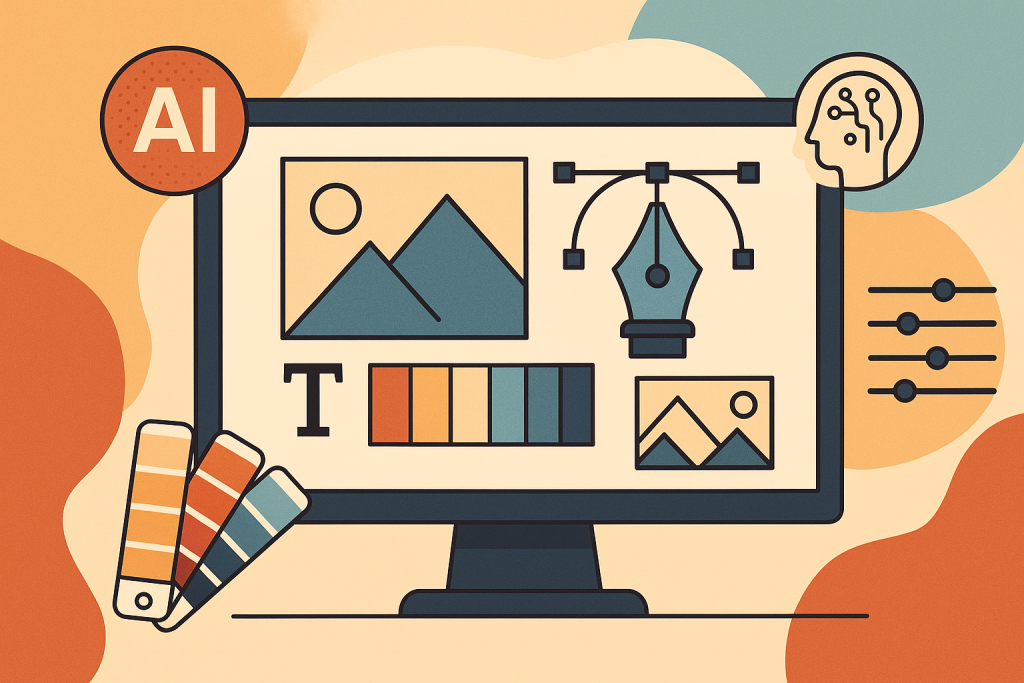
Graphic Designing in the AI World: Creativity Meets Automation Introduction In the rapidly evolving landscape of technology, Artificial Intelligence (AI) is redefining industries, and graphic design is at the forefront of this transformation. Once a domain driven solely by human creativity, graphic design now embraces a synergy of human imagination and AI-driven automation. From generating stunning visuals in seconds to personalizing designs at scale, AI is reshaping how designers work. This blog dives into the profound impact of AI on graphic design, explores the evolving role of designers, and highlights how creativity and automation can coexist to produce innovative, impactful designs. How AI is Transforming Graphic Design AI is revolutionizing graphic design by introducing tools and processes that enhance efficiency and creativity. Here’s how AI is making its mark: Content Co-Creation: Tools like Adobe Firefly, DALL·E, and Canva’s AI features allow designers to collaborate with algorithms, generating initial drafts or variations based on text prompts or design inputs. Personalization at Scale: AI analyzes user data—such as preferences, behaviors, and demographics—to create tailored visuals for marketing campaigns, websites, and social media. Data-Driven Design Suggestions: AI evaluates trends and performance metrics to suggest layouts, color schemes, and typography that resonate with target audiences. Accessibility Enhancements: AI tools recommend inclusive design elements, such as high-contrast color palettes and alt texts, making designs accessible to diverse audiences. Infographic: AI Tools in Graphic Design Image Description: A clean, modern infographic with a tech-inspired design. It features a circular layout with icons representing popular AI tools (e.g., Adobe Firefly, DALL·E, Canva AI). Each icon is connected to a brief description of the tool’s key feature, set against a white background with accents of teal and orange. A central heading reads “AI Tools Powering Design” in bold sans-serif font. Caption: A snapshot of leading AI tools transforming graphic design workflows. Top Benefits of AI in Graphic Designing AI is not just a trend—it’s a game-changer for designers. Below are the key advantages reshaping the industry: Speeds Up Design Workflows: AI automates repetitive tasks like resizing images or generating mockups, allowing designers to focus on high-level creative work. Reduces Repetitive Tasks: Tools like Runway ML and Khroma handle mundane tasks such as background removal or color palette generation, saving hours of manual effort. Enhances Creative Brainstorming: AI generates multiple design variations, sparking inspiration and helping designers explore new creative directions. Supports Real-Time Adjustments: AI-powered platforms enable instant tweaks to layouts, fonts, or colors, streamlining the feedback and revision process. Chart: Time Saved with AI in Design Workflows Image Description: A bar chart with a sleek, minimalist design. The x-axis lists design tasks (e.g., Image Resizing, Background Removal, Mockup Creation), and the y-axis shows hours saved. Each bar is filled with a gradient of blue to green, set against a dark background for contrast. A title at the top reads “Time Saved with AI Tools” in white, bold text. Caption: AI tools significantly reduce time spent on repetitive design tasks. What AI Can’t Replace While AI is a powerful ally, it cannot replicate the human touch that defines exceptional graphic design. Here’s what remains uniquely human: Emotional Intelligence: Humans understand cultural nuances, emotions, and context, enabling them to craft designs that resonate deeply with audiences. Storytelling: Effective design tells a story, weaving brand narratives that AI struggles to replicate authentically. Brand Consistency: Human designers ensure designs align with a brand’s identity, values, and long-term vision, a task that requires intuition and strategic thinking. Empathy: Understanding user needs and creating designs that evoke trust and connection is a distinctly human skill. AI may generate visually appealing options, but it’s the designer’s ability to infuse meaning and purpose that elevates a project from good to unforgettable. The Future Role of Graphic Designers As AI continues to shape the industry, the role of graphic designers is evolving. Rather than being replaced, designers are adapting to new responsibilities: Creative Directors of AI Outputs: Designers oversee AI-generated content, refining and curating outputs to align with project goals. Prompt Engineers for AI Tools: Crafting precise prompts for AI art generators like DALL·E or MidJourney is becoming a critical skill. Strategists for Storytelling and Empathy: Designers focus on high-level strategy, ensuring designs connect emotionally with audiences and align with brand narratives.   Challenges of Integrating AI into Graphic Design While AI offers immense potential, it also presents challenges: Learning Curve: Designers must learn to use AI tools effectively, which can be time-consuming initially. Over-Reliance on Automation: Excessive dependence on AI may stifle originality, leading to generic designs. Ethical Concerns: Issues like copyright infringement and the ethical use of AI-generated content are still being navigated. Balancing Creativity and Efficiency: Designers must ensure AI enhances, rather than overshadows, their creative process. By addressing these challenges, designers can harness AI’s power while maintaining their unique creative voice. Conclusion Graphic designing in the AI world is a dynamic blend of human creativity and technological innovation. AI tools like Adobe Firefly, DALL·E, and Canva empower designers to work faster, explore bold ideas, and deliver personalized, accessible designs. However, the heart of design—storytelling, empathy, and cultural awareness—remains a human domain. The future belongs to designers who embrace AI as a creative partner, leveraging its capabilities to amplify their vision. By blending creativity with automation, graphic designers can push boundaries, create impactful visuals, and shape the future of design. Frequently Asked Questions (FAQs) Will AI replace graphic designers? No, AI serves as a tool to assist designers, enhancing efficiency but not replacing the human creativity, emotional intelligence, and strategic thinking essential to design. What are the best AI tools for graphic designers? Popular AI tools include Adobe Firefly, DALL·E, Canva AI, Runway ML, and Khroma, each offering unique features for design automation and inspiration. Is it necessary to learn AI as a graphic designer? While not mandatory, learning AI tools can significantly enhance your skillset, streamline workflows, and make you more competitive in the industry. How is AI improving accessibility in graphic design? AI suggests accessible design elements, such as high-contrast color

Scroll to Top