Tackling Data Debt: A Strategic Blueprint for Data Pipeline Optimization and Real-Time Decision Making
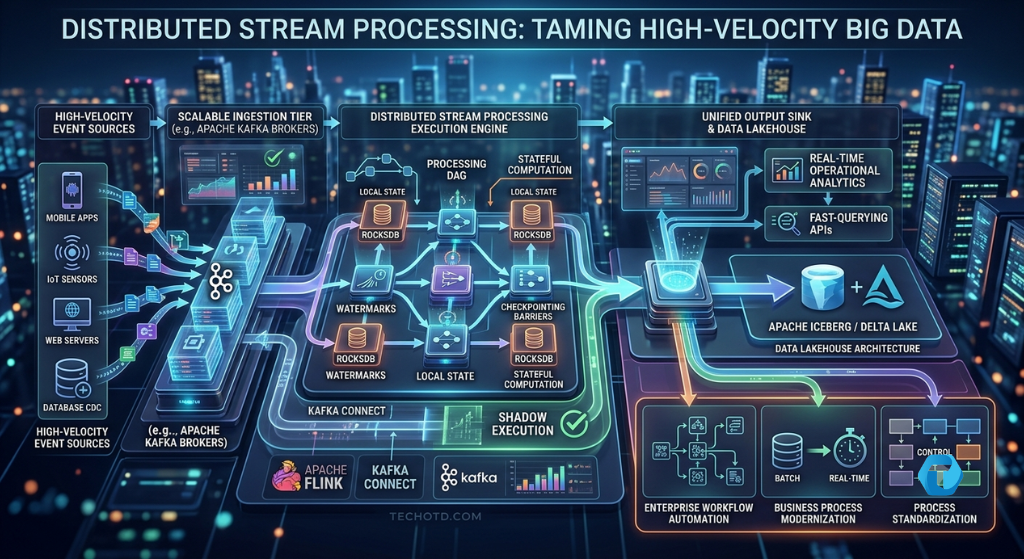
Tackling Data Debt: A Strategic Blueprint for Data Pipeline Optimization and Real-Time Decision Making Every scaling enterprise eventually reaches a critical tipping point where its most valuable asset becomes its primary operational bottleneck. You see it in executive dashboards that take hours to refresh, cloud infrastructure invoices that balloon without explanation, and data engineering teams spending eighty percent of their week patching broken ETL scripts. This silent accumulation of architectural band-aids, shortcut queries, and unmonitored dependencies is what technical leaders call data debt. For Chief Data Officers, Lead Data Engineers, and BI Managers, data debt is not merely a backend inconvenience—it directly hampers your company’s ability to capitalize on fresh operational signals. When marketing needs immediate insights on campaign conversions, or risk management demands sub-second fraud detection, legacy batch infrastructure collapses under the pressure. Our team at Techotd frequently meets enterprise leaders whose analytics stacks were built for yesterday’s daily batch routines rather than today’s event-driven demands. Eliminating this structural drag requires a comprehensive strategy centered on data pipeline optimization—turning fragile, slow processing flows into resilient, low-latency pipelines that power confident, real-time decision making across the business. The Invisible Drag of Data Debt on Modern Engineering Teams Data debt rarely accumulates overnight during a single catastrophic project failure. Instead, it creeps into enterprise systems through dozens of everyday tactical compromises. A marketing team requests an urgent ad-hoc report, so a developer writes a quick SQL script directly against a production database. Six months later, four downstream dashboards and two financial reporting tools quietly depend on that unmonitored, undocumented script. Multiply this pattern across fifty departments and hundreds of microservices, and you inevitably end up with a tangled “spaghetti architecture” that nobody dares to touch. Historically, enterprise data infrastructure relied heavily on traditional night-time batch processing. Relational databases staged raw records, scheduled cron jobs executed heavy SQL transformations during off-peak hours, and pre-aggregated data marts served static morning reports. That model worked well when business operations moved at a daily or weekly rhythm. Today, however, business operations run continuously, and waiting twelve hours for updated inventory levels or user activity logs creates unacceptable competitive lag. When growing enterprises attempt to force legacy batch systems to support real-time demands without undertaking root-cause refactoring, several severe operational pain points surface: Pervasive Data Latency: Crucial business units are forced to make high-stakes choices using stale information. By the time supply chain anomalies, customer churn triggers, or transaction anomalies appear on executive dashboards, the opportunity to mitigate the issue has already passed. Runaway Cloud Infrastructure Costs: Unoptimized SQL transformations running on modern cloud data warehouses without proper partitioning, clustering, or materialization strategies burn through compute credits at an alarming rate. Schema Drift Instability: When upstream application teams modify database schemas without cross-team coordination, downstream pipelines fail silently. This introduces subtle errors into reporting layers and severely damages leadership’s trust in data accuracy. Engineering Fatigue and Turnover: Senior data engineers spend their time firefighting broken jobs, debugging fragile dependencies, and performing manual backfills instead of architecting innovative machine learning capabilities. A structured initiative focused on data pipeline optimization is the only sustainable path out of this cycle. By decoupling ingestion from heavy transformations and removing redundant computation paths, technical leaders can eliminate historical debt while establishing an agile, real-time analytics baseline. How It Works in Practice: Engineering a High-Throughput Real-Time Pipeline Transforming fragile legacy data flows into robust, continuous pipelines requires moving away from rigid, monolithic batch jobs toward an event-driven, decoupled processing model. When our architects at Techotd evaluate enterprise data platforms, we emphasize modularity, horizontal elasticity, and strict data contracts right at the point of ingestion. Here is how modern high-throughput architectures function in production: 1. Event-Driven Ingestion and Change Data Capture (CDC) Rather than executing resource-intensive polling queries against production transactional databases every night, modern architectures capture record changes in near-real-time. Using and distributed streaming platforms like Apache Kafka or Redpanda, operational events—such as a completed order or an updated customer profile—are published to dedicated stream topics the moment they occur. This eliminates heavy database locks on operational systems while capturing precise audit histories. 2. Stream Processing and In-Memory Transformations As events flow into the streaming broker, distributed engines like Apache Flink or Spark Streaming transform, validate, and enrich the data on the fly. Instead of landing raw data into storage and running heavy SQL queries later, stream processors compute running aggregates—such as rolling ten-minute transaction totals or dynamic risk scoring—with sub-second latency. 3. Decoupled Storage and Materialization Layers Storage strategies must reflect how downstream applications consume information. Key-value lookups for operational applications should land in ultra-fast caches like Redis or DynamoDB, whereas long-term analytical trends belong in columnar lakehouse storage like Snowflake, BigQuery, or Databricks. Effective data pipeline optimization ensures data is converted into efficient columnar formats like Apache Parquet or Iceberg before hitting storage layers. 4. Idempotency and Pipeline Observability Continuous pipelines must tolerate network blips, late-arriving events, and schema changes without crashing. Building pipelines for idempotency guarantees that processing the exact same event multiple times yields identical final states. Furthermore, incorporating automated data observability into your data pipeline optimization strategy allows engineering teams to track end-to-end data lineage, detect schema drift instantly, and flag quality anomalies before they impact business users. +————————–+ | Operational Databases | +————————–+ | v (CDC / Debezium) +————————–+ | Apache Kafka Topics | +————————–+ | v +————————–+ | Apache Flink Stream Ops | +————————–+ | +——+——+ | | v v +———–+ +————+ | In-Mem | | Columnar | | Cache | | Lakehouse | +———–+ +————+ Strategic Impact & Measurable Value for Executive Leaders Refactoring your core data infrastructure is far more than a technical housekeeping project; it directly transforms enterprise operational economics and market agility. For Chief Data Officers and BI Managers, investing in systematic data pipeline optimization converts back-office engineering improvements into direct financial savings and strategic advantages. Consider the tangible executive value achieved through modernized pipeline architectures: Significant Infrastructure Spend Reduction: By eliminating duplicate data processing routes, optimizing query execution logic,