Gaming

Artificial Intelligence, Data Analytics, data science, Digital Transformation, Gaming, Graphic Designing

What is Agentforce? Unveiling Salesforce’s Game-Changing AI Platform

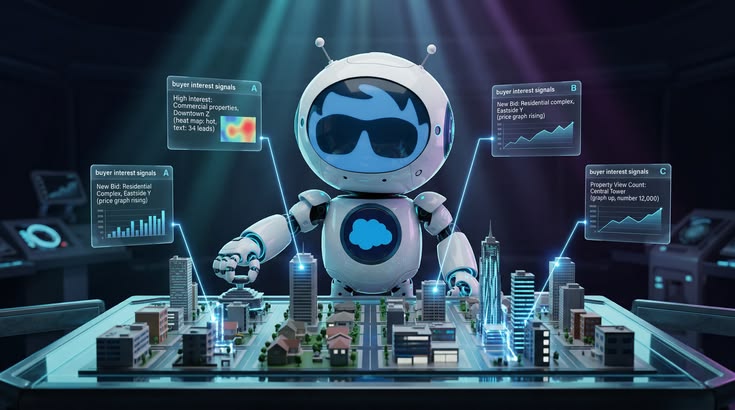
What is Agentforce? Unveiling Salesforce’s Game-Changing AI Platform The End of the “Copilot” Era For the last two years, the tech world has been obsessed with “assistants.” We’ve all used them: the little chat bubbles that help us summarize a long email or draft a polite rejection note. But in 2026, the novelty of the assistant is wearing off. Business leaders are no longer asking for a tool that tells them what to do; they are demanding a platform that simply does it. Salesforce’s answer to this demand is Agentforce. If the previous generation of AI (Einstein Copilot) was a co-pilot sitting in the passenger seat giving directions, Agentforce is the autonomous vehicle that drives the route itself. It represents a fundamental shift from “Predictive AI” and “Generative AI” to “Agentic AI.” This platform allows organizations to build, customize, and deploy autonomous agents that handle tasks end-to-end, across every department from Sales and Service to Marketing and Commerce. 1. The Secret Sauce: The Atlas Reasoning Engine The most frequent question technical teams ask is: “How does it actually make decisions?” The answer lies in the Atlas Reasoning Engine. Unlike standard LLMs that simply predict the next word in a sentence, Atlas is designed to reason through complex business logic. It operates on a continuous loop of: Evaluation: Analyzing the user’s intent and the current state of the CRM data. Refinement: Breaking down a vague request (e.g., “Fix this shipping delay”) into granular steps. Execution: Selecting the right “tools”—whether that’s a Salesforce Flow, an Apex class, or a MuleSoft API call—to resolve the issue. This reasoning engine ensures the agent doesn’t just “hallucinate” a solution; it follows the strict business processes already defined in your Salesforce environment. 2. Data Cloud: The Nervous System of the Agent An agent is only as smart as the data it can access. This is why Agentforce is inextricably linked to Salesforce Data Cloud. In many organizations, customer data is “trapped” in silos—emails, PDFs, legacy databases, and call transcripts. Data Cloud acts as the nervous system, harmonizing this unstructured data and feeding it to the agent in real-time. This allows an Agentforce service agent to know that a customer just complained on Twitter, opened a high-priority ticket ten minutes ago, and has a contract expiring next month—all before the conversation even begins. 3. Building Without Code: The Agent Builder Salesforce has always championed the “low-code” revolution, and Agentforce continues that legacy. Through the Agent Builder, admins can create a digital worker as easily as they would create a custom object. The builder focuses on four key pillars: Role: Defining exactly what the agent does (e.g., “Tier 1 Support Concierge”). Knowledge: Pointing the agent to the right documentation and data sources. Actions: Giving the agent “hands” to perform tasks like processing refunds or scheduling meetings. Guardrails: Setting the ethical and operational boundaries the agent must never cross. 4. Real-World Impact: Beyond the Hype The true value of Agentforce isn’t in its code, but in the hours it returns to human employees. Consider these 2026 benchmarks: Customer Service: Early adopters are seeing agents resolve up to 75% of common inquiries autonomously, from password resets to complex troubleshooting. Sales Qualification: AI agents are now performing 100% of initial lead follow-ups within minutes, ensuring that human sales reps only step in when a deal is “warm.” Operational Efficiency: In manufacturing, agents are being used to detect anomalies in field service data and automatically trigger repair workflows before a machine even fails. 5. The “Human-in-the-Loop” Security Model Autonomy often triggers anxiety about security. Salesforce addresses this through the Einstein Trust Layer. This security framework ensures that sensitive customer data (like PII) is stripped away before being processed by an LLM and that every autonomous action leaves a clear audit trail. Furthermore, Agentforce is built with a “Handoff Logic.” If the agent detects frustration in a customer’s tone or encounters a problem it isn’t authorized to solve, it seamlessly transfers the case to a human, providing a full summary of the interaction so the customer never has to repeat themselves. 6. Pricing and The “Consumption” Revolution Moving into mid-2026, Salesforce has shifted its pricing model to match the agentic era. Instead of just paying “per seat,” many organizations are moving toward a consumption-based model. * Flex Credits: Enterprises can purchase credits that are consumed as agents perform specific actions. Conversation-Based Pricing: For customer-facing bots, a flat rate (typically around $2 per conversation) allows for predictable scaling without adding headcount. Conclusion: Writing the Next Chapter of CRM Salesforce Agentforce is more than just a new feature; it is the blueprint for the future of work. By moving from “assistants” to “agents,” Salesforce is allowing businesses to scale their operations at a rate previously thought impossible. The companies that will win in the coming years are those that view AI not as a threat to their workforce, but as an expansion of it. Agentforce provides the platform to make that expansion safe, data-driven, and—most importantly—deeply human. We are no longer just managing relationships; we are orchestrating a symbiotic team of humans and agents, working together to drive success. The Digital Colleague: How Agentic AI Will Work as a Coworker Alongside Your Team
Artificial Intelligence, Gaming, Software development, Technology

Beyond the Controller: Game Development Technologies and Trends Shaping 2026

Introduction The world of game development has always moved at a breakneck pace, but 2026 feels like a genuine turning point. We’ve moved past the era of simply “better graphics” and entered a phase where the technology itself is becoming invisible, focusing instead on seamless player immersion and creative freedom. Whether you’re an indie developer or a tech enthusiast, understanding these shifts is essential for navigating the modern gaming landscape. The Generative Revolution: AI as a Co-Creator In 2026, Artificial Intelligence has transitioned from a experimental novelty to a fundamental member of the development team. We aren’t just talking about smarter bots; we’re talking about “Generative Design.” Developers are now using AI-integrated pipelines to handle the heavy lifting of asset creation. Neural asset generation allows small teams to produce 4K, PBR-ready (Physically Based Rendering) textures and complex 3D rigging from simple text or image prompts. This has effectively leveled the playing field, allowing a three-person indie studio to achieve visual fidelity that would have required a hundred-person “AAA” team just five years ago. Beyond visuals, Large Language Models (LLMs) are now powering “Living Stories,” where NPCs (Non-Playable Characters) no longer rely on static dialogue trees but hold context-aware, unscripted conversations that remember your past choices. Spatial Computing and the Death of the Screen While VR headsets used to be the “clunky” frontier, 2026 has seen the maturation of Mixed Reality (MR) and Spatial Computing. Devices have become lighter, more like stylish glasses than helmets, and the software has followed suit. “Room-aware” gameplay is the new standard. Imagine a strategy game where your dining table becomes the holographic battlefield, or a horror game where the digital monsters hide behind your actual sofa. Using LiDAR and advanced depth sensors, games now map your physical environment in real-time, blending pixels with reality so convincingly that the “screen” effectively disappears. This trend is forcing developers to rethink UI/UX—moving away from 2D menus toward natural gestures and eye-tracking interfaces. Cloud-Native Architecture: Play Anywhere, Instantly The old cycle of “Download, Install, Patch” is finally breathing its last breath. In 2026, cloud gaming has removed the hardware barrier entirely. We are seeing a massive shift toward cloud-native builds where the heavy processing—like global illumination and complex physics simulations—happens on high-end servers, while your local device (be it a phone, tablet, or smart TV) handles the input and character movement. This “Hybrid Rendering” means that players in emerging markets, such as India and Southeast Asia, can access high-fidelity AAA experiences without needing a $500 console or a $2,000 PC. For developers, this means a “one build, everywhere” approach, significantly reducing the time spent on porting and optimization for low-end hardware. The Rise of “Semantic” Environments Game worlds in 2026 are getting “smarter” through semantic labeling. In previous generations, a chair in a game was just a static 3D model. If you wanted an NPC to sit in it, you had to program that specific animation. Today, game engines use semantic intelligence so the engine “knows” an object is a chair. Any character in the game can now interact with that object naturally—sitting on it, throwing it, or using it as a shield—without a single line of manual animation. This creates a “Physics-First” design philosophy where worlds feel truly destructible and reactive. If you blow up a wall, it doesn’t just play a pre-baked animation; it collapses based on the material’s stress and weight, making every explosion unique. The Creator Economy and UGC 2.0 We are seeing a massive shift in who actually “makes” the games. Platforms like Roblox and Fortnite have evolved into sophisticated ecosystems where User-Generated Content (UGC) is the primary driver of engagement. In 2026, professional-grade development tools are being embedded directly into the games themselves. This “GaaS 2.0” (Games as a Service) model allows players to be co-creators. Instead of waiting for a studio to release a new map, the community builds it. This has birthed a new career path for “Digital Architects” and “Narrative Designers” who work exclusively within these metaverses, proving that the boundary between “player” and “developer” is thinner than ever. Sustainable and Ethical Monetization After years of “loot box” controversies, 2026 has brought a refreshing trend toward “Value-Based” monetization. Developers are finding that trust is their most valuable currency. We are seeing a return to tiered pricing and “windowing” strategies—similar to how movies were released in the past. Games are launching with premium experiences, followed by subscription access and cosmetic-only transactions that respect a player’s time and wallet. This shift isn’t just ethical; it’s practical. In a crowded market, games that build long-term loyalty through fair systems are the ones seeing the highest lifetime revenue. Conclusion: A More Human Way to Play As we look at the trajectory of game development in 2026, the theme is clear: Convergence. AI, cloud computing, and spatial hardware are merging to create experiences that feel more natural and less “technical.” We are moving away from being consumers of static media and toward being participants in living, breathing digital worlds. For developers, the challenge is no longer just about mastering a specific engine like Unity or Unreal; it’s about mastering the “flow state” of the player. The technology has finally reached a point where it can support any imagination. Now, the only limit is the story we choose to tell. The Human-Centered Developer: Why Empathy is the New Code  

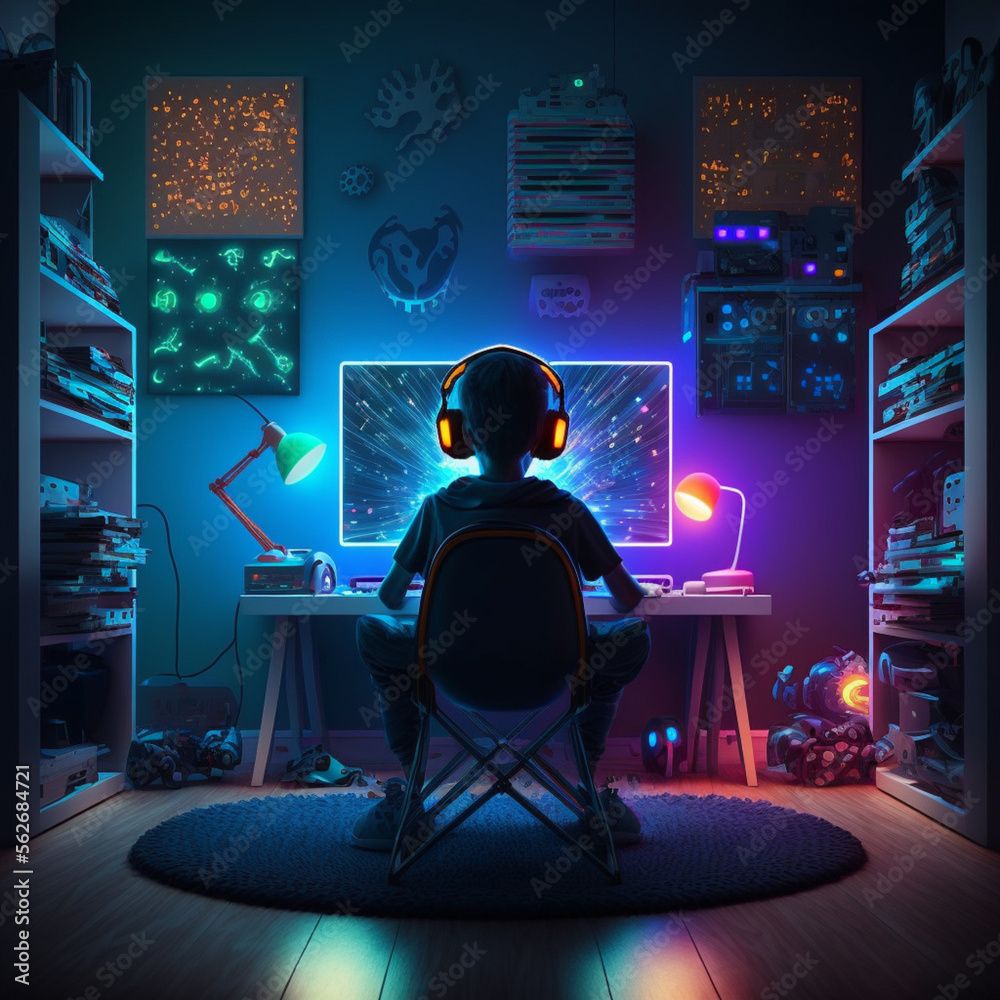
A gamer wearing headphones playing on a PC setup with colorful RGB lights, representing the modern gaming world and digital innovation.
Gaming

The Evolution of Gaming: From Pixels to Virtual Worlds

Introduction Gaming has transformed from a fun pastime into a global phenomenon that influences art, technology, and communication. What started with pixelated screens in the 1970s has now evolved into lifelike virtual realities and competitive eSports arenas. The gaming industry today is not just entertainment — it’s a culture, a community, and a career path. The Early Days of Gaming The first video games were simple yet revolutionary. Games like Pong and Space Invaders introduced people to the joy of digital play. These early arcade and console games laid the foundation for what would become one of the most powerful industries in the world. The Rise of Console and PC Gaming With the introduction of consoles like the Nintendo Entertainment System (NES), PlayStation, and Xbox, gaming became a household experience. At the same time, PC gaming brought higher graphics, open worlds, and the rise of online multiplayer experiences — changing the way people connected across the globe. The Era of Mobile Gaming Smartphones made gaming accessible to everyone, everywhere. Games like Candy Crush, PUBG Mobile, and Among Us proved that entertainment could fit in your pocket. Mobile gaming now represents one of the largest segments of the gaming industry. eSports: Gaming as a Career What was once a hobby has become a professional career. eSports tournaments fill entire stadiums, with players competing for millions in prize money. Streamers and content creators have built global fanbases through platforms like Twitch and YouTube Gaming — turning passion into profession. The Future of Gaming The future of gaming is driven by cutting-edge technologies: Virtual Reality (VR): Immersive experiences that make players feel part of the game world. Augmented Reality (AR): Blending real and digital worlds through smartphones and headsets. Artificial Intelligence (AI): Smarter NPCs and adaptive gameplay. Cloud Gaming: Services like NVIDIA GeForce NOW and Xbox Cloud Gaming let players stream high-quality games without expensive hardware. Why Gaming Matters Creativity and Problem Solving: Games encourage strategic thinking and decision-making. Social Connection: Multiplayer and co-op games help build friendships worldwide. Career Opportunities: From game design to eSports, the industry offers diverse paths. Mental Stimulation: Gaming can enhance focus, reflexes, and learning skills when done in moderation. Conclusion Gaming has come a long way — from blocky graphics to breathtaking virtual worlds. It’s not just about playing; it’s about storytelling, technology, and human imagination. As we move into the future, gaming will continue to blur the line between reality and fantasy — one pixel at a time.

Gaming

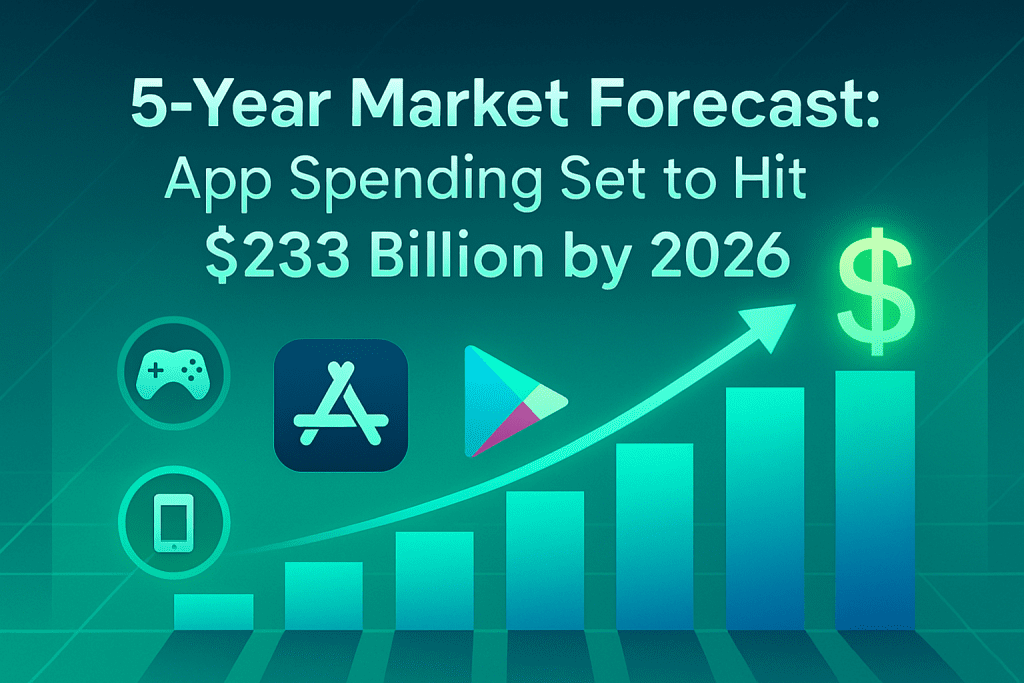
5-Year Market Forecast: App Spending Set to Hit $233 Billion by 2026

Introduction As the digital economy continues its explosive growth, mobile app spending is breaking new records. By 2026, global expenditures in mobile apps—including premium downloads, in-app purchases, and subscriptions—are forecasted to reach an unprecedented $233 billion. For businesses, developers, and tech leaders, understanding this evolving landscape is essential to maximize growth and make future-ready decisions. In this blog, we analyze the market’s trajectory, highlight key growth drivers, and provide actionable insights—with direct links to TechOTD’s expert IT, AI, and development services to help you capitalize on these booming trends.   2021–2026 App Economy Surge Global app spend is projected to hit $233 billion by 2026—a 77% leap from $132 billion in 2021. This growth is powered by the ongoing digital transformation seen across industries and regions. Platform Breakdown Apple App Store: Anticipated to reach $161 billion in revenue with a CAGR of 13.7%. Google Play Store: Forecasted to grow to $72 billion, with an 8.9% CAGR. Regional Insights United States: Leads global growth, forecasted at $86 billion (16.5% CAGR). Asia-Pacific: Remains the largest market for first-time downloads, fueled by rising smartphone penetration and affordable connectivity. Emerging Categories Non-gaming app categories such as entertainment, productivity, and healthcare are now rivaling gaming, with non-gaming apps expected to comprise 57% of iOS revenue by 2026. Top Factors Driving Market Growth 1. Digital Acceleration Post-2020 Pandemic-driven habits (remote work, remote learning, online buying) have become permanent, boosting demand for both consumer and enterprise apps. Brands are expanding digital offerings to stay competitive—see how digital solutions can modernize your workflows at TechOTD. 2. Rise of Non-Gaming App Revenue Beyond mobile games, categories like social networking, streaming, business, and eCommerce apps are seeing record growth. Leverage industry-focused app innovation and strategy through TechOTD’s AI Solutions and Industry Services. 3. Recurring Revenue Models (Subscriptions) Subscription-based revenue is dominating app monetization, leading to higher lifetime value per user. Ensure your app’s backend supports scalable infrastructure by partnering with TechOTD’s Web & App Development Team. 4. Continued First-Time Downloads App downloads are projected to hit 181 billion in 2026, led by emerging markets and expanding internet access. Businesses must optimize onboarding and long-term retention, strategies that TechOTD can help implement for both consumer and B2B apps. Actionable Insights for Business and Developers Invest in Non-Gaming Vertical Apps As user preferences diversify, now’s the time to innovate with apps in finance, health, education, and productivity. Capitalize on Subscriptions & Cloud Integration Build for recurring revenue and global scale. TechOTD’s cloud and AI expertise ensures seamless growth and personalized experiences. Optimize for Regional Growth Hotspots Adapt user journeys and payment strategies for growth markets like Asia-Pacific and North America. Future-Proof with AI and Analytics Data-driven insights and machine learning will be at the heart of profitable apps—explore custom AI integration at TechOTD AI. Partner for End-to-End Excellence From ideation to deployment and lifecycle support, trust TechOTD for web, mobile, and enterprise application success. Conclusion Mobile app spending is on track to redefine the global digital economy, soaring toward $233 billion in just five years. For brands, startups, and enterprises, opportunity lies in pairing innovative products with robust development and growth strategies. As digital transformation accelerates worldwide, let your app leverage the tools, partnerships, and expertise of leaders like TechOTD—and secure your place at the frontier of the $233 billion app economy. FAQ 1. What is the projected global app spending in 2026? Global app expenditure is forecasted to reach $233 billion by 2026, led by strong growth in both iOS and Android markets. 2. Which platform will be the biggest revenue driver? The Apple App Store will continue to lead in overall revenue, while Google Play drives a majority of downloads from emerging regions. 3. Will non-gaming apps overtake games in revenue share? Yes, on the App Store, non-gaming apps are expected to comprise 57% of total revenue by 2026. 4. What is the CAGR for overall global app spending? The compound annual growth rate is predicted at 12% from 2021 to 2026. 5. How can I position my app for success in this market? Focus on solving real problems, leverage cloud and AI, invest in scalable infrastructure, and partner with comprehensive IT experts like TechOTD.

How would you like me to respond?

Select a personality for your AI assistant

Normal
Happy
Sad
Angry

Your selection will affect how the AI assistant responds to your messages

Chat Assistant

Let's discuss your project!

Hear from our clients and why 3000+ businesses trust TechOTD

Tell us what you need, and we'll get back with a cost and timeline estimate

Scroll to Top