IT consulting

IT consulting, Software development, Technology & Business

Beyond the Code: A Human Guide to Choosing the Right Software Outsourcing Partner

Introduction Outsourcing often gets a bad rap as a “cost-cutting” measure, but in 2026, it’s evolved into something far more personal. It’s about bridging the gap between an idea and a reality by finding a team that acts as an extension of your own. However, with thousands of firms claiming to be the “best,” how do you find the one that is actually right for you? 1. Look for Shared Values, Not Just Skills Technical expertise is the baseline—everyone has it. But what sets a great partner apart is cultural alignment. You want a team that communicates in a way you understand and shares your work ethic. The Litmus Test: During your first few calls, pay attention to their questions. Are they asking about your budget, or are they asking about your users? A partner who tries to understand your “why” is far more valuable than one who just says “yes” to every feature request. 2. Prioritize Transparency Over Promises In the early stages, it’s easy for a firm to promise the moon. The right partner will be honest about what is difficult, what might take longer, and what might not work at all. The Sign of Quality: Look for “Product Owners” rather than just “Project Managers.” You want someone who will challenge your ideas to make them better, not someone who just checks boxes. Ask for a peek into their project management tools (like Jira or Slack) to see how they handle real-time updates and roadblocks. 3. The “Stability” Factor A common mistake is looking at a company’s logo list rather than their team’s history. You aren’t hiring a logo; you’re hiring people. Dig Deeper: Ask how long their core developers have been with the company. High turnover in an outsourcing firm is a red flag for your project’s consistency. You want a dedicated team model where the same faces start and finish your project, ensuring that the tribal knowledge of your software stays intact. 4. Security is a Relationship, Not a Checklist In an era of AI-driven threats, security isn’t just about a signed NDA. It’s about their daily habits. Ensure your partner follows modern standards like Zero Trust architectures and regular security audits. If they handle your data, they should treat it with the same (or more) reverence as you do. 5. The “Culture Fit” and Communication Software development is rarely a smooth, linear path. There will be bugs and shifting deadlines. In those moments of high pressure, your relationship with the team is what determines success. The Midnight Test: You don’t necessarily need a team in your backyard, but you do need an overlap of at least 3–4 hours. This allows for “synchronous” collaboration where ideas can be brainstormed in real-time, rather than waiting 24 hours for a reply to a simple email. Language & Tone: Do they speak “business” or just “code”? You need a partner who can translate complex technical debt into risks you can actually understand. 6. Transparency: Seeing “Under the Hood” If an outsourcing firm tells you everything is “perfect” every single week, you should be worried. Real development is messy. The right partner offers radical transparency. * Direct Access: You should have access to their project management boards (Jira or Trello) and their code repositories (GitHub). The Honest “No”: The best partners are the ones who say, “We can build that, but it will delay the launch. Is it worth it?” If they never push back, they aren’t thinking about your success; they are just billing hours. Conclusion: The Long Game Choosing a software development partner is like choosing a co-pilot. The “right” choice isn’t necessarily the cheapest one or the one with the most employees—it’s the one that makes you feel confident that your project is in safe, capable hands. Focus on building a partnership, not just a contract, and the results will speak for themselves. Beyond the VPN: Why Zero Trust (ZTNA) is the Future of Remote Work


Business leaders discussing strategy with IT consulting professionals
IT consulting

Why Every Business Needs a Strategic IT Consulting Partner

Why Every Business Needs a Strategic IT Consulting Partner In today’s rapidly evolving digital world, technology is the foundation of every successful organization. However, managing IT infrastructure, security, and innovation in-house can be complex and expensive. This is where a strategic IT consulting partner becomes invaluable. Whether it’s developing long-term technology roadmaps, optimizing processes, or securing data, IT consultants bring specialized knowledge that helps businesses achieve efficiency and scalability. Let’s explore why every modern business needs a strategic IT consulting partner in 2025. The Value of Strategic IT Partnerships A strategic IT consulting partner acts as an extension of your team, aligning technology initiatives with business goals. Rather than offering one-time solutions, these partners focus on long-term growth and adaptability. They analyze your existing systems, identify gaps, and design custom strategies that enhance productivity, reduce costs, and support innovation. The key difference between a vendor and a strategic IT partner lies in collaboration—consultants work closely with management teams to make technology decisions that drive business success. For small and mid-sized businesses, strategic IT partnerships provide enterprise-level expertise without the overhead of a full-time IT department. Aligning IT with Business Objectives One of the biggest challenges companies face is bridging the gap between business strategy and IT execution. A strategic IT consulting partner ensures that technology investments align with business objectives, not just technical requirements. For example, if your company aims to expand internationally, consultants can recommend cloud-based systems that support global operations. If improving customer experience is your focus, they might help implement CRM platforms and automation tools. By aligning IT with business goals, organizations gain agility, efficiency, and measurable ROI from their technology decisions. Driving Innovation and Digital Transformation Digital transformation is no longer optional—it’s a competitive necessity. Strategic IT consultants help organizations identify opportunities to innovate through automation, artificial intelligence (AI), and data-driven insights. They assess which emerging technologies can deliver real value, whether it’s cloud migration, process automation, or IoT integration. Consultants also ensure smooth transitions by managing risk, change, and employee adaptation. Businesses that partner with IT consultants can stay ahead of the curve by continuously improving operations and delivering exceptional customer experiences through innovation. Strengthening Cybersecurity and Compliance Cybersecurity threats are evolving faster than ever. Without a strong defense, businesses risk losing sensitive data, money, and reputation. A strategic IT consulting partner provides expertise in developing and maintaining robust security frameworks. Consultants perform security audits, vulnerability assessments, and penetration testing to identify potential risks. They implement tools like multi-factor authentication (MFA), encryption, and network monitoring to ensure 24/7 protection. Moreover, IT consultants help companies stay compliant with data protection laws such as GDPR, HIPAA, or CCPA. This proactive approach to cybersecurity minimizes risks and builds customer trust. Enhancing Operational Efficiency A well-structured IT strategy improves workflows and reduces downtime. IT consulting partners introduce automation, integrate digital tools, and streamline processes across departments. For example, consultants may recommend project management platforms like Jira or Asana, or cloud-based ERP systems like SAP and Oracle NetSuite to enhance collaboration and data management. By simplifying complex systems, businesses save both time and resources—allowing employees to focus on innovation and customer satisfaction instead of repetitive manual tasks. Cost Optimization and Resource Management Many companies overspend on technology due to poor planning or redundant systems. Strategic IT consultants perform cost analysis to identify areas where expenses can be reduced without compromising performance. They negotiate software licenses, recommend open-source alternatives, and implement scalable solutions that grow with the business. By optimizing cloud usage, consultants also help reduce monthly operational costs. This financial transparency enables companies to allocate resources more effectively, improving profitability and long-term sustainability. Building Long-Term Resilience In the digital era, resilience is key. A strategic IT consulting partner prepares businesses for unexpected challenges such as system failures, data breaches, or market disruptions. Through disaster recovery planning and business continuity strategies, consultants ensure that your organization can quickly recover and maintain operations even during crises. They also focus on scalability—ensuring that IT systems evolve alongside business growth. This proactive, forward-thinking approach helps companies remain competitive in any market condition. Fostering a Culture of Continuous Improvement Technology evolves rapidly, and staying updated is crucial. IT consulting partners foster a culture of continuous improvement by regularly reviewing performance, updating tools, and introducing innovation opportunities. They provide ongoing employee training to ensure teams can use new technologies efficiently. This commitment to growth ensures that businesses stay ahead of technological disruptions and remain future-ready. Conclusion A strategic IT consulting partner is not just a service provider—it’s a growth enabler. By aligning technology with business objectives, driving innovation, ensuring cybersecurity, and optimizing costs, IT consultants empower companies to thrive in a digital-first economy. As businesses navigate 2025 and beyond, partnering with an experienced IT consulting firm can mean the difference between merely surviving and truly succeeding. When strategy, technology, and execution come together, digital transformation becomes a sustainable reality. FAQs 1. What does a strategic IT consulting partner do?They provide expert guidance to align technology with business goals, improve efficiency, and drive digital transformation. 2. How can IT consulting improve business performance?Consultants streamline operations, enhance security, and implement technologies that support innovation and growth. 3. Is IT consulting only for large companies?No, small and medium-sized businesses also benefit from IT consulting to scale efficiently without high costs. 4. How does an IT consulting partner help with cybersecurity?They perform security audits, deploy protective tools, and ensure compliance with international data protection laws. 5. Why is long-term IT strategy important for businesses?A long-term IT strategy ensures technology investments support ongoing growth, resilience, and competitive advantage. Connect with us.

Startup founders discussing IT consulting strategies for business scalability
IT consulting

IT Consulting for Startups — Turning Ideas into Scalable Businesses

IT Consulting for Startups — Turning Ideas into Scalable Businesses Launching a startup is exciting — but turning an idea into a successful, scalable business requires more than passion. It demands the right technology, strategy, and execution. That’s where IT consulting for startups plays a crucial role. IT consultants help new businesses build a strong technological foundation, optimize operations, and make smart digital investments. This blog explores how IT consulting empowers startups to grow efficiently and sustainably. Building a Scalable Tech Foundation Every successful startup begins with a solid technical foundation. IT consultants assess the startup’s goals, budget, and business model to design a robust IT infrastructure that supports growth. For example, instead of relying on outdated systems or fragmented tools, consultants help implement cloud-based and modular architectures that scale with the business. They ensure that servers, databases, and software applications are aligned with long-term expansion plans. A well-designed tech foundation not only reduces future upgrade costs but also prevents downtime and performance bottlenecks. Whether it’s an e-commerce startup, fintech app, or SaaS product, IT consulting ensures the technology backbone is reliable, secure, and scalable from day one. Choosing the Right Technology Stack Selecting the right technology stack (frontend, backend, databases, and frameworks) is one of the most critical decisions for any startup. Poor tech choices can lead to integration issues, security risks, and limited scalability. IT consultants evaluate factors such as performance, flexibility, team expertise, and maintenance requirements before recommending a tech stack. For example: For web startups, they might suggest React.js, Node.js, or Qwik for high performance. For app-based startups, frameworks like Flutter or React Native offer cross-platform efficiency. For backend and database management, consultants may recommend AWS, MongoDB, or Firebase depending on the use case. By choosing wisely early on, startups save both time and money while ensuring their products evolve smoothly as they grow. Cost-Effective Cloud Solutions Cloud computing is a game-changer for startups with limited budgets. IT consultants guide entrepreneurs in adopting cloud-first solutions that minimize upfront hardware costs and provide flexibility. Using platforms like Amazon Web Services (AWS), Google Cloud, or Microsoft Azure, startups can host their applications, store data, and deploy services on-demand. Consultants ensure the cloud setup includes backup systems, data redundancy, and cost optimization. Moreover, cloud-based tools enable startups to collaborate efficiently with remote teams and scale instantly when demand rises — a vital feature for fast-growing companies. Consultants also monitor usage patterns to prevent unnecessary expenses, ensuring startups get maximum value from every cloud investment. Ensuring Security and Compliance Startups often overlook cybersecurity until it’s too late. Data breaches or cyberattacks can destroy brand reputation and customer trust. That’s why IT consultants prioritize security from the start. They perform risk assessments, identify vulnerabilities, and implement strong defense mechanisms like firewalls, encryption, and access control. Consultants also ensure compliance with data protection regulations (such as GDPR or CCPA) to avoid legal risks. Additionally, security training for employees helps prevent phishing and insider threats — common weak points for startups. By integrating cybersecurity into every stage of business development, consultants safeguard the company’s digital assets and ensure customer data remains protected. Streamlining Operations with Automation Automation is a major advantage that IT consulting brings to startups. By integrating automated workflows, startups can reduce manual errors, save time, and focus on growth. IT consultants deploy automation tools for project management, customer onboarding, data entry, and marketing campaigns. CRM systems like HubSpot or Salesforce, and workflow tools like Zapier or Asana, are often implemented to streamline repetitive processes. Automation not only improves efficiency but also enhances consistency and customer satisfaction — key ingredients for scaling successfully. Developing Scalable Digital Strategies Beyond technology, IT consultants help startups craft digital growth strategies aligned with market trends and business objectives. This includes everything from building online presence and digital marketing integration to analyzing data for informed decision-making. Consultants often provide digital transformation roadmaps, guiding startups through product evolution, customer engagement, and market expansion. This strategic partnership ensures startups can adapt quickly and sustain growth in competitive industries. Providing Ongoing Support and IT Maintenance IT consulting doesn’t end after setup. Ongoing support is crucial for startups to remain efficient and secure. Consultants provide continuous monitoring, system updates, and performance optimization. Whether it’s troubleshooting software bugs or scaling up infrastructure during rapid growth phases, consultants ensure technology never becomes a barrier to innovation. Many also offer managed IT services that provide startups with enterprise-level reliability without the cost of an in-house team. Conclusion IT consulting is the backbone of modern startup success. By combining technology expertise with business insight, consultants help entrepreneurs turn ideas into profitable realities. From choosing the right tech stack and cloud solutions to ensuring security and scalability, IT consulting provides startups with the roadmap to thrive in a digital-first world. For startups looking to accelerate growth, collaborating with experienced IT consultants isn’t just an option — it’s a necessity for sustainable success. FAQs 1. Why do startups need IT consulting?Startups need IT consulting to build scalable infrastructure, choose the right technologies, and implement secure, cost-effective digital strategies. 2. What are the key benefits of IT consulting for startups?Key benefits include better technology decisions, reduced costs, enhanced security, and faster time-to-market. 3. How do IT consultants help with scalability?Consultants design flexible architectures and recommend cloud-based solutions that grow with your business needs. 4. Are IT consulting services expensive for startups?Not necessarily. Most consultants offer scalable pricing or project-based models suitable for startups with limited budgets. 5. Can IT consulting help improve cybersecurity for startups?Yes, consultants implement robust security frameworks, ensure data compliance, and provide employee training to protect sensitive information. Connect with us.

IT consultants analyzing future technology trends using data analytics dashboard
IT consulting

Top IT Consulting Trends Shaping the Future of Business

Top IT Consulting Trends Shaping the Future of Business In today’s rapidly evolving digital world, IT consulting plays a crucial role in helping organizations stay ahead of the competition. From automation to sustainability, consultants are guiding businesses through technological innovation and transformation. Let’s explore the key IT consulting trends shaping the future of business in 2025 and beyond. Artificial Intelligence and Automation Artificial Intelligence (AI) and automation are revolutionizing the IT consulting landscape. Consultants are helping businesses leverage AI to optimize operations, reduce manual workload, and enhance decision-making accuracy. AI-powered automation tools are being deployed in data management, cybersecurity, and customer service. Chatbots now handle 24/7 customer queries, predictive algorithms forecast sales trends, and AI-based analytics provide deep insights into consumer behavior. Moreover, automation in IT processes such as system updates, bug detection, and maintenance reduces downtime and improves reliability. By adopting AI, organizations can achieve smarter workflows, boost productivity, and make better business decisions in real time. Cloud-First Strategies The cloud-first approach has become a fundamental trend in IT consulting. With the rise of remote work and digital collaboration, businesses are migrating to cloud platforms for scalability, flexibility, and cost-effectiveness. IT consultants assist in designing and executing seamless cloud migration strategies while ensuring minimal disruption to daily operations. They evaluate whether a public, private, or hybrid cloud solution fits the company’s needs and security policies. Cloud computing also empowers global collaboration—employees can access data and applications anytime, anywhere. As cybersecurity risks increase, consultants play a crucial role in implementing encryption, identity management, and compliance standards across cloud infrastructures. Cybersecurity as a Priority As businesses embrace digital transformation, cybersecurity has become a top concern. With cyberattacks growing more sophisticated, IT consultants are focusing on proactive security planning and defense strategies. Modern IT consulting emphasizes risk management, real-time monitoring, and multi-layered security frameworks. Consultants perform penetration testing, vulnerability assessments, and employee security training to strengthen defenses. They also recommend Zero Trust Architecture (ZTA), ensuring that every device and user is verified before accessing any data. This trend demonstrates a significant shift from reactive security to preventive protection, where cybersecurity is embedded in every layer of the business ecosystem. Data-Driven Decision Making Data has become the new oil in today’s economy. Businesses that effectively utilize data can unlock insights to drive smarter decisions. IT consultants are helping organizations design data-driven frameworks that transform raw data into actionable strategies. Through advanced analytics and business intelligence tools like Power BI and Tableau, companies can measure performance, track customer preferences, and predict future trends. Consultants help establish data governance models, ensuring data integrity and compliance with privacy regulations like GDPR and CCPA. Predictive analytics, powered by AI, is enabling organizations to anticipate market shifts, optimize inventory, and personalize customer experiences. The ability to make data-backed decisions gives companies a competitive edge and improves overall operational efficiency. Sustainable IT Consulting Sustainability is no longer just a corporate buzzword—it’s a necessity. IT consulting is now embracing eco-friendly technologies to reduce environmental impact while maintaining performance. Consultants advise on optimizing energy consumption in data centers, implementing virtual infrastructure, and adopting cloud solutions that cut down hardware waste. They also perform Green IT audits to assess an organization’s carbon footprint and recommend eco-conscious practices. Sustainable IT consulting not only benefits the planet but also reduces operational costs and strengthens brand reputation. By investing in green technology, businesses appeal to environmentally conscious customers and investors alike. Emergence of Remote IT Consulting The global shift toward hybrid and remote work has opened new opportunities for remote IT consulting. Businesses can now access expertise from consultants across the world through virtual collaboration tools. This trend has reduced operational costs while increasing access to a broader talent pool. IT consultants can remotely perform tasks such as system audits, security analysis, and software deployment. As digital communication tools become more advanced, remote consulting will remain a key trend in the years ahead. Conclusion The IT consulting industry is at the forefront of technological change, helping businesses navigate complex challenges and embrace innovation. From artificial intelligence and cloud-first strategies to cybersecurity and sustainability, consultants are shaping the future of digital transformation. Organizations that stay informed about these trends and work with experienced IT consultants will not only enhance efficiency but also build long-term resilience in an ever-changing digital economy. By aligning technology with business goals, IT consulting ensures that companies remain agile, secure, and future-ready in 2025 and beyond. FAQs 1. What are the biggest IT consulting trends in 2025?The major trends include AI automation, cloud-first strategies, cybersecurity enhancement, data-driven insights, and sustainable IT solutions. 2. How does IT consulting help in business growth?IT consultants identify technology opportunities, streamline processes, and implement strategies that increase efficiency and reduce costs. 3. What role does cloud computing play in IT consulting?Cloud computing enables flexibility, scalability, and remote collaboration, making it a central component of IT consulting services. 4. Why is data-driven decision-making important?It allows organizations to make strategic choices based on real insights rather than assumptions, improving performance and customer satisfaction. 5. How does sustainability impact IT consulting?Sustainable IT consulting promotes eco-friendly technologies that lower energy consumption, reduce costs, and improve corporate responsibility. Connect with us

IT consultants discussing cost optimization strategies
IT consulting

How IT Consulting Helps Businesses Reduce Costs and Boost Efficiency

Introduction In today’s competitive digital landscape, every organization is striving to achieve more with fewer resources. Businesses are under pressure to streamline operations, reduce costs, and enhance productivity—all while keeping pace with technological change. However, without proper planning, technology expenses can spiral out of control, and productivity may decline due to inefficient systems. This is where IT consulting becomes a game changer. By partnering with experienced IT consultants, companies can align their technology with their strategic goals, optimize resources, and improve operational efficiency. IT consulting doesn’t just fix problems—it transforms the way organizations work. Let’s explore how IT consulting helps businesses cut costs and enhance efficiency while ensuring sustainable growth. Assessing Current IT Infrastructure The first step in improving efficiency is understanding where you currently stand. IT consultants perform a comprehensive audit of your existing IT infrastructure, including hardware, software, networks, and workflows. This assessment helps identify: Redundant or outdated technologies draining resources Underutilized hardware and software licenses Bottlenecks in workflow automation Gaps in data management or cybersecurity By analyzing these areas, consultants create a roadmap that outlines clear steps to reduce waste and improve performance. The result? A more streamlined and cost-effective IT ecosystem. Implementing Process Automation One of the most effective ways to boost productivity and reduce costs is process automation. IT consultants help businesses identify repetitive manual tasks that can be automated using the right tools and technologies. Automation can be applied to: Data entry and report generation Invoice processing and payroll management Customer relationship management (CRM) tasks IT helpdesk support and ticketing systems Automating these functions reduces human error, frees up employee time, and allows teams to focus on strategic initiatives rather than repetitive work. In addition, automation tools can be scaled as your business grows, making it a long-term investment in efficiency. Optimizing IT Resources Many organizations overpay for technology resources they don’t use efficiently. IT consultants help optimize your IT spending by eliminating waste and consolidating tools. Here’s how: Software Rationalization: Identify duplicate software solutions performing the same function. Cloud Optimization: Adjust cloud resources to pay only for what you use. License Management: Prevent overspending on unnecessary software licenses. Hardware Utilization: Reuse or repurpose underused hardware assets. This optimization leads to significant cost savings, especially for businesses managing hybrid or cloud-based environments. Ensuring Data Security Cybersecurity is no longer optional—it’s essential. Data breaches can cost businesses millions in damages, not to mention loss of reputation and customer trust. IT consulting plays a vital role in strengthening your security posture. Consultants assess vulnerabilities, develop risk mitigation plans, and implement security frameworks such as: Multi-factor authentication (MFA) Data encryption and secure backups Endpoint protection Threat monitoring and incident response By investing in proactive cybersecurity consulting, companies avoid costly data breaches and ensure regulatory compliance. Strong security not only protects your assets but also improves operational reliability. Improving System Integration In many companies, departments operate in silos, each using its own set of tools and databases. This disjointed approach leads to data duplication, inefficiency, and confusion. IT consultants help integrate these systems for seamless communication and collaboration across all departments. For example: Integrating CRM with ERP systems for better customer and sales insights Connecting HR and payroll systems for faster employee management Linking analytics dashboards with real-time data sources Effective integration ensures that everyone in the organization has access to accurate, up-to-date information, which improves decision-making and operational speed. Leveraging Cloud Solutions for Cost Efficiency Cloud computing has revolutionized the way businesses manage data and applications. However, without expert guidance, companies can easily overspend or misconfigure cloud environments. IT consultants help select the right cloud model—public, private, or hybrid—based on your goals and budget. Key benefits of cloud consulting include: Pay-as-you-go cost models to eliminate wasted resources Improved data accessibility and scalability Reduced maintenance and hardware costs Enhanced disaster recovery and business continuity Migrating to the cloud under professional supervision allows businesses to save significantly while enjoying enhanced flexibility and performance. Enhancing Employee Productivity Technology should empower employees, not overwhelm them. IT consulting improves workplace efficiency by optimizing digital tools and workflows. Consultants introduce user-friendly systems, collaborative platforms, and communication tools that enhance team performance. Examples include: Cloud-based collaboration platforms like Microsoft 365 or Google Workspace AI-powered productivity tools Centralized project management systems When technology supports employees effectively, productivity increases, and job satisfaction improves. Driving Long-Term Cost Savings IT consulting is not a one-time service—it’s a long-term strategy. The goal is to create sustainable solutions that continuously reduce costs and improve performance over time. Long-term savings come from: Regular performance monitoring Preventive maintenance of IT systems Predictive analytics for resource planning Continuous improvement through innovation By focusing on continuous optimization, IT consultants ensure that your organization remains agile and cost-efficient even as technology evolves. How Small and Medium Businesses Benefit Many small and medium enterprises (SMEs) assume IT consulting is only for large corporations. In reality, SMEs often see the highest returns on investment. Consultants help small businesses: Implement affordable technology solutions Avoid overspending on unnecessary tools Strengthen data protection Enhance remote work capabilities With the right consulting support, even small organizations can compete with larger players using efficient, well-managed IT systems. Conclusion In a world where technology drives business success, IT consulting is no longer a luxury—it’s a necessity. By assessing infrastructure, automating processes, optimizing resources, and ensuring security, consultants help organizations achieve maximum efficiency at minimum cost. The expertise of IT consultants allows businesses to make smarter technology decisions, avoid wasteful spending, and focus on what matters most—growth and innovation. In short, IT consulting empowers companies to do more with less, creating a sustainable path toward digital excellence. Connect with us FAQs 1. How can IT consulting lower operational costs? IT consultants identify inefficiencies in systems, automate manual processes, and eliminate redundant technologies, reducing overall costs. 2. Which industries benefit most from IT consulting? Almost every sector benefits, especially finance, healthcare, manufacturing, retail, and education. 3. What tools do consultants use for process optimization? They use tools like workflow automation software, analytics dashboards, and

IT consultant analyzing business data on laptop
IT consulting

The Role of IT Consulting in Digital Transformation

Introduction The world of business is evolving faster than ever. Every day, new technologies are introduced, customer expectations rise, and competition becomes more intense. In such a rapidly changing landscape, digital transformation has become essential for survival — not just an option. However, not every organization has the in-house expertise or resources to implement complex digital solutions efficiently. That’s where IT consulting steps in. IT consultants act as the bridge between technology and business strategy. They guide organizations in leveraging digital tools, automating workflows, and modernizing IT infrastructures to stay competitive and future-ready. In this article, we’ll explore the role of IT consulting in digital transformation, its key benefits, services, and how it helps businesses stay ahead of the curve. What is IT Consulting? IT consulting refers to the process of advising businesses on how best to use technology to achieve their objectives. It involves analyzing existing IT systems, identifying inefficiencies, and designing a roadmap to enhance performance. An IT consultant doesn’t just fix problems; they anticipate them. They help businesses: Implement new technologies strategically Ensure cost-effective IT operations Reduce risks related to cybersecurity and downtime Improve data-driven decision-making From startups to large enterprises, IT consulting plays a vital role in aligning technology with long-term business vision. Why Digital Transformation Matters Digital transformation is not just about adopting new tools—it’s about redefining how a business operates. The process includes integrating digital technology into every area of an organization, changing how teams work, deliver value, and interact with customers. Some of the key goals of digital transformation include: Improving customer experience through digital platforms Increasing efficiency by automating manual tasks Gaining insights using advanced data analytics Enhancing flexibility and scalability via cloud computing However, achieving transformation without proper guidance can be risky. That’s why IT consultants are crucial—they assess readiness, plan implementation, and ensure seamless integration with existing business processes. How IT Consulting Enables Innovation Innovation is the heart of digital success. IT consultants help organizations foster innovation by introducing modern solutions such as AI-driven analytics, machine learning models, and cloud-native applications. Here’s how IT consulting drives innovation: Identifying Technology Opportunities: Consultants assess your operations and find areas where digital tools can create value. Implementing Agile Systems: They guide companies toward agile methodologies that improve adaptability. Encouraging a Culture of Change: Consultants train teams to adopt new technologies confidently. Leveraging Data: IT consulting ensures your business uses real-time analytics for smarter, faster decision-making. By integrating innovation into business operations, consultants ensure your organization not only keeps up but leads in your industry. Common Services Offered by IT Consulting Firms IT consulting firms offer a variety of specialized services designed to support all aspects of digital growth. Below are the most common ones: IT Strategy Development:Helps define long-term technology goals aligned with your business objectives. Cloud Consulting:Assists in cloud migration, setup, and optimization to reduce infrastructure costs and improve scalability. Cybersecurity Services:Protects sensitive business data from threats, ensuring compliance with industry standards. Data Analytics & Business Intelligence:Helps organizations use data to make evidence-based decisions. Infrastructure Optimization:Improves performance by modernizing outdated systems and integrating automation tools. Software Consulting:Provides guidance on the right tools, platforms, and integrations needed to streamline operations. The Benefits of IT Consulting in Digital Transformation Expertise and ObjectivityIT consultants bring fresh perspectives and expert insights that in-house teams may lack. Cost EfficiencyBy optimizing technology investments, consultants help businesses avoid unnecessary expenses. Focus on Core BusinessPartnering with consultants allows organizations to concentrate on core activities while the experts handle technology transitions. Enhanced Security and ComplianceIT consulting ensures data privacy and protection from cyber threats through robust security strategies. Accelerated GrowthDigital transformation guided by consulting accelerates business operations, improves productivity, and opens new revenue streams. Challenges Without IT Consulting Many businesses attempt to handle digital transformation on their own and face several roadblocks: Lack of a clear roadmap or strategy Poor integration of digital tools Data silos and security vulnerabilities Resistance to change among employees IT consulting addresses all these challenges by providing an actionable strategy, hands-on implementation, and training to ensure smooth adaptation. How to Choose the Right IT Consulting Partner Selecting the right IT consulting firm can make or break your transformation journey. Here are a few things to look for: Proven experience in your industry Comprehensive service offerings (cloud, security, data, etc.) Strong communication and collaboration skills Post-implementation support to ensure continuous improvement The right consultant becomes a long-term partner who helps your business evolve with technology trends. Conclusion Digital transformation is no longer optional—it’s the foundation of modern business success. IT consulting acts as the guiding compass that ensures your transformation efforts are strategic, efficient, and sustainable. Whether you’re modernizing legacy systems, adopting cloud technology, or using data for better decision-making, IT consultants ensure that every investment drives measurable results. In short, IT consulting transforms technology into opportunity — helping businesses innovate, scale, and lead in the digital era. FAQs 1. What does an IT consultant do? An IT consultant provides expert advice on how to use technology effectively to achieve business goals. 2. How can IT consulting help small businesses? It helps small businesses adopt cost-effective digital tools, improve efficiency, and stay competitive. 3. What are the top benefits of hiring an IT consultant? Some benefits include cost savings, expert insights, enhanced security, and faster project implementation. 4. How much do IT consulting services cost? The cost varies depending on project size, duration, and complexity. Many firms offer flexible pricing. 5. What is the difference between IT consulting and IT services? IT consulting focuses on planning and strategy, while IT services focus on implementation and maintenance. 6. How does IT consulting improve efficiency? Consultants streamline IT processes, automate tasks, and optimize infrastructure to boost overall performance. Connect with us

IT consulting

Why a custom internet portel is essential for your entrprise and how to build it right

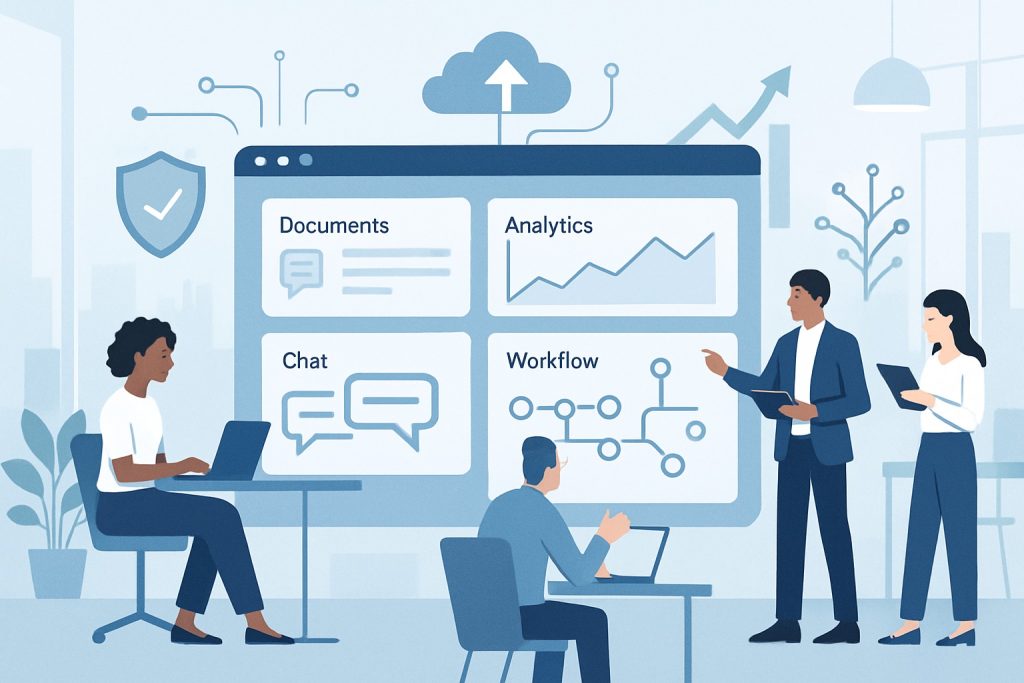
Introduction In today’s fast-evolving business environment, companies face unprecedented challenges and opportunities. As digital transformation accelerates, organizations must adopt tools that not only support their operations but also drive innovation, improve efficiency, and maintain robust security. A custom internet portal is one such tool — a centralized, secure digital platform specifically tailored to your enterprise’s unique needs. Unlike off-the-shelf software, a custom portal aligns perfectly with your workflows, integrations, and strategic goals, thereby empowering your business in critical ways. Why a Custom Internet Portal Matters 1. Tailored to Your Unique Business Processes Every enterprise has idiosyncratic workflows, data management needs, and departmental interactions. A custom portal is designed to support these unique processes seamlessly. It can be built to mirror your business rules, automate repetitive tasks specific to your domain, and integrate smoothly with existing systems such as CRM (Customer Relationship Management), ERP (Enterprise Resource Planning), HRIS (Human Resource Information System), and others. This interoperability minimizes duplication, reduces errors, and streamlines operations. 2. Enhanced Security and Compliance Security is paramount in enterprise environments. Custom portals allow you to implement finely tuned access controls, user authentication methods, and data encryption protocols that meet or exceed industry benchmarks. Moreover, for organizations operating in regulated sectors (healthcare, finance, government), custom portals enable precise compliance management by enforcing role-based permissions, activity logging, and data protection policies tailored to regulatory requirements such as GDPR, HIPAA, or SOX. 3. Significant Boost to Employee Productivity With all crucial resources—files, collaboration tools, workflows, and communication channels—consolidated into a single, intuitive platform, employees spend less time hunting for information and more time executing tasks that add value. The portal simplifies onboarding by providing new hires with easy access to training materials, documentation, and contact points. Workflow automation reduces bottlenecks and accelerates approvals, enabling teams to focus on strategic initiatives instead of administrative overhead. 4. Scalable and Future-Ready Architecture As your business grows or pivots, a custom portal can evolve accordingly. Its flexible architecture supports adding new modules, integrating emerging technologies, and expanding to accommodate new teams or geographic locations without needing a complete overhaul. This scalability protects your technology investments and ensures your digital infrastructure remains aligned with business goals over time. 5. Gaining Competitive Advantage A custom-built portal is more than a functional tool; it’s a strategic asset. It can incorporate unique features and workflows that differentiate your company from competitors, enabling faster decision-making, superior customer service, or enhanced internal collaboration. Additionally, the portal’s design and user experience reflect your brand’s identity and culture, fostering employee engagement and reinforcing your organizational values. How to Build a Custom Internet Portal the Right Way Step 1: Clearly Define Goals and Requirements Begin by involving diverse stakeholders across departments — IT, operations, HR, sales, and even end-users. Collect detailed input regarding the challenges they face, desired features, and measurable business objectives. Document must-haves such as document sharing, real-time notifications, analytics dashboards, system integrations, and mobile accessibility. Clear objectives help avoid scope creep and ensure the portal delivers tangible value. Step 2: Choose the Optimal Technology Stack Assess whether to build your portal from scratch, customize an existing open-source framework, or adapt a commercial product. Your decision should weigh factors such as development cost, speed to market, ability to customize, scalability, security features, and ease of integration with your existing systems. Modern tech stacks often involve cloud computing, microservices architecture, and robust API ecosystems for flexibility and resilience. Step 3: Prioritize User Experience (UX) Design Effective portals are those employees want to use. Engage actual users early and often during the design phase through interviews, surveys, and usability testing. The interface should be clean, intuitive, and customizable according to different roles. User-friendly navigation, responsive design for mobile devices, and quick loading times are vital to adoption and productivity. Step 4: Build Secure and Robust Architecture Security must be integral from day one. Employ role-based access control (RBAC) to restrict user permissions dynamically. Implement multi-factor authentication (MFA), encryption for data at rest and in transit, and rigorous logging and monitoring. Regular software updates and vulnerability assessments safeguard against emerging threats. Step 5: Ensure Seamless Integration with Enterprise Systems Plan comprehensive API and connector strategies to link your portal with key systems like CRM, ERP, HR, email platforms, and third-party applications. Seamless data synchronization avoids duplication, reduces errors, and provides unified insights. Conduct thorough integration testing to ensure smooth data flows and system interoperability. Step 6: Develop a Support and Continuous Improvement Plan A portal is a living system; user needs evolve and technology advances. Establish dedicated support teams tasked with handling user queries, performing maintenance, rolling out updates, and enhancing features. Actively collect user feedback through surveys and monitoring analytics to identify pain points and opportunities for improvement. Common Features of a Custom Enterprise Internet Portal Core Feature Description Document Management Centralized, permission-controlled repository for files Collaboration Tools Chat, forums, shared workspaces to boost teamwork Workflow Automation Streamlined processes with automated approvals Analytics & Reporting Real-time dashboards providing insight and engagement System Integration Connectors linking ERP, CRM, HR systems, and more Custom Dashboards Personalized views and data tailored by user roles Notifications & Alerts Instant updates and real-time communication Final Thoughts A well-crafted custom internet portal is much more than a digital bulletin board. It forms the backbone of efficient operations, secure data management, and dynamic collaboration. By investing the time and resources to build a portal that truly aligns with your business needs and user expectations, you position your organization to work smarter, comply better, and innovate continuously—laying a strong foundation for future success. If you want, I can also help you with related content such as case studies, detailed feature explanations, or technology recommendations! Just let me know.

How would you like me to respond?

Select a personality for your AI assistant

Normal
Happy
Sad
Angry

Your selection will affect how the AI assistant responds to your messages

Chat Assistant

Let's discuss your project!

Hear from our clients and why 3000+ businesses trust TechOTD

Tell us what you need, and we'll get back with a cost and timeline estimate

Scroll to Top