July 2025

Technology

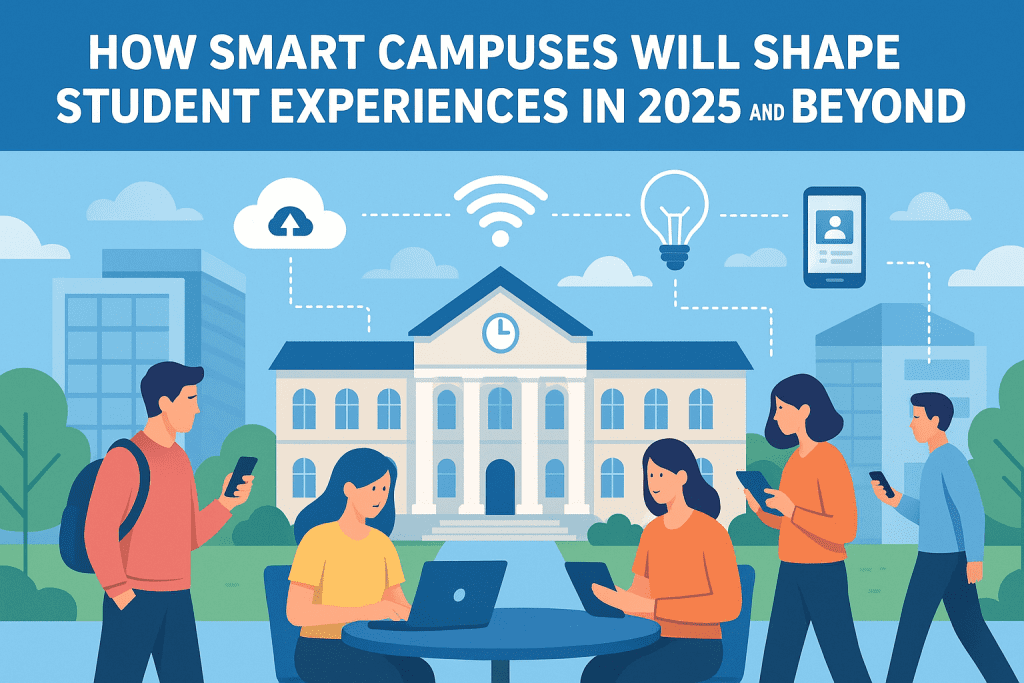
How Smart Campuses Will Shape Student Experiences in 2025 and Beyond

Introduction In 2025, the age of the smart campus is in full swing. Universities are embracing digital transformation far beyond online classes—integrating the Internet of Things (IoT), artificial intelligence (AI), and advanced data analytics to redefine every aspect of the student journey. From daily convenience to new ways of learning, smart campuses are setting new standards for engagement, support, and innovation in higher education. What Is a Smart Campus? A smart campus blends physical and digital environments, connecting infrastructure, people, and systems through technologies like IoT sensors, AI assistants, big data platforms, and cloud services. The result: environments that are not just connected, but adaptive, sustainable, and deeply personalized to each student’s needs. Core Pillars: How Smart Campuses Transform Student Life 1. Personalized & Immersive Learning IoT-enabled classrooms: Sensors track engagement and personalize learning materials in real time, while smartboards and AR/VR experiences turn lectures into interactive journeys. AI tutors: Virtual assistants guide students, answer questions instantly, and support self-paced, adaptive learning far beyond the classroom. Seamless hybrid experiences: Whether on-campus or remote, students enjoy the same resources, collaboration tools, and educator access. 2. Enhanced Campus Services & Daily Convenience Smart apps: Students use unified mobile apps to book study rooms, access resources, navigate facilities, and even find open parking spaces—all powered by real-time data. Automated amenities: Dorm climate adjusts automatically; face or voice recognition provides secure access; digital kiosks update schedules and announcements instantly. Flow management: IoT integrates crowd movement analytics for less congestion and optimized use of shared spaces. 3. Well-Being, Safety, and Inclusivity Smart housing and health: Digital health services, wellness trackers, and smart housing improve student well-being. Safety systems: AI-powered video, smart lighting, and emergency apps provide instant alerts and rapid response, while digital platforms enable anonymous feedback and support. Universal access: Speech recognition, accessible content, and remote tech ensure inclusivity for students with diverse needs. 4. Sustainability and Campus Efficiency Green technology: Smart buildings monitor and minimize energy, water, and waste; real-time data enables universities to meet ambitious sustainability goals. Resource optimization: Automated scheduling and predictive maintenance save universities money, allowing more funding for student initiatives. Living labs: Students can work on real-world sustainability and technology projects enabled by smart campus infrastructure. 5. Community, Engagement, and Belonging Data-driven engagement: Digital platforms connect students with clubs, events, and mental health resources, fostering a greater sense of belonging. Collaborative environments: Cloud-based tools and connected spaces make teamwork, research, and networking seamless—across campus or worldwide. Real-World Example Arizona State University: Apps provide services from finding open parking to tracking event satisfaction, while IoT sensors help optimize facilities for energy use and student comfort. UC San Diego: IoT smart meters have cut energy use by 20%, making the campus greener and budgets more student-focused. Key Trends to Watch in 2025 and Beyond Trend Impact on Students AI & Analytics Everywhere Hyper-personalized experiences and support AR/VR-Driven Classrooms Immersive, experiential learning on demand Touchless & Frictionless Convenience, seamless access, and heightened security Data-Driven Well-Being Proactive health, safety, and engagement interventions Campus-as-a-Service Models Flexible, subscription-like access to services/amenities Frequently Asked Questions How does a smart campus benefit students daily? Better safety, faster access to resources, personalized learning, lower costs, and more confidence in navigating campus life. Will smart campuses make learning more inclusive? Yes! Universal design features and tech for accessibility ensure every student can thrive, regardless of ability. What about privacy and data? Institutions are prioritizing privacy, transparency, and security as foundational to every smart campus initiative. Conclusion Smart campuses represent a bold leap toward student-centered, future-ready education. By combining intelligent infrastructure with data-driven insight and seamless digital integration, these campuses help students learn, live, and succeed like never before. The impacts: stronger engagement, greater well-being, more sustainable communities—and lifelong value for every graduate.

Technology

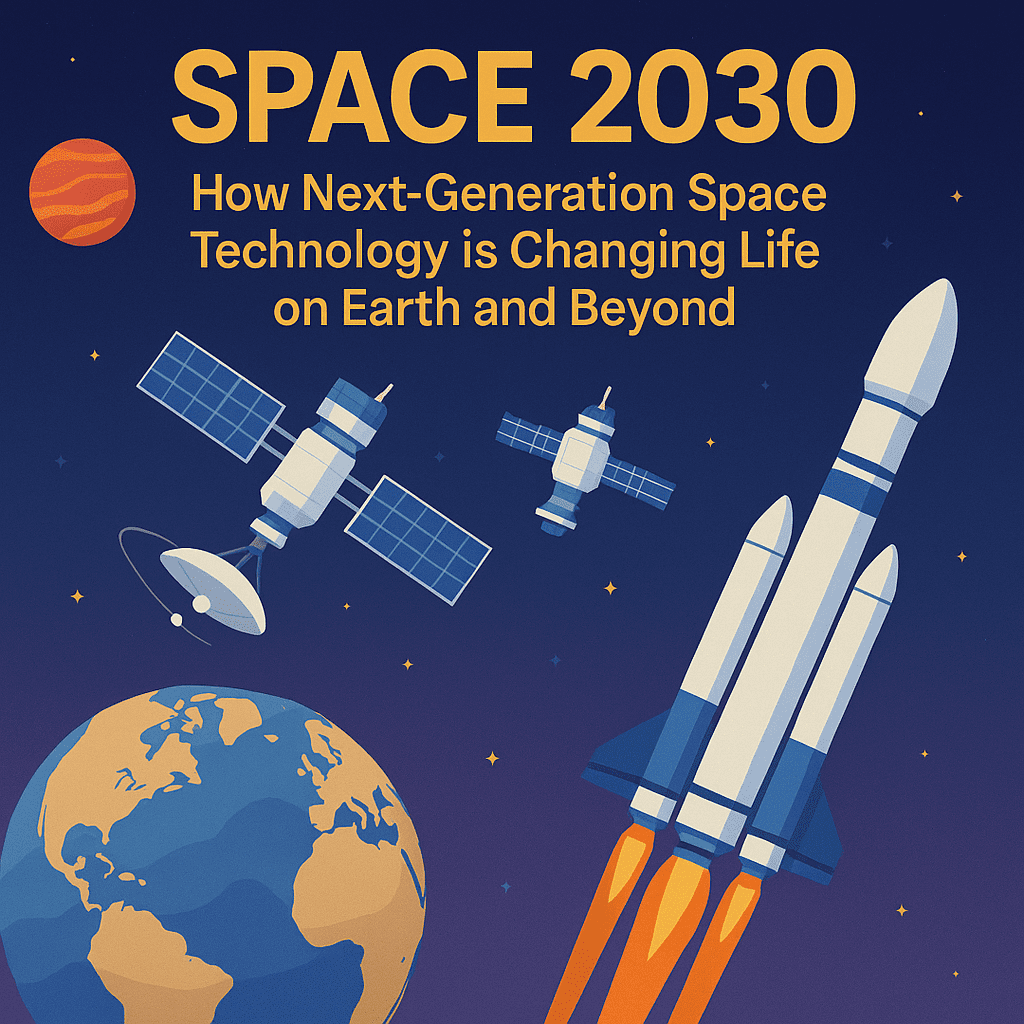
Space 2030: How Next-Generation Space Technology is Changing Life on Earth and Beyond

Introduction The space frontier is rapidly evolving—and by 2030, transformative space technology will reshape life on Earth and propel humanity further into the cosmos. From hyper-efficient satellites to in-space manufacturing and interplanetary ambitions, next-generation tools are already impacting not just science, but our daily lives, economies, and the future of sustainability. Here’s how these innovations are taking us to a new era. The New Space Race: What’s Driving Change? Explosion of Private Sector Involvement: Companies like SpaceX, Blue Origin, and a new generation of global startups are making launches, space data, and travel more accessible than ever before. Miniaturization & Mass Production: Tiny satellites (CubeSats, nano-satellites) lower launch costs and democratize Earth observation, telecom, and scientific research. Reusable Rockets & Advanced Propulsion: Dramatic cost reductions and renewed interest in deep-space missions, the Moon, and Mars. AI & Edge Computing in Orbit: On-board intelligence allows spacecraft to analyze data, make decisions, and respond to events instantly—even on missions to deep space. International Collaboration: Emerging space nations, universities, and corporations are contributing, fueling a global wave of discovery and competition. How Space Technology Is Already Impacting Life on Earth 1. Planetary Monitoring and Sustainability Advanced Earth Observation: Modern satellites track climate change, natural disasters, and agricultural trends in real-time. As much as 50% of all climate data now comes from space-based platforms. Environmental Protection: Satellite imaging helps predict wildfires, assess resource use, and manage global water and food supplies. Disaster Response: Early warning systems powered by space data enable better preparedness for hurricanes, earthquakes, and other crises. 2. Global Connectivity and Communication Satellite Mega-Constellations: Projects like Starlink and Kuiper deliver high-speed internet to even the world’s remotest regions, bridging the digital divide. Quantum-Encrypted Networks: Next-gen satellites are testing ultra-secure communications for banking, government, and privacy-centric industries. Smarter Navigation: Enhanced GNSS systems will power more precise transport, logistics, and autonomous vehicles across the globe. 3. Revolutionizing Industries on Earth Healthcare: Space-developed tech has spawned advanced water purification, remote medical imaging, and telemedicine, enabling healthcare access in even the most isolated corners of Earth. New Energy Solutions: Technologies for space missions—like high-efficiency solar panels and batteries—drive advances in renewable energy and electric vehicles. Manufacturing: Zero gravity enables the production of materials—like fiber optics and pharmaceuticals—with properties impossible to achieve on Earth. Life Beyond Earth: Big Leaps by 2030 Space Stations, Habitats, and Tourism Commercial Space Habitats: Companies and agencies plan for modules in orbit and Moon bases, supporting research and even tourism. Space Tourism: Routine orbital trips for science, recreation, and industry—once science fiction—are entering early real-world adoption. Moon, Mars, and Deep Space Ambitions Artemis, Starship, and International Missions: Lunar settlements, Mars flybys, and robotic asteroid explorations are on track for the early 2030s, setting the stage for a multi-planetary human presence. In-Space Manufacturing & Resource Extraction 3D Printing & Autonomous Robotic Assembly: Large-scale structures, satellites, and supporting hardware will be built in space, not just launched from Earth, reducing costs and enabling new designs. Resource Mining: Asteroid and lunar mining could provide water, metals, and fuel critical for extended space operations. The Big Picture: Space Tech’s Societal Impact Application Example Technology Earthly Impact Climate & Sustainability Hyperspectral satellites Combat environmental crises, improve agriculture Healthcare Remote monitoring, imaging Broaden access, boost emergency response Education & Equality Global internet constellations Connect remote regions, spread knowledge National Security Quantum/AI-driven surveillance Enhance safety, aid disaster management Smart Cities Satellite navigation/data Power IoT, enable resilient urban infrastructure Manufacturing In-space factories Advance materials, drive industry innovation Key Trends to Watch by 2030 AI-Driven Spacecraft: Smarter probes making decisions independently in deep space. Sustainable Lunar Bases: Test beds for resource recycling, energy production, and self-sufficient habitats. Democratization of Space: Universities, small nations, and even citizen groups gaining space access. Cross-Border Collaboration: More nations and sectors joining forces for peace, science, and commerce in orbit. Frequently Asked Questions (FAQ) How does all this benefit non-space industries? Spinoff technologies from space research routinely improve healthcare, environmental management, disaster response, communication, and even the food we eat. Will costs of space access continue to drop? Yes. Continued breakthroughs in reusable launch vehicles, ridesharing launches, and in-space manufacturing are making space more affordable and routine. Is space tech helping sustainability goals? Absolutely. From climate data to efficient energy and resource management, space tech is critical for tracking—and fighting—environmental challenges. Could new discoveries in space impact daily life on Earth? Yes—space has given us GPS, weather forecasts, clean water systems, and breakthrough medical imaging. With new tools, future impacts will be even broader and deeper. Conclusion By 2030, next-generation space technologies are more than missions to the stars—they’re a driving force for sustainability, equity, and innovation right here at home. As public and private collaboration intensifies, expect future breakthroughs to connect, inspire, and elevate people everywhere—on Earth and beyond.

Artificial Intelligence

How Data Analytics is Powering the Future of FinTech Enterprises

Introduction The financial technology (FinTech) sector is transforming at an unprecedented pace. From mobile payments and robo-advisors to digital lending and blockchain, FinTech companies are redefining how consumers and businesses interact with financial services. At the heart of this transformation lies data analytics. By leveraging big data, AI, and predictive analytics, FinTech enterprises are making smarter decisions, improving customer experiences, reducing risks, and driving innovation. 1. The Role of Data Analytics in FinTech FinTech enterprises generate and process massive amounts of data daily, including transaction records, customer behavior, risk profiles, and market trends. Data analytics helps organizations: Identify customer needs with precision. Personalize financial products based on behavioral insights. Mitigate financial fraud and cybersecurity risks. Streamline operations and improve efficiency. 2. Key Applications of Data Analytics in FinTech a. Personalized Financial Services By analyzing spending habits, investment preferences, and credit histories, FinTech platforms can offer tailored services such as personalized investment portfolios, custom loan offers, and budgeting recommendations. b. Fraud Detection and Risk Management Advanced analytics, combined with AI algorithms, can quickly detect unusual transaction patterns or suspicious activities, minimizing fraud risks and ensuring compliance with regulatory frameworks. c. Credit Scoring and Lending Traditional credit scoring models are being replaced with advanced analytics that assess creditworthiness based on a broader set of data points, such as social behavior, digital footprints, and alternative credit indicators. d. Predictive Analytics for Investments FinTech firms use predictive models to forecast stock trends, cryptocurrency movements, and portfolio performance, empowering users to make informed investment decisions. e. Customer Retention and Experience Data-driven insights help organizations improve customer engagement through targeted marketing campaigns, loyalty programs, and 24/7 personalized financial advice. 3. Benefits of Data Analytics for FinTech Enterprises Enhanced Decision Making: Real-time insights help businesses respond quickly to market changes. Operational Efficiency: Automation and advanced analytics reduce costs and human error. Improved Security: Detecting fraudulent activity before it impacts customers builds trust. Competitive Edge: Firms leveraging analytics can outpace competitors with faster, smarter services. 4. Future Trends in FinTech Data Analytics AI-Driven Automation: Integration of AI for faster data analysis and decision-making. Blockchain Analytics: Ensuring secure and transparent financial transactions. Advanced Predictive Modeling: Better risk management and investment strategies. RegTech Solutions: Compliance analytics to handle evolving financial regulations effortlessly. Conclusion Data analytics is not just a supporting tool; it’s the driving force shaping the future of FinTech enterprises. From improving customer experiences to mitigating financial risks, its applications are limitless. Companies that embrace data analytics now will be well-positioned to lead the next wave of FinTech innovation.

Technology

Top 10 Big Data Analytics Use Cases Revolutionizing the Telecom Industry

Introduction The telecom sector sits at the crossroads of massive data generation and technological disruption. In 2025, big data analytics is not just a buzzword—it’s the backbone of competitive advantage. Advanced analytics enables telecoms to boost operational efficiency, personalize the customer journey, reduce fraud, and unlock new revenue streams. Let’s explore the top 10 real-world use cases of big data analytics that are transforming the telecom industry. Top 10 Use Cases 1. Predictive Churn Analysis Telecoms analyze customer behavior patterns, usage, complaints, and service logs to forecast which customers are likely to leave. Machine learning models deliver real-time churn risk scoring, enabling operators to launch targeted retention campaigns and reduce customer loss. 2. Network Optimization & Traffic Management By processing big data from sensors, network logs, and devices, companies can proactively manage congestion, predict peak traffic, and optimize bandwidth allocation. Real-time analytics ensure smooth connectivity and improved Quality of Service—especially crucial for 5G and IoT deployments. 3. Fraud Detection and Prevention Big data platforms combine call records, transaction logs, and geolocation to detect anomalies such as SIM card cloning, fake billing, subscription abuse, and identity theft. AI/ML-based fraud detection protects both revenue and customer trust. 4. Targeted Marketing and Personalization Telecoms use data-driven segmentation to craft hyper-targeted offers, dynamic pricing, and personalized content. Analytics power recommendations and marketing campaigns that boost customer engagement and average revenue per user (ARPU). 5. Predictive Maintenance Telecom companies process signals from network equipment, sensors, and maintenance logs to predict hardware failures before they occur. Proactive repairs minimize downtime, improve reliability, reduce costs, and enhance user experiences. 6. Enhancing Customer Experience Aggregating data from touchpoints—calls, messages, app usage—enables telecoms to map the customer journey, discover pain points, and provide personalized support. This data-driven approach leads to higher satisfaction and loyalty. 7. Real-Time Analytics for Service Improvement Analyzing real-time data streams empowers on-the-fly recommendations, proactive incident responses, and dynamic load balancing across networks. Companies like Nokia use this approach for agile network management and superior service delivery. 8. Price Optimization and Revenue Assurance By modeling subscriber behavior, competitors’ offers, and willingness to pay, telecoms use big data to dynamically adjust plans, maximize revenue, and reduce price wars, while identifying revenue leaks. 9. Capacity Planning and Resource Allocation Predictive analytics assess historic and real-time data to forecast future network demand, guiding investment in infrastructure, preventing congestion, and ensuring robust coverage. Leaders like Verizon rely on such models for effective expansion. 10. Product Innovation and Monetization Big data analytics uncover hidden trends, power new product development, and even create new data-driven services (e.g., Vodafone Analytics). Monetizing insights as a service opens lucrative business-to-business (B2B) opportunities for operators. Table: Big Data Analytics Use Cases in Telecom Use Case Business Impact Example Implementation Predictive Churn Analysis Reduces customer loss, increases retention Machine learning churn scoring Network Optimization Boosts service quality, cuts costs Proactive congestion management Fraud Detection Minimizes revenue leakage, builds trust AI-driven anomaly detection Targeted Marketing Increases ARPU, campaign ROI Personalized offers, micro-segmentation Predictive Maintenance Cuts downtime, saves costs Equipment failure prediction Customer Experience Raises satisfaction/loyalty Personalized support, journey mapping Real-Time Analytics Immediate service improvement Dynamic load balancing Price Optimization Maximizes revenue, reduces churn Dynamic plan adjustments Capacity Planning Prevents congestion, guides investment Demand forecasting models Product Innovation Grows revenue, new markets Data monetization services Real-World Leaders AT&T: Predictive fault detection and auto-remediation. China Mobile: Dynamic resource allocation in 5G using AI analytics. Vodafone: Vodafone Analytics—a platform for B2B insights. Deutsche Telekom: Micro-segmented offers, adaptive streaming. Key Takeaways Big data analytics is revolutionizing telecom by turning every interaction into actionable insight. The most forward-thinking operators treat data as a core asset, not an afterthought—securing competitive advantage in retention, monetization, and future-readiness. From customer churn prevention to product innovation and fraud prevention, the business case for big data in telecom has never been clearer or more urgent.

App Development

10 Tips to Hire Android App Developers

Introduction In 2025, Android remains the world’s leading mobile platform. Finding the right Android app developer is crucial to building successful, scalable apps that stand out in a crowded marketplace. Avoid costly mistakes and delays—here’s how to make your hiring process smarter, faster, and more effective. 10 Essential Tips for Hiring Android App Developers 1. Define Your Requirements Clearly Start by outlining your app’s purpose, target users, platforms, core features, and required tech stack. A crystal-clear brief ensures candidates understand your goals and you attract the best-fit talent. 2. Evaluate Technical Skills and Experience Shortlist candidates with proven expertise in Java, Kotlin, Android SDK, and experience with APIs and integrations. Check for hands-on experience with contemporary frameworks and robust testing skills. 3. Review Portfolios and Past Projects Deep-dive into their published apps—check for downloads, ratings, and user feedback. Look for diversity across domains and complexity levels; test out their apps when possible. 4. Assess Problem-Solving and Innovation Good developers troubleshoot issues rapidly and creatively. Discuss real-world challenges and ask for examples of how they approached bugs or feature development. 5. Check Soft Skills and Communication Effective collaboration depends on clear, timely communication. Evaluate their ability to explain technical concepts, take feedback, and work in teams. 6. Give a Technical Assessment or Coding Test Use real-world scenarios to assess logic, coding standards, and efficiency. This reveals practical skills beyond what’s visible on resumes. 7. Validate Cultural Fit and Adaptability Ensure alignment in values and work ethic. Look for developers eager to learn and keep up with evolving tech trends. 8. Understand Their Approach to UI/UX A great Android app needs more than clean code—it needs intuitive design. Ask about their familiarity with Material Design and ability to collaborate on interface design. 9. Discuss Post-Launch Support and Maintenance Clarify expectations for bug fixes, updates, and long-term support. Reliable post-launch help is as important as initial development. 10. Choose the Right Hiring Model Decide among freelancers, in-house hires, or partnering with an established app development agency. Weigh cost, scale, collaboration needs, and project duration to pick the best fit. Quick Table: Hiring Steps Overview Step Why It Matters Define requirements Aligns expectations & attracts right talent Evaluate skills Ensures technical fit & depth of expertise Review past work Reveals quality, experience, and reliability Test problem-solving Uncovers creativity & adaptability Assess soft skills Key for smooth collaboration Technical assessment Screens for real-world capability Validate cultural fit Enhances team chemistry UI/UX focus Drives user satisfaction Clarify support terms Ensures long-term app success Select engagement model Matches cost, speed, and project scope Conclusion Hiring Android app developers in 2025 means balancing technical rigor, creative problem-solving, and strong communication. Follow these ten steps to find developers who deliver robust, beautiful Android apps—and become valuable, long-term partners in your business growth.

Uncategorized

Building Your Own AI Chatbot App in 2025: Cost & Key Considerations

Introduction AI chatbots have become essential in providing seamless customer service, automating business operations, and elevating user experiences. In 2025, evolving technology and rising user expectations make building a chatbot more promising—and more complex—than ever. Here’s a complete guide to what it takes to launch your own AI chatbot app this year, what it will likely cost, and which decisions matter most. The Real Cost of Building an AI Chatbot App in 2025 Development costs can vary dramatically based on features, scale, and level of intelligence. Solution Type Typical 2025 Cost (USD) Example Features Simple FAQ or Rule-Based Bot $3,000 – $15,000 Basic text, single platform, simple responses NLP-Driven Chatbot (Custom) $15,000 – $40,000 Natural language understanding, basic integrations Advanced AI/ML Chatbot $40,000 – $150,000+ Context, personalization, voice, integrations, analytics Enterprise-Scale, Multi-Channel $100,000 – $250,000+ Omnichannel, API/Webhook, compliance, advanced security Ongoing expenses: Maintenance: 15–25% of the original build per year Third-party APIs (OpenAI, cloud hosting): $500–$10,000/month or more Support and updates Major Factors Affecting Chatbot Development Cost Complexity & Features: The more powerful the bot (NLP, voice, personalization), the higher the investment. Integrations: Connecting with CRMs, ERPs, payment gateways, or third-party APIs adds to both initial and ongoing costs. Platform: Costs are higher for multi-channel (web, mobile, social media) and voice-enabled experiences. Design: Rich, branded UX/UI design and accessibility increase price. Compliance: Security, privacy, and adherence to regulations like GDPR or HIPAA add cost but are mandatory for many sectors. Training Data & AI Model: Custom model training or using advanced generative models leads to higher costs. Developer Location: Rates range from $25–$200/hr depending on geographic location and expertise. Essential Steps to Build Your AI Chatbot App in 2025 Define Clear Goals Identify your target users and the primary problems your bot should solve. Specify success metrics up front. Choose the Right Platform & Stack Options include Dialogflow, Rasa, Microsoft Bot Framework, proprietary platforms, or low-code builders. Decide on text, voice, or multimodal (image, video) support. Design Natural, Inclusive Conversations Map user journeys, intents, entities, and tone for the best user experience. Prioritize clarity and human-like responses; plan for fallback and escalation to human agents. Development & Training Build backend infrastructure for NLP, user management, integrations, and analytics. Train the chatbot using realistic, diverse data for robust performance. Testing and Quality Assurance Test for edge cases, security, UX, and multi-platform consistency. Deployment and Monitoring Integrate with target platforms and use built-in analytics for ongoing improvement. Compliance & Maintenance Plan for regular updates, privacy, and monitoring to address user feedback and security patches. 2025 Trends Shaping AI Chatbot Apps Advanced NLP: Chatbots are now far more conversational, handling multiple languages and dialects, sentiment detection, and context awareness. Voice Bots & Multimodal Inputs: Users expect voice, image, and text input/output for seamless interaction. Personalization at Scale: AI adapts recommendations, tone, and responses based on user profiles. No-Code/Low-Code Builders: Smaller businesses leverage visual bot builders to create, test, and launch without deep coding. Deep Integrations: Chatbots work alongside CRMs, ERPs, and other core systems, powering sales, support, healthcare, and more. Focus on Privacy and Ethics: Compliance and transparent AI are expected by users and required by law. Pro Tips for Success Prioritize must-haves over nice-to-haves to control cost and time-to-launch. Start with a defined MVP—iterate with real-world data and upgrade features as adoption grows. Budget for long-term support—cutting corners on security or UX leads to bigger costs later. Involve users early—their input shapes user-friendly flows and higher satisfaction. Frequently Asked Questions (FAQ) Q: How fast can I launch my own AI chatbot app in 2025? A: Simple bots: 2–8 weeks; advanced, custom AI chatbots: 2–6 months, with ongoing improvements. Q: Are ongoing costs a big deal? A: Yes, annual maintenance, third-party APIs, and scaling often run 15–25% of the original build each year. Q: Can I use no-code platforms to save money? A: Absolutely—great for basic chatbots, but limited in customization and advanced integrations. Q: Should I develop in-house or outsource? A: In-house offers more control but often costs more; outsourcing (especially to experienced AI teams abroad) can cut budget but requires careful management. Q: What are the hidden costs? A: Training data curation, server hosting, compliance work, and regular feature updates are easy to underestimate. Conclusion Building an AI chatbot app in 2025 is an exciting but multifaceted endeavor. Whether you target customer service, sales, or bold new ideas, balancing vision, technology, and budget is key. Invest upfront in planning, clear goals, and user-centric design—and your chatbot will be ready for tomorrow’s intelligent, always-on digital world.

Technology & Innovation

Why Agentic AI Is the Game-Changer for Australian Enterprises in 2025

Introduction Agentic AI—AI empowered with autonomy, goal-driven reasoning, and the ability to take initiative—has quickly moved from a futuristic concept to a transformative force for Australian enterprises. In 2025, Agentic AI stands as a critical enabler of productivity, innovation, and resilience, propelling businesses beyond traditional automation and into an era of intelligent, adaptive decision-making. What Makes Agentic AI Different? Autonomy: Unlike previous AI, Agentic AI acts on its own initiative, proactively identifying opportunities, setting sub-goals, and making context-aware decisions without constant human prompting. Complex Task Handling: Rather than solving isolated tasks, it orchestrates complex, multi-step processes and adapts dynamically as situations evolve. Continuous Learning: Agentic AI systems learn from ongoing feedback, optimizing performance and response over time. Strategic Collaboration: They serve as true digital team members, augmenting staff and freeing humans for creativity, strategy, and high-value work. Why 2025 Is a Tipping Point in Australia Nearly 97% of Australian enterprises are expanding their AI agent use in 2025; 91% see Agentic AI as essential for competitiveness. Productivity Superpower: Australian businesses see Agentic AI as a solution to persistent productivity plateaus and talent shortages. Experience-Driven Adoption: Previous investments in generative AI have laid the groundwork, giving enterprises the confidence and skillsets required for full agentic adoption. Core Benefits for Australian Enterprises 1. Enhanced Operational Efficiency Automated data entry, report generation, and administrative workflows reduce manual errors and speed up core business processes. Employees are liberated to focus on strategic tasks, boosting organizational performance, and morale. 2. Seamless Data Integration and Insights Agentic AI breaks down data silos, rapidly synthesizing information across departments and platforms for real-time, actionable insights. Instant access to integrated data enables informed, agile decisions. 3. Personalized Customer Experiences Delivers tailored interactions—product recommendations, bespoke support, and targeted marketing—scaling personalization with unprecedented efficiency. 4. Robust Cybersecurity and Compliance Proactive monitoring detects anomalies and threats in real time, minimizing downtime and data breach risk. Designed to meet Australian privacy laws and GDPR standards, with end-to-end encryption and auditability. 5. Scalable Growth Scales through cloud-native APIs and microservices; easily integrates with legacy systems, allowing rapid adaptation as needs evolve without disrupting existing infrastructure. 6. Multisector Transformation Sector Example Use Cases Expected Outcomes Healthcare Patient data integration, workflow automation Faster care, improved outcomes Retail Personalized recommendations, dynamic pricing, inventory optimization Better customer loyalty, reduced costs Finance Autonomous fraud detection, compliance management Stronger risk mitigation, efficiency Supply Chain Real-time logistics, predictive inventory management Lower delay, cost optimization Government Streamlined case handling, real-time citizen services Reduced bureaucracy, faster service Real-World Momentum Market Growth: The Australian enterprise Agentic AI market is forecast to jump from $36.9M in 2024 to over $435M by 2030. Leadership Support: 81% of business leaders in Australia are planning for agentic AI-driven digital team members in the next 12–18 months. Industry Example: Leading healthcare providers and financial institutions are already seeing significant improvements in operational agility through Agentic AI-powered automation. Overcoming Key Challenges Legacy Systems: Agentic AI’s modular architectures allow it to coexist with (and modernize) legacy environments. Data Fragmentation: Smarter integration dissolves silos, empowering better cross-team collaboration and decision-making. Expertise Shortage: Agentic AI augments specialized talent, helping enterprises tackle complex challenges even with limited human resources. Best Practices for Implementation Start with targeted, high-impact agent-driven projects and scale as the organization’s AI maturity grows. Invest in training for both technical teams and business users to ensure smooth adoption and alignment. Prioritize robust security and compliance measures from day one, leveraging Agentic AI’s innate monitoring and audit features. Frequently Asked Questions (FAQ) How is Agentic AI different from traditional automation or chatbots? It not only automates tasks but also autonomously sets goals, adapts to dynamic environments, and makes decisions based on reasoning and learning—acting more like a human collaborator than a programmed tool. Are Australian privacy and compliance requirements addressed? Agentic AI is designed with compliance in mind—offering end-to-end encryption, audit trails, and proactive data privacy management to ensure alignment with laws such as the Australian Privacy Act and GDPR. Which industries in Australia benefit most from Agentic AI? Healthcare, retail, finance, logistics, and government see the most immediate gains, but most sectors can leverage benefits in efficiency, decision-making, and security. What are the main hurdles for Australian enterprises? Common challenges include integrating with legacy technology, addressing skills gaps, and managing AI bias and data privacy—but these are being overcome with strategic planning and ongoing investment. Conclusion Agentic AI is not just a buzzword; it’s a paradigm shift that empowers Australian enterprises to solve old problems in new ways—transforming efficiency, security, and customer engagement. As 2025 unfolds, businesses that seize the agentic advantage will pull ahead, setting the pace for the future of work, service, and innovation in Australia.

Maker Movement

How Arduino is Revolutionizing Electronics for Beginners and Experts

Introduction Arduino has transformed the world of electronics. What began as a modest educational tool in 2005 is now an open-source global standard—democratizing hands-on electronics and coding for everyone from first-time hobbyists to professional engineers. This blog explores how Arduino serves as both a launchpad for beginners and a powerful platform for experts, reshaping how we invent, learn, and innovate. What is Arduino? Arduino is an open-source electronics platform combining easy-to-use hardware (microcontroller boards) with a streamlined coding environment. It allows users to control sensors, lights, motors, and nearly any electronic device—making interactive projects possible for all skill levels. Why Arduino is a Game-Changer For Beginners Accessibility: Beginner-friendly boards like the Arduino Uno cost little, set up quickly, and have a huge base of tutorials and support. Simple Programming: The Arduino IDE uses a straightforward version of C++ that’s easy to learn, even with no background in coding. Plug-and-Play: Input/output pins and widespread compatibility with sensors and modules mean early projects require minimal wiring or soldering. Community Support: A vibrant online community provides shared code, troubleshooting forums, and detailed how-tos—accelerating the learning curve. For Experts Rapid Prototyping: Seasoned engineers and product developers use Arduino boards to quickly test ideas, iterate on hardware, and build proof-of-concept models without reinventing the wheel. Customizability: Open-source hardware and firmware invite deep customization, from industrial automation to creative art installations. Professional Integration: Arduino is pivotal in IoT (Internet of Things), robotics, smart agriculture, and research, sometimes even powering commercial and industrial products. Advanced Features: Specialized boards (e.g., Arduino Due, Nano, Portenta) offer more speed, memory, and connectivity for demanding projects. Real-World Impact: Applications Field Beginner Projects Advanced/Expert Projects Education LED blinkers, basic sensors, traffic lights Robotics, data loggers, education kits Home Automation Light/temperature automation Full-scale smart home systems Robotics Line-following robots, toy cars Drones, autonomous vehicles, robotic arms IoT & Connectivity Weather stations, basic data logging Industrial monitoring, smart agriculture Art & Design Sound-reactive LEDs, simple displays Complex kinetic sculptures, smart wearables Environmental Science Air quality sensors, noise meter Real-time wildlife and resource tracking How Arduino Empowers Different Audiences Education Revolution Schools and universities worldwide use Arduino to teach electronics, physics, and programming hands-on—bridging the gap between theory and real-world problem-solving. Maker and DIY Movement Hobbyists, tinkerers, and inventors can realize almost any idea—from automating a plant-watering system to designing custom musical instruments—fueling the global Maker Movement. Professional Prototyping and Industry Startups and research teams use Arduino to validate concepts quickly, making innovation more affordable and accessible even for small enterprises or independent inventors. Why Arduino Works for Both Beginners and Experts Open Source DNA: Anyone can study, modify, and manufacture Arduino boards or software. Scalability: Start simple and grow into complex multi-board or networked systems as your skills increase. Massive Ecosystem: Hundreds of add-on shields (boards for networking, motor control, and wireless) expand projects without deep technical knowledge. Frequently Asked Questions (FAQ) Why has Arduino become more popular than other platforms? It balances accessibility, cost, and capability, with a strong global community and open-source ethos. Is Arduino only for students and hobbyists? Not at all—professionals and large companies use Arduino for fast prototyping, process automation, and sometimes even in final products. Can Arduino handle modern tech needs like IoT or AI? Yes. Modern boards support wireless communication, data logging, and integration with AI or cloud services, making them fit for contemporary demands. Are there limitations to Arduino? Boards have limited memory and processing power compared to full computers. For demanding tasks (like real-time image processing), more powerful platforms may be better—but for most electronics projects, Arduino is more than enough. Conclusion Arduino isn’t just a tool—it’s a revolution in how we approach technology. It has torn down entry barriers in electronics for newcomers and provided seasoned experts with a nimble platform for bold innovation. Beginners can get started with an LED blink; experts can build robots, IoT systems, and industrial automation—often within the same ecosystem. As electronics becomes a universal language, Arduino ensures everyone can speak it.

Technology & Business

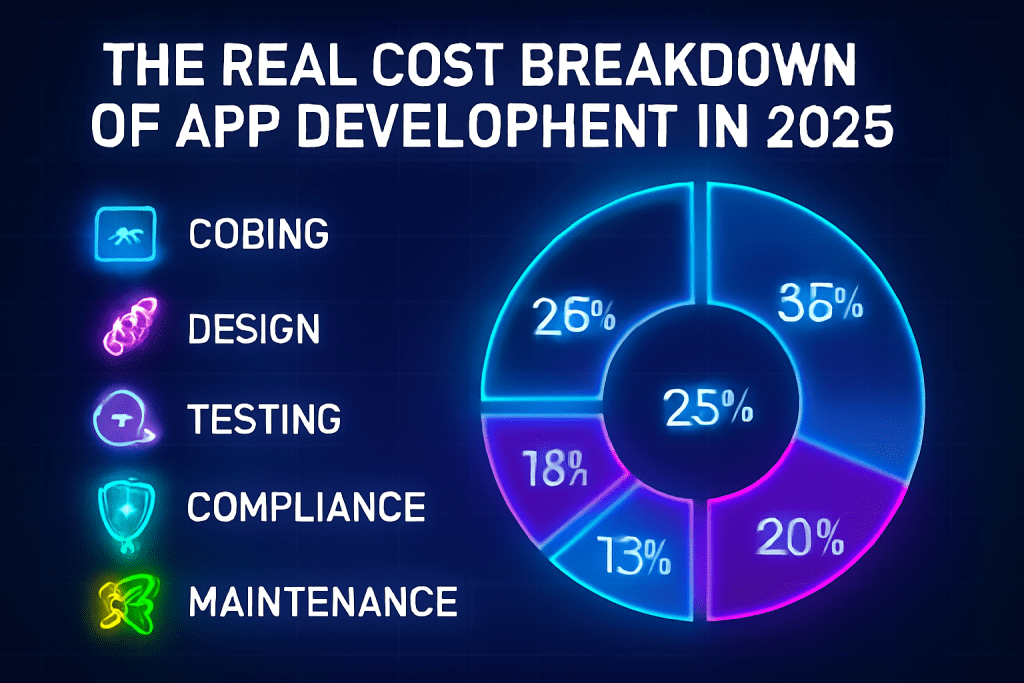
Breaking Down the Real Cost of App Development in 2025: Beyond Just Coding

Introduction App development in 2025 is about far more than lines of code. As expectations for quality, speed, scalability, and compliance rise, so do hidden and overlooked costs. This breakdown shows exactly what you’re paying for—beyond just hiring developers. The Real Cost of Building an App in 2025 Typical cost ranges: Simple app: $5,000 – $50,000 Mid-range complexity: $32,000 – $100,000 Complex/enterprise app: $100,000 – $400,000+ (and often much more) But this is just the start. These figures only represent direct development. The real cost of app development covers a lot more. Cost Breakdown: Every Phase Matters Development Phase 2025 Typical Cost (USD) What’s Included Discovery/Planning $4,500 – $8,000 Research, requirements gathering, scoping Design & Prototyping $15,000 – $30,000 UX/UI, wireframes, branding, design sprints Development (Coding) $35,000 – $75,000 Backend, frontend, API integrations Quality Assurance $8,000 – $18,000 Manual/automated testing, bug fixes Deployment $2,000 – $4,000 App store prep, backend transfer Maintenance (annual) 20–25% of original cost Updates, bug fixes, server fees, minor features Total Range $80,000 – $250,000+ Varies by app complexity and scope Source: 2025 industry reports and agency benchmarks What Drives App Development Costs Up? 1. Complexity and Features Advanced features: Real-time chat, AI, AR/VR, payments, analytics, and third-party integrations hike costs. Multiplying platforms (iOS, Android, web) doubles or triples work—native builds cost more than cross-platform. 2. Design Quality Custom animations, branding, and intensive user experience (UX) work increase time and budget. Accessibility and localization (multi-language) add further complexity. 3. Rising Developer Salaries In 2025, senior developer rates have soared to $80–$200/hour, especially for AI, automation, and cloud expertise. Talent shortages inflate costs globally, even in traditional outsourcing regions. 4. Security & Compliance Robust data security, GDPR, HIPAA, and other legal compliance standards are now non-negotiable. Expect extra costs for security infrastructure and legal reviews. 5. AI & Emerging Technologies AI-powered features (e.g., chatbots, recommendations) demand data pipelines, AI model training, specialized talent, and ongoing model tuning—all beyond standard coding. 6. Testing and Deployment Cross-device, cross-platform, and performance testing is more intensive than ever. Bugs, edge cases, and app store requirements require real QA investment. 7. Maintenance & Upgrades Post-launch, apps typically consume 15–25% of the original build cost yearly for bug fixes, security patches, OS updates, evolving features, and hosting. 8. Ongoing Infrastructure Cloud hosting, database management, analytics tools, push notification services, and external APIs add recurring (often growing) costs. 9. Marketing, Support & Scaling App store optimization, initial marketing, and user support are usually overlooked in budgets, but are crucial for success. Regional Cost Differences Region Developer Rate (USD/hour) Example Total App Cost North America / Western EU $80 – $200 $100,000 – $500,000+ Eastern Europe $35 – $100 $40,000 – $200,000+ India, SE Asia, Latin Am. $20 – $60 $10,000 – $150,000+ Outsourcing still brings savings, but global demand is shrinking the price gap. Hidden and Overlooked Costs Discovery and project management: Time spent scoping, iterating, and aligning goals. Third-party licenses & tools: Fees for libraries, frameworks, SaaS, and APIs. Legal and privacy compliance: Audits, certifications, and legal counsel. User acquisition: Marketing, onboarding flows, and initial support. Analytics and reporting: Implementing tools for usage tracking, engagement, and crash reporting. How to Keep Costs Under Control Prioritize MVP: Start with a minimum viable product to reduce initial spend and validate your core idea. Choose wisely: Use cross-platform tools where possible, but weigh against performance needs. Plan for maintenance: Budget at least 20% of your build costs annually for ongoing support. Invest in design and QA: Skipping these leads to poor ratings and post-launch costs. Understand compliance early: Legal and security shortcuts are costly in the long run. Hire specialized teams, not just cheap labor: Experienced developers optimize code, reduce bugs, and reach launch faster, often saving money in total. Frequently Asked Questions (FAQ) How much does a basic app cost in 2025? Estimates for a basic app range from $5,000 – $50,000, but serious MVPs average $40,000–$100,000, including design, QA, and deployment. Why are post-launch costs so high? App maintenance, updates, and legacy support account for 20–25% of build costs per year. Plus, scaling, cloud fees, and evolving user demands always add up. What’s the biggest mistake in budgeting for app development? Underestimating everything besides coding—especially QA, compliance, maintenance, and marketing. How much should I budget for a complex or AI-powered app? Complex and AI-integrated apps with advanced features will usually start at $100,000 and can exceed $400,000, with ongoing costs for data, training, and specialized talent. Conclusion The real expense of app development in 2025 goes far beyond just coding. Factor in discovery, design, compliance, AI integration, rising salaries, security, testing, and year-on-year maintenance. A well-researched, flexible budget—alongside clear priorities and seasoned partners—is the key to launching an app that succeeds for years to come.

Technology & Business, Uncategorized

From Brief to Launch: Building a Custom LMS in 3 Weeks

Introduction In today’s fast-paced digital landscape, the ability to rapidly deliver innovative learning experiences is a game-changer. While custom learning management systems (LMS) are often thought to require months of planning and development, it’s possible—with the right approach—to go from a concept brief to a fully functioning LMS in just three weeks. Here’s how we did it, step by step. Why Build a Custom LMS? Tailored to your audience: Meet the precise needs of your learners and organization. Feature control: Implement only what you need—nothing more, nothing less. Branding and UX: Ensure a seamless, branded user experience that off-the-shelf products can’t provide. Week-by-Week Roadmap to a Custom LMS Week 1: Discovery & Setup Kickoff & Brief Define clear goals: Who is this LMS for? What’s the must-have feature set? Gather requirements from stakeholders. Platform Planning Choose the technology stack (e.g., React, Node.js, Python, cloud services). Define user roles (Admin, Instructor, Learner). Initial Design Rapid wireframing: Map out LMS navigation, key screens, and user flows. Start UI/UX prototyping with input from stakeholders. Foundational Build Set up project structure, repositories, and development environments. Integrate boilerplate code for basic authentication and user management. Week 2: Development Sprint Core Feature Development Build and connect these modules: User registration and login Course creation and content upload (text, video, presentations) Enrollment and progress tracking Assessments or quizzes Content Population Collaborate with content creators or use AI to generate sample lessons, quizzes, and tutorials. Continuous Testing Integrate basic testing and QA into every coding session to eliminate blockers fast. Stakeholder Check-in Demo first builds to get rapid feedback and reprioritize features as needed. Week 3: Launch Prep & Refinement Polish UX/UI Iterate based on feedback, improving navigation and accessibility. Add finishing touches: branding, dashboards, notifications. Robust Testing Conduct full end-to-end testing: enroll users, complete modules, submit assessments. Final Data Import Upload real course and user data. Confirm everything works at scale. Deployment & Rollout Launch on chosen cloud or server. Provide a quick-start guide for admins and faculty. Collect instant feedback from first users for rapid fixes. Table: Your 3-Week Custom LMS Plan Week Focus Areas Deliverables Week 1 Discovery, setup, prototyping Wireframes, project setup, MVP roadmap Week 2 Core feature development User, course, and assessment modules Week 3 Testing, refinement, launch Fully functional, deployed LMS Tips for Success Plan ruthlessly, prioritize features: Focus on must-haves; postpone the “nice-to-have” until after launch. Leverage templates & AI: Use code services, design libraries, or AI content helpers to accelerate development. Collaborate closely: Daily check-ins with stakeholders prevent costly rework. Iterate rapidly: Expect feedback and be ready to refine features in real time. Don’t skip testing: Early and frequent testing ensures you avoid launch-day disasters. Frequently Asked Questions (FAQ) Is building a custom LMS in 3 weeks realistic for most teams? It’s possible with sharp focus, rapid feedback, and a lean MVP mindset—but complex features or extensive integrations may require more time. What’s the best tech stack for a rapid LMS build? Popular choices include React for front-end, Node.js or Python for backend, and cloud hosting for instant scalability. Can you use no-code or low-code platforms? Absolutely. No-code tools can speed up some aspects, especially MVPs, but custom coding gives the greatest flexibility. What features should a first version include? User management, course delivery, content upload, enrollment, progress tracking, and basic reporting are the essentials. Conclusion Delivering a custom LMS in three weeks is ambitious but entirely possible with focused planning, the right tools, and a commitment to iterative improvement. The result? A bespoke, branded learning hub that’s ready to delight users from launch day—and adapt as your educational goals evolve.

How would you like me to respond?

Select a personality for your AI assistant

Normal
Happy
Sad
Angry

Your selection will affect how the AI assistant responds to your messages

Chat Assistant

Let's discuss your project!

Hear from our clients and why 3000+ businesses trust TechOTD

Tell us what you need, and we'll get back with a cost and timeline estimate

Scroll to Top