
Author name: Bipul Kumar

Technology

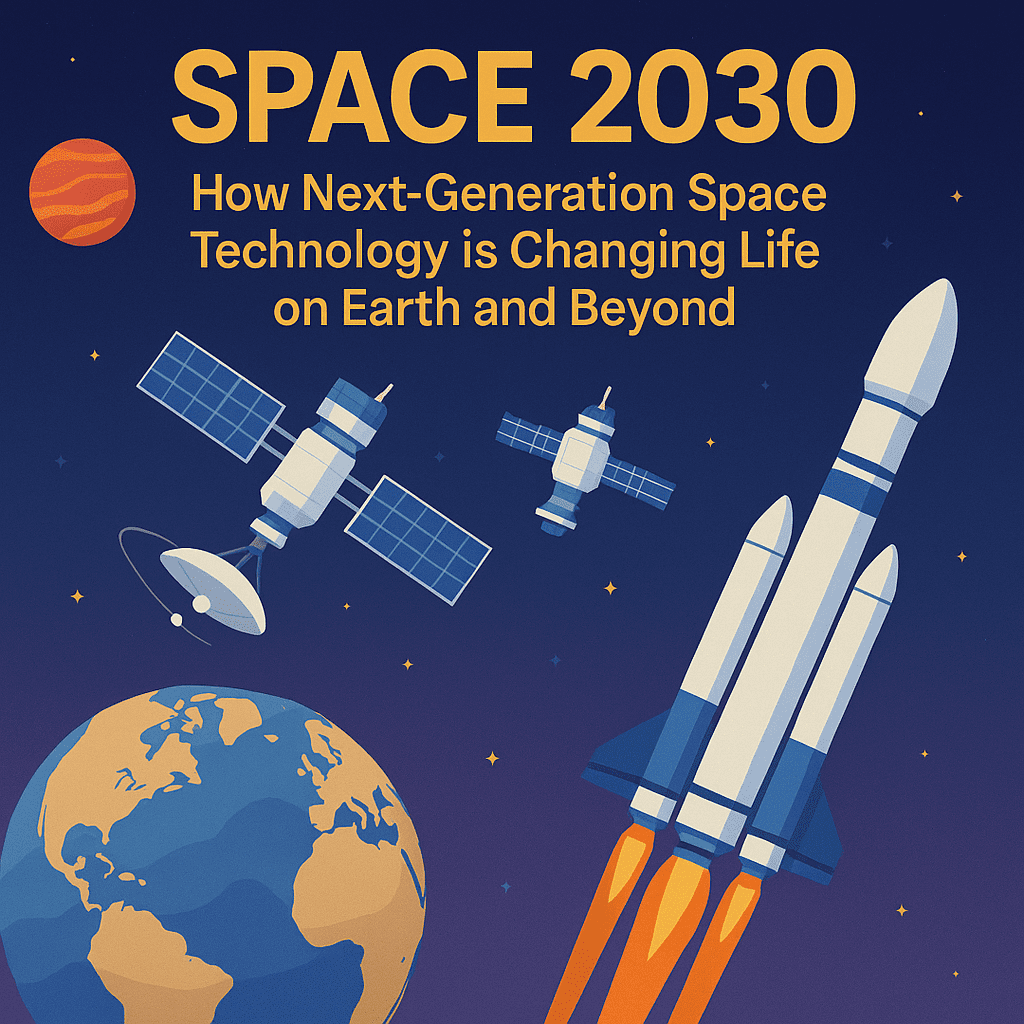
Space 2030: How Next-Generation Space Technology is Changing Life on Earth and Beyond

Introduction The space frontier is rapidly evolving—and by 2030, transformative space technology will reshape life on Earth and propel humanity further into the cosmos. From hyper-efficient satellites to in-space manufacturing and interplanetary ambitions, next-generation tools are already impacting not just science, but our daily lives, economies, and the future of sustainability. Here’s how these innovations are taking us to a new era. The New Space Race: What’s Driving Change? Explosion of Private Sector Involvement: Companies like SpaceX, Blue Origin, and a new generation of global startups are making launches, space data, and travel more accessible than ever before. Miniaturization & Mass Production: Tiny satellites (CubeSats, nano-satellites) lower launch costs and democratize Earth observation, telecom, and scientific research. Reusable Rockets & Advanced Propulsion: Dramatic cost reductions and renewed interest in deep-space missions, the Moon, and Mars. AI & Edge Computing in Orbit: On-board intelligence allows spacecraft to analyze data, make decisions, and respond to events instantly—even on missions to deep space. International Collaboration: Emerging space nations, universities, and corporations are contributing, fueling a global wave of discovery and competition. How Space Technology Is Already Impacting Life on Earth 1. Planetary Monitoring and Sustainability Advanced Earth Observation: Modern satellites track climate change, natural disasters, and agricultural trends in real-time. As much as 50% of all climate data now comes from space-based platforms. Environmental Protection: Satellite imaging helps predict wildfires, assess resource use, and manage global water and food supplies. Disaster Response: Early warning systems powered by space data enable better preparedness for hurricanes, earthquakes, and other crises. 2. Global Connectivity and Communication Satellite Mega-Constellations: Projects like Starlink and Kuiper deliver high-speed internet to even the world’s remotest regions, bridging the digital divide. Quantum-Encrypted Networks: Next-gen satellites are testing ultra-secure communications for banking, government, and privacy-centric industries. Smarter Navigation: Enhanced GNSS systems will power more precise transport, logistics, and autonomous vehicles across the globe. 3. Revolutionizing Industries on Earth Healthcare: Space-developed tech has spawned advanced water purification, remote medical imaging, and telemedicine, enabling healthcare access in even the most isolated corners of Earth. New Energy Solutions: Technologies for space missions—like high-efficiency solar panels and batteries—drive advances in renewable energy and electric vehicles. Manufacturing: Zero gravity enables the production of materials—like fiber optics and pharmaceuticals—with properties impossible to achieve on Earth. Life Beyond Earth: Big Leaps by 2030 Space Stations, Habitats, and Tourism Commercial Space Habitats: Companies and agencies plan for modules in orbit and Moon bases, supporting research and even tourism. Space Tourism: Routine orbital trips for science, recreation, and industry—once science fiction—are entering early real-world adoption. Moon, Mars, and Deep Space Ambitions Artemis, Starship, and International Missions: Lunar settlements, Mars flybys, and robotic asteroid explorations are on track for the early 2030s, setting the stage for a multi-planetary human presence. In-Space Manufacturing & Resource Extraction 3D Printing & Autonomous Robotic Assembly: Large-scale structures, satellites, and supporting hardware will be built in space, not just launched from Earth, reducing costs and enabling new designs. Resource Mining: Asteroid and lunar mining could provide water, metals, and fuel critical for extended space operations. The Big Picture: Space Tech’s Societal Impact Application Example Technology Earthly Impact Climate & Sustainability Hyperspectral satellites Combat environmental crises, improve agriculture Healthcare Remote monitoring, imaging Broaden access, boost emergency response Education & Equality Global internet constellations Connect remote regions, spread knowledge National Security Quantum/AI-driven surveillance Enhance safety, aid disaster management Smart Cities Satellite navigation/data Power IoT, enable resilient urban infrastructure Manufacturing In-space factories Advance materials, drive industry innovation Key Trends to Watch by 2030 AI-Driven Spacecraft: Smarter probes making decisions independently in deep space. Sustainable Lunar Bases: Test beds for resource recycling, energy production, and self-sufficient habitats. Democratization of Space: Universities, small nations, and even citizen groups gaining space access. Cross-Border Collaboration: More nations and sectors joining forces for peace, science, and commerce in orbit. Frequently Asked Questions (FAQ) How does all this benefit non-space industries? Spinoff technologies from space research routinely improve healthcare, environmental management, disaster response, communication, and even the food we eat. Will costs of space access continue to drop? Yes. Continued breakthroughs in reusable launch vehicles, ridesharing launches, and in-space manufacturing are making space more affordable and routine. Is space tech helping sustainability goals? Absolutely. From climate data to efficient energy and resource management, space tech is critical for tracking—and fighting—environmental challenges. Could new discoveries in space impact daily life on Earth? Yes—space has given us GPS, weather forecasts, clean water systems, and breakthrough medical imaging. With new tools, future impacts will be even broader and deeper. Conclusion By 2030, next-generation space technologies are more than missions to the stars—they’re a driving force for sustainability, equity, and innovation right here at home. As public and private collaboration intensifies, expect future breakthroughs to connect, inspire, and elevate people everywhere—on Earth and beyond.

App Development

10 Tips to Hire Android App Developers

Introduction In 2025, Android remains the world’s leading mobile platform. Finding the right Android app developer is crucial to building successful, scalable apps that stand out in a crowded marketplace. Avoid costly mistakes and delays—here’s how to make your hiring process smarter, faster, and more effective. 10 Essential Tips for Hiring Android App Developers 1. Define Your Requirements Clearly Start by outlining your app’s purpose, target users, platforms, core features, and required tech stack. A crystal-clear brief ensures candidates understand your goals and you attract the best-fit talent. 2. Evaluate Technical Skills and Experience Shortlist candidates with proven expertise in Java, Kotlin, Android SDK, and experience with APIs and integrations. Check for hands-on experience with contemporary frameworks and robust testing skills. 3. Review Portfolios and Past Projects Deep-dive into their published apps—check for downloads, ratings, and user feedback. Look for diversity across domains and complexity levels; test out their apps when possible. 4. Assess Problem-Solving and Innovation Good developers troubleshoot issues rapidly and creatively. Discuss real-world challenges and ask for examples of how they approached bugs or feature development. 5. Check Soft Skills and Communication Effective collaboration depends on clear, timely communication. Evaluate their ability to explain technical concepts, take feedback, and work in teams. 6. Give a Technical Assessment or Coding Test Use real-world scenarios to assess logic, coding standards, and efficiency. This reveals practical skills beyond what’s visible on resumes. 7. Validate Cultural Fit and Adaptability Ensure alignment in values and work ethic. Look for developers eager to learn and keep up with evolving tech trends. 8. Understand Their Approach to UI/UX A great Android app needs more than clean code—it needs intuitive design. Ask about their familiarity with Material Design and ability to collaborate on interface design. 9. Discuss Post-Launch Support and Maintenance Clarify expectations for bug fixes, updates, and long-term support. Reliable post-launch help is as important as initial development. 10. Choose the Right Hiring Model Decide among freelancers, in-house hires, or partnering with an established app development agency. Weigh cost, scale, collaboration needs, and project duration to pick the best fit. Quick Table: Hiring Steps Overview Step Why It Matters Define requirements Aligns expectations & attracts right talent Evaluate skills Ensures technical fit & depth of expertise Review past work Reveals quality, experience, and reliability Test problem-solving Uncovers creativity & adaptability Assess soft skills Key for smooth collaboration Technical assessment Screens for real-world capability Validate cultural fit Enhances team chemistry UI/UX focus Drives user satisfaction Clarify support terms Ensures long-term app success Select engagement model Matches cost, speed, and project scope Conclusion Hiring Android app developers in 2025 means balancing technical rigor, creative problem-solving, and strong communication. Follow these ten steps to find developers who deliver robust, beautiful Android apps—and become valuable, long-term partners in your business growth.

Technology

Revolution in Technology in the Last 15 Years

Introduction The past 15 years have witnessed an unprecedented revolution in technology, impacting nearly every aspect of modern life. From communication and transportation to healthcare and entertainment, developments in digital tools and systems have reshaped our daily experiences and transformed industries around the globe. Key Technological Advancements (2010–2025) 1. Rise of Smartphones and 5G Networks Smartphones have become faster, smarter, and more integral to our lives, serving as cameras, computers, and entertainment systems in our pockets. The rollout of 4G, followed by 5G, enabled lightning-fast internet connectivity, seamless video streaming, and real-time gaming experiences on mobile devices. 2. Artificial Intelligence (AI) and Machine Learning AI-powered tools permeate everything from virtual assistants (Siri, Alexa) to image recognition, language translation, and autonomous robots. AI’s influence expanded in areas such as healthcare diagnostics, self-driving cars, and smart home technology. 3. Electric and Autonomous Vehicles Electric vehicles (EVs) went mainstream, with increasing sales and wider adoption in many countries. The development and testing of autonomous (self-driving) cars are transforming the future of personal and public transport. 4. Cloud Computing & Remote Collaboration Cloud technology allowed businesses and individuals to access, store, and share data from anywhere, fueling the rise of remote work and collaboration. Platforms like Office 365, Google Drive, and Zoom became essential, especially during the pandemic years. 5. Social Media & Digital Transformation Social networks (Facebook, Instagram, X, TikTok) fundamentally changed personal connection, business marketing, and news consumption. Digital payments and e-commerce experienced explosive growth, digitizing transactions and consumer habits. 6. Wearables, AR/VR, and IoT Smartwatches, fitness trackers, and wearables transformed personal health and productivity. Augmented reality (AR) and virtual reality (VR) evolved, offering new dimensions in gaming, design, and education. The Internet of Things (IoT) interconnected devices, appliances, and infrastructure, enabling smart homes and cities. 7. Blockchain and Cryptocurrencies Blockchain technology, initially associated with cryptocurrencies, began to revolutionize finance, supply chains, and digital identity management. Secure, decentralized records brought new possibilities for transparency, trust, and innovation. 8. 3D Printing and Manufacturing Innovations 3D printing moved from prototyping to mainstream manufacturing, enabling custom products, medical devices, implants, and more. Rapid design iterations and on-demand production became possible in industries such as healthcare and automotive. 9. Advances in Healthcare Technology Telemedicine, wearable health monitors, and digital health records improved care accessibility and patient outcomes. AI-powered diagnostics and personalized medicine are driving breakthroughs in disease prevention and treatment. 10. Sustainability and Green Tech Renewable energy technologies, especially solar panels and wind turbines, have made significant progress. Smart grids, energy storage solutions, and green transportation are helping address climate change and promote sustainability. Societal and Economic Impact Productivity: Technology enhanced business efficiency, enabling rapid innovation across sectors. Workforce: Automation and AI shifted job roles, making digital skills and adaptability more valuable. Society: Digital access expanded globally, but also highlighted challenges like the digital divide and data privacy concerns. Looking Ahead: What’s Next? Quantum computing is emerging as a frontier that could solve previously impossible problems in science and logistics. Convergence of technologies (AI, IoT, edge computing) promises smarter, more connected environments. Conclusion The past 15 years represent a defining chapter in the history of technology, marked by rapid change and continuous innovation. These breakthroughs have extended human capabilities, improved quality of life, and will continue to shape our future in ways we are only beginning to imagine.

Technology

Engagement of AI in the Modern Era

Introduction Artificial Intelligence (AI) is no longer a technology of the distant future—it is an integral part of daily life and a driving force behind innovation across industries. The modern era sees AI embedded in everything from our smartphones to large-scale industrial operations, redefining efficiency, convenience, and even the way we make decisions . How AI Shapes Daily Life Personalized Assistants: Voice-activated helpers like Siri and Alexa handle scheduling, reminders, and even home automation tasks . Smart Recommendations: Streaming platforms, online shopping, and social networks use AI to personalize content, increasing user engagement and satisfaction . Healthcare Tools: AI-driven diagnostics and medical assistants help provide faster disease identification and personalized treatments . Major Applications of AI in Modern Industries Industry Key AI Applications Impact/Benefit Healthcare Diagnostic tools, personalized treatment Increased accuracy, faster outcomes Finance Fraud detection, risk assessment Enhanced security, improved decision-making Manufacturing Predictive maintenance, quality control Reduced downtime, cost savings Retail Personalization, chatbots, inventory management Improved customer experience Transportation Autonomous vehicles, smart traffic management Safer roads, optimized routes Education Adaptive learning platforms, automated grading Tailored instruction, efficiency Economic and Social Impact Efficiency and Productivity: Businesses adopting AI experience greater productivity, streamlined operations, and lower costs. Job Transformation: While AI automates many routine tasks, it also generates new roles requiring advanced skills, prompting a shift toward upskilling and reskilling in the workforce. Global Economy: AI technologies are projected to add trillions of dollars to the global GDP by 2030 through enhanced productivity and innovation. Challenges and Ethical Considerations Data Privacy & Security: With more personal information processed by AI, concerns about privacy and securing sensitive data have grown . Bias and Fairness: Algorithms can inadvertently reinforce societal biases, impacting decisions in areas like hiring or lending. Job Displacement: Although AI creates opportunities, automation also puts some professions at risk, necessitating a focus on workforce adaptation and education . Future Trends: What’s Next for AI? Explainable AI: As AI decisions influence more aspects of life, transparency and interpretability are becoming vital for trust and regulatory compliance . Sustainability: AI will be pivotal in optimizing resource use, monitoring environmental impact, and driving sustainable practices across industries . Autonomous Systems: Advances in robotics and self-driving cars are set to make transportation, logistics, and even household chores more efficient . Conclusion The engagement of AI in the modern era is profound and rapidly growing. Its influence is reshaping industries, transforming daily life, and raising new opportunities and challenges. As organizations and individuals, adapting to these changes, focusing on ethical development, and lifelong learning will be key to harnessing AI’s full potential .

How would you like me to respond?

Select a personality for your AI assistant

Normal
Happy
Sad
Angry

Your selection will affect how the AI assistant responds to your messages

Chat Assistant

Let's discuss your project!

Hear from our clients and why 3000+ businesses trust TechOTD

Tell us what you need, and we'll get back with a cost and timeline estimate

Scroll to Top