AI compliance

Artificial Intelligence, Business Intelligence, Digital Transformation, Technology

AI Governance in 2026: Balancing Innovation and Regulation

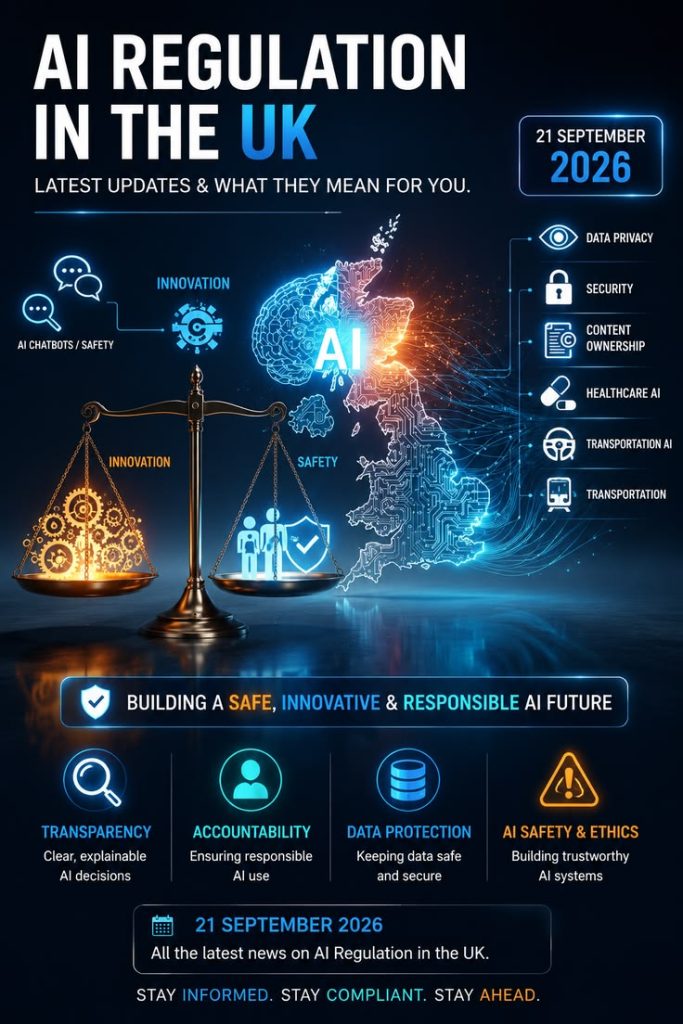
AI Governance in 2026: Balancing Innovation and Regulation Artificial intelligence has rapidly evolved from an emerging technology into a critical business and societal tool. From automating business operations and improving healthcare outcomes to powering advanced research and enhancing customer experiences, AI is transforming nearly every industry. However, as AI systems become more powerful and influential, concerns surrounding transparency, accountability, privacy, bias, and security continue to grow. In 2026, AI governance has become one of the most important topics in the technology landscape. Governments, regulators, technology companies, and enterprises are working together to create frameworks that encourage innovation while ensuring AI is developed and deployed responsibly. The challenge is clear: how can society unlock the enormous benefits of AI without exposing individuals, businesses, and governments to unnecessary risks? The answer lies in effective AI governance. What Is AI Governance? AI governance refers to the policies, standards, regulations, and organizational practices used to guide the development, deployment, and management of artificial intelligence systems. Its primary objectives include: Ensuring AI systems operate ethically Promoting transparency and accountability Protecting user privacy Reducing bias and discrimination Strengthening cybersecurity Maintaining regulatory compliance Building public trust Unlike traditional software governance, AI governance must address unique challenges associated with machine learning, generative AI, autonomous decision-making, and continuously evolving algorithms. As organizations increasingly rely on AI-powered systems for critical decisions, governance frameworks are becoming essential components of modern business operations. Why AI Governance Matters More Than Ever The rapid adoption of generative AI and autonomous systems has dramatically increased the importance of governance. Organizations are now using AI for: Financial decision-making Hiring and recruitment Healthcare diagnostics Customer service automation Cybersecurity monitoring Supply chain optimization Legal research Business intelligence While these applications offer significant benefits, they also introduce potential risks. An AI system that generates inaccurate information can damage a company’s reputation. A biased algorithm can lead to discrimination claims. Weak AI security controls can expose sensitive data to cybercriminals. Without proper governance, AI can become a liability instead of a competitive advantage. Businesses are realizing that governance is not merely about compliance—it is about creating sustainable and trustworthy AI ecosystems. The Global Push for AI Regulation One of the biggest developments in 2026 is the increasing focus on AI regulation worldwide. Governments recognize that artificial intelligence is reshaping economies, national security, labor markets, and public services. As a result, regulators are introducing policies designed to manage AI risks while encouraging innovation. Several key areas are receiving attention: Risk-Based AI Classification Many governments are adopting risk-based approaches to AI oversight. Under this model, AI applications are categorized according to their potential impact. Examples include: Low-Risk Systems Chatbots Recommendation engines Productivity assistants Medium-Risk Systems Customer service automation Business analytics platforms Educational AI tools High-Risk Systems Medical diagnosis systems Financial approval algorithms Law enforcement technologies Critical infrastructure management systems The higher the risk level, the stricter the governance requirements become. This approach helps regulators avoid unnecessary restrictions on innovation while focusing oversight where it is needed most. Transparency Requirements AI transparency has become a major regulatory priority. Users increasingly want to know: How AI systems make decisions What data is being used Whether content was AI-generated How organizations monitor AI outputs Transparency requirements are encouraging businesses to provide clearer explanations of AI-driven decisions and maintain detailed documentation of their AI models. Data Protection and Privacy AI systems require large amounts of data to function effectively. This has raised concerns about: User consent Data ownership Personal information protection Cross-border data transfers Governments are introducing stricter data governance rules to ensure AI systems respect privacy rights while still enabling innovation. Organizations that fail to comply may face significant financial penalties and reputational damage. Enterprise AI Governance Becomes a Strategic Priority In 2026, AI governance is no longer just the responsibility of compliance departments. It has become a boardroom issue. Executives recognize that poorly managed AI initiatives can create legal, financial, and operational risks. As a result, organizations are establishing dedicated AI governance programs that include: AI ethics committees Risk management teams Compliance officers Data governance specialists Cybersecurity professionals Legal advisors These teams work together to ensure AI projects align with business objectives, regulatory requirements, and ethical standards. Companies that implement robust governance frameworks are often able to deploy AI more confidently and at greater scale. Ethical AI Takes Center Stage Ethical AI has become one of the defining themes of AI governance. Businesses understand that compliance alone is not enough. Users expect AI systems to operate fairly, responsibly, and transparently. Ethical AI initiatives focus on several key principles. Fairness AI systems should treat all individuals fairly and avoid discriminatory outcomes. Organizations are investing in bias detection tools and model auditing processes to identify and mitigate unfair decision-making. Accountability There must be clear responsibility for AI-generated outcomes. Businesses are establishing governance structures that define who is accountable when AI systems make errors or produce harmful results. Human Oversight Despite significant advances in automation, human involvement remains critical. Many organizations require human review for high-impact decisions involving: Employment Healthcare Financial services Legal matters This ensures AI supports decision-making rather than replacing human judgment entirely. Transparency Users should understand when they are interacting with AI systems and how important decisions are made. Transparent AI helps build trust and reduces concerns about hidden algorithms influencing outcomes. The Rise of AI Audits Just as financial audits help ensure accountability in business operations, AI audits are becoming increasingly common. AI audits evaluate: Model performance Bias levels Security controls Regulatory compliance Data quality Decision-making processes Organizations are conducting regular assessments to verify that AI systems continue operating as intended. Independent third-party audits are also gaining popularity because they provide additional credibility and transparency. In many industries, AI auditing is becoming a standard governance practice. Managing Generative AI Risks Generative AI remains one of the most transformative technologies of the decade. Businesses are using AI tools to create: Marketing content Software code Product designs Business reports Customer communications Educational materials However, generative AI introduces unique governance challenges. Hallucinations AI models can

Artificial Intelligence, Data Privacy & Security

The Rise of Private AI: Why Businesses Want More Control Over Their Data

The Rise of Private AI: Why Businesses Want More Control Over Their Data Artificial Intelligence has become one of the most transformative technologies of the modern business era. From automating routine processes and generating content to analyzing massive datasets and enhancing customer experiences, AI is helping organizations operate more efficiently than ever before. However, as AI adoption accelerates, a new concern has emerged alongside the excitement: data privacy. Businesses today generate and store enormous volumes of sensitive information. Customer records, financial data, intellectual property, strategic plans, employee information, and proprietary research are among the most valuable assets an organization possesses. While public AI platforms offer impressive capabilities, many companies are becoming increasingly cautious about how their data is processed, stored, and used. This growing concern has led to the rise of Private AI, an approach that allows organizations to harness the power of artificial intelligence while maintaining greater control over their data. Rather than sending sensitive information to public AI services, businesses are exploring private AI environments that prioritize security, compliance, and ownership. As digital transformation continues to reshape industries, Private AI is quickly becoming a critical component of enterprise technology strategies. Understanding Private AI Private AI refers to artificial intelligence systems that operate within a controlled environment owned or managed by an organization. These systems can be deployed on-premises, within private cloud infrastructure, or through dedicated environments that ensure data remains isolated from public systems. Unlike public AI platforms that often rely on shared infrastructure and external data processing, Private AI enables businesses to retain control over where their information resides, who can access it, and how it is used. The objective is simple: gain the benefits of advanced AI capabilities without exposing sensitive business data to unnecessary risks. Private AI solutions can include: Self-hosted large language models Private generative AI assistants Secure machine learning environments Enterprise AI platforms with dedicated infrastructure Industry-specific AI systems designed for regulated sectors This model is becoming increasingly attractive as organizations seek to balance innovation with security and regulatory compliance. Why Businesses Are Prioritizing Data Control Data has become one of the most valuable assets in the modern economy. As AI systems require access to large datasets for analysis and decision-making, organizations want assurance that their information remains protected. Several factors are driving the shift toward Private AI. Protecting Sensitive Information Many businesses handle confidential data that cannot be shared outside approved environments. Financial institutions manage customer transactions, healthcare providers process medical records, and technology companies store proprietary intellectual property. Using public AI systems may raise concerns about data exposure, accidental leaks, or unauthorized access. Private AI allows organizations to keep critical information within secure boundaries. For industries where trust is essential, maintaining complete control over sensitive data is often non-negotiable. Meeting Regulatory Requirements Governments and regulatory bodies worldwide are introducing stricter data protection laws. Regulations such as GDPR, industry-specific compliance frameworks, and national privacy laws require organizations to demonstrate responsible data handling practices. Businesses operating across multiple regions face increasing pressure to comply with diverse regulatory requirements. Private AI environments provide greater transparency and control, helping organizations meet compliance obligations more effectively. By knowing exactly where data is stored and processed, businesses can reduce regulatory risks and avoid costly penalties. Safeguarding Intellectual Property For many organizations, proprietary information represents a significant competitive advantage. Product designs, research findings, source code, business strategies, and internal documentation are assets that businesses cannot afford to expose. As generative AI tools become more integrated into daily workflows, concerns have emerged about how submitted data may be used by external systems. Private AI offers a solution by ensuring sensitive business knowledge remains within the organization’s own ecosystem. This level of protection is particularly important for industries driven by innovation and intellectual property. The Growing Trust Challenge in AI Despite the remarkable capabilities of AI, trust remains one of the biggest barriers to adoption. Business leaders often ask critical questions: Who owns the data used by the AI system? Where is the information stored? Can external parties access company data? How is the data protected? What happens if a security breach occurs? These concerns become even more significant when AI systems are used for mission-critical operations. Private AI helps address these trust issues by providing greater visibility and governance over AI operations. Organizations can establish clear policies regarding data access, model training, monitoring, and security controls. When employees and customers trust how AI is being implemented, adoption tends to increase significantly. How Private AI Improves Security Cybersecurity threats continue to evolve at an alarming pace. Data breaches can lead to financial losses, reputational damage, legal consequences, and operational disruptions. Private AI strengthens security through several mechanisms. Controlled Access Organizations can define who has access to AI systems and what information can be processed. Role-based permissions reduce the risk of unauthorized access and internal misuse. Enhanced Monitoring Private environments enable businesses to monitor AI activity more closely. Security teams can track interactions, detect anomalies, and respond quickly to potential threats. Reduced Data Exposure Keeping data within private infrastructure minimizes the need to transmit sensitive information across external networks, reducing potential attack surfaces. Custom Security Policies Businesses can implement security measures aligned with their specific needs, including encryption, authentication, network isolation, and auditing capabilities. These controls provide a level of protection that many organizations consider essential for enterprise-scale AI adoption. The Role of Private AI in Highly Regulated Industries Certain industries face particularly strict requirements regarding privacy and data protection. Healthcare Healthcare organizations manage highly sensitive patient information. AI can assist with diagnostics, patient engagement, medical research, and operational efficiency, but privacy concerns remain paramount. Private AI allows healthcare providers to leverage AI while maintaining compliance with healthcare regulations and safeguarding patient trust. Financial Services Banks and financial institutions process vast amounts of confidential customer data. Fraud detection, risk analysis, and customer support increasingly rely on AI technologies. Private AI helps financial organizations maintain strict security standards while improving operational performance. Government and Public Sector Government agencies often handle classified

Infographic illustrating industries such as healthcare, finance, government, retail, telecom, manufacturing, energy, education, and logistics benefiting from Confidential AI adoption, with icons for data security, AI, and compliance.
Artificial Intelligence

Confidential AI

Introduction The age of intelligent automation is reshaping every industry, allowing organizations to process vast amounts of data, deliver deeply personalized experiences, and accelerate innovation. However, as the power of AI grows, so do concerns about data privacy, security, and regulatory compliance. Confidential AI—a new paradigm for data protection—ensures that sensitive information remains secure not only during storage or transit but also while being processed by advanced machine learning models. Embracing Confidential AI is essential for organizations that want to unlock the full potential of intelligent automation without compromising on trust or ethics. The Rise of Confidential AI: Protecting Data at Every Stage Traditional security approaches primarily focus on protecting data at rest and in transit. Confidential AI extends these boundaries, delivering robust protection even when data is actively being processed by AI models. Key Technologies Behind Confidential AI: Homomorphic Encryption: Allows computations on encrypted data, so raw information is never exposed—even during analytics and model training. Federated Learning: Enables AI models to learn collaboratively from multiple sources without sharing underlying data—critical for sectors like healthcare and finance. Trusted Execution Environments (TEEs): Secure zones within hardware that keep sensitive processing insulated from the rest of the system. Differential Privacy & Secure Multiparty Computation: Techniques that anonymize data or allow secure joint analysis across organizations. These methods work together to form multilayered defenses that guard against both external hackers and insider threats, ensuring regulatory compliance and ethical stewardship. Why Confidential AI is Critical for Today’s Businesses Compliance with Tougher Regulations With GDPR, HIPAA, CCPA, and similar laws tightening global data privacy requirements, Confidential AI helps organizations: Automate compliance by integrating privacy controls directly into AI workflows, reducing manual oversight. Respond rapidly to audits and demonstrate robust safeguards, building regulatory trust. End-to-End Security and Risk Mitigation Confidential AI protects sensitive datasets against exposure at all stages—storage, transit, and active processing—mitigating risks before they start. By encrypting or isolating data in secure hardware and software enclaves, organizations significantly reduce vulnerabilities to insider attacks and malicious breaches. Business Value and Ethical Innovation Enables organizations to extract actionable insights from confidential data safely, driving data-driven innovation without reputational risk. Supports responsible AI and data ethics by default, so businesses can build customer trust and brand reputation while scaling automation. Best Practices for Implementing Confidential AI 1. Encrypt All Sensitive Data Use strong encryption protocols for data storage, transfer, and especially for processing (homomorphic encryption). Ensure encryption keys are controlled and regularly rotated. 2. Strengthen Data Privacy with Differential Privacy Anonymize datasets before analysis to remove personal identifiers. Use role-based controls so only authorized personnel access confidential data. 3. Utilize Secure Hardware and Trusted Execution Environments Deploy TEEs to isolate AI computations from the rest of the system, preventing unauthorized monitoring or data leaks. 4. Enforce Rigorous Access Controls and Monitoring Use multi-factor authentication, API keys, and continuous monitoring to detect and stop unauthorized access to both data and models. Maintain full audit trails of data access and algorithm activity for accountability and compliance reviews. 5. Ensure AI Compliance and Governance Regularly review AI systems for bias, model transparency, and explainability issues to meet emerging regulatory standards. Align with frameworks like GDPR, HIPAA, and sector-specific regulation. Practical Use Cases of Confidential AI Healthcare Securely processes patient records for diagnostics and research without ever exposing raw personal data. Enables collaborative research via federated learning between hospitals and labs. Finance Protects sensitive financial data (such as transaction history and customer details) while enabling fraud detection and predictive analytics. Facilitates secure AI-driven risk modeling across regulated financial institutions. Government and Public Sector Allows agencies to analyze census, security, and welfare data without violating citizen privacy. Supports public health and smart city initiatives powered by confidential data aggregation. Cross-Industry: Multi-Party Data Collaboration Confidential AI allows companies in supply chain, retail, tech, and more to build shared AI models without sharing underlying datasets. Key Points Table Aspect Confidential AI Approach Traditional AI Security Data Protection Secures data at rest, in transit, and in use Focuses on data at rest/in transit Technology Homomorphic encryption, TEEs, federated learning Firewalls, standard encryption Insider Threats Mitigates both insider and outsider threats Limited resistance to insider attacks Compliance Embedded privacy controls, audit-friendly Manual compliance checks Business Value Unlocks insights from sensitive data securely Limits analysis on confidential data FAQ Q1: What is Confidential AI and how is it different from traditional AI security? A1: Confidential AI protects sensitive data not just during storage and transfer, but also while data is being actively processed by AI models—using technologies like encryption, federated learning, and secure hardware zones. Traditional security typically focuses only on protecting data at rest or in transit. Q2: What are the main regulatory compliance concerns with AI and sensitive data? A2: Regulations such as GDPR, HIPAA, and CCPA require strict data protection, usage transparency, and rapid breach reporting. Confidential AI automates much of the compliance process and reduces the risk of costly violations. Q3: Which industries benefit most from Confidential AI? A3: Sectors with highly sensitive or regulated data—such as healthcare, finance, government, and cloud-based collaboration—gain the most value from Confidential AI solutions. Q4: How can organizations implement Confidential AI effectively? A4: Encrypt all sensitive data, use secure enclaves for computation, enforce strict access controls, and embed compliance checks throughout the AI lifecycle. Q5: Is Confidential AI expensive or hard to deploy? A5: With cloud providers and hardware vendors now supporting TEEs, federated learning, and dedicated confidential AI services, implementation is becoming more accessible and cost-efficient for organizations of any size. Conclusion The explosion of intelligent automation means businesses handle more sensitive data than ever before. Confidential AI empowers organizations to extract unparalleled business value from data—while maintaining compliance, ethics, and trust. By embedding cutting-edge privacy and security methods throughout the AI lifecycle, Confidential AI becomes a cornerstone for safe, responsible automation. Now is the time for leaders in all industries to invest in end-to-end confidential AI solutions, leveraging innovation without sacrificing data protection. For organizations seeking to securely harness AI’s potential, consult with experts at TechOTD AI Services to design

finance

Large Language Models (LLMs) in Finance: Benefits, Applications, and Real Examples

Introduction The finance industry is undergoing a transformation fueled by advances in artificial intelligence, with Large Language Models (LLMs) playing a pivotal role. These sophisticated AI models, trained on vast amounts of textual data, have unlocked new opportunities to automate, analyze, and innovate across various financial sectors. Here’s an in-depth look at the benefits, applications, and real-world examples of LLMs in finance. Explore how TechOTD’s AI services can help your business leverage LLMs and other cutting-edge technologies to drive growth and efficiency. Benefits of LLMs in Finance Enhanced Data Processing: LLMs can quickly read, interpret, and summarize massive volumes of financial documents, reports, and news, significantly reducing manual effort. Improved Decision-Making: By extracting insights from unstructured data, LLMs provide a richer context for risk assessment, investment strategies, and compliance monitoring. Automated Customer Support: Chatbots powered by LLMs handle complex, natural conversations, offering personalized assistance 24/7 with high accuracy. Fraud Detection and Risk Management: LLMs analyze patterns and flag suspicious activities beyond standard rule-based systems, increasing security. Regulatory Compliance: Automate the review of regulatory updates, ensuring businesses remain compliant without exhaustive manual checks. Cost Efficiency: Automating document processing, customer inquiries, and report generation reduces operational costs and accelerates turnaround times. Applications of LLMs in Finance Research & Analytics: LLMs aggregate and interpret market data, earnings reports, and analyst notes to generate actionable insights. Customer Experience: AI-driven virtual assistants personalize banking, investment, and insurance services to individual customer needs. Document Automation: Contracts, loan applications, and policy documents are processed faster and with fewer errors using LLMs. Sentiment Analysis: Monitoring social media and news for sentiment trends helps financial institutions adjust strategies proactively. Portfolio Management: LLMs assist portfolio managers by synthesizing data and simulating scenarios for better asset allocation. Chatbots & Conversational AI: Enhance virtual agents with LLMs to support financial advice, fraud alerts, and routine queries. Real Examples of LLMs in Finance JP Morgan Chase: Utilizes LLM-powered chatbots to automate client communications and internal document analysis, saving countless work hours. Goldman Sachs: Applies LLMs for market sentiment analysis, leveraging news and social media data to anticipate market shifts. Bank of America: “Erica” chatbot uses LLM technology to enhance customer interactions, deliver financial advice, and speed up transaction processes. HSBC: Employs LLMs for compliance and regulatory report automation, reducing the risk of penalties. Capital One: Uses natural language processing to analyze customer feedback and improve product offerings rapidly. Getting Started with LLMs in Your Financial Business Adopting LLMs requires a strategic approach—from data assessment and model selection to secure deployment and continuous refinement. Partnering with an expert like TechOTD ensures you get customized AI solutions designed for your specific finance needs, backed by secure cloud and software development expertise (TechOTD Services). FAQ 1. Can LLMs replace human analysts in finance? LLMs augment analysts by automating routine tasks and providing insights, but human expertise remains crucial for strategic decisions. 2. How secure are LLM implementations in finance? With proper security protocols, encryption, and compliance standards, LLMs can be deployed safely in financial environments. 3. What types of financial documents can LLMs process? Contractual agreements, earnings reports, regulatory filings, loan applications, policy documents, and more. 4. Are LLM-powered chatbots suitable for all customer segments? Yes, they can be trained to handle diverse queries with personalized responses across demographics. 5. How does AI improve compliance in finance? By quickly analyzing regulatory changes and automating report generation, reducing human errors and audit risks.

Scroll to Top