The Rise of Private AI: Why Businesses Want More Control Over Their Data
Artificial Intelligence has become one of the most transformative technologies of the modern business era. From automating routine processes and generating content to analyzing massive datasets and enhancing customer experiences, AI is helping organizations operate more efficiently than ever before. However, as AI adoption accelerates, a new concern has emerged alongside the excitement: data privacy.
Businesses today generate and store enormous volumes of sensitive information. Customer records, financial data, intellectual property, strategic plans, employee information, and proprietary research are among the most valuable assets an organization possesses. While public AI platforms offer impressive capabilities, many companies are becoming increasingly cautious about how their data is processed, stored, and used.
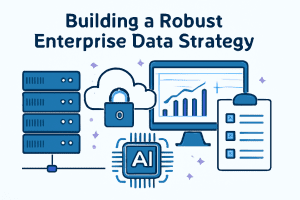
This growing concern has led to the rise of Private AI, an approach that allows organizations to harness the power of artificial intelligence while maintaining greater control over their data. Rather than sending sensitive information to public AI services, businesses are exploring private AI environments that prioritize security, compliance, and ownership.
As digital transformation continues to reshape industries, Private AI is quickly becoming a critical component of enterprise technology strategies.
Understanding Private AI
Private AI refers to artificial intelligence systems that operate within a controlled environment owned or managed by an organization. These systems can be deployed on-premises, within private cloud infrastructure, or through dedicated environments that ensure data remains isolated from public systems.
Unlike public AI platforms that often rely on shared infrastructure and external data processing, Private AI enables businesses to retain control over where their information resides, who can access it, and how it is used.
The objective is simple: gain the benefits of advanced AI capabilities without exposing sensitive business data to unnecessary risks.
Private AI solutions can include:
- Self-hosted large language models
- Private generative AI assistants
- Secure machine learning environments
- Enterprise AI platforms with dedicated infrastructure
- Industry-specific AI systems designed for regulated sectors
This model is becoming increasingly attractive as organizations seek to balance innovation with security and regulatory compliance.
Why Businesses Are Prioritizing Data Control
Data has become one of the most valuable assets in the modern economy. As AI systems require access to large datasets for analysis and decision-making, organizations want assurance that their information remains protected.
Several factors are driving the shift toward Private AI.
Protecting Sensitive Information
Many businesses handle confidential data that cannot be shared outside approved environments. Financial institutions manage customer transactions, healthcare providers process medical records, and technology companies store proprietary intellectual property.
Using public AI systems may raise concerns about data exposure, accidental leaks, or unauthorized access. Private AI allows organizations to keep critical information within secure boundaries.
For industries where trust is essential, maintaining complete control over sensitive data is often non-negotiable.
Meeting Regulatory Requirements
Governments and regulatory bodies worldwide are introducing stricter data protection laws. Regulations such as GDPR, industry-specific compliance frameworks, and national privacy laws require organizations to demonstrate responsible data handling practices.
Businesses operating across multiple regions face increasing pressure to comply with diverse regulatory requirements. Private AI environments provide greater transparency and control, helping organizations meet compliance obligations more effectively.
By knowing exactly where data is stored and processed, businesses can reduce regulatory risks and avoid costly penalties.
Safeguarding Intellectual Property
For many organizations, proprietary information represents a significant competitive advantage. Product designs, research findings, source code, business strategies, and internal documentation are assets that businesses cannot afford to expose.
As generative AI tools become more integrated into daily workflows, concerns have emerged about how submitted data may be used by external systems.
Private AI offers a solution by ensuring sensitive business knowledge remains within the organization’s own ecosystem.
This level of protection is particularly important for industries driven by innovation and intellectual property.
The Growing Trust Challenge in AI
Despite the remarkable capabilities of AI, trust remains one of the biggest barriers to adoption.
Business leaders often ask critical questions:
- Who owns the data used by the AI system?
- Where is the information stored?
- Can external parties access company data?
- How is the data protected?
- What happens if a security breach occurs?
These concerns become even more significant when AI systems are used for mission-critical operations.
Private AI helps address these trust issues by providing greater visibility and governance over AI operations. Organizations can establish clear policies regarding data access, model training, monitoring, and security controls.
When employees and customers trust how AI is being implemented, adoption tends to increase significantly.
How Private AI Improves Security
Cybersecurity threats continue to evolve at an alarming pace. Data breaches can lead to financial losses, reputational damage, legal consequences, and operational disruptions.
Private AI strengthens security through several mechanisms.
Controlled Access
Organizations can define who has access to AI systems and what information can be processed. Role-based permissions reduce the risk of unauthorized access and internal misuse.
Enhanced Monitoring
Private environments enable businesses to monitor AI activity more closely. Security teams can track interactions, detect anomalies, and respond quickly to potential threats.
Reduced Data Exposure
Keeping data within private infrastructure minimizes the need to transmit sensitive information across external networks, reducing potential attack surfaces.
Custom Security Policies
Businesses can implement security measures aligned with their specific needs, including encryption, authentication, network isolation, and auditing capabilities.
These controls provide a level of protection that many organizations consider essential for enterprise-scale AI adoption.
The Role of Private AI in Highly Regulated Industries
Certain industries face particularly strict requirements regarding privacy and data protection.
Healthcare
Healthcare organizations manage highly sensitive patient information. AI can assist with diagnostics, patient engagement, medical research, and operational efficiency, but privacy concerns remain paramount.
Private AI allows healthcare providers to leverage AI while maintaining compliance with healthcare regulations and safeguarding patient trust.
Financial Services
Banks and financial institutions process vast amounts of confidential customer data. Fraud detection, risk analysis, and customer support increasingly rely on AI technologies.
Private AI helps financial organizations maintain strict security standards while improving operational performance.
Government and Public Sector
Government agencies often handle classified information and citizen data. Public sector organizations require AI solutions that align with national security requirements and strict governance standards.
Private AI provides the necessary control and oversight for sensitive government operations.
Legal Services
Law firms and legal departments deal with confidential client information, contracts, and case documents. Private AI allows legal professionals to use AI-powered research and document analysis without compromising confidentiality.
Private AI and the Future of Generative AI
Generative AI has become one of the fastest-growing segments of the technology industry. Businesses are using AI to create content, generate code, summarize information, automate workflows, and support decision-making.
However, many organizations hesitate to use public generative AI tools for sensitive business tasks.
Private generative AI models offer an attractive alternative. Companies can train or customize models using internal knowledge while maintaining strict control over data access and usage.
This approach enables organizations to benefit from AI-driven productivity gains without sacrificing privacy or security.
As technology continues to evolve, private generative AI is expected to become a major focus area for enterprise innovation.
The Business Benefits Beyond Security
While data protection is a primary motivation, Private AI offers additional strategic advantages.
Greater Customization
Organizations can tailor AI models to specific business requirements, workflows, and industry needs. This often leads to more accurate and relevant results.
Improved Performance
Private AI systems can be optimized for organizational goals, enabling faster processing and better integration with existing technology infrastructure.
Enhanced Data Governance
Businesses gain greater visibility into how data is collected, processed, stored, and utilized throughout the AI lifecycle.
Competitive Advantage
Organizations that successfully implement secure AI solutions can innovate faster while maintaining customer trust and regulatory compliance.
This combination of innovation and control is becoming a powerful differentiator in competitive markets.
Challenges of Implementing Private AI
Although Private AI offers numerous benefits, implementation is not without challenges.
Organizations may face:
- Higher infrastructure costs
- Increased technical complexity
- Model deployment and maintenance requirements
- Talent shortages in AI and cybersecurity
- Integration challenges with existing systems
Building and managing private AI environments often requires specialized expertise and long-term investment.
However, as AI technologies mature and enterprise solutions become more accessible, these barriers are gradually decreasing.
Many organizations view the investment as worthwhile given the potential security, compliance, and operational benefits.
The Road Ahead
The future of AI is unlikely to be entirely public or entirely private. Instead, many organizations will adopt hybrid approaches that combine the flexibility of public AI services with the security and control of private AI environments.
As concerns around privacy, compliance, and data ownership continue to grow, businesses will increasingly prioritize solutions that allow them to maintain authority over their information.
Private AI represents a significant evolution in how organizations approach artificial intelligence. It enables companies to unlock AI’s transformative potential while addressing one of the most important challenges of the digital age: protecting valuable data.
Organizations that successfully balance innovation with responsible data governance will be better positioned to build trust, achieve compliance, and create sustainable competitive advantages in an increasingly AI-driven world.
Conclusion
The rise of Private AI reflects a broader shift in how businesses think about technology adoption. While AI offers unprecedented opportunities for growth, automation, and innovation, organizations are recognizing that data control must remain a top priority.
By keeping sensitive information within secure environments, Private AI helps businesses reduce risk, meet regulatory requirements, protect intellectual property, and strengthen customer trust. As enterprise AI adoption continues to expand, Private AI is expected to play a central role in shaping the next generation of secure and responsible artificial intelligence solutions.