Author name: Kirti Sharma

Technology

Green Energy Innovations That Will Save the Planet

Introduction As the climate crisis accelerates and the world races toward net-zero emissions, green energy innovations are at the heart of our hopes for a cleaner, more sustainable future. From breakthroughs in solar and wind power to revolutionary energy storage and green hydrogen, 2025 is witnessing extraordinary advances that promise to save the planet and transform industries, economies, and everyday lives. What Makes Green Energy So Important? Reduces Greenhouse Gas Emissions: Renewable sources like solar and wind emit little to no CO₂, critical for slowing climate change. Improves Air Quality: Shift to green energy lowers smog and airborne toxins, benefiting public health especially in cities. Drives Down Costs: As renewables become cheaper, they make electricity more affordable everywhere. Creates Jobs: Millions of new roles in technology, manufacturing, and installation are powered by the green shift. Boosts Energy Security: Reduces dependence on imported fossil fuels, strengthening national resilience. Top Green Energy Innovations in 2025 1. Perovskite & Tandem Solar Cells Perovskite cells are revolutionizing solar power with rapid efficiency gains—now topping 25%, rivaling and even surpassing traditional silicon panels. Tandem cells combine perovskite and silicon, pushing efficiencies above 30%. Bifacial panels capture sunlight from both sides for higher output, while thin-film and transparent solar panels can power windows, vehicles, or entire buildings. 2. Green Hydrogen Produced by splitting water with renewable electricity, green hydrogen is emerging as an emission-free fuel for heavy industry, shipping, steel production, and long-haul transport. Major increases in investment and tech breakthroughs in hydrogen storage and distribution make this a key player in decarbonizing sectors that electricity can’t reach. 3. Next-Gen Energy Storage (Solid-State & Iron-Air Batteries) Solid-state batteries offer higher density, faster charging, and better safety than classic lithium-ion, supporting grid stability and powering cleaner vehicles. Iron-air and lithium-glass batteries provide long-duration storage at lower costs, ensuring renewables can deliver 24/7—even when sun or wind is intermittent. 4. AI-Powered Smart Grids Smart grids use AI and IoT to dynamically balance supply and demand in real time—optimizing energy distribution, reducing blackouts, and integrating high shares of renewables. Automated maintenance and energy forecasting power a more stable, efficient, and resilient green grid. 5. Floating & Offshore Wind Farms Floating wind turbines open up deep-sea areas with persistent winds. Advances in turbine size, design, and modularity allow installations in new places, slashing both cost and environmental footprint. 6. Floating Solar Farms Installing solar panels on lakes and reservoirs saves land, keeps panels cool (boosting output), and protects water from evaporation—a win-win for crowded regions and climate resilience. 7. Tidal & Wave Energy Ocean energy taps the immense power of tides and waves using underwater turbines and oscillating columns—offering constant, predictable clean generation. 8. Carbon Capture & Storage (CCS) Breakthrough filters and membrane technologies now capture CO₂ at source—factories, power plants—and lock it underground or reuse it, tackling emissions that can’t be eliminated immediately. 9. Modular Residential Wind and Solar Smaller vertical wind turbines, “solar canopies,” and solar windows integrate renewable generation into homes, cities, and even moving vehicles. 10. Green Transportation Solutions Solar-powered trains, rechargeable tires, and green hydrogen fuel cell vehicles are being piloted around the world, drastically cutting transport emissions. How Regions Are Leading in 2025 Region Key Progress in 2025 China Wind and solar surpass coal in installed capacity. India Clean electricity up 26% over 2024. USA Renewables now generate more power than coal. Australia Rooftop solar surged, powering 16% of national demand. Europe Investment in offshore wind, but challenged by low wind in some quarters. Real-World Benefits Cheaper electricity bills in regions expanding green energy. Job creation: Manufacturing, installing, and maintaining renewables is booming. Healthier cities: Clear drops in smog and pollutants. Decentralized grids: Community-powered microgrids drive energy independence and resilience. Frequently Asked Questions (FAQ) Q1: What are the most promising green energy innovations for the near future? A: Perovskite solar cells, green hydrogen, next-gen batteries, floating/offshore wind, and AI-powered grids lead the field. Q2: Is green hydrogen really sustainable? A: Yes, when produced with renewables, green hydrogen offers emissions-free fuel for uses where electricity can’t practically replace fossil fuels. Q3: Can renewable energy supply power 24/7? A: With advancements in storage (solid-state, iron-air) and integration of AI-enabled smart grids, 24/7 green power is now increasingly reliable and affordable. Q4: How affordable is it to adopt green energy at home? A: Costs continue to fall for solar panels, home wind, and batteries thanks to rapid innovation and scaling. Q5: Which countries are leading in renewable adoption in 2025? A: China, India, USA, and Australia are making groundbreaking strides, with Europe investing heavily in offshore wind and smart grid upgrades. Conclusion The planet is at a turning point, and thanks to green energy innovations, a cleaner, healthier, and more prosperous future is within reach. From revolutionary solar cells to smart and resilient grids, and breakthrough storage systems, humanity’s ingenuity is powering the transition toward sustainability. These advances aren’t just technical marvels—they are tools of hope, resilience, and opportunity that put climate action in everyone’s hands.

Technology

Microlearning & AI Tutors: The Future of Upskilling

Introduction In today’s fast-changing work environment, traditional corporate training often struggles to keep pace with the need for continuous learning and rapid upskilling. Enter microlearning and AI tutors—two transformative forces that are redefining how employees, students, and professionals acquire skills. Microlearning breaks complex topics into short, focused modules that are easy to fit into even the busiest schedules. With the integration of AI tutors, training becomes personalized, adaptive, and remarkably efficient. This blog explores how combining these innovations is empowering learners to close skill gaps, improve retention, and future-proof their careers—why it matters for organizations and individuals aiming to remain competitive in a digital-first world. The Power of Microlearning in Upskilling Bite-Sized, Targeted Learning: Microlearning delivers content in short modules, making it highly accessible and easy to digest, minimizing disruptions to daily work. Enhanced Knowledge Retention: Studies show microlearning can boost long-term retention by up to 80% compared to traditional methods. Real-Time Application: Training can be directly related to current job tasks or upcoming projects, ensuring immediate applicability. Flexibility for Modern Learners: Employees and students can access training on-demand and at their own pace—whether at work, at home, or on the go. Cost and Time Efficiency: Organizations reduce classroom time, travel costs, and printed materials while maximizing engagement. Supports Continuous Upskilling: Microlearning fits seamlessly into daily routines, enabling ongoing skill development without overwhelming learners. Use Cases Onboarding new employees with short, interactive lessons. Continuous professional development and compliance training. Soft skill enhancement—leadership, time management, communication. Role-specific technical skills for rapid workplace adaptation. How AI Tutors Supercharge Microlearning Personalized Learning Paths: AI tutors analyze learner performance and preferences, adapting content recommendations in real time for optimal challenge and engagement. Instant, Intelligent Feedback: Learners get immediate answers, personalized tips, and reinforcement exactly when needed, increasing motivation and clarity. Scalable and Adaptive: AI systems can scale training across entire organizations while tailoring the experience for each individual—bridging skill gaps efficiently. Automated Content Creation: AI-driven tools can quickly turn documentation or new policies into microlearning modules, quizzes, or infographics—cutting development time drastically. Popular Examples: Platforms like Khanmigo (Khan Academy), Duolingo, Quizlet, and TutorMe are already enhancing learning through AI-driven adaptation and support. Impactful Results AI-driven training programs have been shown to boost learning efficiency by up to 57%. Real-world implementations report higher engagement, improved completion rates, and measurable skill improvements. In academic settings, microlearning combined with AI intervention has produced significant gains in soft skill development and job readiness, particularly in business and technical fields. Conclusion Microlearning and AI tutors are not just passing trends—they’re strategic assets for the workforce of the future. By combining short, focused learning moments with adaptive, AI-powered support, organizations and individuals can accelerate reskilling, boost engagement, and unlock ongoing career growth. If you’re ready to future-proof your learning strategy, it’s time to embrace microlearning and AI tutors. Call to Action: Share this article with your network, comment below with your upskilling experiences, or reach out to learn how microlearning and AI tutors can empower your organization. FAQ Section Q1: What is the primary benefit of microlearning for busy professionals? A1: Microlearning enables professionals to learn new skills in short, targeted bursts, fitting easily into their daily schedules and minimizing disruption to their workflow. Q2: How do AI tutors personalize the learning experience? A2: AI tutors track learner progress, analyze performance, and adapt the difficulty and content in real time, creating a custom learning path for each user. Q3: Can microlearning be used for soft skill development? A3: Yes. Microlearning is highly effective for developing soft skills like communication, leadership, and time management, especially when modules are scenario-based and interactive. Q4: Are there proven results from using AI-powered microlearning in the workplace? A4: Yes. Studies report boosts in learning efficiency, improved skill retention, and higher engagement rates when organizations deploy AI-powered microlearning solutions. Q5: What are some top platforms combining microlearning and AI tutors? A5: Popular platforms include Khanmigo (Khan Academy), Duolingo, Quizlet, TutorMe, and Elsa Speak, which offer adaptive, AI-driven learning experiences across various skills and subjects

Business Process

The Rise of Digital Twins: How Virtual Models Are Changing Industries

Introduction Digital twins—virtual replicas of physical objects, systems, or processes—are rapidly transforming the industrial landscape. By bridging the gap between the real and digital worlds, these sophisticated virtual models allow organizations to simulate, monitor, and optimize operations in real time. As businesses grapple with increasing complexity, talent shortages, and global competition, digital twins offer a pathway to smarter decision-making, reduced costs, and unprecedented efficiencies. Understanding how these technologies are revolutionizing industries is crucial for leaders aiming to remain competitive and future-ready. What Are Digital Twins and Why Are They Important? Digital twins are detailed digital replicas of physical assets, processes, or systems, continuously updated using real-world data from sensors, IoT devices, and analytics platforms. These models reflect the current state and behavior of their physical counterparts, allowing organizations to: Simulate “what-if” scenarios for operational planning. Predict issues and enable proactive maintenance. Monitor performance and health of assets in real time. Why are they important? Enable safer, faster, and more cost-effective testing without physical risks. Provide insights to improve design, manufacturing, and end-user experiences. Lead to significant cost savings, increased uptime, and higher customer satisfaction. Key Market Statistics The global digital twin market is projected to reach $27.53 billion in 2025, with forecasts exceeding $471 billion by 2034—a CAGR of over 37%. Adoption is accelerating across sectors, with manufacturing, healthcare, construction, smart cities, and aerospace leading the way. How Digital Twins Are Transforming Industries Manufacturing Real-time asset monitoring and predictive maintenance minimize downtime and lower repair costs. Digital twins facilitate optimized production lines, reduced waste, and improved product quality. Companies like Mars are leveraging digital twins to enhance capacity, reduce packaging errors, and maximize equipment uptime. Healthcare Virtual models of the human body allow for better diagnosis, treatment, and personalized care. Hospital operations and logistics are improved through simulation and predictive analytics. Architecture, Construction, and Smart Cities Digital twins model buildings and infrastructure for planning, safety analysis, and efficient resource management. Cities use digital twins for traffic and utility management, disaster response, and sustainability initiatives. Aerospace & Automotive Simulate and test aircraft and vehicle performance before physical prototypes are built. Predict maintenance needs, reducing unexpected failures and extending asset life. Energy and Utilities Power plants and grids use digital twins for real-time operation optimization and maintenance scheduling. Renewable energy assets (e.g., wind turbines) benefit from predictive analytics for improved efficiency. Conclusion Digital twins are much more than a technological trend; they are a transformative force reshaping how industries operate. By merging digital intelligence with physical systems, organizations unlock new value from their assets, making operations smarter, safer, and more sustainable. As adoption rises and AI-driven automation deepens, the only question is how fast businesses will implement these tools to gain and sustain competitive advantage. Ready to future-proof your operations? Now is the time to explore and invest in digital twin technologies for transformative results. FAQ 1. What is a digital twin? A digital twin is a virtual replica of a physical asset, process, or system, constantly updated with real-time data to simulate and optimize performance. 2. Which industries use digital twins the most? Manufacturing, healthcare, construction, smart cities, aerospace, and energy are leading adopters. 3. How do digital twins save costs? By predicting failures, optimizing operations, and enabling proactive maintenance, digital twins reduce downtime, resource waste, and maintenance expenses. 4. Are digital twins only for large businesses? While early adoption was led by large enterprises, advancements in IoT and cloud/edge computing are making digital twins accessible to mid-sized and even small companies. 5. What challenges are there in adopting digital twins? Key hurdles include integration with legacy systems, data privacy, high upfront costs, and ensuring data quality.

Lifestyle & Future Trends

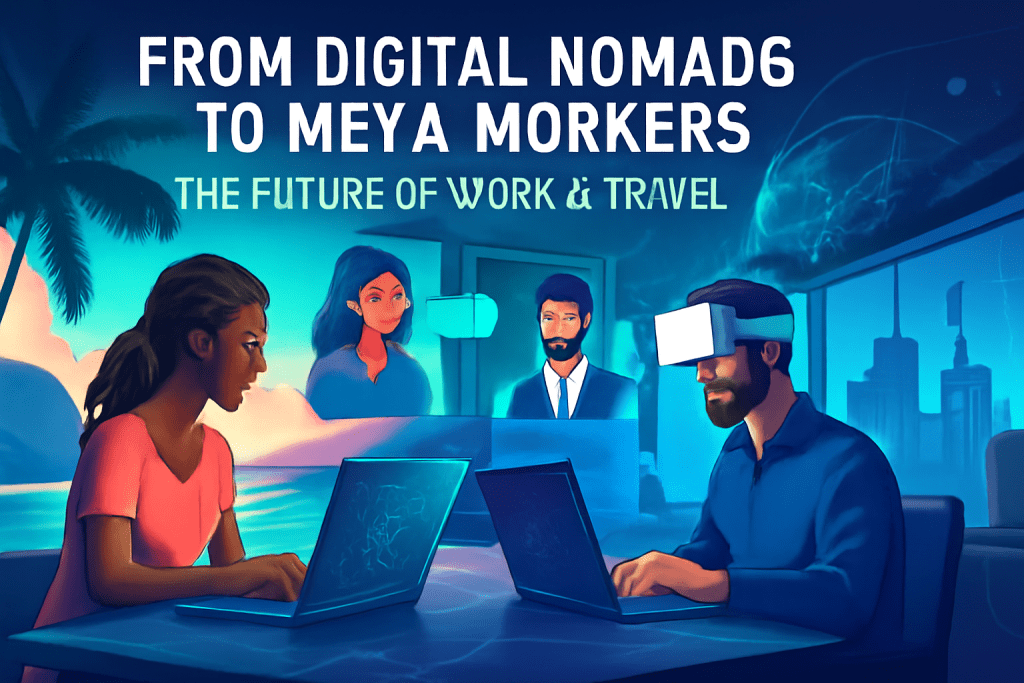
From Digital Nomads to Meta-Workers: The Future of Work & Travel

Introduction The way we work and travel in 2025 is unlike anything seen before. Thanks to accelerated digital transformation and the rise of immersive technologies, the lines between career and lifestyle are rapidly blurring. Digital nomads, once a niche community of remote workers exploring the globe, now lead a revolution—ushering in the age of the “meta-worker.” Whether collaborating from tropical beaches or inside virtual office spaces, today’s professionals expect flexibility, inclusivity, and experience-driven work-life balance. This blog explores the evolution from digital nomadism to meta-working, key trends shaping the future of work and travel, and why this movement is reshaping how we live, connect, and achieve success. The Evolution: From Digital Nomads to Meta-Workers Digital Nomads in 2025: The digital nomad lifestyle has become “mainstream,” with over 40 million people worldwide identifying as nomads. Typical nomads are tech-literate, mid-career professionals, predominantly from the US, but with a rising share from the Global South and Gen Z. Many travel with partners or families, not just solo. Most digital nomads value flexibility, cultural immersion, and freedom, often changing locations every few weeks. Meta-Workers: The Next Frontier: Meta-workers use immersive technologies like VR and AR to engage in work from anywhere—physical or virtual. In the “metaverse,” workers design customizable avatars, participate in virtual offices, and join global teams in 3D environments. This move toward meta-working challenges traditional expectations around workplace identity, collaboration, and inclusion, offering new forms of expression and belonging. Key Points: High job satisfaction: Over 80% of digital nomads report satisfaction, noting improved quality of life and work independence. Major job types: Software development, digital marketing, UX/UI, product management, writing, and AI-powered freelancing are common. Annual income varies, but top earners (like developers and product managers) can make €58,000–€128,000/year. The Future of Work & Travel: Trends, Destinations, and Impacts Work Trends You Can’t Ignore Hybrid Work and “Bleisure” Travel: Hybrid models combining business and leisure travel are thriving. Professionals seek destinations with robust digital infrastructure, coworking spaces, and recreational opportunities. Meta-Workspaces: Firms are investing in VR/AR, with 60% of workers wanting VR headsets in the office and 70% expecting to work globally via immersive platforms. Flexibility & Inclusion: 67% of organizations say they’ll lose talent without flexible/remote options. Face-to-face meetings are shifting to virtual or augmented reality spaces, creating a new paradigm of global collaboration. Slow & Sustainable Travel: The “slow travel” and “regenerative travel” waves encourage longer stays and community impact, driven by remote professionals aiming for deeper cultural engagement and reduced environmental footprints. Popular Destinations & Legal Evolution Countries like Mexico, Georgia, Thailand, and Portugal remain top hotspots for digital nomads due to affordable cost of living, reliable internet, and supportive visa programs. The Global South is rising fast, with locations like Colombia, Kenya, and the Philippines gaining attention for flexibility and value-for-money. Governments are increasing compliance and creating digital nomad visas, making legal remote work more accessible worldwide. Technology, Wellbeing, and Lifestyle AI and automation tools make freelancing and entrepreneurship more efficient than ever. Community-led nomad villages and eco-friendly coworking hubs are flourishing worldwide. A strong emphasis on wellness, with professionals choosing destinations prioritizing health, nature, and work-life balance. Conclusion The convergence of digital nomadism and meta-working signals a radical shift in how we perceive, perform, and enjoy work and travel. As immersive tech, flexible policies, and global opportunities take center stage, more individuals are forging careers without borders—balancing freedom, innovation, and mindful living. Whether you’re a freelancer seeking new horizons or an exec rethinking virtual offices, now is the time to embrace the future of work and travel. Ready to become a meta-worker or take your digital nomad journey to the next level? The world—and the metaverse—are open. Start shaping your future, anywhere. FAQ 1. What is a meta-worker? A meta-worker is someone who works using immersive digital technologies (like AR and VR) in virtual spaces, often represented by avatars and collaborating transcending physical boundaries. 2. Are digital nomads still relevant in 2025? Absolutely! Digital nomad numbers are at an all-time high, with new types like “slowmads,” families, and hybrid-nomads gaining momentum. 3. Can I work legally while traveling abroad? Yes. Many countries now offer digital nomad visas, making it easier to live and work remotely around the world. 4. How do metaverse offices change collaboration? Virtual offices enable inclusivity, creative teamwork, and reduce the isolation of remote work by simulating real-world interaction in digital environments. 5. What jobs are best for digital nomads and meta-workers? Software development, digital marketing, design, virtual assistance, content creation, and AI-driven roles are especially well-suited for remote, globe-trotting professionals.

Artificial Intelligence

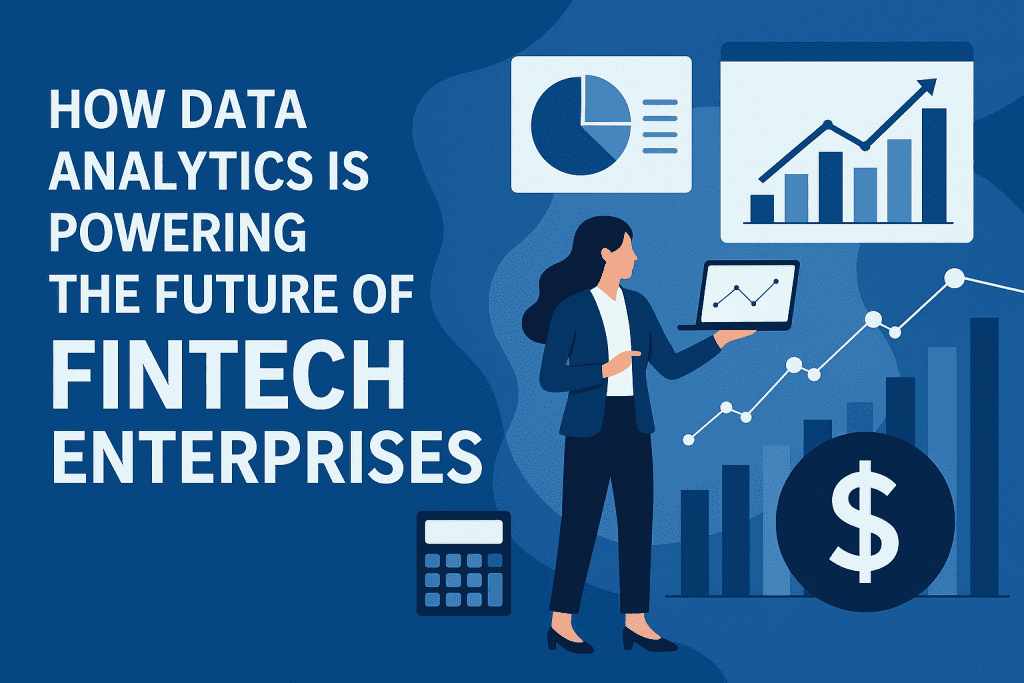
How Data Analytics is Powering the Future of FinTech Enterprises

Introduction The financial technology (FinTech) sector is transforming at an unprecedented pace. From mobile payments and robo-advisors to digital lending and blockchain, FinTech companies are redefining how consumers and businesses interact with financial services. At the heart of this transformation lies data analytics. By leveraging big data, AI, and predictive analytics, FinTech enterprises are making smarter decisions, improving customer experiences, reducing risks, and driving innovation. 1. The Role of Data Analytics in FinTech FinTech enterprises generate and process massive amounts of data daily, including transaction records, customer behavior, risk profiles, and market trends. Data analytics helps organizations: Identify customer needs with precision. Personalize financial products based on behavioral insights. Mitigate financial fraud and cybersecurity risks. Streamline operations and improve efficiency. 2. Key Applications of Data Analytics in FinTech a. Personalized Financial Services By analyzing spending habits, investment preferences, and credit histories, FinTech platforms can offer tailored services such as personalized investment portfolios, custom loan offers, and budgeting recommendations. b. Fraud Detection and Risk Management Advanced analytics, combined with AI algorithms, can quickly detect unusual transaction patterns or suspicious activities, minimizing fraud risks and ensuring compliance with regulatory frameworks. c. Credit Scoring and Lending Traditional credit scoring models are being replaced with advanced analytics that assess creditworthiness based on a broader set of data points, such as social behavior, digital footprints, and alternative credit indicators. d. Predictive Analytics for Investments FinTech firms use predictive models to forecast stock trends, cryptocurrency movements, and portfolio performance, empowering users to make informed investment decisions. e. Customer Retention and Experience Data-driven insights help organizations improve customer engagement through targeted marketing campaigns, loyalty programs, and 24/7 personalized financial advice. 3. Benefits of Data Analytics for FinTech Enterprises Enhanced Decision Making: Real-time insights help businesses respond quickly to market changes. Operational Efficiency: Automation and advanced analytics reduce costs and human error. Improved Security: Detecting fraudulent activity before it impacts customers builds trust. Competitive Edge: Firms leveraging analytics can outpace competitors with faster, smarter services. 4. Future Trends in FinTech Data Analytics AI-Driven Automation: Integration of AI for faster data analysis and decision-making. Blockchain Analytics: Ensuring secure and transparent financial transactions. Advanced Predictive Modeling: Better risk management and investment strategies. RegTech Solutions: Compliance analytics to handle evolving financial regulations effortlessly. Conclusion Data analytics is not just a supporting tool; it’s the driving force shaping the future of FinTech enterprises. From improving customer experiences to mitigating financial risks, its applications are limitless. Companies that embrace data analytics now will be well-positioned to lead the next wave of FinTech innovation.

Uncategorized

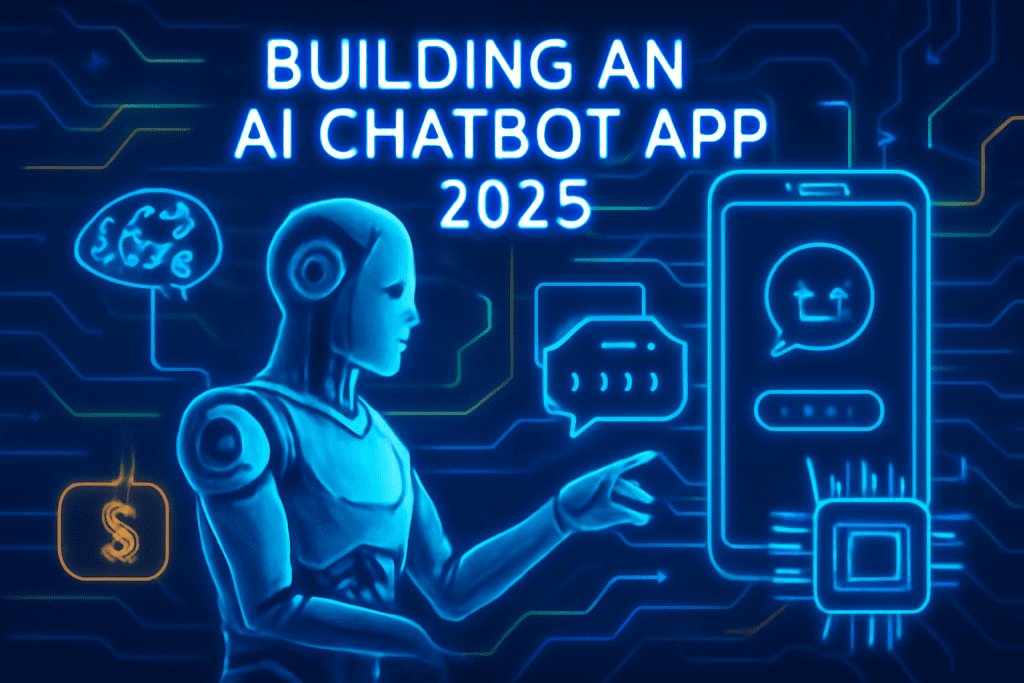
Building Your Own AI Chatbot App in 2025: Cost & Key Considerations

Introduction AI chatbots have become essential in providing seamless customer service, automating business operations, and elevating user experiences. In 2025, evolving technology and rising user expectations make building a chatbot more promising—and more complex—than ever. Here’s a complete guide to what it takes to launch your own AI chatbot app this year, what it will likely cost, and which decisions matter most. The Real Cost of Building an AI Chatbot App in 2025 Development costs can vary dramatically based on features, scale, and level of intelligence. Solution Type Typical 2025 Cost (USD) Example Features Simple FAQ or Rule-Based Bot $3,000 – $15,000 Basic text, single platform, simple responses NLP-Driven Chatbot (Custom) $15,000 – $40,000 Natural language understanding, basic integrations Advanced AI/ML Chatbot $40,000 – $150,000+ Context, personalization, voice, integrations, analytics Enterprise-Scale, Multi-Channel $100,000 – $250,000+ Omnichannel, API/Webhook, compliance, advanced security Ongoing expenses: Maintenance: 15–25% of the original build per year Third-party APIs (OpenAI, cloud hosting): $500–$10,000/month or more Support and updates Major Factors Affecting Chatbot Development Cost Complexity & Features: The more powerful the bot (NLP, voice, personalization), the higher the investment. Integrations: Connecting with CRMs, ERPs, payment gateways, or third-party APIs adds to both initial and ongoing costs. Platform: Costs are higher for multi-channel (web, mobile, social media) and voice-enabled experiences. Design: Rich, branded UX/UI design and accessibility increase price. Compliance: Security, privacy, and adherence to regulations like GDPR or HIPAA add cost but are mandatory for many sectors. Training Data & AI Model: Custom model training or using advanced generative models leads to higher costs. Developer Location: Rates range from $25–$200/hr depending on geographic location and expertise. Essential Steps to Build Your AI Chatbot App in 2025 Define Clear Goals Identify your target users and the primary problems your bot should solve. Specify success metrics up front. Choose the Right Platform & Stack Options include Dialogflow, Rasa, Microsoft Bot Framework, proprietary platforms, or low-code builders. Decide on text, voice, or multimodal (image, video) support. Design Natural, Inclusive Conversations Map user journeys, intents, entities, and tone for the best user experience. Prioritize clarity and human-like responses; plan for fallback and escalation to human agents. Development & Training Build backend infrastructure for NLP, user management, integrations, and analytics. Train the chatbot using realistic, diverse data for robust performance. Testing and Quality Assurance Test for edge cases, security, UX, and multi-platform consistency. Deployment and Monitoring Integrate with target platforms and use built-in analytics for ongoing improvement. Compliance & Maintenance Plan for regular updates, privacy, and monitoring to address user feedback and security patches. 2025 Trends Shaping AI Chatbot Apps Advanced NLP: Chatbots are now far more conversational, handling multiple languages and dialects, sentiment detection, and context awareness. Voice Bots & Multimodal Inputs: Users expect voice, image, and text input/output for seamless interaction. Personalization at Scale: AI adapts recommendations, tone, and responses based on user profiles. No-Code/Low-Code Builders: Smaller businesses leverage visual bot builders to create, test, and launch without deep coding. Deep Integrations: Chatbots work alongside CRMs, ERPs, and other core systems, powering sales, support, healthcare, and more. Focus on Privacy and Ethics: Compliance and transparent AI are expected by users and required by law. Pro Tips for Success Prioritize must-haves over nice-to-haves to control cost and time-to-launch. Start with a defined MVP—iterate with real-world data and upgrade features as adoption grows. Budget for long-term support—cutting corners on security or UX leads to bigger costs later. Involve users early—their input shapes user-friendly flows and higher satisfaction. Frequently Asked Questions (FAQ) Q: How fast can I launch my own AI chatbot app in 2025? A: Simple bots: 2–8 weeks; advanced, custom AI chatbots: 2–6 months, with ongoing improvements. Q: Are ongoing costs a big deal? A: Yes, annual maintenance, third-party APIs, and scaling often run 15–25% of the original build each year. Q: Can I use no-code platforms to save money? A: Absolutely—great for basic chatbots, but limited in customization and advanced integrations. Q: Should I develop in-house or outsource? A: In-house offers more control but often costs more; outsourcing (especially to experienced AI teams abroad) can cut budget but requires careful management. Q: What are the hidden costs? A: Training data curation, server hosting, compliance work, and regular feature updates are easy to underestimate. Conclusion Building an AI chatbot app in 2025 is an exciting but multifaceted endeavor. Whether you target customer service, sales, or bold new ideas, balancing vision, technology, and budget is key. Invest upfront in planning, clear goals, and user-centric design—and your chatbot will be ready for tomorrow’s intelligent, always-on digital world.

Technology & Innovation

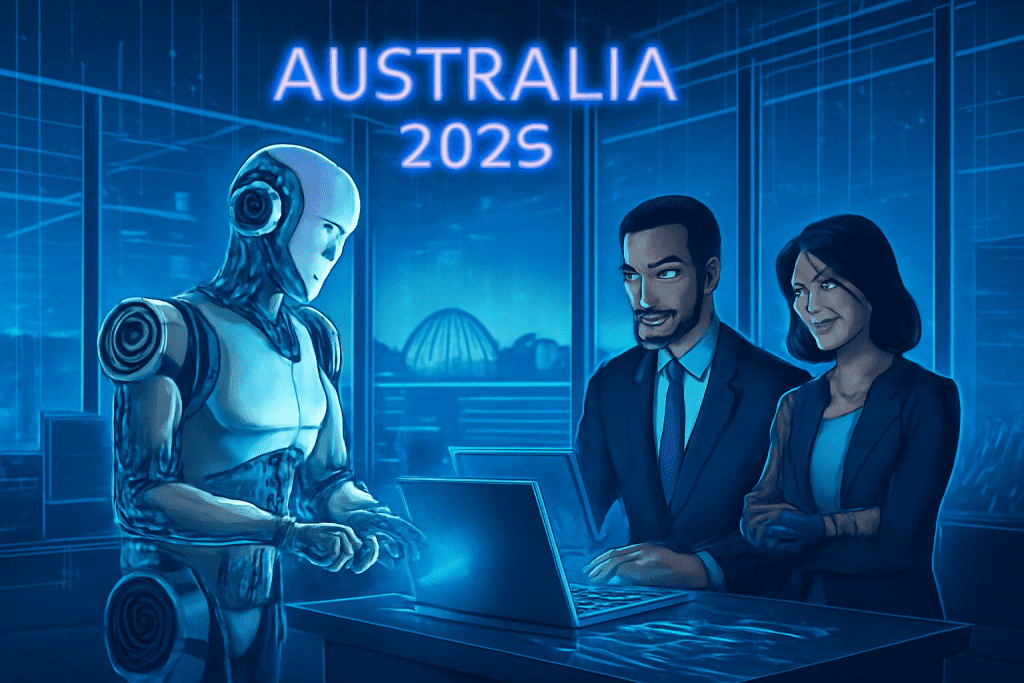
Why Agentic AI Is the Game-Changer for Australian Enterprises in 2025

Introduction Agentic AI—AI empowered with autonomy, goal-driven reasoning, and the ability to take initiative—has quickly moved from a futuristic concept to a transformative force for Australian enterprises. In 2025, Agentic AI stands as a critical enabler of productivity, innovation, and resilience, propelling businesses beyond traditional automation and into an era of intelligent, adaptive decision-making. What Makes Agentic AI Different? Autonomy: Unlike previous AI, Agentic AI acts on its own initiative, proactively identifying opportunities, setting sub-goals, and making context-aware decisions without constant human prompting. Complex Task Handling: Rather than solving isolated tasks, it orchestrates complex, multi-step processes and adapts dynamically as situations evolve. Continuous Learning: Agentic AI systems learn from ongoing feedback, optimizing performance and response over time. Strategic Collaboration: They serve as true digital team members, augmenting staff and freeing humans for creativity, strategy, and high-value work. Why 2025 Is a Tipping Point in Australia Nearly 97% of Australian enterprises are expanding their AI agent use in 2025; 91% see Agentic AI as essential for competitiveness. Productivity Superpower: Australian businesses see Agentic AI as a solution to persistent productivity plateaus and talent shortages. Experience-Driven Adoption: Previous investments in generative AI have laid the groundwork, giving enterprises the confidence and skillsets required for full agentic adoption. Core Benefits for Australian Enterprises 1. Enhanced Operational Efficiency Automated data entry, report generation, and administrative workflows reduce manual errors and speed up core business processes. Employees are liberated to focus on strategic tasks, boosting organizational performance, and morale. 2. Seamless Data Integration and Insights Agentic AI breaks down data silos, rapidly synthesizing information across departments and platforms for real-time, actionable insights. Instant access to integrated data enables informed, agile decisions. 3. Personalized Customer Experiences Delivers tailored interactions—product recommendations, bespoke support, and targeted marketing—scaling personalization with unprecedented efficiency. 4. Robust Cybersecurity and Compliance Proactive monitoring detects anomalies and threats in real time, minimizing downtime and data breach risk. Designed to meet Australian privacy laws and GDPR standards, with end-to-end encryption and auditability. 5. Scalable Growth Scales through cloud-native APIs and microservices; easily integrates with legacy systems, allowing rapid adaptation as needs evolve without disrupting existing infrastructure. 6. Multisector Transformation Sector Example Use Cases Expected Outcomes Healthcare Patient data integration, workflow automation Faster care, improved outcomes Retail Personalized recommendations, dynamic pricing, inventory optimization Better customer loyalty, reduced costs Finance Autonomous fraud detection, compliance management Stronger risk mitigation, efficiency Supply Chain Real-time logistics, predictive inventory management Lower delay, cost optimization Government Streamlined case handling, real-time citizen services Reduced bureaucracy, faster service Real-World Momentum Market Growth: The Australian enterprise Agentic AI market is forecast to jump from $36.9M in 2024 to over $435M by 2030. Leadership Support: 81% of business leaders in Australia are planning for agentic AI-driven digital team members in the next 12–18 months. Industry Example: Leading healthcare providers and financial institutions are already seeing significant improvements in operational agility through Agentic AI-powered automation. Overcoming Key Challenges Legacy Systems: Agentic AI’s modular architectures allow it to coexist with (and modernize) legacy environments. Data Fragmentation: Smarter integration dissolves silos, empowering better cross-team collaboration and decision-making. Expertise Shortage: Agentic AI augments specialized talent, helping enterprises tackle complex challenges even with limited human resources. Best Practices for Implementation Start with targeted, high-impact agent-driven projects and scale as the organization’s AI maturity grows. Invest in training for both technical teams and business users to ensure smooth adoption and alignment. Prioritize robust security and compliance measures from day one, leveraging Agentic AI’s innate monitoring and audit features. Frequently Asked Questions (FAQ) How is Agentic AI different from traditional automation or chatbots? It not only automates tasks but also autonomously sets goals, adapts to dynamic environments, and makes decisions based on reasoning and learning—acting more like a human collaborator than a programmed tool. Are Australian privacy and compliance requirements addressed? Agentic AI is designed with compliance in mind—offering end-to-end encryption, audit trails, and proactive data privacy management to ensure alignment with laws such as the Australian Privacy Act and GDPR. Which industries in Australia benefit most from Agentic AI? Healthcare, retail, finance, logistics, and government see the most immediate gains, but most sectors can leverage benefits in efficiency, decision-making, and security. What are the main hurdles for Australian enterprises? Common challenges include integrating with legacy technology, addressing skills gaps, and managing AI bias and data privacy—but these are being overcome with strategic planning and ongoing investment. Conclusion Agentic AI is not just a buzzword; it’s a paradigm shift that empowers Australian enterprises to solve old problems in new ways—transforming efficiency, security, and customer engagement. As 2025 unfolds, businesses that seize the agentic advantage will pull ahead, setting the pace for the future of work, service, and innovation in Australia.

Maker Movement

How Arduino is Revolutionizing Electronics for Beginners and Experts

Introduction Arduino has transformed the world of electronics. What began as a modest educational tool in 2005 is now an open-source global standard—democratizing hands-on electronics and coding for everyone from first-time hobbyists to professional engineers. This blog explores how Arduino serves as both a launchpad for beginners and a powerful platform for experts, reshaping how we invent, learn, and innovate. What is Arduino? Arduino is an open-source electronics platform combining easy-to-use hardware (microcontroller boards) with a streamlined coding environment. It allows users to control sensors, lights, motors, and nearly any electronic device—making interactive projects possible for all skill levels. Why Arduino is a Game-Changer For Beginners Accessibility: Beginner-friendly boards like the Arduino Uno cost little, set up quickly, and have a huge base of tutorials and support. Simple Programming: The Arduino IDE uses a straightforward version of C++ that’s easy to learn, even with no background in coding. Plug-and-Play: Input/output pins and widespread compatibility with sensors and modules mean early projects require minimal wiring or soldering. Community Support: A vibrant online community provides shared code, troubleshooting forums, and detailed how-tos—accelerating the learning curve. For Experts Rapid Prototyping: Seasoned engineers and product developers use Arduino boards to quickly test ideas, iterate on hardware, and build proof-of-concept models without reinventing the wheel. Customizability: Open-source hardware and firmware invite deep customization, from industrial automation to creative art installations. Professional Integration: Arduino is pivotal in IoT (Internet of Things), robotics, smart agriculture, and research, sometimes even powering commercial and industrial products. Advanced Features: Specialized boards (e.g., Arduino Due, Nano, Portenta) offer more speed, memory, and connectivity for demanding projects. Real-World Impact: Applications Field Beginner Projects Advanced/Expert Projects Education LED blinkers, basic sensors, traffic lights Robotics, data loggers, education kits Home Automation Light/temperature automation Full-scale smart home systems Robotics Line-following robots, toy cars Drones, autonomous vehicles, robotic arms IoT & Connectivity Weather stations, basic data logging Industrial monitoring, smart agriculture Art & Design Sound-reactive LEDs, simple displays Complex kinetic sculptures, smart wearables Environmental Science Air quality sensors, noise meter Real-time wildlife and resource tracking How Arduino Empowers Different Audiences Education Revolution Schools and universities worldwide use Arduino to teach electronics, physics, and programming hands-on—bridging the gap between theory and real-world problem-solving. Maker and DIY Movement Hobbyists, tinkerers, and inventors can realize almost any idea—from automating a plant-watering system to designing custom musical instruments—fueling the global Maker Movement. Professional Prototyping and Industry Startups and research teams use Arduino to validate concepts quickly, making innovation more affordable and accessible even for small enterprises or independent inventors. Why Arduino Works for Both Beginners and Experts Open Source DNA: Anyone can study, modify, and manufacture Arduino boards or software. Scalability: Start simple and grow into complex multi-board or networked systems as your skills increase. Massive Ecosystem: Hundreds of add-on shields (boards for networking, motor control, and wireless) expand projects without deep technical knowledge. Frequently Asked Questions (FAQ) Why has Arduino become more popular than other platforms? It balances accessibility, cost, and capability, with a strong global community and open-source ethos. Is Arduino only for students and hobbyists? Not at all—professionals and large companies use Arduino for fast prototyping, process automation, and sometimes even in final products. Can Arduino handle modern tech needs like IoT or AI? Yes. Modern boards support wireless communication, data logging, and integration with AI or cloud services, making them fit for contemporary demands. Are there limitations to Arduino? Boards have limited memory and processing power compared to full computers. For demanding tasks (like real-time image processing), more powerful platforms may be better—but for most electronics projects, Arduino is more than enough. Conclusion Arduino isn’t just a tool—it’s a revolution in how we approach technology. It has torn down entry barriers in electronics for newcomers and provided seasoned experts with a nimble platform for bold innovation. Beginners can get started with an LED blink; experts can build robots, IoT systems, and industrial automation—often within the same ecosystem. As electronics becomes a universal language, Arduino ensures everyone can speak it.

Technology & Business

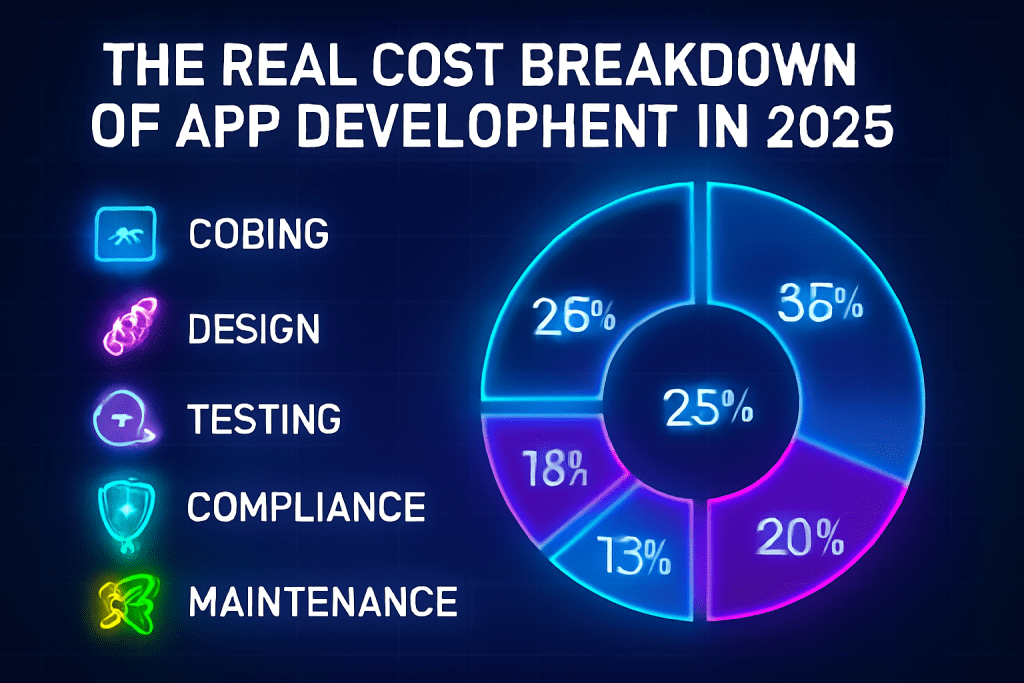
Breaking Down the Real Cost of App Development in 2025: Beyond Just Coding

Introduction App development in 2025 is about far more than lines of code. As expectations for quality, speed, scalability, and compliance rise, so do hidden and overlooked costs. This breakdown shows exactly what you’re paying for—beyond just hiring developers. The Real Cost of Building an App in 2025 Typical cost ranges: Simple app: $5,000 – $50,000 Mid-range complexity: $32,000 – $100,000 Complex/enterprise app: $100,000 – $400,000+ (and often much more) But this is just the start. These figures only represent direct development. The real cost of app development covers a lot more. Cost Breakdown: Every Phase Matters Development Phase 2025 Typical Cost (USD) What’s Included Discovery/Planning $4,500 – $8,000 Research, requirements gathering, scoping Design & Prototyping $15,000 – $30,000 UX/UI, wireframes, branding, design sprints Development (Coding) $35,000 – $75,000 Backend, frontend, API integrations Quality Assurance $8,000 – $18,000 Manual/automated testing, bug fixes Deployment $2,000 – $4,000 App store prep, backend transfer Maintenance (annual) 20–25% of original cost Updates, bug fixes, server fees, minor features Total Range $80,000 – $250,000+ Varies by app complexity and scope Source: 2025 industry reports and agency benchmarks What Drives App Development Costs Up? 1. Complexity and Features Advanced features: Real-time chat, AI, AR/VR, payments, analytics, and third-party integrations hike costs. Multiplying platforms (iOS, Android, web) doubles or triples work—native builds cost more than cross-platform. 2. Design Quality Custom animations, branding, and intensive user experience (UX) work increase time and budget. Accessibility and localization (multi-language) add further complexity. 3. Rising Developer Salaries In 2025, senior developer rates have soared to $80–$200/hour, especially for AI, automation, and cloud expertise. Talent shortages inflate costs globally, even in traditional outsourcing regions. 4. Security & Compliance Robust data security, GDPR, HIPAA, and other legal compliance standards are now non-negotiable. Expect extra costs for security infrastructure and legal reviews. 5. AI & Emerging Technologies AI-powered features (e.g., chatbots, recommendations) demand data pipelines, AI model training, specialized talent, and ongoing model tuning—all beyond standard coding. 6. Testing and Deployment Cross-device, cross-platform, and performance testing is more intensive than ever. Bugs, edge cases, and app store requirements require real QA investment. 7. Maintenance & Upgrades Post-launch, apps typically consume 15–25% of the original build cost yearly for bug fixes, security patches, OS updates, evolving features, and hosting. 8. Ongoing Infrastructure Cloud hosting, database management, analytics tools, push notification services, and external APIs add recurring (often growing) costs. 9. Marketing, Support & Scaling App store optimization, initial marketing, and user support are usually overlooked in budgets, but are crucial for success. Regional Cost Differences Region Developer Rate (USD/hour) Example Total App Cost North America / Western EU $80 – $200 $100,000 – $500,000+ Eastern Europe $35 – $100 $40,000 – $200,000+ India, SE Asia, Latin Am. $20 – $60 $10,000 – $150,000+ Outsourcing still brings savings, but global demand is shrinking the price gap. Hidden and Overlooked Costs Discovery and project management: Time spent scoping, iterating, and aligning goals. Third-party licenses & tools: Fees for libraries, frameworks, SaaS, and APIs. Legal and privacy compliance: Audits, certifications, and legal counsel. User acquisition: Marketing, onboarding flows, and initial support. Analytics and reporting: Implementing tools for usage tracking, engagement, and crash reporting. How to Keep Costs Under Control Prioritize MVP: Start with a minimum viable product to reduce initial spend and validate your core idea. Choose wisely: Use cross-platform tools where possible, but weigh against performance needs. Plan for maintenance: Budget at least 20% of your build costs annually for ongoing support. Invest in design and QA: Skipping these leads to poor ratings and post-launch costs. Understand compliance early: Legal and security shortcuts are costly in the long run. Hire specialized teams, not just cheap labor: Experienced developers optimize code, reduce bugs, and reach launch faster, often saving money in total. Frequently Asked Questions (FAQ) How much does a basic app cost in 2025? Estimates for a basic app range from $5,000 – $50,000, but serious MVPs average $40,000–$100,000, including design, QA, and deployment. Why are post-launch costs so high? App maintenance, updates, and legacy support account for 20–25% of build costs per year. Plus, scaling, cloud fees, and evolving user demands always add up. What’s the biggest mistake in budgeting for app development? Underestimating everything besides coding—especially QA, compliance, maintenance, and marketing. How much should I budget for a complex or AI-powered app? Complex and AI-integrated apps with advanced features will usually start at $100,000 and can exceed $400,000, with ongoing costs for data, training, and specialized talent. Conclusion The real expense of app development in 2025 goes far beyond just coding. Factor in discovery, design, compliance, AI integration, rising salaries, security, testing, and year-on-year maintenance. A well-researched, flexible budget—alongside clear priorities and seasoned partners—is the key to launching an app that succeeds for years to come.

Technology & Business, Uncategorized

From Brief to Launch: Building a Custom LMS in 3 Weeks

Introduction In today’s fast-paced digital landscape, the ability to rapidly deliver innovative learning experiences is a game-changer. While custom learning management systems (LMS) are often thought to require months of planning and development, it’s possible—with the right approach—to go from a concept brief to a fully functioning LMS in just three weeks. Here’s how we did it, step by step. Why Build a Custom LMS? Tailored to your audience: Meet the precise needs of your learners and organization. Feature control: Implement only what you need—nothing more, nothing less. Branding and UX: Ensure a seamless, branded user experience that off-the-shelf products can’t provide. Week-by-Week Roadmap to a Custom LMS Week 1: Discovery & Setup Kickoff & Brief Define clear goals: Who is this LMS for? What’s the must-have feature set? Gather requirements from stakeholders. Platform Planning Choose the technology stack (e.g., React, Node.js, Python, cloud services). Define user roles (Admin, Instructor, Learner). Initial Design Rapid wireframing: Map out LMS navigation, key screens, and user flows. Start UI/UX prototyping with input from stakeholders. Foundational Build Set up project structure, repositories, and development environments. Integrate boilerplate code for basic authentication and user management. Week 2: Development Sprint Core Feature Development Build and connect these modules: User registration and login Course creation and content upload (text, video, presentations) Enrollment and progress tracking Assessments or quizzes Content Population Collaborate with content creators or use AI to generate sample lessons, quizzes, and tutorials. Continuous Testing Integrate basic testing and QA into every coding session to eliminate blockers fast. Stakeholder Check-in Demo first builds to get rapid feedback and reprioritize features as needed. Week 3: Launch Prep & Refinement Polish UX/UI Iterate based on feedback, improving navigation and accessibility. Add finishing touches: branding, dashboards, notifications. Robust Testing Conduct full end-to-end testing: enroll users, complete modules, submit assessments. Final Data Import Upload real course and user data. Confirm everything works at scale. Deployment & Rollout Launch on chosen cloud or server. Provide a quick-start guide for admins and faculty. Collect instant feedback from first users for rapid fixes. Table: Your 3-Week Custom LMS Plan Week Focus Areas Deliverables Week 1 Discovery, setup, prototyping Wireframes, project setup, MVP roadmap Week 2 Core feature development User, course, and assessment modules Week 3 Testing, refinement, launch Fully functional, deployed LMS Tips for Success Plan ruthlessly, prioritize features: Focus on must-haves; postpone the “nice-to-have” until after launch. Leverage templates & AI: Use code services, design libraries, or AI content helpers to accelerate development. Collaborate closely: Daily check-ins with stakeholders prevent costly rework. Iterate rapidly: Expect feedback and be ready to refine features in real time. Don’t skip testing: Early and frequent testing ensures you avoid launch-day disasters. Frequently Asked Questions (FAQ) Is building a custom LMS in 3 weeks realistic for most teams? It’s possible with sharp focus, rapid feedback, and a lean MVP mindset—but complex features or extensive integrations may require more time. What’s the best tech stack for a rapid LMS build? Popular choices include React for front-end, Node.js or Python for backend, and cloud hosting for instant scalability. Can you use no-code or low-code platforms? Absolutely. No-code tools can speed up some aspects, especially MVPs, but custom coding gives the greatest flexibility. What features should a first version include? User management, course delivery, content upload, enrollment, progress tracking, and basic reporting are the essentials. Conclusion Delivering a custom LMS in three weeks is ambitious but entirely possible with focused planning, the right tools, and a commitment to iterative improvement. The result? A bespoke, branded learning hub that’s ready to delight users from launch day—and adapt as your educational goals evolve.

How would you like me to respond?

Select a personality for your AI assistant

Normal
Happy
Sad
Angry

Your selection will affect how the AI assistant responds to your messages

Chat Assistant

Let's discuss your project!

Hear from our clients and why 3000+ businesses trust TechOTD

Tell us what you need, and we'll get back with a cost and timeline estimate

Scroll to Top