

Technology & Innovation

App Development, Digital Transformation, Software development, Technology & Innovation

Next-Gen Web & Mobile Development

Next-Gen Web & Mobile Development: Trends Shaping 2026 The landscape of development is no longer just about choosing between “Web” or “Mobile.” In 2026, the lines have blurred, giving rise to a unified ecosystem where intelligence, speed, and spatial awareness are the new standards. Whether you are a seasoned developer or a tech enthusiast, understanding these shifts is crucial for staying ahead of the curve. 1. AI-Native Development: Beyond the Chatbot We have moved past simple API integrations. Today, Next-Gen apps are built with “Agentic Workflows.” Predictive User Interfaces: Apps now use local machine learning to predict what a user wants next, dynamically reordering menus and content. Edge AI: By processing data directly on the device using frameworks like CoreML, developers are ensuring faster response times and absolute data privacy. 2. The Rise of Spatial UI With the mass adoption of AR and VR headsets, the web is no longer flat. WebAssembly (Wasm): This has become the backbone for bringing desktop-level 3D performance to the browser. Spatial Navigation: We are seeing a shift from “clicking” to “gazing and gesturing.” Designing for these inputs requires a complete rethink of traditional UI/UX principles. 3. High-Performance Frameworks in 2026 Choosing the right stack is more important than ever. Here is the current hierarchy: Next.js & SvelteKit: Dominating the web with near-zero runtime overhead. Kotlin Multiplatform (KMP): The preferred choice for enterprises wanting to share logic across iOS and Android without sacrificing native performance. Flutter: Still the king of rapid prototyping and beautiful, consistent UI across every screen size. 4. Sustainability: Green Engineering “GreenOps” is the new DevOps. Modern developers are now tasked with optimizing code not just for speed, but for energy efficiency. Carbon-Aware SDKs: Applications that delay heavy background tasks until the local power grid is using renewable energy. Efficient Data Transfer: Reducing the carbon footprint of data centers by minimizing unnecessary API calls and optimizing asset delivery. The Future of Development: A Deep Dive into Next-Gen Web & Mobile (2026) The landscape of development is no longer just about choosing between “Web” or “Mobile.” In 2026, the lines have blurred, giving rise to a unified ecosystem where intelligence, speed, and spatial awareness are the new standards. 1. AI-Native Development: Moving Beyond Chatbots In 2026, AI is the foundation, not an afterthought. We’ve moved from simple API integrations to Agentic Workflows. Predictive User Interfaces (PUI): Modern apps use local machine learning to analyze user behavior in real-time. Instead of static menus, the UI “morphs” to present the tools a user is most likely to need next. Edge AI & Privacy: With the rise of specialized chips in mobile devices, heavy AI processing now happens on-device via frameworks like CoreML and TensorFlow Lite. This reduces latency to near-zero and ensures user data never leaves the device. Self-Healing Code: Next-gen development environments now use AI to monitor production logs and automatically suggest (or even deploy) patches for minor bugs before a human developer even sees the ticket. 2. Spatial Computing: Designing for the 3D Web With the maturity of AR/VR hardware, the “flat” web is evolving. If your app isn’t spatial-ready, it’s already behind. WebAssembly (Wasm) for 3D: Wasm has become the backbone for bringing desktop-level performance to the browser. Developers are using it to run complex physics engines and high-fidelity 3D environments directly in Chrome or Safari. Spatial UI/UX Principles: We are moving away from “clicks” and “taps” toward gaze-tracking and gestures. This requires a complete rethink of button sizes, depth perception, and auditory feedback in web design. Interoperable Assets: The move toward USDZ and glTF file formats allows 3D assets to be shared seamlessly between a website, a mobile app, and a virtual reality headset. 3. The 2026 Tech Stack: Efficiency at Scale Choosing the right stack in 2026 is about balancing developer velocity with “Hydration” costs and performance. The SvelteKit & Next.js Dominance: These frameworks have won the “speed war” by moving as much logic as possible to the server or build-time, delivering almost pure HTML to the client. Kotlin Multiplatform (KMP): For mobile, KMP has overtaken traditional cross-platform tools for enterprise apps. It allows teams to share “business logic” (the math and data) while keeping the UI 100% native for both iOS and Android. The Death of Plain CSS: We’ve moved almost entirely to component-based styling (like advanced versions of Tailwind or CSS-in-JS) that automatically prunes unused code to save every possible kilobyte. 4. Green Engineering: The “Carbon-Aware” Developer As global regulations tighten, “GreenOps” has joined DevOps as a mandatory practice. Energy-Efficient Algorithms: Developers are now being audited on the “carbon cost” of their code. High-energy background tasks are now scheduled to run only when the local power grid is using renewable energy. Dark Mode by Default: Beyond aesthetics, modern OLED-optimized UIs are designed to save battery life and reduce the energy consumption of mobile devices on a massive scale. Conclusion: Embracing the Next Frontier   As we look toward the remainder of 2026, it is clear that Next-Gen Web & Mobile Development is no longer about just writing code—it’s about orchestrating intelligence. From the rise of AI-native workflows to the immersive possibilities of Spatial Computing, the tools we use are becoming as smart as the applications we build. For developers, the challenge lies in staying adaptable. By focusing on performance, sustainability (GreenOps), and cross-platform efficiency with tools like Kotlin Multiplatform, you can build products that are not only technologically advanced but also globally responsible. Next-Gen Web & Mobile Development

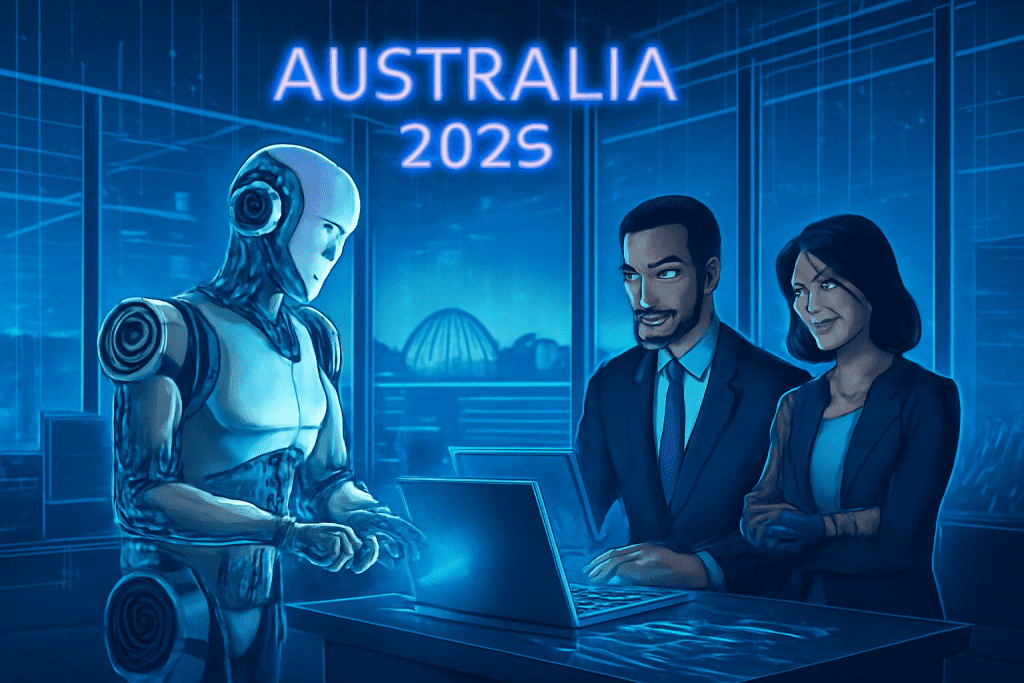
Business professionals collaborating with digital technology, holographic displays, and innovative workspace
Technology & Innovation

The Future of Technology & Innovation: Transforming Tomorrow’s World

Introduction Technology and innovation have become the twin engines driving humanity forward in the 21st century. As we navigate through 2025, the pace of technological advancement shows no signs of slowing down. From artificial intelligence reshaping how we work to quantum computing promising to solve previously unsolvable problems, innovation continues to redefine what’s possible. In this comprehensive guide, we’ll explore the most significant technology trends, understand how innovation is transforming industries, and look ahead at what the future holds for our increasingly digital world. Artificial Intelligence: Beyond the Hype Artificial intelligence has evolved from a buzzword to an essential business tool. In 2025, AI is no longer just about automation—it’s about augmentation, enabling humans to make better decisions and achieve outcomes that were previously impossible. Generative AI’s Maturation Generative AI has moved beyond novelty to become a productivity powerhouse. Organizations are integrating AI assistants into workflows, automating complex tasks, and creating personalized customer experiences at scale. The technology has matured to handle multimodal inputs—text, images, audio, and video—opening new creative and analytical possibilities. AI in Healthcare Medical diagnostics powered by AI are detecting diseases earlier and more accurately than ever before. Machine learning algorithms analyze medical imaging, predict patient outcomes, and even assist in drug discovery, potentially saving millions of lives and billions in healthcare costs. Quantum Computing: The Next Frontier Quantum computing is transitioning from theoretical promise to practical application. While still in its early stages, quantum computers are beginning to tackle problems in cryptography, materials science, and complex optimization that would take classical computers millennia to solve. Major tech companies and research institutions are racing to achieve “quantum advantage”—the point where quantum computers can solve real-world problems faster than traditional computers. This breakthrough could revolutionize fields from climate modeling to financial forecasting. Sustainable Technology: Innovation with Purpose Climate change has made sustainable technology not just desirable but essential. Innovation is increasingly focused on reducing environmental impact while maintaining or improving functionality. Green Energy Solutions Solar and wind technology continues to become more efficient and affordable. Battery storage solutions are solving the intermittency problem, making renewable energy viable for baseload power. Innovations in hydrogen fuel cells and carbon capture technology are addressing hard-to-decarbonize sectors. Circular Economy Tech Technology is enabling circular economy models where waste becomes a resource. IoT sensors track product lifecycles, AI optimizes recycling processes, and blockchain ensures transparency in supply chains, all working together to minimize environmental impact. The Internet of Things (IoT) and Edge Computing The IoT ecosystem has exploded, with billions of connected devices generating unprecedented amounts of data. Edge computing processes this data closer to its source, reducing latency and enabling real-time responses crucial for applications like autonomous vehicles and smart cities. Smart homes, wearable health monitors, industrial sensors, and connected infrastructure are creating a world where physical and digital realms seamlessly integrate. This connectivity is optimizing everything from energy consumption to traffic flow. Blockchain Beyond Cryptocurrency While cryptocurrencies grabbed headlines, blockchain’s real innovation lies in its ability to create trust in trustless environments. In 2025, blockchain is being applied to supply chain transparency, digital identity verification, smart contracts, and decentralized finance (DeFi). Organizations are using blockchain to ensure product authenticity, streamline cross-border transactions, and create tamper-proof records for everything from medical histories to property deeds. Augmented and Virtual Reality: Merging Worlds AR and VR technologies have matured beyond gaming into practical applications across industries. Virtual training environments allow professionals to practice high-risk procedures safely. AR assists technicians with complex repairs by overlaying digital instructions onto physical equipment. The metaverse concept continues evolving, with virtual spaces hosting business meetings, educational experiences, and social interactions that feel increasingly natural and immersive. Biotechnology and Human Enhancement The convergence of technology and biology is opening extraordinary possibilities. CRISPR gene editing, brain-computer interfaces, and personalized medicine are moving from research labs to real-world applications. Wearable technology monitors health metrics in real-time, while implantable devices can restore sight, hearing, and mobility. The ethical implications are profound, but the potential to eliminate diseases and extend healthy lifespans is transforming healthcare. The Innovation Ecosystem True innovation rarely happens in isolation. It emerges from ecosystems where startups, established companies, research institutions, and governments collaborate. Open-source communities, accelerator programs, and venture capital all play crucial roles in bringing innovative ideas to market. The Role of Startups Startups continue to be innovation catalysts, unburdened by legacy systems and willing to take risks. They’re disrupting established industries and creating entirely new markets, from fintech to foodtech. Corporate Innovation Labs Large corporations are establishing innovation labs and partnering with startups to stay competitive. This collaboration combines startup agility with corporate resources and market access, accelerating technology adoption. Challenges and Considerations Innovation brings challenges alongside opportunities. Cybersecurity threats evolve as quickly as the technologies they target. Privacy concerns grow as data collection becomes ubiquitous. The digital divide risks leaving behind those without access to technology or digital literacy. Ethical considerations around AI bias, autonomous weapons, and genetic modification require thoughtful regulation and public discourse. Society must balance innovation’s benefits against potential risks and unintended consequences. Preparing for the Future Organizations and individuals must embrace continuous learning to thrive in this rapidly evolving landscape. Technical skills remain important, but creativity, critical thinking, and adaptability are equally crucial. Investing in STEM education, supporting diverse voices in technology, and fostering cultures of experimentation will determine who leads and who follows in the innovation race. Conclusion Technology and innovation are reshaping every aspect of human existence. From how we work and communicate to how we address global challenges like climate change and healthcare, technological advancement offers unprecedented opportunities. The future belongs to those who embrace change, think creatively, and use technology purposefully. As we stand at the intersection of multiple technological revolutions, the question isn’t whether innovation will transform our world—it’s how we’ll shape that transformation to benefit all of humanity. The most exciting innovations may not yet be invented. The next breakthrough could come from a garage startup, a university lab, or a global corporation. What’s certain is

Technology & Innovation

Why Agentic AI Is the Game-Changer for Australian Enterprises in 2025

Introduction Agentic AI—AI empowered with autonomy, goal-driven reasoning, and the ability to take initiative—has quickly moved from a futuristic concept to a transformative force for Australian enterprises. In 2025, Agentic AI stands as a critical enabler of productivity, innovation, and resilience, propelling businesses beyond traditional automation and into an era of intelligent, adaptive decision-making. What Makes Agentic AI Different? Autonomy: Unlike previous AI, Agentic AI acts on its own initiative, proactively identifying opportunities, setting sub-goals, and making context-aware decisions without constant human prompting. Complex Task Handling: Rather than solving isolated tasks, it orchestrates complex, multi-step processes and adapts dynamically as situations evolve. Continuous Learning: Agentic AI systems learn from ongoing feedback, optimizing performance and response over time. Strategic Collaboration: They serve as true digital team members, augmenting staff and freeing humans for creativity, strategy, and high-value work. Why 2025 Is a Tipping Point in Australia Nearly 97% of Australian enterprises are expanding their AI agent use in 2025; 91% see Agentic AI as essential for competitiveness. Productivity Superpower: Australian businesses see Agentic AI as a solution to persistent productivity plateaus and talent shortages. Experience-Driven Adoption: Previous investments in generative AI have laid the groundwork, giving enterprises the confidence and skillsets required for full agentic adoption. Core Benefits for Australian Enterprises 1. Enhanced Operational Efficiency Automated data entry, report generation, and administrative workflows reduce manual errors and speed up core business processes. Employees are liberated to focus on strategic tasks, boosting organizational performance, and morale. 2. Seamless Data Integration and Insights Agentic AI breaks down data silos, rapidly synthesizing information across departments and platforms for real-time, actionable insights. Instant access to integrated data enables informed, agile decisions. 3. Personalized Customer Experiences Delivers tailored interactions—product recommendations, bespoke support, and targeted marketing—scaling personalization with unprecedented efficiency. 4. Robust Cybersecurity and Compliance Proactive monitoring detects anomalies and threats in real time, minimizing downtime and data breach risk. Designed to meet Australian privacy laws and GDPR standards, with end-to-end encryption and auditability. 5. Scalable Growth Scales through cloud-native APIs and microservices; easily integrates with legacy systems, allowing rapid adaptation as needs evolve without disrupting existing infrastructure. 6. Multisector Transformation Sector Example Use Cases Expected Outcomes Healthcare Patient data integration, workflow automation Faster care, improved outcomes Retail Personalized recommendations, dynamic pricing, inventory optimization Better customer loyalty, reduced costs Finance Autonomous fraud detection, compliance management Stronger risk mitigation, efficiency Supply Chain Real-time logistics, predictive inventory management Lower delay, cost optimization Government Streamlined case handling, real-time citizen services Reduced bureaucracy, faster service Real-World Momentum Market Growth: The Australian enterprise Agentic AI market is forecast to jump from $36.9M in 2024 to over $435M by 2030. Leadership Support: 81% of business leaders in Australia are planning for agentic AI-driven digital team members in the next 12–18 months. Industry Example: Leading healthcare providers and financial institutions are already seeing significant improvements in operational agility through Agentic AI-powered automation. Overcoming Key Challenges Legacy Systems: Agentic AI’s modular architectures allow it to coexist with (and modernize) legacy environments. Data Fragmentation: Smarter integration dissolves silos, empowering better cross-team collaboration and decision-making. Expertise Shortage: Agentic AI augments specialized talent, helping enterprises tackle complex challenges even with limited human resources. Best Practices for Implementation Start with targeted, high-impact agent-driven projects and scale as the organization’s AI maturity grows. Invest in training for both technical teams and business users to ensure smooth adoption and alignment. Prioritize robust security and compliance measures from day one, leveraging Agentic AI’s innate monitoring and audit features. Frequently Asked Questions (FAQ) How is Agentic AI different from traditional automation or chatbots? It not only automates tasks but also autonomously sets goals, adapts to dynamic environments, and makes decisions based on reasoning and learning—acting more like a human collaborator than a programmed tool. Are Australian privacy and compliance requirements addressed? Agentic AI is designed with compliance in mind—offering end-to-end encryption, audit trails, and proactive data privacy management to ensure alignment with laws such as the Australian Privacy Act and GDPR. Which industries in Australia benefit most from Agentic AI? Healthcare, retail, finance, logistics, and government see the most immediate gains, but most sectors can leverage benefits in efficiency, decision-making, and security. What are the main hurdles for Australian enterprises? Common challenges include integrating with legacy technology, addressing skills gaps, and managing AI bias and data privacy—but these are being overcome with strategic planning and ongoing investment. Conclusion Agentic AI is not just a buzzword; it’s a paradigm shift that empowers Australian enterprises to solve old problems in new ways—transforming efficiency, security, and customer engagement. As 2025 unfolds, businesses that seize the agentic advantage will pull ahead, setting the pace for the future of work, service, and innovation in Australia.

Scroll to Top