Next-Gen Web & Mobile Development: Trends Shaping 2026
The landscape of development is no longer just about choosing between “Web” or “Mobile.” In 2026, the lines have blurred, giving rise to a unified ecosystem where intelligence, speed, and spatial awareness are the new standards.
Whether you are a seasoned developer or a tech enthusiast, understanding these shifts is crucial for staying ahead of the curve.
1. AI-Native Development: Beyond the Chatbot
We have moved past simple API integrations. Today, Next-Gen apps are built with “Agentic Workflows.”
-
Predictive User Interfaces: Apps now use local machine learning to predict what a user wants next, dynamically reordering menus and content.
-
Edge AI: By processing data directly on the device using frameworks like CoreML, developers are ensuring faster response times and absolute data privacy.
2. The Rise of Spatial UI
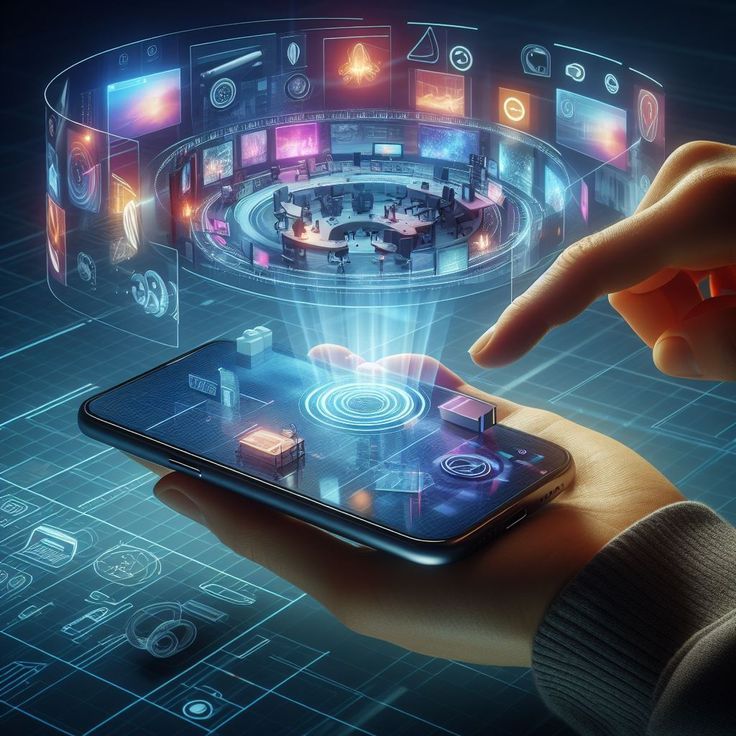
With the mass adoption of AR and VR headsets, the web is no longer flat.
-
WebAssembly (Wasm): This has become the backbone for bringing desktop-level 3D performance to the browser.
-
Spatial Navigation: We are seeing a shift from “clicking” to “gazing and gesturing.” Designing for these inputs requires a complete rethink of traditional UI/UX principles.
3. High-Performance Frameworks in 2026
Choosing the right stack is more important than ever. Here is the current hierarchy:
-
Next.js & SvelteKit: Dominating the web with near-zero runtime overhead.
-
Kotlin Multiplatform (KMP): The preferred choice for enterprises wanting to share logic across iOS and Android without sacrificing native performance.
-
Flutter: Still the king of rapid prototyping and beautiful, consistent UI across every screen size.
4. Sustainability: Green Engineering
“GreenOps” is the new DevOps. Modern developers are now tasked with optimizing code not just for speed, but for energy efficiency.
-
Carbon-Aware SDKs: Applications that delay heavy background tasks until the local power grid is using renewable energy.
-
Efficient Data Transfer: Reducing the carbon footprint of data centers by minimizing unnecessary API calls and optimizing asset delivery.
The Future of Development: A Deep Dive into Next-Gen Web & Mobile (2026)
The landscape of development is no longer just about choosing between “Web” or “Mobile.” In 2026, the lines have blurred, giving rise to a unified ecosystem where intelligence, speed, and spatial awareness are the new standards.
1. AI-Native Development: Moving Beyond Chatbots
In 2026, AI is the foundation, not an afterthought. We’ve moved from simple API integrations to Agentic Workflows.
-
Predictive User Interfaces (PUI): Modern apps use local machine learning to analyze user behavior in real-time. Instead of static menus, the UI “morphs” to present the tools a user is most likely to need next.
-
Edge AI & Privacy: With the rise of specialized chips in mobile devices, heavy AI processing now happens on-device via frameworks like CoreML and TensorFlow Lite. This reduces latency to near-zero and ensures user data never leaves the device.
-
Self-Healing Code: Next-gen development environments now use AI to monitor production logs and automatically suggest (or even deploy) patches for minor bugs before a human developer even sees the ticket.
2. Spatial Computing: Designing for the 3D Web
With the maturity of AR/VR hardware, the “flat” web is evolving. If your app isn’t spatial-ready, it’s already behind.
-
WebAssembly (Wasm) for 3D: Wasm has become the backbone for bringing desktop-level performance to the browser. Developers are using it to run complex physics engines and high-fidelity 3D environments directly in Chrome or Safari.
-
Spatial UI/UX Principles: We are moving away from “clicks” and “taps” toward gaze-tracking and gestures. This requires a complete rethink of button sizes, depth perception, and auditory feedback in web design.
-
Interoperable Assets: The move toward USDZ and glTF file formats allows 3D assets to be shared seamlessly between a website, a mobile app, and a virtual reality headset.
3. The 2026 Tech Stack: Efficiency at Scale
Choosing the right stack in 2026 is about balancing developer velocity with “Hydration” costs and performance.
-
The SvelteKit & Next.js Dominance: These frameworks have won the “speed war” by moving as much logic as possible to the server or build-time, delivering almost pure HTML to the client.
-
Kotlin Multiplatform (KMP): For mobile, KMP has overtaken traditional cross-platform tools for enterprise apps. It allows teams to share “business logic” (the math and data) while keeping the UI 100% native for both iOS and Android.
-
The Death of Plain CSS: We’ve moved almost entirely to component-based styling (like advanced versions of Tailwind or CSS-in-JS) that automatically prunes unused code to save every possible kilobyte.
4. Green Engineering: The “Carbon-Aware” Developer
As global regulations tighten, “GreenOps” has joined DevOps as a mandatory practice.
-
Energy-Efficient Algorithms: Developers are now being audited on the “carbon cost” of their code. High-energy background tasks are now scheduled to run only when the local power grid is using renewable energy.
-
Dark Mode by Default: Beyond aesthetics, modern OLED-optimized UIs are designed to save battery life and reduce the energy consumption of mobile devices on a massive scale.
Conclusion: Embracing the Next Frontier
As we look toward the remainder of 2026, it is clear that Next-Gen Web & Mobile Development is no longer about just writing code—it’s about orchestrating intelligence. From the rise of AI-native workflows to the immersive possibilities of Spatial Computing, the tools we use are becoming as smart as the applications we build.
For developers, the challenge lies in staying adaptable. By focusing on performance, sustainability (GreenOps), and cross-platform efficiency with tools like Kotlin Multiplatform, you can build products that are not only technologically advanced but also globally responsible.