
Author name: Pushkar Pandey

App Development, Digital Transformation, Software development, Technology & Innovation

Next-Gen Web & Mobile Development

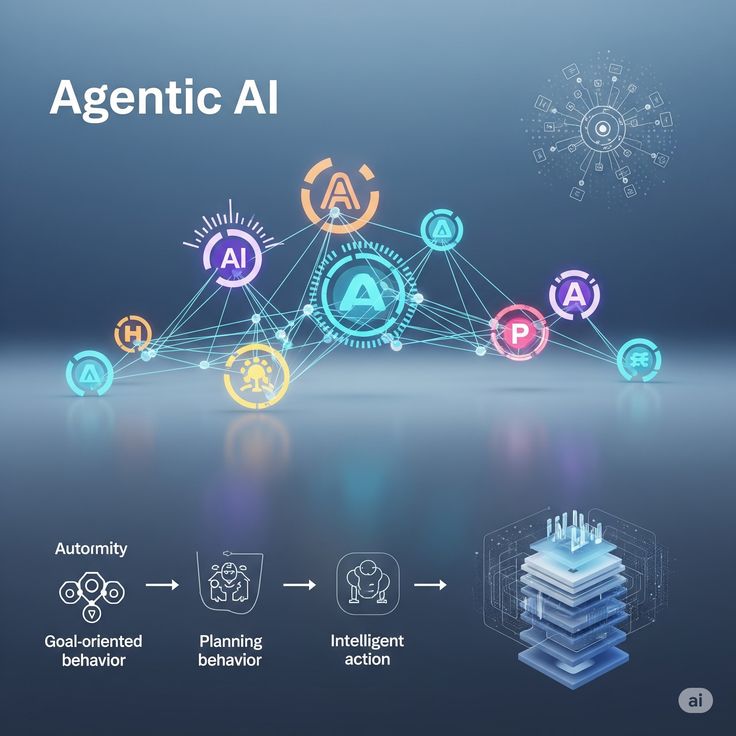
Next-Gen Web & Mobile Development: Trends Shaping 2026 The landscape of development is no longer just about choosing between “Web” or “Mobile.” In 2026, the lines have blurred, giving rise to a unified ecosystem where intelligence, speed, and spatial awareness are the new standards. Whether you are a seasoned developer or a tech enthusiast, understanding these shifts is crucial for staying ahead of the curve. 1. AI-Native Development: Beyond the Chatbot We have moved past simple API integrations. Today, Next-Gen apps are built with “Agentic Workflows.” Predictive User Interfaces: Apps now use local machine learning to predict what a user wants next, dynamically reordering menus and content. Edge AI: By processing data directly on the device using frameworks like CoreML, developers are ensuring faster response times and absolute data privacy. 2. The Rise of Spatial UI With the mass adoption of AR and VR headsets, the web is no longer flat. WebAssembly (Wasm): This has become the backbone for bringing desktop-level 3D performance to the browser. Spatial Navigation: We are seeing a shift from “clicking” to “gazing and gesturing.” Designing for these inputs requires a complete rethink of traditional UI/UX principles. 3. High-Performance Frameworks in 2026 Choosing the right stack is more important than ever. Here is the current hierarchy: Next.js & SvelteKit: Dominating the web with near-zero runtime overhead. Kotlin Multiplatform (KMP): The preferred choice for enterprises wanting to share logic across iOS and Android without sacrificing native performance. Flutter: Still the king of rapid prototyping and beautiful, consistent UI across every screen size. 4. Sustainability: Green Engineering “GreenOps” is the new DevOps. Modern developers are now tasked with optimizing code not just for speed, but for energy efficiency. Carbon-Aware SDKs: Applications that delay heavy background tasks until the local power grid is using renewable energy. Efficient Data Transfer: Reducing the carbon footprint of data centers by minimizing unnecessary API calls and optimizing asset delivery. The Future of Development: A Deep Dive into Next-Gen Web & Mobile (2026) The landscape of development is no longer just about choosing between “Web” or “Mobile.” In 2026, the lines have blurred, giving rise to a unified ecosystem where intelligence, speed, and spatial awareness are the new standards. 1. AI-Native Development: Moving Beyond Chatbots In 2026, AI is the foundation, not an afterthought. We’ve moved from simple API integrations to Agentic Workflows. Predictive User Interfaces (PUI): Modern apps use local machine learning to analyze user behavior in real-time. Instead of static menus, the UI “morphs” to present the tools a user is most likely to need next. Edge AI & Privacy: With the rise of specialized chips in mobile devices, heavy AI processing now happens on-device via frameworks like CoreML and TensorFlow Lite. This reduces latency to near-zero and ensures user data never leaves the device. Self-Healing Code: Next-gen development environments now use AI to monitor production logs and automatically suggest (or even deploy) patches for minor bugs before a human developer even sees the ticket. 2. Spatial Computing: Designing for the 3D Web With the maturity of AR/VR hardware, the “flat” web is evolving. If your app isn’t spatial-ready, it’s already behind. WebAssembly (Wasm) for 3D: Wasm has become the backbone for bringing desktop-level performance to the browser. Developers are using it to run complex physics engines and high-fidelity 3D environments directly in Chrome or Safari. Spatial UI/UX Principles: We are moving away from “clicks” and “taps” toward gaze-tracking and gestures. This requires a complete rethink of button sizes, depth perception, and auditory feedback in web design. Interoperable Assets: The move toward USDZ and glTF file formats allows 3D assets to be shared seamlessly between a website, a mobile app, and a virtual reality headset. 3. The 2026 Tech Stack: Efficiency at Scale Choosing the right stack in 2026 is about balancing developer velocity with “Hydration” costs and performance. The SvelteKit & Next.js Dominance: These frameworks have won the “speed war” by moving as much logic as possible to the server or build-time, delivering almost pure HTML to the client. Kotlin Multiplatform (KMP): For mobile, KMP has overtaken traditional cross-platform tools for enterprise apps. It allows teams to share “business logic” (the math and data) while keeping the UI 100% native for both iOS and Android. The Death of Plain CSS: We’ve moved almost entirely to component-based styling (like advanced versions of Tailwind or CSS-in-JS) that automatically prunes unused code to save every possible kilobyte. 4. Green Engineering: The “Carbon-Aware” Developer As global regulations tighten, “GreenOps” has joined DevOps as a mandatory practice. Energy-Efficient Algorithms: Developers are now being audited on the “carbon cost” of their code. High-energy background tasks are now scheduled to run only when the local power grid is using renewable energy. Dark Mode by Default: Beyond aesthetics, modern OLED-optimized UIs are designed to save battery life and reduce the energy consumption of mobile devices on a massive scale. Conclusion: Embracing the Next Frontier   As we look toward the remainder of 2026, it is clear that Next-Gen Web & Mobile Development is no longer about just writing code—it’s about orchestrating intelligence. From the rise of AI-native workflows to the immersive possibilities of Spatial Computing, the tools we use are becoming as smart as the applications we build. For developers, the challenge lies in staying adaptable. By focusing on performance, sustainability (GreenOps), and cross-platform efficiency with tools like Kotlin Multiplatform, you can build products that are not only technologically advanced but also globally responsible. Next-Gen Web & Mobile Development

cybersecurity, Data Privacy & Security, Digital Transformation, enterprise, Software development, Technology

Beyond the Firewall: Securing the Software Supply Chain in 2026

Beyond the Firewall: Securing the Software Supply Chain in 2026 For decades, cybersecurity was defined by the “castle and moat” analogy. If you built a strong enough firewall, your data was safe. However, as we move through 2026, the perimeter has completely dissolved. Modern software is no longer a monolithic block of custom code; it is a sprawling web of open-source dependencies, third-party APIs, and AI-generated snippets. The greatest threat to the tech sector today isn’t a hacker “breaking in” through your front door—it’s a vulnerability “walking in” through your supplier’s back door. Welcome to the era of Software Supply Chain Integrity. The New Attack Vector: Upstream Compromise In 2026, attackers have pivoted their focus “upstream.” Instead of targeting a single enterprise, they target the libraries and tools that thousands of enterprises use. By compromising a popular open-source package or a widely used CI/CD tool, a single exploit can cascade through the global tech ecosystem. The data is clear: supply chain attacks have quadrupled over the last few years. Whether it is a malicious “dependency confusion” attack or a compromised GitHub Action, the goal is the same: to inject malicious code into a trusted environment before it ever reaches production. The Three Pillars of Modern Supply Chain Security At TechOTD, we’ve identified three critical strategies that every development team must adopt in 2026 to remain resilient. 1. The SBOM Mandate (Software Bill of Materials) Think of an SBOM as the “nutrition label” for your software. It is a formal, machine-readable record of every library, module, and dependency used to build an application. In 2026, providing an SBOM is no longer a “nice-to-have”; it is a regulatory requirement for many enterprise contracts. By maintaining a real-time SBOM, security teams can respond to new vulnerabilities (CVEs) in seconds rather than days. If a critical flaw is found in a minor utility library, an SBOM tells you exactly which of your products are affected and where they are deployed. 2. Guarding AI-Generated Code The rise of “Vibe Coding” and AI agents has introduced a new type of risk: AI-generated security debt. AI models are designed to be helpful, but they lack context and judgment. They may suggest code that is functional but uses outdated, insecure encryption or references deprecated libraries. Securing the supply chain in 2026 means implementing Automated AI Guardrails. Every line of code suggested by an AI must pass through an automated “security lens”—AI-powered SAST (Static Application Security Testing) tools that scan for logic flaws and insecure patterns in real-time within the developer’s IDE. 3. Identity-First Security and Non-Human Identities (NHIs) The “login” is the new break-in point. As we move toward Agentic AI and automated microservices, the number of “Non-Human Identities”—API keys, service accounts, and tokens—has exploded. Attackers in 2026 are increasingly targeting these machine identities because they are often over-privileged and rarely rotated. A robust security posture now requires Continuous Adaptive Authentication, where every request—whether from a human or an AI agent—is verified based on real-time risk signals like geolocation, device health, and behavioral patterns. From Prevention to “Durable Resilience” The hard truth of 2026 is that 100% prevention is impossible. The focus has shifted from “How do we stop every attack?” to “How quickly can we recover when a dependency is compromised?” This is the concept of Durable Resilience. It involves: Chaos Engineering for Security: Purposely “breaking” a dependency in a sandbox to see how the system fails. Crypto-Agility: Building architecture that allows you to swap out compromised encryption algorithms without rebuilding the entire app. Rapid Patching Protocols: Mandating that high-severity vulnerabilities in third-party code must be patched within 24 hours of discovery. Conclusion: The Developer’s New Mandate Cybersecurity is no longer a “department”—it is a core feature of high-quality software development. In the tech sector of 2026, the most successful companies will be those that treat their software supply chain with the same scrutiny they apply to their own internal code. AI-Native Architecture

Artificial Intelligence, Uncategorized

AI-Native Architecture

The Era of AI-Native Architecture: Why LLMs are the New Operating System In the early days of the digital revolution, we moved from “analog” to “digital-first.” Today, in 2026, we are witnessing an even more profound shift: the move from software-defined to AI-native architecture. For years, developers have treated Artificial Intelligence as an “add-on”—a feature or a plugin that sits on top of a traditional application. However, as the limitations of this “bolted-on” approach become clear, top-tier development firms like TechOTD are rebuilding the very foundations of how software is designed. What is AI-Native Architecture? To understand AI-native, we must first understand what it is not. Traditional architecture follows a deterministic path: If X happens, then do Y. It relies on hard-coded logic paths and structured data. AI-native architecture, by contrast, is probabilistic. It treats Large Language Models (LLMs) and specialized AI agents not as peripheral tools, but as the core routing and decision-making engine of the entire application. In an AI-native system, the model doesn’t just answer questions; it manages the application state, orchestrates API calls, and dynamically generates the user interface based on the user’s current intent. It is the difference between a car with a GPS (traditional) and a fully autonomous vehicle (AI-native). The Four Pillars of the AI-Native Stack Building in this new era requires a complete overhaul of the traditional “LAMP” or “MERN” stacks. At TechOTD, we focus on four critical components: 1. The LLM as the Orchestrator In traditional apps, the backend code decides which function to run next. In AI-native apps, the LLM acts as the “controller.” Using frameworks like LangChain or AutoGPT, the system analyzes a user’s request and determines which “tools” (APIs, databases, or third-party services) it needs to access to fulfill that request. This allows for infinitely more flexible software that can handle edge cases without a developer needing to write a thousand “if-else” statements. 2. Memory and Vector Databases Standard relational databases (SQL) are excellent for structured data like prices or dates. However, AI-native apps need to understand context. This is where Vector Databases (like Pinecone, Milvus, or Weaviate) come in. By converting text, images, and data into “vector embeddings,” the software gains a mathematical understanding of meaning. This provides the AI with “Long-Term Memory,” allowing it to remember past user interactions and company-specific data with high precision. 3. Agentic Workflows 2026 is the year of the AI Agent. Unlike a simple chatbot, an agent can execute multi-step tasks autonomously. For example, an AI-native project management tool doesn’t just remind you of a deadline; it analyzes the team’s workload, suggests a new timeline, emails the stakeholders for approval, and updates the task board once a response is received. 4. Real-time Inference and Edge Integration Latency is the enemy of AI. To make AI-native apps feel “instant,” developers are moving inference (the AI’s thinking process) closer to the user through Edge Computing. By optimizing models to run locally on devices or at the network edge, we eliminate the 2-3 second delay that often breaks the user experience. Conclusion: Leading the AI-Native Frontier The transition to AI-native architecture is more than just a technical upgrade; it is a fundamental shift in how we perceive the relationship between human intent and machine execution. As we move deeper into 2026, the distinction between “apps with AI” and “AI-native systems” will become the primary differentiator between market leaders and those left behind. For businesses, this shift offers an unprecedented opportunity to eliminate rigid processes and replace them with fluid, intelligent systems that evolve in real-time. For developers, it marks the end of the “deterministic” era and the beginning of a more creative, orchestration-focused discipline. What is AI Bidding? A Simple Guide to Automated Auctions.

Artificial Intelligence, Technology & Business

What is AI Bidding? A Simple Guide to Automated Auctions.

What is AI Bidding? At its core, AI Bidding is the use of machine learning algorithms to automate and optimize the process of placing bids in real-time auctions. Whether it’s for Google Ads, social media marketing, or programmatic display ads, AI analyzes millions of data points in milliseconds to determine the “perfect” price for a click or impression. How Does It Work? Unlike manual bidding—where a human sets a static price—AI bidding uses Predictive Analytics. It looks at: User Behavior: What time of day is this person most likely to buy? Device & Location: Is the user on a high-intent device (like a desktop) or just browsing on mobile? Historical Data: How have similar auctions performed in the past $24$ hours? Why Businesses are Switching to AI Bidding Efficiency: Humans can’t process data fast enough to bid on thousands of individual auctions per second. Cost-Effectiveness: AI helps prevent “overbidding,” ensuring you only pay what a lead is actually worth based on the likelihood of conversion. Real-Time Optimization: The system learns from every win and loss, constantly getting smarter. Pro Tip: While AI Bidding saves time, it still requires “human guardrails.” Always set a maximum CPA (Cost Per Acquisition) to ensure the machine stays within your budget! Popular AI Bidding Strategies Depending on your goals, AI bidding engines usually offer different “flavors” of automation. Here are the three most common strategies you’ll encounter in platforms like Google Ads or Meta: Target CPA (Cost Per Acquisition): The AI focuses on getting as many conversions as possible at or below your specified cost. It’s ideal for lead generation. Target ROAS (Return on Ad Spend): This is the “gold standard” for e-commerce. The AI analyzes which users are likely to spend more money and bids higher for those specific high-value shoppers. Maximize Conversions: Perfect for when you have a set daily budget and you want the AI to spend it all while getting the highest volume of results possible. Common Pitfalls to Avoid While AI Bidding is powerful, it isn’t “set it and forget it.” New users often make these mistakes: Ignoring the “Learning Phase”: When you first turn on AI bidding, the algorithm needs time to test. If you change your settings every two days, the AI will never stabilize. Give it at least 7–14 days. Poor Data Quality: If your website tracking is broken, the AI is “flying blind.” It needs accurate data to understand what a successful conversion looks like. Too Small of a Budget: AI needs “fuel” (data) to learn. If your budget only allows for one or two clicks a day, the algorithm won’t have enough information to optimize effectively. The Future of Automated Auctions As we move toward 2027, AI bidding is evolving from simple “click optimization” to Predictive Lifetime Value (pLTV). Soon, bidding engines won’t just look for a single sale; they will predict which customers will remain loyal to your brand for years and bid aggressively to win them early. How Machine Learning Powers AI Bidding The backbone of any modern Digital Marketing strategy is the ability to process data at scale. Machine Learning algorithms allow bidding systems to move beyond simple “if-then” rules. Instead of just bidding more for a specific location, the AI uses neural networks to identify non-obvious patterns. For example, it might discover that users searching on an iPhone at 10 PM are $15\%$ more likely to convert if they have previously visited your “About Us” page. By recognizing these micro-signals, AI Bidding ensures that your budget is always allocated to the highest-probability opportunities. Best Practices for Implementing AI Bidding To get the most out of your automated auctions, follow these industry standards: Set Realistic Conversion Values: If you are using Target ROAS, ensure you have assigned a monetary value to your conversions so the AI knows what to optimize for. Avoid Frequent Changes: Every time you change a bid strategy, the Machine Learning model enters a “Learning Phase.” Frequent edits reset this progress, leading to inconsistent performance. Use Broad Match with Smart Bidding: In platforms like Google Ads, pairing broad match keywords with AI Bidding allows the system to find new, relevant search terms that you might have missed manually. Conclusion: Why AI Bidding is No Longer Optional In the fast-paced world of Digital Marketing, manual bidding is becoming a relic of the past. As auctions become more competitive and data-driven, leveraging AI Bidding is the only way to remain efficient and profitable. By letting Machine Learning handle the heavy lifting of data analysis, marketers can focus on what really matters: creative strategy and brand growth. How AI is Transforming Education Systems

cybersecurity, Digital Transformation, Software development

The Shift to Continuous Background Screening in 2026

Beyond the Initial Hire: The Shift to Continuous Background Screening in 2026 For years, the “background check” was a box to be checked once during the onboarding process. Once an employee was hired, the company essentially stopped looking. But in the fast-paced, high-security environment of 2026, a “one-and-done” approach is a massive vulnerability. Enter Continuous Background Screening—a dynamic, real-time approach to workforce risk management. 1. What is Continuous Background Screening? Continuous screening is the process of monitoring employee records—criminal, financial, and professional—on an ongoing basis. Instead of waiting for a re-check every five years, companies receive automated alerts the moment a record is updated. In 2026, this technology is powered by API-driven integration with global legal and financial databases. If an employee in a sensitive role (like a DevOps engineer with access to production servers) incurs a significant legal or financial red flag, the system notifies the cybersecurity team immediately, allowing for proactive risk assessment. 2. Why the “One-and-Done” Model Failed The traditional model relied on a snapshot in time. However, an individual’s circumstances can change overnight. The Insider Threat: Most data breaches are not caused by external hackers but by disgruntled or compromised insiders. Regulatory Compliance: In industries like healthcare and finance, having an unlicensed or sanctioned employee on the payroll for even a week can result in millions of dollars in fines. 3. The Tech Behind the Monitor: AI and Data Streams Modern screening doesn’t mean a human is manually searching names every day. It relies on Machine Learning (ML) to filter noise from actual risks. Semantic Analysis: The system distinguishes between a minor traffic ticket and a serious offense. Privacy-First Alerts: To stay compliant with 2026 privacy laws, these systems often use Zero-Knowledge Proofs, notifying HR that a risk has emerged without revealing sensitive details until a formal review is triggered. 4. The Human Element: Balancing Security and Privacy The biggest challenge of continuous screening is the “Big Brother” perception. For this to work in a humanized workplace, transparency is key. Consent-Based Monitoring: Employees must be informed that their public records are being monitored as part of their security clearance. The “Right to Rectify”: If an automated alert is triggered by a clerical error in a public database, the employee needs a clear, fast path to correct the record before it affects their employment. 5. Implementation for techotd.com Readers If you are managing a DEVOPs team or a software firm, your roadmap should look like this: Audit Your Access Levels: Who has the keys to the kingdom? These are your first candidates for continuous monitoring. Integrate with Your PMS: Link your screening tool directly into your Product Lifecycle Management software to ensure that only “clear” individuals can push code to production. Establish an Ethics Committee: Ensure that the data is used to protect the company, not to micro-manage the private lives of your staff. Conclusion: A Living Security Strategy Continuous background screening is the final piece of the Zero Trust puzzle. By treating background checks as a living, breathing data stream rather than a static document, companies can build a culture of trust that is verified in real-time. Identifying the Need for Software Integration

Scroll to Top