
September 2025

Artificial Intelligence

10 Use Cases, Benefits, and Examples of How cobots are Transforming the Manufacturing Industry

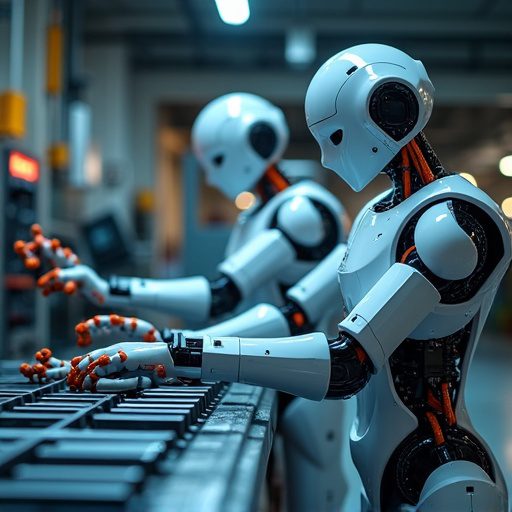
Introduction The manufacturing industry has always been at the forefront of adopting new technologies. From the industrial revolution to automation and now artificial intelligence (AI), innovation is continuously shaping how goods are produced. One of the most revolutionary advancements of the 21st century is the rise of collaborative robots (cobots). Unlike traditional industrial robots that work in isolation, cobots are designed to work alongside humans, augmenting their skills and enhancing efficiency. In this comprehensive blog, we’ll explore 10 real-world use cases of cobots in manufacturing, the key benefits they offer, and practical examples of their adoption worldwide. (For more AI-driven business insights, explore AI solutions and check out our latest blogs on transformative technologies.) What Are Cobots? Cobots, or collaborative robots, are advanced robotic systems designed to share workspace with humans. Unlike traditional robots that require safety cages, cobots integrate safety features such as force sensors, vision systems, and smart programming, making them safe to work alongside people. They are cost-effective, flexible, and highly scalable, making them ideal for small and medium-sized enterprises (SMEs) that previously could not afford robotics. 10 Use Cases of Cobots in Manufacturing 1. Assembly Line Automation Cobots can handle repetitive tasks such as screwing, fitting, and component assembly. Benefit: Reduces human error and increases consistency. Example: BMW uses cobots on their assembly line to assist workers in fitting car doors, ensuring accuracy without replacing human jobs. 2. Quality Inspection & Testing Cobots equipped with vision systems can inspect products for defects with high accuracy. Benefit: Improves product quality and reduces wastage. Example: A food packaging plant in Japan uses cobots to scan for damaged packaging before distribution. 3. Machine Tending Cobots can load and unload CNC machines, injection molding machines, or 3D printers. Benefit: Increases machine uptime and reduces operator fatigue. Example: A US-based plastics manufacturer deployed cobots for injection molding machine tending, boosting output by 25%. 4. Material Handling & Logistics Cobots move raw materials, tools, and products across the factory floor. Benefit: Enhances worker safety by reducing manual lifting. Example: DHL uses cobots in warehouses for picking and transporting items alongside human workers. 5. Packaging & Palletizing Cobots are ideal for repetitive tasks like placing items into boxes or stacking pallets. Benefit: Reduces packaging time and increases efficiency. Example: Universal Robots’ cobots are widely used in FMCG companies for automated palletizing. 6. Welding & Soldering Cobots can perform precision welding tasks with minimal supervision. Benefit: Improves welding quality while protecting humans from hazardous fumes. Example: Ford Motor Company uses cobots for welding, reducing error rates in vehicle production. 7. Painting & Coating Cobots apply paint or coatings with high precision and uniformity. Benefit: Reduces wastage of materials and ensures consistent surface finish. Example: A furniture manufacturer in Italy uses cobots for automated spray painting, cutting down coating costs by 30%. 8. Electronics Manufacturing Cobots handle delicate components like circuit boards and microchips. Benefit: Increases accuracy and reduces product defects. Example: Samsung uses cobots in semiconductor manufacturing for handling fragile wafers. 9. Healthcare & Pharmaceutical Manufacturing Cobots assist in pill packaging, sterile lab work, and chemical handling. Benefit: Reduces contamination risk and ensures compliance with safety standards. Example: A pharma lab in Germany deployed cobots for filling vials during the COVID-19 vaccine production process. 10. 3D Printing & Additive Manufacturing Cobots assist in preparing materials, cleaning, and post-processing printed items. Benefit: Streamlines the additive manufacturing workflow. Example: Aerospace manufacturers use cobots to handle large-scale printed parts requiring precision finishing. Key Benefits of Cobots in Manufacturing Enhanced Productivity – Cobots reduce downtime and keep machines running longer. Improved Worker Safety – Cobots take on hazardous and physically demanding tasks. Flexibility & Scalability – Easily programmable for different processes. Cost-Effectiveness – Lower investment compared to traditional industrial robots. Higher Quality Products – Consistency in repetitive processes ensures fewer defects. Faster ROI – Most cobot investments pay for themselves within 12-18 months. Seamless Human-Robot Collaboration – Workers focus on creative/problem-solving tasks. Future-Readiness – Prepares factories for Industry 4.0 and smart manufacturing. (To learn more about tech-driven efficiency, check our guide on predictive analytics software. Real-World Examples of Cobots in Action   Automotive: BMW & Ford use cobots for assembly and welding. Electronics: Samsung & Sony deploy cobots for micro-component handling. Food & Beverages: Nestlé uses cobots for packaging chocolates. Pharmaceuticals: Pfizer and Moderna deployed cobots during COVID-19 vaccine production. SMEs: Thousands of small businesses now integrate cobots to remain competitive. The Future of Cobots in Manufacturing With the rise of AI, IoT, and machine learning, cobots will become smarter, more autonomous, and capable of predictive maintenance. Future cobots will not just assist but learn and optimize processes on their own. (For more insights, see how AI is shaping customer service). Final Thoughts Cobots are no longer a futuristic concept—they are already reshaping manufacturing by enabling smarter, safer, and more efficient factories. Businesses that embrace cobots today will gain a competitive edge in productivity, cost savings, and innovation. Whether you are a small manufacturer or a global enterprise, cobots represent the future of human-machine collaboration.

Artificial Intelligence

How to Choose the Best AI Agent Development Company for Businesses

Introduction Artificial Intelligence (AI) has moved far beyond being a buzzword – it is now one of the most crucial technologies shaping the future of business. From automating workflows to delivering personalized customer experiences and enabling predictive decision-making, AI agents are transforming industries across the globe. Businesses looking to stay competitive are increasingly turning to AI agent development companies for customized solutions. However, choosing the right AI agent development company can be overwhelming, especially with the rapid growth of the AI service provider ecosystem. This blog serves as a comprehensive 5000-word guide to help businesses identify, evaluate, and partner with the best AI agent development companies. It will also reference relevant resources from TechOTD and related blogs to provide deeper insights into AI, blockchain, predictive analytics, and other cutting-edge technologies. Table of Contents Introduction to AI Agent Development for Businesses Why AI Agents Are Critical for Modern Enterprises Key Services Provided by AI Agent Development Companies Factors to Consider Before Choosing an AI Partner Evaluating Company Expertise and Technical Proficiency Industry-Specific Experience: Why It Matters Comparing Global vs. Local AI Development Companies Assessing Scalability and Long-Term Value Questions to Ask a Potential AI Agent Development Partner Red Flags to Avoid When Hiring AI Development Firms Case Studies: AI Success Stories in Businesses How TechOTD and Similar Firms are Leading AI Innovation Future Trends in AI Agent Development Final Checklist for Selecting the Best AI Development Company Conclusion 1. Introduction to AI Agent Development for Businesses AI agents are intelligent systems capable of perceiving their environment, making decisions, and taking actions to achieve specific goals. These agents are widely used in: Customer service automation (chatbots, voice assistants) Predictive analytics and business intelligence Fraud detection in finance Personalized marketing campaigns Workflow automation With demand skyrocketing, organizations need expert AI development companies that understand their industry, challenges, and goals. For a more detailed introduction to AI applications in modern business, visit TechOTD AI Page. 2. Why AI Agents Are Critical for Modern Enterprises Businesses today are data-driven. AI agents provide: 24/7 customer engagement (chatbots and virtual assistants) Cost reduction through automation Revenue growth by enabling hyper-personalization Improved decision-making with predictive insights Relevant read: Seamless Customer Journeys with AI – The Future of Service Excellence. 3. Key Services Provided by AI Agent Development Companies Custom AI Agent Development Tailor-made AI chatbots, virtual assistants, and workflow bots. Integration Services Connecting AI agents with CRM, ERP, or third-party systems. Data Analytics and Machine Learning Predictive modeling, data processing, and insights. Read: Predictive Analytics in Software Development. Natural Language Processing (NLP) Enabling agents to understand and respond in human-like language. AI in Finance Fraud detection, investment advisory, and compliance automation. Resource: Large Language Models in Finance. 4. Factors to Consider Before Choosing an AI Partner Business Needs Alignment – Does the company understand your domain? Technology Stack – Do they specialize in NLP, ML, computer vision, or multi-agent systems? Proven Track Record – Verified success stories and references. Security Standards – Ensuring compliance with data privacy laws. Cost & ROI – Transparent pricing with long-term value. Related resource: Blockchain Integration in Business Processes. 5. Evaluating Company Expertise and Technical Proficiency A good AI development company must: Employ certified AI/ML engineers. Have experience with frameworks such as TensorFlow, PyTorch, Rasa. Demonstrate expertise in cloud platforms like AWS, Azure, GCP. Show past projects in similar industries. Check How We Work – TechOTD Process to understand the structured approach followed by leading firms. 6. Industry-Specific Experience: Why It Matters AI applications vary across industries: Healthcare – Diagnostics, patient engagement. Retail & E-commerce – Product recommendations. Finance – Fraud detection. Education – Adaptive learning platforms. Further insights: Technology Impact on Education. 7. Comparing Global vs. Local AI Development Companies Global Firms – Offer broader experience, advanced capabilities, and scalability. Local Firms – Provide personalized support, cultural context, and faster communication. Your choice depends on your project scope and long-term expansion plans. 8. Assessing Scalability and Long-Term Value The right AI development company should: Offer flexible solutions that grow with your business. Provide ongoing maintenance and optimization. Stay updated with emerging AI trends. Relevant guide: React Native vs. Swift – Choosing the Right Development Framework. 9. Questions to Ask a Potential AI Agent Development Partner What industries have you delivered AI solutions for? What is your process for AI project implementation? How do you ensure data security and compliance? Can you provide real case studies? What post-deployment support do you offer? 10. Red Flags to Avoid When Hiring AI Development Firms Lack of clear methodology. Overpromising unrealistic outcomes. No portfolio of successful AI projects. Poor communication and transparency. Weak data security measures. 11. Case Studies: AI Success Stories in Businesses   E-commerce: Personalized shopping experiences increased sales by 25%. Finance: Fraud detection reduced transaction losses by 40%. Healthcare: AI chatbots reduced patient query response times by 60%. 12. How TechOTD and Similar Firms are Leading AI Innovation TechOTD has been consistently delivering advanced AI and digital transformation services. Explore: AI Services Mobile App Development Services Best Gadgets for Programmers in 2025 for insights on emerging tech. 13. Future Trends in AI Agent Development Autonomous multi-agent systems AI-driven hyper-automation Voice-first AI assistants Generative AI for business operations AI in sustainable and green technologies 14. Final Checklist for Selecting the Best AI Development Company ✅ Define your AI goals clearly. ✅ Evaluate company expertise & industry experience. ✅ Check client testimonials and case studies. ✅ Ensure security and compliance. ✅ Discuss long-term scalability and support. 15. Conclusion Choosing the best AI agent development company is not just about technical capabilities – it’s about finding a partner who understands your business needs, industry challenges, and long-term vision. Companies like TechOTD are leading the way in delivering customized AI solutions that empower businesses to innovate, optimize processes, and stay competitive. For more AI-related insights and services, explore: AI Services by TechOTD TechOTD Blog How We Work

How would you like me to respond?

Select a personality for your AI assistant

Normal
Happy
Sad
Angry

Your selection will affect how the AI assistant responds to your messages

Chat Assistant

Let's discuss your project!

Hear from our clients and why 3000+ businesses trust TechOTD

Tell us what you need, and we'll get back with a cost and timeline estimate

Scroll to Top