
blockchain development

app technology comparison

PHP vs Python

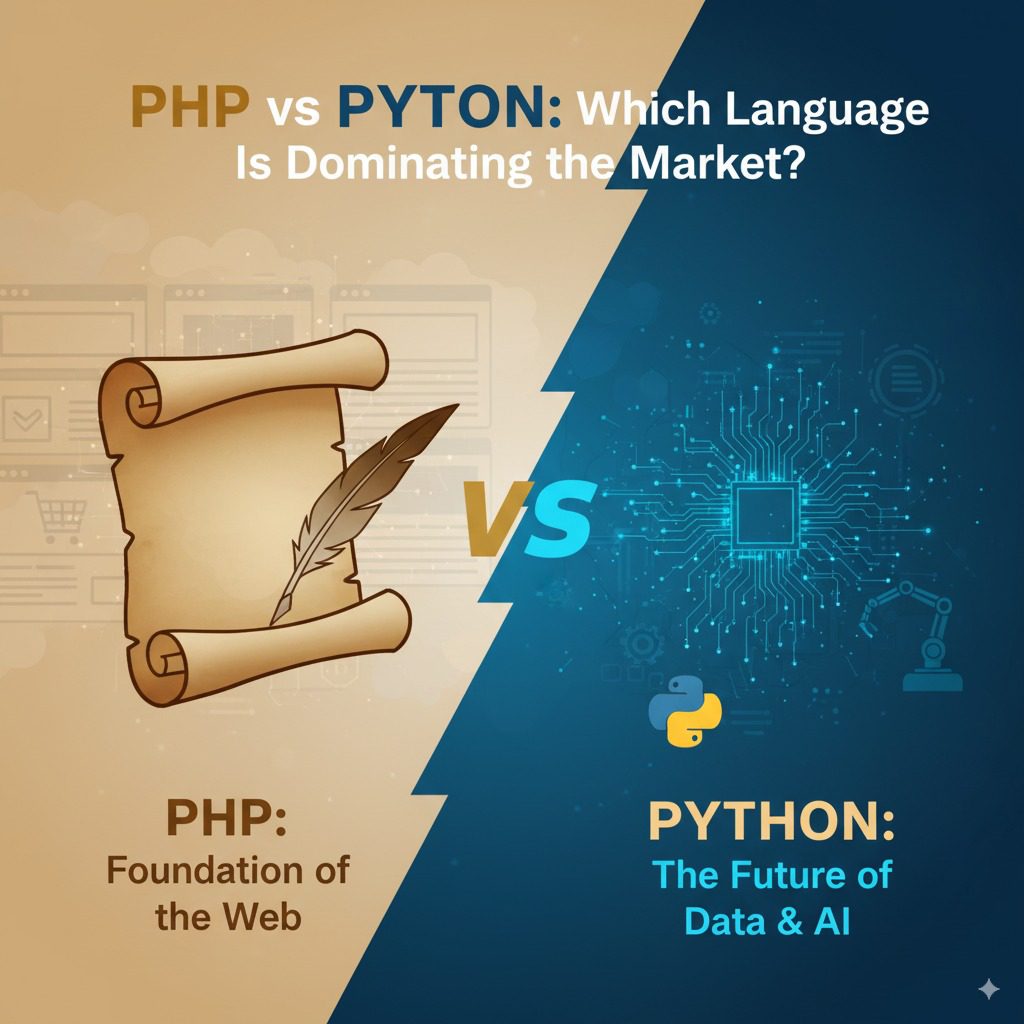
Introduction Choosing the right programming language is a pivotal decision in software development, affecting project outcomes, developer productivity, and long-term maintenance. Among the most widely used programming languages today, PHP and Python spark continuous debates. Both languages have significant market presence, unique strengths, and vibrant communities, but which one is truly dominating the market? This extensive blog dives deep into the technological capabilities, market trends, developer preferences, and industry applications of PHP and Python. It further explores their roles in shaping modern development, backed by insights from AI, blockchain, and analytics innovations featured on TechOTD AI Services and TechOTD Blog. Overview of PHP and Python PHP: The Backbone of Web Development Developed in the mid-1990s, PHP (Hypertext Preprocessor) is a server-side scripting language traditionally used for web development. It powers popular content management systems like WordPress and Drupal and remains a dominant language for building dynamic web pages. Strong integration with HTML and databases. Massive ecosystem of frameworks like Laravel and Symfony. Emphasis on rapid web application development. Python: The Multipurpose Powerhouse Python, created in the late 1980s, has grown into a versatile, general-purpose programming language acclaimed for simplicity and readability. It spans multiple domains including web development, data science, machine learning, automation, and more. Rich standard library and extensive third-party packages. Support for AI, machine learning, data analytics, and more. Popular frameworks like Django and Flask for web. Market Share and Popularity Trends According to industry reports, Python has seen exponential growth over the past decade, emerging as one of the world’s most popular programming languages. PHP retains a strong position in web hosting environments but has experienced slower growth, slightly overshadowed by newer languages. Python ranks consistently high in developer surveys, favored for its ease of learning and broad applicability in AI and analytics fields TechOTD AI Solutions. Technical Strengths and Feature Comparison Feature PHP Python Syntax C-style, relatively straightforward Clean, readable, highly intuitive Web Development Traditionally dominant with LAMP stack Strong with Django, Flask Versatility Mainly web scripting Web, AI, ML, automation, scripting Performance Decent for Web Comparable, with faster implementations possible Learning Curve Moderate Easy for beginners Community & Support Large, mature Diverse, rapidly growing AI & Data Science Limited native support Extensive libraries and frameworks Popular Use Cases CMS, e-commerce, blogging AI, scientific computing, web apps Industry Use Cases Driving Popularity PHP Use Cases Content Management Systems (WordPress, Joomla). E-Commerce platforms (Magento). Small to medium web applications. Legacy system maintenance and integration. Python Use Cases Artificial Intelligence and Machine Learning. Data Science and Analytics. Web Application Development. Scripting and Automation. Emerging blockchain and IoT applications. Developer Experience and Ecosystem PHP offers rich server-side web hosting options and mature tools, but developers sometimes find its ecosystem fragmented. Python’s straightforward syntax attracts beginners and experienced developers alike, fostering faster prototyping and project iterations. Both languages have vibrant communities but Python’s growth is more evident in trending domains like AI and big data Predictive Analytics TechOTD. Market Demand and Career Outlook Python’s versatility creates strong demand across industries from finance to healthcare to tech giants. PHP remains relevant for web-specialized roles, especially in agencies and companies maintaining legacy sites. Demand for Python skills outpaces PHP for new projects, yet PHP skills remain a valuable asset. Integration with Modern Technologies Python leads in AI integration, advanced analytics, and automation, supported by frameworks and cloud services TechOTD AI Blog. PHP is increasingly used alongside JavaScript frameworks for rich web interfaces and integrates with blockchain solutions in niche applications TechOTD Blockchain Integration. Conclusion Python currently holds a dominant position in the global programming landscape, driven by AI, data science, and diverse application domains. Its simplicity, versatility, and growing ecosystem make it a preferred choice for new projects and emerging technologies. PHP remains an indispensable workhorse for web development, powering a significant portion of the internet. It thrives in legacy systems and specialized web applications but faces challenges expanding beyond those niches.

Blockchain & Technology, Uncategorized

An Entrepreneur’s Guide on Blockchain Technology and Its Uses

Introduction Blockchain technology is rapidly transforming the way businesses operate and engage with customers worldwide. For entrepreneurs, understanding blockchain’s fundamentals and practical applications is crucial to leveraging its potential for innovation, security, and efficiency. Blockchain’s decentralized, transparent, and tamper-proof nature brings new possibilities in finance, supply chain, healthcare, real estate, and beyond. This guide dives deep into what blockchain is, how it works, entrepreneurial opportunities it offers, and strategies for deploying blockchain solutions successfully. What is Blockchain Technology? Blockchain is a decentralized digital ledger that records transactions across multiple computers in a way that prevents alterations retroactively. Unlike traditional centralized databases, blockchain distributes data to enhance security, transparency, and trust. Key Features of Blockchain Decentralization: No single entity controls the database. Immutability: Once recorded, data cannot be changed or deleted. Transparency: Transactions are visible to all network participants. Security: Cryptographic techniques ensure data integrity and authentication. Smart Contracts: Automated agreements that execute when predefined conditions are met. Blockchain’s revolutionary architecture enables trustless transactions and collaborates with other technologies such as AI and IoT for smarter business processes (TechOTD AI). How Blockchain Works: A Simplified Explanation At its core, a blockchain consists of a chain of blocks, each containing batches of verified transactions. When a new transaction occurs: It is broadcast to a peer-to-peer network of nodes. These nodes validate the transaction using consensus mechanisms such as Proof of Work or Proof of Stake. Validated transactions are grouped into a block and added to the chain chronologically. The distributed ledger is updated across all nodes simultaneously, ensuring synchronization. This process prevents fraud and establishes a permanent, auditable record. Entrepreneurial Applications of Blockchain Entrepreneurs stand to gain from blockchain in various sectors by solving traditional business challenges like fraud, inefficiency, and lack of transparency. Finance and Payments Cryptocurrencies: Decentralized digital currencies enable borderless payments and lower transaction fees. Decentralized Finance (DeFi): Offers lending, borrowing, and investment platforms without intermediaries. Fraud Prevention: Immutable ledgers combat identity theft and financial fraud. Supply Chain Management Provenance Tracking: Blockchain verifies product origin and handling through transparent records. Counterfeit Mitigation: Assures authenticity across complex supply chains. Efficiency: Automates reconciliation and reduces paperwork with smart contracts (blockchain integration Dubai). Healthcare Patient Records: Secure sharing of medical data with privacy compliance assurance. Drug Traceability: Track and verify pharmaceuticals to prevent counterfeit drugs. Research Collaboration: Trusted platforms for clinical trials data sharing. Real Estate Property Transactions: Streamlines title transfers and notarization via smart contracts. Fractional Ownership: Enables micro-investments and liquidity in real estate markets. Digital Identity Allows self-sovereign identity management where users control access to personal data securely. Benefits of Blockchain for Entrepreneurs Entrepreneurs leveraging blockchain technologies enjoy multiple advantages: Increased Transparency and Trust: Builds credibility with customers and partners. Improved Security and Reduced Fraud: Mitigates cyber risks effectively. Operational Efficiency: Automates workflows, reducing manual errors and delays. Cost Savings: Cuts intermediaries and transaction costs. Access to New Markets: Cryptocurrencies and DeFi open global customer bases. Innovative Business Models: Enables tokenization, decentralization, and new monetization avenues (TechOTD Services). How to Implement Blockchain in Your Business Implementing blockchain requires a strategic approach blending technology assessment, product design, and ongoing support: Analyze Business Needs: Determine pain points suited for blockchain solutions (How We Work). Evaluate Data and Infrastructure: Ensure necessary data quality and system compatibility. Design the Blockchain Product: Define architecture, blockchain type (public/private/consortium), and select the right tech stack (Ethereum, Hyperledger, etc.). Develop and Test: Collaborate with experienced developers for prototyping, testing, and refinement. Deployment and Integration: Integrate with existing systems securely, possibly using cloud platforms. Ongoing Support and Optimization: Monitor, update, and optimize blockchain solutions continuously (TechOTD AI Deployment). Challenges and Considerations for Entrepreneurs While blockchain offers powerful benefits, entrepreneurs must be aware of common challenges: Regulatory and Compliance Risks: Stay updated with evolving laws in different regions. Scalability Issues: Public blockchains sometimes face throughput and latency constraints. Energy Consumption: Proof of Work blockchains consume significant energy; prefer sustainable protocols. Technical Complexity: Expertise needed to develop and manage blockchain infrastructure. Integration with Legacy Systems: Can be complex and costly. User Adoption: Requires educating stakeholders on new processes and trust models. Address these issues with expert consultation and phased implementation. Future Trends: Blockchain Plus AI and Beyond The future of entrepreneurship lies in combining blockchain with emerging technologies: AI-Driven Smart Contracts: More autonomous, adaptive contracts with predictive functions (seamless AI customer journeys). Decentralized Autonomous Organizations (DAOs): Innovating business governance without centralized control. Interoperability Protocols: Connecting multiple blockchains for seamless data and asset transfers. Blockchain for IoT Security: Enhancing device trustworthiness and data integrity. Predictive Analytics on Blockchain Data: Unique insights via secure, decentralized data pools (predictive analytics guide). Conclusion Blockchain technology is more than a buzzword; it is a foundational innovation enabling entrepreneurs to create more secure, transparent, and efficient businesses. By understanding blockchain’s core principles, entrepreneurial opportunities, benefits, and challenges, business leaders can chart a clear course for digital transformation. Embracing blockchain alongside AI, IoT, and predictive analytics unlocks unprecedented potential for innovation and competitive advantage in a rapidly evolving marketplace. For entrepreneurs ready to embark on their blockchain journey, partnering with experts like TechOTD ensures access to premium AI, blockchain, and custom software development services tailored to specific business needs and scaling goals. Book a consultation today to harness blockchain’s power for your enterprise: TechOTD AI Services.

How would you like me to respond?

Select a personality for your AI assistant

Normal
Happy
Sad
Angry

Your selection will affect how the AI assistant responds to your messages

Chat Assistant

Let's discuss your project!

Hear from our clients and why 3000+ businesses trust TechOTD

Tell us what you need, and we'll get back with a cost and timeline estimate

Scroll to Top