AI Technology

Artificial Intelligence, Digital Transformation, Educational Technology

Multimodal AI Explained: The Future of Human-Computer Interaction

Introduction Artificial Intelligence has evolved rapidly over the past decade, moving from simple rule-based systems to highly sophisticated models capable of understanding and generating human-like content. One of the most significant breakthroughs in recent years is the emergence of Multimodal AI, a technology that allows machines to process and understand multiple forms of data simultaneously, including text, images, audio, video, and even sensor inputs. Traditional AI systems typically specialize in a single type of input. For example, a chatbot processes text, while an image recognition system analyzes pictures. Multimodal AI changes this paradigm by combining different data types into a unified understanding. This advancement is paving the way for a new era of human-computer interaction where technology can communicate more naturally, understand context better, and provide richer experiences. As businesses, developers, and consumers increasingly adopt AI-powered tools, Multimodal AI is expected to become one of the defining technologies of the next decade. From virtual assistants and healthcare applications to autonomous vehicles and smart workplaces, its influence is already being felt across industries. What Is Multimodal AI? Multimodal AI refers to artificial intelligence systems that can process and interpret information from multiple sources or modalities simultaneously. These modalities include: Text Images Audio Video Sensor Data Gestures and Physical Inputs Humans naturally use multiple senses to understand the world. For example, during a conversation, we listen to words, observe facial expressions, and interpret body language at the same time. Multimodal AI aims to replicate this ability by integrating different forms of information into a single intelligent system. Instead of analyzing data in isolation, Multimodal AI combines various inputs to gain a deeper understanding of context and intent. This enables more accurate decision-making and more natural interactions between humans and machines. The Evolution of Human-Computer Interaction Human-computer interaction has undergone several major transformations over the years. Command-Line Interfaces Early computers relied on text-based commands. Users needed technical knowledge to communicate with machines effectively. Graphical User Interfaces The introduction of graphical interfaces made computers more accessible. Users could interact through windows, icons, and menus instead of memorizing commands. Touch-Based Interaction The rise of smartphones and tablets introduced touchscreens, making interaction more intuitive and mobile. Voice Assistants Virtual assistants brought voice recognition into mainstream technology, allowing users to perform tasks through spoken commands. Multimodal Interaction Today, AI systems are moving beyond single-input methods. Users can speak, type, upload images, share videos, and interact naturally with intelligent systems that understand all these inputs together. This shift represents one of the most significant changes in the history of computing. How Multimodal AI Works At its core, Multimodal AI combines information from different data sources and processes them through advanced machine learning models. The process generally involves several steps: Data Collection The AI gathers data from multiple sources such as text documents, images, microphones, cameras, and sensors. Data Processing Each data type undergoes specialized processing: Natural Language Processing for text Computer Vision for images and videos Speech Recognition for audio Sensor Analysis for environmental inputs Data Fusion The processed information is combined into a unified representation that allows the AI to understand relationships between different inputs. Contextual Understanding The AI analyzes the combined information to determine meaning, intent, and context. Response Generation Based on its understanding, the system generates an appropriate output, which could be text, speech, images, recommendations, or actions. This integrated approach enables more intelligent and context-aware interactions. Why Multimodal AI Is Important The significance of Multimodal AI lies in its ability to bridge the gap between human communication and machine understanding. Improved Accuracy Using multiple data sources reduces ambiguity and improves decision-making. For example, a voice command combined with visual context allows an AI assistant to better understand what a user is requesting. Better User Experiences Interactions become more natural because users can communicate in the way that feels most comfortable. Enhanced Context Awareness Multimodal systems understand situations more effectively by considering multiple signals simultaneously. Increased Accessibility People with different abilities can interact with technology using speech, images, gestures, or text. More Human-Like Communication By understanding various forms of input, AI systems can engage in conversations and interactions that closely resemble human communication. Key Technologies Powering Multimodal AI Several advanced technologies contribute to the development of multimodal systems. Natural Language Processing NLP enables machines to understand, interpret, and generate human language. Computer Vision Computer vision allows AI systems to analyze images, videos, objects, faces, and environments. Speech Recognition Speech technologies convert spoken language into machine-readable formats. Deep Learning Neural networks help identify complex patterns across multiple data types. Generative AI Models Modern generative models can create text, images, audio, and video content from various inputs. Large Language Models Advanced language models provide the reasoning and contextual understanding necessary for multimodal applications. Together, these technologies create AI systems capable of understanding and generating rich, multi-format content. Real-World Applications of Multimodal AI Healthcare Healthcare organizations are using Multimodal AI to analyze medical records, diagnostic images, laboratory reports, and physician notes simultaneously. Benefits include: Faster diagnosis Improved treatment planning Better patient monitoring Enhanced medical research Doctors can receive more comprehensive insights by combining information from multiple sources. Customer Service Businesses are implementing AI-powered support systems that understand: Customer messages Voice conversations Uploaded screenshots Product photos This allows customer service teams to resolve issues faster and improve customer satisfaction. Education Educational platforms use Multimodal AI to create personalized learning experiences. Students can: Ask questions verbally Submit handwritten assignments Upload images Receive customized explanations This makes learning more interactive and accessible. Autonomous Vehicles Self-driving vehicles rely heavily on multimodal intelligence. They combine information from: Cameras Radar systems LiDAR sensors GPS data Traffic information This comprehensive understanding helps vehicles navigate safely. Smart Assistants Next-generation AI assistants can process text, voice, images, and video simultaneously. Users may simply take a picture, ask a question, and receive an accurate response without needing to provide detailed descriptions. Retail and E-Commerce Retailers use Multimodal AI for: Visual product searches Personalized recommendations Inventory management Customer behavior analysis Shoppers can upload images of products they like

Artificial Intelligence, Software development, Technology & Innovation

Green AI: Making Artificial Intelligence More Sustainable

Green AI: Making Artificial Intelligence More Sustainable Artificial Intelligence (AI) has become one of the most transformative technologies of the modern era. From powering virtual assistants and recommendation systems to driving autonomous vehicles and advanced medical diagnostics, AI is changing the way individuals, businesses, and governments operate. However, as AI systems become more powerful and widespread, concerns about their environmental impact are growing. Training and operating large AI models require significant computing power, which in turn consumes vast amounts of electricity. Data centers housing AI infrastructure operate around the clock, contributing to energy consumption and carbon emissions. As organizations increasingly adopt AI solutions, the need for sustainable practices has become more important than ever. This is where Green AI comes into the picture. Green AI focuses on developing, deploying, and maintaining artificial intelligence systems in ways that minimize environmental impact while maximizing efficiency. It represents a growing movement within the technology industry aimed at balancing innovation with sustainability. What Is Green AI? Green AI refers to the practice of designing artificial intelligence systems that prioritize energy efficiency, resource optimization, and environmental sustainability. Unlike traditional AI development, which often focuses solely on achieving higher performance and accuracy, Green AI also considers the environmental costs associated with training and running AI models. The concept encourages researchers and organizations to measure not only the effectiveness of AI systems but also the resources required to build and operate them. This includes factors such as electricity consumption, carbon emissions, hardware utilization, and computational efficiency. Green AI promotes the idea that technological progress should not come at the expense of the environment. Instead, innovation should be aligned with sustainable development goals. Why Sustainability Matters in AI Artificial intelligence models are becoming increasingly complex. Modern generative AI systems often require enormous datasets and thousands of powerful processors to train effectively. Training a single large-scale AI model can consume as much electricity as hundreds of households use over several months. As AI adoption accelerates across industries, energy demand is expected to rise significantly. Without sustainable practices, the environmental footprint of AI could become a major concern. Several factors highlight the importance of sustainability in AI: Rising Energy Consumption AI workloads demand substantial computing resources. Large language models, image generation systems, and deep learning networks require extensive processing power that translates directly into increased energy usage. Growing Data Center Footprint Data centers serve as the backbone of AI infrastructure. These facilities consume massive amounts of electricity for both computing and cooling systems. As AI applications expand, data center energy requirements continue to increase. Carbon Emissions In regions where electricity is generated from fossil fuels, AI operations contribute to greenhouse gas emissions. Reducing these emissions is critical to achieving global climate goals. Resource Utilization Manufacturing AI hardware such as GPUs and specialized chips requires valuable natural resources. Sustainable AI practices help maximize the lifespan and efficiency of these technologies. The Evolution of Green AI The discussion around Green AI gained momentum as researchers began examining the environmental costs of training increasingly large machine learning models. While advancements in AI delivered impressive results, many experts questioned whether the pursuit of marginal performance improvements justified the significant increase in computational requirements. As awareness grew, researchers started advocating for greater transparency regarding the energy consumption and carbon footprint of AI systems. This shift encouraged organizations to consider efficiency as a key performance metric alongside accuracy. Today, Green AI has evolved into a broader movement that includes sustainable infrastructure, energy-efficient algorithms, responsible hardware design, and environmentally conscious deployment strategies. Key Principles of Green AI Energy Efficiency One of the primary goals of Green AI is reducing the amount of energy required to train and operate AI models. Developers achieve this through optimized algorithms, efficient architectures, and improved hardware utilization. Resource Optimization Green AI encourages maximizing the use of existing computational resources. Instead of constantly scaling infrastructure, organizations focus on improving efficiency and eliminating waste. Transparency Researchers are increasingly reporting computational costs alongside model performance metrics. This transparency helps stakeholders make informed decisions about AI development practices. Sustainable Infrastructure Green AI supports the use of renewable energy sources, efficient cooling systems, and environmentally friendly data center designs. Long-Term Environmental Responsibility The movement promotes balancing technological innovation with ecological responsibility, ensuring that future AI advancements remain sustainable. How Green AI Reduces Environmental Impact Efficient Model Design Developers are creating AI architectures that achieve comparable results with fewer parameters and lower computational requirements. Smaller and more efficient models consume less energy during both training and inference. Model Compression Techniques Techniques such as pruning, quantization, and knowledge distillation help reduce model size while maintaining performance. These methods decrease computational demands and energy consumption. Transfer Learning Rather than training models from scratch, transfer learning allows developers to build upon existing pre-trained models. This significantly reduces training time and resource requirements. Optimized Training Processes Advanced training strategies improve efficiency by reducing unnecessary computations. Better scheduling and workload management contribute to lower energy usage. Edge Computing Running AI applications closer to users through edge devices reduces the need for constant communication with centralized data centers. This can lower network energy consumption and improve efficiency. The Role of Renewable Energy in Green AI Renewable energy plays a crucial role in making AI more sustainable. Many technology companies are investing heavily in solar, wind, and hydroelectric power to support their AI operations. By powering data centers with renewable energy, organizations can significantly reduce the carbon footprint associated with AI workloads. Some companies are even designing data centers in locations where renewable energy resources are abundant. The integration of clean energy sources allows AI innovation to continue while minimizing environmental impact. Green Data Centers: The Foundation of Sustainable AI Data centers are at the heart of modern AI systems. Making these facilities more sustainable is essential for achieving Green AI objectives. Energy-Efficient Cooling Cooling systems often account for a significant portion of data center energy consumption. Modern facilities use advanced cooling technologies, including liquid cooling and intelligent climate control systems. Smart Energy Management

Artificial Intelligence, Educational Technology

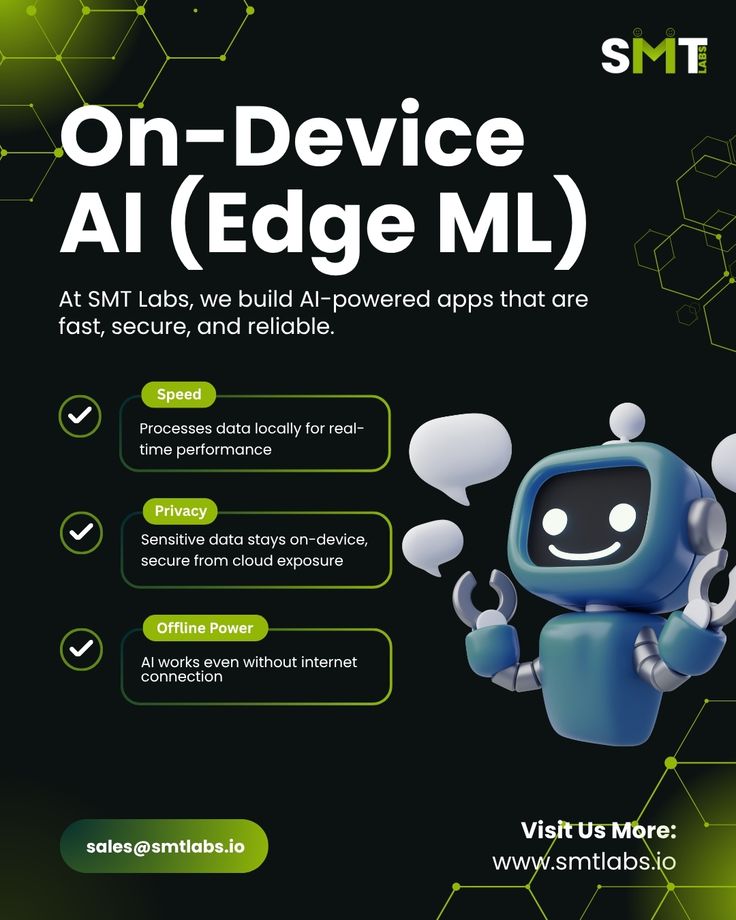
How Edge AI Is Powering the Next Generation of Smart Devices

How Edge AI Is Powering the Next Generation of Smart Devices Artificial Intelligence has become one of the most influential technologies of the modern digital era. Over the past few years, AI applications have evolved from cloud-based systems to more efficient and responsive solutions capable of operating directly on devices. This shift has given rise to Edge AI, a transformative technology that is changing the way smart devices function and interact with users. From smartphones and smart speakers to industrial robots and healthcare monitoring systems, Edge AI is enabling devices to process information locally instead of relying entirely on remote cloud servers. This approach is making devices faster, smarter, more secure, and capable of delivering real-time experiences that were previously difficult to achieve. As businesses and consumers continue to demand intelligent technologies that provide instant responses while protecting sensitive data, Edge AI is emerging as a critical component of next-generation smart devices. Understanding how this technology works and why it matters can help organizations and individuals prepare for the future of connected technology. What Is Edge AI? Edge AI refers to the deployment of artificial intelligence algorithms directly on hardware devices located at the “edge” of a network. Instead of sending data to cloud data centers for processing, the device itself performs AI computations locally. The term “edge” refers to devices positioned close to where data is generated. Examples include: Smartphones Smart cameras Smartwatches Industrial sensors Autonomous vehicles Medical devices Smart home appliances Retail monitoring systems By integrating AI capabilities directly into these devices, organizations can significantly reduce the need for constant cloud communication while improving performance and responsiveness. For example, when a smartphone uses facial recognition to unlock instantly, much of the processing happens directly on the device rather than being sent to a remote server. This local processing is a practical example of Edge AI in action. Why Edge AI Is Gaining Momentum Several technological developments are driving the rapid adoption of Edge AI across industries. The growth of Internet of Things (IoT) devices has resulted in billions of connected systems generating enormous amounts of data every day. Sending all this information to centralized cloud environments can create bandwidth limitations, increase costs, and introduce delays. At the same time, consumers have become more concerned about privacy and data security. Organizations are looking for ways to process information without exposing sensitive data to external servers. Advancements in AI chips, neural processing units (NPUs), and specialized hardware accelerators have also made it possible to run sophisticated AI models on compact devices with limited power consumption. These factors have created the ideal environment for Edge AI to flourish. How Edge AI Works Edge AI combines machine learning models with specialized hardware capable of performing complex calculations efficiently. The process generally follows these steps: Data Collection Sensors, cameras, microphones, and connected components collect information from the surrounding environment. Local Processing The device processes the data using embedded AI models. Instead of transmitting raw data to a cloud server, the analysis occurs locally. Decision Making Based on the processed information, the AI model makes decisions or predictions in real time. Action Execution The device performs the necessary action immediately, such as sending alerts, adjusting settings, recognizing objects, or responding to voice commands. Optional Cloud Synchronization Some devices periodically connect to cloud platforms for updates, training improvements, or data backups while keeping most real-time operations local. This architecture dramatically improves efficiency while reducing dependency on internet connectivity. Key Benefits of Edge AI The increasing popularity of Edge AI is largely driven by the advantages it offers over traditional cloud-based AI systems. Faster Response Times One of the biggest advantages of Edge AI is reduced latency. When data must travel to a cloud server and back, delays can occur. In applications such as autonomous vehicles or industrial automation, even a few milliseconds can be critical. By processing data directly on the device, Edge AI delivers immediate responses that improve user experiences and operational efficiency. Enhanced Privacy and Security Data privacy has become a major concern for businesses and consumers. Edge AI helps address these concerns by keeping sensitive information on the device rather than transmitting it across networks. For example: Medical devices can analyze patient data locally. Security cameras can identify threats without storing footage in the cloud. Smartphones can process biometric information without external servers. This approach reduces exposure to cyber threats and helps organizations comply with data protection regulations. Reduced Bandwidth Usage Transmitting large amounts of data to cloud platforms requires significant network resources. Edge AI minimizes bandwidth consumption because only relevant insights or summarized information need to be transmitted. This capability is particularly valuable in remote environments where network connectivity may be limited or expensive. Improved Reliability Many smart devices operate in environments where internet connectivity is inconsistent. Since Edge AI functions locally, devices can continue working even when network access is unavailable. This reliability is essential for industries such as manufacturing, transportation, healthcare, and defense. Lower Operational Costs Cloud computing costs can increase rapidly as organizations process larger volumes of data. By performing AI tasks at the edge, companies can reduce cloud storage, bandwidth expenses, and server processing requirements. This cost efficiency makes AI deployment more accessible for businesses of all sizes. Edge AI in Smartphones Modern smartphones are among the most common examples of Edge AI. Manufacturers increasingly incorporate AI accelerators that enable advanced features such as: Facial recognition Voice assistants Real-time translation Photography enhancement Predictive text suggestions Battery optimization Spam call detection Because these capabilities run directly on the device, users experience faster performance while maintaining greater privacy. The latest generation of smartphones continues to demonstrate how Edge AI can improve everyday digital experiences without relying heavily on cloud infrastructure. Smart Homes Powered by Edge AI The smart home ecosystem is rapidly evolving thanks to Edge AI technologies. Smart devices can now make intelligent decisions locally rather than waiting for cloud instructions. Examples include: Smart Security Systems AI-powered cameras can detect suspicious activities, recognize faces, and differentiate between

Artificial Intelligence, Business Analytics, Business Intelligence, Data Privacy & Security, Digital Transformation

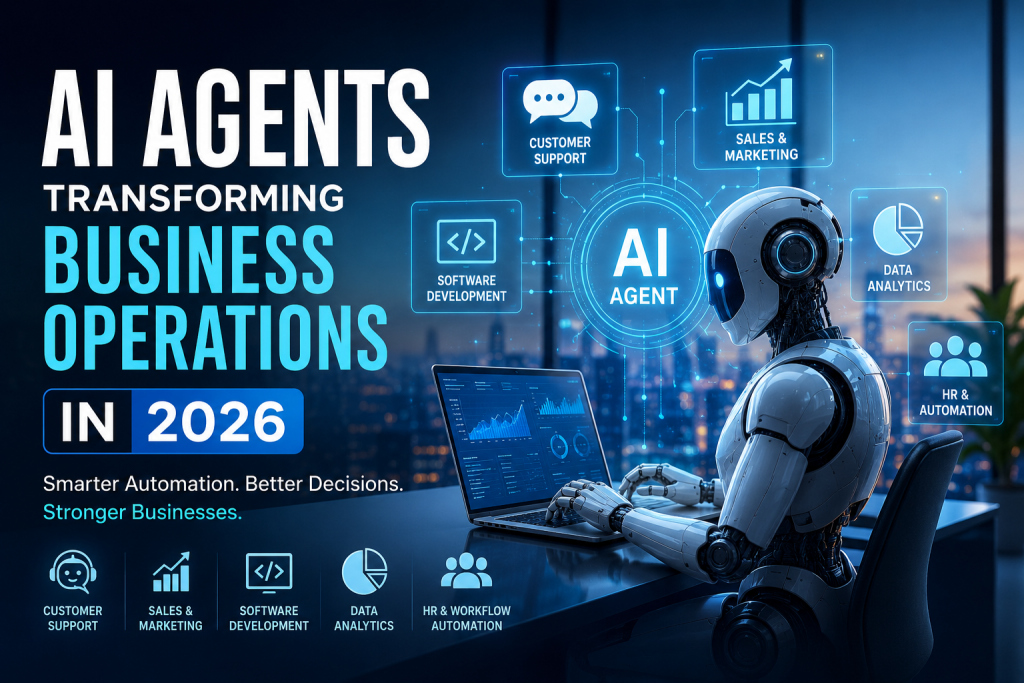
AI Agents in 2026: How Autonomous Systems Are Transforming Business Operations

Introduction Artificial Intelligence has moved far beyond simple chatbots and recommendation engines. In 2026, AI agents are becoming one of the most influential technologies shaping modern businesses. These intelligent systems are capable of understanding goals, making decisions, performing tasks, and even coordinating with other software tools with minimal human intervention. What once required teams of employees and multiple software platforms can now be managed by autonomous AI systems that work continuously and efficiently. The rise of AI agents marks a significant shift in how organizations approach productivity, operations, and decision-making. Rather than serving only as assistants, AI systems are increasingly acting as digital workers that can execute complex workflows, analyze large volumes of information, and adapt to changing business conditions in real time. As companies continue to invest in automation and digital transformation, AI agents are emerging as a critical component of business strategy. Their ability to reduce operational costs, improve efficiency, and accelerate innovation is changing the way organizations operate across industries. What Are AI Agents? AI agents are autonomous software systems designed to perform tasks on behalf of users or organizations. Unlike traditional automation tools that follow predefined rules, AI agents can understand context, learn from interactions, make decisions, and take actions to achieve specific objectives. These systems combine advanced artificial intelligence technologies such as large language models, machine learning, natural language processing, and workflow automation. They can interact with applications, access databases, communicate with users, and execute tasks without requiring constant human supervision. For example, an AI agent can receive a request to prepare a market research report, gather information from multiple sources, analyze trends, generate insights, create a presentation, and deliver the final report automatically. Instead of performing one isolated function, it manages an entire process from start to finish. This capability is what makes AI agents fundamentally different from conventional software automation solutions. Why AI Agents Are Gaining Momentum in 2026 Several factors are contributing to the rapid adoption of AI agents across industries. Businesses are generating more data than ever before, creating a growing need for systems that can process and interpret information quickly. At the same time, organizations face increasing pressure to improve efficiency while reducing operational costs. Advancements in generative AI and large language models have significantly improved the reasoning and decision-making abilities of AI systems. Modern AI agents can understand complex instructions, maintain context across multiple tasks, and interact naturally with both humans and software applications. Cloud computing infrastructure has also made it easier for businesses to deploy and scale AI-powered solutions. Organizations no longer need extensive hardware investments to access advanced AI capabilities. The combination of these technological developments has created an environment where AI agents can deliver measurable business value across a wide range of functions. How AI Agents Work At their core, AI agents operate through a cycle of perception, reasoning, action, and learning. First, the agent gathers information from its environment. This may include user requests, business data, emails, documents, databases, or external sources. Next, the system analyzes the information and determines the best course of action based on predefined objectives. Advanced reasoning models help the agent evaluate different possibilities and choose appropriate responses. Once a decision is made, the AI agent executes the required actions. This may involve sending emails, updating records, generating reports, scheduling meetings, processing transactions, or interacting with other software systems. Finally, the agent learns from outcomes and feedback to improve future performance. Over time, this continuous learning process helps the system become more effective and accurate. This ability to independently manage workflows makes AI agents particularly valuable in complex business environments. Transforming Customer Service Operations Customer service is one of the areas experiencing the most significant impact from AI agents. Traditional customer support often involves long wait times, repetitive inquiries, and high operational costs. AI agents are helping organizations overcome these challenges by providing instant, personalized, and scalable support. Modern AI customer service agents can understand customer questions, access relevant information, resolve issues, process requests, and escalate complex cases when necessary. They operate around the clock, ensuring customers receive assistance whenever needed. Beyond answering questions, AI agents can proactively identify potential issues, recommend solutions, and follow up with customers to ensure satisfaction. Businesses using AI-powered customer support systems are reporting faster response times, improved customer experiences, and reduced service costs. Revolutionizing Human Resources Management Human Resources departments are increasingly adopting AI agents to streamline administrative tasks and improve employee experiences. Recruitment is one area where these systems are delivering significant benefits. AI agents can screen resumes, schedule interviews, communicate with candidates, and identify suitable applicants based on specific job requirements. Employee onboarding processes are also becoming more efficient. AI agents can guide new hires through documentation, answer common questions, provide training materials, and ensure compliance requirements are completed. In addition, AI systems can assist with performance evaluations, workforce planning, employee engagement initiatives, and professional development recommendations. By automating routine administrative work, HR teams can focus more on strategic initiatives and employee relationships. Enhancing Sales and Marketing Performance Sales and marketing teams are using AI agents to improve customer engagement, generate leads, and optimize campaigns. AI-powered sales agents can identify potential customers, analyze purchasing behavior, personalize outreach efforts, and recommend next steps for sales representatives. These capabilities help organizations improve conversion rates and accelerate revenue growth. Marketing teams benefit from AI agents that can create content, monitor campaign performance, analyze audience behavior, and adjust strategies based on real-time insights. For example, an AI agent may automatically identify underperforming advertisements, suggest improvements, allocate budgets more effectively, and generate detailed performance reports. This level of automation allows businesses to respond more quickly to market changes and customer preferences. Improving Financial Operations Financial management is another area where AI agents are creating substantial value. Organizations handle large volumes of financial data every day, making accuracy and efficiency critical. AI agents can automate invoice processing, expense management, budgeting, forecasting, and financial reporting. These systems can identify unusual transactions, detect potential fraud, and alert financial teams to

Artificial Intelligence, Digital Transformation, Technology

AI-Powered Search vs Traditional Search Engines: What’s Changing?

AI-Powered Search vs Traditional Search Engines: What’s Changing? The way we search for information online is undergoing one of the biggest transformations since the birth of the internet. For more than two decades, traditional search engines have been our gateway to the digital world. Whether we wanted to find a nearby restaurant, learn a new skill, research a topic, or compare products, search engines have always been the first stop. However, the rise of Artificial Intelligence has started a new chapter in the evolution of search technology. AI-powered search is changing how users interact with information, moving beyond simply displaying links and providing direct, conversational answers. From AI assistants and chatbots to intelligent search platforms integrated into browsers and applications, the search experience is becoming faster, smarter, and more personalized than ever before. But what exactly is changing? How does AI-powered search differ from traditional search engines? And what does this shift mean for businesses, content creators, and everyday users? Let’s explore. Understanding Traditional Search Engines Traditional search engines have dominated the internet for years. Their primary purpose is to help users discover relevant web pages based on keywords entered into a search box. When a user searches for something like “best laptops for students,” the search engine scans its index of billions of web pages and returns a list of links ranked according to relevance and authority. This process generally involves: Crawling websites Indexing content Ranking pages Displaying search results The user then clicks through multiple links to find the information they need. Traditional search has been highly effective because it provides access to a vast amount of information. However, it often requires users to visit several websites before finding a complete answer. For simple questions, this process may feel inefficient in today’s fast-paced digital environment. What Is AI-Powered Search? AI-powered search represents a significant evolution in information retrieval. Instead of simply presenting a list of links, AI search systems understand user intent, analyze context, and generate direct answers in natural language. These systems use advanced technologies such as: Natural Language Processing (NLP) Machine Learning Large Language Models (LLMs) Contextual Understanding Generative AI When users ask a question, AI-powered search can provide a summarized response, explain concepts, compare options, and even engage in follow-up conversations. For example, instead of searching: “Best smartphones under ₹30,000” Users can ask: “Which smartphone under ₹30,000 has the best camera and battery life for daily use?” An AI-powered system can analyze the query, understand the requirements, and provide a tailored recommendation instantly. This conversational approach makes information discovery significantly more intuitive. The Biggest Differences Between AI Search and Traditional Search Although both approaches aim to help users find information, they operate very differently. 1. Links vs Direct Answers Traditional search engines primarily provide lists of relevant links. Users must browse multiple websites to gather information and form conclusions. AI-powered search, on the other hand, often delivers a complete answer directly within the search interface. This reduces the need to open multiple tabs and saves valuable time. 2. Keyword Matching vs Intent Understanding Traditional search heavily relies on keywords. While modern search engines have become better at understanding language, keyword relevance remains a major factor. AI-powered search focuses more on understanding intent. It analyzes the meaning behind the query rather than just matching keywords. This allows users to ask questions naturally without worrying about specific search terms. 3. Static Results vs Conversational Interaction Traditional search results are generally static. If users need clarification, they must perform additional searches. AI-powered search creates an interactive experience. Users can ask follow-up questions, request explanations, or refine their search without starting over. This makes information gathering more efficient and user-friendly. 4. Information Gathering vs Information Synthesis Traditional search presents information from multiple sources. Users are responsible for reading and synthesizing the content. AI search performs much of this work automatically by combining information from various sources and presenting it in a summarized format. This significantly reduces research time. 5. One-Size-Fits-All vs Personalized Experiences AI systems can adapt responses based on context, previous interactions, and user preferences. This creates a more personalized experience compared to traditional search methods that often display similar results for everyone. Why AI-Powered Search Is Gaining Popularity The rapid adoption of AI search is not happening by accident. Several factors are driving this shift. Faster Access to Information Modern users expect instant answers. AI-powered search reduces the number of steps needed to find information, improving efficiency. Instead of reading multiple articles, users receive concise responses immediately. Better Understanding of Complex Queries People often struggle to find the right keywords when using traditional search. AI-powered systems understand natural language, making searches more intuitive. Users can communicate as if they were speaking to another person. Enhanced Productivity Professionals, students, researchers, and businesses are increasingly using AI search tools to accelerate workflows. Tasks that once required hours of research can now be completed in minutes. Improved User Experience The conversational nature of AI search creates a more engaging experience. Rather than searching repeatedly, users can refine questions naturally and receive increasingly relevant responses. How AI Search Is Impacting Businesses The shift toward AI-powered search is creating both opportunities and challenges for businesses. Changing SEO Strategies For years, businesses have optimized content to rank highly on search engine results pages. As AI search becomes more common, SEO strategies are evolving. Content creators now need to focus on: Answering user questions clearly Providing valuable insights Demonstrating expertise Creating trustworthy content Structuring information effectively High-quality content is becoming more important than ever. Increased Importance of Authority AI systems prioritize reliable and authoritative information. Businesses that consistently publish accurate, informative, and credible content are more likely to gain visibility. Building trust is becoming a competitive advantage. New Opportunities for Brand Visibility Although AI-generated answers may reduce clicks to websites in some cases, they also create opportunities for brands to be cited as trusted sources. Businesses that produce valuable content can strengthen their authority and reach broader audiences. Challenges Facing AI-Powered Search Despite

Artificial Intelligence, Business Intelligence, Digital Transformation, enterprise

Agentic AI: How Autonomous AI Agents Are Changing Business Workflows

Agentic AI: How Autonomous AI Agents Are Changing Business Workflows Artificial Intelligence has rapidly evolved from being a futuristic concept to becoming a critical component of modern business operations. Over the past few years, organizations have adopted AI-powered tools to automate repetitive tasks, improve customer experiences, and enhance decision-making. However, the latest advancement in this technological journey is Agentic AI—a new generation of AI systems capable of acting autonomously, making decisions, and completing complex workflows with minimal human intervention. Unlike traditional AI systems that require continuous prompts and instructions, Agentic AI can independently analyze situations, plan actions, execute tasks, and adapt based on outcomes. This shift represents one of the most significant developments in business technology, offering organizations unprecedented levels of efficiency, productivity, and scalability. As businesses face increasing competition and growing operational complexity, Agentic AI is emerging as a powerful solution capable of transforming how work gets done. From customer service and sales to software development and project management, autonomous AI agents are redefining business workflows across industries. In this article, we’ll explore what Agentic AI is, how it works, its business applications, benefits, challenges, and why it is poised to become a cornerstone of future enterprise operations. Understanding Agentic AI Agentic AI refers to artificial intelligence systems designed to operate as autonomous agents. These agents can perceive their environment, understand goals, create plans, make decisions, and take actions without requiring constant human supervision. Traditional AI tools generally perform specific tasks based on direct user input. For example, a chatbot may answer questions, or an AI image generator may create images based on prompts. Agentic AI goes several steps further. Instead of merely responding to commands, autonomous AI agents can: Understand objectives Break down complex tasks into smaller actions Gather necessary information Make decisions based on available data Execute workflows independently Learn from outcomes and adjust strategies This capability transforms AI from a passive assistant into an active digital worker capable of managing entire business processes. The Evolution from Traditional AI to Agentic AI The development of Agentic AI represents the next stage in the evolution of artificial intelligence. Traditional Automation Early automation systems followed predefined rules. They could execute repetitive tasks but lacked flexibility and intelligence. Examples include: Email automation Data entry automation Scheduled reporting systems Machine Learning Systems Machine learning introduced predictive capabilities. These systems could identify patterns and make recommendations based on data. Examples include: Recommendation engines Fraud detection systems Predictive analytics tools Generative AI Generative AI expanded AI capabilities by creating content such as text, images, code, and videos. Examples include: AI writing assistants Image generation platforms Coding assistants Agentic AI Agentic AI combines reasoning, planning, memory, and action capabilities. Instead of assisting users with individual tasks, autonomous agents can complete entire workflows from start to finish. This progression marks a fundamental shift from AI tools that simply respond to requests toward AI systems that actively pursue objectives. How Agentic AI Works To understand its business value, it’s important to know how Agentic AI functions. 1. Goal Understanding An AI agent begins by understanding the objective provided by the user or organization. For example: “Generate a market research report for the healthcare industry.” The agent interprets the request and identifies the required steps. 2. Planning The system creates a strategic plan to accomplish the objective. This may involve: Researching industry data Gathering competitor information Analyzing trends Creating visual reports Drafting conclusions 3. Execution The AI agent performs tasks independently using available tools and resources. It may: Search databases Access internal documents Analyze spreadsheets Generate reports Send notifications 4. Monitoring Throughout execution, the agent evaluates progress and adjusts actions when necessary. 5. Learning Advanced agents continuously improve performance by learning from previous experiences and outcomes. This combination of reasoning, planning, execution, and adaptation enables Agentic AI to handle increasingly sophisticated business processes. Why Businesses Are Embracing Agentic AI Organizations worldwide are investing heavily in Agentic AI because of its ability to improve operational efficiency while reducing costs. Several factors are driving adoption: Growing Data Volumes Businesses generate enormous amounts of data daily. Human teams often struggle to process and analyze this information efficiently. Agentic AI can monitor, analyze, and extract insights from large datasets in real time. Need for Faster Decision-Making Competitive markets require rapid responses. Autonomous agents can process information and make recommendations significantly faster than traditional workflows. Workforce Productivity Employees spend substantial time on repetitive administrative tasks. AI agents can automate these activities, allowing workers to focus on strategic and creative responsibilities. Cost Optimization Reducing manual effort leads to lower operational expenses while maintaining high levels of productivity. Business Applications of Agentic AI Agentic AI is transforming numerous departments across organizations. Customer Support Customer service is one of the most impactful areas for AI adoption. Autonomous agents can: Handle customer inquiries Resolve common issues Process refunds Escalate complex cases Provide 24/7 support This improves customer satisfaction while reducing support costs. Sales and Lead Generation Sales teams spend considerable time identifying prospects and nurturing leads. AI agents can: Research potential customers Qualify leads Schedule meetings Send follow-up emails Generate sales insights As a result, sales professionals can focus on closing deals rather than administrative work. Marketing Automation Marketing departments can leverage Agentic AI for: Content creation Campaign optimization Audience segmentation Competitor analysis Social media management AI agents continuously monitor performance and make adjustments to improve results. Human Resources HR teams are increasingly using AI agents to streamline recruitment and employee management. Applications include: Resume screening Candidate ranking Interview scheduling Employee onboarding Performance tracking This reduces hiring time and improves recruitment efficiency. Software Development Agentic AI is making a major impact in software engineering. AI agents can: Write code Detect bugs Conduct testing Generate documentation Monitor system performance Development teams benefit from faster release cycles and improved software quality. Finance and Accounting Financial departments use autonomous AI agents for: Invoice processing Expense tracking Financial forecasting Fraud detection Compliance monitoring These capabilities reduce errors and improve financial accuracy. Benefits of Agentic AI for Businesses Increased Productivity

How would you like me to respond?

Select a personality for your AI assistant

Normal
Happy
Sad
Angry

Your selection will affect how the AI assistant responds to your messages

Chat Assistant

Let's discuss your project!

Hear from our clients and why 3000+ businesses trust TechOTD

Tell us what you need, and we'll get back with a cost and timeline estimate

Scroll to Top