
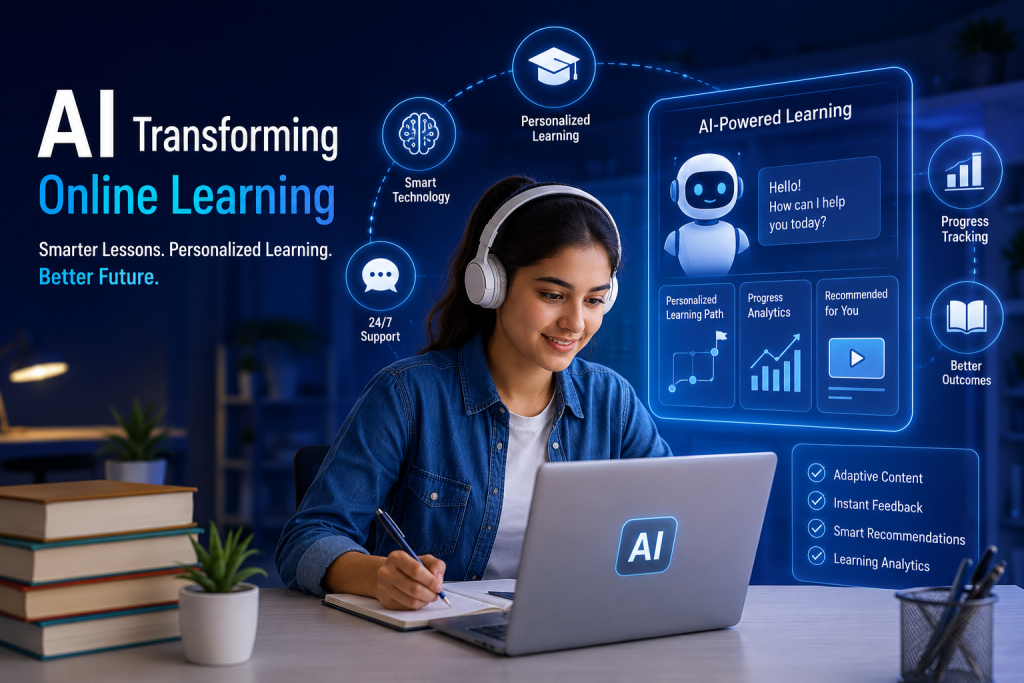
How Artificial Intelligence Is Transforming Online Learning
Introduction Artificial Intelligence is becoming an important part of online education, changing how students access content, receive feedback, and progress through digital courses. AI-powered tools can analyze learning patterns and provide support that is more responsive to individual student needs. AI in online learning can help create personalized learning experiences by recommending relevant lessons, adjusting content difficulty, and identifying areas where students may need additional practice. This can make digital education more flexible and adaptive. As online learning continues to grow, artificial intelligence is creating new opportunities for smarter learning platforms, automated support, adaptive assessments, and personalized educational experiences. However, effective use of AI also requires responsible implementation, reliable data, and meaningful human guidance. What Is AI in Online Learning? AI in online learning refers to the use of artificial intelligence technologies to improve digital education and support students throughout their learning journey. AI-powered systems can analyze student interactions, learning progress, and performance to provide more relevant educational experiences. AI-Powered Learning Platforms AI-powered learning platforms can organize educational content and provide recommendations based on student activity. These systems can help learners discover relevant lessons, practice materials, and resources according to their progress and learning needs. Adaptive Learning Adaptive learning uses technology to adjust educational content according to a student’s performance and progress. If a learner finds a topic difficult, the platform can provide additional explanations, practice activities, or supporting resources. AI-Based Student Support AI-based tools can provide automated support through chatbots, virtual assistants, and intelligent help systems. These tools can answer common questions, guide students toward relevant resources, and provide assistance outside regular classroom hours. By combining data analysis, automation, and personalized recommendations, AI can help online learning platforms create more flexible and responsive learning experiences. How AI Personalizes Online Learning AI can personalize online learning by analyzing how students interact with educational content and identifying their learning patterns, strengths, and areas that may require additional support. This allows digital learning platforms to provide more relevant experiences for individual learners. 1. Personalized Learning Paths AI-powered platforms can recommend lessons and learning activities based on a student’s progress and performance. Instead of following exactly the same path as every other learner, students can receive content that is better suited to their current level and learning needs. 2. Adaptive Content and Difficulty AI systems can adjust the difficulty of learning materials based on student performance. Learners who understand a topic quickly may move forward, while students who need more support can receive additional explanations, examples, and practice activities. 3. Personalized Recommendations AI can recommend relevant videos, articles, exercises, and other learning resources based on a student’s interests and previous activity. These recommendations can help learners discover useful content without spending excessive time searching for it. 4. Identifying Learning Gaps By analyzing assessment results and learning activity, AI can help identify areas where students may be struggling. Teachers and learners can then use this information to focus on specific topics that require additional attention. Benefits of AI in Online Learning AI can provide several benefits for online learners and educators by making digital education more personalized, responsive, and efficient. When used effectively, AI tools can support learning without replacing the important role of teachers and human guidance. Personalized Learning Experiences AI can adapt learning experiences according to student progress, performance, and learning needs. This can help learners receive more relevant content and avoid spending unnecessary time on material they have already mastered. Instant Feedback AI-powered assessment tools can provide quick feedback on quizzes, exercises, and learning activities. Immediate feedback can help students identify mistakes and understand which areas need additional practice. 24/7 Learning Support AI-based chatbots and virtual assistants can provide basic support outside traditional classroom hours. Students can receive answers to common questions and guidance toward relevant learning resources whenever they need assistance. Improved Learning Efficiency AI can automate certain tasks such as organizing content, recommending resources, and analyzing learning progress. This can help students spend more time learning while giving educators useful information about student performance. Support for Teachers and Educators AI tools can help educators analyze learning data, identify students who may need additional support, and reduce repetitive administrative tasks. This can give teachers more time to focus on teaching, mentoring, and meaningful student interaction. Challenges and Limitations of AI in Online Learning Although AI can improve online learning in many ways, its use also creates important challenges. Educational institutions and online learning platforms need to consider privacy, data security, accuracy, accessibility, and the continued importance of human guidance. Data Privacy and Security AI-powered learning platforms may collect information about student activity, performance, and learning behavior. This data should be handled responsibly and protected through appropriate privacy and security practices. Accuracy and Reliability AI-generated recommendations and responses may not always be completely accurate or appropriate. Students and educators should evaluate AI-generated information carefully and avoid relying on automated systems without human review when accuracy is important. Overdependence on Technology Students may become overly dependent on AI tools if technology replaces independent thinking and problem-solving. AI should support learning rather than discourage students from developing their own understanding and critical thinking skills. Digital Access and Inequality Not every student has equal access to reliable internet connections, modern devices, or advanced AI-powered learning platforms. Equal access remains an important challenge for making AI-supported online education more inclusive. Maintaining Human Interaction AI can provide useful automated support, but it cannot fully replace teachers, mentors, and meaningful human interaction. Educators continue to play an important role in providing guidance, motivation, emotional understanding, and personalized support. The Future of AI in Online Learning The role of AI in online learning is likely to continue growing as artificial intelligence technologies become more advanced and accessible. Future learning platforms may provide smarter recommendations, more adaptive content, improved learning analytics, and increasingly personalized educational experiences. AI may also become more integrated with other technologies such as virtual reality, augmented reality, interactive simulations, and intelligent digital assistants. This combination could create more immersive and flexible online learning environments.