AI in banking

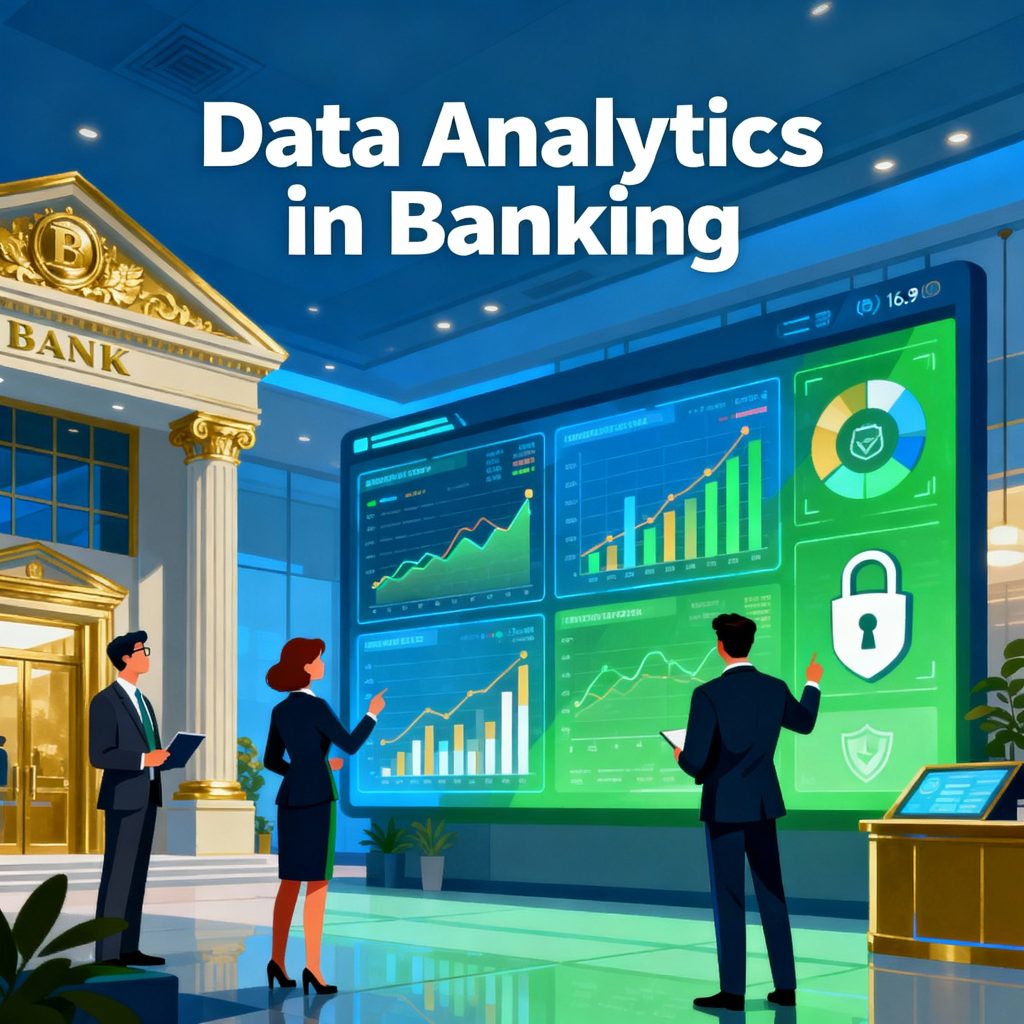
2D illustration of a modern bank with professionals examining colorful digital analytics dashboards, security icons, and vibrant graphs, highlighting data analytics in banking.
data science

Data Analytics in Banking: Transforming Finance in 2025

  Introduction The banking industry is entering a new era—where every transaction, service, and decision is powered by data analytics in banking, banking analytics, and data-driven banking. From retail and commercial banking to investment and treasury, financial institutions are now harnessing the power of analytics tools, financial data analysis, and artificial intelligence to drive smarter strategies, deliver personalized customer experiences, prevent fraud, and manage risk more effectively than ever before. In today’s competitive financial landscape, banks that embrace data analytics not only thrive—they set the pace. For insights on related financial innovation, read our guide to predictive analytics software development. For the latest industry research from a leading consultancy, visit McKinsey Financial Services Insights. How Data Analytics Powers Modern Banking Fraud Detection and AML/KYC Real-time transaction monitoring, anomaly detection, and predictive analytics flag suspicious activity for strong anti-fraud and compliance measures in banking analytics. Machine learning models analyze transaction patterns to detect fraud, building trust and reducing losses for data-driven banking. Customer Segmentation & Personalization Banks group customers by behavior, demographics, and spending patterns for highly relevant product offerings powered by financial data analysis. Personalized recommendations, communications, and experiences increase retention by up to 85% when personalization is prioritized in data analytics in banking. Credit Risk Assessment Advanced credit analytics leverage alternative data and predictive analytics models to accurately assess borrower risk, reducing non-performing assets. Faster and fairer data-driven lending decisions empower responsible lending and expand financial inclusion. Churn Prediction & Retention Analytics identify at-risk customers early, enabling banks to trigger proactive retention campaigns and reduce churn in banking analytics. Early intervention through data-driven banking strategies boosts long-term relationship value. Operational Efficiency & Compliance Streamlined reporting and process automation lower regulatory costs and compliance errors in banking analytics (compliance costs can drop by 20%). Automated pipelines support real-time reporting for Basel, IFRS9, and SEBI requirements with predictive analytics in banking. Predictive Analytics for Strategy Predictive analytics models anticipate cash/ATM demand, optimize pricing, assess investment risk, and forecast market trends for smarter business decisions. Scenario analysis enables banks to adapt to changing economic conditions using data analytics in banking. Real-World Use Cases   Use Case Description Fraud Detection Real-time analytics spot and prevent suspicious transactions using banking analytics. Personalized Banking Banks offer tailored products and services brought by data-driven banking and customer financial data analysis. Loan Default Prediction Machine learning credit scoring supports risk decisions, reducing losses in banking analytics. Compliance Reporting Automation cuts regulatory costs and errors in financial data analysis. Customer Churn Prediction Analytics identify at-risk accounts for targeted retention using predictive analytics. Pricing Optimization Data-driven interest rates and dynamic product pricing improve growth. Strategic ATM Placement Analytics and data-driven banking determine ATM locations for higher usage and savings. Benefits of Data Analytics in Banking Smarter, faster data-driven decisions for revenue growth Stronger fraud prevention and security through predictive analytics Better risk management using banking analytics tools Personalized customer engagement and loyalty Reduced operational costs and improved compliance in financial data analysis Deeper customer insight for strategic data-driven banking innovation Conclusion Data analytics in banking, banking analytics, and predictive analytics are transforming every facet of the industry—empowering institutions to innovate, mitigate risk, and deliver exceptional service. As financial data analysis and data-driven banking become standard in 2025, analytics will drive resilient, future-ready financial strategies. FAQ How does data analytics prevent banking fraud? By using real-time monitoring and machine learning, analytics detect fraudulent patterns and anomalies rapidly, minimizing losses. What is customer segmentation and why does it matter? It’s grouping customers by behavioral and demographic traits, helping banks target relevant offerings for higher engagement and loyalty. How does analytics improve loan approval speed? Credit scoring models use multiple data sources for instant, accurate risk assessment—approving loans faster and reducing bad debt. Can analytics reduce compliance costs? Yes, automation of reporting and data management slashes compliance expenses and error rates. What’s the future of analytics in banking? Expect smarter AI models, blockchain integration for data transparency, real-time insights, and hyper-personalized banking as standard.  

Artificial Intelligence

Creating Hyper-Personalized Banking with AI: Cost, ROI, and Use Cases

Introduction Artificial Intelligence (AI) is revolutionizing the banking industry by enabling hyper-personalized customer experiences that were previously unimaginable. Banks can now leverage AI-driven data analytics, machine learning models, and natural language processing to tailor services, products, and interactions uniquely to each customer’s preferences and behaviors. This shift enhances customer satisfaction, loyalty, and operational efficiency, making AI-powered personalization a powerful competitive differentiator. This blog explores how banks can create hyper-personalized experiences using AI, including typical costs involved, potential Return on Investment (ROI), and compelling use cases transforming the sector. For insights on AI in finance and predictive analytics, explore TechOTD’s AI services and their technology blog. What is Hyper-Personalized Banking? Hyper-personalization uses AI to analyze vast datasets encompassing transactional history, demographics, social media, and behavioral signals, delivering real-time, individualized banking experiences. This goes beyond segment-based marketing to dynamic, one-to-one customer engagement. Key Use Cases of AI-Driven Hyper-Personalization 1. Personalized Financial Product Recommendations AI models analyze spending patterns, credit scores, and life events to suggest tailored loans, credit cards, or investment products. 2. Intelligent Virtual Assistants and Chatbots AI-powered chatbots offer 24/7 personalized customer support, resolve queries, and proactively alert customers about offers or account anomalies. 3. Customized Credit Risk Assessment Machine learning algorithms refine credit scoring individually based on expanded datasets, enabling more accurate risk evaluation and inclusive lending. 4. Dynamic Pricing and Offers Banks can customize interest rates, fees, and promotions in real time based on customer behavior and market conditions. 5. Fraud Detection and Prevention AI analyzes transaction patterns to identify unusual activities, instantly protecting customers from fraud and identity theft. Costs of Implementing AI for Hyper-Personalization Technology Investment: Procuring AI platforms, cloud infrastructure, and data storage solutions. Data Management: Cleaning, integrating, and maintaining quality datasets. Talent Acquisition: Hiring data scientists, AI engineers, and financial analysts. Development and Integration: Building, testing, and deploying AI models with existing banking systems. Compliance and Security: Ensuring data privacy and meeting regulatory standards (GDPR, PCI-DSS). Typical budgets vary based on scope: Small-scale pilots: $100,000 – $250,000 Mid-size implementations: $250,000 – $1 million Large enterprise-wide AI initiatives: $1 million+ Return on Investment (ROI) from AI-Powered Personalization Increased Customer Retention: Personalized services improve satisfaction and reduce churn by up to 30%. Boosted Revenue: Targeted product recommendations and dynamic pricing can increase sales by 10-20%. Cost Savings: AI automation reduces customer service costs and fraud losses significantly. Faster Decision-Making: Accelerated loan approvals with AI-driven credit assessment improve conversion rates. A well-executed AI personalization project typically sees ROI within 12-24 months. How to Get Started with AI-Powered Personalization Assess Data Readiness: Evaluate data quality and integration capabilities. Identify Use Cases: Prioritize high-impact personalization areas aligned with business goals. Choose AI Partners: Collaborate with AI vendors or development experts like TechOTD for custom solutions. Pilot and Scale: Implement pilot projects, analyze results, and expand capabilities iteratively. Ensure Compliance: Embed privacy and governance frameworks. Explore how TechOTD supports AI-enabled banking innovations: TechOTD AI Banking Solutions. Conclusion AI-driven hyper-personalization is transforming banking by creating seamless, tailored customer journeys that drive business growth and operational excellence. While initial investments can be substantial, the long-term ROI through enhanced loyalty, revenue, and efficiency justifies the commitment. With expert partners and a clear strategy, banks can harness AI to redefine customer relationships and competitive positioning in the digital age. Stay updated on AI and banking innovations through TechOTD Blog. FAQs Q1: What distinguishes hyper-personalization from traditional personalization? It uses real-time AI-driven insights for individual customer experiences versus broad segmentation. Q2: How much does AI personalization cost for banks? Costs range from $100,000 for pilots to over $1 million for enterprise projects. Q3: What are the biggest ROI drivers? Customer retention, revenue growth from targeted offers, fraud reduction, and operational efficiency. Q4: How quickly can banks implement AI personalization? Pilots can launch within 3-6 months, with scaling taking 1-2 years. Q5: Is data privacy a concern with AI in banking? Yes, compliance with regulations like GDPR is critical when handling sensitive financial data.

Cloud

Cloud Computing in Banking: All You Need to Know Before Moving to the Cloud

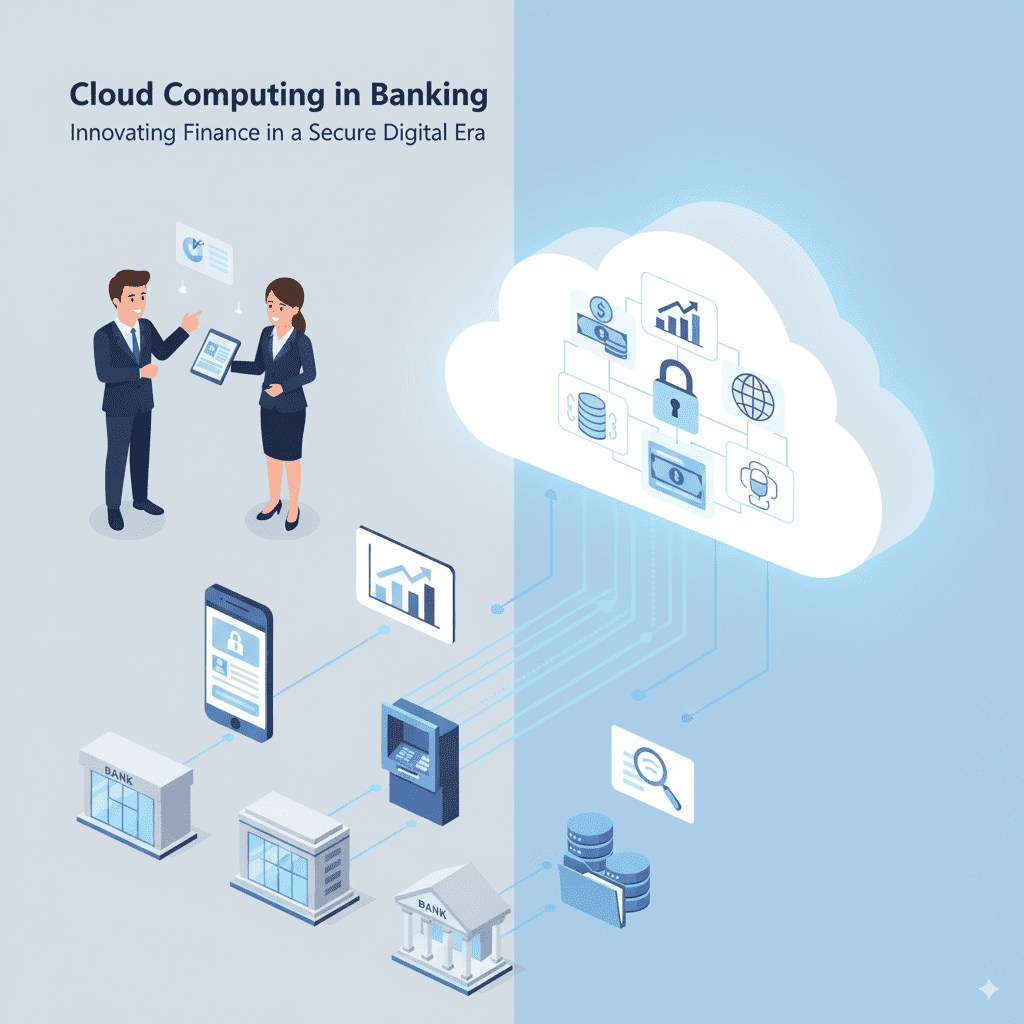
Introduction The banking industry is undergoing a profound digital transformation, with cloud computing emerging as a critical enabler of innovation, agility, and operational efficiency. Banks worldwide are rapidly adopting cloud technologies to modernize legacy systems, enhance customer experience, and accelerate product delivery. However, migrating to the cloud also presents unique challenges around data security, regulatory compliance, and integration complexity. This blog covers everything banks need to know before moving to the cloud—benefits, risks, migration strategies, and key considerations for a successful cloud journey. It also highlights how AI-driven cloud solutions and predictive analytics are shaping the future of banking technology, drawing on insights from leading experts like TechOTD. Why Cloud Computing Matters for Banks Scalability: Cloud platforms enable banks to scale computing resources on demand during peak loads or new product launches. Cost Efficiency: Moving from capital expenditure to operational expenditure reduces upfront IT investments and optimizes resource usage. Innovation Enablement: Cloud supports rapid development of digital banking products, AI-powered services, and personalized customer experiences. Improved Collaboration: Cloud platforms enhance data sharing across departments and partner ecosystems securely. Disaster Recovery & Business Continuity: Cloud’s resilient infrastructure safeguards critical banking operations against data loss and outages. Explore how AI and analytics complement cloud capabilities to drive smarter, data-driven banking: Predictive Analytics in Banking. Key Considerations Before Moving to the Cloud 1. Regulatory Compliance and Data Privacy Banks must comply with strict regulations like GDPR, PCI DSS, and regional data protection laws. Understanding cloud providers’ compliance certifications and data residency options is vital. 2. Security and Risk Management Implementing end-to-end encryption, identity and access management (IAM), and continuous threat monitoring is mandatory to protect sensitive financial data. 3. Legacy System Integration Seamless integration between existing on-premises systems and cloud platforms is crucial to avoid business disruptions. 4. Selecting the Right Cloud Model Public Cloud: Cost-effective and scalable but requires strict security controls. Private Cloud: Offers better control and security but at higher costs. Hybrid Cloud: Combines benefits of both, allowing sensitive workloads on private clouds and less critical ones on public clouds. 5. Vendor Lock-in and Multi-cloud Strategy Banks should evaluate risks associated with dependence on a single cloud provider and consider multi-cloud approaches for flexibility and resilience. Migration Strategies for Banking Cloud Adoption Lift and Shift: Moving applications without changes; fastest but may not optimize cloud benefits. Re-platforming: Modifying existing apps for cloud compatibility and efficiency. Refactoring: Redesigning applications entirely to be cloud-native, maximizing scalability and functionality. TechOTD’s expert teams design and execute tailored cloud migration strategies ensuring minimal disruption: How We Work – TechOTD. Benefits of AI and Cloud in Modern Banking Enhanced Fraud Detection: AI algorithms analyze transactions in real-time to flag suspicious activities. Personalized Customer Experiences: AI models predict customer needs and tailor financial products. Operational Efficiency: Automation reduces manual workflows and error rates. Discover AI’s role in banking innovation and see real-world examples: Large Language Models in Finance. Challenges Banks Face in Cloud Adoption Managing cultural and organizational change Ensuring interoperability across hybrid environments Handling complex data migration and synchronization Meeting constantly evolving compliance and security requirements Conclusion Cloud computing offers transformative potential for banks looking to innovate, scale, and compete in the digital economy. However, it requires careful planning, strategic decision-making, and trusted technology partnerships to effectively manage risks and unlock benefits. Leveraging AI and predictive analytics atop cloud infrastructure further accelerates banking digital maturity by enabling smarter operations and customer-first models. Embark on your cloud journey with experienced partners like TechOTD, who specialize in AI-driven cloud solutions for finance and beyond. Explore more banking technology insights and trends at TechOTD Blog. FAQs Q1: Is public cloud safe for banks? With strong encryption and compliance controls, public cloud can be secure, though sensitive data may benefit from private or hybrid clouds. Q2: How long does cloud migration usually take? Depending on scale and complexity, it ranges from a few months to over a year. Q3: What are key benefits of hybrid cloud in banking? It balances security, flexibility, and cost efficiency by allocating workloads appropriately. Q4: Can AI operate effectively in cloud environments? Yes, cloud provides the computational power and scalability AI applications demand. Q5: How to avoid vendor lock-in? Adopt open standards, multi-cloud strategies, and platform-agnostic architectures.

finance

Large Language Models (LLMs) in Finance: Benefits, Applications, and Real Examples

Introduction The finance industry is undergoing a transformation fueled by advances in artificial intelligence, with Large Language Models (LLMs) playing a pivotal role. These sophisticated AI models, trained on vast amounts of textual data, have unlocked new opportunities to automate, analyze, and innovate across various financial sectors. Here’s an in-depth look at the benefits, applications, and real-world examples of LLMs in finance. Explore how TechOTD’s AI services can help your business leverage LLMs and other cutting-edge technologies to drive growth and efficiency. Benefits of LLMs in Finance Enhanced Data Processing: LLMs can quickly read, interpret, and summarize massive volumes of financial documents, reports, and news, significantly reducing manual effort. Improved Decision-Making: By extracting insights from unstructured data, LLMs provide a richer context for risk assessment, investment strategies, and compliance monitoring. Automated Customer Support: Chatbots powered by LLMs handle complex, natural conversations, offering personalized assistance 24/7 with high accuracy. Fraud Detection and Risk Management: LLMs analyze patterns and flag suspicious activities beyond standard rule-based systems, increasing security. Regulatory Compliance: Automate the review of regulatory updates, ensuring businesses remain compliant without exhaustive manual checks. Cost Efficiency: Automating document processing, customer inquiries, and report generation reduces operational costs and accelerates turnaround times. Applications of LLMs in Finance Research & Analytics: LLMs aggregate and interpret market data, earnings reports, and analyst notes to generate actionable insights. Customer Experience: AI-driven virtual assistants personalize banking, investment, and insurance services to individual customer needs. Document Automation: Contracts, loan applications, and policy documents are processed faster and with fewer errors using LLMs. Sentiment Analysis: Monitoring social media and news for sentiment trends helps financial institutions adjust strategies proactively. Portfolio Management: LLMs assist portfolio managers by synthesizing data and simulating scenarios for better asset allocation. Chatbots & Conversational AI: Enhance virtual agents with LLMs to support financial advice, fraud alerts, and routine queries. Real Examples of LLMs in Finance JP Morgan Chase: Utilizes LLM-powered chatbots to automate client communications and internal document analysis, saving countless work hours. Goldman Sachs: Applies LLMs for market sentiment analysis, leveraging news and social media data to anticipate market shifts. Bank of America: “Erica” chatbot uses LLM technology to enhance customer interactions, deliver financial advice, and speed up transaction processes. HSBC: Employs LLMs for compliance and regulatory report automation, reducing the risk of penalties. Capital One: Uses natural language processing to analyze customer feedback and improve product offerings rapidly. Getting Started with LLMs in Your Financial Business Adopting LLMs requires a strategic approach—from data assessment and model selection to secure deployment and continuous refinement. Partnering with an expert like TechOTD ensures you get customized AI solutions designed for your specific finance needs, backed by secure cloud and software development expertise (TechOTD Services). FAQ 1. Can LLMs replace human analysts in finance? LLMs augment analysts by automating routine tasks and providing insights, but human expertise remains crucial for strategic decisions. 2. How secure are LLM implementations in finance? With proper security protocols, encryption, and compliance standards, LLMs can be deployed safely in financial environments. 3. What types of financial documents can LLMs process? Contractual agreements, earnings reports, regulatory filings, loan applications, policy documents, and more. 4. Are LLM-powered chatbots suitable for all customer segments? Yes, they can be trained to handle diverse queries with personalized responses across demographics. 5. How does AI improve compliance in finance? By quickly analyzing regulatory changes and automating report generation, reducing human errors and audit risks.

Scroll to Top