Autonomous Systems

Artificial Intelligence, Cloud Computing and Technology, Software development

The Shift to Autonomous Ecosystems: Why Static Software is Dying in 2026

The Shift to Autonomous Ecosystems: Why Static Software is Dying in 2026 Remember when we used to log into an application, click five different buttons to generate a report, download a CSV file, and then manually upload it into another software system? For decades, human-computer interaction followed a strict, predictable script. Software was a passive tool. It sat there, waiting for a human to input data, trigger a command, or click a button. If you wanted to automate something, you had to build rigid, brittle API connections or rely on brittle Robotic Process Automation (RPA) scripts that broke the second a user interface changed by a single pixel. Welcome to 2026. The era of the static, passive software application is officially drawing to a close. We are currently living through the most profound shift in computer science since the migration from desktop mainframes to the cloud. We are moving away from traditional software applications and moving toward Autonomous Ecosystems—self-healing, self-optimizing networks of cognitive AI agents, decentralized edge nodes, and fluid data architectures that adapt to human intent in real time. In this deep dive, we will unpack exactly what this paradigm shift looks like, how it’s rewriting the rules of software development, the infrastructure powering it, and what it means for businesses striving to stay relevant. 1. The Anatomy of Static vs. Autonomous Software To understand where we are going, we must first look at where we’ve been. Traditional software is inherently deterministic. You write code that says: If User Executes Action A, Trigger Event B. Autonomous software, by contrast, is probabilistic and goal-oriented. You don’t tell the software how to do a task; you tell it what goal to achieve, establish the boundaries (guardrails), and let the system determine the optimal path to get there. A Side-by-Side Comparison Feature Traditional (Static) Software Autonomous Ecosystems Logic Execution Hardcoded, deterministic rules and conditional branches. Probabilistic reasoning via Cognitive Architectures & LLMs. Integration Rigid, pre-built API integrations or webhook chains. Dynamic, on-the-fly tool discovery and negotiation. User Interface Fixed graphical user interfaces (GUIs) with static dashboards. Generative User Interfaces (GUIs) that adapt to the user’s immediate context. Maintenance Requires manual debugging, patching, and code updates. Self-healing codebases with automated telemetry-driven optimization. Data Interaction Structured relational databases or rigid NoSQL storage. Vector spaces, semantic graphs, and streaming real-time memory. When software transitions from a tool you use to a partner that collaborates with you, the entire friction point of enterprise operations disappears. 2. The Rise of Agentic Workflows: Beyond the Chatbot When Large Language Models (LLMs) exploded onto the scene a few years ago, everyone thought the future of tech was a simple text box. You ask a question, you get an answer. It was impressive, but it was still fundamentally a static interaction model: Prompt $\rightarrow$ Response. Today, we have moved squarely into the era of Agentic Workflows. An AI Agent isn’t just a chatbot; it’s an autonomous software entity equipped with reasoning capabilities, long-term memory, access to external tools, and the ability to execute multi-step plans without human intervention. [User Goal Input] │ ▼ ┌────────────────────────────────────────┐ │ Cognitive Planning Layer │ │ (Breaks goal into sequential tasks) │ └──────────────────┬─────────────────────┘ │ ▼ ┌────────────────────────────────────────┐ │ Execution & Tool Discovery │ │ (APIs, Web Browsing, Databases) │ └──────────────────┬─────────────────────┘ │ ▼ ┌────────────────────────────────────────┐ │ Self-Reflection & Audit │ │ (Evaluates if results match the goal) │ └──────────────────┬─────────────────────┘ │ ▼ [Final Achieved Outcome] The Three Pillars of Modern Agentic Systems Reasoning and Planning (The Brain): Instead of executing code line by line, modern systems leverage advanced cognitive architectures like Tree-of-Thoughts (ToT) or Graph-of-Thoughts (GoT). This allows software to simulate multiple paths to a solution, evaluate the drawbacks of each, and pick the path with the highest probability of success. Dynamic Tool Utilization: If an autonomous system needs information it doesn’t possess, it doesn’t throw an error. It searches for available web APIs, reads the documentation documentation dynamically, authenticates itself, and pulls the required data payload. Reflection and Self-Correction: When a human software engineer writes code, they test it. Autonomous agents do the same. If an action fails or returns a bad payload, the agent reflects on the failure, adjusts its strategy, and tries an alternative route. 3. Deconstructing the Architecture: How it Works Under the Hood Building an autonomous ecosystem requires a fundamentally different tech stack than building a traditional React-Node-PostgreSQL application. Let’s break down the core components driving modern autonomous architectures. The Semantic Memory Layer In traditional apps, memory is state management (like Redux) or a fast cache database (like Redis). In autonomous ecosystems, memory is divided into three tiers: Sensory Memory: Immediate, in-context information processing (the current token window). Short-Term Memory: The trace logs of the current session or task workflow sequence. Long-Term Memory: A vector database combined with a Knowledge Graph. This allows the system to store embeddings of past interactions, organizational policies, and historical context that can be fetched via semantic similarity searches. Dynamic API Generation and Graph Orchestration Instead of hardcoding an integration between your CRM (like Salesforce) and your marketing tool (like Hubspot), autonomous ecosystems treat external software suites as nodes in a dynamic graph. Using protocols like JSON-RPC or semantic OpenAPI schemas, an orchestrator evaluates the capabilities of different platforms on the fly. If you migrate from one vendor to another, you no longer need to spend months rewriting your integration pipeline. The autonomous system auto-discovers the new endpoints, maps the data schemas, and continues operation seamless. 4. Real-World Applications: Where the Paradigm Shift is Happening Now This isn’t theoretical science fiction. Businesses across sectors are actively dismantling their legacy, static software suites to make room for fluid ecosystems. Supply Chain and Logistics Autonomy In traditional supply chain software, an alert flags a delay in shipping. A human manager logs in, views the delay, calls alternative suppliers, creates a new purchase order, updates the inventory tracker, and emails the logistics coordinator. In an autonomous supply chain ecosystem: The system monitors global weather patterns, port telemetry, and shipping data streams. The
Artificial Intelligence, Business Analytics, Business Intelligence, Data Privacy & Security, Digital Transformation

AI Agents in 2026: How Autonomous Systems Are Transforming Business Operations

Introduction Artificial Intelligence has moved far beyond simple chatbots and recommendation engines. In 2026, AI agents are becoming one of the most influential technologies shaping modern businesses. These intelligent systems are capable of understanding goals, making decisions, performing tasks, and even coordinating with other software tools with minimal human intervention. What once required teams of employees and multiple software platforms can now be managed by autonomous AI systems that work continuously and efficiently. The rise of AI agents marks a significant shift in how organizations approach productivity, operations, and decision-making. Rather than serving only as assistants, AI systems are increasingly acting as digital workers that can execute complex workflows, analyze large volumes of information, and adapt to changing business conditions in real time. As companies continue to invest in automation and digital transformation, AI agents are emerging as a critical component of business strategy. Their ability to reduce operational costs, improve efficiency, and accelerate innovation is changing the way organizations operate across industries. What Are AI Agents? AI agents are autonomous software systems designed to perform tasks on behalf of users or organizations. Unlike traditional automation tools that follow predefined rules, AI agents can understand context, learn from interactions, make decisions, and take actions to achieve specific objectives. These systems combine advanced artificial intelligence technologies such as large language models, machine learning, natural language processing, and workflow automation. They can interact with applications, access databases, communicate with users, and execute tasks without requiring constant human supervision. For example, an AI agent can receive a request to prepare a market research report, gather information from multiple sources, analyze trends, generate insights, create a presentation, and deliver the final report automatically. Instead of performing one isolated function, it manages an entire process from start to finish. This capability is what makes AI agents fundamentally different from conventional software automation solutions. Why AI Agents Are Gaining Momentum in 2026 Several factors are contributing to the rapid adoption of AI agents across industries. Businesses are generating more data than ever before, creating a growing need for systems that can process and interpret information quickly. At the same time, organizations face increasing pressure to improve efficiency while reducing operational costs. Advancements in generative AI and large language models have significantly improved the reasoning and decision-making abilities of AI systems. Modern AI agents can understand complex instructions, maintain context across multiple tasks, and interact naturally with both humans and software applications. Cloud computing infrastructure has also made it easier for businesses to deploy and scale AI-powered solutions. Organizations no longer need extensive hardware investments to access advanced AI capabilities. The combination of these technological developments has created an environment where AI agents can deliver measurable business value across a wide range of functions. How AI Agents Work At their core, AI agents operate through a cycle of perception, reasoning, action, and learning. First, the agent gathers information from its environment. This may include user requests, business data, emails, documents, databases, or external sources. Next, the system analyzes the information and determines the best course of action based on predefined objectives. Advanced reasoning models help the agent evaluate different possibilities and choose appropriate responses. Once a decision is made, the AI agent executes the required actions. This may involve sending emails, updating records, generating reports, scheduling meetings, processing transactions, or interacting with other software systems. Finally, the agent learns from outcomes and feedback to improve future performance. Over time, this continuous learning process helps the system become more effective and accurate. This ability to independently manage workflows makes AI agents particularly valuable in complex business environments. Transforming Customer Service Operations Customer service is one of the areas experiencing the most significant impact from AI agents. Traditional customer support often involves long wait times, repetitive inquiries, and high operational costs. AI agents are helping organizations overcome these challenges by providing instant, personalized, and scalable support. Modern AI customer service agents can understand customer questions, access relevant information, resolve issues, process requests, and escalate complex cases when necessary. They operate around the clock, ensuring customers receive assistance whenever needed. Beyond answering questions, AI agents can proactively identify potential issues, recommend solutions, and follow up with customers to ensure satisfaction. Businesses using AI-powered customer support systems are reporting faster response times, improved customer experiences, and reduced service costs. Revolutionizing Human Resources Management Human Resources departments are increasingly adopting AI agents to streamline administrative tasks and improve employee experiences. Recruitment is one area where these systems are delivering significant benefits. AI agents can screen resumes, schedule interviews, communicate with candidates, and identify suitable applicants based on specific job requirements. Employee onboarding processes are also becoming more efficient. AI agents can guide new hires through documentation, answer common questions, provide training materials, and ensure compliance requirements are completed. In addition, AI systems can assist with performance evaluations, workforce planning, employee engagement initiatives, and professional development recommendations. By automating routine administrative work, HR teams can focus more on strategic initiatives and employee relationships. Enhancing Sales and Marketing Performance Sales and marketing teams are using AI agents to improve customer engagement, generate leads, and optimize campaigns. AI-powered sales agents can identify potential customers, analyze purchasing behavior, personalize outreach efforts, and recommend next steps for sales representatives. These capabilities help organizations improve conversion rates and accelerate revenue growth. Marketing teams benefit from AI agents that can create content, monitor campaign performance, analyze audience behavior, and adjust strategies based on real-time insights. For example, an AI agent may automatically identify underperforming advertisements, suggest improvements, allocate budgets more effectively, and generate detailed performance reports. This level of automation allows businesses to respond more quickly to market changes and customer preferences. Improving Financial Operations Financial management is another area where AI agents are creating substantial value. Organizations handle large volumes of financial data every day, making accuracy and efficiency critical. AI agents can automate invoice processing, expense management, budgeting, forecasting, and financial reporting. These systems can identify unusual transactions, detect potential fraud, and alert financial teams to

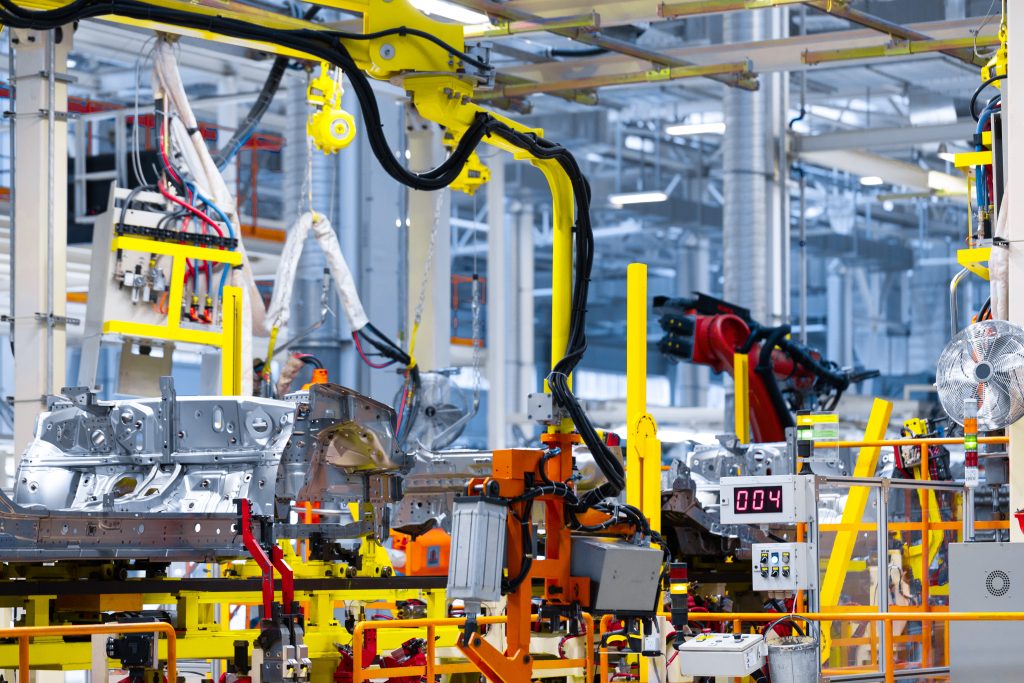
Industrial robotic arms assembling components in a smart factory.
Artificial Intelligence, machine learning

Automation and Robotics: Powering the Future of Work and Industry

Introduction Imagine a world where machines can think, learn, and perform tasks faster, safer, and more accurately than humans. That world isn’t science fiction — it’s happening right now, thanks to automation and robotics. From factory floors to hospitals, logistics hubs to your kitchen, robots and automation systems are revolutionizing how we live and work. They don’t just improve productivity — they redefine what’s possible. This blog explores how automation and robotics are driving innovation, reshaping industries, and creating a future where humans and machines collaborate seamlessly. What Is Automation? Automation refers to the use of technology to perform tasks without human intervention. It’s about replacing repetitive, rule-based processes with smart systems that can work independently — reducing errors and improving speed.  Types of Automation Fixed Automation:Used in mass production lines (e.g., car manufacturing). High volume, low flexibility. Programmable Automation:Machines can be reprogrammed for different tasks. Used in batch production industries. Flexible Automation:Systems quickly adapt to new products or processes. Ideal for industries with frequent design changes. Cognitive Automation (AI-driven):Integrates machine learning and AI for decision-making and self-improvement. Used in customer service bots, predictive maintenance, and data analysis. What Is Robotics? Robotics is a branch of engineering that designs, builds, and operates robots — programmable machines that perform tasks automatically or semi-automatically. Robots combine mechanical components, sensors, actuators, and AI to perform physical actions and make intelligent decisions.  Types of Robots Industrial Robots: Perform assembly, welding, or packaging in factories. Service Robots: Used in healthcare, hospitality, or home cleaning. Autonomous Robots: Navigate environments independently (e.g., drones, self-driving vehicles). Collaborative Robots (Cobots): Work safely alongside humans. Humanoid Robots: Mimic human gestures and expressions. Automation and Robotics in Industry Automation and robotics are the cornerstone of Industry 5.0, the new era of intelligent manufacturing focused on human-machine collaboration.  Manufacturing Robots handle repetitive tasks like assembly, painting, and quality inspection. AI-driven automation predicts equipment failures before they happen. Cobots work side by side with human operators, enhancing safety and precision. Example:Companies like Tesla and BMW use robotic arms for car assembly, improving speed and accuracy. Healthcare Robots assist doctors in surgeries and automate hospital logistics. Surgical robots perform precise operations with minimal invasion. Delivery robots transport medicines and supplies. AI automation manages patient data and diagnostics. Example: The da Vinci Surgical System enables surgeons to perform complex procedures remotely with robotic precision. Logistics and Supply Chain Automation powers warehouse management and delivery systems. Automated Guided Vehicles (AGVs) move materials. Drones deliver goods efficiently. AI systems optimize inventory and routes. Example:Amazon’s fulfillment centers use robots to pick, pack, and ship millions of products daily. Finance and Business Robotic Process Automation (RPA) automates repetitive office tasks like data entry, report generation, and compliance checks. Saves time and reduces human error. Frees employees for higher-value work. Example:Banks use RPA to process loan approvals, detect fraud, and manage accounts. Home and Daily Life From vacuuming robots like Roomba to voice-controlled assistants like Alexa, automation is making homes smarter and lives easier. Smart appliances can learn user habits and operate efficiently, saving energy and effort. The Fusion of AI and Robotics When Artificial Intelligence (AI) meets robotics, machines gain the ability to learn, adapt, and make decisions. Computer vision enables robots to “see” and analyze surroundings. Machine learning helps them improve performance over time. Natural language processing allows them to interact with humans conversationally. Example:Boston Dynamics’ robots like “Atlas” and “Spot” combine AI and robotics to perform complex tasks like running, climbing, and opening doors. Benefits of Automation and Robotics Benefit Description Increased Efficiency Machines can operate 24/7 without fatigue. Precision & Consistency Reduced errors and high-quality output. Safety Robots perform dangerous tasks, reducing workplace injuries. Cost Savings Long-term operational savings after initial setup. Innovation Enables new forms of production and services. Challenges in Automation and Robotics Despite the advantages, challenges exist: Job Displacement: Automation can replace routine tasks. High Initial Investment: Robots and automation systems are costly to deploy. Complex Integration: Requires skilled professionals and system compatibility. Cybersecurity Risks: Connected robots can be vulnerable to hacking. Ethical Dilemmas: Balancing human employment and machine efficiency. However, the Industry 5.0 model focuses on collaboration, not replacement — using robots to assist humans, not eliminate them. The Future of Automation and Robotics The next decade will see automation evolve from mechanical efficiency to intelligent collaboration. Key Future Trends: Cobots in every industry AI-driven autonomous systems Robotics-as-a-Service (RaaS) business models Sustainable automation for green manufacturing Emotional and social robots for healthcare and education Automation and robotics will become integral to every aspect of life — not just replacing humans but enhancing human potential. Conclusion Automation and robotics represent the next leap in human innovation — merging intelligence, precision, and reliability to reshape the future of work. As we enter the Industry 5.0 era, the goal isn’t to remove humans from the equation but to empower them with intelligent machines that amplify creativity, safety, and productivity. The future is not man versus machine — it’s man with machine, building a smarter, more efficient world together. FAQs 1. What is the main difference between automation and robotics?Automation refers to using systems for automatic operations, while robotics involves machines physically performing tasks. 2. What industries use robotics the most?Manufacturing, logistics, healthcare, agriculture, and defense are leading sectors. 3. Will robots take over human jobs?They’ll replace repetitive tasks but also create new roles in programming, maintenance, and AI system design. 4. What are collaborative robots (cobots)?Cobots are robots designed to work safely alongside humans without barriers. 5. How is AI used in robotics?AI helps robots learn, make decisions, and interact naturally with humans and their environment.

Digital Transformation

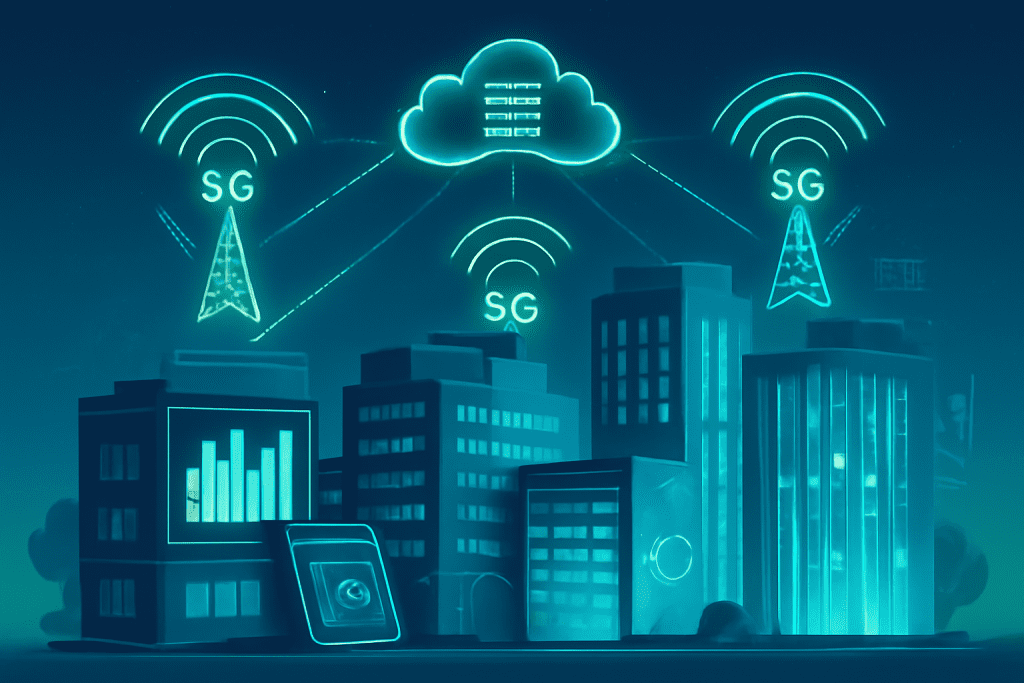
Why Mobile Edge Computing is Critical for Enterprises in the 5G Era

Introduction The arrival of 5G wireless technology is revolutionizing enterprise connectivity, promising multi-gigabit speeds, ultra-low latency, and support for billions of connected devices. However, to truly unlock the transformative potential of 5G, enterprises must integrate Mobile Edge Computing (MEC) into their digital infrastructure. 5G edge computing moves computation and data processing closer to where data is generated—at the “edge” of the network—enabling faster response times, greater security, and empowering real-time business innovation. Explore how AI-powered Mobile Edge Computing solutions can transform business processes at TechOTD AI Services. What is Mobile Edge Computing (MEC)? Mobile Edge Computing (MEC) is a network architecture that brings computing, storage, and analytics capabilities out of centralized data centers and closer to the physical location of devices and users. This proximity accelerates data processing and decision-making—critical in the 5G edge computing era where speed, responsiveness, and high-bandwidth are no longer optional but foundational to enterprise competitiveness. The Symbiosis of 5G and Mobile Edge Computing Ultra-low Latency: 5G networks promise sub-millisecond latency. Mobile Edge Computing (MEC) is essential for achieving these targets since only local processing can deliver true real-time responses for autonomous vehicles, telemedicine, and AR/VR solutions. High Bandwidth Utilization: With 5G’s massive data throughput, 5G edge computing prevents bottlenecks and network congestion. Reliability & Resilience: MEC in 5G networks reduces reliance on continual cloud connectivity, making operations more robust against outages and delivering superior quality of service. Key Benefits of Mobile Edge Computing for Enterprises Real-Time Data ProcessingProcessing data locally enables ultra-fast analytics required for applications like predictive maintenance, intelligent video surveillance, and automated supply chains. ✅ Example: A smart factory uses 5G edge computing with MEC to process IoT sensor data, optimizing equipment performance and reducing downtime—without sending all data to the cloud. Enhanced Security & PrivacyBy handling sensitive data close to its source, Mobile Edge Computing minimizes interception risks. Industries like healthcare and finance benefit from localized compliance and data residency. Reduced Network Congestion & CostsOffloading computation from central servers to the edge decreases backhaul requirements, making MEC in 5G both cost-efficient and scalable. Greater Scalability & FlexibilityMobile Edge Computing enables modular deployment of enterprise apps, scaling easily across retail, logistics, and smart cities. Industry Use Cases of Mobile Edge Computing Manufacturing: Smart factories rely on 5G edge computing for predictive analytics, digital twins, and real-time equipment monitoring. Retail: Edge-enabled personalization, AR shopping, and real-time customer engagement enhance user experience. Healthcare: Secure telemedicine, real-time imaging, and patient monitoring with Mobile Edge Computing in healthcare. Logistics & Transportation: Smart fleet management and navigation powered by MEC and 5G. Smart Cities: IoT-driven traffic management, safety, and environmental monitoring with edge computing in 5G networks. Conclusion Mobile Edge Computing (MEC) is critical for enterprises in the 5G era because it enables: Ultra-low latency, reliable, and scalable real-time applications Enhanced data security, privacy, and compliance Cost-effective handling of massive, distributed data flows Seamless integration with AI, IoT, and blockchain technologies Robust digital transformation strategies powering growth and innovation

Scroll to Top