Introduction:-
For decades, enterprise security relied on a simple, comforting analogy: the castle and the moat. The castle was your local server room, the moat was your firewall, and the drawbridge was your Virtual Private Network (VPN). If you were outside the moat, you were untrusted. If you managed to cross the drawbridge with the right credentials, you were let inside the castle walls and granted free rein to roam the courtyard.
But then the world changed. Applications left the local server room for the public cloud. Employees packed up their desktops and started working from home, coffee shops, and airports. Suddenly, the castle was empty, and the moat was protecting nothing but air.
Continuing to rely on traditional, perimeter-based security in a hybrid, cloud-first era isn’t just inefficient—it is an open invitation to modern cyber criminals. When a malicious actor or a compromised device gains access to a traditional VPN, they inherit “lateral mobility,” allowing them to scan your entire network and compromise sensitive data at will.
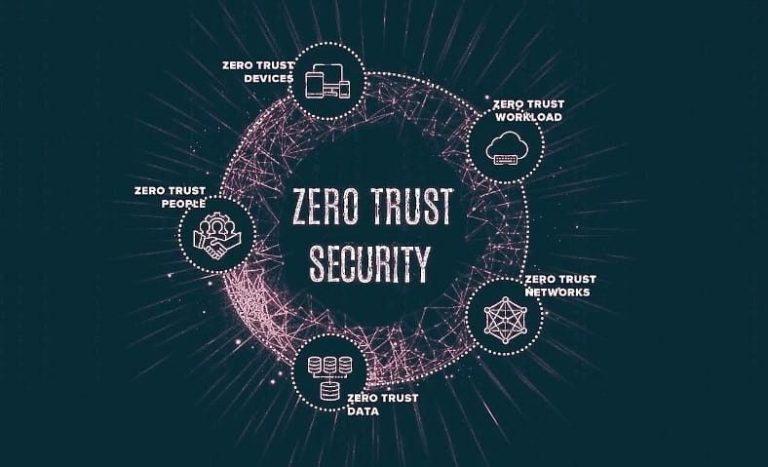
To survive this landscape, organizations are shifting toward a radically simple, uncompromising philosophy: Never Trust, Always Verify. This is the core engine behind Zero Trust Network Access (ZTNA).
1. Demystifying ZTNA: What is it Exactly?
Zero Trust Network Access (ZTNA) is a category of security technologies designed to provide secure, seamless remote access to specific applications and data based on clearly defined access control policies.
Unlike a legacy VPN, which grants broad network-level entry, ZTNA works on a strict need-to-know basis. It treats every single user, device, and connection request as a potential threat until proven otherwise.
The Core Pillars of Zero Trust
To truly understand ZTNA, it helps to look at the three foundational principles established by the National Institute of Standards and Technology (NIST):
-
Explicit Verification: Always authenticate and authorize based on all available data points—including user identity, geographic location, device health, service or workload context, and data classification.
-
Least Privilege Access: Limit user access with Just-In-Time (JIT) and Just-Enough-Access (JEA) models. Give users access only to the specific applications they need to do their jobs, and absolutely nothing else.
-
Assume Breach: Micro-segment your network, minimize your attack surface, encrypt all digital sessions end-to-end, and use real-time analytics to detect anomalies and continuously improve your defenses.
2. Why the Traditional VPN is Failing the Modern Enterprise
To appreciate why ZTNA is taking over the tech landscape, we have to look closely at the architectural cracks in the traditional VPN armor.
TRADITIONAL VPN (Castle-and-Moat) [User] ---> [VPN Gateway/Firewall] ---> [Access Granted to the ENTIRE Corporate Network] ZTNA ARCHITECTURE (Micro-Perimeters) [User] ---> [ZTNA Trust Engine] ---> [Strict Verification] ---> [Access Granted ONLY to App A] X-> [App B Hidden/Invisible]The Inherent Flaw of Lateral Movement
The biggest vulnerability of a standard VPN is implicit trust. Once an employee logs in via a VPN client, they are functionally dropped directly into the corporate network segment. If an attacker steals that employee’s credentials via a sophisticated phishing attack, the attacker can move laterally across the infrastructure. They can hop from an innocent marketing portal to the critical financial database without triggering secondary alarms.
Poor User Experience and Bottlenecks
Traditional VPNs were designed when only a small fraction of the workforce worked remotely. In a modern hybrid enterprise, routing thousands of employees’ daily traffic through a central data center creates massive bandwidth bottlenecks. Employees experience sluggish connection speeds, dropped video calls, and overall frustration, which often tempts them to bypass corporate security measures entirely.
The Problem of Visibility
A VPN makes an open port visible to the public internet so that remote users can discover it. Unfortunately, if an authorized user can see it, a hacker scanning the internet for vulnerabilities can see it too.
3. How ZTNA Works Under the Hood
ZTNA completely flips the script on network visibility. Instead of dropping users onto a network, ZTNA creates an isolated, encrypted “micro-perimeter” around each individual application.
Here is a step-by-step breakdown of how a typical ZTNA connection request occurs:
-
Step 1: The Request. A user attempts to access an internal corporate application (e.g., a private CRM or source code repository) from their laptop.
-
Step 2: The Context Check. Before the connection is established, the ZTNA controller analyzes a multitude of contextual signals. It doesn’t just ask, “Does this person have the right password?” It asks:
-
Is the device running an updated operating system?
-
Is the corporate antivirus active?
-
Is the user logging in from an expected geographic location?
-
Does this request match their normal behavioral patterns?
-
-
Step 3: The Dark Cloud Effect. While this verification occurs, the application remains completely hidden from the public internet. It does not respond to external pings or network scans, making it effectively invisible to attackers.
-
Step 4: Micro-Segmented Access. Once the ZTNA controller verifies the user and device, it establishes a secure, isolated tunnel directly between that specific user and that specific application. The user has zero awareness of, or access to, any other applications hosted on the same network infrastructure.
-
Step 5: Continuous Assessment. The trust is never permanent. The ZTNA engine continuously monitors the session. If the user suddenly disables their local firewall or changes locations dramatically mid-session, the connection is instantly revoked.
4. Architectural Models: Endpoint vs. Service-Initiated ZTNA
When implementing ZTNA, organizations generally choose between two primary deployment styles, depending on their infrastructure and device fleet.
| Feature | Endpoint-Initiated ZTNA | Service-Initiated ZTNA |
| Agent Requirement | Requires a dedicated software agent installed on the user’s device. | Clientless; typically accessed securely through a standard web browser. |
| Best Used For | Corporate-managed laptops and heavy engineering workloads. | BYOD (Bring Your Own Device), contractors, and third-party vendors. |
| Application Coverage | Supports both web-based and legacy desktop applications. | Primarily optimized for web-based (HTTP/HTTPS) applications. |
| Security Control | Deep device posture checking (inspecting registry files, patch levels). | Standard identity validation and browser-level security checks. |
Endpoint-Initiated ZTNA
In this model, a lightweight software agent sits on the user’s endpoint. The agent communicates device health and identity data to a centralized ZTNA controller. The controller then instructs a gateway to open a secure connection tunnel to the requested application. This provides deep, granular security metrics but requires comprehensive device management capabilities.
Service-Initiated ZTNA
This approach utilizes a cloud-hosted ZTNA service provider. The corporate application establishes an outbound connection to the provider’s cloud gateway. When a user wants to access the app, they authenticate with the cloud provider, who validates the credentials and bridges the connection. The massive advantage here is that it requires no local software installation, making it ideal for managing access for external consultants or contractors using unmanaged personal devices.
5. Business Benefits: Why Executives are Funding ZTNA Transitions
While ZTNA is fundamentally a security architecture, its benefits extend far beyond the IT department. Implementing a zero-trust model unlocks substantial, measurable business advantages.
Accelerated Agility and Cloud Migration
Modern companies scale by adopting multi-cloud strategies (AWS, Azure, and Google Cloud simultaneously). ZTNA abstracts the underlying network complexity. Whether an application lives in an on-premise data center or an isolated cloud instance, ZTNA presents a unified, secure access point for the user, radically simplifying complex cloud migration timelines.
Drastic Reduction in Attack Surface
By rendering your corporate assets invisible to internet-wide scanning tools, ZTNA completely cuts off external exploitation vectors. Opportunistic automated botnets and targeted ransomware groups cannot attack what they cannot see.
Frictionless User Experience
Employees no longer have to manually launch a slow, clunky VPN app every morning, pick a geographic server location, and re-authenticate every time their laptop goes to sleep. ZTNA runs quietly and efficiently in the background, providing a transparent, native application experience that mirrors public web applications while preserving enterprise-grade isolation.
6. The Road to Implementation: A Step-by-Step Blueprint
Transitioning to a Zero Trust architecture is a journey, not a single software installation. You cannot simply buy a box labeled “Zero Trust” and plug it into your server rack. It requires a deliberate, iterative strategy.
[Phase 1: Inventory Assets] ---> [Phase 2: Map Data Flows] ---> [Phase 3: Design Policies] ---> [Phase 4: Continuous Optimization]Phase 1: Map Your Digital Architecture
You cannot protect what you don’t know exists. Step one is executing a comprehensive audit of all enterprise applications, data storage units, user groups, and current network access vectors. Identify where your most sensitive intellectual property and regulated customer data live.
Phase 2: Formulate Granular Access Control Policies
Define clear, contextual access matrices based on job descriptions. For example:
-
Graphic Designers require access to the cloud asset library, but absolutely no access to the financial payroll database.
-
Customer Support Representatives need CRM access exclusively during their scheduled shift hours and only from verified corporate machines.
Phase 3: Pilot with Low-Risk, High-Impact Targets
Do not try to switch your entire global enterprise over to ZTNA over a single weekend. Start small. Pick a non-critical internal application, roll out your ZTNA platform to a single department, iron out configuration bugs, gather user feedback, and then systematically scale the architecture across the rest of the enterprise.
7. Beyond ZTNA: The Evolution Into SASE
As you plan your cybersecurity trajectory, it is vital to realize that ZTNA does not exist in a vacuum. It represents one core pillar of a broader corporate paradigm shifting the technology industry: Secure Access Service Edge (SASE).
SASE (pronounced sassy) unifies comprehensive network routing capabilities (like SD-WAN) with advanced, cloud-native security features. Alongside ZTNA, a comprehensive SASE platform integrates:
-
Cloud Access Security Brokers (CASB): Securing data compliance and policy enforcement within public SaaS platforms like Microsoft 365, Salesforce, and Google Workspace.
-
Secure Web Gateways (SWG): Protecting employees from web-based threats by filtering malicious URL endpoints and enforcing strict content filtering policies.
-
Data Loss Prevention (DLP): Actively monitoring and preventing sensitive data strings (like credit card numbers or proprietary code blocks) from being exfiltrated outside the secure corporate umbrella.
By evaluating ZTNA vendors with an eye toward a unified SASE future, you ensure your technology stack remains fully interoperable, future-proof, and highly performant for the decades ahead.
8. Summary: Embracing the Future of Security
The shift away from legacy network models toward Zero Trust Network Access is no longer an optional luxury for cutting-edge tech firms—it is a modern requirement for operational resilience.
By eliminating the vulnerability of implicit trust and establishing dynamic, identity-centric micro-perimeters, ZTNA empowers organizations to innovate fearlessly. It gives your teams the freedom to work from anywhere in the world, on any modern device, with the absolute confidence that your corporate data remains completely secure and hidden from prying eyes.
The era of relying on structural moats is officially over. It’s time to hide the castle, verify explicitly, and step confidently into a safer, cloud-driven horizon.
Beyond the Chatbot: How Agentic AI and Multi-Agent Workflows Are Quietly Replacing Software Rules