How Much Does It Cost to Develop an App in 2025?
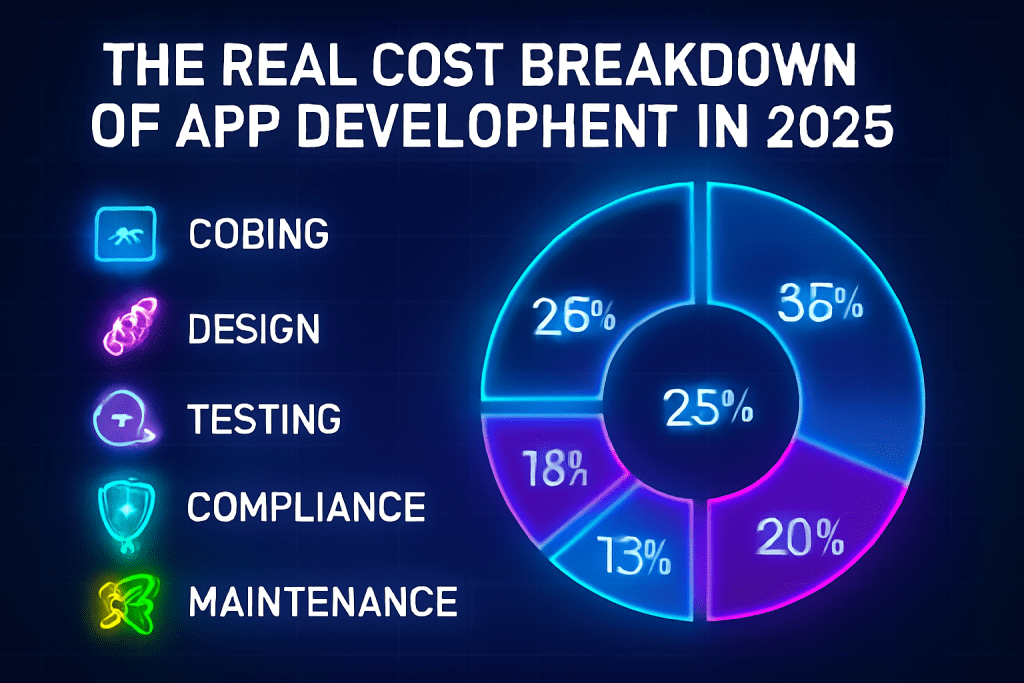
Introduction Budgeting for app development is one of the most critical decisions a business leader will make in 2025. With digital transformation reshaping every industry, a well-planned mobile or web app is a gateway to new customers and better efficiency—but how much does it really cost to turn your idea into a fully functioning app? Costs depend on app complexity, required features, choice of tech, and team expertise. Understanding these factors will help every founder, manager, or enterprise leader plan smarter and build with confidence. In this detailed guide, we’ll break down app development costs phase-by-phase, compare budgets for different industries, highlight influencing factors, and show how leveraging AI and modern tech (like TechOTD’s solutions) can optimize investments. Explore TechOTD’s AI services, how we work, and mobile app solutions as you plan your journey. Phases of App Development and Associated Costs Building an app involves several distinct steps, each with budget requirements. Let’s break down each stage, using recent industry cost data: 1. Strategy & Planning ($4,000–$10,000) Business analysis, market research, competitor benchmarking. Defining user personas, app objectives, and feature lists. See TechOTD strategy examples. 2. Design (UX/UI) ($6,000–$30,000) Wireframing, prototyping, visual branding, user journey mapping. Interactive mockups and usability testing. Learn more about UX/UI trends. 3. Core Development ($25,000–$75,000+) Frontend and backend coding (iOS, Android, web, cross-platform). Third-party integrations (payment, GPS, social login). Custom features: e.g., predictive analytics, chatbots, real-time feeds. Framework insights: React Native vs Swift. 4. Third-Party Integrations ($5,000–$15,000) APIs for CRM, analytics, cloud storage, payment gateways. Blockchain or AI integrations for security and personalization. More on blockchain-powered apps. 5. Quality Assurance & Testing ($8,000–$18,000) Device, OS, and usability tests, bug fixing, security audits. Compliance with GDPR, PCI DSS, and industry standards. Predictive analytics in QA. 6. Deployment & Launch ($2,000–$7,000) App store submission (Apple, Google Play), launch marketing. Backend optimization, analytics setup. See TechOTD’s launch support. 7. Maintenance & Support (15–20% per year) Updates, bug fixes, feature enhancements, security patches. Hosting and server monitoring. Typical App Development Budgets by Complexity App Type Budget Range Examples Timeline Simple/MVP $20,000–$60,000 To-do, news, calculators 2–4 months Medium $60,000–$120,000 Loyalty, booking, fintech 4–7 months Complex $120,000–$250,000+ E-commerce, social media, healthcare, AR/AI 6–12 months Explore detailed cost analysis for loyalty apps: How much does it cost to build a customer loyalty app? Key Factors Influencing App Development Cost 1. App Complexity Number of user roles, features (e.g., chat, push notifications, payment). Custom UI, animation, and security. Advanced integrations (AI, ML, blockchain). TechOTD leverages latest innovations. 2. Platform Choice Native (Swift/Java/Kotlin) costs more than cross-platform (Flutter, React Native). Multi-platform apps increase cost by 30–40%. Cross-platform vs native advice. 3. Design and Branding High-fidelity UI/UX, custom illustrations, AR/VR increase cost. TechOTD’s design approach. 4. Data Security & Compliance Apps in finance, healthcare, and education need strict compliance (HIPAA, GDPR, PCI DSS). Cost increases for advanced encryption and regulatory audits. TechOTD’s security-first methodology. 5. AI, Analytics, and Next-Gen Technology Adding AI/ML for personalization, recommendation engines increases budget. Predictive analytics, chatbots, speech/image processing. AI-powered app solutions. 6. Team Location & Experience US/Europe rates: $60–$200/hr; Asia/Eastern Europe: $20–$60/hr. Experienced agencies deliver better quality and ongoing support. See TechOTD’s multi-regional expertise. Cost Examples by Industry Industry Typical Budget Unique Features Explore Fintech $80,000–$200,000+ Secure payments, AI analytics, blockchain LLMs in Finance Education $50,000–$150,000 LMS, AR/VR, remote learning, analytics Tech & Education E-Commerce $100,000–$250,000 Product catalog, cart, payment, push notifications Industry Blogs Loyalty/App $60,000–$120,000 CRM, rewards, gamification, partner systems Customer Loyalty App Guide On-Demand $75,000–$180,000 Real-time tracking, chat, payments, reviews Explore TechOTD’s solutions How TechOTD Optimizes Costs with Emerging Technologies AI & Machine Learning: Saves time, automates personalization, improves retention. Cloud & Edge Computing: Scalable infrastructure and performance. Blockchain Integration: High security and transparency for finance and supply chain apps. Agile & DevOps: Quicker cycles, better quality, ongoing support. Learn more from TechOTD’s blog and how we work. Tips to Budget Effectively for App Development Start with an MVP and validate user needs. Choose cross-platform tools if budget is limited. Use proven frameworks for speed and reliability. Invest in robust QA and post-launch support. Allocate budget for ongoing marketing and analytics. Partner with experienced agencies (like TechOTD) for guidance and best practices. Conclusion The cost to develop an app in 2025 depends on its complexity, features, chosen technology, and vendor expertise. Typical budgets range from $20,000 for a simple app to $250,000+ for enterprise-level solutions, with maintenance usually about 15–20% of initial yearly cost. Careful planning, partner selection, and leveraging advanced tech are key to maximizing ROI. Take the next step: Book a free consultation with TechOTD Explore best practices on TechOTD’s blog Discover AI-driven solutions FAQ Q1: What is the lowest possible budget for a simple app in 2025? A: MVPs with minimal features start at $20,000–$40,000 in most regions. Q2: Why do maintenance costs matter? A: Post-launch updates, bug fixes, and performance improvements are critical; expect 15–20% of original build cost per year. Q3: Can I reduce expenses by using cross-platform tools? A: Yes, React Native and Flutter typically lower costs by up to 30% compared to fully native solutions. Q4: Is security a major cost factor? A: Apps in finance or healthcare need greater compliance and security testing, which increases costs but protects your business. Q5: What kind of costs do loyalty and e-commerce apps involve? A: Loyalty apps range $60,000–$120,000 and e-commerce apps from $100,000–$250,000+, depending on features and integrations.