
API security

Mobile App Development

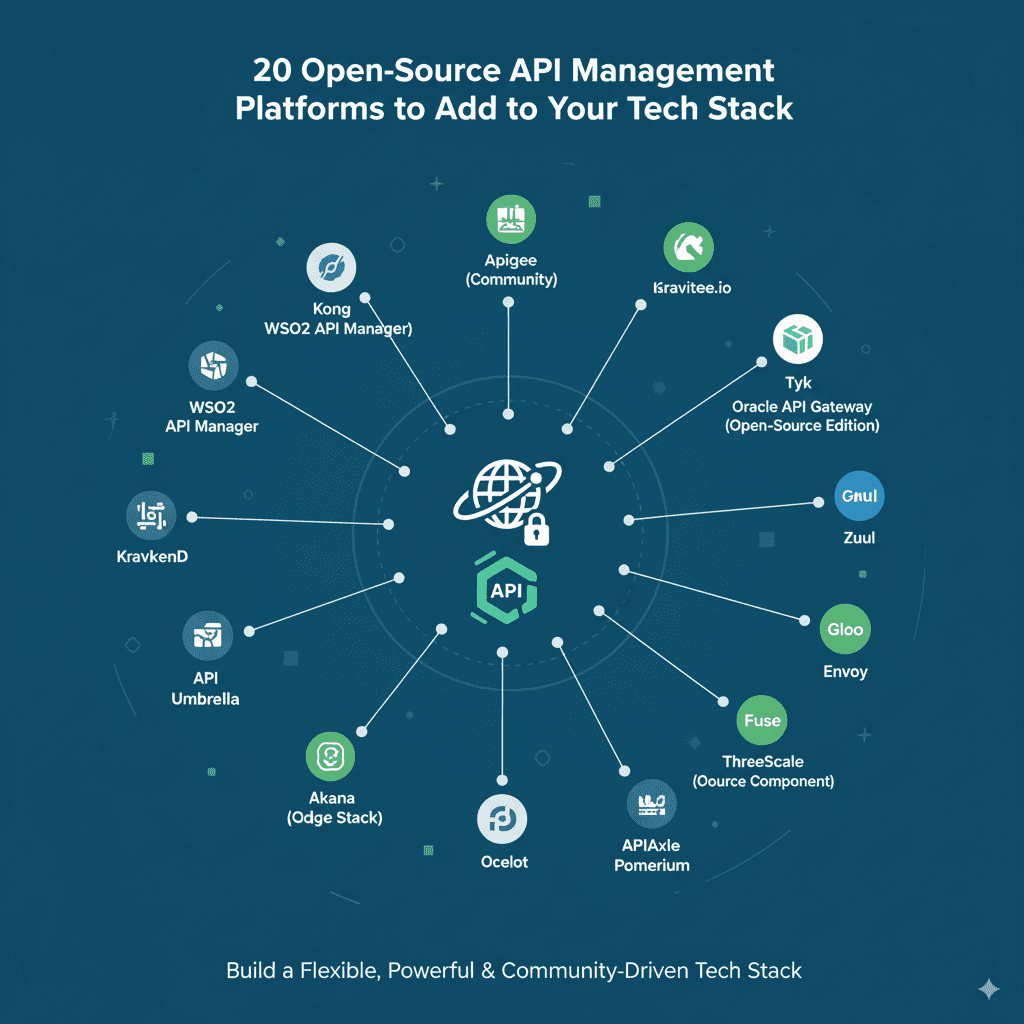
20 Open-Source API Management Platforms to Add to Your Tech Stack

Introduction In today’s fast-evolving digital landscape, APIs (Application Programming Interfaces) play a pivotal role in enabling seamless communication between software systems, driving innovation, and accelerating time-to-market. Efficiently managing APIs across development, deployment, security, and monitoring stages is critical for business agility. This is where API management platforms come into play—empowering organizations to publish, secure, monitor, and scale APIs effectively. Open-source API management platforms provide the flexibility, cost-efficiency, and community-driven innovations that many organizations seek. Whether you are a startup building your technology stack or an enterprise looking to optimize API lifecycle management, integrating the right open-source solutions is key. This blog explores 20 powerful open-source API management platforms to consider adding to your tech stack, describing their key features and use cases. For digital transformation insights and related technology trends, explore TechOTD’s AI and tech blog and their extensive AI service offerings. Top 20 Open-Source API Management Platforms 1. Kong A scalable, cloud-native API gateway with features like traffic control, authentication, and analytics. Kong supports plugins for flexibility and is widely adopted for microservices architectures. 2. Tyk Full lifecycle API management with a powerful gateway, analytics, developer portal, and dashboard. Tyk supports hybrid deployments and advanced security protocols. 3. Apiman Red Hat’s open-source API manager offering governance, rate limiting, and security. It integrates well with Java-based environments and supports customizable policies. 4. WSO2 API Manager An open-source enterprise-grade API management solution providing API publishing, lifecycle management, security, and analytics. Supports on-premises and cloud deployment. 5. Gravitee.io Lightweight and modular, Gravitee.io offers an API gateway, developer portal, and management tools with a user-friendly interface. 6. KrakenD An ultra-high-performance API gateway focused on aggregating multiple backend services into a single API endpoint. It simplifies API transformation and scaling. 7. Express Gateway An open-source API gateway built on Node.js, ideal for teams looking for lightweight, customizable API management with policy-driven security. 8. Zuul Netflix’s highly scalable gateway solution designed for routing and filtering requests in microservices environments. Features dynamic routing and resiliency. 9. Ambassador A Kubernetes-native API gateway built on Envoy proxy, offering fast API routing, authentication, and observability for cloud-native apps. 10. Ocelot A .NET API Gateway designed for simple, rapid deployment with support for routing, rate limiting, and authentication. 11. API Umbrella Open-source API management platform providing unified authentication, rate limiting, caching, and analytics. 12. Wrench Designed for simplified API running and monitoring with built-in support for health checks, rate limiting, and logging. 13. Janus A high-performance API gateway written in Golang that supports plugin-based extensions and dynamic routing. 14. Fusio API management platform focusing on API automation, analytics, and auto-documentation, suitable for PHP environments. 15. Kong Mesh Built on top of Kong Gateway, offers service mesh capabilities for microservices environments emphasizing security and observability. 16. KrakenD Enterprise Edition (CE available) Enables complex API composition with robust caching, rate limiting, and middleware support. 17. Apisix A dynamic, real-time, cloud-native API gateway based on Nginx and OpenResty, providing flexible routing and plugin systems. 18. Tyk Hybrid Open-source core with options for hosted cloud dashboard services; focuses on high-scale API operations and developer experience. 19. WSO2 Microgateway Modular API gateway optimized for microservices, integrating with Kubernetes and service mesh environments. 20. Spring Cloud Gateway Designed for Spring Boot applications, offering a simple yet effective way to route API requests with integrated security mechanisms. Benefits of Using Open-Source API Management Platforms Cost Efficiency: Eliminate expensive licensing fees with open-source solutions. Flexibility: Customize and extend platforms to meet unique business requirements. Community Support: Benefit from active communities and rapid innovation cycles. Transparency and Control: Full access to code for auditing and compliance. Seamless Integration: Easily integrate with existing frameworks and cloud environments. Choosing the Right API Management Platform Factors to consider: Deployment model compatibility (on-premises, cloud, hybrid). Scalability and performance needs. Security and compliance features. Developer experience and ecosystem. Integration with analytics and monitoring tools. For expert guidance and custom API solutions development leveraging AI and cloud, consult with TechOTD’s services. Conclusion API management platforms are indispensable tools in the digital ecosystem, enabling businesses to securely expose and monetize their services. The open-source options listed above provide robust, scalable, and flexible capabilities suitable for a vast range of use cases from startups to enterprises. Selecting the right platform aligned with your technology landscape and strategic goals will empower accelerated innovation and superior API performance. Explore more on APIs and digital transformation trends with TechOTD here: TechOTD Blog. FAQs Q1: What is an API management platform? It’s a tool that helps design, secure, publish, monitor, and analyze APIs across their lifecycle. Q2: Are open-source API platforms reliable for enterprises? Many leading companies use open-source solutions for their flexibility, cost-effectiveness, and community support. Q3: What features should I prioritize when selecting an API management platform? Security, scalability, ease of integration, and developer tools are key priorities. Q4: Can API management platforms improve developer productivity? Yes, they offer tools like developer portals, documentation, and analytics that simplify API consumption and support. Q5: How does AI enhance API management? AI can optimize traffic routing, detect anomalies, and automate policy enforcement for smarter API governance.
Software development

The Future of Connectivity: Exploring the Explosive Growth of APIs

Introduction In today’s hyper-connected digital economy, Application Programming Interfaces (APIs) have become the cornerstone of seamless communication between applications, services, and platforms. APIs enable businesses to unlock innovation, streamline operations, and create new revenue streams by facilitating efficient data exchange and integration. With industries rapidly adopting cloud services, AI, IoT, and blockchain technologies, the demand for robust APIs is growing explosively. For businesses aiming to thrive in the evolving digital landscape, understanding the future of connectivity powered by APIs is crucial. This blog explores the transformative role of APIs, the trends driving their growth, key benefits, and practical use cases shaping industries worldwide. It also provides insights for CTOs, developers, and business leaders to leverage APIs effectively for competitive advantage. What Are APIs and Why Do They Matter? APIs are sets of rules and protocols that allow different software applications to communicate with each other. They act as intermediaries enabling services, platforms, or devices to request and exchange data securely and efficiently. Key Functions of APIs: Enable Integration: Connect diverse systems and technologies across the cloud, on-premises, and edge environments. Enhance Modularity: Allow developers to reuse components and build scalable applications faster. Drive Automation: Facilitate workflow automation by linking disparate services seamlessly. Allow Innovation: Power new digital experiences like AI-driven personalization, real-time analytics, and IoT device communication. APIs empower businesses to deliver services faster while ensuring agility and reliability in complex environments (TechOTD AI services). The Explosive Growth of APIs: Market Trends and Drivers The API economy is surging with no signs of slowing down. According to industry reports, the global API management market is projected to reach $6 billion by 2027, driven by digital transformation initiatives across sectors. Key Drivers Fueling API Growth: Cloud Adoption and Microservices: Cloud-native applications rely heavily on APIs to enable microservices architectures that support scalability and resilience (TechOTD cloud solutions). AI and Big Data: Increasing AI and analytics use require APIs to access machine learning models, datasets, and real-time processing (LLMs in finance). IoT Proliferation: APIs facilitate secure data exchange between billions of connected IoT devices and backend systems (TechOTD industries). Blockchain Integration: Blockchain networks expose APIs enabling interoperability and automation with existing IT architectures (Blockchain in Dubai). Mobile and Web Apps Demand: APIs support diverse platforms and devices, fueling demand for seamless third-party integrations (Mobile apps services). Emerging API Trends API-First Development: Prioritizing APIs in product development for extensibility and faster iterations (React Native vs Swift). GraphQL Adoption: Allowing flexible and efficient queries over traditional REST APIs. API Security Enhancements: Zero trust, OAuth, API gateways, and rate limiting to secure the growing API attack surface. Event-Driven APIs: Supporting real-time data streaming for responsive user experiences. Benefits of APIs for Modern Businesses APIs reshape how businesses build and deliver value in many ways: Accelerate Innovation: By reusing existing APIs, companies can rapidly develop new features and integrations. Improve Customer Experiences: Facilitate personalized, omnichannel experiences in retail, finance, healthcare, and more (Seamless customer journeys with AI). Operational Efficiency: APIs automate workflows, reduce manual interventions, and improve data accuracy. Expand Market Reach: APIs enable ecosystem partnerships and third-party developers to extend product offerings globally. Enhance Agility and Scalability: Cloud APIs and microservices accelerate scaling without sacrificing stability. Real-World Use Cases of API Connectivity 1. Finance and Banking Banks use APIs for secure transactions, open banking, KYC verification, and integrating AI-driven credit risk models (Predictive analytics in finance). 2. Retail and E-commerce APIs connect payment gateways, inventory systems, CRMs, and marketing platforms to create frictionless shopping experiences. 3. Healthcare Interoperable healthcare systems share patient data securely via APIs improving diagnostics, remote monitoring, and personalized treatment plans (Healthcare app development). 4. Telecommunications Telecom providers leverage APIs for network management, customer billing, and IoT device connectivity (Big Data in Telecom). 5. Education Technology APIs power digital learning platforms by integrating content, workflows, and analytics to enhance remote and hybrid education systems (Technology impact on education). Challenges and Best Practices in API Management While APIs unlock substantial benefits, businesses must navigate challenges thoughtfully: Security Risks: APIs create new exposure points. Secure design, authentication, and monitoring are crucial. Complexity Management: Handling API versioning, documentation, and governance requires robust tools and processes (How We Work). Performance Optimization: Ensuring reliability and low latency is critical for distributed APIs. Scalability and support for rapid growth. Developer Experience: Comprehensive documentation and sandbox environments accelerate adoption. Best practices include using API gateways, implementing rate limiting, and adopting continuous integration/continuous deployment (CI/CD) pipelines for updates. The Future of APIs: What to Expect APIs will continue to evolve as foundational components of digital transformation: AI-Powered APIs: Intelligent APIs capable of adaptive learning and recommendations. Decentralized APIs: Leveraging blockchain for secure, trustless API interactions. API Marketplaces: Platforms offering discoverable, monetizable APIs supporting developer ecosystems. Enhanced API Automation: Automated testing, deployment, and security assessments. Cross-Platform Interoperability: APIs supporting multi-cloud and edge computing environments. Conclusion APIs are central to the future of digital connectivity, fueling innovation and business growth in every sector. Organizations embracing API-first strategies enjoy enhanced agility, operational efficiency, and ecosystem opportunities. With the rapid adoption of cloud, AI, IoT, and blockchain, APIs have never been more critical in shaping seamless, personalized, and secure user experiences. As new trends emerge, mastering API management and security will be vital to stay competitive in the evolving digital ecosystem. For businesses seeking expert guidance and cutting-edge AI and API integration solutions, TechOTD offers bespoke services to transform your technology roadmap seamlessly. Explore their offerings today: TechOTD AI services. FAQ 1. What is an API and why is it important for businesses? An API is a set of protocols enabling software applications to communicate, facilitating integration, automation, and innovation critical for modern businesses. 2. How do APIs impact customer experience? APIs enable seamless data exchange across channels and platforms, supporting personalized, efficient, and consistent customer interactions. 3. What are the main security concerns with APIs? APIs can expose vulnerabilities if improperly secured. Key concerns include authentication flaws, data leaks, and denial-of-service attacks. 4. How can a business get started with API-first development? Start by identifying core services for API exposure, adopt an API management platform, and involve developers early in designing reusable API endpoints. 5. What role do APIs play in AI and blockchain integration? APIs connect AI

How would you like me to respond?

Select a personality for your AI assistant

Normal
Happy
Sad
Angry

Your selection will affect how the AI assistant responds to your messages

Chat Assistant

Let's discuss your project!

Hear from our clients and why 3000+ businesses trust TechOTD

Tell us what you need, and we'll get back with a cost and timeline estimate

Scroll to Top