How AI-Powered Learning Is Personalizing Education
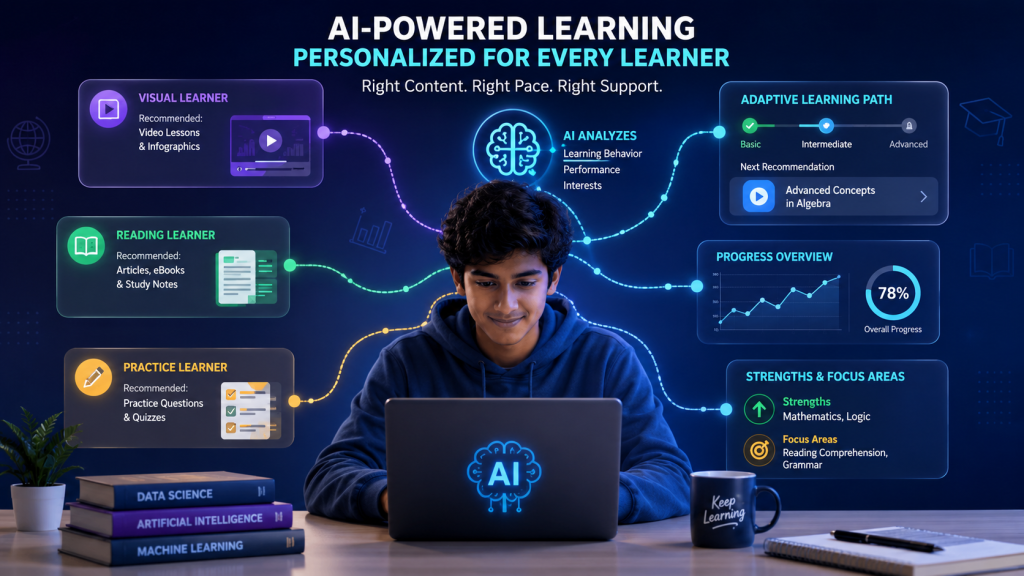
Introduction Every student learns differently. Some understand concepts quickly through visual content, while others need more practice, examples, or additional explanations. Traditional education often follows a common learning path, but artificial intelligence is making it possible to create more personalized learning experiences. AI-powered learning platforms can analyze student interactions, learning progress, and performance to recommend content and activities that match individual needs. This approach can help students learn at their own pace while giving educators better insights into where additional support may be required. As educational technology continues to evolve, personalized learning is becoming an important part of modern education. AI is not simply changing what students learn; it is also changing how learning content is delivered, practiced, and evaluated. What Is Personalized Learning? Personalized learning is an educational approach in which learning experiences are adapted to the individual needs, abilities, interests, and progress of each student. Instead of providing exactly the same content and activities to every learner, personalized learning aims to provide appropriate resources and support based on how each student learns. AI can make personalized learning more effective by analyzing information such as quiz results, learning activity, completed lessons, and areas where a student may be struggling. Based on these patterns, an AI-powered system can recommend suitable content, practice exercises, or additional explanations. Traditional Learning vs. Personalized Learning In a traditional learning environment, students often follow the same syllabus, lessons, and assessment schedule. Personalized learning allows the learning experience to become more flexible by adjusting content, difficulty, and pace according to individual progress. How AI-Powered Learning Personalizes Education AI-powered learning systems can use data and intelligent algorithms to understand how students interact with educational content. This allows learning platforms to make recommendations and adjust learning experiences based on individual progress. 1. Adaptive Learning Paths AI can adjust the difficulty and sequence of learning materials based on a student’s performance. If a learner understands a concept quickly, the system can provide more advanced material. If a learner struggles, it can recommend additional explanations and practice. 2. Personalized Content Recommendations AI can recommend videos, articles, exercises, quizzes, and other educational resources based on a student’s learning history and interests. This can help learners find relevant material without having to search through large amounts of content. 3. Individualized Feedback AI-powered systems can provide immediate feedback on quizzes, assignments, and practice activities. Quick feedback can help students identify mistakes, understand concepts, and make improvements while they are still actively learning. 4. Learning at an Individual Pace Students do not always need the same amount of time to understand a concept. Personalized learning allows students to spend more time on difficult topics and move ahead when they are ready, creating a more flexible learning experience. Benefits of AI-Powered Personalized Learning AI-powered personalized learning can provide benefits for students, teachers, and educational institutions. By adapting learning experiences to individual needs, it can make education more flexible, engaging, and focused on student progress. Better Learning Engagement When students receive content that matches their interests and learning levels, they may find lessons more relevant and engaging. Personalized recommendations can also help students discover learning resources that are appropriate for their current level. Improved Learning Outcomes Personalized learning can help students spend more time on topics they find difficult while moving faster through concepts they already understand. This targeted approach can support better understanding and continuous progress. Early Identification of Learning Gaps AI can analyze learning patterns and performance to identify areas where students may need additional support. Teachers can use these insights to provide targeted assistance before learning gaps become larger. More Efficient Teaching AI-powered platforms can provide teachers with information about student progress and learning needs. These insights can help educators plan additional activities and provide more focused support to individual learners. Greater Learning Flexibility Personalized learning allows students to access educational content at different times and progress at a pace that suits their needs. This flexibility can make learning more convenient for students with different schedules and learning preferences. Challenges of AI-Powered Personalized Learning Although AI-powered personalized learning offers many advantages, it also comes with challenges. Educational institutions need to consider data privacy, accuracy, accessibility, technology costs, and the importance of maintaining human involvement in education. Data Privacy and Security Personalized learning systems may collect information about student performance, learning behavior, preferences, and progress. Educational institutions need strong privacy and security practices to protect this information and ensure that student data is used responsibly. Accuracy of Recommendations AI recommendations depend on the quality of the data and algorithms being used. If a system incorrectly understands a student’s needs, it may recommend unsuitable content or learning activities. Human oversight can help identify and correct such issues. Digital Access and Inequality Not every student has access to reliable internet connections, modern devices, or advanced learning platforms. Differences in access can make it difficult to provide personalized technology-based learning equally to all students. Teacher Training Teachers need appropriate training to understand how AI-powered learning systems work and how to use their recommendations effectively. Technology should support teachers’ expertise rather than replace their judgment. Technology Costs Implementing AI-powered learning platforms may require investment in software, infrastructure, devices, training, and maintenance. Educational institutions need to consider these costs carefully when adopting personalized learning technologies. The Role of Teachers in Personalized Learning AI can provide useful information and recommendations, but teachers remain an essential part of personalized education. Teachers can use AI-generated insights to understand student needs, provide guidance, and make informed decisions about learning activities. AI as a Support Tool for Teachers AI should be viewed as a support tool rather than a replacement for teachers. It can help identify learning gaps, organize information, and suggest resources, while teachers provide context, judgment, encouragement, and personal support. Human Interaction Still Matters Learning is not only about receiving information. Communication, collaboration, creativity, emotional support, and classroom relationships are also important parts of education. Teachers play a central role in creating these human learning experiences. Combining AI With Human Expertise