AI automation

Artificial Intelligence, Business Analytics, enterprice

The Impact of Agentic AI on Enterprise Productivity

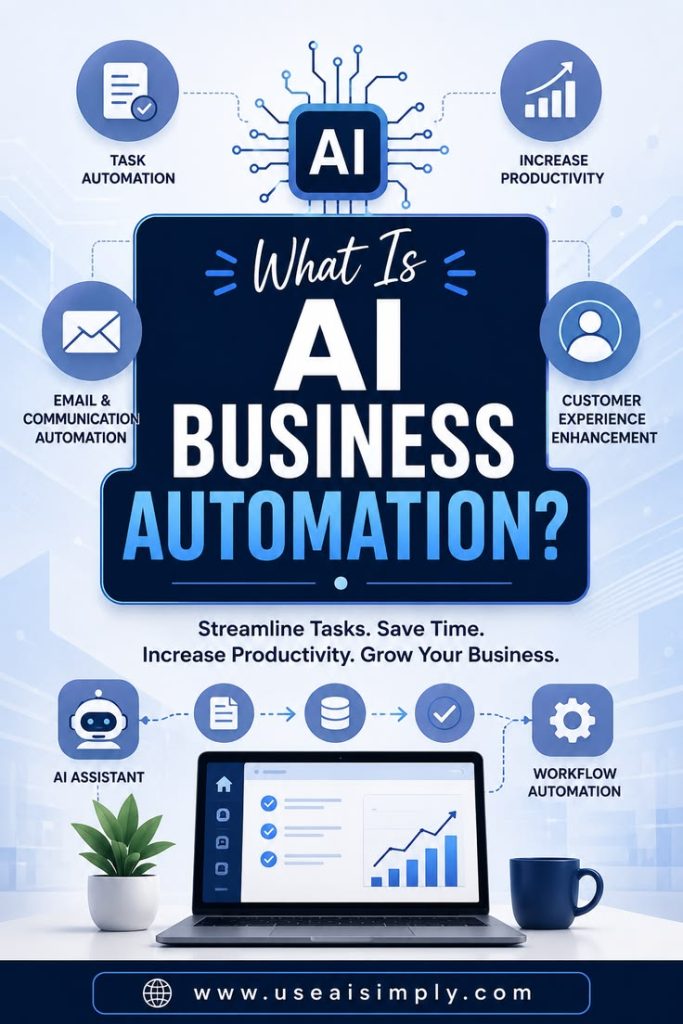
The Impact of Agentic AI on Enterprise Productivity Artificial Intelligence has evolved rapidly over the past few years. What started as chatbots, recommendation engines, and predictive analytics has now entered a new phase known as Agentic AI. Unlike traditional AI systems that primarily respond to commands or analyze data, Agentic AI can independently plan, execute, monitor, and optimize tasks to achieve specific goals. As organizations continue their digital transformation journeys, Agentic AI is emerging as one of the most influential technologies reshaping enterprise productivity. Businesses are no longer looking at AI merely as a tool that assists employees; instead, they are deploying AI agents capable of acting as digital workers that can handle complex workflows with minimal human intervention. From customer service and IT operations to finance, marketing, and supply chain management, Agentic AI is helping enterprises operate more efficiently, reduce costs, improve decision-making, and unlock new levels of productivity. As we move through 2026, companies across industries are recognizing that the future of work will involve close collaboration between humans and autonomous AI agents. Understanding Agentic AI Agentic AI refers to artificial intelligence systems that possess the ability to act autonomously toward achieving predefined objectives. Unlike conventional AI applications that require constant prompts or supervision, Agentic AI can make decisions, initiate actions, adapt to changing environments, and complete multi-step tasks independently. For example, a traditional AI chatbot may answer customer questions based on available information. An Agentic AI system, however, can handle an entire customer support process—from receiving the request and identifying the issue to processing refunds, updating records, and following up with customers. The key capabilities that distinguish Agentic AI include: Goal-oriented decision-making Autonomous workflow execution Continuous learning and adaptation Multi-step task management Context awareness Integration with enterprise systems Proactive problem-solving These characteristics enable Agentic AI to function more like a virtual employee rather than a simple software application. Why Enterprises Are Adopting Agentic AI Organizations are under increasing pressure to improve efficiency, reduce operational expenses, and maintain competitiveness in rapidly changing markets. Traditional automation solutions can handle repetitive tasks, but they often struggle with complex processes that require decision-making and adaptability. Agentic AI fills this gap by bringing intelligence and autonomy to business operations. Several factors are driving enterprise adoption: Growing Operational Complexity Modern businesses manage enormous volumes of data, processes, and interactions. Human teams often struggle to keep up with increasing complexity. Agentic AI can process information at scale and coordinate multiple tasks simultaneously. Demand for Faster Decision-Making Markets move quickly, and delays can be costly. AI agents analyze data in real time and provide immediate actions or recommendations, helping organizations respond more rapidly to opportunities and challenges. Workforce Productivity Challenges Many industries continue to face talent shortages and increasing workloads. Agentic AI helps organizations maximize productivity without significantly expanding headcount. Cost Optimization Businesses are continuously seeking ways to reduce expenses. AI agents can automate labor-intensive processes, reducing operational costs while maintaining service quality. Digital Transformation Initiatives Organizations investing in cloud computing, analytics, and automation increasingly view Agentic AI as a natural extension of their digital transformation strategies. Workflow Automation Beyond Traditional RPA Robotic Process Automation (RPA) has been used for years to automate repetitive tasks. However, RPA systems generally follow predefined rules and struggle when unexpected situations arise. Agentic AI enhances automation by introducing intelligence into workflows. For example, instead of simply processing invoices according to fixed rules, an AI agent can: Identify anomalies Communicate with vendors Request missing information Resolve exceptions Complete approvals automatically This significantly reduces manual intervention and accelerates business processes. Enhanced Employee Productivity One of the most important benefits of Agentic AI is its ability to augment human workers. Employees often spend significant time on administrative tasks such as: Data entry Scheduling Reporting Documentation Research Information retrieval AI agents can handle these responsibilities, allowing employees to focus on strategic, creative, and high-value work. Rather than replacing workers, Agentic AI often acts as a productivity multiplier, enabling teams to accomplish more with the same resources. Faster Decision-Making Data-driven decision-making has become essential for modern enterprises. However, analyzing large datasets can be time-consuming. Agentic AI systems continuously monitor: Market trends Customer behavior Operational performance Financial metrics Supply chain activities They can identify patterns, generate insights, and recommend actions in real time. Executives and managers benefit from faster access to actionable intelligence, improving organizational agility and responsiveness. Improved Customer Service Operations Customer experience has become a major competitive differentiator. Agentic AI is transforming customer support by enabling intelligent automation. AI agents can: Resolve support tickets Handle account updates Process refunds Schedule appointments Escalate complex issues Follow up with customers Because these systems operate around the clock, businesses can provide faster and more consistent service while reducing support costs. Knowledge Management and Information Access Large enterprises often struggle with fragmented information spread across multiple systems. Employees may spend considerable time searching for documents, policies, procedures, and data. Agentic AI can act as an intelligent knowledge assistant that: Retrieves relevant information Summarizes documents Generates reports Provides recommendations Answers internal queries This improves productivity by reducing time spent searching for information. Supply Chain Optimization Supply chain management involves numerous interconnected activities, making it an ideal environment for Agentic AI deployment. AI agents can: Monitor inventory levels Predict demand fluctuations Optimize procurement Coordinate logistics Identify supply chain risks Recommend corrective actions These capabilities help organizations improve efficiency while minimizing disruptions. Financial Operations Efficiency Finance departments often deal with repetitive and time-consuming processes. Agentic AI can streamline activities such as: Invoice processing Expense management Budget forecasting Financial reporting Compliance monitoring Fraud detection As a result, finance teams can focus more on strategic planning and business growth initiatives. IT Operations and Infrastructure Management Enterprise IT environments continue to grow in complexity. Agentic AI is increasingly being used to manage infrastructure and support operations. AI agents can: Detect system anomalies Monitor performance Resolve incidents Apply security updates Allocate resources Predict failures This proactive approach improves system reliability while reducing operational workloads. Marketing and Sales Productivity Marketing and sales teams are

Business, Business Analytics, Technology, Technology & Innovation

Hyperautomation in 2026: Beyond Traditional Process Automation

Hyperautomation in 2026: Beyond Traditional Process Automation Businesses have spent years automating repetitive tasks to improve efficiency and reduce operational costs. Traditional automation solutions, particularly Robotic Process Automation (RPA), have helped organizations streamline rule-based processes such as data entry, invoice processing, customer onboarding, and report generation. While these technologies have delivered significant value, the business landscape of 2026 demands much more than simple task automation. Organizations are now dealing with massive volumes of data, increasingly complex workflows, evolving customer expectations, and growing pressure to make faster decisions. As a result, companies are moving beyond basic automation and embracing hyperautomation—a more advanced approach that combines multiple technologies to automate entire business processes from start to finish. Hyperautomation is no longer a futuristic concept. It has become a strategic priority for organizations seeking greater agility, productivity, and innovation. By integrating artificial intelligence, machine learning, process mining, low-code platforms, intelligent document processing, and robotic process automation, businesses can create intelligent systems capable of learning, adapting, and making decisions with minimal human intervention. Understanding Hyperautomation Hyperautomation refers to the coordinated use of multiple advanced technologies to identify, automate, optimize, and continuously improve business processes. Unlike traditional automation, which focuses on individual tasks, hyperautomation aims to automate complete workflows across departments and systems. Think of traditional automation as teaching a machine to perform one repetitive task. Hyperautomation, on the other hand, creates an ecosystem where different technologies work together to handle complex business operations autonomously. For example, when a customer submits a loan application, a hyperautomation system can automatically collect documents, verify information, assess risk using AI models, perform compliance checks, communicate with the customer, and generate approval decisions. What once required multiple employees and several days can now be completed within minutes. The goal is not simply to replace manual work but to create intelligent business operations that continuously learn and improve. Why Hyperautomation Is Gaining Momentum in 2026 Several factors are driving the rapid adoption of hyperautomation across industries. The first is the explosion of enterprise data. Organizations generate vast amounts of structured and unstructured information every day. Processing this data manually is increasingly impractical. Hyperautomation enables businesses to extract insights, make decisions, and execute actions automatically. Another major driver is the growing demand for operational efficiency. Economic uncertainty and competitive markets are forcing organizations to do more with fewer resources. Hyperautomation helps reduce costs while improving speed and accuracy. Customer expectations have also evolved significantly. Modern consumers expect instant responses, personalized experiences, and seamless service. Businesses that rely solely on manual processes struggle to meet these expectations consistently. Additionally, advances in artificial intelligence have made intelligent automation more accessible than ever before. AI models can now understand language, analyze documents, recognize patterns, and generate recommendations with remarkable accuracy. Together, these factors are pushing businesses toward a new era of automation where machines not only execute tasks but also support decision-making and continuous optimization. Key Technologies Powering Hyperautomation Hyperautomation is not a single technology. It is a combination of several powerful tools working together. Artificial Intelligence and Machine Learning AI and machine learning provide the intelligence behind hyperautomation. These technologies allow systems to analyze data, identify patterns, make predictions, and improve performance over time. In customer service, AI can classify support requests, suggest responses, and route inquiries to the appropriate departments. In finance, machine learning algorithms can detect fraud and assess risk in real time. As AI capabilities continue to evolve, businesses are automating increasingly sophisticated decision-making processes. Robotic Process Automation (RPA) RPA remains a foundational component of hyperautomation. Software bots can perform repetitive tasks such as copying data, updating records, generating reports, and interacting with multiple applications. While traditional RPA focuses on rule-based activities, its integration with AI allows bots to handle more dynamic and complex scenarios. Intelligent Document Processing Businesses process enormous volumes of documents, including invoices, contracts, applications, and compliance records. Intelligent Document Processing uses AI, optical character recognition, and natural language processing to extract, classify, and validate information automatically. This significantly reduces manual document handling while improving speed and accuracy. Process Mining One of the biggest challenges in automation is identifying which processes should be automated. Process mining tools analyze system logs and workflow data to uncover inefficiencies and bottlenecks. Organizations can gain a clear understanding of how work is performed and identify opportunities for automation and optimization. Low-Code and No-Code Platforms Low-code and no-code platforms allow employees with limited programming knowledge to create automation workflows quickly. These platforms accelerate digital transformation by reducing dependency on specialized development teams while encouraging innovation across departments. Conversational AI Chatbots and virtual assistants have evolved dramatically in recent years. Modern conversational AI systems can understand context, provide personalized responses, and complete transactions. Businesses are increasingly using conversational AI to automate customer interactions, employee support services, and internal workflows. How Hyperautomation Differs from Traditional Automation Traditional automation typically focuses on isolated tasks. For example, a software bot might transfer data from one system to another. Hyperautomation takes a broader approach. It connects multiple technologies to automate entire processes from beginning to end. Traditional automation follows predefined rules and struggles when exceptions occur. Hyperautomation incorporates AI-driven decision-making, allowing systems to adapt to changing circumstances and handle more complex scenarios. Another key difference is continuous improvement. Hyperautomation systems monitor performance, identify inefficiencies, and recommend optimizations automatically. This creates a cycle of ongoing enhancement that traditional automation cannot achieve. Real-World Applications Across Industries The impact of hyperautomation extends across virtually every sector. Healthcare Healthcare organizations are using hyperautomation to streamline patient registration, appointment scheduling, insurance verification, medical coding, and claims processing. AI-powered systems can analyze patient records, assist with diagnosis support, and improve administrative efficiency, allowing healthcare professionals to focus more on patient care. Banking and Financial Services Financial institutions face increasing pressure to deliver faster services while maintaining compliance and security. Hyperautomation helps automate loan approvals, fraud detection, customer onboarding, compliance monitoring, and transaction processing. These capabilities reduce operational costs while improving customer experiences. Manufacturing Manufacturers are combining automation, AI, and Internet of Things

Artificial Intelligence, Digital Transformation, Educational Technology

AI Workflow Automation for Enterprises

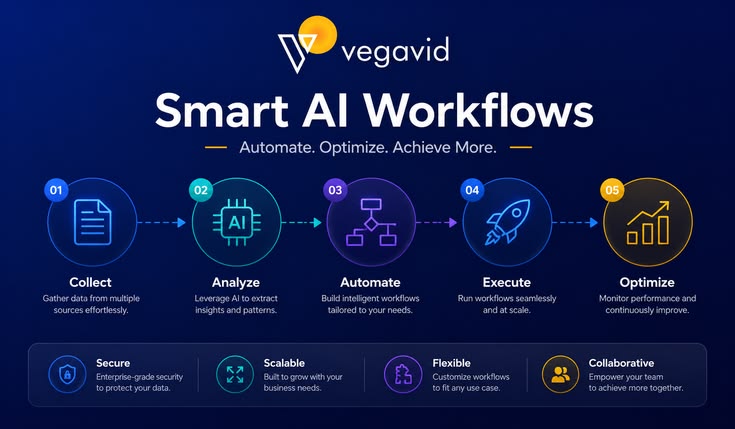
AI Workflow Automation for Enterprises: The Ultimate Blueprint for Scalable Digital Transformation (2026) The global corporate landscape has decisively moved past the experimental phase of artificial intelligence. Today, the core operational differentiator between market leaders and lagging firms isn’t just the adoption of AI—it’s orchestration. Enterprises are no longer looking for isolated AI chatbots to summarize emails. Instead, they are demanding end-to-end AI Workflow Automation: complex, self-healing, multi-agent systems that integrate with legacy infrastructure, automate decision-making pipelines, and fundamentally redefine human-machine collaboration. This comprehensive guide serves as an enterprise-grade blueprint for tech executives, operations leaders, and digital transformation architects looking to deploy scalable AI automation across their organizational fabric. 1. Defining Enterprise AI Workflow Automation To build an effective automation strategy, we must first distinguish modern AI workflow automation from legacy systems. For over a decade, Robotic Process Automation (RPA) served as the backbone of operational efficiency. RPA excels at deterministic, rule-based tasks: “If data arrives in Form A, copy it exactly into Field B.” However, the moment a user submits an unformatted invoice, an unexpected error code pops up, or an email contains nuanced human emotion, traditional RPA breaks down. +———————————————————————–+ | THE AUTOMATION EVOLUTION | +———————————————————————–+ | LEGACY RPA | MODERN AI | | “Deterministic & Rigid” | “Probabilistic & Adaptive” | | • Rule-bound execution | • Contextual understanding | | • Breaks on unstructured data| • Learns from edge cases | | • Requires static formats | • Handles text, voice, and video | +———————————————————————–+ Modern Enterprise AI Automation shifts the paradigm from deterministic to probabilistic. Backed by Large Language Models (LLMs), vision systems, and specialized embedding models, these workflows possess cognitive context. They don’t just move data; they comprehend data, make judgment calls based on corporate playbooks, learn from edge cases, and seamlessly pass control to human supervisors when structural thresholds are crossed. 2. The Architecture of an Automated AI Workflow An enterprise-grade AI workflow is rarely built on a single, isolated prompt. It is a layered, multi-component architecture engineered to maximize accuracy, data security, and execution speed. Layer 1: Data Ingestion and Semantic Parsing Every automated pipeline begins with data. The ingestion layer utilizes advanced optical character recognition (OCR), speech-to-text engines, and computer vision to ingest unstructured assets—such as raw PDFs, audio recordings of client calls, complex internal spreadsheets, or customer emails—and normalize them into structured JSON schemas. Layer 2: Vector Infrastructure and Corporate Memory To prevent the underlying models from hallucinating or losing track of corporate standards, workflows use Retrieval-Augmented Generation (RAG) systems tied to low-latency vector databases. When a new transaction or support ticket enters the pipeline, the system extracts semantic embeddings, queries the vector infrastructure for relevant corporate historical data, and constructs a highly contextual prompt. Layer 3: The Multi-Agent Orchestration Core Instead of relying on one massive, generalized AI model to handle an entire process, modern architectures break workflows down into discrete, specialized AI Agents. [Ingested Customer Ticket] | v +——————————+ | Orchestrator Agent | +——————————+ / | \ +————————+ | +————————-+ | v | +———————–+ +——————–+ +———————–+ | Data Extraction Agent | | Legal Compliance | | Quality Assurance | | | | Agent | | Agent | +———————–+ +——————–+ +———————–+ | | | +————————+ | +————————-+ \ | / v +——————————+ | Final Response / Action | +——————————+ The Orchestrator Agent: Receives the inbound payload, analyzes intent, and maps out an execution plan. The Specialist Agents: Micro-tuned models dedicated to singular tasks. For example, in an insurance claims pipeline, one agent extracts medical billing codes, a second agent cross-references the claim against policy terms, and a third agent checks for historical patterns of fraud. The Critic/Validator Agent: A separate model designed specifically to stress-test the output of the specialist agents against strict regulatory constraints before any action is committed. Layer 4: System Integration and Actuation (Tool Use) An AI that can only output text is a passive advisor. True automation requires action. Through unified API gateways, enterprise AI frameworks interact directly with core business software: writing data directly into SAP ERP systems, updating customer records in Salesforce, or pushing alerts to Microsoft Teams and Slack. 3. High-Impact Enterprise Use Cases While AI automation can be applied universally, organizations see the fastest, highest-margin returns on investment (ROI) by targeting data-heavy, communication-intensive friction points. A. Supply Chain Logistics and Vendor Management The Friction Point: Managing thousands of global vendor invoices, bills of lading, customs declarations, and shifting spot-market price quotes. The AI Automation Solution: An autonomous agent continually monitors shared procurement inboxes. When an invoice arrives, the agent automatically extracts line items, matches them against existing purchase orders (POs) within Oracle or NetSuite, verifies customs compliance documentation via RAG, flags discrepancies to a human logistics manager, and pre-approves flawless entries for payment execution. B. Legal and Financial Compliance Auditing The Friction Point: Reviewing multi-hundred-page commercial contracts, loan applications, or regulatory fillings for subtle non-compliance risks. The AI Automation Solution: Legal teams deploy specialized analysis pipelines where contracts are run through automated safety scripts. The workflow flags clauses that deviate from standard corporate positions, automatically generates alternative, compliant legal phrasing, and highlights potential financial liabilities—reducing initial contract review timelines by over 80%. C. Hyper-Personalized Global Customer Operations The Friction Point: Scaling localized customer care across multiple continents without ballooning headcounts or degrading response quality. The AI Automation Solution: Multimodal AI pipelines ingest inbound customer issues across voice, chat, and email. By recognizing user intent and tone natively, the system resolves routine technical support, processes exchanges inside the billing database, drafts highly localized, context-aware email resolutions, and seamlessly escalates frustrated or VIP accounts to human agents with a fully summarized case history. 4. Selecting the Core AI Infrastructure Stack Building an enterprise pipeline requires selecting an foundational model provider that aligns with your operational realities, technical constraints, and data security requirements. Capability / Metric OpenAI (GPT-4o / o1 Ecosystem) Anthropic (Claude 3.5 Suite) Google Cloud (Gemini Enterprise) Primary Structural Strength Elite tool usage, complex logic, massive developer market. Highly articulate prose,

Artificial Intelligence, Software development, Technology & Innovation

How AI Automation Helps Businesses

Beyond the Hype: How AI Automation Helps Businesses Scale, Save, and Out-Compete There is a massive shift happening in the corporate world right now, and it has nothing to do with flashy sci-fi tropes. Instead, it is unfolding quietly inside spreadsheets, customer service queues, supply chain logs, and marketing workflows. We have officially moved past the era of viewing Artificial Intelligence as a speculative tech experiment. Today, it is an operational engine. For modern enterprises and growing startups alike, the question is no longer, “What is AI?” but rather, “How exactly does AI automation help businesses survive and thrive in a hyper-competitive market?” If you are a business leader looking to cut through the industry buzzwords and understand the tangible, bottom-line impact of deploying smart automation, you are in the right place. Let’s break down exactly how AI automation is transforming modern business frameworks, reducing overhead, and unlocking entirely new revenue streams. 1. Redefining Human Productivity: Eradicating the “Busywork Tax” The average employee spends an alarming percentage of their workday on repetitive, administrative tasks—data entry, scheduling, sorting emails, and cross-referencing files. This is what operational experts call the “Busywork Tax.” It drains employee morale and wastes expensive human capital on tasks that require zero critical thinking. AI automation acts as a digital tirelessness layer that handles these tasks at scale. Intelligent Document Processing (IDP) Traditional software can read data if it is structured perfectly. AI goes a step further. Using Natural Language Processing (NLP), AI can ingest unstructured documents—like unstructured PDF invoices, handwritten receipts, or messy client emails—extract the relevant figures, categorize them, and instantly push them into your ERP or accounting software. Smart Scheduling and Operations Instead of a human spending hours coordinating calendars across internal teams and external clients, autonomous AI agents manage scheduling, anticipate time-zone friction, and even prepare meeting briefs by analyzing the participants’ public profiles and past touchpoints. The Human Shift: When you automate the mundane, you don’t replace your staff; you upgrade them. A data-entry clerk becomes a data analyst. A customer support agent becomes a customer success strategist. 2. Revolutionizing Customer Experience (CX) with 24/7 Contextual Care We’ve all experienced the frustration of legacy chatbots. You type a complex question, and it responds with: “I didn’t quite catch that. Did you mean ‘Track Order’?” It’s a broken user experience. AI automation has fundamentally rewritten the rules of customer engagement by introducing true context, empathy, and speed. Instant, Hyper-Personalized Resolving Modern AI customer service agents don’t just pull from a static FAQ document. They connect securely to your internal databases. When a customer messages your platform, the AI instantly reviews their entire purchase history, recognizes their subscription tier, understands their emotional sentiment (detecting frustration or urgency), and crafts a bespoke response within seconds. Multi-Channel Ubiquity AI automation allows a lean support team to operate across web chat, WhatsApp, email, and social media DMs simultaneously without a drop-off in response times. Customer Service Metric Legacy Framework AI-Automated Framework Average Response Time 2 to 4 Hours Less than 15 Seconds Availability Fixed Business Hours 24/7/365 First-Contact Resolution 45% – 60% 80%+ (For routine tier-1 queries) 3. Transforming Data into Prescriptive, Real-Time Strategy Most businesses are drowning in data but starving for insights. They have access to Google Analytics, CRM logs, and sales numbers, but by the time a human team compiles these reports at the end of the month, the insights are already outdated. AI automation changes your business orientation from reactive to predictive and prescriptive. [ Raw Data Streams ] —> [ AI Automation Analytics Engine ] —> [ Predictive Forecasting ] | v [ Prescriptive Action Taken ] (Automated Inventory Orders / Ad Adjustments) Predictive Inventory and Supply Chain Management For e-commerce and manufacturing businesses, AI monitors micro-trends, weather forecasts, social media velocity, and historical sales patterns to predict exactly when a product will spike in demand. It can then automatically adjust supply chain orders to prevent stockouts without over-purchasing warehouse space. Dynamic Financial Modeling AI-driven financial tools continuously run thousands of “Monte Carlo” simulations against your business’s burn rate and revenue pipeline. This gives leadership real-time updates on cash flow runways and flags financial vulnerabilities months before they appear on a traditional balance sheet. 4. Hyper-Accelerating the Creative Pipeline and Marketing ROI Marketing teams are under constant pressure to produce more content, run more ad variants, and target tighter demographics. Doing this manually is an expensive, slow process of trial and error. AI automation serves as a force multiplier for creative output. Automated A/B Testing at Scale Instead of a marketer manually designing three ad variations and waiting two weeks for results, AI tools can generate hundreds of hyper-targeted ad copy variations, deploy them across ad networks, analyze real-time performance indicators, and automatically shift budgets toward winning creative assets in minutes. Hyper-Personalization Outbound AI allows businesses to send marketing emails that feel completely bespoke. Instead of blasting an entire list with the same promotion, the AI customizes the subject line, product recommendations, and call-to-action based entirely on individual user behavior profiles. 5. Safeguarding Enterprises with Automated Cybersecurity & Risk Mitigation As digital infrastructure grows, so do the threats against it. Human IT teams simply cannot monitor every network log, login attempt, or database query occurring across a global enterprise. AI automation acts as an immune system for corporate networks. Anomaly Detection over Static Rules Legacy cybersecurity relies on fixed rules (e.g., block an IP if it enters the wrong password five times). Hackers know how to bypass these. AI automation monitors behavioral baselines. If an employee who normally accesses data from Chicago suddenly logs in from a machine performing atypical database queries out of Germany, the AI flags the anomaly, freezes the access endpoint, and alerts the security team instantly. Automated Compliance Auditing In highly regulated fields like healthcare (HIPAA) or finance, AI compliance engines continuously monitor internal communication channels, data storage, and external transfers to guarantee zero sensitive compliance infractions occur, preventing millions in regulatory fines. The Roadmap to Implementing AI

Abstract visualization of artificial intelligence and machine learning networks.
Artificial Intelligence, machine learning

Artificial Intelligence and Machine Learning in Everyday Life

Introduction Artificial Intelligence (AI) and Machine Learning (ML) are no longer futuristic concepts — they’re part of our daily reality. Whether it’s unlocking your phone with facial recognition, getting directions from Google Maps, or streaming personalized shows on Netflix, AI and ML are silently working behind the scenes. These technologies have become the backbone of modern innovation, revolutionizing industries, improving decision-making, and enhancing user experiences everywhere. In this article, we’ll explore how AI and ML are reshaping the way we live, work, and interact with technology. Understanding AI and ML Artificial Intelligence (AI) AI refers to the simulation of human intelligence in machines. It enables computers to perform tasks like thinking, learning, problem-solving, and decision-making. Machine Learning (ML) ML is a subset of AI that allows systems to learn from data and improve automatically without being explicitly programmed. In simple words:AI = The brain that makes decisions.ML = The process that helps the brain learn from experience. How AI and ML Work Together AI uses algorithms and models developed through ML to process vast amounts of data and identify patterns. The more data they process, the smarter they become. For instance, when you shop online and see product recommendations, that’s ML analyzing your behavior, and AI deciding what to show you next. AI and ML in Everyday Life Here are some real-world examples of how these technologies impact our daily routines: 1. Smartphones and Personal Assistants Voice assistants like Siri, Google Assistant, and Alexa use AI for voice recognition, natural language processing (NLP), and smart decision-making. AI helps understand your voice commands. ML learns your preferences over time. Combined, they make your device more intuitive and efficient. Example: Predictive text suggestions, camera scene detection, and smart replies in messaging apps. Social Media Platforms AI powers everything from your feed recommendations to face tagging. Facebook/Instagram: Recognize faces in photos using ML models. Twitter/X: Filters spam and offensive content automatically. TikTok/YouTube: Recommend videos based on user behavior patterns. AI learns what you enjoy, keeping your feed relevant and engaging. Healthcare and Medicine AI is saving lives by improving diagnostics and personalizing treatments. Early Disease Detection: ML models detect cancer or heart disease earlier than humans. Drug Discovery: AI accelerates the process of finding new medicines. Virtual Nurses: Chatbots assist patients with reminders and consultations. Example: IBM Watson assists doctors by analyzing patient data for accurate diagnoses. 4. Transportation and Navigation From Google Maps to self-driving cars, AI and ML make transportation smarter. Navigation apps use ML to analyze traffic patterns and suggest the fastest routes. Autonomous vehicles like Tesla’s Autopilot use sensors and AI to drive safely. Impact: Reduced traffic congestion, fewer accidents, and improved travel efficiency. 5. Banking and Finance AI enhances fraud detection, risk management, and personalized banking. Detects unusual transactions in real time. Analyzes spending behavior to prevent fraud. Provides AI-based financial advice and budgeting tools. Example: Chatbots like HDFC’s “EVA” or SBI’s “SIA” answer customer queries instantly. 6. Education and E-Learning AI personalizes learning for students based on strengths and weaknesses. Adaptive learning platforms adjust content difficulty automatically. Virtual tutors provide 24/7 assistance. ML helps educators predict student performance. Example: Duolingo uses ML to personalize language lessons for every learner. 7. Entertainment and Streaming Platforms AI decides what you watch next! Netflix, Spotify, and YouTube use ML algorithms to study your history and recommend similar content. AI improves sound and video quality using enhancement algorithms. Example: Netflix’s recommendation engine reportedly saves the company over $1 billion per year by retaining users through personalized suggestions. 8. Smart Homes and IoT Devices AI-powered home devices such as Nest Thermostats, Smart Lights, and Security Cameras learn your habits to optimize comfort and energy use. Adjusts lighting and temperature automatically. Detects intrusions using ML-based image recognition. Saves energy with predictive scheduling. 9. Customer Service Chatbots Businesses now use AI chatbots to handle thousands of customer queries efficiently. Provides 24/7 instant support. Understands natural language queries. Reduces wait time and operational costs. Example: ChatGPT-powered bots are now integrated into customer service systems globally. 10. Retail and E-Commerce AI and ML personalize your shopping journey. Product recommendations Dynamic pricing (adjusts prices based on demand) Predictive inventory management Example: Amazon’s “Just Walk Out” technology uses AI to automatically bill customers as they leave the store. Behind the Scenes: Technologies That Power AI and ML Technology Function Neural Networks Mimic the human brain to identify complex patterns. Natural Language Processing (NLP) Enables machines to understand human speech/text. Deep Learning Learns from massive data sets with minimal human supervision. Computer Vision Allows systems to interpret visual data (images, videos). Reinforcement Learning Systems learn by trial and error through rewards and penalties. These technologies together enable machines to see, understand, and respond intelligently — shaping our digital world. Advantages and Challenges of AI in Daily Life Advantages Saves time and increases efficiency Reduces human error Enables predictive analytics Improves personalization and user experience Enhances safety and convenience Challenges Data privacy concerns Job automation and workforce displacement Algorithmic bias High implementation cost for small businesses The Future of AI and ML The next decade will witness AI becoming even more integrated into our personal and professional lives. Future Trends: AI-powered healthcare diagnostics Fully autonomous transportation systems Emotion-recognizing AI for human-machine interaction AI-driven education personalization Smarter robotics for home and industry AI is moving from automation to augmentation — not replacing humans, but empowering them to achieve more. Conclusion AI and ML have become invisible assistants guiding our daily decisions — what we buy, how we travel, what we learn, and even how we stay healthy. Their true magic lies not in replacing humans, but in enhancing human potential — making life smarter, faster, and more connected than ever before. The era of intelligent machines has begun — and it’s already in your pocket. FAQs 1. What is the difference between AI and ML?AI is the broader concept of intelligent machines; ML is a subset that allows machines to learn from data. 2. How is AI used in daily

Artificial intelligence network scanning for cyber threats and data protection.
Artificial Intelligence, cybersecurity

The Role of Artificial Intelligence in Cybersecurity

Introduction In a world where cyberattacks are growing more sophisticated by the day, traditional defense systems are no longer enough. Businesses, governments, and individuals face threats ranging from phishing scams to ransomware and identity theft. To combat this, Artificial Intelligence (AI) has emerged as a game-changing weapon in the field of cybersecurity. By combining machine learning (ML), predictive analytics, and automation, AI helps security teams identify, prevent, and respond to attacks — often before they occur. As per IBM’s Cost of a Data Breach Report 2025, organizations using AI-driven cybersecurity tools save an average of $3 million per breach compared to those without it. Clearly, the future of cybersecurity is AI-powered. What Is AI in Cybersecurity? Artificial Intelligence in Cybersecurity involves using algorithms and machine learning models to analyze data, detect anomalies, and automatically respond to threats. Unlike traditional security systems that rely on pre-defined rules, AI systems learn and adapt to new threats dynamically — making them ideal for handling today’s complex digital environments.     Core Functions: Real-time threat detection Automated response and mitigation Behavioral analysis Network monitoring Predictive analytics Why AI Is Essential in Cybersecurity Traditional cybersecurity relies on human experts and static rule-based systems. However, with billions of daily data points and evolving attack patterns, humans alone can’t keep up. AI brings: Speed: Instantly processes large datasets to identify threats. Accuracy: Reduces false positives compared to manual analysis. Scalability: Monitors thousands of endpoints simultaneously. Adaptability: Learns from new data and evolving attacks. AI acts as a force multiplier — enhancing human intelligence rather than replacing it. Key Applications of AI in Cybersecurity 1. Threat Detection and Prediction AI systems analyze historical attack data to predict potential threats. By learning patterns, AI can detect zero-day vulnerabilities that traditional systems might miss. Example: Darktrace uses AI to continuously learn an organization’s network behavior and identify anomalies in real-time. 2. Behavioral Analytics AI monitors user and system behavior to detect suspicious activities such as unauthorized access or data transfers. Example: If an employee’s account suddenly downloads huge amounts of data at odd hours, AI can flag and isolate that activity. 3. Automated Incident Response AI can automate the initial response to threats — such as isolating infected devices or blocking suspicious IP addresses — reducing the time between detection and action. Example: SOAR (Security Orchestration, Automation, and Response) platforms use AI to streamline security workflows. 4. Phishing and Email Security Machine learning models analyze email content, sender patterns, and URLs to detect phishing attacks before they reach users’ inboxes. Example: Google’s Gmail AI blocks over 100 million phishing emails daily using ML filters. 5. Malware Detection AI-powered systems can detect new malware strains by studying code structure and execution patterns — even if the malware hasn’t been seen before. Example: Cylance uses AI models trained on millions of malicious files to predict threats in real-time. 6. Network Security and Monitoring AI helps track massive network traffic volumes, identifying abnormalities that might signal cyberattacks like DDoS (Distributed Denial of Service). Example: AI tools detect unusual spikes in network activity and alert administrators instantly. 7. Fraud Detection Banks and e-commerce companies use AI to analyze user transactions and detect fraudulent behavior. Example: Mastercard’s Decision Intelligence uses AI to evaluate transaction risks within milliseconds.  Advantages of Using AI in Cybersecurity Advantage Impact Speed & Efficiency Real-time threat detection and mitigation Improved Accuracy Fewer false alarms and better prioritization Cost Reduction Reduced operational costs and data breach impact Predictive Capabilities Prevents attacks before they occur 24/7 Monitoring Continuous protection without downtime Adaptive Learning Evolves with emerging cyber threats Challenges and Limitations While AI offers immense potential, it’s not without challenges. 1. Adversarial AI Attacks Hackers use AI to create smarter malware or bypass security systems by mimicking legitimate behavior. 2. High Implementation Costs Building and training AI models require significant investment in infrastructure and expertise. 3. False Positives Poorly trained AI systems may still misclassify safe activities as threats, leading to unnecessary alerts. 4. Data Privacy Concerns AI models need large datasets to train — which sometimes include sensitive user data. 5. Skill Gap The shortage of AI and cybersecurity professionals makes it difficult for many organizations to deploy AI effectively. The Future of AI in Cybersecurity The next era of cybersecurity will be autonomous, predictive, and intelligent. Key Trends to Watch: AI + Blockchain Integration: For tamper-proof data verification. Quantum AI Security: Defending against quantum computing-based attacks. Self-Healing Systems: Networks that can automatically detect, isolate, and repair vulnerabilities. Edge AI: Real-time protection for IoT and edge devices. AI-driven Cyber Threat Intelligence (CTI): Collaborative global databases for predictive defense. By 2030, AI will be the central pillar of all major cybersecurity infrastructures — empowering organizations to respond to threats faster than hackers can act. Real-World Case Studies IBM Watson for Cybersecurity Uses natural language processing and machine learning to analyze millions of security reports, helping security teams make faster decisions. Capital One Implements AI to monitor billions of transactions in real time, protecting customers from credit card fraud and identity theft. Healthcare Networks Hospitals use AI-based security tools to protect sensitive patient records and detect ransomware attacks. Conclusion The rise of Artificial Intelligence has redefined the battle against cybercrime. From predictive threat detection to automated defense mechanisms, AI enables businesses to stay one step ahead of hackers. As digital transformation accelerates, the fusion of AI and cybersecurity will become the cornerstone of trust and resilience in the online world. However, with great power comes responsibility — ensuring AI is used ethically, transparently, and securely will be crucial for a safer digital future. In short, AI is not just defending the digital world — it’s redefining it. FAQs 1. How is AI used in cybersecurity?AI analyzes patterns, detects anomalies, and automates responses to identify and mitigate cyber threats in real time. 2. Can AI prevent cyberattacks completely?AI reduces risks and improves detection, but human oversight remains essential for complex decision-making. 3. What are the main benefits of AI in cybersecurity?Faster detection, improved accuracy,

Digital transformation concept with business technology, AI data flow, and cloud computing network.
Uncategorized

Digital Transformation in 2025: How Technology Is Redefining Business and Innovation

Introduction The world is changing — and it’s happening at digital speed. Digital transformation has evolved from being a buzzword to a fundamental necessity for every business. It’s not just about adopting new technologies but about reimagining how organizations operate, deliver value, and connect with customers. In 2025, companies that embrace digital transformation are leading markets, while those that resist it risk falling behind. From cloud computing to AI-driven automation, digital innovation is redefining the global economy. What Is Digital Transformation? Digital transformation is the integration of digital technologies into all areas of business, changing how companies operate and deliver value. It involves adopting new tools, automating processes, and building a culture that embraces continuous innovation. Key aspects include: Technology Adoption: Using AI, cloud, and analytics. Process Optimization: Automating workflows and operations. Cultural Change: Encouraging adaptability and innovation. Core Technologies Powering Digital Transformation Artificial Intelligence (AI): Enables automation, predictions, and personalization. Cloud Computing: Offers scalability and remote accessibility. Internet of Things (IoT): Connects devices for real-time data exchange. Big Data Analytics: Transforms raw data into actionable insights. Blockchain: Adds transparency and security to transactions. 5G Networks: Enables faster, more reliable digital experiences. Benefits of Digital Transformation Speed & Agility: Faster decision-making and innovation. Customer Satisfaction: Real-time personalization and engagement. Cost Efficiency: Automation reduces operational expenses. Business Continuity: Cloud services ensure resilience and scalability. Sustainability: Digital solutions minimize resource waste and paper usage. Challenges in Digital Transformation While transformation offers benefits, it also brings challenges: Cybersecurity Risks: Increased digital exposure demands stronger protection. Legacy Systems: Outdated technology slows innovation. Cultural Resistance: Employees may fear change or automation. High Initial Costs: Digital tools require upfront investment. The Future of Digital Transformation The next phase of transformation focuses on AI-first ecosystems, automation, and sustainability. Hyper-Automation: Everything that can be automated will be. Green IT: Businesses are adopting eco-friendly digital solutions. AI-Driven Decision Making: Predictive insights guide leadership. Metaverse Integration: Blending digital and physical experiences. Conclusion Digital transformation is not just a technological upgrade — it’s a mindset shift. In 2025, success depends on how quickly businesses adapt to change, leverage data, and deliver value through innovation. As AI, cloud computing, and automation continue to evolve, one thing is clear: “Digital transformation is the bridge between today’s challenges and tomorrow’s possibilities.” FAQ Section Q1. What is digital transformation in simple terms?It’s the process of using technology to improve how businesses operate and serve customers. Q2. Which technologies drive digital transformation?AI, cloud computing, IoT, big data, and automation. Q3. Why is digital transformation important?It enhances efficiency, innovation, and customer satisfaction while reducing costs. Q4. What are common challenges?Cybersecurity, cost, and cultural resistance to change. Q5. Is digital transformation only for big companies?No — small and medium businesses also benefit from automation and cloud tools.

Scroll to Top