AI Workflow Automation for Enterprises: The Ultimate Blueprint for Scalable Digital Transformation (2026)
The global corporate landscape has decisively moved past the experimental phase of artificial intelligence. Today, the core operational differentiator between market leaders and lagging firms isn’t just the adoption of AI—it’s orchestration.
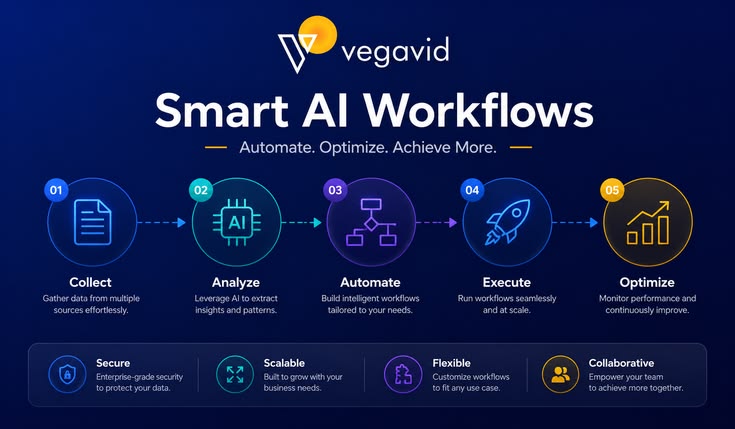
Enterprises are no longer looking for isolated AI chatbots to summarize emails. Instead, they are demanding end-to-end AI Workflow Automation: complex, self-healing, multi-agent systems that integrate with legacy infrastructure, automate decision-making pipelines, and fundamentally redefine human-machine collaboration.
This comprehensive guide serves as an enterprise-grade blueprint for tech executives, operations leaders, and digital transformation architects looking to deploy scalable AI automation across their organizational fabric.
1. Defining Enterprise AI Workflow Automation
To build an effective automation strategy, we must first distinguish modern AI workflow automation from legacy systems.
For over a decade, Robotic Process Automation (RPA) served as the backbone of operational efficiency. RPA excels at deterministic, rule-based tasks: “If data arrives in Form A, copy it exactly into Field B.” However, the moment a user submits an unformatted invoice, an unexpected error code pops up, or an email contains nuanced human emotion, traditional RPA breaks down.
+-----------------------------------------------------------------------+ | THE AUTOMATION EVOLUTION | +-----------------------------------------------------------------------+ | LEGACY RPA | MODERN AI | | "Deterministic & Rigid" | "Probabilistic & Adaptive" | | • Rule-bound execution | • Contextual understanding | | • Breaks on unstructured data| • Learns from edge cases | | • Requires static formats | • Handles text, voice, and video | +-----------------------------------------------------------------------+Modern Enterprise AI Automation shifts the paradigm from deterministic to probabilistic. Backed by Large Language Models (LLMs), vision systems, and specialized embedding models, these workflows possess cognitive context. They don’t just move data; they comprehend data, make judgment calls based on corporate playbooks, learn from edge cases, and seamlessly pass control to human supervisors when structural thresholds are crossed.
2. The Architecture of an Automated AI Workflow
An enterprise-grade AI workflow is rarely built on a single, isolated prompt. It is a layered, multi-component architecture engineered to maximize accuracy, data security, and execution speed.
Layer 1: Data Ingestion and Semantic Parsing
Every automated pipeline begins with data. The ingestion layer utilizes advanced optical character recognition (OCR), speech-to-text engines, and computer vision to ingest unstructured assets—such as raw PDFs, audio recordings of client calls, complex internal spreadsheets, or customer emails—and normalize them into structured JSON schemas.
Layer 2: Vector Infrastructure and Corporate Memory
To prevent the underlying models from hallucinating or losing track of corporate standards, workflows use Retrieval-Augmented Generation (RAG) systems tied to low-latency vector databases. When a new transaction or support ticket enters the pipeline, the system extracts semantic embeddings, queries the vector infrastructure for relevant corporate historical data, and constructs a highly contextual prompt.
Layer 3: The Multi-Agent Orchestration Core
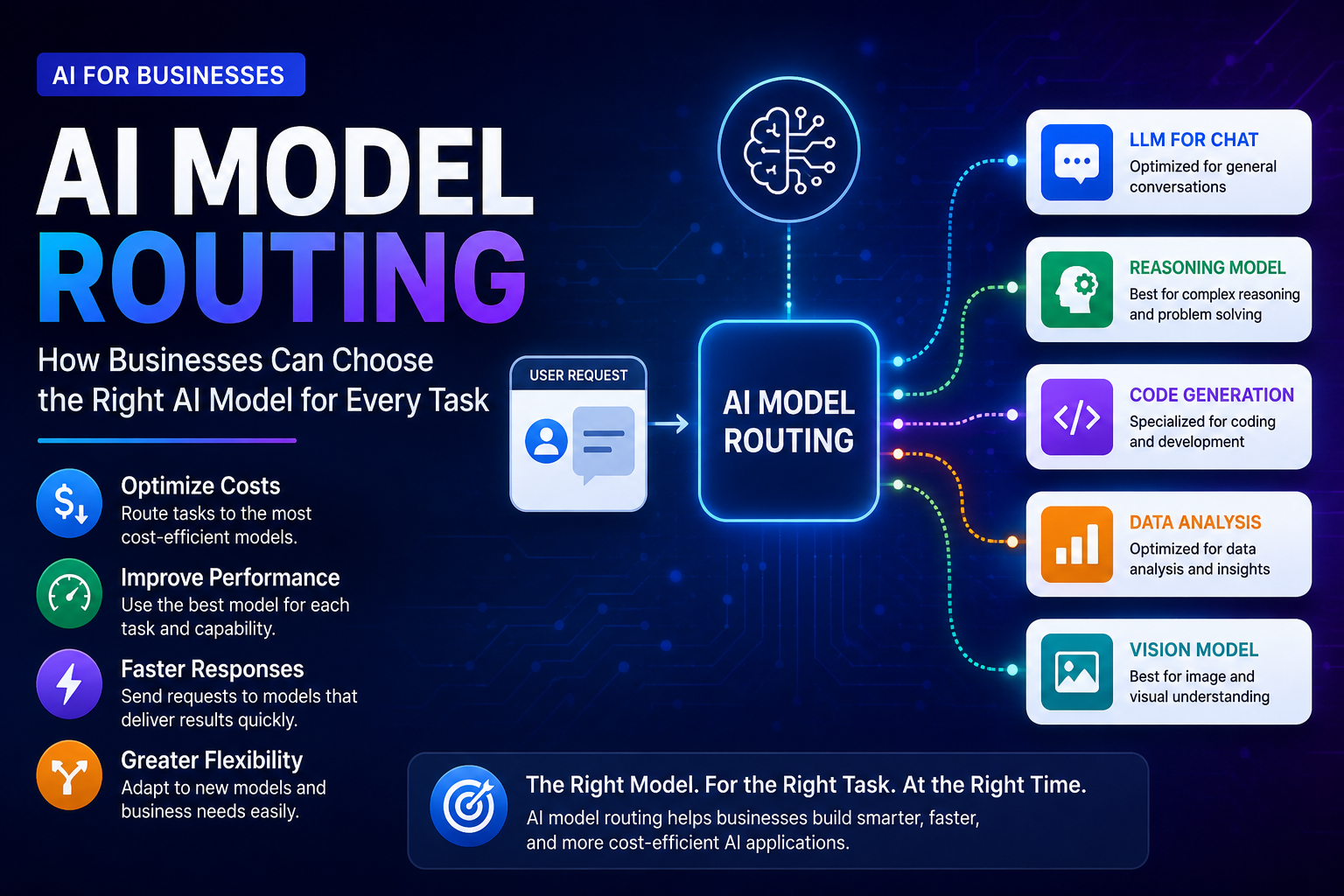
Instead of relying on one massive, generalized AI model to handle an entire process, modern architectures break workflows down into discrete, specialized AI Agents.
[Ingested Customer Ticket] | v +------------------------------+ | Orchestrator Agent | +------------------------------+ / | \ +------------------------+ | +-------------------------+ | v | +-----------------------+ +--------------------+ +-----------------------+ | Data Extraction Agent | | Legal Compliance | | Quality Assurance | | | | Agent | | Agent | +-----------------------+ +--------------------+ +-----------------------+ | | | +------------------------+ | +-------------------------+ \ | / v +------------------------------+ | Final Response / Action | +------------------------------+-
The Orchestrator Agent: Receives the inbound payload, analyzes intent, and maps out an execution plan.
-
The Specialist Agents: Micro-tuned models dedicated to singular tasks. For example, in an insurance claims pipeline, one agent extracts medical billing codes, a second agent cross-references the claim against policy terms, and a third agent checks for historical patterns of fraud.
-
The Critic/Validator Agent: A separate model designed specifically to stress-test the output of the specialist agents against strict regulatory constraints before any action is committed.
Layer 4: System Integration and Actuation (Tool Use)
An AI that can only output text is a passive advisor. True automation requires action. Through unified API gateways, enterprise AI frameworks interact directly with core business software: writing data directly into SAP ERP systems, updating customer records in Salesforce, or pushing alerts to Microsoft Teams and Slack.
3. High-Impact Enterprise Use Cases
While AI automation can be applied universally, organizations see the fastest, highest-margin returns on investment (ROI) by targeting data-heavy, communication-intensive friction points.
A. Supply Chain Logistics and Vendor Management
-
The Friction Point: Managing thousands of global vendor invoices, bills of lading, customs declarations, and shifting spot-market price quotes.
-
The AI Automation Solution: An autonomous agent continually monitors shared procurement inboxes. When an invoice arrives, the agent automatically extracts line items, matches them against existing purchase orders (POs) within Oracle or NetSuite, verifies customs compliance documentation via RAG, flags discrepancies to a human logistics manager, and pre-approves flawless entries for payment execution.
B. Legal and Financial Compliance Auditing
-
The Friction Point: Reviewing multi-hundred-page commercial contracts, loan applications, or regulatory fillings for subtle non-compliance risks.
-
The AI Automation Solution: Legal teams deploy specialized analysis pipelines where contracts are run through automated safety scripts. The workflow flags clauses that deviate from standard corporate positions, automatically generates alternative, compliant legal phrasing, and highlights potential financial liabilities—reducing initial contract review timelines by over 80%.
C. Hyper-Personalized Global Customer Operations
-
The Friction Point: Scaling localized customer care across multiple continents without ballooning headcounts or degrading response quality.
-
The AI Automation Solution: Multimodal AI pipelines ingest inbound customer issues across voice, chat, and email. By recognizing user intent and tone natively, the system resolves routine technical support, processes exchanges inside the billing database, drafts highly localized, context-aware email resolutions, and seamlessly escalates frustrated or VIP accounts to human agents with a fully summarized case history.
4. Selecting the Core AI Infrastructure Stack
Building an enterprise pipeline requires selecting an foundational model provider that aligns with your operational realities, technical constraints, and data security requirements.
| Capability / Metric | OpenAI (GPT-4o / o1 Ecosystem) | Anthropic (Claude 3.5 Suite) | Google Cloud (Gemini Enterprise) |
| Primary Structural Strength | Elite tool usage, complex logic, massive developer market. | Highly articulate prose, advanced code architecture, structural reasoning. | Unprecedented context windows, native multi-hour video and audio parsing. |
| Ecosystem Alliance | Microsoft Azure Native | AWS Bedrock Independent | Google Cloud Platform (GCP) Native |
| Best Suited For | High-velocity autonomous agents and interactive voice networks. | Rigorous compliance frameworks, documentation audits, legal workflows. | High-throughput data analysis, codebase synthesis, multimedia pipelines. |
Choosing an infrastructure strategy often boils down to your existing cloud architecture. Organizations heavily anchored in Microsoft Azure typically leverage Azure OpenAI deployments, companies deeply integrated with Amazon Web Services look to Claude via AWS Bedrock, and data-heavy enterprises running on Google Cloud lean into Gemini’s massive processing windows.
5. Security, Data Privacy, and Enterprise Governance
Deploying autonomous systems into core business operations introduces complex risk surfaces. Moving from pilots to full production environments requires a rigorous, multi-layered security model.
Absolute Data Isolation
Enterprises cannot allow sensitive corporate data, employee records, or consumer PII to be mixed into public training data pools. AI automation workflows must be built using enterprise-grade API contracts or hosted inside completely isolated virtual private clouds (VPCs). Leading providers natively guarantee that your input text, documents, and historical logs are explicitly excluded from model refinement mechanisms.
Guardrails and Hallucination Control
Because modern generative models are probabilistic, they can occasionally return inaccurate information with high levels of confidence. To combat this, enterprise workflows must implement hard programmatic guardrails.
[Raw AI Agent Output] ---> [Deterministic Validation Scripts] ---> [Safety Alignment Engine] ---> [Approved System Action]By adding intermediate validation scripts (such as validating that an extracted dollar amount matches a strict numerical regex pattern) and utilizing semantic alignment layers, organizations can catch, filter, and re-route flawed outputs before they reach external end-users or write data to permanent databases.
The Human-in-the-Loop (HITL) Imperative
True operational safety requires clear escalation thresholds. An automated system should be fully authorized to process routine tasks (e.g., generating standard internal summaries or confirming straightforward item returns), but must automatically pause and ping a human operator when confidence scores drop below a specified threshold, or when a high-value transaction requires senior approval.
6. A Step-by-Step Implementation Framework
For organizations aiming to transition from legacy operational processes to fully automated AI pipelines, a disciplined, phased approach reduces technical debt and accelerates time-to-value.
Phase 1: High-Friction Process Discovery
Begin by auditing your current operational friction points. Avoid starting with highly fragmented, cross-departmental overhauls. Instead, identify high-volume, repetitive processes that possess rich text or data histories—such as routine employee onboarding, basic vendor reconciliations, or inbound support routing.
Phase 2: Rapid Prototyping and Prompt Engineering
Build a functional Proof of Concept (POC) using managed playground environments or low-code orchestration layers. Focus heavily on optimizing prompt templates, setting up initial RAG databases with your internal playbooks, and testing how effectively the model processes real-world corporate data variances.
Phase 3: Robust Multi-Agent Integration
Once the foundational model logic proves stable, transition the project into code. Utilize enterprise orchestration frameworks (such as LangChain, LlamaIndex, or Semantic Kernel) to break the workflow into specialized micro-agents. Explicitly define system inputs, connect the platform to your internal enterprise software APIs, and establish comprehensive monitoring logs to track response latencies and token economics.
Phase 4: Staged Production Rollout & Fine-Tuning
Deploy the automation pipeline to a limited, internal pilot group. Maintain an aggressive Human-in-the-Loop model during this initial stage, gathering explicit user feedback on system inaccuracies or UX bottlenecks. Use these real-world deployment logs to fine-tune your prompts, clean up underlying database indexing, and scale the automation across broader organizational lines safely.
Final Thoughts: The Competitive Mandate
Enterprise AI workflow automation has fundamentally shifted from a forward-looking technological experiment to an absolute operational necessity. Organizations that continue to view AI as an isolated tool for text generation will inevitably find themselves outpaced by competitors running fully integrated, autonomous business architectures.
By systematically identifying high-impact operational bottlenecks, building secure multi-agent pipelines, and enforcing ironclad corporate governance frameworks, your enterprise can successfully navigate this digital transformation—unlocking unprecedented levels of operational efficiency, speed, and scalable growth.