agile

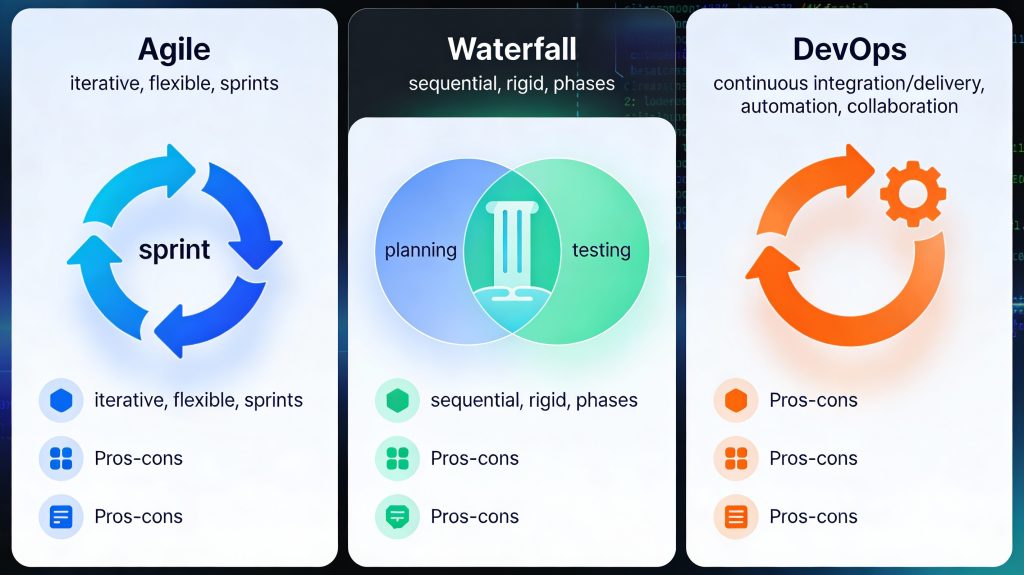
Agile vs Waterfall vs DevOps software development methodologies
Software development

Agile vs Waterfall vs DevOps: Choosing the Right Software Development Methodology

Introduction Choosing the right software development methodology is one of the most important decisions for any development project. The methodology you select determines how your team plans, builds, tests, and delivers software. Among the many approaches available today, Agile, Waterfall, and DevOps are the most widely used and debated. Each methodology has its strengths, weaknesses, and ideal use cases. While some teams prefer the structure of Waterfall, others thrive on the flexibility of Agile or the speed of DevOps. Understanding these models helps organizations align their development strategy with business goals. In this blog, we will compare Agile vs Waterfall vs DevOps, explore how each model works, and help you choose the right approach for your software development needs. What Are Software Development Methodologies? Software development methodologies are structured frameworks that define how software projects are planned, executed, and delivered. They provide guidelines for collaboration, workflow, documentation, and quality assurance. The right methodology improves efficiency, reduces risk, and ensures consistent delivery of high-quality software. Waterfall Methodology Overview The Waterfall model is one of the earliest software development methodologies. It follows a linear and sequential approach, where each phase must be completed before moving to the next. Phases of Waterfall Requirement analysis System design Development Testing Deployment Maintenance Advantages of Waterfall Clear structure and documentation Easy to manage and understand Ideal for projects with fixed requirements Disadvantages of Waterfall Limited flexibility Changes are costly Late testing increases risk Best Use Cases Government projects Regulatory-compliant systems Projects with well-defined requirements Agile Software Development Overview Agile is an iterative and incremental approach focused on flexibility, collaboration, and customer feedback. Instead of delivering the entire product at once, Agile teams work in short cycles called iterations or sprints. Key Principles of Agile Customer collaboration over contracts Responding to change over following a plan Continuous delivery of working software Popular Agile Frameworks Scrum Kanban Extreme Programming (XP) Advantages of Agile Faster delivery High adaptability to change Continuous user feedback Improved team collaboration Disadvantages of Agile Less predictability Requires experienced teams Documentation may be limited Best Use Cases Startups Mobile and web applications Projects with evolving requirements DevOps Methodology Overview DevOps is a cultural and technical approach that combines development and operations to improve collaboration, automation, and deployment speed. It focuses on continuous integration, continuous delivery, and continuous monitoring. Key DevOps Practices CI/CD pipelines Infrastructure as code Automated testing Continuous monitoring Advantages of DevOps Faster release cycles Improved software quality Better system reliability Reduced deployment failures Disadvantages of DevOps Requires cultural change Initial setup complexity Tooling and automation costs Best Use Cases Large-scale systems Cloud-native applications High-availability platforms Agile vs Waterfall vs DevOps: Key Differences Feature Waterfall Agile DevOps Flexibility Low High Very High Delivery One-time Incremental Continuous Customer Feedback Late Continuous Continuous Automation Minimal Moderate Extensive Speed Slow Fast Very Fast How to Choose the Right Methodology Consider the following factors: 1. Project Requirements Stable requirements favor Waterfall, while changing requirements favor Agile or DevOps. 2. Team Experience Agile and DevOps require skilled, self-managed teams. 3. Time-to-Market DevOps and Agile enable faster releases. 4. Compliance and Documentation Waterfall suits heavily regulated industries. Modern Hybrid Approaches Many organizations adopt hybrid models, such as Agile-DevOps or Waterfall-Agile hybrids, to balance structure and flexibility. These approaches leverage the strengths of multiple methodologies. Conclusion There is no one-size-fits-all software development methodology. Waterfall offers structure, Agile provides flexibility, and DevOps delivers speed and automation. The right choice depends on your project goals, team capabilities, and business needs. By understanding Agile, Waterfall, and DevOps, organizations can build software that is reliable, scalable, and aligned with modern development demands. Frequently Asked Questions (FAQs) 1. Which software development methodology is best? The best methodology depends on project requirements, team experience, and delivery timelines. 2. Is Agile better than Waterfall? Agile is better for flexible projects, while Waterfall works well for fixed-scope projects. 3. Can Agile and DevOps be used together? Yes, Agile and DevOps complement each other and are commonly used together. 4. Is DevOps only for large companies? No, DevOps can benefit organizations of all sizes. 5. Does Waterfall still exist today? Yes, Waterfall is still used in regulated and documentation-heavy industries. 6. Can one project use multiple methodologies? Yes, hybrid approaches are common in modern software development. Connect With Us: https://www.facebook.com/profile.php?id=61555452386126

Software development lifecycle phases from planning to maintenance
Uncategorized

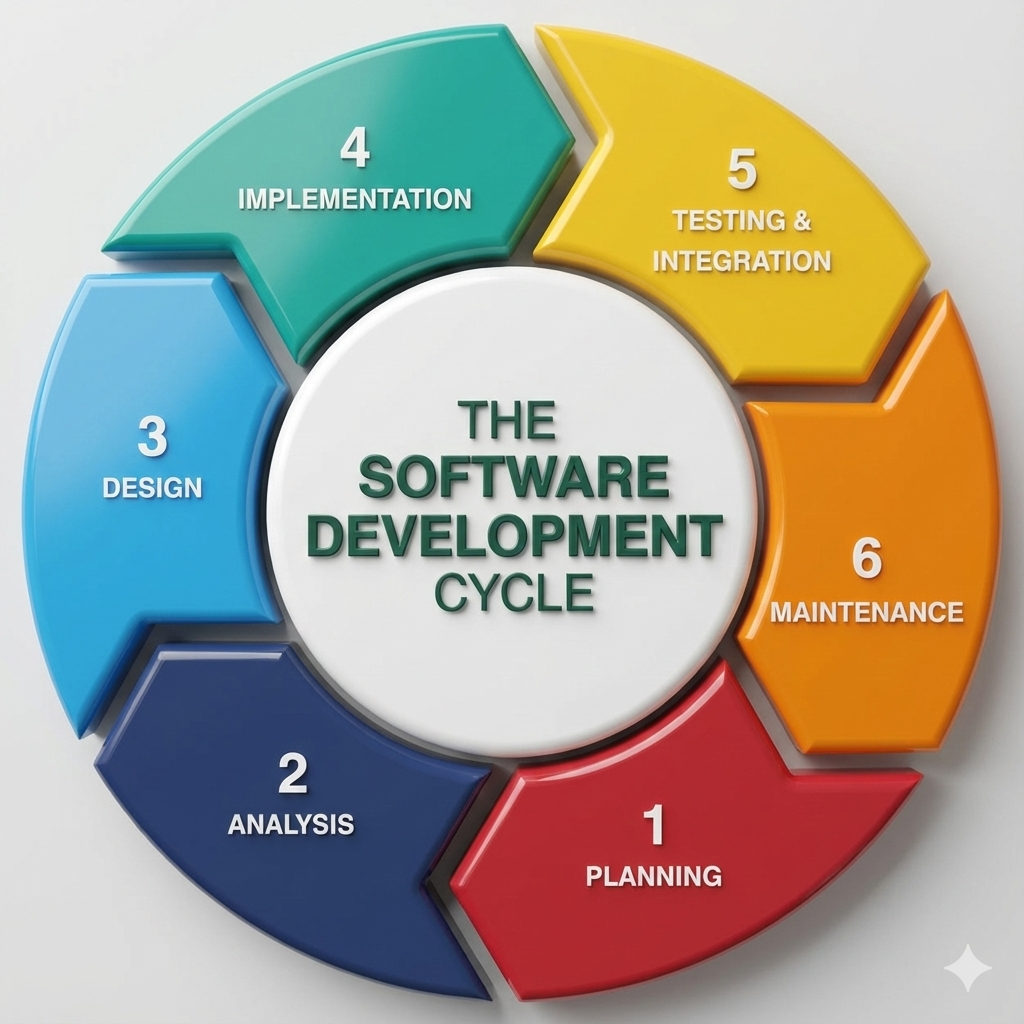
Software Development Lifecycle (SDLC): A Step-by-Step Guide to Building Reliable Software

Introduction Building high-quality software requires more than just writing code. Successful applications are the result of a structured and disciplined approach that ensures efficiency, reliability, and scalability. This structured approach is known as the Software Development Lifecycle (SDLC). The SDLC defines a series of phases that guide software teams from the initial idea to final deployment and ongoing maintenance. By following a well-defined lifecycle, organizations can reduce risks, control costs, improve quality, and deliver software that meets user expectations. In this blog, we will explore the software development lifecycle in detail, understand each phase, examine popular SDLC models, and learn why SDLC is essential for modern software development. What Is the Software Development Lifecycle (SDLC)? The Software Development Lifecycle is a systematic process used to develop software applications. It outlines the steps required to design, build, test, deploy, and maintain software efficiently. The main goals of SDLC are to: Deliver high-quality software Meet customer requirements Reduce project risks Ensure predictable timelines and budgets SDLC provides a clear roadmap for developers, designers, testers, and stakeholders. Why Is SDLC Important? Following the SDLC helps organizations: Improve project planning and management Detect issues early in development Enhance communication among teams Deliver consistent and reliable software Without a structured lifecycle, projects are more likely to face delays, budget overruns, and quality issues. Phases of the Software Development Lifecycle The SDLC typically consists of six to seven key phases. 1. Requirement Analysis This is the foundation of the entire development process. Key Activities Gathering business requirements Understanding user needs Defining functional and non-functional requirements Documenting requirements Clear and accurate requirements prevent costly changes later in the project. 2. Planning In the planning phase, teams define how the project will be executed. Key Activities Estimating timelines and costs Allocating resources Defining milestones and deliverables Risk assessment Effective planning ensures smooth project execution. 3. System Design The design phase focuses on how the software will work. Types of Design High-Level Design (HLD): Overall architecture and system components Low-Level Design (LLD): Detailed logic, data structures, and workflows This phase translates requirements into a technical blueprint. 4. Development (Implementation) This is where actual coding takes place. Key Activities Writing source code Code reviews Integrating components Developers follow coding standards and best practices to ensure maintainability and performance. 5. Testing Testing ensures the software works as intended. Types of Testing Unit testing Integration testing System testing User acceptance testing (UAT) Testing identifies bugs, security vulnerabilities, and performance issues before release. 6. Deployment In this phase, the software is released to users. Deployment Methods Manual deployment Continuous integration and continuous deployment (CI/CD) Proper deployment strategies minimize downtime and risks. 7. Maintenance and Support After deployment, the software enters the maintenance phase. Key Activities Bug fixes Performance optimization Feature enhancements Security updates Maintenance ensures long-term software reliability. Popular SDLC Models Different projects use different SDLC models based on requirements. 1. Waterfall Model A linear and sequential approach suitable for projects with fixed requirements. 2. Agile Model An iterative approach that emphasizes flexibility, collaboration, and continuous delivery. 3. Scrum A popular Agile framework using short development cycles called sprints. 4. DevOps Model Combines development and operations to enable faster and more reliable releases. Choosing the Right SDLC Model The right SDLC model depends on: Project size and complexity Requirement stability Team structure Timeline and budget Choosing the correct model improves project outcomes. SDLC in Modern Software Development Modern development practices often blend SDLC with Agile and DevOps principles. Automation, cloud platforms, and continuous testing have transformed traditional lifecycle models into more flexible and efficient processes. Conclusion The Software Development Lifecycle is a critical framework that ensures software projects are delivered successfully. By understanding and following SDLC phases, organizations can build reliable, scalable, and secure applications. Whether you are developing a small application or a large enterprise system, SDLC provides the structure needed to achieve consistent results. Frequently Asked Questions (FAQs) 1. What is SDLC in software development? SDLC is a structured process that defines the stages involved in building, deploying, and maintaining software. 2. How many phases are in the SDLC? Typically, SDLC consists of six to seven phases, including requirements, design, development, testing, deployment, and maintenance. 3. Which SDLC model is best? There is no single best model. Agile is best for flexible projects, while Waterfall suits projects with fixed requirements. 4. Why is testing important in SDLC? Testing ensures software quality, reliability, and security before release. 5. Can SDLC be combined with Agile? Yes, modern development often integrates SDLC principles with Agile and DevOps practices. 6. Does SDLC apply to all software projects? Yes, SDLC can be adapted to projects of all sizes and complexities. Contact with us: https://www.facebook.com/profile.php?id=61555452386126

Software development lifecycle and modern application development
Software development

Software Development: A Complete Guide to Building Modern, Scalable Applications

Introduction In the digital era, software development is the backbone of innovation, automation, and business growth. From mobile applications and enterprise systems to cloud platforms and artificial intelligence, software powers nearly every aspect of modern life. Organizations rely on robust software solutions to improve efficiency, enhance customer experiences, and gain a competitive advantage. Software development is not just about writing code—it is a structured process that involves planning, designing, building, testing, deploying, and maintaining applications. As technology evolves, so do development methodologies, tools, and best practices. This comprehensive guide explains what software development is, how it works, its types, lifecycle, tools, and why it plays a critical role in modern digital transformation. What Is Software Development? Software development is the process of creating applications, systems, or programs that perform specific tasks for users or businesses. It includes everything from simple websites to complex enterprise systems and cloud-based platforms. The process involves: Understanding user requirements Designing software architecture Writing and reviewing code Testing for quality and performance Deploying applications Ongoing maintenance and updates Software development combines creativity, logic, and engineering principles to solve real-world problems. Types of Software Development Software development can be categorized into several types based on use cases and platforms. 1. Web Development Involves building websites and web applications using technologies like HTML, CSS, JavaScript, and backend frameworks. 2. Mobile App Development Focuses on creating applications for Android and iOS platforms using native or cross-platform technologies. 3. Desktop Software Development Includes applications designed for desktops, such as productivity tools and system software. 4. Enterprise Software Development Custom software solutions built for large organizations to manage operations, data, and workflows. 5. Embedded Software Development Software designed to run on hardware devices like IoT systems, automobiles, and medical equipment. Software Development Lifecycle (SDLC) The Software Development Lifecycle (SDLC) is a structured approach that ensures high-quality software delivery. 1. Requirement Analysis Understanding business goals, user needs, and system requirements. 2. Planning Defining scope, timeline, resources, and budget. 3. Design Creating system architecture, UI/UX designs, and data models. 4. Development Writing, reviewing, and integrating code. 5. Testing Identifying bugs, performance issues, and security vulnerabilities. 6. Deployment Releasing the software into production. 7. Maintenance Updating, fixing, and improving software over time. Popular Software Development Methodologies 1. Waterfall Model A linear and sequential approach, suitable for projects with well-defined requirements. 2. Agile Development An iterative approach that focuses on flexibility, collaboration, and continuous improvement. 3. Scrum A popular Agile framework that delivers software in short development cycles called sprints. 4. DevOps Combines development and operations to enable faster and more reliable software delivery. Tools Used in Software Development Modern software development relies on powerful tools and technologies: Programming Languages: Java, Python, JavaScript, C++, C# Version Control: Git, GitHub, GitLab IDEs: Visual Studio Code, IntelliJ IDEA Testing Tools: Selenium, JUnit, Jest CI/CD Tools: Jenkins, GitHub Actions Choosing the right tools improves productivity and code quality. Importance of Software Development in Business Software development enables businesses to: Automate processes Improve customer engagement Scale operations efficiently Analyze data for better decision-making Stay competitive in digital markets Custom software solutions often provide more flexibility and control than off-the-shelf products. Challenges in Software Development Common challenges include: Changing requirements Tight deadlines Security risks Scalability issues Technical debt Following best practices and using modern methodologies helps overcome these challenges. Future of Software Development The future of software development includes: Artificial Intelligence and Machine Learning Cloud-native applications Low-code and no-code platforms Cybersecurity-focused development Continuous learning and adaptation are essential for developers and businesses alike. Conclusion Software development is a dynamic and ever-evolving field that drives innovation across industries. By following structured processes, adopting modern tools, and applying best practices, organizations can build scalable, secure, and high-performing software solutions. Whether you’re a startup or an enterprise, investing in quality software development is essential for long-term success. Frequently Asked Questions (FAQs) 1. What is software development used for? Software development is used to create applications and systems that solve problems, automate tasks, and improve efficiency for users and businesses. 2. What skills are required for software development? Key skills include programming, problem-solving, system design, debugging, and understanding development methodologies. 3. What is the SDLC in software development? The Software Development Lifecycle is a structured process that guides software creation from planning to maintenance. 4. Is Agile better than Waterfall? Agile is better for projects with changing requirements, while Waterfall suits projects with fixed and well-defined goals. 5. How long does software development take? Development time depends on project complexity, features, and team size, ranging from weeks to months. 6. Is custom software development expensive? While initial costs may be higher, custom software often provides better long-term value and scalability. Connect With Us: https://www.facebook.com/profile.php?id=61555452386126

DevOps workflows for faster and reliable delivery
DEVOPs

The Importance of Automation in DevOps Workflows: Boosting Efficiency and Reliability

Introduction In the fast-paced world of software development, automation is the engine that powers DevOps. It’s the secret ingredient that allows teams to move quickly, deliver consistently, and maintain reliability across the entire software lifecycle. Without automation, DevOps would be incomplete — manual interventions would slow processes and introduce human errors. From code integration to testing, deployment, and monitoring, automation ensures that every stage of development runs smoothly and predictably. What is DevOps Automation? DevOps automation refers to the use of technology and tools to perform repetitive, time-consuming tasks without manual intervention. The goal is to increase efficiency, consistency, and reliability in the software development and deployment process. Automation enables teams to focus on innovation and problem-solving instead of manual operations, while also ensuring that software updates are delivered faster and with higher quality. Why Automation Matters in DevOps 1. Faster Software Delivery Manual processes slow down the delivery pipeline. Automation eliminates delays by executing build, test, and deployment tasks continuously and without human intervention. 2. Fewer Human Errors Even experienced developers can make mistakes during manual deployments. Automation reduces this risk by applying consistent, repeatable scripts and configurations. 3. Better Collaboration Between Teams Automation bridges the gap between development and operations. When tasks are automated, developers and IT teams can work in harmony — leading to smoother deployments and fewer misunderstandings. 4. Improved Scalability Automation allows organizations to handle multiple deployments simultaneously. Whether it’s deploying across multiple regions or environments, automation makes scaling easy and error-free. 5. Consistent Results Automated workflows ensure that every build and deployment follows the same process, producing predictable outcomes every time. Key Areas of Automation in DevOps Continuous Integration and Continuous Delivery (CI/CD) CI/CD pipelines automate the process of integrating code, testing, and deploying it to production. Tools like Jenkins, GitLab CI, and CircleCI handle these steps automatically, reducing turnaround times. Infrastructure as Code (IaC) IaC tools like Terraform, Ansible, and AWS CloudFormation enable developers to create and manage infrastructure using code, ensuring consistency across environments. Automated Testing Testing is one of the most critical areas to automate. With tools like Selenium, JUnit, and TestNG, teams can automatically verify new code, reducing bugs before deployment. Configuration Management Configuration automation ensures that servers and environments are set up correctly every time. Tools like Chef, Puppet, and Ansible make this process fast and reliable. Monitoring and Alerts Automation in monitoring tools like Prometheus, Grafana, and ELK Stack helps track performance metrics and send real-time alerts to detect and fix issues early. Benefits of DevOps Automation Accelerated Delivery: Automating repetitive tasks speeds up releases. Enhanced Quality: Automated testing ensures each release meets quality standards. Reduced Downtime: Quick detection and rollback mechanisms prevent long outages. Cost Savings: Less manual work means reduced operational costs. Increased Productivity: Developers spend more time coding and innovating instead of handling repetitive tasks. Challenges in Implementing Automation Despite its advantages, implementing automation in DevOps can be challenging: Tool Overload: Choosing the right tools can be confusing with so many options. Initial Setup Costs: Automation requires time and resources to implement correctly. Skill Gaps: Teams may lack the technical expertise for advanced automation. Security Concerns: Automated scripts, if misconfigured, can expose vulnerabilities. To overcome these, businesses should start small, train teams, and gradually scale automation. Best Practices for DevOps Automation Automate Incrementally: Begin with the most repetitive and error-prone tasks. Use Version Control: Store all automation scripts in repositories like Git. Monitor Continuously: Track automation performance and fix issues proactively. Integrate Security Early: Combine automation with DevSecOps principles for secure pipelines. Keep Documentation Updated: Ensure that automated workflows are well-documented for easy maintenance. Real-World Example: Amazon’s DevOps Automation Amazon uses advanced automation in its DevOps pipelines to deploy thousands of updates daily. Through continuous delivery and infrastructure automation, the company achieves near-zero downtime and rapid innovation. This example proves that with proper automation, large-scale operations can maintain speed and reliability simultaneously. Conclusion Automation is the lifeblood of DevOps. It reduces human dependency, accelerates release cycles, and ensures that every deployment is consistent and reliable. By automating infrastructure, testing, and delivery, organizations can achieve the full potential of DevOps — delivering faster, smarter, and better-quality software to users around the world. In 2025 and beyond, automation will continue to evolve with AI, machine learning, and predictive analytics, making DevOps even more intelligent and efficient. FAQs 1. What is DevOps automation?It’s the use of tools and scripts to automate repetitive DevOps tasks like building, testing, and deploying software. 2. How does automation help in DevOps?Automation reduces manual work, speeds up deployment, and ensures consistency across environments. 3. What are the best tools for DevOps automation?Jenkins, Ansible, Terraform, Docker, and GitLab CI are some of the most popular automation tools. 4. Is automation suitable for small teams?Yes, small teams benefit greatly from automation because it saves time and reduces errors. 5. What is the difference between DevOps and automation?DevOps is a culture and methodology, while automation is a key practice that enables DevOps efficiency. 6. What is the future of automation in DevOps?The future lies in AI-driven automation (AIOps), where systems can self-correct and optimize without human intervention. Connect with us.

Team collaborating on DevOps workflow with automation tools
DEVOPs

What Is DevOps and Why It Matters in 2025

Introduction In the fast-paced world of software development, agility and reliability are critical for success. As businesses race to deliver software faster without compromising quality, a modern methodology called DevOps has become the cornerstone of innovation. DevOps combines “Development” and “Operations” — breaking the traditional silos between software engineers and IT teams. This collaboration allows organizations to deliver updates quickly, respond to user needs faster, and maintain high performance across systems. But what exactly is DevOps, and why has it become essential in 2025? Let’s explore. What Is DevOps? DevOps is a cultural and technical approach that unites software development and IT operations to achieve continuous integration, delivery, and improvement. The goal is simple: shorten the software development lifecycle while maintaining quality and stability. Instead of working separately, developers, testers, and system administrators collaborate using automation tools, shared metrics, and continuous feedback loops. This promotes faster releases, fewer bugs, and better customer satisfaction. In short, DevOps isn’t just about tools—it’s about teamwork, automation, and a culture of continuous improvement. The Core Principles of DevOps DevOps is built on a few key principles that guide how teams work together: Collaboration and Communication – DevOps breaks down barriers between developers and operations teams, promoting transparency and shared responsibility. Automation – From testing to deployment, automation reduces manual errors and speeds up delivery. Continuous Integration and Continuous Deployment (CI/CD) – Regularly merging and deploying code ensures faster releases and immediate bug detection. Monitoring and Feedback – Constant monitoring allows teams to detect issues early and improve system performance. Security Integration (DevSecOps) – Security is embedded into every stage of development rather than being added at the end. These principles enable organizations to innovate faster while maintaining system reliability and security. The DevOps Lifecycle The DevOps lifecycle represents the continuous loop of development, integration, deployment, and monitoring. It typically includes the following stages: Plan – Teams collaborate to define requirements and goals. Code – Developers write and review code collaboratively. Build – Code is compiled, tested, and packaged for deployment. Test – Automated testing ensures code quality and reliability. Release – Approved builds are deployed to production environments. Deploy – Software is automatically deployed using pipelines. Operate – Systems are monitored for performance and availability. Monitor – Real-time feedback is collected for continuous improvement. This cyclical process ensures faster delivery and consistent software quality. Benefits of Adopting DevOps Implementing DevOps brings a wide range of business and technical advantages: Faster Software Delivery – Automated workflows and CI/CD pipelines speed up deployment cycles. Improved Collaboration – Cross-functional teams communicate better, reducing bottlenecks. Higher Quality Software – Continuous testing ensures fewer bugs and more stable releases. Greater Customer Satisfaction – Quick updates and reliable performance improve user experience. Increased Efficiency – Automation reduces repetitive manual tasks. Scalability – DevOps practices enable businesses to scale applications quickly as demand grows. For modern organizations, these benefits translate into innovation, cost efficiency, and competitive advantage. Common DevOps Tools DevOps thrives on the right set of tools that support integration, automation, and monitoring. Some of the most popular tools include: Jenkins – Automates CI/CD pipelines. Docker – Simplifies containerization and application deployment. Kubernetes – Manages container orchestration. Git & GitHub – Enables version control and team collaboration. Ansible & Puppet – Automate infrastructure configuration. Prometheus & Grafana – Provide system monitoring and alerting. These tools empower teams to build, test, and deploy faster while maintaining reliability and visibility. DevOps in 2025: Emerging Trends As technology evolves, DevOps continues to adapt. Here are the top trends shaping DevOps in 2025: AI-Driven DevOps (AIOps) – Artificial intelligence helps automate decision-making, detect anomalies, and predict failures. GitOps – Managing infrastructure through Git repositories for versioned and auditable automation. Serverless Architectures – Enabling faster, cost-effective deployment without server management. DevSecOps Expansion – Integrating security into every step of development. Cloud-Native Development – Leveraging multi-cloud strategies for scalability and flexibility. These trends are transforming DevOps into a more intelligent, automated, and secure approach to software delivery. Challenges in Implementing DevOps While DevOps offers immense benefits, implementation isn’t without challenges: Cultural Resistance – Teams may struggle to adapt to new collaborative models. Tool Overload – Choosing and managing too many tools can cause confusion. Skill Gaps – DevOps requires multidisciplinary expertise. Security Concerns – Faster deployments can introduce vulnerabilities if not managed properly. Organizations overcome these challenges through training, leadership support, and adopting DevOps gradually across teams. Conclusion DevOps is more than just a buzzword—it’s a fundamental shift in how software is built and delivered. By merging development, operations, and automation, organizations achieve agility, reliability, and continuous innovation. In 2025 and beyond, DevOps remains the foundation of digital success. Businesses that embrace it gain the agility to deliver faster, adapt to market changes, and meet customer expectations effortlessly. Whether you’re a startup or an enterprise, adopting DevOps today ensures you’re prepared for the digital challenges of tomorrow. FAQs 1. What is the main purpose of DevOps?To improve collaboration between development and operations teams and speed up software delivery cycles. 2. What are the key stages of the DevOps lifecycle?Planning, coding, building, testing, releasing, deploying, operating, and monitoring. 3. How does DevOps improve efficiency?Automation and CI/CD pipelines reduce manual effort, minimize errors, and accelerate deployments. 4. What is the difference between Agile and DevOps?Agile focuses on iterative software development, while DevOps extends it to include deployment and operations. 5. What are common DevOps tools?Jenkins, Docker, Kubernetes, Git, Ansible, and Prometheus. 6. Is DevOps relevant for non-tech companies?Yes, any organization that develops or uses software can benefit from DevOps to improve delivery and performance. Connect with us.

Mobile App Development

How Long Does It Take to Develop a Mobile App?

Introduction Developing a mobile app can take anywhere from 2 months for a simple app to over a year for highly complex solutions, with most projects landing in the 4–9 month range depending on complexity, features, team experience, and client requirements. Below, a comprehensive 4000-word blog is outlined, providing a detailed look at the full journey—from conception to launch—of building a mobile app, including timelines, development phases, influencing factors, and tips for streamlining the process. How Long Does It Take to Develop a Mobile App? Building a successful mobile app is a multi-stage journey influenced by a range of variables. Estimates suggest a simple app may be developed in as little as 2–4 months, while more complex applications can take 9 months or longer. To understand these timelines, it’s vital to dive into each phase of the process, analyze what impacts duration at each stage, and consider the best practices for making the most of every development week. Understanding Mobile App Development Timelines Typical Timeframes Simple apps (e.g., calculators, notepads): 2–4 months. Average complexity apps (e.g., fitness trackers, booking apps): 4–7 months. Complex apps (e.g., social networks, real-time systems): 7–12+ months. These estimates reflect time from ideation through launch, including all core phases. Stages of Mobile App Development Every mobile app project passes through key phases, each of which shapes the overall timeline: 1. Product Discovery & Ideation This phase involves defining the app’s vision, conducting market research, identifying user personas, and setting clear business goals. Activities include: Brainstorming sessions. Market analysis. Feature prioritization. Creating user stories or a product canvas. Time estimate: 2–4 weeks for most projects. 2. Planning & Technical Feasibility Project scope is finalized along with timelines, budget, resource allocation, technical requirements (platform choice: iOS, Android, or cross-platform), and data flow diagrams. Time estimate: 2–4 weeks. 3. UX/UI Design Designers map out wireframes, user journeys, visual prototypes, and interactive mockups. Decisions made here greatly impact user adoption and app usability. Time estimate: 4–8 weeks, depending on screens/features. 4. Development This core phase covers building the app’s front-end, back-end, integrations, and server-side logic. Larger, feature-rich projects take longer and often proceed in multiple sprints: Simple MVPs may use pre-built templates, Complex apps require custom development, API integrations, and sometimes machine learning or AR. Time estimate: Simple: 1–2 months Medium: 2–4 months Complex: 5–9+ months. 5. Testing & Quality Assurance Every module is rigorously tested—unit, integration, usability, device compatibility, security, and performance. Expect multiple iterations of bug fixing and refinements. Time estimate: 3–6 weeks, though testing often overlaps with development. 6. Deployment & App Store Launch After QA, apps are prepared for launch. This involves final documentation, creating store listings, compiling the app for target platforms, and submitting for review (with iOS often taking longer due to approval times). Time estimate: 1–2 weeks. 7. Post-Launch Maintenance Launching the app is just the beginning. Maintenance includes monitoring, analytics, user feedback collection, and releasing patches or new features. Time estimate: Ongoing, but rapid updates often occur in the first 1–2 months post-launch. Key Factors Affecting Development Time App Complexity Feature count: More screens, user flows, or integrations extend timelines Back-end requirements: Real-time updates, cloud synchronization, or advanced user management require more work. Platform Choice Developing for iOS vs. Android, or building cross-platform, can affect both the timeline and the resources required. Third-Party Integrations Use of APIs (for payments, social logins, analytics) may speed up some functionality, but custom integrations often add time. Team Expertise & Size A larger, more experienced team can build faster, especially in parallel sprints and with robust project management systems. UI/UX Demands Highly interactive or animated user interfaces require more design and development time—simple designs accelerate progress. Testing Requirements Apps built for many device types and OS versions, with extensive compliance or security needs, require longer QA phases. Regulatory & Compliance Needs Apps in finance, healthcare, or those targeting specific geographies (GDPR, HIPAA, etc.) may require extra development for compliance. Detailed Timeline Examples App Type Discovery Design Development Testing Deployment Typical Total [months] Simple 2 weeks 2 weeks 4 weeks 3 weeks 1 weeks 2–4 Medium 3–4 weeks 4 weeks 8–16 weeks 4 weeks 1–2 weeks 4–7 Complex 4–6 weeks 6–8 weeks 20–36 weeks 6–10 weeks 2 weeks 7–12+ Tips for Speeding Up Mobile App Development Develop an MVP first: Start small, then iteratively add features. Utilize cross-platform frameworks: Flutter, React Native, or Xamarin reduce duplicated work. Automate testing: Use CI/CD pipelines and automated test suites to accelerate QA. Adopt agile project management: Regular sprints, daily standups, and clear backlog prioritization keep teams focused. Leverage open-source libraries and APIs: Don’t reinvent the wheel for standard features. Top Mistakes That Prolong Development Undefined requirements: Vague or shifting objectives waste development weeks. Poor communication: Gaps between the client, designers, and developers increase iteration cycles. Skipping QA early on: Postponing bug hunts can lead to major setbacks. Overly ambitious scope: Attempting everything at once stalls the project; start with a core set of features. The Developer’s Perspective Many developers report that the actual “coding” phase is rarely the bottleneck. Instead, most delays come from scope changes, unclear requirements, or slow approval cycles during design and testing. Real-world experience shows that even small projects can face setbacks if communication is poor or stakeholders change “must-have” features during sprints. Case Studies Simple App: To-Do List Features: Add, delete, edit tasks, mark as completed. Platform: Android and iOS (with Flutter). Estimated timeline: 2–3 months from idea to launch, including a week of post-launch bug fixes. Medium Complexity: Fitness Tracker Features: Use device sensors, integrate with wearables/APIs, push notifications, social login. Platform: Both major OS (React Native for speed). Estimated timeline: 5–6 months including QA and store approvals. Complex App: Social Networking Platform Features: Real-time chat, media uploads, advanced search, robust moderation, scalable server infrastructure. Platform: iOS, Android, web. Estimated timeline: 9–12+ months; may be released in iterative phases or with a core MVP first. Client Checklist for a Smoother Process To help keep a project on track: Define business goals and key features upfront. Prioritize features into must-have, nice-to-have, and later releases. Approve wireframes and designs quickly and decisively. Assign a project owner for fast feedback to dev queries. Plan for

Scroll to Top