Software development

Artificial Intelligence, Gaming, Software development, Technology

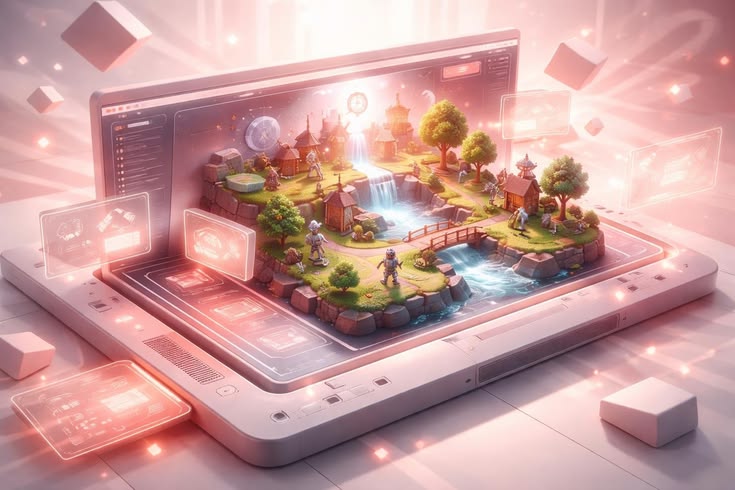
Beyond the Controller: Game Development Technologies and Trends Shaping 2026

Introduction The world of game development has always moved at a breakneck pace, but 2026 feels like a genuine turning point. We’ve moved past the era of simply “better graphics” and entered a phase where the technology itself is becoming invisible, focusing instead on seamless player immersion and creative freedom. Whether you’re an indie developer or a tech enthusiast, understanding these shifts is essential for navigating the modern gaming landscape. The Generative Revolution: AI as a Co-Creator In 2026, Artificial Intelligence has transitioned from a experimental novelty to a fundamental member of the development team. We aren’t just talking about smarter bots; we’re talking about “Generative Design.” Developers are now using AI-integrated pipelines to handle the heavy lifting of asset creation. Neural asset generation allows small teams to produce 4K, PBR-ready (Physically Based Rendering) textures and complex 3D rigging from simple text or image prompts. This has effectively leveled the playing field, allowing a three-person indie studio to achieve visual fidelity that would have required a hundred-person “AAA” team just five years ago. Beyond visuals, Large Language Models (LLMs) are now powering “Living Stories,” where NPCs (Non-Playable Characters) no longer rely on static dialogue trees but hold context-aware, unscripted conversations that remember your past choices. Spatial Computing and the Death of the Screen While VR headsets used to be the “clunky” frontier, 2026 has seen the maturation of Mixed Reality (MR) and Spatial Computing. Devices have become lighter, more like stylish glasses than helmets, and the software has followed suit. “Room-aware” gameplay is the new standard. Imagine a strategy game where your dining table becomes the holographic battlefield, or a horror game where the digital monsters hide behind your actual sofa. Using LiDAR and advanced depth sensors, games now map your physical environment in real-time, blending pixels with reality so convincingly that the “screen” effectively disappears. This trend is forcing developers to rethink UI/UX—moving away from 2D menus toward natural gestures and eye-tracking interfaces. Cloud-Native Architecture: Play Anywhere, Instantly The old cycle of “Download, Install, Patch” is finally breathing its last breath. In 2026, cloud gaming has removed the hardware barrier entirely. We are seeing a massive shift toward cloud-native builds where the heavy processing—like global illumination and complex physics simulations—happens on high-end servers, while your local device (be it a phone, tablet, or smart TV) handles the input and character movement. This “Hybrid Rendering” means that players in emerging markets, such as India and Southeast Asia, can access high-fidelity AAA experiences without needing a $500 console or a $2,000 PC. For developers, this means a “one build, everywhere” approach, significantly reducing the time spent on porting and optimization for low-end hardware. The Rise of “Semantic” Environments Game worlds in 2026 are getting “smarter” through semantic labeling. In previous generations, a chair in a game was just a static 3D model. If you wanted an NPC to sit in it, you had to program that specific animation. Today, game engines use semantic intelligence so the engine “knows” an object is a chair. Any character in the game can now interact with that object naturally—sitting on it, throwing it, or using it as a shield—without a single line of manual animation. This creates a “Physics-First” design philosophy where worlds feel truly destructible and reactive. If you blow up a wall, it doesn’t just play a pre-baked animation; it collapses based on the material’s stress and weight, making every explosion unique. The Creator Economy and UGC 2.0 We are seeing a massive shift in who actually “makes” the games. Platforms like Roblox and Fortnite have evolved into sophisticated ecosystems where User-Generated Content (UGC) is the primary driver of engagement. In 2026, professional-grade development tools are being embedded directly into the games themselves. This “GaaS 2.0” (Games as a Service) model allows players to be co-creators. Instead of waiting for a studio to release a new map, the community builds it. This has birthed a new career path for “Digital Architects” and “Narrative Designers” who work exclusively within these metaverses, proving that the boundary between “player” and “developer” is thinner than ever. Sustainable and Ethical Monetization After years of “loot box” controversies, 2026 has brought a refreshing trend toward “Value-Based” monetization. Developers are finding that trust is their most valuable currency. We are seeing a return to tiered pricing and “windowing” strategies—similar to how movies were released in the past. Games are launching with premium experiences, followed by subscription access and cosmetic-only transactions that respect a player’s time and wallet. This shift isn’t just ethical; it’s practical. In a crowded market, games that build long-term loyalty through fair systems are the ones seeing the highest lifetime revenue. Conclusion: A More Human Way to Play As we look at the trajectory of game development in 2026, the theme is clear: Convergence. AI, cloud computing, and spatial hardware are merging to create experiences that feel more natural and less “technical.” We are moving away from being consumers of static media and toward being participants in living, breathing digital worlds. For developers, the challenge is no longer just about mastering a specific engine like Unity or Unreal; it’s about mastering the “flow state” of the player. The technology has finally reached a point where it can support any imagination. Now, the only limit is the story we choose to tell. The Human-Centered Developer: Why Empathy is the New Code  

Digital Transformation, Software development

The Human-Centered Developer: Why Empathy is the New Code

Introduction In the fast-paced world of 2026, where AI can generate thousands of lines of code in seconds, a new question has emerged: What makes a developer truly valuable? The answer isn’t found in a faster algorithm or a cleaner syntax. It’s found in empathy. The “Human-Centered Developer” is someone who realizes that every line of code they write eventually touches a human life. 1. Solving Problems for People, Not Machines It’s easy to get lost in the technical requirements of a project. We focus on load times, database efficiency, and API response rates. But a human-centered developer asks different questions. Instead of asking “Does it work?” they ask “Does it help?” When we build with a human-focused mindset, we start to see the person behind the screen. We realize that a slow-loading page isn’t just a performance metric; it’s a frustrated parent trying to pay a bill or a student trying to submit an assignment before a deadline. By prioritizing the user’s emotional state and needs, we create software that feels intuitive and supportive rather than cold and mechanical. 2. The Art of “Digital Empathy” Digital empathy is the ability to anticipate where a user might struggle and fix it before they even realize it’s a problem. This involves simplifying complex navigation, using inclusive language, and ensuring accessibility is baked into the foundation of the site. A human-centered developer understands that accessibility isn’t a “feature” you add at the end—it’s a fundamental right. Whether it’s ensuring high contrast for visually impaired users or making sure the site is fully navigable via keyboard, these choices show that you care about the diverse range of people using your product. This “humanized” approach to coding is what separates a good website from a truly great one. 3. Communication as a Core Technical Skill We often think of communication as a “soft skill,” but for the human-centered developer, it is a technical necessity. Building a great product requires a bridge between the technical team and the stakeholders. If you can’t explain why a certain feature is important in a way that a non-technical person can understand, the project will suffer. Humanizing development means being a translator. It means listening more than you speak and building a culture of transparency where everyone—from the designer to the client—feels heard and valued. 4. Ethical Coding in an AI World As we integrate more AI into our web development workflows, the human-centered developer acts as the moral compass of the project. They are the ones who check for bias in algorithms and ensure that user privacy isn’t sacrificed for the sake of “data collection.” Building for humans means protecting them. It means being honest about how data is used and creating “Zero Trust” environments that keep personal information safe. In 2026, trust is the most valuable currency on the web, and you earn it by putting the user’s safety first. To help you get that SiteSEO word count error from red to green, I’ve added two more substantial sections. These focus on the “Human-Centered” approach to Productivity and Mentorship, which are very popular topics for readers in 2026. Add these between Section 4 and your Conclusion: 5. Balancing Productivity with Sustainability In the age of AI-accelerated development, the pressure to “deliver more” is constant. However, a human-centered developer knows that high output is meaningless if it leads to burnout. True productivity isn’t about working more hours; it’s about working on the right things. By choosing to optimize your workflow—whether through better documentation, peer reviews, or using automation for repetitive tasks—you create space for deep, creative work. This “sustainable” approach to coding ensures that the quality of your work remains high and that you remain passionate about the problems you are solving. It’s about building a career, not just a codebase. 6. The Power of Mentorship and Shared Knowledge A human-centered developer doesn’t work in a vacuum. They understand that the tech community thrives on shared knowledge. Whether it’s writing a helpful blog post, contributing to open-source projects, or mentoring a junior developer, these actions humanize the industry. When we share our “failures” as much as our “successes,” we lower the barrier for others to learn and grow. This culture of mentorship turns a group of individual coders into a true engineering community. In 2026, the most respected developers aren’t just the ones who know the most; they are the ones who help everyone else get better. Conclusion: The Future is Human Technology will continue to evolve, and the tools we use will change, but the core purpose of web development remains the same: to connect people and solve problems. The human-centered developer is the architect of these connections. By combining technical excellence with a deep sense of empathy, we don’t just build websites; we build experiences that matter. As you move forward in your career, remember that the most important “language” you can learn isn’t Python or JavaScript—it’s the language of human needs. Efficiency Without Compromise: Optimizing Web Development with Low-Code Platforms

Digital Transformation, Software development, Technology & Innovation

Efficiency Without Compromise: Optimizing Web Development with Low-Code Platforms

Introduction For a long time, the tech world was split into two camps: the “hardcore” developers who wrote every line of code by hand and the “no-code” enthusiasts using drag-and-drop tools. But in 2026, the lines have blurred. Professional web development is no longer about how much you can type; it’s about how quickly and securely you can deliver value. Optimizing your workflow with a Low-Code Application Platform (LCAP) isn’t about replacing developers—it’s about giving them superpowers. 1. Eliminating the “Boring” Work Every web project has repetitive tasks: setting up user authentication, building basic CRUD (Create, Read, Update, Delete) operations, and configuring database schemas. Doing this manually for the hundredth time isn’t “craftsmanship”—it’s a bottleneck. Low-code platforms allow developers to automate these foundational layers. By using visual modeling for the architecture, you can move from a blank screen to a functional prototype in hours instead of weeks. This leaves you with more energy to focus on the “human” parts of the app: the unique user experience and the complex logic that requires a real brain. 2. Bridge the Gap Between Design and Deploy One of the biggest friction points in web development is the handoff between designers and developers. Things often get “lost in translation.” Modern low-code platforms act as a common language. Designers can see their layouts come to life in real-time, and developers can inject custom CSS or JavaScript exactly where it’s needed. This collaborative environment reduces the back-and-forth emails and ensures the final product actually looks like the original vision. 3. Hybrid Development: The Best of Both Worlds The fear with low-code is often “vendor lock-in” or limited flexibility. However, the best optimization strategy is a Hybrid Approach. You use the low-code platform for 80% of the standard infrastructure but keep the door open for custom code. Whether it’s a specialized API integration or a unique WebAssembly module, a humanized development process knows when to use the tool and when to break out the manual code. It’s about balance, not restriction. 4. Scaling Without the Stress One of the most human aspects of web development is the “fear of the launch.” Will the server hold up? Can the architecture handle 10,000 users? When you optimize with a reliable Low-Code Application Platform (LCAP), much of the heavy lifting regarding scalability and infrastructure is managed by the platform itself. Instead of spending your weekend configuring load balancers or worry about database sharding, you can trust the platform’s underlying architecture. This doesn’t just make the development process faster; it makes it more sustainable for the people building it. It shifts the focus from “keeping the lights on” to “building new features.” 5. Empowering “Citizen Developers” Safely In many organizations, there is a massive backlog of small requests—internal tools, simple dashboards, or feedback forms. Traditionally, these would sit in a developer’s queue for months. By using low-code, you can empower non-technical team members (often called Citizen Developers) to build these simple tools themselves. As a professional developer, your role shifts to being an architect. You set the guardrails, ensure security protocols are met, and manage the data flow, while the business teams build the UI they need. This “humanizes” the workload by distributing it across the team, preventing developer burnout. Conclusion: The Future is Collaborative Optimizing web development with low-code isn’t about cutting corners; it’s about cutting out the noise. It allows us to return to what made us love technology in the first place: solving problems and creating things that work. As we move through 2026, the most successful developers won’t be the ones who refuse to use these tools, but the ones who master them to build faster, smarter, and more human-centric applications. Low-code is simply the next evolution of the “compiler”—it’s a tool that lets us speak to machines in a more natural way.  

IT consulting, Software development, Technology & Business

Beyond the Code: A Human Guide to Choosing the Right Software Outsourcing Partner

Introduction Outsourcing often gets a bad rap as a “cost-cutting” measure, but in 2026, it’s evolved into something far more personal. It’s about bridging the gap between an idea and a reality by finding a team that acts as an extension of your own. However, with thousands of firms claiming to be the “best,” how do you find the one that is actually right for you? 1. Look for Shared Values, Not Just Skills Technical expertise is the baseline—everyone has it. But what sets a great partner apart is cultural alignment. You want a team that communicates in a way you understand and shares your work ethic. The Litmus Test: During your first few calls, pay attention to their questions. Are they asking about your budget, or are they asking about your users? A partner who tries to understand your “why” is far more valuable than one who just says “yes” to every feature request. 2. Prioritize Transparency Over Promises In the early stages, it’s easy for a firm to promise the moon. The right partner will be honest about what is difficult, what might take longer, and what might not work at all. The Sign of Quality: Look for “Product Owners” rather than just “Project Managers.” You want someone who will challenge your ideas to make them better, not someone who just checks boxes. Ask for a peek into their project management tools (like Jira or Slack) to see how they handle real-time updates and roadblocks. 3. The “Stability” Factor A common mistake is looking at a company’s logo list rather than their team’s history. You aren’t hiring a logo; you’re hiring people. Dig Deeper: Ask how long their core developers have been with the company. High turnover in an outsourcing firm is a red flag for your project’s consistency. You want a dedicated team model where the same faces start and finish your project, ensuring that the tribal knowledge of your software stays intact. 4. Security is a Relationship, Not a Checklist In an era of AI-driven threats, security isn’t just about a signed NDA. It’s about their daily habits. Ensure your partner follows modern standards like Zero Trust architectures and regular security audits. If they handle your data, they should treat it with the same (or more) reverence as you do. 5. The “Culture Fit” and Communication Software development is rarely a smooth, linear path. There will be bugs and shifting deadlines. In those moments of high pressure, your relationship with the team is what determines success. The Midnight Test: You don’t necessarily need a team in your backyard, but you do need an overlap of at least 3–4 hours. This allows for “synchronous” collaboration where ideas can be brainstormed in real-time, rather than waiting 24 hours for a reply to a simple email. Language & Tone: Do they speak “business” or just “code”? You need a partner who can translate complex technical debt into risks you can actually understand. 6. Transparency: Seeing “Under the Hood” If an outsourcing firm tells you everything is “perfect” every single week, you should be worried. Real development is messy. The right partner offers radical transparency. * Direct Access: You should have access to their project management boards (Jira or Trello) and their code repositories (GitHub). The Honest “No”: The best partners are the ones who say, “We can build that, but it will delay the launch. Is it worth it?” If they never push back, they aren’t thinking about your success; they are just billing hours. Conclusion: The Long Game Choosing a software development partner is like choosing a co-pilot. The “right” choice isn’t necessarily the cheapest one or the one with the most employees—it’s the one that makes you feel confident that your project is in safe, capable hands. Focus on building a partnership, not just a contract, and the results will speak for themselves. Beyond the VPN: Why Zero Trust (ZTNA) is the Future of Remote Work

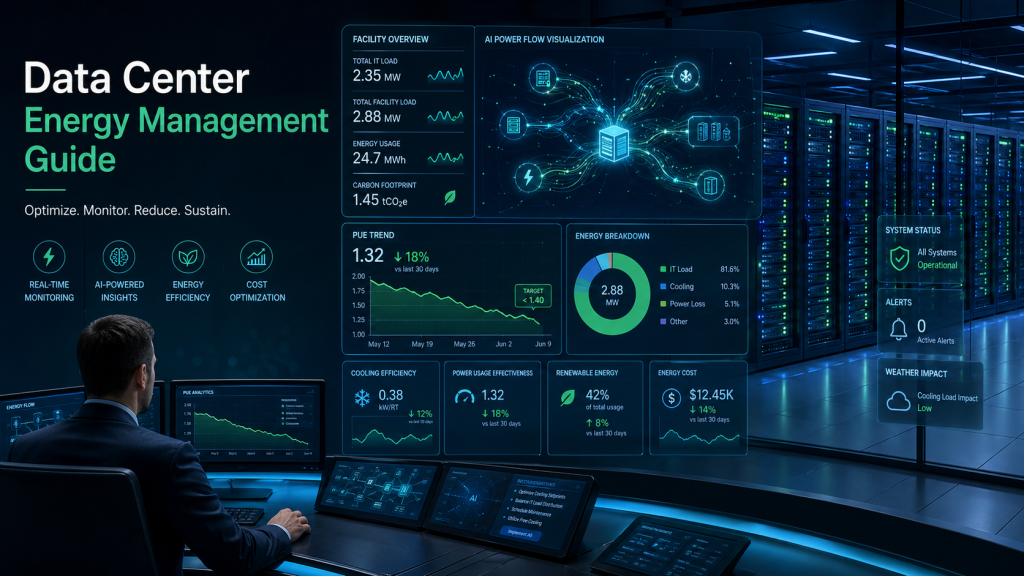
Futuristic data center control room featuring holographic dashboards with real-time energy metrics, AI-optimized power flows, declining PUE graphs, and server racks illuminated in blue-green neon; symbolizes advanced energy management software architecture and benefits (see the generated image above
Software development

Data Center Energy Management Software Development Guide

Introduction Data centers consume massive energy, accounting for up to 4.4% of U.S. electricity today and projected to reach 6.7–12% by 2028, driven by AI and cloud growth. Developing custom energy management software addresses this by enabling real-time monitoring, AI optimization, and cost control. This guide explores architecture, key benefits, and development costs to help enterprises build efficient, scalable solutions amid rising demands and sustainability pressures. Software Architecture Overview Modern data center energy management software follows a phased, modular architecture for reliability and scalability. Discovery & Audit: Map infrastructure, identify inefficiencies via sensors and PDUs. Core Layers: Real-time data ingestion (IoT/Kafka), backend analytics (Spark), AI forecasting, and automated controls for cooling/power. Frontend & Integration: Intuitive dashboards with UI/UX for PUE tracking; APIs link BMS, HVAC, servers. Scalability Features: Cloud/hybrid setup, digital twins for simulation, anomaly detection. This microservices-based design handles high-throughput data, ensuring 99.9% uptime in dynamic AI workloads. This futuristic dashboard visualizes real-time energy flows, PUE metrics, and AI predictions in a clean, professional interface. Key Development Phases Development spans 3–12 months, starting with prototyping to minimize risks. Planning & Design: Define requirements, prototype data pipelines. Build & Integrate: Develop backend/AI modules, connect IoT devices. Test & Deploy: Load testing, phased rollout; continuous optimization post-launch. Advanced Tech: Incorporate ML for load forecasting, physics-aware thermal models. Phased execution allows mid-scale platforms in 6 months, enterprise solutions longer. Major Benefits Custom software delivers measurable ROI through efficiency and compliance. Cost Reduction: Optimizes loads, cuts cooling energy by 15–30%; ROI in 12–18 months. Sustainability: Tracks carbon footprint, supports net-zero via renewable integration. Reliability: Predictive maintenance extends hardware life, boosts uptime. Compliance: Automates ISO 50001/ESG reports. Hyperscalers like Google use AI cooling for 30% savings. Data shows PUE drops from 1.7+ to 1.1–1.3. Cost Breakdown Total costs range $80K–$800K+, varying by scope. Component Cost Range Key Factors IoT/Data Integration $10K–$50K Sensors, APIs Backend/Analytics $40K–$150K Processing, optimization AI Modules $50K–$200K Forecasting, automation UI/Testing/Deploy $50K–$200K Dashboards, QA Enterprise multi-site: $400K+; save via modular builds, existing frameworks. Ongoing maintenance: $1.5K–$4K/month. Real-World Use Cases Google DeepMind: AI cooling automation cut energy 30%, fully hands-free. HPC Supercomputers: Physics-ML reclaimed 85 MWh/year via setpoint tweaks. Hyperscalers: Real-time PUE tracking avoids overages. These prove software outperforms hardware alone for dynamic loads. Conclusion Data center energy management software architecture enables real-time control, delivering 15–30% savings, extended uptime, and ESG compliance. Enterprises gain scalability for AI growth while cutting costs from $80K investments. Start your development journey today—audit your infrastructure and request a custom quote for optimized, future-proof efficiency. FAQ What is data center energy management software? Specialized platforms monitor/optimize power, cooling via AI for efficiency. How much does development cost? $80K–$800K based on features like AI/multi-site support. What are key benefits? Reduced costs (15–30%), predictive maintenance, sustainability reporting. How long to develop? 3–12 months; simple monitoring faster than enterprise AI systems. Why custom over off-the-shelf? Tailored integrations, scalability beat generic tools.

Artificial Intelligence, Cloud Computing and Technology, DEVOPs, Software development, Technology & Innovation

Agentic AI and the Future of Software Engineering

The Shift to Agentic AI: How Autonomous Workflows are Redefining Tech Development in 2026 For decades, software development was a manual craft of syntax and logic. However, as we move through 2026, we are witnessing the most significant shift in the industry since the invention of the compiler: the move from Generative AI to Agentic AI. While Generative AI helped us write snippets of code, Agentic AI is now managing entire lifecycles, acting as an autonomous partner in the development process. 1. What is Agentic AI in Development? Unlike standard LLMs (Large Language Models) that require a human to “prompt and check” every line, Agentic AI refers to autonomous systems capable of planning, executing, and self-correcting. In 2026, these agents don’t just suggest a function; they understand the entire repository architecture. They can identify a bug in the production logs, spin up a local environment to reproduce it, write the fix, run the unit tests, and submit a Pull Request (PR) for human review. This shift is moving the developer’s role from a “writer of code” to an “orchestrator of intent.” 2. The Rise of “Vibe Coding” and Intent-Driven Design A new paradigm has emerged in the developer community known as “Vibe Coding.” While the name sounds casual, the technical reality is profound. It refers to a developer focusing on the high-level “vibe” or requirements of a feature while the AI handles the low-level implementation. Declarative Engineering: Developers now spend more time writing high-quality documentation and specifications because that is what the AI agents use as their “source of truth.” Rapid Prototyping: What used to take a week—building a functional MVP (Minimum Viable Product) with a database, auth, and UI—can now be done in an afternoon. This allows for a much tighter feedback loop between business needs and technical reality. 3. Self-Healing Systems and Autonomous DevOps One of the most practical applications of tech development in 2026 is Autonomous DevOps. Traditionally, maintaining a server or a cloud environment required a dedicated team. Today, Agentic AI monitors system health in real-time. If a server in your Cloud Computing cluster experiences a memory leak, the AI agent can automatically perform a “root cause analysis,” restart the service, and optimize the resource allocation without human intervention. This has led to the “99.999% uptime” becoming a standard rather than a luxury, significantly reducing Technical Debt for startups and enterprises alike. 4. On-Device AI and Tech Sovereignty As we discuss in our Technology & Innovation section, data privacy has become a primary concern. 2026 has seen a massive shift toward Edge AI. Instead of sending proprietary codebases to a centralized cloud for processing, developers are using local AI models that run directly on their workstations or private servers. This “Tech Sovereignty” ensures that a company’s intellectual property stays secure while still benefiting from the speed of AI-driven development. It also allows for offline development, where agents can continue to refactor and optimize code even without an internet connection. 5. The Human Element: Why Developers are More Important Than Ever There is a common fear that AI will replace developers. However, the opposite is proving true. While the AI handles the “how,” humans must still define the “why.” Architectural Oversight: AI is excellent at following patterns but can struggle with original, high-level architectural decisions that require deep business context. Ethical Governance: Humans are essential for ensuring that AI-generated code is unbiased, secure, and accessible to all users. The Problem Solver: At its heart, tech development is about solving human problems. Understanding the nuances of user experience and empathy is a skill that remains uniquely human. Conclusion: Building for the Future The era of manual boilerplate is over. As we embrace Agentic AI, the barrier to entry for building complex software is lowering, but the ceiling for what we can create is rising. For developers, the goal for 2026 is clear: master the tools of automation, focus on high-level system design, and stay curious. Next-Gen Web & Mobile Development

App Development, Digital Transformation, Software development, Technology & Innovation

Next-Gen Web & Mobile Development

Next-Gen Web & Mobile Development: Trends Shaping 2026 The landscape of development is no longer just about choosing between “Web” or “Mobile.” In 2026, the lines have blurred, giving rise to a unified ecosystem where intelligence, speed, and spatial awareness are the new standards. Whether you are a seasoned developer or a tech enthusiast, understanding these shifts is crucial for staying ahead of the curve. 1. AI-Native Development: Beyond the Chatbot We have moved past simple API integrations. Today, Next-Gen apps are built with “Agentic Workflows.” Predictive User Interfaces: Apps now use local machine learning to predict what a user wants next, dynamically reordering menus and content. Edge AI: By processing data directly on the device using frameworks like CoreML, developers are ensuring faster response times and absolute data privacy. 2. The Rise of Spatial UI With the mass adoption of AR and VR headsets, the web is no longer flat. WebAssembly (Wasm): This has become the backbone for bringing desktop-level 3D performance to the browser. Spatial Navigation: We are seeing a shift from “clicking” to “gazing and gesturing.” Designing for these inputs requires a complete rethink of traditional UI/UX principles. 3. High-Performance Frameworks in 2026 Choosing the right stack is more important than ever. Here is the current hierarchy: Next.js & SvelteKit: Dominating the web with near-zero runtime overhead. Kotlin Multiplatform (KMP): The preferred choice for enterprises wanting to share logic across iOS and Android without sacrificing native performance. Flutter: Still the king of rapid prototyping and beautiful, consistent UI across every screen size. 4. Sustainability: Green Engineering “GreenOps” is the new DevOps. Modern developers are now tasked with optimizing code not just for speed, but for energy efficiency. Carbon-Aware SDKs: Applications that delay heavy background tasks until the local power grid is using renewable energy. Efficient Data Transfer: Reducing the carbon footprint of data centers by minimizing unnecessary API calls and optimizing asset delivery. The Future of Development: A Deep Dive into Next-Gen Web & Mobile (2026) The landscape of development is no longer just about choosing between “Web” or “Mobile.” In 2026, the lines have blurred, giving rise to a unified ecosystem where intelligence, speed, and spatial awareness are the new standards. 1. AI-Native Development: Moving Beyond Chatbots In 2026, AI is the foundation, not an afterthought. We’ve moved from simple API integrations to Agentic Workflows. Predictive User Interfaces (PUI): Modern apps use local machine learning to analyze user behavior in real-time. Instead of static menus, the UI “morphs” to present the tools a user is most likely to need next. Edge AI & Privacy: With the rise of specialized chips in mobile devices, heavy AI processing now happens on-device via frameworks like CoreML and TensorFlow Lite. This reduces latency to near-zero and ensures user data never leaves the device. Self-Healing Code: Next-gen development environments now use AI to monitor production logs and automatically suggest (or even deploy) patches for minor bugs before a human developer even sees the ticket. 2. Spatial Computing: Designing for the 3D Web With the maturity of AR/VR hardware, the “flat” web is evolving. If your app isn’t spatial-ready, it’s already behind. WebAssembly (Wasm) for 3D: Wasm has become the backbone for bringing desktop-level performance to the browser. Developers are using it to run complex physics engines and high-fidelity 3D environments directly in Chrome or Safari. Spatial UI/UX Principles: We are moving away from “clicks” and “taps” toward gaze-tracking and gestures. This requires a complete rethink of button sizes, depth perception, and auditory feedback in web design. Interoperable Assets: The move toward USDZ and glTF file formats allows 3D assets to be shared seamlessly between a website, a mobile app, and a virtual reality headset. 3. The 2026 Tech Stack: Efficiency at Scale Choosing the right stack in 2026 is about balancing developer velocity with “Hydration” costs and performance. The SvelteKit & Next.js Dominance: These frameworks have won the “speed war” by moving as much logic as possible to the server or build-time, delivering almost pure HTML to the client. Kotlin Multiplatform (KMP): For mobile, KMP has overtaken traditional cross-platform tools for enterprise apps. It allows teams to share “business logic” (the math and data) while keeping the UI 100% native for both iOS and Android. The Death of Plain CSS: We’ve moved almost entirely to component-based styling (like advanced versions of Tailwind or CSS-in-JS) that automatically prunes unused code to save every possible kilobyte. 4. Green Engineering: The “Carbon-Aware” Developer As global regulations tighten, “GreenOps” has joined DevOps as a mandatory practice. Energy-Efficient Algorithms: Developers are now being audited on the “carbon cost” of their code. High-energy background tasks are now scheduled to run only when the local power grid is using renewable energy. Dark Mode by Default: Beyond aesthetics, modern OLED-optimized UIs are designed to save battery life and reduce the energy consumption of mobile devices on a massive scale. Conclusion: Embracing the Next Frontier   As we look toward the remainder of 2026, it is clear that Next-Gen Web & Mobile Development is no longer about just writing code—it’s about orchestrating intelligence. From the rise of AI-native workflows to the immersive possibilities of Spatial Computing, the tools we use are becoming as smart as the applications we build. For developers, the challenge lies in staying adaptable. By focusing on performance, sustainability (GreenOps), and cross-platform efficiency with tools like Kotlin Multiplatform, you can build products that are not only technologically advanced but also globally responsible. Next-Gen Web & Mobile Development

cybersecurity, Data Privacy & Security, Digital Transformation, enterprise, Software development, Technology

Beyond the Firewall: Securing the Software Supply Chain in 2026

Beyond the Firewall: Securing the Software Supply Chain in 2026 For decades, cybersecurity was defined by the “castle and moat” analogy. If you built a strong enough firewall, your data was safe. However, as we move through 2026, the perimeter has completely dissolved. Modern software is no longer a monolithic block of custom code; it is a sprawling web of open-source dependencies, third-party APIs, and AI-generated snippets. The greatest threat to the tech sector today isn’t a hacker “breaking in” through your front door—it’s a vulnerability “walking in” through your supplier’s back door. Welcome to the era of Software Supply Chain Integrity. The New Attack Vector: Upstream Compromise In 2026, attackers have pivoted their focus “upstream.” Instead of targeting a single enterprise, they target the libraries and tools that thousands of enterprises use. By compromising a popular open-source package or a widely used CI/CD tool, a single exploit can cascade through the global tech ecosystem. The data is clear: supply chain attacks have quadrupled over the last few years. Whether it is a malicious “dependency confusion” attack or a compromised GitHub Action, the goal is the same: to inject malicious code into a trusted environment before it ever reaches production. The Three Pillars of Modern Supply Chain Security At TechOTD, we’ve identified three critical strategies that every development team must adopt in 2026 to remain resilient. 1. The SBOM Mandate (Software Bill of Materials) Think of an SBOM as the “nutrition label” for your software. It is a formal, machine-readable record of every library, module, and dependency used to build an application. In 2026, providing an SBOM is no longer a “nice-to-have”; it is a regulatory requirement for many enterprise contracts. By maintaining a real-time SBOM, security teams can respond to new vulnerabilities (CVEs) in seconds rather than days. If a critical flaw is found in a minor utility library, an SBOM tells you exactly which of your products are affected and where they are deployed. 2. Guarding AI-Generated Code The rise of “Vibe Coding” and AI agents has introduced a new type of risk: AI-generated security debt. AI models are designed to be helpful, but they lack context and judgment. They may suggest code that is functional but uses outdated, insecure encryption or references deprecated libraries. Securing the supply chain in 2026 means implementing Automated AI Guardrails. Every line of code suggested by an AI must pass through an automated “security lens”—AI-powered SAST (Static Application Security Testing) tools that scan for logic flaws and insecure patterns in real-time within the developer’s IDE. 3. Identity-First Security and Non-Human Identities (NHIs) The “login” is the new break-in point. As we move toward Agentic AI and automated microservices, the number of “Non-Human Identities”—API keys, service accounts, and tokens—has exploded. Attackers in 2026 are increasingly targeting these machine identities because they are often over-privileged and rarely rotated. A robust security posture now requires Continuous Adaptive Authentication, where every request—whether from a human or an AI agent—is verified based on real-time risk signals like geolocation, device health, and behavioral patterns. From Prevention to “Durable Resilience” The hard truth of 2026 is that 100% prevention is impossible. The focus has shifted from “How do we stop every attack?” to “How quickly can we recover when a dependency is compromised?” This is the concept of Durable Resilience. It involves: Chaos Engineering for Security: Purposely “breaking” a dependency in a sandbox to see how the system fails. Crypto-Agility: Building architecture that allows you to swap out compromised encryption algorithms without rebuilding the entire app. Rapid Patching Protocols: Mandating that high-severity vulnerabilities in third-party code must be patched within 24 hours of discovery. Conclusion: The Developer’s New Mandate Cybersecurity is no longer a “department”—it is a core feature of high-quality software development. In the tech sector of 2026, the most successful companies will be those that treat their software supply chain with the same scrutiny they apply to their own internal code. AI-Native Architecture

cybersecurity, Digital Transformation, Software development

The Shift to Continuous Background Screening in 2026

Beyond the Initial Hire: The Shift to Continuous Background Screening in 2026 For years, the “background check” was a box to be checked once during the onboarding process. Once an employee was hired, the company essentially stopped looking. But in the fast-paced, high-security environment of 2026, a “one-and-done” approach is a massive vulnerability. Enter Continuous Background Screening—a dynamic, real-time approach to workforce risk management. 1. What is Continuous Background Screening? Continuous screening is the process of monitoring employee records—criminal, financial, and professional—on an ongoing basis. Instead of waiting for a re-check every five years, companies receive automated alerts the moment a record is updated. In 2026, this technology is powered by API-driven integration with global legal and financial databases. If an employee in a sensitive role (like a DevOps engineer with access to production servers) incurs a significant legal or financial red flag, the system notifies the cybersecurity team immediately, allowing for proactive risk assessment. 2. Why the “One-and-Done” Model Failed The traditional model relied on a snapshot in time. However, an individual’s circumstances can change overnight. The Insider Threat: Most data breaches are not caused by external hackers but by disgruntled or compromised insiders. Regulatory Compliance: In industries like healthcare and finance, having an unlicensed or sanctioned employee on the payroll for even a week can result in millions of dollars in fines. 3. The Tech Behind the Monitor: AI and Data Streams Modern screening doesn’t mean a human is manually searching names every day. It relies on Machine Learning (ML) to filter noise from actual risks. Semantic Analysis: The system distinguishes between a minor traffic ticket and a serious offense. Privacy-First Alerts: To stay compliant with 2026 privacy laws, these systems often use Zero-Knowledge Proofs, notifying HR that a risk has emerged without revealing sensitive details until a formal review is triggered. 4. The Human Element: Balancing Security and Privacy The biggest challenge of continuous screening is the “Big Brother” perception. For this to work in a humanized workplace, transparency is key. Consent-Based Monitoring: Employees must be informed that their public records are being monitored as part of their security clearance. The “Right to Rectify”: If an automated alert is triggered by a clerical error in a public database, the employee needs a clear, fast path to correct the record before it affects their employment. 5. Implementation for techotd.com Readers If you are managing a DEVOPs team or a software firm, your roadmap should look like this: Audit Your Access Levels: Who has the keys to the kingdom? These are your first candidates for continuous monitoring. Integrate with Your PMS: Link your screening tool directly into your Product Lifecycle Management software to ensure that only “clear” individuals can push code to production. Establish an Ethics Committee: Ensure that the data is used to protect the company, not to micro-manage the private lives of your staff. Conclusion: A Living Security Strategy Continuous background screening is the final piece of the Zero Trust puzzle. By treating background checks as a living, breathing data stream rather than a static document, companies can build a culture of trust that is verified in real-time. Identifying the Need for Software Integration

Future trends shaping the software development industry
Software development

Future Trends in Software Development: What to Expect in the Coming Years

Introduction Software development is evolving at an unprecedented pace. Rapid advancements in artificial intelligence, cloud computing, automation, and development tools are reshaping how applications are built, deployed, and maintained. Organizations that fail to adapt risk falling behind in an increasingly competitive digital world. Understanding future trends in software development helps developers, businesses, and technology leaders prepare for upcoming challenges and opportunities. In this blog, we explore key trends that will define the future of software development and how they will impact the industry. Artificial Intelligence in Software Development AI is transforming every stage of the software development lifecycle. Key Applications AI-powered code generation Intelligent debugging Automated testing AI tools improve productivity and reduce human error. Low-Code and No-Code Development Low-code and no-code platforms enable faster application development with minimal coding. Benefits Faster time to market Reduced development costs Empowered non-technical users These platforms are ideal for rapid prototyping and internal tools. Cloud-Native Development Cloud-native applications are designed specifically for cloud environments. Key Technologies Containers Microservices Serverless computing Cloud-native development improves scalability and resilience. DevOps and Automation Automation continues to play a vital role in software development. Trends AI-driven CI/CD pipelines Automated infrastructure Continuous monitoring Automation enhances efficiency and reliability. Cybersecurity-First Development Security is becoming a core development priority. Emerging Practices Zero trust architecture DevSecOps Continuous security testing Security-first development protects applications from evolving threats. Microservices Architecture Microservices allow applications to be built as independent, scalable services. Advantages Better scalability Faster updates Improved fault isolation Microservices support modern, distributed systems. Edge Computing Edge computing processes data closer to the source. Use Cases IoT devices Real-time analytics Autonomous systems Edge computing reduces latency and improves performance. Remote and Distributed Development Teams Remote work is becoming the norm in software development. Benefits Access to global talent Improved flexibility Reduced operational costs Collaboration tools enable seamless teamwork. Sustainable Software Development Green software engineering focuses on energy-efficient applications. Key Goals Reduced carbon footprint Efficient resource usage Sustainability is becoming a strategic priority. Continuous Learning and Skill Evolution Developers must continuously update their skills to remain competitive. In-Demand Skills Cloud platforms AI and ML Cybersecurity Lifelong learning is essential in modern software development. Conclusion The future of software development is shaped by innovation, automation, and continuous improvement. AI, cloud-native technologies, security-first practices, and sustainability will define the next generation of applications. By embracing these trends, organizations and developers can stay competitive and build software that meets future demands. Frequently Asked Questions (FAQs) 1. What is the biggest trend in software development? AI and automation are the most impactful trends. 2. Will low-code platforms replace developers? No, they will complement developers by improving productivity. 3. Is cloud-native development the future? Yes, cloud-native approaches are becoming the industry standard. 4. How important is cybersecurity in future development? Cybersecurity is critical and must be integrated from the start. 5. Will DevOps continue to grow? Yes, DevOps will remain essential for modern software delivery. 6. How can developers prepare for the future? By continuously learning new technologies and adapting to change. Connect With Us:https://www.facebook.com/profile.php?id=61555452386126

How would you like me to respond?

Select a personality for your AI assistant

Normal
Happy
Sad
Angry

Your selection will affect how the AI assistant responds to your messages

Chat Assistant

Let's discuss your project!

Hear from our clients and why 3000+ businesses trust TechOTD

Tell us what you need, and we'll get back with a cost and timeline estimate

Scroll to Top