The Shift to Agentic AI: How Autonomous Workflows are Redefining Tech Development in 2026
For decades, software development was a manual craft of syntax and logic. However, as we move through 2026, we are witnessing the most significant shift in the industry since the invention of the compiler: the move from Generative AI to Agentic AI. While Generative AI helped us write snippets of code, Agentic AI is now managing entire lifecycles, acting as an autonomous partner in the development process.
1. What is Agentic AI in Development?
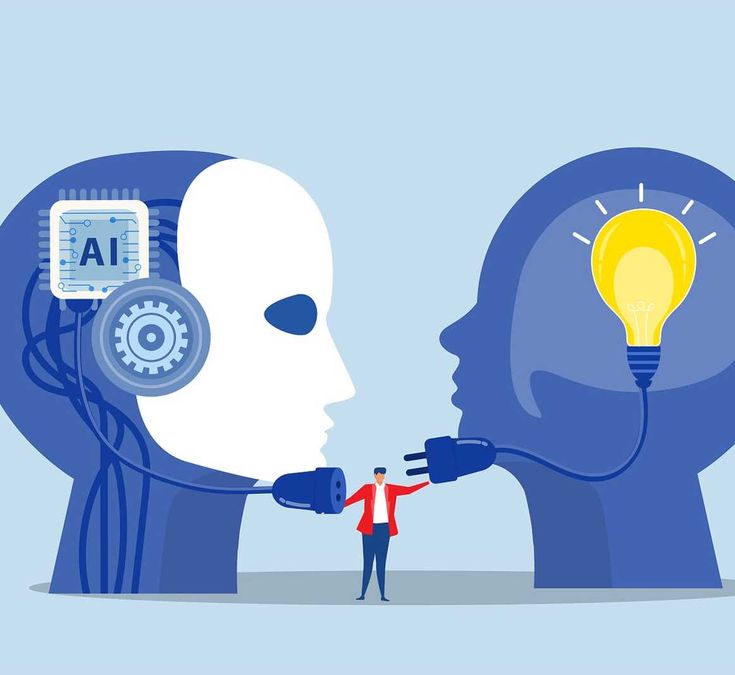
Unlike standard LLMs (Large Language Models) that require a human to “prompt and check” every line, Agentic AI refers to autonomous systems capable of planning, executing, and self-correcting. In 2026, these agents don’t just suggest a function; they understand the entire repository architecture.
They can identify a bug in the production logs, spin up a local environment to reproduce it, write the fix, run the unit tests, and submit a Pull Request (PR) for human review. This shift is moving the developer’s role from a “writer of code” to an “orchestrator of intent.”
2. The Rise of “Vibe Coding” and Intent-Driven Design
A new paradigm has emerged in the developer community known as “Vibe Coding.” While the name sounds casual, the technical reality is profound. It refers to a developer focusing on the high-level “vibe” or requirements of a feature while the AI handles the low-level implementation.
-
Declarative Engineering: Developers now spend more time writing high-quality documentation and specifications because that is what the AI agents use as their “source of truth.”
-
Rapid Prototyping: What used to take a week—building a functional MVP (Minimum Viable Product) with a database, auth, and UI—can now be done in an afternoon. This allows for a much tighter feedback loop between business needs and technical reality.
3. Self-Healing Systems and Autonomous DevOps
One of the most practical applications of tech development in 2026 is Autonomous DevOps. Traditionally, maintaining a server or a cloud environment required a dedicated team. Today, Agentic AI monitors system health in real-time.
If a server in your Cloud Computing cluster experiences a memory leak, the AI agent can automatically perform a “root cause analysis,” restart the service, and optimize the resource allocation without human intervention. This has led to the “99.999% uptime” becoming a standard rather than a luxury, significantly reducing Technical Debt for startups and enterprises alike.
4. On-Device AI and Tech Sovereignty
As we discuss in our Technology & Innovation section, data privacy has become a primary concern. 2026 has seen a massive shift toward Edge AI. Instead of sending proprietary codebases to a centralized cloud for processing, developers are using local AI models that run directly on their workstations or private servers.
This “Tech Sovereignty” ensures that a company’s intellectual property stays secure while still benefiting from the speed of AI-driven development. It also allows for offline development, where agents can continue to refactor and optimize code even without an internet connection.
5. The Human Element: Why Developers are More Important Than Ever
There is a common fear that AI will replace developers. However, the opposite is proving true. While the AI handles the “how,” humans must still define the “why.”
-
Architectural Oversight: AI is excellent at following patterns but can struggle with original, high-level architectural decisions that require deep business context.
-
Ethical Governance: Humans are essential for ensuring that AI-generated code is unbiased, secure, and accessible to all users.
-
The Problem Solver: At its heart, tech development is about solving human problems. Understanding the nuances of user experience and empathy is a skill that remains uniquely human.
Conclusion: Building for the Future
The era of manual boilerplate is over. As we embrace Agentic AI, the barrier to entry for building complex software is lowering, but the ceiling for what we can create is rising. For developers, the goal for 2026 is clear: master the tools of automation, focus on high-level system design, and stay curious.