Machine Learning

Artificial Intelligence, cybersecurity, Educational Technology, Technology

The Rise of Personal AI Assistants: Beyond Chatbots

The Rise of Personal AI Assistants: Beyond Chatbots Artificial Intelligence has rapidly evolved over the last few years, moving far beyond simple chatbots that could only answer basic questions or follow scripted commands. In 2026, personal AI assistants are becoming smarter, more personalized, and significantly more capable than ever before. They are no longer limited to responding to text prompts; instead, they are transforming into intelligent digital companions that can understand user preferences, manage tasks, automate workflows, and even make recommendations based on individual needs. From helping professionals manage their schedules to assisting students with learning and supporting businesses with daily operations, personal AI assistants are becoming an integral part of modern life. As advancements in machine learning, natural language processing, and generative AI continue to accelerate, these assistants are reshaping the way people interact with technology. Understanding the Evolution of AI Assistants The first generation of AI assistants focused primarily on basic voice commands and simple information retrieval. Users could ask for weather updates, set reminders, or search the internet. While these features were useful, the assistants often struggled with context, personalization, and complex requests. Today’s AI assistants are vastly different. They can understand conversations, remember preferences, learn from user interactions, and provide more meaningful responses. Modern AI systems are capable of handling multiple tasks simultaneously, analyzing data, generating content, and assisting with decision-making. This evolution has transformed AI assistants from reactive tools into proactive digital partners that can anticipate user needs and provide relevant support before being asked. What Makes Modern AI Assistants Different? The biggest difference between traditional chatbots and modern AI assistants is personalization. Instead of treating every interaction as a separate conversation, advanced AI assistants build contextual understanding over time. They can remember preferred writing styles, frequently used applications, work schedules, and personal interests. This enables them to deliver responses and recommendations that feel more relevant and tailored to individual users. For example, an AI assistant helping a marketing professional might automatically suggest content ideas based on industry trends, schedule social media posts, and summarize important emails. Meanwhile, a student using the same assistant may receive personalized study plans, learning resources, and exam preparation support. The ability to adapt to individual needs is making AI assistants significantly more valuable across different use cases. The Shift from Chat to Action One of the most important developments in personal AI technology is the transition from conversation-based assistance to action-based assistance. Modern AI assistants are increasingly capable of performing tasks instead of merely providing instructions. Rather than explaining how to complete a process, they can often execute portions of the workflow directly. Examples include: Scheduling meetings automatically Managing emails Organizing files and documents Generating reports Creating presentations Drafting content Tracking project deadlines Managing customer interactions This shift allows users to focus on higher-value work while routine tasks are handled by AI systems. As integration with software platforms continues to improve, AI assistants are becoming capable of interacting with multiple applications simultaneously, creating seamless digital workflows. Personalized Productivity and Time Management Productivity is one of the areas where personal AI assistants are creating the greatest impact. Modern professionals often deal with information overload, endless notifications, and growing workloads. AI assistants help reduce this burden by organizing information and prioritizing tasks. Instead of manually reviewing hundreds of emails, users can receive AI-generated summaries highlighting only the most important messages. Meeting transcripts can be automatically generated and converted into actionable tasks. Calendar management can be optimized based on priorities and availability. These capabilities allow individuals to spend less time managing work and more time focusing on meaningful activities. As AI becomes more context-aware, productivity assistance will become increasingly proactive, helping users identify opportunities, risks, and deadlines before they become problems. AI Assistants in Education Education is another sector experiencing significant transformation through personal AI assistants. Students can now access personalized tutoring experiences that adapt to their learning pace and knowledge level. AI assistants can explain difficult concepts, generate practice questions, create study schedules, and provide instant feedback. Unlike traditional learning resources, AI-powered educational tools can adjust their teaching methods based on student performance. If a learner struggles with a specific topic, the assistant can provide additional explanations and targeted exercises. Teachers are also benefiting from AI technology. Administrative tasks such as grading, lesson planning, and content creation can be streamlined, allowing educators to spend more time supporting students. As educational AI systems continue to improve, personalized learning experiences are expected to become more accessible worldwide. The Role of AI Assistants in Business Businesses are increasingly deploying AI assistants to improve efficiency and reduce operational costs. Customer support teams use AI assistants to handle routine inquiries, allowing human agents to focus on more complex issues. Sales teams leverage AI to analyze customer behavior, generate leads, and personalize communication. Project managers benefit from AI-generated status reports, automated documentation, and workflow tracking. Human resources departments use AI assistants for recruitment support, employee onboarding, and internal communication. The growing ability of AI systems to interact with enterprise software platforms is enabling organizations to automate processes that previously required significant human effort. As a result, businesses can improve productivity while maintaining a high level of service quality. The Emergence of AI Agents A major trend driving the future of personal AI assistants is the rise of AI agents. Unlike traditional assistants that respond only when prompted, AI agents can independently perform tasks, monitor objectives, and take action within defined boundaries. For example, an AI agent might: Monitor market trends Track project progress Analyze customer feedback Generate reports automatically Schedule follow-up actions Coordinate multiple software tools These capabilities represent a significant step toward autonomous digital assistants capable of managing entire workflows. While human oversight remains essential, AI agents are increasingly functioning as virtual team members rather than simple software tools. Privacy and Data Security Challenges As AI assistants become more personalized, concerns regarding privacy and data security are becoming increasingly important. Personalized experiences require access to user information, including schedules, preferences, communication history, and behavioral patterns.
Artificial Intelligence, Business Analytics, Business Intelligence, Data Privacy & Security, Digital Transformation

AI Agents in 2026: How Autonomous Systems Are Transforming Business Operations

Introduction Artificial Intelligence has moved far beyond simple chatbots and recommendation engines. In 2026, AI agents are becoming one of the most influential technologies shaping modern businesses. These intelligent systems are capable of understanding goals, making decisions, performing tasks, and even coordinating with other software tools with minimal human intervention. What once required teams of employees and multiple software platforms can now be managed by autonomous AI systems that work continuously and efficiently. The rise of AI agents marks a significant shift in how organizations approach productivity, operations, and decision-making. Rather than serving only as assistants, AI systems are increasingly acting as digital workers that can execute complex workflows, analyze large volumes of information, and adapt to changing business conditions in real time. As companies continue to invest in automation and digital transformation, AI agents are emerging as a critical component of business strategy. Their ability to reduce operational costs, improve efficiency, and accelerate innovation is changing the way organizations operate across industries. What Are AI Agents? AI agents are autonomous software systems designed to perform tasks on behalf of users or organizations. Unlike traditional automation tools that follow predefined rules, AI agents can understand context, learn from interactions, make decisions, and take actions to achieve specific objectives. These systems combine advanced artificial intelligence technologies such as large language models, machine learning, natural language processing, and workflow automation. They can interact with applications, access databases, communicate with users, and execute tasks without requiring constant human supervision. For example, an AI agent can receive a request to prepare a market research report, gather information from multiple sources, analyze trends, generate insights, create a presentation, and deliver the final report automatically. Instead of performing one isolated function, it manages an entire process from start to finish. This capability is what makes AI agents fundamentally different from conventional software automation solutions. Why AI Agents Are Gaining Momentum in 2026 Several factors are contributing to the rapid adoption of AI agents across industries. Businesses are generating more data than ever before, creating a growing need for systems that can process and interpret information quickly. At the same time, organizations face increasing pressure to improve efficiency while reducing operational costs. Advancements in generative AI and large language models have significantly improved the reasoning and decision-making abilities of AI systems. Modern AI agents can understand complex instructions, maintain context across multiple tasks, and interact naturally with both humans and software applications. Cloud computing infrastructure has also made it easier for businesses to deploy and scale AI-powered solutions. Organizations no longer need extensive hardware investments to access advanced AI capabilities. The combination of these technological developments has created an environment where AI agents can deliver measurable business value across a wide range of functions. How AI Agents Work At their core, AI agents operate through a cycle of perception, reasoning, action, and learning. First, the agent gathers information from its environment. This may include user requests, business data, emails, documents, databases, or external sources. Next, the system analyzes the information and determines the best course of action based on predefined objectives. Advanced reasoning models help the agent evaluate different possibilities and choose appropriate responses. Once a decision is made, the AI agent executes the required actions. This may involve sending emails, updating records, generating reports, scheduling meetings, processing transactions, or interacting with other software systems. Finally, the agent learns from outcomes and feedback to improve future performance. Over time, this continuous learning process helps the system become more effective and accurate. This ability to independently manage workflows makes AI agents particularly valuable in complex business environments. Transforming Customer Service Operations Customer service is one of the areas experiencing the most significant impact from AI agents. Traditional customer support often involves long wait times, repetitive inquiries, and high operational costs. AI agents are helping organizations overcome these challenges by providing instant, personalized, and scalable support. Modern AI customer service agents can understand customer questions, access relevant information, resolve issues, process requests, and escalate complex cases when necessary. They operate around the clock, ensuring customers receive assistance whenever needed. Beyond answering questions, AI agents can proactively identify potential issues, recommend solutions, and follow up with customers to ensure satisfaction. Businesses using AI-powered customer support systems are reporting faster response times, improved customer experiences, and reduced service costs. Revolutionizing Human Resources Management Human Resources departments are increasingly adopting AI agents to streamline administrative tasks and improve employee experiences. Recruitment is one area where these systems are delivering significant benefits. AI agents can screen resumes, schedule interviews, communicate with candidates, and identify suitable applicants based on specific job requirements. Employee onboarding processes are also becoming more efficient. AI agents can guide new hires through documentation, answer common questions, provide training materials, and ensure compliance requirements are completed. In addition, AI systems can assist with performance evaluations, workforce planning, employee engagement initiatives, and professional development recommendations. By automating routine administrative work, HR teams can focus more on strategic initiatives and employee relationships. Enhancing Sales and Marketing Performance Sales and marketing teams are using AI agents to improve customer engagement, generate leads, and optimize campaigns. AI-powered sales agents can identify potential customers, analyze purchasing behavior, personalize outreach efforts, and recommend next steps for sales representatives. These capabilities help organizations improve conversion rates and accelerate revenue growth. Marketing teams benefit from AI agents that can create content, monitor campaign performance, analyze audience behavior, and adjust strategies based on real-time insights. For example, an AI agent may automatically identify underperforming advertisements, suggest improvements, allocate budgets more effectively, and generate detailed performance reports. This level of automation allows businesses to respond more quickly to market changes and customer preferences. Improving Financial Operations Financial management is another area where AI agents are creating substantial value. Organizations handle large volumes of financial data every day, making accuracy and efficiency critical. AI agents can automate invoice processing, expense management, budgeting, forecasting, and financial reporting. These systems can identify unusual transactions, detect potential fraud, and alert financial teams to

Artificial Intelligence, Business Intelligence, Cloud Computing and Technology

AI-Powered Customer Experience: The Next Evolution of Personalization

Introduction Customer expectations have changed dramatically over the past decade. Modern consumers no longer want generic interactions, mass marketing campaigns, or one-size-fits-all services. They expect businesses to understand their preferences, anticipate their needs, and deliver personalized experiences across every touchpoint. In an increasingly digital world, personalization has become a key factor that influences purchasing decisions, customer loyalty, and brand perception. This shift in expectations has created new opportunities and challenges for organizations. While traditional personalization methods relied on basic customer data and manual segmentation, they often struggled to keep pace with evolving customer behaviors. Today, Artificial Intelligence (AI) is revolutionizing how businesses interact with customers by enabling real-time, intelligent, and highly personalized experiences at scale. AI-powered customer experience is no longer a futuristic concept. It is already transforming industries such as retail, banking, healthcare, telecommunications, travel, and e-commerce. From personalized recommendations and intelligent chatbots to predictive analytics and sentiment analysis, AI is helping organizations create deeper customer relationships while improving operational efficiency. As businesses compete for customer attention in an increasingly crowded marketplace, AI-driven personalization is becoming one of the most important competitive advantages. Organizations that successfully leverage AI can deliver experiences that feel more human, relevant, and valuable than ever before. Understanding AI-Powered Customer Experience AI-powered customer experience refers to the use of artificial intelligence technologies to enhance interactions between businesses and customers. These technologies analyze vast amounts of customer data, identify patterns, learn from user behavior, and generate insights that help organizations provide more personalized services. Unlike traditional systems that rely on predefined rules, AI continuously learns and adapts based on customer interactions. This allows businesses to deliver recommendations, support, and communications that align with individual customer preferences. The foundation of AI-powered customer experience includes technologies such as: Machine Learning Natural Language Processing (NLP) Predictive Analytics Computer Vision Generative AI Conversational AI Sentiment Analysis Together, these technologies enable businesses to understand customers more accurately and respond more effectively. Why Personalization Matters More Than Ever Customers today interact with brands through multiple channels including websites, mobile applications, social media platforms, emails, and physical stores. They expect seamless experiences regardless of where and how they engage with a business. Research consistently shows that customers are more likely to purchase from brands that provide personalized experiences. Personalized interactions make customers feel valued, understood, and appreciated, leading to stronger emotional connections and long-term loyalty. Some key benefits of personalization include: Increased customer satisfaction Higher conversion rates Improved customer retention Stronger brand loyalty Better customer engagement Increased revenue opportunities However, delivering personalized experiences to millions of customers simultaneously would be nearly impossible without AI. How AI Is Revolutionizing Personalization Intelligent Product Recommendations One of the most visible applications of AI is personalized product recommendations. AI systems analyze customer browsing history, purchase behavior, preferences, and interactions to suggest products that align with individual interests. Instead of showing the same products to every visitor, AI creates unique experiences for each customer. This not only improves user satisfaction but also increases sales and average order value. Modern recommendation engines can consider hundreds of variables simultaneously, allowing businesses to provide highly accurate suggestions that feel relevant and timely. Predictive Customer Insights AI enables businesses to move from reactive customer service to proactive customer engagement. By analyzing historical and real-time data, AI can predict: Future purchasing behavior Customer churn risks Product preferences Service requirements Potential complaints Customer lifetime value These insights allow businesses to take preventive actions before issues arise, improving overall customer satisfaction. For example, a subscription-based company can identify customers likely to cancel their membership and offer personalized incentives to retain them. Conversational AI and Virtual Assistants Customer support has undergone significant transformation through AI-powered chatbots and virtual assistants. Modern conversational AI systems can: Answer customer questions instantly Provide product recommendations Process transactions Resolve common issues Guide users through complex processes Offer multilingual support Unlike traditional support systems that require customers to wait for human agents, AI assistants provide immediate responses around the clock. As Natural Language Processing continues to improve, these interactions are becoming increasingly natural and human-like. Hyper-Personalized Marketing Campaigns Traditional marketing often targets broad audience segments. AI takes personalization much further by enabling one-to-one marketing. AI analyzes customer behavior, demographics, interests, and engagement patterns to create highly targeted campaigns. Businesses can automatically personalize: Email content Website experiences Product recommendations Promotional offers Social media advertisements Mobile app notifications This level of personalization significantly increases engagement rates while reducing marketing waste. Sentiment Analysis and Emotional Intelligence Understanding customer emotions has always been challenging for businesses. AI is changing that through sentiment analysis. AI systems can analyze: Customer reviews Social media posts Survey responses Support conversations Online feedback By identifying positive, negative, or neutral sentiments, businesses gain valuable insights into customer perceptions and experiences. This helps organizations respond quickly to emerging issues, improve services, and strengthen customer relationships. The Rise of Generative AI in Customer Experience Generative AI has become one of the most transformative technologies in recent years. Unlike traditional AI systems that primarily analyze data, generative AI can create content, conversations, recommendations, and solutions. Businesses are increasingly using generative AI to: Generate personalized email responses Create customized product descriptions Provide intelligent customer support Develop personalized shopping experiences Produce tailored content recommendations Customers benefit from faster responses and more relevant interactions, while organizations achieve greater efficiency and scalability. Generative AI also helps customer service teams by summarizing conversations, suggesting responses, and providing real-time assistance during customer interactions. Omnichannel Personalization Powered by AI Modern customers expect consistent experiences across multiple channels. They do not want to repeat information every time they switch from a website to a mobile app or contact customer support. AI enables omnichannel personalization by creating a unified customer profile that integrates data from various sources. This allows businesses to: Recognize customers across channels Maintain conversation continuity Deliver consistent recommendations Provide context-aware support Improve customer journey management As a result, customers experience smoother and more personalized interactions regardless of where they engage with a brand. AI and Customer Journey Optimization Every customer

Business, Business Analytics, Technology, Technology & Innovation

Hyperautomation in 2026: Beyond Traditional Process Automation

Hyperautomation in 2026: Beyond Traditional Process Automation Businesses have spent years automating repetitive tasks to improve efficiency and reduce operational costs. Traditional automation solutions, particularly Robotic Process Automation (RPA), have helped organizations streamline rule-based processes such as data entry, invoice processing, customer onboarding, and report generation. While these technologies have delivered significant value, the business landscape of 2026 demands much more than simple task automation. Organizations are now dealing with massive volumes of data, increasingly complex workflows, evolving customer expectations, and growing pressure to make faster decisions. As a result, companies are moving beyond basic automation and embracing hyperautomation—a more advanced approach that combines multiple technologies to automate entire business processes from start to finish. Hyperautomation is no longer a futuristic concept. It has become a strategic priority for organizations seeking greater agility, productivity, and innovation. By integrating artificial intelligence, machine learning, process mining, low-code platforms, intelligent document processing, and robotic process automation, businesses can create intelligent systems capable of learning, adapting, and making decisions with minimal human intervention. Understanding Hyperautomation Hyperautomation refers to the coordinated use of multiple advanced technologies to identify, automate, optimize, and continuously improve business processes. Unlike traditional automation, which focuses on individual tasks, hyperautomation aims to automate complete workflows across departments and systems. Think of traditional automation as teaching a machine to perform one repetitive task. Hyperautomation, on the other hand, creates an ecosystem where different technologies work together to handle complex business operations autonomously. For example, when a customer submits a loan application, a hyperautomation system can automatically collect documents, verify information, assess risk using AI models, perform compliance checks, communicate with the customer, and generate approval decisions. What once required multiple employees and several days can now be completed within minutes. The goal is not simply to replace manual work but to create intelligent business operations that continuously learn and improve. Why Hyperautomation Is Gaining Momentum in 2026 Several factors are driving the rapid adoption of hyperautomation across industries. The first is the explosion of enterprise data. Organizations generate vast amounts of structured and unstructured information every day. Processing this data manually is increasingly impractical. Hyperautomation enables businesses to extract insights, make decisions, and execute actions automatically. Another major driver is the growing demand for operational efficiency. Economic uncertainty and competitive markets are forcing organizations to do more with fewer resources. Hyperautomation helps reduce costs while improving speed and accuracy. Customer expectations have also evolved significantly. Modern consumers expect instant responses, personalized experiences, and seamless service. Businesses that rely solely on manual processes struggle to meet these expectations consistently. Additionally, advances in artificial intelligence have made intelligent automation more accessible than ever before. AI models can now understand language, analyze documents, recognize patterns, and generate recommendations with remarkable accuracy. Together, these factors are pushing businesses toward a new era of automation where machines not only execute tasks but also support decision-making and continuous optimization. Key Technologies Powering Hyperautomation Hyperautomation is not a single technology. It is a combination of several powerful tools working together. Artificial Intelligence and Machine Learning AI and machine learning provide the intelligence behind hyperautomation. These technologies allow systems to analyze data, identify patterns, make predictions, and improve performance over time. In customer service, AI can classify support requests, suggest responses, and route inquiries to the appropriate departments. In finance, machine learning algorithms can detect fraud and assess risk in real time. As AI capabilities continue to evolve, businesses are automating increasingly sophisticated decision-making processes. Robotic Process Automation (RPA) RPA remains a foundational component of hyperautomation. Software bots can perform repetitive tasks such as copying data, updating records, generating reports, and interacting with multiple applications. While traditional RPA focuses on rule-based activities, its integration with AI allows bots to handle more dynamic and complex scenarios. Intelligent Document Processing Businesses process enormous volumes of documents, including invoices, contracts, applications, and compliance records. Intelligent Document Processing uses AI, optical character recognition, and natural language processing to extract, classify, and validate information automatically. This significantly reduces manual document handling while improving speed and accuracy. Process Mining One of the biggest challenges in automation is identifying which processes should be automated. Process mining tools analyze system logs and workflow data to uncover inefficiencies and bottlenecks. Organizations can gain a clear understanding of how work is performed and identify opportunities for automation and optimization. Low-Code and No-Code Platforms Low-code and no-code platforms allow employees with limited programming knowledge to create automation workflows quickly. These platforms accelerate digital transformation by reducing dependency on specialized development teams while encouraging innovation across departments. Conversational AI Chatbots and virtual assistants have evolved dramatically in recent years. Modern conversational AI systems can understand context, provide personalized responses, and complete transactions. Businesses are increasingly using conversational AI to automate customer interactions, employee support services, and internal workflows. How Hyperautomation Differs from Traditional Automation Traditional automation typically focuses on isolated tasks. For example, a software bot might transfer data from one system to another. Hyperautomation takes a broader approach. It connects multiple technologies to automate entire processes from beginning to end. Traditional automation follows predefined rules and struggles when exceptions occur. Hyperautomation incorporates AI-driven decision-making, allowing systems to adapt to changing circumstances and handle more complex scenarios. Another key difference is continuous improvement. Hyperautomation systems monitor performance, identify inefficiencies, and recommend optimizations automatically. This creates a cycle of ongoing enhancement that traditional automation cannot achieve. Real-World Applications Across Industries The impact of hyperautomation extends across virtually every sector. Healthcare Healthcare organizations are using hyperautomation to streamline patient registration, appointment scheduling, insurance verification, medical coding, and claims processing. AI-powered systems can analyze patient records, assist with diagnosis support, and improve administrative efficiency, allowing healthcare professionals to focus more on patient care. Banking and Financial Services Financial institutions face increasing pressure to deliver faster services while maintaining compliance and security. Hyperautomation helps automate loan approvals, fraud detection, customer onboarding, compliance monitoring, and transaction processing. These capabilities reduce operational costs while improving customer experiences. Manufacturing Manufacturers are combining automation, AI, and Internet of Things

Artificial Intelligence, Data Privacy & Security

The Rise of Private AI: Why Businesses Want More Control Over Their Data

The Rise of Private AI: Why Businesses Want More Control Over Their Data Artificial Intelligence has become one of the most transformative technologies of the modern business era. From automating routine processes and generating content to analyzing massive datasets and enhancing customer experiences, AI is helping organizations operate more efficiently than ever before. However, as AI adoption accelerates, a new concern has emerged alongside the excitement: data privacy. Businesses today generate and store enormous volumes of sensitive information. Customer records, financial data, intellectual property, strategic plans, employee information, and proprietary research are among the most valuable assets an organization possesses. While public AI platforms offer impressive capabilities, many companies are becoming increasingly cautious about how their data is processed, stored, and used. This growing concern has led to the rise of Private AI, an approach that allows organizations to harness the power of artificial intelligence while maintaining greater control over their data. Rather than sending sensitive information to public AI services, businesses are exploring private AI environments that prioritize security, compliance, and ownership. As digital transformation continues to reshape industries, Private AI is quickly becoming a critical component of enterprise technology strategies. Understanding Private AI Private AI refers to artificial intelligence systems that operate within a controlled environment owned or managed by an organization. These systems can be deployed on-premises, within private cloud infrastructure, or through dedicated environments that ensure data remains isolated from public systems. Unlike public AI platforms that often rely on shared infrastructure and external data processing, Private AI enables businesses to retain control over where their information resides, who can access it, and how it is used. The objective is simple: gain the benefits of advanced AI capabilities without exposing sensitive business data to unnecessary risks. Private AI solutions can include: Self-hosted large language models Private generative AI assistants Secure machine learning environments Enterprise AI platforms with dedicated infrastructure Industry-specific AI systems designed for regulated sectors This model is becoming increasingly attractive as organizations seek to balance innovation with security and regulatory compliance. Why Businesses Are Prioritizing Data Control Data has become one of the most valuable assets in the modern economy. As AI systems require access to large datasets for analysis and decision-making, organizations want assurance that their information remains protected. Several factors are driving the shift toward Private AI. Protecting Sensitive Information Many businesses handle confidential data that cannot be shared outside approved environments. Financial institutions manage customer transactions, healthcare providers process medical records, and technology companies store proprietary intellectual property. Using public AI systems may raise concerns about data exposure, accidental leaks, or unauthorized access. Private AI allows organizations to keep critical information within secure boundaries. For industries where trust is essential, maintaining complete control over sensitive data is often non-negotiable. Meeting Regulatory Requirements Governments and regulatory bodies worldwide are introducing stricter data protection laws. Regulations such as GDPR, industry-specific compliance frameworks, and national privacy laws require organizations to demonstrate responsible data handling practices. Businesses operating across multiple regions face increasing pressure to comply with diverse regulatory requirements. Private AI environments provide greater transparency and control, helping organizations meet compliance obligations more effectively. By knowing exactly where data is stored and processed, businesses can reduce regulatory risks and avoid costly penalties. Safeguarding Intellectual Property For many organizations, proprietary information represents a significant competitive advantage. Product designs, research findings, source code, business strategies, and internal documentation are assets that businesses cannot afford to expose. As generative AI tools become more integrated into daily workflows, concerns have emerged about how submitted data may be used by external systems. Private AI offers a solution by ensuring sensitive business knowledge remains within the organization’s own ecosystem. This level of protection is particularly important for industries driven by innovation and intellectual property. The Growing Trust Challenge in AI Despite the remarkable capabilities of AI, trust remains one of the biggest barriers to adoption. Business leaders often ask critical questions: Who owns the data used by the AI system? Where is the information stored? Can external parties access company data? How is the data protected? What happens if a security breach occurs? These concerns become even more significant when AI systems are used for mission-critical operations. Private AI helps address these trust issues by providing greater visibility and governance over AI operations. Organizations can establish clear policies regarding data access, model training, monitoring, and security controls. When employees and customers trust how AI is being implemented, adoption tends to increase significantly. How Private AI Improves Security Cybersecurity threats continue to evolve at an alarming pace. Data breaches can lead to financial losses, reputational damage, legal consequences, and operational disruptions. Private AI strengthens security through several mechanisms. Controlled Access Organizations can define who has access to AI systems and what information can be processed. Role-based permissions reduce the risk of unauthorized access and internal misuse. Enhanced Monitoring Private environments enable businesses to monitor AI activity more closely. Security teams can track interactions, detect anomalies, and respond quickly to potential threats. Reduced Data Exposure Keeping data within private infrastructure minimizes the need to transmit sensitive information across external networks, reducing potential attack surfaces. Custom Security Policies Businesses can implement security measures aligned with their specific needs, including encryption, authentication, network isolation, and auditing capabilities. These controls provide a level of protection that many organizations consider essential for enterprise-scale AI adoption. The Role of Private AI in Highly Regulated Industries Certain industries face particularly strict requirements regarding privacy and data protection. Healthcare Healthcare organizations manage highly sensitive patient information. AI can assist with diagnostics, patient engagement, medical research, and operational efficiency, but privacy concerns remain paramount. Private AI allows healthcare providers to leverage AI while maintaining compliance with healthcare regulations and safeguarding patient trust. Financial Services Banks and financial institutions process vast amounts of confidential customer data. Fraud detection, risk analysis, and customer support increasingly rely on AI technologies. Private AI helps financial organizations maintain strict security standards while improving operational performance. Government and Public Sector Government agencies often handle classified

Artificial Intelligence, Software development, Technology

How Generative AI Is Reshaping Software Development

How Generative AI Is Reshaping Software Development Software development has always evolved alongside technological innovation. From the early days of manual coding to the rise of integrated development environments (IDEs), cloud computing, and DevOps practices, every advancement has aimed to make building software faster, more efficient, and less error-prone. Today, another major transformation is underway, driven by Generative Artificial Intelligence (AI). Generative AI is no longer a futuristic concept limited to research labs or tech giants. It has become a practical tool that developers, businesses, and organizations are actively using to accelerate software creation, automate repetitive tasks, improve code quality, and streamline entire development lifecycles. What once required hours of manual effort can now be accomplished in minutes with the assistance of AI-powered tools. As businesses continue their digital transformation journeys, Generative AI is emerging as one of the most influential technologies reshaping how software is designed, developed, tested, and maintained. Understanding Generative AI in Software Development Generative AI refers to artificial intelligence systems capable of creating new content based on patterns learned from large datasets. While many people associate Generative AI with text, images, and videos, its impact on software development is equally significant. Modern AI coding assistants can understand natural language instructions and generate functional code snippets, entire functions, documentation, test cases, and even complete applications. Developers can describe what they want in plain English, and AI tools can suggest code that accomplishes the task. Rather than replacing developers, Generative AI acts as an intelligent collaborator that helps teams work faster and focus on higher-value problem-solving activities. Accelerating Code Generation One of the most visible impacts of Generative AI is its ability to generate code quickly. Developers often spend a significant portion of their time writing repetitive code structures, configuring frameworks, or implementing common functionalities. AI-powered coding assistants can automate these tasks by generating code suggestions in real time. For example, instead of manually creating API endpoints, authentication modules, or database queries, developers can provide a prompt and receive ready-to-use code within seconds. This dramatically reduces development time and allows teams to focus on innovation rather than repetitive implementation work. The result is increased productivity, shorter development cycles, and faster delivery of software products. Enhancing Developer Productivity Software engineers frequently switch between coding, researching solutions, reviewing documentation, and troubleshooting issues. These context switches can impact efficiency and slow progress. Generative AI helps reduce these interruptions by providing instant assistance directly within development environments. Developers can ask questions, request code explanations, generate examples, or seek alternative implementation approaches without leaving their workflow. This immediate access to information enables developers to spend more time building solutions and less time searching for answers. For junior developers, AI also serves as a valuable learning companion, helping them understand complex concepts and best practices while coding. Improving Code Quality and Consistency Maintaining code quality is essential for building reliable and scalable software applications. Poor coding practices can lead to technical debt, security vulnerabilities, and maintenance challenges. Generative AI contributes to better software quality by identifying potential issues, suggesting improvements, and promoting coding standards. AI tools can analyze existing codebases and recommend cleaner, more efficient implementations. Organizations can also use AI to enforce coding guidelines across development teams, ensuring consistency in naming conventions, architecture patterns, and documentation practices. By reducing human errors and encouraging best practices, AI helps create more maintainable and robust software systems. Revolutionizing Software Testing Testing remains one of the most time-consuming phases of software development. Writing test cases, identifying edge cases, and validating application behavior often require extensive effort. Generative AI is transforming this process by automatically generating test scenarios, unit tests, integration tests, and regression testing scripts. AI can analyze application logic and identify areas that require testing, reducing the likelihood of overlooked bugs. Furthermore, AI-powered testing tools can predict potential failure points and suggest additional test coverage based on historical data and code changes. This leads to faster testing cycles, improved software reliability, and reduced quality assurance costs. Simplifying Debugging and Error Resolution Debugging can consume countless hours, especially when dealing with large and complex applications. Generative AI helps developers identify the root causes of errors more efficiently. By analyzing logs, error messages, and source code, AI systems can suggest likely solutions and explain why issues are occurring. Instead of manually searching through documentation or forums, developers can receive contextual recommendations tailored to their specific problem. This capability significantly reduces troubleshooting time and accelerates software maintenance activities. Streamlining Documentation Creation Documentation is critical for software success, yet it is often neglected due to time constraints. Generative AI can automatically create technical documentation, API references, user guides, code comments, and onboarding materials. As developers write code, AI tools can generate accompanying explanations and documentation in real time. This ensures that projects remain well-documented throughout their lifecycle rather than requiring documentation efforts at the end of development. Better documentation improves collaboration, simplifies maintenance, and accelerates knowledge transfer within teams. Supporting Low-Code and No-Code Development Generative AI is also contributing to the growth of low-code and no-code development platforms. Business users who may not have extensive programming expertise can describe application requirements using natural language. AI-powered systems can then generate workflows, interfaces, databases, and business logic automatically. This democratization of software development enables organizations to build applications faster while reducing dependency on specialized development resources. Although professional developers remain essential for complex projects, Generative AI is making software creation more accessible than ever before. Strengthening DevOps and Deployment Processes Modern software development extends beyond writing code. Continuous integration, deployment, monitoring, and infrastructure management are equally important. Generative AI is helping DevOps teams automate configuration management, deployment scripts, infrastructure provisioning, and incident response workflows. AI can analyze deployment patterns, predict infrastructure requirements, and recommend optimizations for cloud environments. It can also identify anomalies before they become critical issues, improving system reliability and performance. By automating operational tasks, organizations can achieve faster releases and more resilient software systems. Enhancing Cybersecurity in Development Security has become a top priority as cyber threats continue

Artificial Intelligence, cybersecurity, Technology

The Future of Cybersecurity in an AI-Driven World

The Future of Cybersecurity in an AI-Driven World Introduction The digital world is evolving faster than ever, and with every technological advancement comes a new set of security challenges. Artificial Intelligence (AI) has become one of the most transformative technologies of our time, helping businesses automate processes, improve decision-making, and unlock new levels of efficiency. However, as AI continues to reshape industries, it is also changing the cybersecurity landscape in profound ways. Cybersecurity has traditionally been a constant battle between defenders and attackers. Security teams work to protect systems and data, while cybercriminals continuously search for new vulnerabilities to exploit. The introduction of AI has accelerated this battle. Organizations are now using AI-powered security tools to detect threats faster and respond more effectively, while attackers are leveraging the same technology to launch increasingly sophisticated cyberattacks. As we move deeper into an AI-driven era, cybersecurity is no longer just an IT concern. It has become a strategic business priority. Companies that fail to adapt to emerging security threats risk financial losses, reputational damage, regulatory penalties, and operational disruptions. How AI Is Transforming Cybersecurity Artificial intelligence is transforming cybersecurity by enabling systems to analyze massive amounts of data in real time. Traditional security tools often rely on predefined rules and signatures to identify threats. While effective against known attacks, these systems can struggle to detect new or evolving threats. AI-powered cybersecurity solutions use machine learning algorithms to identify unusual patterns, recognize anomalies, and detect suspicious behavior that may indicate a cyberattack. This allows organizations to identify and respond to threats more quickly than ever before. Faster Threat Detection and Response One of the biggest advantages of AI in cybersecurity is speed. Modern organizations generate enormous volumes of data every second. AI systems can monitor network traffic, user behavior, applications, and endpoint devices simultaneously, identifying threats within seconds rather than hours or days. This rapid detection capability helps businesses minimize damage, reduce downtime, and improve overall security resilience. Smarter Threat Intelligence Threat intelligence is essential for understanding emerging attack techniques, malware variants, and vulnerabilities. AI can analyze information from security reports, threat databases, dark web forums, and network logs to identify potential risks before they become major incidents. This proactive approach allows organizations to strengthen defenses and stay one step ahead of attackers. The Rise of AI-Powered Cyber Threats While AI strengthens defenses, it is also giving cybercriminals new tools and capabilities. Advanced Phishing Attacks Traditional phishing emails often contain spelling mistakes or suspicious wording. AI-generated phishing messages are much more convincing. They can be personalized, professionally written, and tailored to specific individuals or organizations. As a result, employees may find it increasingly difficult to distinguish between legitimate communications and fraudulent attempts. Deepfakes and Identity Fraud Deepfake technology uses AI to create highly realistic audio, video, and images. Criminals can use deepfakes to impersonate executives, employees, or trusted individuals. These fake identities can be used to authorize fraudulent payments, gain unauthorized access, or manipulate employees into revealing confidential information. AI-Enhanced Ransomware Ransomware attacks continue to evolve. AI can help attackers identify valuable targets, automate attack strategies, and evade traditional security systems. This increased sophistication means businesses need more intelligent security solutions capable of detecting suspicious activity before ransomware can spread. The Growing Importance of Cloud Security Cloud computing has become essential for modern organizations, but it also introduces new security challenges. AI-powered cloud security platforms can continuously monitor cloud environments, identify misconfigurations, detect unusual activities, and recommend corrective actions. This automated protection helps organizations maintain stronger security while reducing operational complexity. As businesses continue migrating applications and data to cloud platforms, AI-driven cloud security will become even more important. Securing the Internet of Things (IoT) The number of connected devices is growing rapidly. From smart sensors and industrial machinery to wearable devices and connected appliances, IoT is transforming how businesses operate. However, many IoT devices lack strong security controls. AI can help by monitoring device behavior, detecting anomalies, and identifying compromised devices before they become entry points for cyberattacks. As IoT ecosystems expand, AI-powered monitoring will be critical for maintaining security. Zero Trust and AI: A Powerful Combination The traditional concept of trusting users and devices inside a network perimeter is becoming outdated. Modern organizations are increasingly adopting Zero Trust security models based on the principle of “Never Trust, Always Verify.” Continuous Verification AI enhances Zero Trust architectures by continuously evaluating user behavior, device health, access requests, and contextual information. Instead of relying on a single login event, AI can continuously assess risk levels and adjust access permissions in real time. Reducing Insider Threats Insider threats remain one of the most challenging security risks. AI can identify unusual user behavior that may indicate compromised accounts or malicious activity from within the organization. This capability helps security teams detect and address threats before significant damage occurs. The Future of Identity and Access Management Passwords alone are no longer enough to protect sensitive systems and information. AI-powered authentication solutions are introducing more advanced methods of identity verification through behavioral biometrics. Behavioral Biometrics Behavioral biometrics analyze patterns such as: Typing speed Mouse movements Device usage habits Login locations Navigation behavior These unique behavioral characteristics help verify identities without creating friction for users. Addressing the Cybersecurity Skills Gap The global shortage of cybersecurity professionals continues to challenge organizations worldwide. AI can help bridge this gap by automating repetitive security tasks such as: Log analysis Threat detection Vulnerability scanning Incident response Security monitoring By handling routine tasks, AI allows cybersecurity experts to focus on strategic planning and complex investigations. The Risks and Challenges of AI in Cybersecurity Despite its benefits, AI is not a perfect solution. Adversarial AI Attacks Cybercriminals are developing techniques to manipulate AI systems themselves. These attacks may involve: Poisoning training data Manipulating machine learning models Exploiting algorithm weaknesses Bypassing AI-powered defenses Organizations must secure not only their networks but also the AI systems protecting them. Privacy and Compliance Concerns AI systems often require access to large amounts of data. Businesses must ensure that

Artificial Intelligence, Technology & Product Development

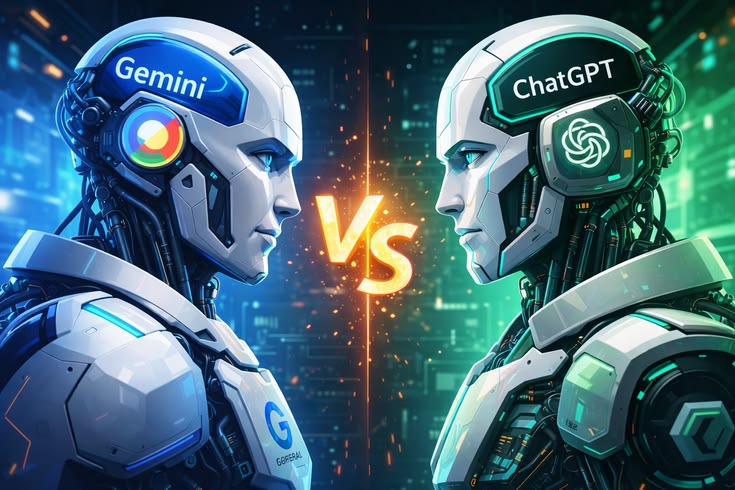
OpenAI vs Gemini

OpenAI vs Gemini: The Ultimate Architectural and Enterprise Comparison The landscape of generative artificial intelligence is no longer driven by raw novelty. For enterprise architects, product managers, and software engineers, selecting an AI foundation model provider is a high-stakes infrastructure decision. The choice influences application latency, contextual reasoning capabilities, operational costs, and data privacy frameworks for years to come. While many consumer-facing reviews focus on which chatbot writes better poetry, the real engineering battle takes place at the API and model architecture layers. The dominant titans in this space—OpenAI and Google’s Gemini—have engineered fundamentally divergent paths toward achieving Artificial General Intelligence (AGI). This comprehensive technical blueprint delivers an exhaustive, production-grade comparison between OpenAI and Gemini, evaluating their internal architectures, multimodal processing capabilities, API performance, developer ecosystems, and enterprise readiness. 1. Underlying Philosophy and Architectural Layout To choose the right model for your application stack, it is essential to understand how both engineering teams approach model training and processing. OpenAI Approach (Composite / Mixture of Experts) [Input Prompt] —> [Router System] —> [Expert Model A] —> [Expert Model B] -> [Output] Google Gemini Approach (Native Multimodal Matrix) [Text / Audio / Video] —> [Unified Core Neural Network] -> [Multimodal Output] OpenAI: The Evolution of Text-First Transformers OpenAI’s flagships (such as the GPT-4 and GPT-o series) evolved out of advanced text-based Large Language Models (LLMs). To handle vision, audio, and code, OpenAI pioneered a highly sophisticated, interlocking ecosystem of specialized neural networks. Mixture of Experts (MoE): Modern OpenAI models route incoming prompts dynamically through an intelligent routing layer to smaller, hyper-specialized sub-networks (“experts”). This maximizes processing efficiency for distinct tasks like mathematics, creative writing, or logical coding. The Omni Integration: With the introduction of native omni-style models, OpenAI has increasingly moved toward processing audio, vision, and text end-to-end within a single neural network, dramatically lowering latency for real-time applications. Gemini: Built from the Ground Up as Natively Multimodal Google engineered the Gemini series with a completely different starting premise. Instead of training a master text model and stitching secondary vision or audio networks onto it, Gemini was designed as a native multimodal model from day one. Unified Tokenization: Gemini translates text pixels, audio frequencies, video frames, and code syntax into a unified token stream at the foundational layer. This allows the model to seamlessly interleave and cross-reference entirely different mediums of data without losing context or requiring intermediate translations. Infrastructure Synergy: Because Gemini is built by Google, its underlying neural network is tightly co-designed with Google’s proprietary Tensor Processing Units (TPUs). This direct hardware-software integration allows for massive parallel computing efficiencies that are unique to Google’s cloud ecosystem. 2. Context Window Warfare and Memory Retention The size of a model’s context window dictates how much data it can analyze, remember, and reason over during a single API request cycle. This is where the divergence between OpenAI and Gemini is most apparent. The Gemini Context Advantage Google completely shifted the industry paradigm by introducing a massive 2-million token context window in its Gemini 1.5 Pro architecture. What 2M Tokens Means in Production: You can upload an entire codebase (tens of thousands of lines of code), 2 hours of raw high-definition video, or up to 60 full-length books directly into a single prompt window. The “Needle in a Haystack” Metric: Having a massive context window is useless if the model forgets data hidden in the middle. Gemini maintains a near-perfect 99%+ retrieval rate across its entire 2-million token spectrum, making it the undisputed champion for deep log analysis, comprehensive legal auditing, and large-scale asset cross-referencing. The OpenAI Philosophy: Focused and Fast OpenAI relies on a standard baseline of a 128K token context window across its dominant enterprise models. While significantly smaller than Gemini’s maximum limits, OpenAI operates under a different design priority: The RAG Paradigm: OpenAI relies on the premise that feeding millions of raw tokens into an LLM for every single prompt is computationally inefficient and introduces unnecessary latency. Instead, OpenAI advocates for Retrieval-Augmented Generation (RAG). Vector Embeddings Execution: By indexing massive datasets into external vector databases and injecting only the most relevant snippets into the tight 128K window, developers can keep API interactions lightning-fast, highly targeted, and cost-effective. 3. Multimodal Execution: Video, Audio, and Code Processing multiple input streams efficiently determines how capable your application tier will be when managing real-world media workloads. Feature / Modality OpenAI Enterprise Stack Google Gemini Enterprise Stack Native Video Processing Treats video as a sequence of isolated, extracted image frames. Natively streams raw video, tracking timestamps and audio cues in sync. Audio Processing Extremely low-latency voice synthesis via advanced speech-to-speech tokens. Deep voice analytics, capable of discerning ambient noises and vocal emotional shifts. Code Generation Elite logical reasoning, clean structural execution, and advanced debugging. Masterful multi-file structural codebase refactoring due to massive context. Video and Spatial Analysis When processing video, OpenAI’s API requires splitting the file into distinct static image snapshots (e.g., extracting 1 frame per second) and feeding them sequentially to the vision model. Gemini accepts raw video file formats natively. It reads the continuous data stream directly, allowing developers to ask complex temporal questions, such as: “At exactly what timestamp in this 1-hour security footage does the delivery truck leave the frame?” Code Synthesis and Logical Execution Both providers exhibit exceptional software engineering capabilities. OpenAI remains incredibly popular among developers due to its sharp code logic, accurate code generation patterns, and highly structured JSON outputs via native Structured Outputs modes. However, when it comes to refactoring entire software repositories at once, Gemini’s capacity to swallow the whole codebase into memory gives it a distinct operational advantage for enterprise system overhauls. 4. API Performance, Developer Experience, and Tooling Building production-grade software requires evaluating rate limits, response times, and the developer tools provided by each platform. Developer Tooling and SDK Environments OpenAI Developer Experience: OpenAI sets the industry benchmark for developer onboarding. Its SDKs (Python, Node.js) are exceptionally clean, documentation is exhaustive, and the developer portal features intuitive playgrounds for real-time testing. Features like Function

Machines that mimic human gestures and expressions
Uncategorized

The Future of Automation and Robotics: Transforming Industries and Everyday Life

Introduction Automation and robotics are no longer futuristic ideas—they’re a living, breathing reality that’s reshaping industries, transforming workplaces, and redefining how humans interact with machines. From self-driving cars to automated manufacturing lines, robots and intelligent systems are now embedded in nearly every sector. As we enter a new era of Industry 5.0, the collaboration between humans and robots is becoming the cornerstone of innovation. Automation is not just about replacing human labor but about enhancing efficiency, safety, and precision while freeing people for more creative and strategic work. What is Automation and Robotics? Automation refers to the use of technology to perform tasks with minimal human intervention. It involves systems or machines that follow predefined instructions or adapt based on data input.Example: Automated billing systems, robotic assembly lines, and smart home devices. Robotics is a specialized branch of engineering that deals with designing, constructing, and operating robots — machines capable of carrying out complex actions autonomously or semi-autonomously.Example: Industrial robots assembling cars, surgical robots in hospitals, and drones for logistics. When combined, automation and robotics create a powerful synergy that drives speed, accuracy, and cost-effectiveness across industries. Applications Across Industries 1. Manufacturing and Industry 4.0 Robotics in manufacturing has been a game-changer. Automated robotic arms, precision sensors, and AI-powered quality checks ensure products are made faster, safer, and with fewer defects. Example: Car manufacturers like Tesla and Toyota use fully automated production lines with minimal human supervision. Impact: Reduced labor costs, enhanced production rates, and consistent quality. 2. Healthcare and Surgery In healthcare, robotic automation enables precision and minimal invasiveness. Example: The Da Vinci Surgical System assists surgeons with high-precision movements. Impact: Shorter recovery times, smaller incisions, and greater surgical accuracy. 3. Agriculture Robotics is revolutionizing agriculture with smart drones and automated harvesters. Example: Drones monitor crop health, soil quality, and irrigation. Impact: Higher yields, reduced waste, and optimized resource usage. 4. Logistics and Warehousing Automated guided vehicles (AGVs), conveyor systems, and robotic sorters manage large warehouses like those of Amazon or Flipkart. Impact: Improved delivery speed, error reduction, and 24/7 operations. 5. Retail and Customer Service From robotic baristas to self-checkout counters and chatbots, automation is enhancing customer experience and operational efficiency. Example: Walmart uses robots to scan shelves and track inventory. 6. Defense and Security Autonomous drones and surveillance robots are improving national security and battlefield safety. Impact: Risk reduction for soldiers and enhanced decision-making through real-time data analysis. AI and Machine Learning in Robotics Modern robotics heavily relies on Artificial Intelligence (AI) and Machine Learning (ML) to learn from data and make decisions. Robots can now adapt to changing environments and perform complex cognitive tasks like facial recognition or navigation. Collaborative robots (cobots) work safely alongside humans, learning through continuous feedback loops. This integration of AI allows robots to go beyond repetitive tasks and step into roles that demand problem-solving and adaptability. Benefits of Automation and Robotics ✅ Increased productivity and operational efficiency ✅ Reduced human error ✅ Enhanced workplace safety ✅ Lower operational costs ✅ 24/7 operation capability ✅ Consistent quality and output Challenges and Concerns Job Displacement:Automation can replace certain repetitive or manual jobs, leading to workforce restructuring. High Initial Costs:Robotics systems require significant capital investment for setup and maintenance. Cybersecurity Risks:Connected robots can be vulnerable to hacking and data theft. Ethical Dilemmas:The growing autonomy of robots raises questions about accountability, privacy, and human control. The Future of Automation and Robotics The next decade will see humans and robots working together in harmony. Robots will become more intelligent, intuitive, and emotionally aware through AI-driven empathy and neural interfaces. Key Emerging Trends: Humanoid Robots: Machines that mimic human gestures and expressions (e.g., Sophia the Robot). Soft Robotics: Robots made with flexible materials for delicate tasks like food handling. Autonomous Vehicles: Self-driving logistics fleets reducing delivery times and accidents. Industry 5.0: Human-centric automation, where technology empowers—not replaces—humans. The goal is no longer full automation but collaboration, enabling people to focus on creativity, innovation, and decision-making while robots handle the repetitive groundwork. Conclusion Automation and robotics represent the backbone of future innovation. While challenges remain—like cost, ethics, and employment shifts—the benefits are undeniable.Industries that embrace this transformation will thrive in speed, safety, and scale, while those resisting it risk falling behind. The ultimate vision?A world where robots and humans work side-by-side, leveraging each other’s strengths to achieve unprecedented progress. FAQs Q1. How is automation different from robotics?Automation refers to using technology to perform tasks with minimal human input, while robotics specifically involves machines that can execute those tasks physically or intelligently. Q2. Will automation lead to job loss?While some repetitive roles may be automated, new opportunities are emerging in robot maintenance, programming, and AI management. Q3. What are the main industries using robotics today?Manufacturing, logistics, healthcare, agriculture, and defense are leading adopters of robotics technology. Q4. What is the role of AI in modern robotics?AI enables robots to learn from data, adapt to environments, and make intelligent decisions — making them more autonomous and useful across diverse tasks. Q5. What does Industry 5.0 mean?Industry 5.0 focuses on collaboration between humans and robots, emphasizing creativity, personalization, and sustainability rather than full automation.

Abstract visualization of artificial intelligence and machine learning networks.
Artificial Intelligence, machine learning

Artificial Intelligence and Machine Learning in Everyday Life

Introduction Artificial Intelligence (AI) and Machine Learning (ML) are no longer futuristic concepts — they’re part of our daily reality. Whether it’s unlocking your phone with facial recognition, getting directions from Google Maps, or streaming personalized shows on Netflix, AI and ML are silently working behind the scenes. These technologies have become the backbone of modern innovation, revolutionizing industries, improving decision-making, and enhancing user experiences everywhere. In this article, we’ll explore how AI and ML are reshaping the way we live, work, and interact with technology. Understanding AI and ML Artificial Intelligence (AI) AI refers to the simulation of human intelligence in machines. It enables computers to perform tasks like thinking, learning, problem-solving, and decision-making. Machine Learning (ML) ML is a subset of AI that allows systems to learn from data and improve automatically without being explicitly programmed. In simple words:AI = The brain that makes decisions.ML = The process that helps the brain learn from experience. How AI and ML Work Together AI uses algorithms and models developed through ML to process vast amounts of data and identify patterns. The more data they process, the smarter they become. For instance, when you shop online and see product recommendations, that’s ML analyzing your behavior, and AI deciding what to show you next. AI and ML in Everyday Life Here are some real-world examples of how these technologies impact our daily routines: 1. Smartphones and Personal Assistants Voice assistants like Siri, Google Assistant, and Alexa use AI for voice recognition, natural language processing (NLP), and smart decision-making. AI helps understand your voice commands. ML learns your preferences over time. Combined, they make your device more intuitive and efficient. Example: Predictive text suggestions, camera scene detection, and smart replies in messaging apps. Social Media Platforms AI powers everything from your feed recommendations to face tagging. Facebook/Instagram: Recognize faces in photos using ML models. Twitter/X: Filters spam and offensive content automatically. TikTok/YouTube: Recommend videos based on user behavior patterns. AI learns what you enjoy, keeping your feed relevant and engaging. Healthcare and Medicine AI is saving lives by improving diagnostics and personalizing treatments. Early Disease Detection: ML models detect cancer or heart disease earlier than humans. Drug Discovery: AI accelerates the process of finding new medicines. Virtual Nurses: Chatbots assist patients with reminders and consultations. Example: IBM Watson assists doctors by analyzing patient data for accurate diagnoses. 4. Transportation and Navigation From Google Maps to self-driving cars, AI and ML make transportation smarter. Navigation apps use ML to analyze traffic patterns and suggest the fastest routes. Autonomous vehicles like Tesla’s Autopilot use sensors and AI to drive safely. Impact: Reduced traffic congestion, fewer accidents, and improved travel efficiency. 5. Banking and Finance AI enhances fraud detection, risk management, and personalized banking. Detects unusual transactions in real time. Analyzes spending behavior to prevent fraud. Provides AI-based financial advice and budgeting tools. Example: Chatbots like HDFC’s “EVA” or SBI’s “SIA” answer customer queries instantly. 6. Education and E-Learning AI personalizes learning for students based on strengths and weaknesses. Adaptive learning platforms adjust content difficulty automatically. Virtual tutors provide 24/7 assistance. ML helps educators predict student performance. Example: Duolingo uses ML to personalize language lessons for every learner. 7. Entertainment and Streaming Platforms AI decides what you watch next! Netflix, Spotify, and YouTube use ML algorithms to study your history and recommend similar content. AI improves sound and video quality using enhancement algorithms. Example: Netflix’s recommendation engine reportedly saves the company over $1 billion per year by retaining users through personalized suggestions. 8. Smart Homes and IoT Devices AI-powered home devices such as Nest Thermostats, Smart Lights, and Security Cameras learn your habits to optimize comfort and energy use. Adjusts lighting and temperature automatically. Detects intrusions using ML-based image recognition. Saves energy with predictive scheduling. 9. Customer Service Chatbots Businesses now use AI chatbots to handle thousands of customer queries efficiently. Provides 24/7 instant support. Understands natural language queries. Reduces wait time and operational costs. Example: ChatGPT-powered bots are now integrated into customer service systems globally. 10. Retail and E-Commerce AI and ML personalize your shopping journey. Product recommendations Dynamic pricing (adjusts prices based on demand) Predictive inventory management Example: Amazon’s “Just Walk Out” technology uses AI to automatically bill customers as they leave the store. Behind the Scenes: Technologies That Power AI and ML Technology Function Neural Networks Mimic the human brain to identify complex patterns. Natural Language Processing (NLP) Enables machines to understand human speech/text. Deep Learning Learns from massive data sets with minimal human supervision. Computer Vision Allows systems to interpret visual data (images, videos). Reinforcement Learning Systems learn by trial and error through rewards and penalties. These technologies together enable machines to see, understand, and respond intelligently — shaping our digital world. Advantages and Challenges of AI in Daily Life Advantages Saves time and increases efficiency Reduces human error Enables predictive analytics Improves personalization and user experience Enhances safety and convenience Challenges Data privacy concerns Job automation and workforce displacement Algorithmic bias High implementation cost for small businesses The Future of AI and ML The next decade will witness AI becoming even more integrated into our personal and professional lives. Future Trends: AI-powered healthcare diagnostics Fully autonomous transportation systems Emotion-recognizing AI for human-machine interaction AI-driven education personalization Smarter robotics for home and industry AI is moving from automation to augmentation — not replacing humans, but empowering them to achieve more. Conclusion AI and ML have become invisible assistants guiding our daily decisions — what we buy, how we travel, what we learn, and even how we stay healthy. Their true magic lies not in replacing humans, but in enhancing human potential — making life smarter, faster, and more connected than ever before. The era of intelligent machines has begun — and it’s already in your pocket. FAQs 1. What is the difference between AI and ML?AI is the broader concept of intelligent machines; ML is a subset that allows machines to learn from data. 2. How is AI used in daily

How would you like me to respond?

Select a personality for your AI assistant

Normal
Happy
Sad
Angry

Your selection will affect how the AI assistant responds to your messages

Chat Assistant

Let's discuss your project!

Hear from our clients and why 3000+ businesses trust TechOTD

Tell us what you need, and we'll get back with a cost and timeline estimate

Scroll to Top