The Future of Cybersecurity in an AI-Driven World
Introduction
The digital world is evolving faster than ever, and with every technological advancement comes a new set of security challenges. Artificial Intelligence (AI) has become one of the most transformative technologies of our time, helping businesses automate processes, improve decision-making, and unlock new levels of efficiency. However, as AI continues to reshape industries, it is also changing the cybersecurity landscape in profound ways.
Cybersecurity has traditionally been a constant battle between defenders and attackers. Security teams work to protect systems and data, while cybercriminals continuously search for new vulnerabilities to exploit. The introduction of AI has accelerated this battle. Organizations are now using AI-powered security tools to detect threats faster and respond more effectively, while attackers are leveraging the same technology to launch increasingly sophisticated cyberattacks.
As we move deeper into an AI-driven era, cybersecurity is no longer just an IT concern. It has become a strategic business priority. Companies that fail to adapt to emerging security threats risk financial losses, reputational damage, regulatory penalties, and operational disruptions.
How AI Is Transforming Cybersecurity
Artificial intelligence is transforming cybersecurity by enabling systems to analyze massive amounts of data in real time. Traditional security tools often rely on predefined rules and signatures to identify threats. While effective against known attacks, these systems can struggle to detect new or evolving threats.
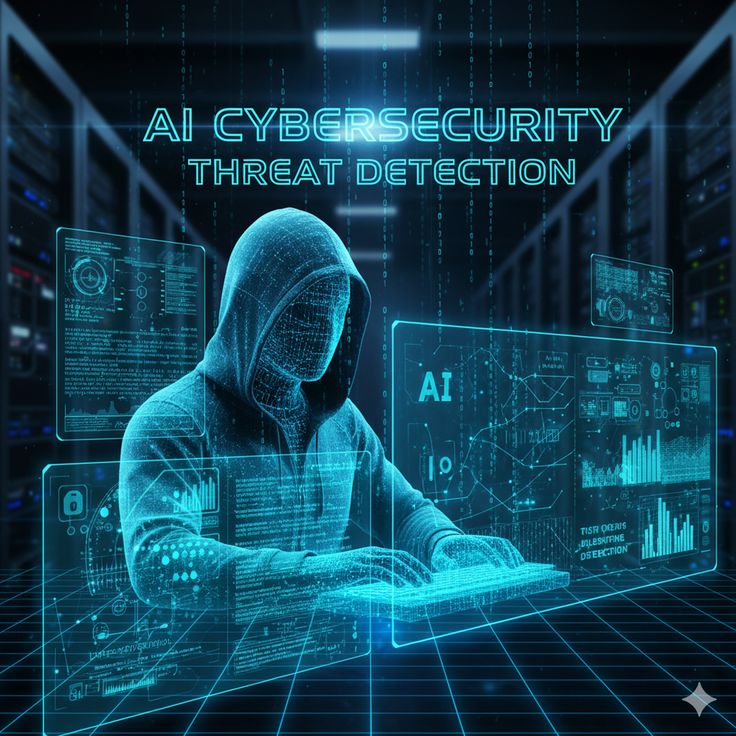
AI-powered cybersecurity solutions use machine learning algorithms to identify unusual patterns, recognize anomalies, and detect suspicious behavior that may indicate a cyberattack. This allows organizations to identify and respond to threats more quickly than ever before.
Faster Threat Detection and Response
One of the biggest advantages of AI in cybersecurity is speed. Modern organizations generate enormous volumes of data every second. AI systems can monitor network traffic, user behavior, applications, and endpoint devices simultaneously, identifying threats within seconds rather than hours or days.
This rapid detection capability helps businesses minimize damage, reduce downtime, and improve overall security resilience.
Smarter Threat Intelligence
Threat intelligence is essential for understanding emerging attack techniques, malware variants, and vulnerabilities. AI can analyze information from security reports, threat databases, dark web forums, and network logs to identify potential risks before they become major incidents.
This proactive approach allows organizations to strengthen defenses and stay one step ahead of attackers.
The Rise of AI-Powered Cyber Threats
While AI strengthens defenses, it is also giving cybercriminals new tools and capabilities.
Advanced Phishing Attacks
Traditional phishing emails often contain spelling mistakes or suspicious wording. AI-generated phishing messages are much more convincing. They can be personalized, professionally written, and tailored to specific individuals or organizations.
As a result, employees may find it increasingly difficult to distinguish between legitimate communications and fraudulent attempts.
Deepfakes and Identity Fraud
Deepfake technology uses AI to create highly realistic audio, video, and images. Criminals can use deepfakes to impersonate executives, employees, or trusted individuals.
These fake identities can be used to authorize fraudulent payments, gain unauthorized access, or manipulate employees into revealing confidential information.
AI-Enhanced Ransomware
Ransomware attacks continue to evolve. AI can help attackers identify valuable targets, automate attack strategies, and evade traditional security systems.
This increased sophistication means businesses need more intelligent security solutions capable of detecting suspicious activity before ransomware can spread.
The Growing Importance of Cloud Security
Cloud computing has become essential for modern organizations, but it also introduces new security challenges.
AI-powered cloud security platforms can continuously monitor cloud environments, identify misconfigurations, detect unusual activities, and recommend corrective actions. This automated protection helps organizations maintain stronger security while reducing operational complexity.
As businesses continue migrating applications and data to cloud platforms, AI-driven cloud security will become even more important.
Securing the Internet of Things (IoT)
The number of connected devices is growing rapidly. From smart sensors and industrial machinery to wearable devices and connected appliances, IoT is transforming how businesses operate.
However, many IoT devices lack strong security controls. AI can help by monitoring device behavior, detecting anomalies, and identifying compromised devices before they become entry points for cyberattacks.
As IoT ecosystems expand, AI-powered monitoring will be critical for maintaining security.
Zero Trust and AI: A Powerful Combination
The traditional concept of trusting users and devices inside a network perimeter is becoming outdated. Modern organizations are increasingly adopting Zero Trust security models based on the principle of “Never Trust, Always Verify.”
Continuous Verification
AI enhances Zero Trust architectures by continuously evaluating user behavior, device health, access requests, and contextual information.
Instead of relying on a single login event, AI can continuously assess risk levels and adjust access permissions in real time.
Reducing Insider Threats
Insider threats remain one of the most challenging security risks. AI can identify unusual user behavior that may indicate compromised accounts or malicious activity from within the organization.
This capability helps security teams detect and address threats before significant damage occurs.
The Future of Identity and Access Management
Passwords alone are no longer enough to protect sensitive systems and information.
AI-powered authentication solutions are introducing more advanced methods of identity verification through behavioral biometrics.
Behavioral Biometrics
Behavioral biometrics analyze patterns such as:
- Typing speed
- Mouse movements
- Device usage habits
- Login locations
- Navigation behavior
These unique behavioral characteristics help verify identities without creating friction for users.
Addressing the Cybersecurity Skills Gap
The global shortage of cybersecurity professionals continues to challenge organizations worldwide.
AI can help bridge this gap by automating repetitive security tasks such as:
- Log analysis
- Threat detection
- Vulnerability scanning
- Incident response
- Security monitoring
By handling routine tasks, AI allows cybersecurity experts to focus on strategic planning and complex investigations.
The Risks and Challenges of AI in Cybersecurity
Despite its benefits, AI is not a perfect solution.
Adversarial AI Attacks
Cybercriminals are developing techniques to manipulate AI systems themselves. These attacks may involve:
- Poisoning training data
- Manipulating machine learning models
- Exploiting algorithm weaknesses
- Bypassing AI-powered defenses
Organizations must secure not only their networks but also the AI systems protecting them.
Privacy and Compliance Concerns
AI systems often require access to large amounts of data. Businesses must ensure that data collection and processing activities comply with privacy regulations and ethical standards.
Balancing innovation, security, and privacy will remain a key challenge in the years ahead.
The Shift Toward Predictive Cybersecurity
One of the most exciting developments in cybersecurity is the move from reactive defense to predictive security.
AI systems can analyze historical attack patterns, behavioral data, and threat intelligence to forecast potential risks before attacks occur.
This predictive approach enables organizations to strengthen defenses proactively rather than responding after damage has already been done.
Why Collaboration Will Shape the Future of Cybersecurity
Cybersecurity is becoming too complex for any single organization to tackle alone.
Businesses, governments, technology providers, and security researchers must collaborate to:
- Share threat intelligence
- Develop security standards
- Improve incident response capabilities
- Address emerging AI-related risks
AI can support this collaboration by processing and distributing security information at unprecedented speed and scale.
Preparing Businesses for an AI-Driven Security Future
Organizations looking to strengthen cybersecurity in the AI era should focus on:
- Investing in AI-powered security tools
- Implementing Zero Trust architectures
- Strengthening employee security awareness
- Securing cloud and IoT environments
- Regularly testing security systems
- Developing AI governance policies
- Staying compliant with evolving regulations
Businesses that adopt these strategies today will be better prepared for tomorrow’s challenges.
Conclusion
The future of cybersecurity in an AI-driven world will be shaped by both innovation and risk. Artificial intelligence is revolutionizing how organizations detect threats, respond to incidents, and protect digital assets. At the same time, cybercriminals are using the same technology to launch increasingly sophisticated attacks.
Success in this rapidly evolving landscape will require a balanced approach that combines advanced technology, skilled professionals, strong governance, and continuous adaptation. Organizations that embrace AI-driven cybersecurity while maintaining a proactive security culture will be better positioned to protect their operations, customers, and reputation in the years ahead.
AI Agents in the Workplace: From Assistants to Autonomous Decision Makers