Introduction
Customer expectations have changed dramatically over the past decade. Modern consumers no longer want generic interactions, mass marketing campaigns, or one-size-fits-all services. They expect businesses to understand their preferences, anticipate their needs, and deliver personalized experiences across every touchpoint. In an increasingly digital world, personalization has become a key factor that influences purchasing decisions, customer loyalty, and brand perception.
This shift in expectations has created new opportunities and challenges for organizations. While traditional personalization methods relied on basic customer data and manual segmentation, they often struggled to keep pace with evolving customer behaviors. Today, Artificial Intelligence (AI) is revolutionizing how businesses interact with customers by enabling real-time, intelligent, and highly personalized experiences at scale.
AI-powered customer experience is no longer a futuristic concept. It is already transforming industries such as retail, banking, healthcare, telecommunications, travel, and e-commerce. From personalized recommendations and intelligent chatbots to predictive analytics and sentiment analysis, AI is helping organizations create deeper customer relationships while improving operational efficiency.
As businesses compete for customer attention in an increasingly crowded marketplace, AI-driven personalization is becoming one of the most important competitive advantages. Organizations that successfully leverage AI can deliver experiences that feel more human, relevant, and valuable than ever before.
Understanding AI-Powered Customer Experience
AI-powered customer experience refers to the use of artificial intelligence technologies to enhance interactions between businesses and customers. These technologies analyze vast amounts of customer data, identify patterns, learn from user behavior, and generate insights that help organizations provide more personalized services.
Unlike traditional systems that rely on predefined rules, AI continuously learns and adapts based on customer interactions. This allows businesses to deliver recommendations, support, and communications that align with individual customer preferences.
The foundation of AI-powered customer experience includes technologies such as:
- Machine Learning
- Natural Language Processing (NLP)
- Predictive Analytics
- Computer Vision
- Generative AI
- Conversational AI
- Sentiment Analysis
Together, these technologies enable businesses to understand customers more accurately and respond more effectively.
Why Personalization Matters More Than Ever
Customers today interact with brands through multiple channels including websites, mobile applications, social media platforms, emails, and physical stores. They expect seamless experiences regardless of where and how they engage with a business.
Research consistently shows that customers are more likely to purchase from brands that provide personalized experiences. Personalized interactions make customers feel valued, understood, and appreciated, leading to stronger emotional connections and long-term loyalty.
Some key benefits of personalization include:
- Increased customer satisfaction
- Higher conversion rates
- Improved customer retention
- Stronger brand loyalty
- Better customer engagement
- Increased revenue opportunities
However, delivering personalized experiences to millions of customers simultaneously would be nearly impossible without AI.
How AI Is Revolutionizing Personalization
Intelligent Product Recommendations
One of the most visible applications of AI is personalized product recommendations. AI systems analyze customer browsing history, purchase behavior, preferences, and interactions to suggest products that align with individual interests.
Instead of showing the same products to every visitor, AI creates unique experiences for each customer. This not only improves user satisfaction but also increases sales and average order value.
Modern recommendation engines can consider hundreds of variables simultaneously, allowing businesses to provide highly accurate suggestions that feel relevant and timely.
Predictive Customer Insights
AI enables businesses to move from reactive customer service to proactive customer engagement.
By analyzing historical and real-time data, AI can predict:
- Future purchasing behavior
- Customer churn risks
- Product preferences
- Service requirements
- Potential complaints
- Customer lifetime value
These insights allow businesses to take preventive actions before issues arise, improving overall customer satisfaction.
For example, a subscription-based company can identify customers likely to cancel their membership and offer personalized incentives to retain them.
Conversational AI and Virtual Assistants
Customer support has undergone significant transformation through AI-powered chatbots and virtual assistants.
Modern conversational AI systems can:
- Answer customer questions instantly
- Provide product recommendations
- Process transactions
- Resolve common issues
- Guide users through complex processes
- Offer multilingual support
Unlike traditional support systems that require customers to wait for human agents, AI assistants provide immediate responses around the clock.
As Natural Language Processing continues to improve, these interactions are becoming increasingly natural and human-like.
Hyper-Personalized Marketing Campaigns
Traditional marketing often targets broad audience segments. AI takes personalization much further by enabling one-to-one marketing.
AI analyzes customer behavior, demographics, interests, and engagement patterns to create highly targeted campaigns.
Businesses can automatically personalize:
- Email content
- Website experiences
- Product recommendations
- Promotional offers
- Social media advertisements
- Mobile app notifications
This level of personalization significantly increases engagement rates while reducing marketing waste.
Sentiment Analysis and Emotional Intelligence
Understanding customer emotions has always been challenging for businesses. AI is changing that through sentiment analysis.
AI systems can analyze:
- Customer reviews
- Social media posts
- Survey responses
- Support conversations
- Online feedback
By identifying positive, negative, or neutral sentiments, businesses gain valuable insights into customer perceptions and experiences.
This helps organizations respond quickly to emerging issues, improve services, and strengthen customer relationships.
The Rise of Generative AI in Customer Experience
Generative AI has become one of the most transformative technologies in recent years. Unlike traditional AI systems that primarily analyze data, generative AI can create content, conversations, recommendations, and solutions.
Businesses are increasingly using generative AI to:
- Generate personalized email responses
- Create customized product descriptions
- Provide intelligent customer support
- Develop personalized shopping experiences
- Produce tailored content recommendations
Customers benefit from faster responses and more relevant interactions, while organizations achieve greater efficiency and scalability.
Generative AI also helps customer service teams by summarizing conversations, suggesting responses, and providing real-time assistance during customer interactions.
Omnichannel Personalization Powered by AI
Modern customers expect consistent experiences across multiple channels. They do not want to repeat information every time they switch from a website to a mobile app or contact customer support.
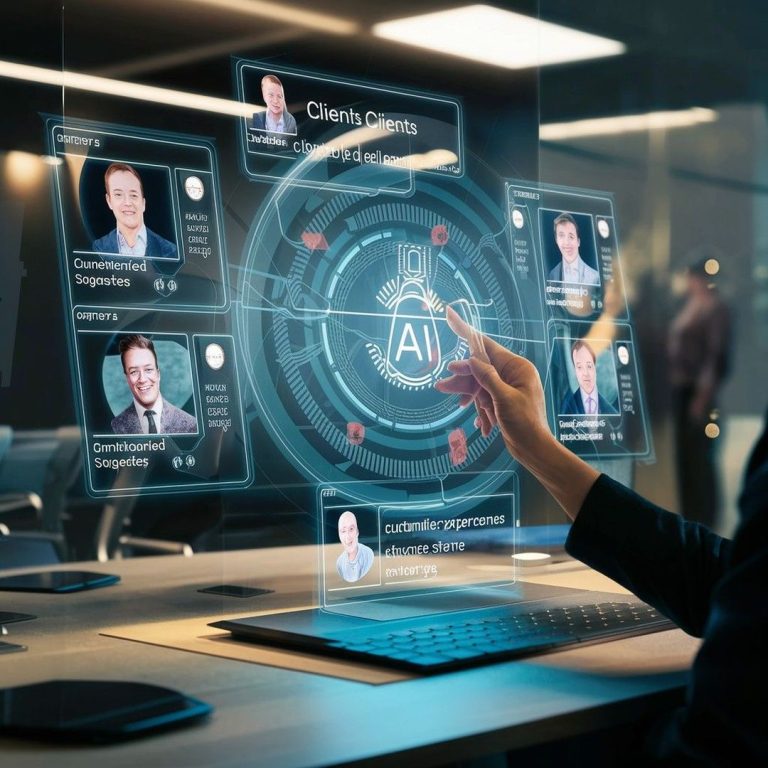
AI enables omnichannel personalization by creating a unified customer profile that integrates data from various sources.
This allows businesses to:
- Recognize customers across channels
- Maintain conversation continuity
- Deliver consistent recommendations
- Provide context-aware support
- Improve customer journey management
As a result, customers experience smoother and more personalized interactions regardless of where they engage with a brand.
AI and Customer Journey Optimization
Every customer follows a unique journey before making a purchasing decision. AI helps businesses understand and optimize these journeys.
By analyzing customer interactions across multiple touchpoints, AI can identify:
- Friction points
- Drop-off stages
- Purchase triggers
- Engagement opportunities
- Conversion barriers
Organizations can then refine their processes to create more seamless customer experiences.
For example, AI may identify that customers frequently abandon shopping carts after encountering complex checkout procedures. Businesses can use these insights to simplify the process and improve conversion rates.
Real-Time Personalization: The Future of Customer Engagement
One of AI’s greatest strengths is its ability to make decisions in real time.
Real-time personalization allows businesses to instantly adjust customer experiences based on current behavior.
Examples include:
- Dynamic website content
- Personalized homepage layouts
- Real-time product recommendations
- Contextual promotions
- Location-based offers
- Instant support suggestions
As customers interact with a platform, AI continuously learns and adapts to deliver the most relevant experience possible.
This creates a sense of responsiveness that traditional personalization methods cannot achieve.
Challenges of AI-Powered Personalization
While AI offers significant advantages, businesses must address several challenges to ensure successful implementation.
Data Privacy and Security
Personalization relies heavily on customer data. Organizations must handle this data responsibly and comply with privacy regulations.
Customers increasingly expect transparency regarding how their information is collected, stored, and used.
Building trust requires strong data governance and security practices.
Bias in AI Systems
AI systems learn from existing data. If that data contains biases, the resulting recommendations and decisions may also be biased.
Organizations must regularly monitor AI models to ensure fairness, accuracy, and inclusivity.
Integration Complexity
Implementing AI often requires integrating multiple systems, databases, and customer platforms.
Without proper planning, organizations may face technical challenges that limit the effectiveness of personalization initiatives.
Maintaining Human Touch
Although AI enhances efficiency, customers still value human interactions, especially when dealing with complex or sensitive issues.
The most successful organizations combine AI capabilities with human expertise to create balanced customer experiences.
The Future of AI-Powered Customer Experience
The future of customer experience will be increasingly intelligent, predictive, and personalized.
Emerging developments are expected to include:
- Emotion-aware AI systems
- Advanced voice assistants
- Autonomous customer service agents
- Predictive customer journey mapping
- AI-powered digital humans
- Context-aware personalization engines
- Enhanced augmented reality shopping experiences
As AI technology continues to evolve, businesses will gain deeper insights into customer behavior and deliver experiences that feel more intuitive and personalized than ever before.
The distinction between digital and human interactions will continue to blur, creating seamless experiences that anticipate customer needs before they are even expressed.
Conclusion
AI-powered customer experience represents the next major evolution in personalization. By leveraging machine learning, predictive analytics, conversational AI, and generative AI, organizations can create highly individualized experiences that drive engagement, satisfaction, and loyalty.
Today’s customers expect brands to understand their needs and deliver relevant interactions at every stage of the customer journey. AI makes this possible at a scale that traditional methods could never achieve.
While challenges related to privacy, integration, and ethical AI remain important considerations, the benefits of AI-driven personalization are undeniable. Businesses that embrace AI-powered customer experience today will be better positioned to meet the growing expectations of tomorrow’s customers.