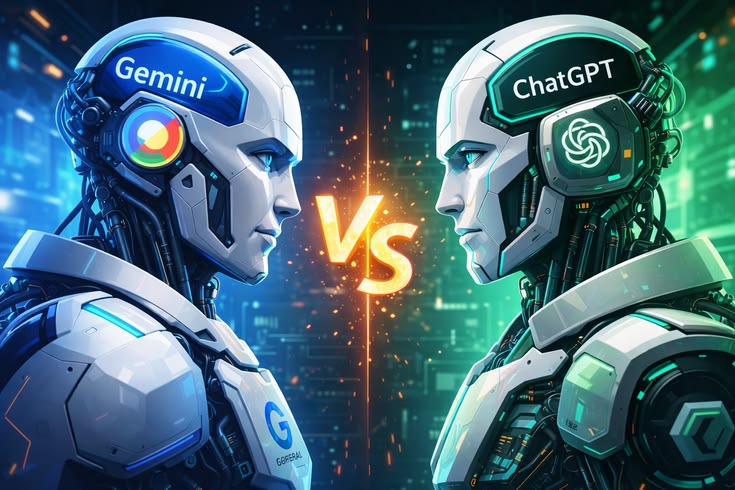
OpenAI vs Gemini: The Ultimate Architectural and Enterprise Comparison
The landscape of generative artificial intelligence is no longer driven by raw novelty. For enterprise architects, product managers, and software engineers, selecting an AI foundation model provider is a high-stakes infrastructure decision. The choice influences application latency, contextual reasoning capabilities, operational costs, and data privacy frameworks for years to come.
While many consumer-facing reviews focus on which chatbot writes better poetry, the real engineering battle takes place at the API and model architecture layers. The dominant titans in this space—OpenAI and Google’s Gemini—have engineered fundamentally divergent paths toward achieving Artificial General Intelligence (AGI).
This comprehensive technical blueprint delivers an exhaustive, production-grade comparison between OpenAI and Gemini, evaluating their internal architectures, multimodal processing capabilities, API performance, developer ecosystems, and enterprise readiness.
1. Underlying Philosophy and Architectural Layout
To choose the right model for your application stack, it is essential to understand how both engineering teams approach model training and processing.
OpenAI Approach (Composite / Mixture of Experts) [Input Prompt] ---> [Router System] ---> [Expert Model A] ---> [Expert Model B] -> [Output] Google Gemini Approach (Native Multimodal Matrix) [Text / Audio / Video] ---> [Unified Core Neural Network] -> [Multimodal Output]OpenAI: The Evolution of Text-First Transformers
OpenAI’s flagships (such as the GPT-4 and GPT-o series) evolved out of advanced text-based Large Language Models (LLMs). To handle vision, audio, and code, OpenAI pioneered a highly sophisticated, interlocking ecosystem of specialized neural networks.
-
Mixture of Experts (MoE): Modern OpenAI models route incoming prompts dynamically through an intelligent routing layer to smaller, hyper-specialized sub-networks (“experts”). This maximizes processing efficiency for distinct tasks like mathematics, creative writing, or logical coding.
-
The Omni Integration: With the introduction of native omni-style models, OpenAI has increasingly moved toward processing audio, vision, and text end-to-end within a single neural network, dramatically lowering latency for real-time applications.
Gemini: Built from the Ground Up as Natively Multimodal
Google engineered the Gemini series with a completely different starting premise. Instead of training a master text model and stitching secondary vision or audio networks onto it, Gemini was designed as a native multimodal model from day one.
-
Unified Tokenization: Gemini translates text pixels, audio frequencies, video frames, and code syntax into a unified token stream at the foundational layer. This allows the model to seamlessly interleave and cross-reference entirely different mediums of data without losing context or requiring intermediate translations.
-
Infrastructure Synergy: Because Gemini is built by Google, its underlying neural network is tightly co-designed with Google’s proprietary Tensor Processing Units (TPUs). This direct hardware-software integration allows for massive parallel computing efficiencies that are unique to Google’s cloud ecosystem.
2. Context Window Warfare and Memory Retention
The size of a model’s context window dictates how much data it can analyze, remember, and reason over during a single API request cycle. This is where the divergence between OpenAI and Gemini is most apparent.
The Gemini Context Advantage
Google completely shifted the industry paradigm by introducing a massive 2-million token context window in its Gemini 1.5 Pro architecture.
-
What 2M Tokens Means in Production: You can upload an entire codebase (tens of thousands of lines of code), 2 hours of raw high-definition video, or up to 60 full-length books directly into a single prompt window.
-
The “Needle in a Haystack” Metric: Having a massive context window is useless if the model forgets data hidden in the middle. Gemini maintains a near-perfect 99%+ retrieval rate across its entire 2-million token spectrum, making it the undisputed champion for deep log analysis, comprehensive legal auditing, and large-scale asset cross-referencing.
The OpenAI Philosophy: Focused and Fast
OpenAI relies on a standard baseline of a 128K token context window across its dominant enterprise models. While significantly smaller than Gemini’s maximum limits, OpenAI operates under a different design priority:
-
The RAG Paradigm: OpenAI relies on the premise that feeding millions of raw tokens into an LLM for every single prompt is computationally inefficient and introduces unnecessary latency. Instead, OpenAI advocates for Retrieval-Augmented Generation (RAG).
-
Vector Embeddings Execution: By indexing massive datasets into external vector databases and injecting only the most relevant snippets into the tight 128K window, developers can keep API interactions lightning-fast, highly targeted, and cost-effective.
3. Multimodal Execution: Video, Audio, and Code
Processing multiple input streams efficiently determines how capable your application tier will be when managing real-world media workloads.
| Feature / Modality | OpenAI Enterprise Stack | Google Gemini Enterprise Stack |
| Native Video Processing | Treats video as a sequence of isolated, extracted image frames. | Natively streams raw video, tracking timestamps and audio cues in sync. |
| Audio Processing | Extremely low-latency voice synthesis via advanced speech-to-speech tokens. | Deep voice analytics, capable of discerning ambient noises and vocal emotional shifts. |
| Code Generation | Elite logical reasoning, clean structural execution, and advanced debugging. | Masterful multi-file structural codebase refactoring due to massive context. |
Video and Spatial Analysis
When processing video, OpenAI’s API requires splitting the file into distinct static image snapshots (e.g., extracting 1 frame per second) and feeding them sequentially to the vision model.
Gemini accepts raw video file formats natively. It reads the continuous data stream directly, allowing developers to ask complex temporal questions, such as: “At exactly what timestamp in this 1-hour security footage does the delivery truck leave the frame?”
Code Synthesis and Logical Execution
Both providers exhibit exceptional software engineering capabilities. OpenAI remains incredibly popular among developers due to its sharp code logic, accurate code generation patterns, and highly structured JSON outputs via native Structured Outputs modes.
However, when it comes to refactoring entire software repositories at once, Gemini’s capacity to swallow the whole codebase into memory gives it a distinct operational advantage for enterprise system overhauls.
4. API Performance, Developer Experience, and Tooling
Building production-grade software requires evaluating rate limits, response times, and the developer tools provided by each platform.
Developer Tooling and SDK Environments
-
OpenAI Developer Experience: OpenAI sets the industry benchmark for developer onboarding. Its SDKs (Python, Node.js) are exceptionally clean, documentation is exhaustive, and the developer portal features intuitive playgrounds for real-time testing. Features like Function Calling and parallel tool execution are robust and simple to implement.
-
Google Gemini Tooling: Developers access Gemini via Google AI Studio (for rapid prototyping) or Vertex AI (Google Cloud’s enterprise machine learning engine). While initially more complex due to Google Cloud’s extensive permission architectures, Vertex AI provides advanced enterprise controls, data lineage tracking, and seamless integrations with Google Workspace data.
Latency and Throughput (TTFT vs. Output Speed)
-
Time to First Token (TTFT): OpenAI models typically demonstrate highly optimized TTFT speeds, initiating streaming responses almost instantly.
-
Token Output Velocity: Gemini models, utilizing TPU v5e and v5p hardware arrays, deliver exceptional sustained token-per-second generation speeds, particularly when handling massive text summaries or bulk data translations.
5. Enterprise Readiness: Security, Pricing, and Data Sovereignty
When processing proprietary corporate data, operational security and predictable pricing models take precedence over pure performance metrics.
Data Privacy Commitments
Both OpenAI Enterprise and Google Cloud Vertex AI enforce strict corporate data protections:
-
Zero Training on Corporate Data: Both providers explicitly state that any data submitted via their commercial API endpoints is never used to train future public iterations of their base models.
-
Compliance Frameworks: Both environments provide enterprise-grade compliance certificates, including SOC 2 Type II, ISO 27001, HIPAA readiness, and strict GDPR data processing agreements.
Pricing Models and Token Economics
Pricing dynamics shift depending on your workload type. OpenAI utilizes standard per-million-token pricing models. Google Gemini features a highly granular pricing structure that introduces distinct cost-saving vectors:
-
Context Caching: Because Gemini handles massive context inputs, Google allows developers to cache frequently used data segments (like an entire legal compliance handbook or a core software framework) inside the model’s memory for a fraction of the cost, slashing repeated input token fees dramatically.
-
Pay-for-Allocation: For massive corporate deployments, Vertex AI allows companies to provision dedicated, isolated throughput capacity, ensuring guaranteed performance speeds regardless of global public traffic spikes.
6. Comprehensive Decision Matrix for Tech Teams
To determine whether your product development stack should pivot toward OpenAI or integrate Google’s Gemini ecosystem, utilize this architectural decision matrix:
| If your SaaS application requires… | Recommended Ecosystem | Primary Architectural Justification |
| Parsing massive documents, full codebases, or long-form video. | Google Gemini | The 2-million native token context window renders traditional RAG overhead obsolete for heavy files. |
| Ultra-fast prototyping, deep community support, and structured JSON generation. | OpenAI | Industry-leading developer tooling, robust SDKs, and highly mature Structured Outputs guarantees. |
| Deep integration with Google Cloud Platform (GCP) and BigQuery arrays. | Google Gemini | Vertex AI bridges native model logic directly into cloud data warehouses with minimal network latency. |
| Complex multi-step agentic workflows and advanced parallel function calling. | OpenAI | Exceptionally reliable function execution logic and consistent adherence to system prompt instructions. |
Conclusion: A Multi-Model Future
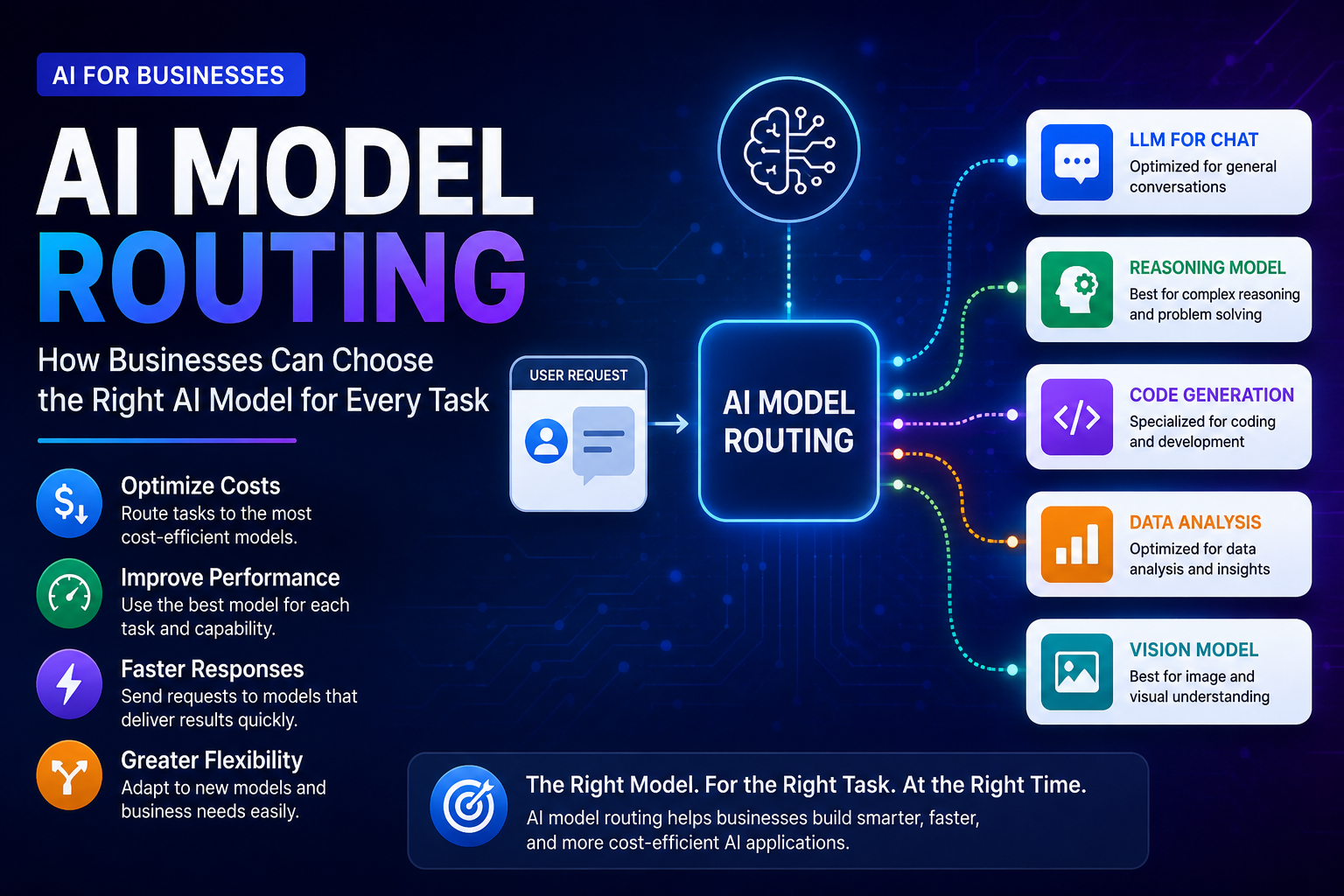
Choosing between OpenAI and Gemini is not a binary choice. The most sophisticated modern SaaS architectures are rapidly moving toward a multi-model mesh approach.
By leveraging a decoupled AI routing tier, enterprise applications can direct short, high-speed, agentic chat commands to OpenAI’s optimized omni-models, while dynamically routing heavy analytical tasks, multi-hour video streams, and full codebase diagnostic checks to Gemini’s expansive multimodal memory pipeline.
Analyze your specific workload characteristics, measure your latency tolerances, map your cloud provider dependencies, and deploy the precise model archetype tailored to your long-term technological vision.