Machine Learning

Business team using AI tools to improve productivity, automate tasks, analyze data, and support faster company growth.
Business Intelligence

How AI Can Help Companies Grow Faster

Introduction Artificial intelligence has moved from being a future-facing concept to a practical growth tool for businesses of all sizes. Companies are using AI to automate repetitive work, analyze large volumes of data, personalize customer experiences, and uncover opportunities that would be difficult to spot manually. This makes AI valuable not only for tech companies, but also for retail, finance, healthcare, service businesses, and startups that want to scale more efficiently. AI can help companies grow faster by improving efficiency, boosting customer engagement, and supporting better decisions. When used strategically, it can increase revenue, reduce costs, and shorten the time it takes to move from idea to execution. One of the biggest ways AI helps companies grow faster is by saving time. Tasks like sorting leads, generating reports, responding to common customer questions, and analyzing trends can be handled much more quickly with AI-powered tools. That gives teams more time to focus on strategy, creativity, and high-value work instead of routine operations. AI also improves decision-making by turning raw data into useful insights. Businesses can use predictive analytics to forecast demand, identify customer behavior patterns, and make more informed decisions about pricing, marketing, hiring, and product planning. Instead of relying only on intuition, leaders can act with greater confidence because they have better information at the right time. Another major advantage is customer growth. AI can help companies deliver more relevant recommendations, targeted marketing, faster support, and more personalized communication. When customers feel understood and get faster service, they are more likely to buy again, stay loyal, and recommend the brand to others. AI also supports faster scaling. As companies grow, it becomes harder to manage more customers, more data, and more operations without adding extra strain to the team. AI helps businesses expand without increasing headcount at the same pace by improving productivity and making processes more efficient. At the same time, companies need to use AI carefully. It works best when it supports people rather than replacing judgment, and when leaders pay attention to accuracy, privacy, and ethical use. Businesses that start with clear goals and measurable outcomes are more likely to see real growth from AI. Key benefits Faster automation of repetitive tasks. Better customer targeting and personalization. Smarter forecasting and planning. Improved productivity across teams. More efficient scaling with lower operational strain. Conclusion AI can help companies grow faster by making work more efficient, decisions more accurate, and customer experiences more personalized. The businesses that benefit most are the ones that use AI with a clear purpose and track the results carefully. In the long run, AI is not just a tool for saving time. It is a growth engine that can help companies compete better, respond faster, and scale smarter. FAQ How does AI help a company grow? AI helps companies grow by automating tasks, improving decisions, increasing productivity, and creating better customer experiences. Which business areas benefit most from AI? Marketing, sales, customer service, operations, hiring, and forecasting often see strong benefits from AI. Can small businesses use AI for growth? Yes, small businesses can use AI for content creation, customer support, marketing analytics, and workflow automation. Does AI replace employees? Usually no. AI is more effective when it supports employees and removes repetitive work so they can focus on higher-value tasks. What is the biggest advantage of AI for growth? The biggest advantage is that AI helps companies do more with less time, less waste, and better data. Should businesses start with one AI use case? Yes, starting with one clear business problem is the best way to measure value and reduce risk.
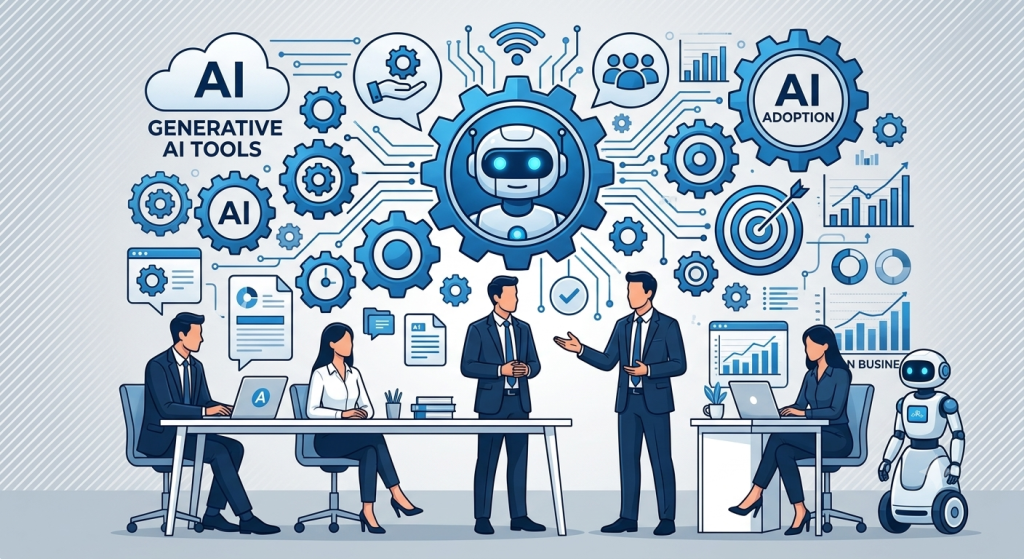
Business team using artificial intelligence tools to improve productivity, automate tasks, and analyze data for better decision-making.
Artificial Intelligence

What Businesses Need to Know About AI

Introduction Businesses today are operating in a world where data is growing faster than teams can manually process it. AI helps bridge that gap by automating repetitive tasks, analyzing large volumes of information, and surfacing patterns that are difficult to spot by hand. This makes AI valuable across departments such as customer service, marketing, operations, finance, and product development. Artificial intelligence is no longer just a tech trend; it is a practical business tool that can improve efficiency, support decision-making, and create new growth opportunities. For most companies, the real question is not whether to use AI, but how to use it responsibly and effectively. One of the biggest reasons businesses are adopting AI is speed. Tasks that once took hours, like sorting customer requests, summarizing reports, or identifying trends, can now be handled much faster with AI-assisted systems. That speed can lead to lower costs, better productivity, and quicker responses to market changes. AI also helps companies make better decisions. Predictive analytics, machine learning, and natural language tools can turn raw data into insights that guide planning and strategy. For example, businesses can use AI to forecast demand, detect unusual patterns, improve customer targeting, or personalize services. At the same time, businesses need to understand that AI is not a magic solution. It works best when people supervise it, review its output, and apply judgment where needed. If a company uses AI without clear policies, it can run into issues involving privacy, security, bias, misinformation, or over-automation. That is why business leaders should think about AI in a balanced way. The companies that benefit most will be the ones that choose the right use cases, train their teams, protect sensitive data, and treat AI as a support system rather than a replacement for human expertise. In practice, this means starting small, measuring results, and building trust as adoption grows. What to know AI can automate repetitive work and save time. AI is most useful when it helps people make faster, better decisions. Human oversight is still essential for accuracy and trust. Data privacy, security, and compliance must be planned from the start. The best AI projects begin with a clear business problem, not just the desire to use AI. Conclusion Businesses need to know that AI can create real value, but only when it is used thoughtfully. The strongest results come from using AI to support people, improve processes, and make data more useful. Companies that invest in training, governance, and the right use cases will be better prepared for the future. In simple terms, AI is not just about technology; it is about building a smarter, more adaptable business. FAQ What is AI in business? AI in business means using artificial intelligence tools to automate tasks, improve operations, analyze data, and support decision-making. Why should businesses care about AI? Businesses should care because AI can reduce costs, improve efficiency, and help teams work with data more effectively. Does AI replace employees? Not usually. AI is best used to support employees by handling repetitive work so people can focus on higher-value tasks. What are the biggest risks of AI for businesses? The main risks include poor data security, privacy issues, biased outputs, over-reliance on automation, and inaccurate results. Where should a business start with AI? Start with one clear problem, such as customer support, reporting, scheduling, or data analysis, and test AI in a controlled way. Is AI only useful for large companies? No, small businesses can also benefit from AI tools for marketing, productivity, customer service, and analysis.

Artificial Intelligence, Technology & Innovation

Architects of Autonomy: The Complete Guide to Deploying Agentic AI in Enterprise Infrastructure

Introduction:- The landscape of artificial intelligence has shifted dramatically. For the past few years, organizations focused heavily on Generative AI—using Large Language Models (LLMs) primarily as sophisticated chatbots, creative writing assistants, or static data summarizers. While these applications delivered clear productivity gains, they remained fundamentally reactive. A human had to prompt the system, evaluate the output, copy-paste the result into another tool, and decide on the next course of action. The AI was a tool, not a teammate. Today, we are witnessing the dawn of the Agentic AI era. This paradigm shift moves us away from passive text generation and toward autonomous execution. Agentic AI refers to systems powered by advanced foundation models that can perceive their environment, reason through complex objectives, formulate multi-step plans, utilize external tools, collaborate with other digital entities, and execute actions to achieve specific business goals with minimal human intervention. For enterprise leaders and technology architects, this transition represents both an unprecedented opportunity and a massive infrastructure challenge. Transitioning from a single prompt-and-response model to a continuously running ecosystem of autonomous agents requires a fundamental rethinking of data pipelines, compute allocation, security frameworks, and software architecture. This guide provides a definitive roadmap for understanding, designing, and deploying enterprise-grade Agentic AI within modern technical ecosystems. Understanding the Anatomy of an AI Agent To build an effective agentic architecture, we must first break down what an AI agent actually is. Unlike a standard software program that follows rigid if/then logic, or a baseline LLM that predicts the next token in a vacuum, an autonomous agent functions as a dynamic loop of perception, reasoning, and action. An enterprise-grade agent consists of four core pillars. The Reasoning Core (The Brain) At the center of every agent is a foundation model, typically an LLM or a multimodal model. The core model acts as the central processing unit. It accepts a high-level goal from a user—such as “Audit our quarterly cloud expenditure and automatically resolve any misallocated billing codes”—and breaks it down into a logical sequence of sub-tasks. The reasoning engine utilizes sophisticated cognitive frameworks like Chain-of-Thought (CoT) or ReAct (Reason and Act) to evaluate its own progress, spot mistakes in its thinking, and pivot its approach when encountering obstacles. Memory Systems (The Context Engine) An agent cannot function effectively if it forgets what it did two minutes ago or lacks historical context about the enterprise. Agent architectures employ two primary types of memory: Short-Term Memory: This captures the immediate, in-flight context of the current task. It tracks what sub-tasks have been completed, what data has been gathered, and what the immediate next step is within a single session. Long-Term Memory: Powered by vector databases and semantic indexing, long-term memory allows an agent to retain knowledge across weeks, months, or thousands of distinct interactions. It stores user preferences, historical corporate data, past mistakes, and successful resolution patterns, allowing the agent to get smarter over time. Tool Integration (The Extremities) An LLM trapped in a sandbox can only talk. To turn talk into action, agents must be equipped with tools. Tools are APIs, database connectors, software development kits (SDKs), web scrapers, or even legacy terminal interfaces that allow the agent to interact with the external digital world. Through a process called function calling, the reasoning core determines when it needs external data or actions, selects the appropriate tool, formats the payload correctly, executes the call, and consumes the resulting data back into its reasoning loop. The Execution and Planning Layer (The Controller) This layer acts as the orchestrator that manages the state machine of the agent. It enforces constraints, manages token budgets, sets timeouts, and dictates how the agent should handle errors. If an API call fails, the planning layer prompts the reasoning core to find an alternative route rather than letting the system crash or enter an infinite loop. Infrastructure Requirements for Enterprise Agentic AI Deploying an application that hits an OpenAI or Anthropic API occasionally is relatively straightforward. Deploying thousands of autonomous agents that run continuously, polling systems, analyzing data streams, and modifying databases requires a robust, scalable, and highly resilient underlying infrastructure. Organizations looking to adopt agentic workflows must invest heavily in three distinct areas of their tech stack. Compute Optimization and Inference Scalability Agentic workflows are compute-intensive. A single user request to an agent might trigger twenty sequential calls to an LLM as the agent reasons, checks a database, refines its query, calls an API, validates the output, and finalizes the result. This creates a massive compounding effect on inference costs and latency. To mitigate this, enterprises are moving away from relying solely on commercial, one-size-fits-all API endpoints. Instead, they are adopting hybrid architectures. High-level planning and critical decision-making are routed to frontier models. Meanwhile, specialized, smaller open-source models (such as Llama-3 or Mistral variants fine-tuned for specific tasks like SQL generation or API interaction) are hosted locally on private cloud infrastructure. Utilizing advanced inference frameworks like vLLM or TensorRT-LLM, combined with dynamic batching, allows enterprises to maintain low latencies and manage predictable compute expenditures. High-Velocity and Graph-Based Data Pipelines Traditional Retrieval-Augmented Generation (RAG) relies on chunking documents and turning them into flat vector embeddings. While this works well for basic question-answering, it falls short for agentic workflows that require understanding complex corporate hierarchies, relational dependencies, and fast-changing operational data. Next-generation agent infrastructure requires a shift toward Knowledge Graphs integrated with vector spaces (GraphRAG). By representing corporate data as nodes (e.g., projects, employees, servers, clients) and edges (e.g., owns, reports to, depends on), agents can perform vastly superior semantic reasoning. If an agent is tasked with diagnosing a system outage, a knowledge graph allows it to instantly trace how a failure in a specific microservice impacts a downstream billing database, giving it the holistic perspective needed to take accurate corrective action. LLM Orchestration and Agent Frameworks Building an agent from scratch using raw API calls is akin to writing a web application in assembly language. Development teams require structured frameworks to manage agent lifecycles, states, and communications.

Artificial Intelligence, cybersecurity, Technology, Technology & Innovation

The New Cybersecurity Frontier: Defending Against AI-Driven Exploits and Autonomous Threats

The New Cybersecurity Frontier: Defending Against AI-Driven Exploits and Autonomous Threats The battleground of digital security has shifted from static defenses to dynamic, algorithmic warfare. For decades, the foundational rules of cybersecurity revolved around predictable patterns. A human attacker wrote malicious code, a security researcher analyzed its signature, and an enterprise deployed a patch or an antivirus definition to block it. This cat-and-mouse game was bounded by the limits of human speed, requiring human hours to discover vulnerabilities, write exploits, and configure defenses. That era has officially drawn to a close. The consumerization and rapid maturation of advanced artificial intelligence frameworks have handed both adversaries and defenders a radically new toolset. Today, security professionals are no longer just fighting human threat actors; they are confronting autonomous, self-learning software agents capable of executing multi-stage attacks at network speeds. When machine learning models can instantly scan millions of lines of code for zero-day vulnerabilities, dynamically mutate payload signatures to evade behavioral detection, and generate hyper-personalized social engineering campaigns at an industrial scale, traditional defensive measures collapse. The infrastructure of tomorrow cannot be protected by the manual workflows of yesterday. Understanding this new paradigm requires looking deep into how weaponized artificial intelligence operates, where it breaches existing defenses, and how enterprises must adapt to survive. The Anatomy of an AI-Driven Cyberattack To defend against an automated adversary, engineering teams must dissect how machine learning alters the traditional cyberkill chain. In a conventional attack blueprint, an offensive operation requires weeks of manual reconnaissance. Attackers trace network perimeters, map out employee organizational charts on professional networks, and carefully audit public-facing infrastructure for unpatched software versions. Artificial intelligence compresses this reconnaissance phase from weeks to seconds. Large language models and specialized code-analysis patterns can ingest massive swaths of public and private data, mapping out corporate attack surfaces with terrifying precision. An automated scanning agent can systematically probe an enterprise’s entire cloud footprint, identifying subtle logic flaws or forgotten API endpoints that a human analyst might overlook during a routine security audit. Once a vulnerability is identified, the weaponization phase begins. Historically, modifying an exploit to bypass a specific endpoint detection and response system required deep assembly-level knowledge and hours of trial and error. Weaponized AI models automate this entirely through a process known as polymorphic code mutation. The malicious agent evaluates the target environment’s defenses and dynamically alters its own structure—changing variable names, modifying execution flows, and encrypting payloads uniquely for that specific machine—ensuring that signature-based antivirus tools remain completely blind to the threat. The execution phase introduces the concept of autonomous decision-making in the wild. Traditional malware relies on a continuous back-and-forth connection with an external command-and-control server to receive instructions from a human operator. This network traffic is highly visible and often triggers behavioral alarms within modern network monitoring suites. An AI-driven malicious agent, however, carries its neural net logic directly within its payload. It can make independent, real-time decisions inside a compromised network—such as choosing when to lie dormant to avoid detection, which high-value databases to target for lateral movement, and how to quietly exfiltrate data without triggering data loss prevention systems. The Weaponization of Large Language Models and Deepfakes Beyond pure code execution, the intersection of generative artificial intelligence and social engineering represents one of the most immediate financial hazards to modern enterprises. Social engineering has always relied on human psychology, but it was historically limited by language barriers, stylistic inconsistencies, and the sheer time required to engage with targets. Generative text models have completely democratized the production of flawless phishing campaigns. Phishing emails used to be easy to spot, often plagued by broken grammar, generic greetings, and suspicious formatting. Today, specialized malicious LLMs can generate perfectly written, context-aware correspondence tailored to a specific target’s industry jargon, corporate hierarchy, and historical writing style. By scraping an executive’s public presentations, blog posts, and social media presence, an automated agent can construct emails that are virtually indistinguishable from legitimate corporate communications, drastically increasing the success rate of business email compromise attacks. Simultaneously, the maturation of synthetic audio and video generation—commonly referred to as deepfakes—has added an entirely new dimension to identity theft and corporate fraud. Threat actors no longer rely solely on written words to trick financial departments into executing fraudulent wire transfers. They deploy real-time voice cloning tools during active phone calls, mimicking the exact cadence, tone, and vocal characteristics of a company’s Chief Financial Officer or Chief Executive Officer. In advanced scenarios, attackers execute highly coordinated multi-media deceptions. They schedule video conference calls where an AI-generated avatar of a trusted corporate leader directs a mid-level manager to bypass standard verification protocols for an urgent, confidential corporate acquisition. The psychological impact of seeing a familiar face and hearing a familiar voice completely bypasses the traditional skepticism employees have been trained to maintain, revealing that the human element remains the most vulnerable interface in the corporate security stack. Vulnerabilities Inherent in the AI Lifecycle As companies rush to integrate artificial intelligence into their own products and internal workflows, they inadvertently introduce an entirely new category of software vulnerabilities. These are not standard software bugs like buffer overflows or SQL injections; they are flaws native to the data structures, training pipelines, and architectural design of machine learning systems. The first major vulnerability is data poisoning. Machine learning models are entirely products of the data they consume during training. If a threat actor managed to subtly corrupt the training dataset of an enterprise model—for instance, by injecting malicious code samples labeled as benign into an automated code-review model—the resulting neural network would inherently inherit that blind spot. The model would systematically approve malicious patterns in production, creating an architectural vulnerability that is incredibly difficult to detect through standard source-code analysis. The second critical risk vector is prompt injection, which specifically targets applications built on top of large language models. Because these systems process user inputs and system instructions within the same linguistic context window, an attacker can craft input strings that overwrite the model’s core

Artificial Intelligence

AI Agents vs Traditional Automation: What’s Changing in 2026?

Introduction:- Automation has been a cornerstone of digital transformation for decades. Businesses have long relied on software to eliminate repetitive tasks, reduce operational costs, and improve efficiency. From manufacturing lines to customer relationship management systems, traditional automation has helped organizations streamline workflows and maintain consistency. However, the technological landscape in 2026 is undergoing a significant shift. Organizations are no longer satisfied with systems that simply follow predefined rules. They increasingly require software that can understand context, adapt to changing situations, make informed decisions, and collaborate with humans. This demand has accelerated the adoption of AI agents, one of the most influential developments in modern artificial intelligence. Unlike traditional automation, AI agents are designed to reason, plan, and act toward specific goals. They can analyze large amounts of information, interact with multiple applications, learn from feedback, and even coordinate with other AI systems. Rather than replacing simple automation, AI agents expand what automation can achieve by handling more dynamic and complex tasks. This article explores how AI agents differ from traditional automation, why organizations are investing in intelligent systems, and how businesses can prepare for the next generation of digital operations. Understanding Traditional Automation Traditional automation refers to software that performs predefined actions based on fixed rules. These systems execute workflows exactly as they were programmed, making them highly reliable for repetitive processes. Examples include: Automated invoice generation Payroll processing Scheduled email campaigns Data backups Manufacturing assembly lines Basic customer support chatbots Rule-based approval workflows The primary advantage of traditional automation is consistency. Once configured correctly, it performs the same task repeatedly with minimal errors. It is ideal for environments where processes rarely change. However, these systems have clear limitations. They cannot interpret ambiguous information, adapt to unexpected scenarios, or make decisions beyond their programmed rules. If the business process changes, developers often need to redesign or update the automation. What Are AI Agents? AI agents are intelligent software systems capable of perceiving information, reasoning about it, making decisions, and taking actions to achieve defined objectives. Unlike conventional automation tools, AI agents do not rely solely on fixed rules. They use technologies such as large language models, machine learning, natural language processing, retrieval systems, and external tools to solve problems dynamically. For example, an AI customer support agent can: Read a customer’s email. Identify the issue and urgency. Search internal documentation. Check order status. Draft a personalized response. Escalate complex cases when necessary. Learn from user feedback over time. Instead of executing a single scripted workflow, the agent evaluates the situation and chooses the most appropriate action. Traditional Automation vs AI Agents Feature Traditional Automation AI Agents Decision-making Rule-based Context-aware Learning No Yes, through AI models and feedback Flexibility Low High Handles unstructured data Limited Excellent Human-like communication Minimal Advanced Adaptability Requires reprogramming Can adjust to changing inputs Best suited for Repetitive tasks Complex, evolving workflows Why 2026 Marks a Turning Point Several technological trends have converged to make AI agents practical at scale. Large language models have become significantly more capable, enabling agents to understand natural language and generate useful responses. Cloud infrastructure now provides the computing power needed to run advanced AI workloads efficiently. Businesses have also accumulated vast amounts of digital data, creating opportunities for AI systems to deliver meaningful insights and automation. At the same time, organizations are under pressure to improve productivity, reduce costs, and respond faster to customer expectations. AI agents address these needs by automating tasks that previously required human judgment. Real-World Business Applications Customer Service Modern AI agents can resolve support tickets, summarize conversations, translate languages, and personalize responses while maintaining a consistent customer experience. Software Development Development teams use AI agents to generate code, review pull requests, identify bugs, write documentation, and automate testing. These capabilities accelerate delivery while allowing engineers to focus on architecture and innovation. Cybersecurity Security operations centers increasingly deploy AI agents to monitor logs, detect anomalies, investigate suspicious behavior, and recommend remediation steps. This helps analysts respond more quickly to emerging threats. Cloud Operations Cloud management platforms benefit from AI agents that optimize infrastructure, monitor resource utilization, predict outages, and recommend cost-saving opportunities. They can assist administrators in maintaining reliable and scalable environments. Healthcare Hospitals and healthcare providers use intelligent agents to organize patient records, assist with appointment scheduling, summarize clinical notes, and support administrative workflows, enabling staff to spend more time on patient care. Benefits of AI Agents Organizations adopting AI agents are seeing improvements in several areas: Increased productivity through intelligent task automation. Faster decision-making based on real-time data. Improved customer experiences with personalized interactions. Reduced operational costs by minimizing manual work. Better scalability across departments. Continuous learning and optimization through AI-driven feedback loops. These advantages make AI agents an important part of digital transformation strategies across industries. AI Governance in 2026: Balancing Innovation and Regulation  

Artificial Intelligence, Business Intelligence, Data Analytics

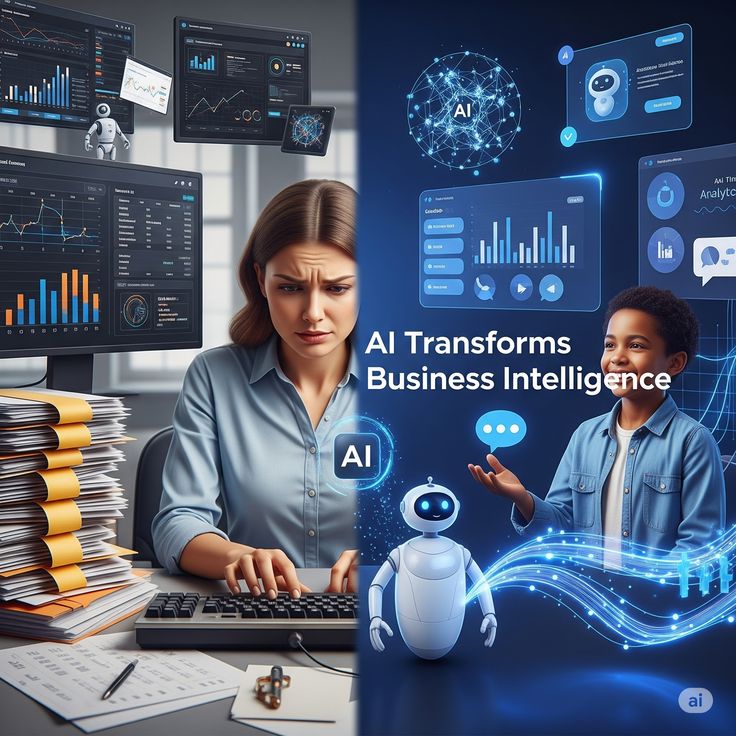
How AI Is Revolutionizing Business Intelligence and Analytics

Introduction In today’s digital economy, businesses generate massive amounts of data every second. From customer interactions and sales transactions to website activity and operational metrics, organizations have access to more information than ever before. However, collecting data alone is not enough. The real challenge lies in transforming that data into actionable insights that drive better business decisions. This is where Artificial Intelligence (AI) is changing the landscape of Business Intelligence (BI) and analytics. Traditional BI systems helped organizations analyze historical data and create reports. AI-powered BI takes this a step further by uncovering hidden patterns, predicting future outcomes, automating analysis, and providing real-time recommendations. As companies strive to remain competitive in rapidly changing markets, AI-driven business intelligence is becoming a critical tool for growth, efficiency, and innovation. What Is Business Intelligence? Business Intelligence refers to the technologies, processes, and strategies used to collect, analyze, and visualize business data. The primary goal of BI is to help organizations make informed decisions based on accurate information. Traditional BI solutions typically focus on: Data collection and storage Reporting and dashboards Performance monitoring Historical data analysis Trend identification While these capabilities remain valuable, modern businesses require deeper insights and faster decision-making. AI addresses these needs by enhancing the capabilities of conventional BI platforms. The Growing Role of AI in Business Intelligence Artificial Intelligence enables machines to analyze data, learn from patterns, and make predictions with minimal human intervention. When integrated with business intelligence systems, AI helps organizations move from descriptive analytics to predictive and prescriptive analytics. Instead of simply answering questions like: “What happened?” AI-powered systems can answer: “Why did it happen?” “What is likely to happen next?” “What actions should we take?” This shift allows businesses to become more proactive rather than reactive. Automated Data Analysis One of the biggest advantages of AI in business intelligence is automation. Traditional data analysis often requires teams of analysts to collect data, clean datasets, create reports, and identify trends manually. This process can take hours or even days. AI-powered analytics platforms can automate many of these tasks by: Cleaning and organizing data Detecting anomalies Identifying trends Generating reports Highlighting important insights Automation reduces human error and enables organizations to analyze larger volumes of data much faster. For example, a retail company can automatically monitor thousands of products and instantly identify unusual changes in sales patterns without requiring manual investigation. Predictive Analytics: Looking Into the Future Predictive analytics is one of the most impactful applications of AI in business intelligence. Using historical data and machine learning algorithms, AI can forecast future outcomes with impressive accuracy. Businesses use predictive analytics to: Forecast sales demand Predict customer behavior Estimate inventory requirements Identify market trends Reduce operational risks For instance, an e-commerce company can predict which products will experience increased demand during upcoming seasons and adjust inventory levels accordingly. This proactive approach helps organizations improve efficiency and reduce costs. Real-Time Decision Making Modern businesses operate in fast-moving environments where decisions often need to be made instantly. Traditional BI systems typically rely on periodic reports, which may already be outdated by the time they are reviewed. AI-driven analytics platforms continuously process incoming data and provide real-time insights. Benefits include: Faster response to market changes Improved customer service Immediate detection of operational issues Better financial monitoring Enhanced risk management For example, financial institutions can detect suspicious transactions in real time and prevent fraudulent activities before significant damage occurs. Enhanced Data Visualization Data visualization is a core component of business intelligence. AI is making dashboards smarter and easier to understand by automatically identifying key insights and presenting them in visually meaningful ways. Advanced BI tools can: Highlight critical trends automatically Generate dynamic charts and graphs Explain data patterns in plain language Customize dashboards for different users Instead of manually searching through hundreds of charts, decision-makers receive instant summaries of the most important business developments. This significantly improves productivity and decision quality. Natural Language Queries One of the most user-friendly innovations in AI-powered business intelligence is Natural Language Processing (NLP). NLP allows users to interact with BI systems using everyday language. Rather than writing complex database queries, users can simply ask questions such as: “What were our top-selling products last month?” “Why did sales decline in the northern region?” “Which customer segment generated the highest revenue?” The system then analyzes data and provides answers instantly. This capability makes data analysis accessible to employees without technical expertise, promoting a stronger data-driven culture throughout the organization. Improving Customer Insights Understanding customer behavior is essential for business success. AI-powered analytics helps organizations gain deeper insights into customer preferences, buying patterns, and engagement trends. Businesses can analyze: Purchase history Website interactions Social media activity Customer feedback Support requests By combining these data sources, AI creates a comprehensive customer profile that enables personalized experiences. Organizations can use these insights to: Improve marketing campaigns Increase customer retention Enhance product recommendations Deliver personalized services As a result, businesses can strengthen customer relationships and drive higher revenue. Fraud Detection and Risk Management Many industries face increasing challenges related to fraud and risk. AI significantly improves risk management by continuously monitoring transactions and identifying suspicious behavior. Machine learning algorithms can detect unusual patterns that may indicate: Financial fraud Cybersecurity threats Compliance violations Operational risks Unlike traditional rule-based systems, AI continuously learns and adapts to emerging threats. This capability helps organizations reduce financial losses and improve security. Supply Chain Optimization Supply chain management generates enormous amounts of operational data. AI-powered business intelligence solutions help companies optimize supply chains through advanced analytics and forecasting. Key benefits include: Demand prediction Inventory optimization Supplier performance monitoring Logistics planning Cost reduction For example, manufacturers can predict supply shortages before they occur and take preventive action to avoid production delays. This leads to greater efficiency and improved customer satisfaction. Personalized Business Strategies Every business operates under unique conditions and objectives. AI enables organizations to develop personalized strategies based on their specific data and performance metrics. Instead of relying solely on industry averages, companies can make decisions based on:

Artificial Intelligence, Digital Transformation, Educational Technology

Multimodal AI Explained: The Future of Human-Computer Interaction

Introduction Artificial Intelligence has evolved rapidly over the past decade, moving from simple rule-based systems to highly sophisticated models capable of understanding and generating human-like content. One of the most significant breakthroughs in recent years is the emergence of Multimodal AI, a technology that allows machines to process and understand multiple forms of data simultaneously, including text, images, audio, video, and even sensor inputs. Traditional AI systems typically specialize in a single type of input. For example, a chatbot processes text, while an image recognition system analyzes pictures. Multimodal AI changes this paradigm by combining different data types into a unified understanding. This advancement is paving the way for a new era of human-computer interaction where technology can communicate more naturally, understand context better, and provide richer experiences. As businesses, developers, and consumers increasingly adopt AI-powered tools, Multimodal AI is expected to become one of the defining technologies of the next decade. From virtual assistants and healthcare applications to autonomous vehicles and smart workplaces, its influence is already being felt across industries. What Is Multimodal AI? Multimodal AI refers to artificial intelligence systems that can process and interpret information from multiple sources or modalities simultaneously. These modalities include: Text Images Audio Video Sensor Data Gestures and Physical Inputs Humans naturally use multiple senses to understand the world. For example, during a conversation, we listen to words, observe facial expressions, and interpret body language at the same time. Multimodal AI aims to replicate this ability by integrating different forms of information into a single intelligent system. Instead of analyzing data in isolation, Multimodal AI combines various inputs to gain a deeper understanding of context and intent. This enables more accurate decision-making and more natural interactions between humans and machines. The Evolution of Human-Computer Interaction Human-computer interaction has undergone several major transformations over the years. Command-Line Interfaces Early computers relied on text-based commands. Users needed technical knowledge to communicate with machines effectively. Graphical User Interfaces The introduction of graphical interfaces made computers more accessible. Users could interact through windows, icons, and menus instead of memorizing commands. Touch-Based Interaction The rise of smartphones and tablets introduced touchscreens, making interaction more intuitive and mobile. Voice Assistants Virtual assistants brought voice recognition into mainstream technology, allowing users to perform tasks through spoken commands. Multimodal Interaction Today, AI systems are moving beyond single-input methods. Users can speak, type, upload images, share videos, and interact naturally with intelligent systems that understand all these inputs together. This shift represents one of the most significant changes in the history of computing. How Multimodal AI Works At its core, Multimodal AI combines information from different data sources and processes them through advanced machine learning models. The process generally involves several steps: Data Collection The AI gathers data from multiple sources such as text documents, images, microphones, cameras, and sensors. Data Processing Each data type undergoes specialized processing: Natural Language Processing for text Computer Vision for images and videos Speech Recognition for audio Sensor Analysis for environmental inputs Data Fusion The processed information is combined into a unified representation that allows the AI to understand relationships between different inputs. Contextual Understanding The AI analyzes the combined information to determine meaning, intent, and context. Response Generation Based on its understanding, the system generates an appropriate output, which could be text, speech, images, recommendations, or actions. This integrated approach enables more intelligent and context-aware interactions. Why Multimodal AI Is Important The significance of Multimodal AI lies in its ability to bridge the gap between human communication and machine understanding. Improved Accuracy Using multiple data sources reduces ambiguity and improves decision-making. For example, a voice command combined with visual context allows an AI assistant to better understand what a user is requesting. Better User Experiences Interactions become more natural because users can communicate in the way that feels most comfortable. Enhanced Context Awareness Multimodal systems understand situations more effectively by considering multiple signals simultaneously. Increased Accessibility People with different abilities can interact with technology using speech, images, gestures, or text. More Human-Like Communication By understanding various forms of input, AI systems can engage in conversations and interactions that closely resemble human communication. Key Technologies Powering Multimodal AI Several advanced technologies contribute to the development of multimodal systems. Natural Language Processing NLP enables machines to understand, interpret, and generate human language. Computer Vision Computer vision allows AI systems to analyze images, videos, objects, faces, and environments. Speech Recognition Speech technologies convert spoken language into machine-readable formats. Deep Learning Neural networks help identify complex patterns across multiple data types. Generative AI Models Modern generative models can create text, images, audio, and video content from various inputs. Large Language Models Advanced language models provide the reasoning and contextual understanding necessary for multimodal applications. Together, these technologies create AI systems capable of understanding and generating rich, multi-format content. Real-World Applications of Multimodal AI Healthcare Healthcare organizations are using Multimodal AI to analyze medical records, diagnostic images, laboratory reports, and physician notes simultaneously. Benefits include: Faster diagnosis Improved treatment planning Better patient monitoring Enhanced medical research Doctors can receive more comprehensive insights by combining information from multiple sources. Customer Service Businesses are implementing AI-powered support systems that understand: Customer messages Voice conversations Uploaded screenshots Product photos This allows customer service teams to resolve issues faster and improve customer satisfaction. Education Educational platforms use Multimodal AI to create personalized learning experiences. Students can: Ask questions verbally Submit handwritten assignments Upload images Receive customized explanations This makes learning more interactive and accessible. Autonomous Vehicles Self-driving vehicles rely heavily on multimodal intelligence. They combine information from: Cameras Radar systems LiDAR sensors GPS data Traffic information This comprehensive understanding helps vehicles navigate safely. Smart Assistants Next-generation AI assistants can process text, voice, images, and video simultaneously. Users may simply take a picture, ask a question, and receive an accurate response without needing to provide detailed descriptions. Retail and E-Commerce Retailers use Multimodal AI for: Visual product searches Personalized recommendations Inventory management Customer behavior analysis Shoppers can upload images of products they like

Artificial Intelligence, Software development, Technology & Innovation

Green AI: Making Artificial Intelligence More Sustainable

Green AI: Making Artificial Intelligence More Sustainable Artificial Intelligence (AI) has become one of the most transformative technologies of the modern era. From powering virtual assistants and recommendation systems to driving autonomous vehicles and advanced medical diagnostics, AI is changing the way individuals, businesses, and governments operate. However, as AI systems become more powerful and widespread, concerns about their environmental impact are growing. Training and operating large AI models require significant computing power, which in turn consumes vast amounts of electricity. Data centers housing AI infrastructure operate around the clock, contributing to energy consumption and carbon emissions. As organizations increasingly adopt AI solutions, the need for sustainable practices has become more important than ever. This is where Green AI comes into the picture. Green AI focuses on developing, deploying, and maintaining artificial intelligence systems in ways that minimize environmental impact while maximizing efficiency. It represents a growing movement within the technology industry aimed at balancing innovation with sustainability. What Is Green AI? Green AI refers to the practice of designing artificial intelligence systems that prioritize energy efficiency, resource optimization, and environmental sustainability. Unlike traditional AI development, which often focuses solely on achieving higher performance and accuracy, Green AI also considers the environmental costs associated with training and running AI models. The concept encourages researchers and organizations to measure not only the effectiveness of AI systems but also the resources required to build and operate them. This includes factors such as electricity consumption, carbon emissions, hardware utilization, and computational efficiency. Green AI promotes the idea that technological progress should not come at the expense of the environment. Instead, innovation should be aligned with sustainable development goals. Why Sustainability Matters in AI Artificial intelligence models are becoming increasingly complex. Modern generative AI systems often require enormous datasets and thousands of powerful processors to train effectively. Training a single large-scale AI model can consume as much electricity as hundreds of households use over several months. As AI adoption accelerates across industries, energy demand is expected to rise significantly. Without sustainable practices, the environmental footprint of AI could become a major concern. Several factors highlight the importance of sustainability in AI: Rising Energy Consumption AI workloads demand substantial computing resources. Large language models, image generation systems, and deep learning networks require extensive processing power that translates directly into increased energy usage. Growing Data Center Footprint Data centers serve as the backbone of AI infrastructure. These facilities consume massive amounts of electricity for both computing and cooling systems. As AI applications expand, data center energy requirements continue to increase. Carbon Emissions In regions where electricity is generated from fossil fuels, AI operations contribute to greenhouse gas emissions. Reducing these emissions is critical to achieving global climate goals. Resource Utilization Manufacturing AI hardware such as GPUs and specialized chips requires valuable natural resources. Sustainable AI practices help maximize the lifespan and efficiency of these technologies. The Evolution of Green AI The discussion around Green AI gained momentum as researchers began examining the environmental costs of training increasingly large machine learning models. While advancements in AI delivered impressive results, many experts questioned whether the pursuit of marginal performance improvements justified the significant increase in computational requirements. As awareness grew, researchers started advocating for greater transparency regarding the energy consumption and carbon footprint of AI systems. This shift encouraged organizations to consider efficiency as a key performance metric alongside accuracy. Today, Green AI has evolved into a broader movement that includes sustainable infrastructure, energy-efficient algorithms, responsible hardware design, and environmentally conscious deployment strategies. Key Principles of Green AI Energy Efficiency One of the primary goals of Green AI is reducing the amount of energy required to train and operate AI models. Developers achieve this through optimized algorithms, efficient architectures, and improved hardware utilization. Resource Optimization Green AI encourages maximizing the use of existing computational resources. Instead of constantly scaling infrastructure, organizations focus on improving efficiency and eliminating waste. Transparency Researchers are increasingly reporting computational costs alongside model performance metrics. This transparency helps stakeholders make informed decisions about AI development practices. Sustainable Infrastructure Green AI supports the use of renewable energy sources, efficient cooling systems, and environmentally friendly data center designs. Long-Term Environmental Responsibility The movement promotes balancing technological innovation with ecological responsibility, ensuring that future AI advancements remain sustainable. How Green AI Reduces Environmental Impact Efficient Model Design Developers are creating AI architectures that achieve comparable results with fewer parameters and lower computational requirements. Smaller and more efficient models consume less energy during both training and inference. Model Compression Techniques Techniques such as pruning, quantization, and knowledge distillation help reduce model size while maintaining performance. These methods decrease computational demands and energy consumption. Transfer Learning Rather than training models from scratch, transfer learning allows developers to build upon existing pre-trained models. This significantly reduces training time and resource requirements. Optimized Training Processes Advanced training strategies improve efficiency by reducing unnecessary computations. Better scheduling and workload management contribute to lower energy usage. Edge Computing Running AI applications closer to users through edge devices reduces the need for constant communication with centralized data centers. This can lower network energy consumption and improve efficiency. The Role of Renewable Energy in Green AI Renewable energy plays a crucial role in making AI more sustainable. Many technology companies are investing heavily in solar, wind, and hydroelectric power to support their AI operations. By powering data centers with renewable energy, organizations can significantly reduce the carbon footprint associated with AI workloads. Some companies are even designing data centers in locations where renewable energy resources are abundant. The integration of clean energy sources allows AI innovation to continue while minimizing environmental impact. Green Data Centers: The Foundation of Sustainable AI Data centers are at the heart of modern AI systems. Making these facilities more sustainable is essential for achieving Green AI objectives. Energy-Efficient Cooling Cooling systems often account for a significant portion of data center energy consumption. Modern facilities use advanced cooling technologies, including liquid cooling and intelligent climate control systems. Smart Energy Management

Artificial Intelligence, Educational Technology

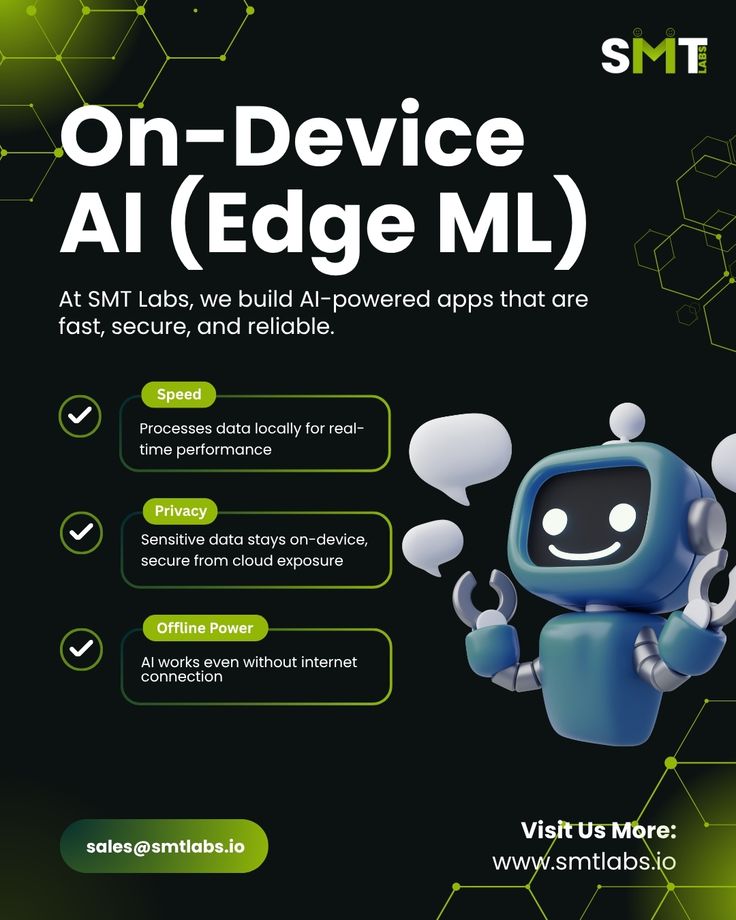
How Edge AI Is Powering the Next Generation of Smart Devices

How Edge AI Is Powering the Next Generation of Smart Devices Artificial Intelligence has become one of the most influential technologies of the modern digital era. Over the past few years, AI applications have evolved from cloud-based systems to more efficient and responsive solutions capable of operating directly on devices. This shift has given rise to Edge AI, a transformative technology that is changing the way smart devices function and interact with users. From smartphones and smart speakers to industrial robots and healthcare monitoring systems, Edge AI is enabling devices to process information locally instead of relying entirely on remote cloud servers. This approach is making devices faster, smarter, more secure, and capable of delivering real-time experiences that were previously difficult to achieve. As businesses and consumers continue to demand intelligent technologies that provide instant responses while protecting sensitive data, Edge AI is emerging as a critical component of next-generation smart devices. Understanding how this technology works and why it matters can help organizations and individuals prepare for the future of connected technology. What Is Edge AI? Edge AI refers to the deployment of artificial intelligence algorithms directly on hardware devices located at the “edge” of a network. Instead of sending data to cloud data centers for processing, the device itself performs AI computations locally. The term “edge” refers to devices positioned close to where data is generated. Examples include: Smartphones Smart cameras Smartwatches Industrial sensors Autonomous vehicles Medical devices Smart home appliances Retail monitoring systems By integrating AI capabilities directly into these devices, organizations can significantly reduce the need for constant cloud communication while improving performance and responsiveness. For example, when a smartphone uses facial recognition to unlock instantly, much of the processing happens directly on the device rather than being sent to a remote server. This local processing is a practical example of Edge AI in action. Why Edge AI Is Gaining Momentum Several technological developments are driving the rapid adoption of Edge AI across industries. The growth of Internet of Things (IoT) devices has resulted in billions of connected systems generating enormous amounts of data every day. Sending all this information to centralized cloud environments can create bandwidth limitations, increase costs, and introduce delays. At the same time, consumers have become more concerned about privacy and data security. Organizations are looking for ways to process information without exposing sensitive data to external servers. Advancements in AI chips, neural processing units (NPUs), and specialized hardware accelerators have also made it possible to run sophisticated AI models on compact devices with limited power consumption. These factors have created the ideal environment for Edge AI to flourish. How Edge AI Works Edge AI combines machine learning models with specialized hardware capable of performing complex calculations efficiently. The process generally follows these steps: Data Collection Sensors, cameras, microphones, and connected components collect information from the surrounding environment. Local Processing The device processes the data using embedded AI models. Instead of transmitting raw data to a cloud server, the analysis occurs locally. Decision Making Based on the processed information, the AI model makes decisions or predictions in real time. Action Execution The device performs the necessary action immediately, such as sending alerts, adjusting settings, recognizing objects, or responding to voice commands. Optional Cloud Synchronization Some devices periodically connect to cloud platforms for updates, training improvements, or data backups while keeping most real-time operations local. This architecture dramatically improves efficiency while reducing dependency on internet connectivity. Key Benefits of Edge AI The increasing popularity of Edge AI is largely driven by the advantages it offers over traditional cloud-based AI systems. Faster Response Times One of the biggest advantages of Edge AI is reduced latency. When data must travel to a cloud server and back, delays can occur. In applications such as autonomous vehicles or industrial automation, even a few milliseconds can be critical. By processing data directly on the device, Edge AI delivers immediate responses that improve user experiences and operational efficiency. Enhanced Privacy and Security Data privacy has become a major concern for businesses and consumers. Edge AI helps address these concerns by keeping sensitive information on the device rather than transmitting it across networks. For example: Medical devices can analyze patient data locally. Security cameras can identify threats without storing footage in the cloud. Smartphones can process biometric information without external servers. This approach reduces exposure to cyber threats and helps organizations comply with data protection regulations. Reduced Bandwidth Usage Transmitting large amounts of data to cloud platforms requires significant network resources. Edge AI minimizes bandwidth consumption because only relevant insights or summarized information need to be transmitted. This capability is particularly valuable in remote environments where network connectivity may be limited or expensive. Improved Reliability Many smart devices operate in environments where internet connectivity is inconsistent. Since Edge AI functions locally, devices can continue working even when network access is unavailable. This reliability is essential for industries such as manufacturing, transportation, healthcare, and defense. Lower Operational Costs Cloud computing costs can increase rapidly as organizations process larger volumes of data. By performing AI tasks at the edge, companies can reduce cloud storage, bandwidth expenses, and server processing requirements. This cost efficiency makes AI deployment more accessible for businesses of all sizes. Edge AI in Smartphones Modern smartphones are among the most common examples of Edge AI. Manufacturers increasingly incorporate AI accelerators that enable advanced features such as: Facial recognition Voice assistants Real-time translation Photography enhancement Predictive text suggestions Battery optimization Spam call detection Because these capabilities run directly on the device, users experience faster performance while maintaining greater privacy. The latest generation of smartphones continues to demonstrate how Edge AI can improve everyday digital experiences without relying heavily on cloud infrastructure. Smart Homes Powered by Edge AI The smart home ecosystem is rapidly evolving thanks to Edge AI technologies. Smart devices can now make intelligent decisions locally rather than waiting for cloud instructions. Examples include: Smart Security Systems AI-powered cameras can detect suspicious activities, recognize faces, and differentiate between

Artificial Intelligence, cybersecurity, Technology

The Future of Cybersecurity in the Age of Generative AI

The Future of Cybersecurity in the Age of Generative AI The cybersecurity landscape is undergoing a dramatic transformation. As organizations continue to embrace digital technologies, cloud computing, remote work, and interconnected systems, cyber threats are becoming increasingly sophisticated. At the same time, a new technological revolution is reshaping how businesses defend themselves against these threats: Generative Artificial Intelligence (Generative AI). Generative AI has rapidly evolved from a fascinating innovation into a powerful business tool capable of creating content, analyzing data, automating processes, and assisting with complex decision-making. While much of the public attention has focused on AI-generated text, images, and videos, one of its most significant impacts is emerging in the field of cybersecurity. Generative AI is creating both opportunities and challenges. On one hand, it enables organizations to detect threats faster, automate security operations, and strengthen defenses against cybercriminals. On the other hand, malicious actors are leveraging the same technology to launch more convincing phishing attacks, develop advanced malware, and exploit vulnerabilities at unprecedented speeds. As businesses prepare for the future, understanding the relationship between generative AI and cybersecurity has become essential. The future of digital security will be defined by how effectively organizations can harness AI while managing the risks it introduces. Understanding Generative AI in Cybersecurity Generative AI refers to artificial intelligence systems capable of creating new content, generating responses, producing code, and learning patterns from massive datasets. Unlike traditional AI systems that primarily analyze information, generative AI can actively create solutions, recommendations, and predictions based on its training. In cybersecurity, this capability opens new possibilities for threat detection, incident response, vulnerability management, and security automation. AI systems can analyze vast amounts of security data, identify suspicious activities, and provide actionable insights in real time. Security teams are increasingly overwhelmed by the volume of alerts generated by modern networks. Generative AI helps reduce this burden by filtering irrelevant alerts, prioritizing threats, and assisting analysts in understanding complex attack patterns. This shift allows security professionals to focus on strategic decision-making rather than spending valuable time on repetitive tasks. The Growing Complexity of Cyber Threats Cybercriminals continue to evolve their methods as organizations strengthen their defenses. Traditional cybersecurity approaches often struggle to keep pace with the scale and speed of modern attacks. Attack surfaces have expanded significantly due to cloud adoption, Internet of Things (IoT) devices, remote work environments, and digital transformation initiatives. Every connected device and application introduces potential vulnerabilities that attackers can exploit. Modern threats include: Advanced phishing campaigns Ransomware attacks Supply chain compromises Zero-day vulnerabilities Insider threats Credential theft Social engineering attacks The increasing sophistication of these threats requires equally advanced defense mechanisms. Generative AI provides organizations with the ability to analyze complex environments continuously and identify emerging risks before they become major incidents. AI-Powered Threat Detection and Prevention One of the most promising applications of generative AI in cybersecurity is threat detection. Traditional security systems often rely on predefined rules and known attack signatures. While effective against familiar threats, these systems may struggle to identify new or evolving attack techniques. Generative AI can analyze patterns across networks, endpoints, user behavior, and application activity to detect anomalies that may indicate malicious activity. For example, if an employee suddenly accesses sensitive data from an unusual location or begins transferring large volumes of information, AI systems can recognize the abnormal behavior and trigger alerts. The benefits include: Faster threat identification Reduced false positives Improved accuracy Real-time monitoring Continuous learning capabilities By identifying threats earlier in the attack lifecycle, organizations can minimize damage and reduce recovery costs. Automating Security Operations Security operations centers (SOCs) face significant challenges due to staffing shortages and increasing workloads. Many organizations struggle to hire enough cybersecurity professionals to manage growing security demands. Generative AI can help bridge this gap by automating routine tasks and supporting security teams. AI-driven automation can assist with: Log analysis Incident classification Threat intelligence gathering Vulnerability assessment Security reporting Compliance monitoring Instead of manually reviewing thousands of alerts each day, analysts can rely on AI-powered systems to summarize incidents, recommend actions, and prioritize critical threats. This automation improves efficiency while enabling security teams to respond more quickly to potential attacks. The Role of Generative AI in Incident Response When a cyberattack occurs, rapid response is critical. Every minute of delay can increase financial losses, operational disruptions, and reputational damage. Generative AI can significantly accelerate incident response processes. AI systems can analyze attack data, identify affected systems, determine the likely attack path, and generate recommended remediation steps. Security teams can use AI-generated insights to: Investigate incidents faster Contain threats more effectively Reduce downtime Improve recovery processes Document incidents automatically As AI technologies continue to mature, organizations may increasingly rely on autonomous response systems capable of taking immediate defensive actions without human intervention. Predictive Cybersecurity and Risk Assessment One of the most exciting developments in AI-driven security is predictive threat analysis. Rather than simply reacting to attacks after they occur, organizations can use generative AI to anticipate future threats. By analyzing historical attack data, vulnerability trends, industry intelligence, and global threat activity, AI systems can identify potential risks before they are exploited. Predictive cybersecurity enables businesses to: Prioritize security investments Patch vulnerabilities proactively Strengthen high-risk systems Improve risk management strategies Reduce attack exposure This proactive approach represents a significant shift from traditional reactive security models. How Cybercriminals Are Using Generative AI While generative AI offers powerful defensive capabilities, it also provides new tools for cybercriminals. Attackers are increasingly using AI technologies to enhance their operations and improve attack success rates. Some malicious applications include: AI-Generated Phishing Attacks Traditional phishing emails often contain grammatical errors and suspicious language. Generative AI can produce highly convincing messages that closely resemble legitimate communications. These personalized attacks can be tailored to specific individuals, making them significantly harder to detect. Advanced Social Engineering AI can generate realistic conversations, fake identities, and persuasive messages designed to manipulate victims into revealing sensitive information. Automated Malware Development Cybercriminals may use AI-assisted coding tools to create malware variants more quickly and

How would you like me to respond?

Select a personality for your AI assistant

Normal
Happy
Sad
Angry

Your selection will affect how the AI assistant responds to your messages

Chat Assistant

Let's discuss your project!

Hear from our clients and why 3000+ businesses trust TechOTD

Tell us what you need, and we'll get back with a cost and timeline estimate

Scroll to Top