
Technology

Technology, Technology & Innovation

WebAssembly (Wasm): Bringing Desktop Power to the Browser

Introduction For the longest time, the web had a bit of a “speed limit.” If you wanted to build something massive—like a professional video editor, a high-end 3D game, or a complex physics engine—you didn’t even consider the browser. You built a desktop app. The browser was reserved for documents, social feeds, and cat videos. Don’t get me wrong, JavaScript is incredible, but it simply wasn’t designed to crunch heavy numbers at lightning speed. Then came WebAssembly (Wasm), and suddenly, the ceiling for what we can build on the web vanished. What is WebAssembly, really? If JavaScript is the flexible, friendly linguist of the web, WebAssembly is the high-performance athlete. One of the biggest misconceptions is that Wasm is here to kill off JavaScript. It’s actually the opposite—they’re teammates. Wasm is a binary format that lets code written in “heavyweight” languages like C++, Rust, and Go run in the browser at near-native speeds. To put it simply: JavaScript has to be parsed and compiled by the browser before it can actually do anything. Wasm, on the other hand, arrives “pre-shrunk” and ready to execute. It’s like the difference between buying IKEA furniture and having to assemble it yourself (JavaScript) versus having a fully built sofa delivered that’s ready to sit on the second it enters your house (Wasm). How Does the Magic Happen? (The Wasm Workflow) You might be wondering: “If I’m a web developer, do I need to go out and learn C++ tomorrow?” Not necessarily. The beauty of WebAssembly is in the ecosystem. The typical workflow looks like this: Write (or find) high-performance code in a language like Rust or C++. Compile that code into a .wasm file using tools like Emscripten or the Rust wasm-pack. Import the .wasm file into your standard JavaScript file. Call those functions just like you would with any other JS library. It allows you to keep your favorite React or Vue frontend while outsourcing the “math-heavy” parts to a specialized Wasm module. Real-World Wins: Wasm in Action If you think you haven’t used Wasm yet, you’d be surprised. It’s already powering some of the most popular tools on the internet: Google Earth: By switching to Wasm, Google was able to bring the full 3D experience of Earth to the web without requiring a massive standalone download. Discord: They used Wasm to optimize their “Go Live” streaming feature, ensuring that video encoding didn’t tank your computer’s performance while gaming. eBay: They implemented a Wasm-based barcode scanner in their mobile web app, making it just as fast as their native app version. Is JavaScript Going Away? Short answer: No. JavaScript is still the king of the DOM (the structure of your webpage). Trying to use Wasm to change the color of a button is like using a rocket engine to power a lawnmower—it’s overkill. JavaScript will continue to handle user interactions and UI logic, while Wasm steps in when you need to process a 4K video or run a complex physics simulation in real-time. Why this is a game-changer in 2026 We’ve officially entered the “Browser-First” era. Most of us have realized that users are tired of downloading .exe or .dmg files. They want to click a link and get to work instantly. Here is why Wasm is the engine driving that shift: The Migration of Giants: Look at tools like Adobe Photoshop or Figma. These aren’t just “websites”—they are full-scale desktop applications living inside a Chrome tab. Wasm is the only reason they feel as smooth as they do. Privacy-First Performance: With Wasm, we can run heavy AI models or real-time encryption directly on your device. This isn’t just about speed; it’s about security. Your data doesn’t have to travel to a server and back just to perform a calculation. Dusting Off Old Code: You can take a powerful C++ library written twenty years ago and drop it into a modern web app. You don’t have to spend months rewriting it in JavaScript. You just “compile” it for the web and move on. The JavaScript + Wasm Duo The real magic happens when you stop trying to choose between them. The best modern apps use JavaScript for the “face”—the buttons, the menus, and the general UI—while WebAssembly handles the “brains”—the heavy image processing or data crunching happening in the background. It’s a partnership that gives us the reach of the web with the raw power of a desktop. The Web Has No Limits We are moving toward a future where the browser is the only “operating system” that truly matters for the average user. WebAssembly has removed the “performance tax” we used to pay for the sake of portability. Whether you’re a developer trying to fix a laggy app or a business owner wanting to offer a premium experience without the friction of a download, Wasm is the bridge to that future. The desktop power is already here; it’s just waiting for you to hit “refresh.” Beyond the Screen: How AI Deepfakes Are Rewriting the Cybersecurity Rulebook in 2026

cybersecurity, Data Privacy & Security, Digital Transformation, enterprise, Software development, Technology

Beyond the Firewall: Securing the Software Supply Chain in 2026

Beyond the Firewall: Securing the Software Supply Chain in 2026 For decades, cybersecurity was defined by the “castle and moat” analogy. If you built a strong enough firewall, your data was safe. However, as we move through 2026, the perimeter has completely dissolved. Modern software is no longer a monolithic block of custom code; it is a sprawling web of open-source dependencies, third-party APIs, and AI-generated snippets. The greatest threat to the tech sector today isn’t a hacker “breaking in” through your front door—it’s a vulnerability “walking in” through your supplier’s back door. Welcome to the era of Software Supply Chain Integrity. The New Attack Vector: Upstream Compromise In 2026, attackers have pivoted their focus “upstream.” Instead of targeting a single enterprise, they target the libraries and tools that thousands of enterprises use. By compromising a popular open-source package or a widely used CI/CD tool, a single exploit can cascade through the global tech ecosystem. The data is clear: supply chain attacks have quadrupled over the last few years. Whether it is a malicious “dependency confusion” attack or a compromised GitHub Action, the goal is the same: to inject malicious code into a trusted environment before it ever reaches production. The Three Pillars of Modern Supply Chain Security At TechOTD, we’ve identified three critical strategies that every development team must adopt in 2026 to remain resilient. 1. The SBOM Mandate (Software Bill of Materials) Think of an SBOM as the “nutrition label” for your software. It is a formal, machine-readable record of every library, module, and dependency used to build an application. In 2026, providing an SBOM is no longer a “nice-to-have”; it is a regulatory requirement for many enterprise contracts. By maintaining a real-time SBOM, security teams can respond to new vulnerabilities (CVEs) in seconds rather than days. If a critical flaw is found in a minor utility library, an SBOM tells you exactly which of your products are affected and where they are deployed. 2. Guarding AI-Generated Code The rise of “Vibe Coding” and AI agents has introduced a new type of risk: AI-generated security debt. AI models are designed to be helpful, but they lack context and judgment. They may suggest code that is functional but uses outdated, insecure encryption or references deprecated libraries. Securing the supply chain in 2026 means implementing Automated AI Guardrails. Every line of code suggested by an AI must pass through an automated “security lens”—AI-powered SAST (Static Application Security Testing) tools that scan for logic flaws and insecure patterns in real-time within the developer’s IDE. 3. Identity-First Security and Non-Human Identities (NHIs) The “login” is the new break-in point. As we move toward Agentic AI and automated microservices, the number of “Non-Human Identities”—API keys, service accounts, and tokens—has exploded. Attackers in 2026 are increasingly targeting these machine identities because they are often over-privileged and rarely rotated. A robust security posture now requires Continuous Adaptive Authentication, where every request—whether from a human or an AI agent—is verified based on real-time risk signals like geolocation, device health, and behavioral patterns. From Prevention to “Durable Resilience” The hard truth of 2026 is that 100% prevention is impossible. The focus has shifted from “How do we stop every attack?” to “How quickly can we recover when a dependency is compromised?” This is the concept of Durable Resilience. It involves: Chaos Engineering for Security: Purposely “breaking” a dependency in a sandbox to see how the system fails. Crypto-Agility: Building architecture that allows you to swap out compromised encryption algorithms without rebuilding the entire app. Rapid Patching Protocols: Mandating that high-severity vulnerabilities in third-party code must be patched within 24 hours of discovery. Conclusion: The Developer’s New Mandate Cybersecurity is no longer a “department”—it is a core feature of high-quality software development. In the tech sector of 2026, the most successful companies will be those that treat their software supply chain with the same scrutiny they apply to their own internal code. AI-Native Architecture

IT automation dashboard India 2026 showing $315B revenue growth, AI robots, Delhi skyline, talent gap solution - why automation next big thing
Technology

Why Automation is the Next Big Thing in IT Industry

Introduction India’s IT exports cross $300B in FY26, fueling 8% GDP growth, yet 1.5M skilled talent gap threatens the $500B 2030 target. Rising developer salaries (₹25L avg in Delhi/Bengaluru), client SLAs demanding 40% faster delivery, and 12% YoY infra costs make IT automation non-negotiable. Manual ops cost ₹25L/employee/year in lost productivity. Automation—RPA, AI/ML orchestration, hyperautomation, DevOps pipelines—delivers 20-40% cost cuts, 66% productivity, 4x process speed. 2026 Stats: 90% enterprise apps AI-integrated 71% GenAI adoption (33%→71%), 50% major ROI 88% hybrid/multi-cloud needs orchestration Hyperautomation: 80% ROI in 12mo India’s IT industry surges to $315 billion revenues in FY26 (6.1% YoY growth), with exports at $246 billion and AI services $10-12 billion, per Nasscom. Yet 82% employers face talent shortage (global avg 72%)—AI skills top the list. Developer costs rise 12% YoY (avg ₹25L Delhi/Bengaluru), clients demand 40% faster delivery. IT automation—AI/ML-driven RPA, DevOps pipelines, hyperautomation orchestration—explodes from niche (10% adoption) to necessity (71% GenAI uptake). The Crunch Explained: 1.5M+ talent gap: Senior AI engineers, data scientists scarce; attrition 25% Ops inefficiency: Manual deployments take weeks vs hours; errors 5-8% Client SLAs: BFSI, manufacturing need 99.9% uptime, zero-downtime deploys Infra explosion: 88% hybrid cloud → orchestration chaos Proof Points: Hyperautomation ROI: 72% firms >200% returns in 18mo; 30-50% cost cuts BigBasket: RPA procurement → ₹30cr saved (6mo), 15 FTEs freed 90% apps AI-integrated by 2026 Delhi IT Reality: From Connaught Place startups to Gurgaon MNCs, manual ops bleed ₹25L/employee/year. Automation scales output 4x without headcount bloat, fueling Nasscom’s $500B 2030 vision. This 2200+ word guide details 10 reasons, India cases (TCS, BigBasket), 2026 trends (agentic AI, trust frameworks), ₹50L ROI roadmap. 20-25% ops savings Year 1, scaling to 40%+. Hyperautomation: 30-50% process costs. BigBasket Deep Dive: 2000+ suppliers, manual PO matching (15 days) → Zoho RPA: Instant matching, shortage prediction, auto-reorder. ₹30cr ($3.5M) saved, errors 8%→0.1%, FTEs redeployed to analytics. TCS/HDFC Parallel: AI chatbots cut service 25%, CSAT +10%. American Express: $500K revenue lift via planning AI. 1. Massive Cost Reduction AI automation slashes 20-25% ops costs Year 1, 40%+ via ML optimization. Hyperautomation: 30-50% process costs down. BigBasket Case: Automated procurement with Zoho Creator → ₹30 crore ($3.5M) saved in 6 months. Manual vendor matching (2000+ suppliers) took 15 FTEs; RPA scans POs, predicts shortages, auto-reorders—errors from 8% to 0.1%. American Express Parallel: AI chatbots cut service costs 25%, CSAT +10%. Indian banks (HDFC, ICICI) mirror: 35% call center reduction. Delhi MSP: ₹45L manual ops → ₹32L automated (RPA pipelines). Savings fund 30% headcount upskill to AI engineers. Why It Works: RPA handles 43% repetitive tasks (invoicing, compliance); GenAI predicts failures pre-downtime. 2. Hyper Productivity Gains 66% employee output boost, 3-5 hours/week saved. 4x faster execution, 25% productivity. Bengaluru DevOps Firm: CI/CD automation → deployments 40x faster (weekly→hourly). GenAI code gen: 30% dev speed-up, focus shifts to architecture. Siemens Case: Production planning AI → 15% time cut, 12% costs down, 99.5% on-time delivery. TCS India: Similar for client infra—saved 500 dev-hours/month on email triage/task routing. Real Impact: Developers escape “firefighting”—70% error reduction. One engineer automates 5 FTEs worth of tickets. Trends Visualization Caption: Glowing AI hand signals intelligent IT automation trends 2026 3. AI/ML Intelligence Era 61% ML in automation, 50% enterprises AI-orchestrated (10%→50%). Agentic AI: Self-healing clouds, auto-scaling. Devoted Guardians Home Care: Automated caregiver dashboards → 0 manual follow-ups, 100% accurate weekly points for 800 staff. Workload calling/texting cut 100%. India PLI Electronics: Exports +47% Q1 FY26 via robotic precision. AutomationEdge RPA: Global firms (Indian ops) eliminate manual staffing chases. Predictive Power: AI forecasts server failures 72 hours ahead—downtime from 4% to 0.2%. 4. Hybrid Orchestration Mastery 89% multi-platform chaos; 93% centralize for 200+ users. 50% invest WLA/SOAP 2026. Resolve.io Incident Resolution: Automate triage/remediation → MTTR from hours to minutes, ROI immediate via zero downtime. Geeks Solutions AI DevOps: Kubernetes 100s microservices—AI predicts failures, auto-remediates, optimizes cloud costs 25%. Frugalhacks Manufacturing: IIoT robotics → throughput +45% [ parallel]. 5. Workflow Revolution Hyperautomation: 72% >200% ROI in 18mo. Small AI agents over mega-RPA. Healthcare: 55% wait times cut. Acme Mfg: 30% on-time delivery → $500K revenue (+5%). Camunda Insight: End-to-end orchestration scales sales 40% uplift. 6. Innovation Unleashed Repetitive automated = humans create. India’s 1.5M gap: Upskill to AI/robotics. Electronics Boom: Micrometre assembly robots enable chip self-reliance. 7. Client Delight Reliability + speed = 30% retention. ITSM self-service: 60% tickets gone. 8. Zero-Risk Compliance AI audits 100% accurate. MFT 90% unified. 9. India Global Lead PLI + automation = $500B IT by 2030. Manufacturing 45% throughput. 10. Infinite Scale 10x output, no headcount. Trust frameworks key 2026. Delhi Phase 1 (Weeks 1-4, ₹10L): RPA pilots (invoicing, tickets)—BigBasket-style 30% savings. Phase 2 (Months 2-3, ₹25L): DevOps AI pipelines, cloud orchestration. Phase 3 (Months 4-6): Hyperautomation full workflows. Metrics: 35% costs down, 66% productivity, 80% ROI 12mo. Tools: UiPath, AutomationEdge, Zoho Creator (India-proven). Conclusion IT automation powers India’s $500B future—₹30cr BigBasket savings prove it. 80% ROI Year 1, scale without limits. Pilot RPA today—transform manual drag to AI rocket. Download: Free IT Automation Toolkit—cases, ROI calculator, vendors. FAQ Q: SMBs afford? A: ₹10L pilots → 6mo ROI. Free tools like UiPath Community. Q: Jobs lost? A: 1.5M gap filled by upskilling—focus high-value. Q: India ready? A: Yes—PLI, talent pool exploding. Q: Risks? A: Start small, assign owners, clean data first.

Technology

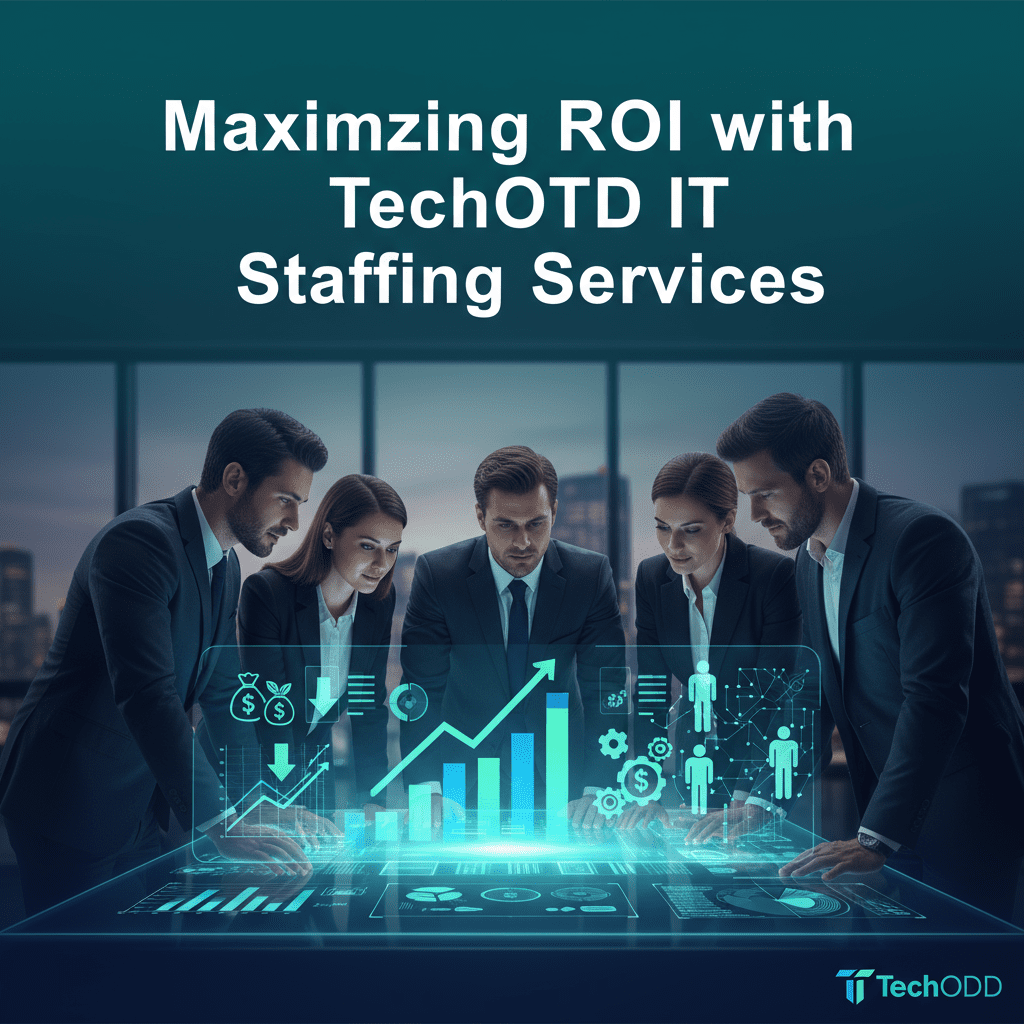
Maximizing ROI with TechOTD IT Staffing Services

Introduction In today’s fast-paced digital landscape, the right IT talent is critical for business success. However, finding, hiring, and retaining skilled professionals is both resource-intensive and expensive. TechOTD IT Staffing Services offer a proven approach to building agile, high-performing tech teams while optimizing costs and maximizing return on investment (ROI). The Value of IT Staffing Services 1. Reduced Hiring Costs TechOTD streamlines the recruitment process, from sourcing and screening to onboarding, reducing internal HR overhead and associated expenses. Their expertise cuts down on recruitment advertising, lengthy interview processes, and credential checks—helping companies allocate resources toward growth initiatives instead. 2. Access to Specialized Talent Pools TechOTD has extensive networks of qualified IT professionals across various domains and technologies. Businesses benefit from rapid access to candidates in high-demand fields such as cloud computing, AI, cybersecurity, and software development, minimizing the time and cost of talent acquisition. 3. Faster Time-to-Hire Speed is vital for maintaining project momentum. TechOTD leverages experienced recruiters and smart technology to present pre-vetted candidates quickly, reducing time-to-hire and supporting business productivity and client delivery deadlines. 4. Enhanced Flexibility and Scalability TechOTD’s flexible staffing solutions—contract, temporary, contract-to-hire, and permanent—allow organizations to adapt workforce size as project requirements change, retaining budget control and operational agility. 5. Improved Quality of Hire Specialized IT recruitment teams use rigorous screening, technical assessments, and culture-fit evaluations to deliver high-caliber professionals primed for success. Quality hires drive project performance and reduce turnover rates, saving costs in the long run. 6. Cost Optimization Strategies TechOTD enables cost-effective solutions such as staff augmentation, remote talent integration, and contract-based assignments, which minimize long-term commitments and overhead while delivering project-specific expertise. 7. Focus on Core Business Functions By handing recruitment and staff management to TechOTD, internal teams focus on strategic business goals, innovation, and client delivery, further enhancing operational ROI. Strategies to Maximize ROI Define clear project goals and role requirements for targeted hires. Leverage data analytics to optimize recruitment and workforce management. Build lasting partnerships for rapid, reliable placements. Prioritize soft skills as well as technical abilities for long-term success. Use integrated staffing software to reduce admin time and enhance candidate engagement. Conclusion TechOTD IT Staffing Services deliver measurable ROI through reduced hiring costs, faster placements, higher quality hires, and flexible workforce solutions. With their deep expertise, scalable model, and commitment to client success, businesses can leverage TechOTD to accelerate digital transformation, drive innovation, and achieve superior growth. Would you like detailed ROI calculation examples, case studies, or info on emerging trends in IT staffing?

Technology

Website Maintenance Cost in India 2025: Comprehensive Guide

Introduction In 2025, website maintenance has moved from a mere afterthought to a strategic necessity for Indian businesses of all sizes. A well-maintained website ensures security, speed, customer trust, and compliance with ever-evolving technology and SEO standards. India’s cost advantage still holds, but expectations for quality, AI-enabled monitoring, and proactive optimization have never been higher. This blog covers everything you need to know about website maintenance costs in India for 2025, from basic pricing to the latest trends and budgeting tips. For expert AI-driven support, check out TechOTD’s AI Solutions and their in-depth technology blog. Why Website Maintenance Matters in 2025 Security: Protect customer data and prevent cyber-attacks. Performance: Ensure fast load times, uptime, and modern user experience. SEO Health: Maintain rankings via updates and performance optimization. Compliance: Stay updated for privacy laws (GDPR, IT Act) and web accessibility. Brand Trust: Regular content, error-free navigation, and technical reliability. Key Components of Website Maintenance Component Typical Cost (Monthly) Description Domain Renewal ₹75 – ₹200 Annual payment for domain ownership Hosting ₹125 – ₹8,000+ Shared, VPS, or dedicated, based on traffic SSL Certificate ₹0 – ₹10,000 Security certificate, some hostings provide free CMS & Plugin Updates ₹500 – ₹3,000 WordPress, custom CMS, extensions/plugins update Backups ₹250 – ₹1,000 Automated regular backups Content Updates ₹1,000 – ₹10,000 Visuals/text, product additions, blog posts Security Monitoring ₹500 – ₹6,000 Malware scans, firewall, vulnerability fixes Performance Checks ₹500 – ₹3,000 Speed, mobile, usability optimization Professional Support ₹1,500 – ₹15,000 Tech support, troubleshooting, reporting Average Website Maintenance Costs in India (2025) Website Type Monthly Cost Range (₹) Yearly Cost Range (₹) Personal Blog 500 – 2,000 6,000 – 24,000 Small Business Website 2,500 – 8,000 30,000 – 96,000 Corporate Website 6,000 – 15,000 72,000 – 180,000 E-commerce Store 8,000 – 20,000 96,000 – 2,40,000 Custom Web Application 15,000 – 50,000+ 1,80,000 – 6,00,000+ Key Factors Affecting Website Maintenance Cost Site Complexity: More pages and interactive features mean higher cost. Traffic Volume: High-traffic sites need robust hosting, backups, and tech support. Platform: WordPress, custom code, Shopify, and enterprise CMS each require a different approach. Frequency of Updates: Regular blog, shop, or news updates add to content costs. AI Automation: AI tools can reduce manual labor but may require initial setup investment. AI’s Role in Website Maintenance (2025) Task Manual (2020s) AI (2025) Uptime Monitoring Ping tools Predictive downtime alerts SEO Audits Manual scans AI-based anomaly & ranking checks Plugin/Update Checks Manually scheduled Automated compatibility, risk scans Security Scheduled scans AI-powered, real-time threat detection Performance Optimization Manual audits Automated, real-time adjustment scripts AI can cut manual maintenance work by up to 50%. Learn more about AI-driven development at TechOTD’s AI page. Maintenance Plan Options in India Plan Type Services Included Best For Basic/Self-Maintenance Hosting, renewals, limited updates Portfolio, personal blog SMB Plan Upgrades, backups, basic support Small/medium business, startups E-commerce Plan Security, daily backups, product updates Online retailers, WooCommerce sites Enterprise/Custom 24/7 support, advanced analytics, scaling Large corporate, custom web apps AI-enabled Maintenance Proactive alerts, SEO/UX automation Tech-forward businesses, high-traffic How to Optimize Website Maintenance Budget Outsource routine tasks to a professional agency for efficiency. Use AI tools for monitoring, detection, and basic analysis (See TechOTD workflow). Combine essential features; don’t overpay for unnecessary extras. Plan for yearly budgeting, not just month-to-month. Ask for bundled deals for hosting, domain, and SSL. Key Points Table Key Aspect Typical Cost Notes Domain & SSL ₹900 – ₹10,000/year Domain renewal & security Hosting ₹1,500 – ₹1,00,000/year Shared, VPS, or dedicated Basic WordPress site ₹5,000 – ₹10,000/month Plugins, content, backups E-commerce store ₹10,000 – ₹20,000/month More updates, security, and support AI-enabled tools Upfront ₹5,000 – ₹30,000+ Reduces long-term manual cost Emergency support ₹500 – ₹5,000/case Optional, ad-hoc Outsourcing agency ₹2,500 – ₹50,000+/month Based on depth & frequency Conclusion Website maintenance is not a luxury but a necessity for any serious business in India in 2025. Investing in a robust plan ensures ongoing performance, security, and growth potential. With new advancements in AI, predictive analytics, and security, partnering with reliable technology providers like TechOTD helps streamline updates and reduce risk. Be proactive about your website’s upkeep to maximize ROI and customer satisfaction. For tailored digital solutions and cost management tips, visit the TechOTD blog. FAQs Q1: What is the minimum website maintenance cost in India for 2025? For a personal or basic site, expect around ₹500–₹2,000 per month. Q2: Will AI reduce maintenance costs? Yes. Automation and predictive tools can cut routine work by up to 50%. Q3: Is outsourcing maintenance a good idea? For most businesses, yes—it ensures uptime, security, and expert coverage. Q4: How often should I update my site? Core systems and plugins: monthly; content as needed for SEO. Q5: What factors increase maintenance cost the most? High traffic, ecommerce functionality, frequent updates, and custom coded features.

Technology

CNAPP: The Future of Cloud Security or Just Another Buzzword?

Introduction As enterprises rapidly shift to cloud-native applications, securing these dynamic environments is more complex than ever. CNAPP, or Cloud-Native Application Protection Platform, is a holistic security approach designed to unify cloud workload protection, compliance, and risk management. This blog examines whether CNAPP is the future cornerstone of cloud security or merely another buzzword. What is CNAPP? CNAPP merges several cloud security functions—Cloud Security Posture Management (CSPM), Cloud Workload Protection Platform (CWPP), vulnerability management, runtime protection, and compliance—into a single platform. Its goal is to provide continuous, automated security across multi-cloud and hybrid environments. Key Benefits of CNAPP   Benefit Description Why It Matters Unified Security Platform Integrates multiple security tools, reducing silos and complexity. Simplifies cloud security management. Improved Visibility & Automation Offers real-time insights and automated risk detection across cloud assets and workloads. Enhances rapid threat response and compliance tracking. DevSecOps Integration Embeds security into development pipelines, supporting continuous security without slowing innovation. Helps deliver secure apps faster. Comprehensive Risk Management Covers misconfigurations, vulnerabilities, and runtime threats in all cloud environments. Minimizes attack surface and breach possibilities. Compliance Simplification Automates audit and compliance reporting for regulatory standards such as GDPR, HIPAA, and PCI-DSS. Reduces manual effort and audit risks. Is CNAPP Just Another Buzzword? Critics argue CNAPP may be overhyped due to: Varying maturity across vendors Implementation complexity Risk of misinterpreting it as a silver bullet However, CNAPP is increasingly seen as a necessary evolution to address fragmented cloud security challenges and better align security with cloud-native architectures. The Future of CNAPP in Cloud Security With cloud adoption increasing, CNAPP’s role is expected to grow as a foundational security solution that: Improves integration and interoperability of cloud security tools Advances automation and threat detection techniques Supports emerging cloud technologies like containers and serverless Conclusion CNAPP represents an important evolution in cloud security, offering a unified and automated approach to protect complex cloud-native applications. While not without challenges, its benefits in visibility, compliance, and risk management position it as a strong contender to become a standard security framework. Organizations that embrace CNAPP thoughtfully will be better equipped to secure their cloud environments effectively and efficiently. FAQ Q1: What does CNAPP mean? Cloud-Native Application Protection Platform, an integrated cloud security framework. Q2: Which cloud security functions does CNAPP combine? CSPM, CWPP, vulnerability management, runtime protection, and compliance. Q3: Can CNAPP replace all existing cloud security tools? No, it complements and integrates with existing tools for better security coverage. Q4: Is CNAPP suitable for all cloud architectures? Yes, designed for multi-cloud and hybrid cloud environments. Q5: What companies offer CNAPP platforms? Several vendors like Palo Alto Networks, Prisma Cloud, and others provide CNAPP solutions.5 Key Benefits of Hiring a Dedicated Flutter App Development Team

Technology

5 Key Benefits of Hiring a Dedicated Flutter App Development Team

Introduction in today’s competitive mobile landscape, choosing the right development approach is essential. Flutter, Google’s powerful UI toolkit, is renowned for building performant cross-platform apps quickly. Hiring a dedicated Flutter app development team ensures focused expertise and superior results. This blog highlights five key benefits that make hiring a dedicated team the smart choice for your Flutter app project. For more tech insights, visit TechOTD Blog. Unleashing the Role of Data Analytics in Driving Smarter Banking Decisions Key Benefits of Hiring a Dedicated Flutter App Development Team Benefit Description Why It Matters Expertise and Specialization Dedicated teams bring deep Flutter expertise for quality and innovation. Ensures efficient problem-solving and advanced app features. Faster Time-to-Market Continuous focus speeds up development and iteration cycles. Capitalize quickly on market opportunities. Cost Efficiency Lower recruitment & overhead costs compared to full-time or freelance hiring. Better ROI and streamlined budgeting. Seamless Communication Regular updates and dedicated contacts improve project alignment. Reduces misunderstandings; boosts transparency. Scalability and Flexibility Easily scale team size or pivot features as business needs evolve. Adapt quickly to market and customer demands. 1. Expertise and Specialization A dedicated Flutter app development team possesses specialized skills focusing solely on Flutter, leading to innovative, high-quality applications. This dedicated knowledge contrasts with generalized teams who may lack Flutter-specific experience. For a deeper dive into application development trends, check out How Blockchain Integration is Optimizing Business Processes. 2. Faster Time-to-Market Dedicated teams work exclusively on your project, minimizing distractions and communication gaps. This singular focus results in faster development cycles and early market entry, giving your business a competitive edge. Learn more about agile development in Seamless Customer Journeys with AI. 3. Cost Efficiency Hiring a dedicated team avoids the hidden costs tied to recruitment, training, and infrastructure found in in-house teams. It also provides a predictable budget with fewer project delays, leading to overall savings. For insights on cost-related tech solutions, explore Predictive Analytics in Software Development.   4. Seamless Communication and Collaboration Effective communication is critical for app success. Dedicated teams maintain constant contact, provide timely updates, and align closely with your business goals. This collaboration ensures the app reflects your vision effectively. Related reading: Technology Impact on Education. 5. Scalability and Flexibility As your app grows, your development resources should too. Dedicated teams provide the ability to scale and pivot swiftly based on changing requirements without affecting ongoing processes. Understand platform options better in React Native vs Swift: Choosing the Right Framework. Conclusion Hiring a dedicated Flutter app development team is a strategic investment that offers technical expertise, accelerated delivery, cost savings, enhanced communication, and scalability. These benefits collectively empower businesses to launch compelling, high-performance apps that meet user expectations and adapt to market trends. For a comprehensive mobile app development service, visit TechOTD Mobile Apps Services. FAQ Q1: What is a dedicated Flutter app development team? A team of developers focused exclusively on Flutter app projects, possessing specialized skills and offering concentrated effort. Q2: Why is Flutter good for cross-platform apps? Flutter enables building apps for iOS and Android from a single codebase with native-like performance and beautiful UI. Q3: Is hiring a dedicated team more cost-effective? Yes, it reduces costs compared to in-house staff or multiple freelancers by streamlining workflows and cutting overhead. Q4: How often can I communicate with the team? Dedicated teams provide regular updates and have clear communication channels to ensure project transparency. Q5: Can the team size be adjusted as needed? Yes, dedicated teams offer flexibility to scale resources up or down depending on the project’s phase and requirements.

Technology

Maritime Management Software Types: From Smooth Sailing to Smart Shipping

Introduction The maritime industry is experiencing a technological revolution, moving from traditional pen-and-paper methods and siloed systems to digitally connected, intelligent shipping operations. Today’s maritime management software spans everything from daily fleet operations to smart shipping powered by AI, automation, and real-time analytics. This guide breaks down the essential types of maritime software, explains their critical features, and shows how companies can achieve smooth—and eventually, truly smart—shipping. Want to future-proof your maritime business? Discover how TechOTD and its partners can help. 1. Fleet Management Software Purpose: Centralizes oversight of entire vessel fleets with dashboards for real-time tracking, fuel consumption, speed, voyage planning, and maintenance. Benefits: Increases operational efficiency, reduces costs, and supports compliance by providing actionable insights on fleet health and performance. Who Needs It: Shipping lines, logistics companies, port operators. Expert solution: Web & App Development by TechOTD 2. Vessel Management & Maintenance Software Purpose: Manages vessel operations, onboard resources, planned maintenance, and safety compliance. Features: Maintenance schedules, reporting, spare parts inventory, QHSE (quality, health, safety, environment), and documentation. Smart Feature: Predictive maintenance alerts powered by AI analytics. Who Needs It: Shipowners, technical management firms. 3. Crew Management Software   Purpose: Simplifies the management of crew schedules, assignments, payroll, certifications, and HR compliance. Features: Automated scheduling, crew movement logging, document management, real-time compliance alerts, and payroll automation. Who Needs It: Operators managing large or multinational crews. 4. Cargo & Inventory Management Software Purpose: Tracks and documents cargo, inventory, and freight from booking to unloading. Features: Cargo tracking, electronic bill of lading, hazardous goods handling, inventory optimization, and documentation. Smart Feature: Real-time shipment updates and automated notifications. Industries: Bulk carriers, container shipping, port warehouses. 5. Port & Terminal Management Software Purpose: Optimizes port operations, berth scheduling, vessel traffic, resource allocation, billing, and regulatory compliance. Features: Port call planning, automated billing, digital data exchange, and integration with customs and port authority systems. 6. Navigation & Safety Software Purpose: Automates navigation, chart plotting, regulatory alerts, and onboard safety management. Features: Electronic navigation charts (ENC), GPS integration, weather routing, and incident logging. 7. Compliance & Regulatory Software Purpose: Ensures ships meet global and regional maritime regulations, safety standards, and environmental requirements. Features: SOLAS, MARPOL, ISM Code compliance modules, emission monitoring, and audit reporting. 8. Smart Shipping Solutions (AI & IoT Integration) Purpose: Leverages AI, IoT, predictive analytics, and machine learning for smart routing, fuel and maintenance optimization, fleet asset tracking, and decision support. Smart Example: Route/weather optimization suggestions, real-time fuel efficiency dashboards, and AI-powered anomaly detection. Explore advanced integration at: TechOTD’s AI Services Why Invest in Maritime Management Software? Efficiency: Replace manual processes with automated workflows—reduce errors, speed up operations. Visibility: Real-time tracking and analytics improve decision-making and customer satisfaction. Cost Reduction: Lower fuel consumption, maintenance expenses, and administrative overhead. Compliance: Automate regulatory reporting and reduce risk of fines or detentions. How to Choose the Right Maritime Software Mix Assess your business goals: Increase efficiency, regulatory compliance, customer focus, or digital transformation? Find scalable solutions: Choose systems that integrate across fleet, crew, cargo, port, and smart analytics needs. Prioritize integration: Unified data creates smoother workflows and reduces duplication. Leverage expert partners: Work with innovators like TechOTD and TechOTD’s Partner Program for custom, future-ready deployments. Explore industry-focused modules: For logistics, eCommerce, or specific fleet operations, see TechOTD’s Industry Solutions. Conclusion From smooth, everyday sailing to smart shipping powered by analytics and automation, maritime management software is transforming the industry. Whether you run a global fleet, operate busy ports, or manage complex crew logistics, the right software drives efficiency, compliance, and profitability. Ready to navigate your digital future? Start your journey with TechOTD for tailored solutions, robust support, and seamless integration at every wave of your shipping business. FAQ: Maritime Management Software Types – From Smooth Sailing to Smart Shipping 1. What is maritime management software? Maritime management software refers to specialized systems that help shipping companies and port operators manage fleets, logistics, crew, cargo, maintenance, and compliance efficiently. 2. How does smart shipping software improve operations? Smart shipping software leverages AI, IoT, and real-time analytics to optimize routes, reduce fuel consumption, improve safety, and enable predictive maintenance, leading to cost savings and improved reliability. 3. What types of maritime software exist? Key types include fleet management, vessel maintenance, crew management, cargo tracking, port management, navigation, compliance solutions, and integrated smart shipping platforms. 4. Can maritime software handle regulatory compliance? Yes, many maritime software platforms include modules to help ensure adherence to international maritime laws, safety standards, and environmental regulations. 5. Is maritime software scalable for different fleet sizes? Most modern maritime management software solutions are highly scalable, capable of supporting single-vessel operators to global fleets. 6. How can companies choose the right maritime software? Companies should assess operational needs, prioritize integration capabilities, scalability, and select vendors offering robust support and industry expertise, such as TechOTD.

finance, Technology

Digital Currencies vs Traditional Banking: Who Will Win?

Introduction The world of money is at a pivotal crossroads: digital currencies are transforming how people move and store value, while traditional banking remains the cornerstone of global finance. With instantly accessible digital wallets and the rise of central bank digital currencies (CBDCs), the competition between digital and conventional banking is fierce. This blog unpacks what digital currency is, how it compares to traditional banking, and which model could shape the future of finance. What Is a Digital Currency? Digital currency is a form of money that exists only in electronic form There are no coins or notes. Other names include digital money, electronic money, e-currency, and cybercast. These currencies are accessible only via computers, smartphones, and online wallets, and they’re used to execute electronic transactions globally.   Key Take aways Digital currencies are purely electronic; there are no physical coins or notes. They typically allow faster, cheaper transactions by skipping intermediaries. All cryptocurrencies are digital currencies, but not all digital currencies are cryptocurrencies. Pros: Fast transfers, global accessibility, lower costs, enhanced privacy. Cons: Technical barriers, hacking risks, volatile prices, limited acceptance, irreversibility. Types of Digital Currencies Cryptocurrencies: Decentralized, secured using cryptography, e.g., Bitcoin, Ethereum. Virtual Currencies: Issued by private networks, often for gaming or social platforms. Central Bank Digital Currencies (CBDCs): Regulated, issued by governments (e.g., digital yuan), designed to supplement or replace traditional currency. Digital Currency vs Traditional Banking Feature Digital Currency Traditional Banking Form Purely electronic, no physical format Physical + digital (cash, cards, e-banking) Transaction Speed Instant, 24/7 global transfers Slower, especially cross-border, limited by business hours Accessibility Anyone with an internet connection; global reach Branch-based, dependent on banking infrastructure Cost Low transaction fees, no intermediaries Higher fees, multiple middlemen Regulation Varies: crypto unregulated, CBDCs highly regulated Highly regulated and insured Privacy High (in some types), can be anonymous Identity-linked, less private Security & Safety Prone to hacks and irreversibility of errors Strong consumer protection mechanisms Physical Presence Not required Branches for in-person help and complex services Stability & Trust Volatile (especially crypto); growing for CBDCs Stable, decades of public trust Use Cases Remittances, online payments, digital investments Deposits, loans, wealth management, daily banking Where Digital Currencies Shine Seamless online payments and transfers across borders, ideal for gig workers and global businesses. Financial inclusion where traditional banking infrastructure is weak. Programmable money in decentralized finance (Defib), reducing costs and enabling automation (e.g., smart contracts). Increased privacy and control for tech-savvy users. Where Traditional Banks Reign Widespread acceptability—banks are integrated into most economies. Personal service for complex needs like mortgages, investments, and financial advice. Stability during market upheavals due to regulatory protections. Deposit insurance and consumer protections. The Future: Competition or Collaboration? Most experts foresee coexistence: digital currencies will complement, not completely replace, traditional banking in the near term. CBDCs are helping banks modernize, allowing for direct, government-backed digital money. Banks are adopting blockchain and digital tech to offer faster payments and enhanced security. Conclusion No clear winner has emerged—yet. Digital currencies and traditional banking each serve different needs. Digital currencies are pushing boundaries, making transactions faster, cheaper, and potentially more private. Traditional banks still deliver trust, security, and broad financial services. The ultimate “winner” will likely be a hybrid system, combining digital innovation with the reassuring stability of traditional banks. Are you ready for the future of money? Explore how digital wallets, crypto, or CBDCs could enhance your financial life—and don’t ignore the staying power of your local bank branch. The choice is increasingly yours! FAQ Q1: Are all digital currencies cryptocurrencies? No, while all cryptocurrencies are digital currencies, not all digital currencies use blockchain or cryptography—CBDCs and virtual currencies are examples that may not. Q2: Do I need a bank account to use digital currency? Typically, no. Digital currencies can be accessed via digital wallets without a bank, though some platforms may require identity checks. Q3: Are digital currencies safer than traditional banking? Digital currencies offer privacy and fast transfers but carry hacking and volatility risks. Traditional banks provide regulated protection and insurance. Q4: Can digital currencies replace banks? Not entirely—banks offer a range of services, personal support, and stability. Digital currencies may complement, but not fully replace, traditional banking soon. Q5: What is a Central Bank Digital Currency (CBDC)? A CBDC is a state-issued, regulated digital currency designed to supplement (or eventually replace) physical money, with direct access from central authorities.

Technology

Green Energy Innovations That Will Save the Planet

Introduction As the climate crisis accelerates and the world races toward net-zero emissions, green energy innovations are at the heart of our hopes for a cleaner, more sustainable future. From breakthroughs in solar and wind power to revolutionary energy storage and green hydrogen, 2025 is witnessing extraordinary advances that promise to save the planet and transform industries, economies, and everyday lives. What Makes Green Energy So Important? Reduces Greenhouse Gas Emissions: Renewable sources like solar and wind emit little to no CO₂, critical for slowing climate change. Improves Air Quality: Shift to green energy lowers smog and airborne toxins, benefiting public health especially in cities. Drives Down Costs: As renewables become cheaper, they make electricity more affordable everywhere. Creates Jobs: Millions of new roles in technology, manufacturing, and installation are powered by the green shift. Boosts Energy Security: Reduces dependence on imported fossil fuels, strengthening national resilience. Top Green Energy Innovations in 2025 1. Perovskite & Tandem Solar Cells Perovskite cells are revolutionizing solar power with rapid efficiency gains—now topping 25%, rivaling and even surpassing traditional silicon panels. Tandem cells combine perovskite and silicon, pushing efficiencies above 30%. Bifacial panels capture sunlight from both sides for higher output, while thin-film and transparent solar panels can power windows, vehicles, or entire buildings. 2. Green Hydrogen Produced by splitting water with renewable electricity, green hydrogen is emerging as an emission-free fuel for heavy industry, shipping, steel production, and long-haul transport. Major increases in investment and tech breakthroughs in hydrogen storage and distribution make this a key player in decarbonizing sectors that electricity can’t reach. 3. Next-Gen Energy Storage (Solid-State & Iron-Air Batteries) Solid-state batteries offer higher density, faster charging, and better safety than classic lithium-ion, supporting grid stability and powering cleaner vehicles. Iron-air and lithium-glass batteries provide long-duration storage at lower costs, ensuring renewables can deliver 24/7—even when sun or wind is intermittent. 4. AI-Powered Smart Grids Smart grids use AI and IoT to dynamically balance supply and demand in real time—optimizing energy distribution, reducing blackouts, and integrating high shares of renewables. Automated maintenance and energy forecasting power a more stable, efficient, and resilient green grid. 5. Floating & Offshore Wind Farms Floating wind turbines open up deep-sea areas with persistent winds. Advances in turbine size, design, and modularity allow installations in new places, slashing both cost and environmental footprint. 6. Floating Solar Farms Installing solar panels on lakes and reservoirs saves land, keeps panels cool (boosting output), and protects water from evaporation—a win-win for crowded regions and climate resilience. 7. Tidal & Wave Energy Ocean energy taps the immense power of tides and waves using underwater turbines and oscillating columns—offering constant, predictable clean generation. 8. Carbon Capture & Storage (CCS) Breakthrough filters and membrane technologies now capture CO₂ at source—factories, power plants—and lock it underground or reuse it, tackling emissions that can’t be eliminated immediately. 9. Modular Residential Wind and Solar Smaller vertical wind turbines, “solar canopies,” and solar windows integrate renewable generation into homes, cities, and even moving vehicles. 10. Green Transportation Solutions Solar-powered trains, rechargeable tires, and green hydrogen fuel cell vehicles are being piloted around the world, drastically cutting transport emissions. How Regions Are Leading in 2025 Region Key Progress in 2025 China Wind and solar surpass coal in installed capacity. India Clean electricity up 26% over 2024. USA Renewables now generate more power than coal. Australia Rooftop solar surged, powering 16% of national demand. Europe Investment in offshore wind, but challenged by low wind in some quarters. Real-World Benefits Cheaper electricity bills in regions expanding green energy. Job creation: Manufacturing, installing, and maintaining renewables is booming. Healthier cities: Clear drops in smog and pollutants. Decentralized grids: Community-powered microgrids drive energy independence and resilience. Frequently Asked Questions (FAQ) Q1: What are the most promising green energy innovations for the near future? A: Perovskite solar cells, green hydrogen, next-gen batteries, floating/offshore wind, and AI-powered grids lead the field. Q2: Is green hydrogen really sustainable? A: Yes, when produced with renewables, green hydrogen offers emissions-free fuel for uses where electricity can’t practically replace fossil fuels. Q3: Can renewable energy supply power 24/7? A: With advancements in storage (solid-state, iron-air) and integration of AI-enabled smart grids, 24/7 green power is now increasingly reliable and affordable. Q4: How affordable is it to adopt green energy at home? A: Costs continue to fall for solar panels, home wind, and batteries thanks to rapid innovation and scaling. Q5: Which countries are leading in renewable adoption in 2025? A: China, India, USA, and Australia are making groundbreaking strides, with Europe investing heavily in offshore wind and smart grid upgrades. Conclusion The planet is at a turning point, and thanks to green energy innovations, a cleaner, healthier, and more prosperous future is within reach. From revolutionary solar cells to smart and resilient grids, and breakthrough storage systems, humanity’s ingenuity is powering the transition toward sustainability. These advances aren’t just technical marvels—they are tools of hope, resilience, and opportunity that put climate action in everyone’s hands.

How would you like me to respond?

Select a personality for your AI assistant

Normal
Happy
Sad
Angry

Your selection will affect how the AI assistant responds to your messages

Chat Assistant

Let's discuss your project!

Hear from our clients and why 3000+ businesses trust TechOTD

Tell us what you need, and we'll get back with a cost and timeline estimate

Scroll to Top