Digital Transformation

Cloud Computing and Technology, Digital Transformation, Software development, Technology

The Rise of Industry-Specific Clouds: Why “Generic” is No Longer Enough in 2026
Introduction: The End of the “One-Size-Fits-All” Era For over a decade, the cloud was a giant, amorphous utility. We talked about it in broad strokes: storage, compute, and networking. Whether you were a high-frequency trading firm in London or a boutique bakery in Paris, you essentially used the same “Lego bricks” provided by the big three hyperscalers. You took a general-purpose virtual machine, added your own layers of security, spent months configuring compliance frameworks, and hoped for the best. But as we move through 2026, that era is officially over. We are witnessing the Rise of Industry-Specific Clouds—often called “Vertical Clouds.” Imagine walking into a tailor. In the old days of cloud, you bought a “large” shirt and spent weeks sewing on extra pockets, shortening the sleeves, and adding a reinforced collar yourself. Today, the cloud provider hands you a custom-fitted suit designed specifically for your profession. If you’re a doctor, it has pockets for your stethoscope; if you’re an architect, it’s reinforced for the job site. This is the fundamental shift from General Cloud to Purpose-Built Cloud. What Exactly is an Industry-Specific Cloud? At its core, an industry-specific cloud is a cloud platform that has been pre-configured with the software, compliance standards, and data models unique to a specific sector. Instead of just giving you a database, a Healthcare Cloud gives you a HIPAA-compliant environment with pre-built connectors for Electronic Health Records (EHR) and medical imaging AI. It’s not just a marketing wrapper. It’s a deep architectural integration that addresses the “last mile” of digital transformation. Section 1: The Catalysts of the Vertical Shift Why is this happening now? Three major forces have converged to make generic clouds feel outdated: 1. The Compliance Nightmare In 2026, data sovereignty isn’t just a suggestion; it’s a legal minefield. With the expansion of regulations like India’s DPDP Act and Europe’s evolving GDPR, businesses are terrified of misconfiguration. Industry clouds bake these regulations into the infrastructure. When you spin up a server in a Financial Services Cloud, it already “knows” how to handle anti-money laundering (AML) data residency. 2. The AI “Data Hunger” Generic AI is impressive, but specialized AI is profitable. To train a model that predicts equipment failure in a factory, you need data structured for manufacturing (Industrial IoT). Vertical clouds provide these industry-standard data schemas out of the box, allowing companies to deploy AI agents in weeks rather than years. 3. The Complexity Gap Most companies are not tech companies. A hospital wants to heal patients, not manage Kubernetes clusters. Industry clouds abstract the technical “noise,” allowing professionals to focus on their actual work. Section 2: Deep Dive into the “Big Three” Verticals I. The Healthcare Cloud: From Records to Real-Time Care In healthcare, the stakes are literal life and death. The move to specialized clouds has allowed for: Interoperability: Finally, different hospitals can “talk” to each other because the cloud uses standardized FHIR (Fast Healthcare Interoperability Resources) data models. Imaging at Scale: Modern Healthcare Clouds include specialized GPU clusters for rendering 3D MRIs in real-time, allowing specialists to collaborate globally. Predictive Diagnostics: By pooling anonymized data across a vertical cloud, AI can identify a potential outbreak or a patient’s declining health before a human monitor catches it. II. The Financial Services Cloud: Security as a Feature Finance was long the “cloud holdout” due to security fears. Vertical clouds changed the narrative by offering: Confidential Computing: Processing data in “enclaves” where even the cloud provider can’t see it. Automated Auditing: Instead of a yearly audit, the cloud provides a real-time dashboard of compliance health for regulators. Fraud Detection Nets: Pre-built machine learning models trained specifically on global transaction patterns. III. The Manufacturing (Industry 4.0) Cloud This is where the physical meets the digital. The Manufacturing Cloud focuses on: Digital Twins: Creating a virtual replica of a factory floor in the cloud to test changes without stopping production. Edge Integration: Seamlessly connecting thousands of sensors on a factory floor to a central cloud brain. Section 3: The Technical Blueprint (Humanized) If you’re a developer or a CTO, you might ask: “Isn’t this just SaaS with a different name?” Not quite. The Architecture of a Vertical Cloud: The Foundation: Standard IaaS (Servers and Storage). The Compliance Layer: Pre-configured firewalls, encryption standards, and residency locks. The Data Schema: This is the secret sauce. It’s a “blueprint” for how data should be organized for that specific industry. The API Marketplace: A library of pre-certified third-party tools (e.g., a payment gateway for retail or a lab-result parser for healthcare). Section 4: The Benefits – Why Businesses are Switching Benefit General Purpose Cloud Industry-Specific Cloud Time to Market 6–12 Months (Custom Setup) 1–3 Months (Template Based) Compliance Responsibility of the User Shared/Built-in AI Integration Build from scratch Pre-trained Industry Models Cost Lower upfront, high dev cost Higher upfront, lower dev cost Section 5: Challenges and “The Catch” It’s not all sunshine and rainbows. There are significant risks to consider: Vendor Lock-in: When your entire data model is built on a specific provider’s Healthcare Cloud, moving to a competitor becomes incredibly difficult. The Premium Price: Specialized services come with specialized price tags. You pay for the convenience. Flexibility vs. Standards: By following a “standard” industry path, you might find it harder to innovate outside those boundaries. Section 6: The Future – Sovereign and Personal AI Clouds As we look toward 2027 and beyond, the “Vertical” trend will likely split into even more granular niches. We are already seeing the emergence of “Sovereign Clouds” where the “industry” is actually a specific nation’s legal framework. Furthermore, we are moving toward Personal AI Clouds. For developers, this means the environment will adapt not just to your industry, but to your specific coding style and project history—a concept that fits perfectly with the Backendless and AIOps trends we see today. Conclusion: Should You Make the Move? The rise of industry-specific clouds represents the maturity of the internet. We no longer just want “online space”; we want “digital workplaces” that understand

App Development, Digital Transformation, Software development, Technology

The Future of FinTech: A Comprehensive Guide to Mobile Payment App Development in 2026

Introduction:- We are living in an era where the physical wallet is becoming a relic of the past. As we move through 2026, the smartphone has officially become the primary financial hub for the global population. From tap-to-pay transit systems in London to QR-code street vendors in Mumbai, mobile payment apps are the invisible engine of modern commerce. For developers and entrepreneurs at techotd.com, building a mobile payment app is no longer just about moving money from Point A to Point B. It is about creating a secure, frictionless, and intelligent financial ecosystem. 1. The 2026 Mobile Payment Landscape: More Than Just “Tap-to-Pay” In 2026, the market has moved beyond basic NFC (Near Field Communication) transactions. We are seeing a convergence of traditional banking and decentralized finance. Super-Apps: Influenced by platforms like WeChat and AliPay, Western apps are now integrating social messaging, e-commerce, and bill payments into a single interface. Biometric Dominance: Passwords are dead. 2026 payment apps rely on “continuous biometrics,” using palm-vein scanning or iris recognition to authorize high-value transfers instantly. 2. Key Features of a Successful Payment App To compete in the current market, your app needs to offer more than the standard “send and receive” functionality. Virtual Card Provisioning: Allow users to generate one-time-use virtual cards for online shopping to prevent fraud. Real-Time Analytics: Use AI to categorize spending and provide users with “Financial Health” scores. Cross-Border Remittance: Integration with blockchain rails for near-instant, low-fee international transfers. 3. The Tech Stack: Building for Speed and Scale In 2026, React Native and Flutter remain the dominant choices for cross-platform development, but the backend is where the real innovation happens. Microservices Architecture: Ensure your app can scale by breaking down functions (authentication, transaction processing, notifications) into independent services. Cloud-Native Databases: Use distributed databases like CockroachDB or AWS Aurora to ensure 99.999% uptime, as even a minute of downtime in a payment app is a disaster. 4. Security: The Non-Negotiable Pillar As you’ve seen in our cybersecurity section, threats are more sophisticated than ever. Tokenization: Never store actual card numbers. Replace sensitive data with unique “tokens” that are useless to hackers if intercepted. Zero-Trust Identity: Every transaction must be verified through multi-factor authentication (MFA) and device fingerprinting. AI Fraud Detection: Implement machine learning models that analyze user behavior (like typing rhythm or typical location) to flag suspicious activity before a transaction is even completed. 5. Regulatory Compliance and PCI-DSS You cannot build a payment app in a vacuum. You must navigate a complex web of regulations: PCI-DSS Level 1: The gold standard for handling credit card data. GDPR/CCPA: Strict adherence to data privacy laws is essential, especially when handling financial records. PSD2/Open Banking: In 2026, apps must be built to share data securely with other financial institutions via standardized APIs. 6. Conclusion: Winning the FinTech Race The success of a mobile payment app in 2026 depends on one thing: Trust. By combining a “Security-First” mindset with a “User-First” design, you can build an app that doesn’t just process payments, but becomes an indispensable part of your user’s daily life. From Connectivity to Autonomy: The Evolution of IoT in 2026  

cybersecurity, Digital Transformation, Software development, Technology

From Connectivity to Autonomy: The Evolution of IoT in 2026

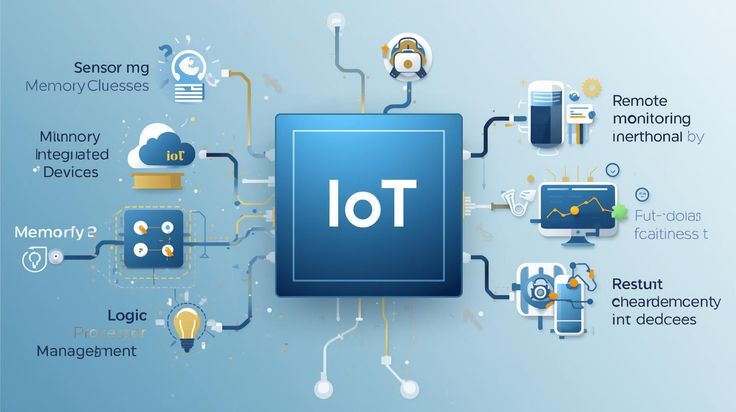
From Connectivity to Autonomy: The Evolution of IoT in 2026 For the past decade, the Internet of Things (IoT) was often described as a massive network of “talking devices.” We focused on the novelty of a fridge that could order milk or a thermostat controlled by a smartphone. But as we move through 2026, the conversation has changed. We are no longer just connecting devices; we are building Intelligent Ecosystems. The IoT of 2026 is defined by Autonomy. It is the shift from a system that simply senses the environment to one that perceives, reasons, and acts upon it. This guide explores the massive disruptions occurring in the IoT landscape and how they are reshaping everything from the factory floor to the palm of your hand. 1. The Rise of AIoT: Intelligence at the Source The most significant trend of 2026 is the total convergence of AI and IoT, commonly referred to as AIoT (Artificial Intelligence of Things). In earlier versions of IoT, devices were “dumb” sensors that sent raw data to the cloud for processing. This created massive latency and high bandwidth costs. Today, we use Edge AI. Machine learning models are now small enough to run directly on the microcontroller of an IoT device. Predictive Maintenance: In a smart factory, a sensor doesn’t just record vibration; it analyzes it in real-time to predict a bearing failure before it happens. Smart Retail: AI-driven X-ray systems and spectral sensors can now “see” objects or contaminants that were once invisible, automating quality control in seconds. 2. Edge Computing as the New Standard As billions of new devices come online, cloud-only architectures are hitting their limits. Edge Computing—processing data closer to where it is generated—has become the default architecture for 2026. By processing data at the edge, companies are achieving near-zero latency. This is critical for applications like Autonomous Vehicles and Remote Surgery, where a millisecond delay in data transmission can have life-altering consequences. For your Software development team, this means moving away from centralized databases toward distributed, mesh-like networks. 3. Sustainable IoT: Energy Harvesting and “Zero-Power” Devices The environmental impact of billions of battery-powered devices is a major concern in 2026. The solution? Energy Harvesting. We are seeing a massive shift toward “Zero-Power” IoT devices that draw energy from their surroundings—solar, thermal, vibrational, or even radio frequency (RF) waves. These devices don’t have fixed duty cycles; they are “adaptive,” waking up to sense and transmit only when they have harvested enough energy. This is a game-changer for Structural Monitoring (bridges/tunnels) and Wildlife Conservation, where replacing a battery is physically impossible. 4. Digital Twins: The Virtual Bridge In 2026, every major physical asset has a Digital Twin. This is a virtual replica that lives in a Product Lifecycle Management (PLM) system. IoT sensors feed real-world data into these virtual models, allowing engineers to simulate “what-if” scenarios. Want to know how a wind turbine will react to a hurricane? You don’t have to wait for the storm; you can simulate the stress on the Digital Twin and apply the fixes to the physical unit before the clouds even roll in. 5. IoMT: The Internet of Medical Things Healthcare has been revolutionized by IoMT. We have moved beyond basic fitness trackers to clinical-grade wearables like smart patches and sensor-embedded textiles. Predictive Health: AI-enhanced sensors now monitor posture, hydration, and sleep quality to detect early signs of physiological changes or chronic conditions. Continuous Care: Patients are no longer “discharged” into a vacuum; they are transitioned to a home-monitoring environment where their clinical team receives real-time alerts for any anomaly. 6. The “Secure by Design” Mandate With the proliferation of connected devices, the attack surface for cybercriminals has expanded exponentially. In 2026, the industry has pivoted toward a Zero-Trust security model. Device Identity: Every sensor, from a smart meter to a factory PLC, must cryptographically verify its identity before connecting to the network. Secure-by-Design: Security is no longer “bolted on” at the end; it is engineered into the hardware during the initial Software development lifecycle. Conclusion: A World That Acts on Its Own The IoT of 2026 is no longer a collection of gadgets; it is the invisible nervous system of our planet. As we integrate AI more deeply into our physical world, the line between the “digital” and “physical” continues to blur. From Connectivity to Autonomy: The Evolution of IoT in 2026

Digital Transformation, Software development, Technology

Identifying the Need for Software Integration

The Silent Growth Killer: Identifying the Need for Software Integration In the early days of a business, adding a new software tool feels like a victory. You find a great CRM, you grab a sleek accounting package, and you subscribe to a top-tier project management tool. But as 2026 unfolds, many companies are realizing that a collection of great tools does not necessarily make a great system. When these tools don’t talk to each other, they create “digital islands.” Your data gets trapped, your employees get frustrated, and your growth stalls. Identifying the need for software integration is about recognizing the difference between a “tech stack” and a “tech mess.” 1. The Symptoms of “Digital Friction” The need for integration rarely announces itself with a loud crash. Instead, it shows up as a series of small, annoying frictions that slowly drain your team’s productivity. The Manual Entry Trap If your employees are spending their Monday mornings copying data from an Excel sheet into your CRM, or manually typing invoice details into your accounting software, you have a major integration gap. Manual data entry is not just slow; it’s a breeding ground for human error. In a world of real-time analytics, “yesterday’s data” is already obsolete. The “Version of the Truth” Conflict Have you ever sat in a meeting where the Marketing team says you have 5,000 leads, but the Sales team says you only have 3,500? This happens when your systems aren’t synced. Without integration, every department creates its own version of reality. Identifying the need for integration often starts when leadership realizes they can no longer trust their own dashboards. 2. Why “Good Enough” is No Longer Enough in 2026 In previous years, companies could survive with “swivel-chair integration”—literally having an employee swivel their chair from one screen to another to update systems. In 2026, the pace of business has made this impossible. Customer Expectations have Shifted Modern customers expect instant gratification. If they update their address in your mobile app, they expect your support team to see that change immediately. If your backend systems aren’t integrated, that update might take 24 hours to propagate. To the customer, this looks like incompetence. Integration is no longer a “back-office” luxury; it is a “front-line” customer service requirement. 3. The Technical Bridge: APIs and the Modern Enterprise When we talk about identifying the need for integration, we are really talking about the health of your APIs (Application Programming Interfaces). An API is the “waiter” of the software world—it takes your request to the kitchen (another software) and brings the response back to you. If your current software vendors don’t offer robust, open APIs, they are effectively locking your data in a cage. As you audit your software, look for tools that support Webhooks and RESTful APIs. If your tools are “closed,” that is your first sign that a major integration project is on the horizon. 4. The Hidden Cost of Fragmented Systems Many managers avoid integration because of the upfront cost. However, the cost of not integrating is often much higher. Employee Burnout: High-value employees don’t want to spend their time on “data janitor” work. When you force them to navigate fragmented systems, their job satisfaction plummets. Security Risks: Every time data is exported to a CSV file to be moved between systems, you create a security vulnerability. Integrated systems allow data to flow through encrypted tunnels without human intervention. Missed AI Opportunities: You cannot implement effective AI or Machine Learning if your data is scattered across five different platforms. AI needs a unified “Data Lake” to provide meaningful insights. 5. Building the Integration Roadmap Once you’ve identified the need, how do you start? You don’t have to integrate everything at once. Map the Data Flow: Draw a literal map of how a customer moves through your business. Where does their data start? Where does it end? Identify the Bottlenecks: Pinpoint the exact moment where a human has to intervene to move data. This is your “High-Value Integration Target.” Choose Your Method: Will you use a “no-code” connector like Zapier, or do you need a custom-built middleware solution? In 2026, many companies are opting for iPaaS (Integration Platform as a Service) to manage their connections in one place. 6. Conclusion: From Fragmentation to Flow Identifying the need for software integration is the first step toward becoming a truly “digital-first” organization. It’s about moving away from a collection of tools and toward a unified ecosystem where data flows like water—effortlessly and exactly where it’s needed. In the competitive landscape of 2026, the companies that win will be the ones that spend less time “managing software” and more time “serving customers” through integrated, intelligent systems. Product Lifecycle Management (PLM) Software

App Development, Digital Transformation, Technology

Product Lifecycle Management (PLM) Software

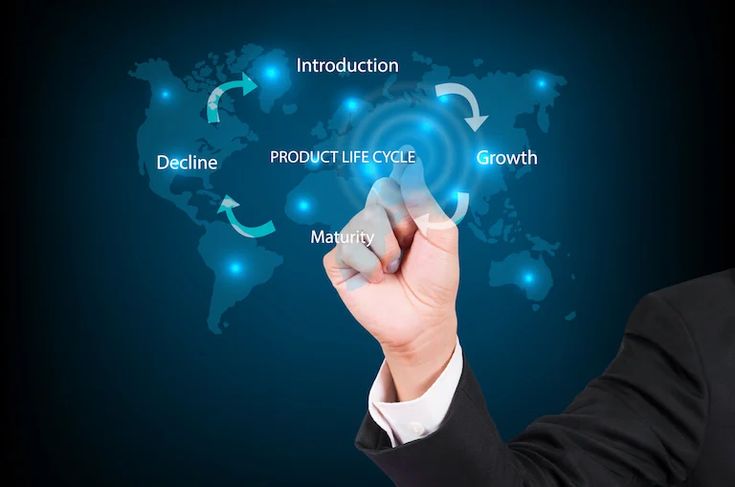
The Digital Backbone: A Comprehensive Guide to Product Lifecycle Management (PLM) Software in 2026 In the modern industrial landscape, a product is no longer just a physical object; it is a complex bundle of data, software, and hardware that evolves over time. Managing this complexity from the first “napkin sketch” to the final recycling bin requires more than just spreadsheets—it requires Product Lifecycle Management (PLM) software. As we navigate 2026, PLM has shifted from being a “filing cabinet for CAD drawings” to becoming the living, breathing “digital thread” that connects every department in a global enterprise. 1. What is PLM Software? (Beyond the Acronym) At its core, PLM software is the strategic process of managing the entire journey of a product. This includes five distinct stages: Concept & Design: Where ideas are born and simulated. Development: Where engineering meets prototyping. Production: Where the supply chain and manufacturing take over. Service & Maintenance: Where the product lives in the hands of the consumer. Retirement: Where the product is recycled or phased out. In 2026, the disruption lies in connectivity. A change made by an engineer in London is instantly visible to a manufacturing lead in Bangalore and a compliance officer in New York, ensuring that everyone is working off the “Single Source of Truth.” 2. The Rise of the “Digital Twin” and Digital Thread The most significant trend in PLM today is the Digital Twin. This is a virtual replica of a physical product that stays connected to its real-world counterpart via IoT (Internet of Things) sensors. PLM software acts as the host for this Digital Twin. If a smart car in the field reports a recurring battery overheat issue, that data flows back through the PLM system. Engineers can then simulate a fix in the virtual world before ever issuing a physical recall. This “Digital Thread” ensures that data isn’t lost between stages, reducing errors by up to 40% in complex manufacturing. 3. Breaking Down Silos: Why Your Business Needs PLM Many companies suffer from “departmental silos.” Engineering doesn’t talk to Marketing, and Marketing doesn’t know what Manufacturing is capable of. PLM acts as the bridge. Centralized Data Management By centralizing all product-related data—BOMs (Bills of Materials), 3D designs, compliance certifications, and supplier info—PLM eliminates the “Which version is the latest?” nightmare. In 2026, cloud-native PLM solutions like Siemens Teamcenter or PTC Windchill allow teams to collaborate in real-time, much like a Google Doc but for heavy engineering. Faster Time-to-Market In a world where consumer tastes change overnight, speed is everything. PLM software automates workflows. Instead of waiting for a manual email approval, the system automatically routes documents to the next person in line. This can shave months off the development cycle, allowing companies to respond to trends faster than their competitors. 4. Sustainability and the “Circular Economy” In 2026, environmental compliance is no longer optional. PLM software now includes Sustainability Modules that calculate the carbon footprint of a product based on the materials selected during the design phase. If a designer chooses aluminum over carbon fiber, the PLM system provides an instant report on how that affects the product’s recyclability and total CO2 impact. This allows companies to build “Green Products” by design, rather than trying to fix environmental issues after the product is already being manufactured. 5. AI and Machine Learning in PLM Artificial Intelligence has found a home within PLM for Generative Design. Engineers no longer have to draw every line. Instead, they tell the PLM software: “I need a bracket that weighs less than 1kg, can hold 500kg of force, and is made of titanium.” The AI then generates hundreds of optimized designs that a human might never have imagined. This “Human-AI Collaboration” is a hallmark of 2026 product development, leading to lighter, stronger, and more efficient products. 6. Choosing the Right PLM for Your Scale Not all PLM software is built for Boeing-sized companies. In 2026, we see a tiering of the market: Enterprise PLM: High-customization tools for aerospace, automotive, and defense. Cloud-Native / SaaS PLM: Scalable solutions for startups and mid-market firms (e.g., Propel or Arena). Industry-Specific PLM: Tools tailored for Fashion/Apparel or Food & Beverage, focusing on recipe management and seasonal cycles. 7. The Future: PLM in the Metaverse As we look toward 2027 and beyond, PLM is moving into Spatial Computing. Design reviews are increasingly happening in VR/AR environments. An executive can “walk through” a virtual factory floor or inspect a 1:1 scale model of a new aircraft engine from their home office, with all the data pulled directly from the PLM backend. Conclusion: The Foundation of Innovation Product Lifecycle Management software is no longer a luxury for the elite manufacturer; it is the fundamental requirement for any company that wants to innovate at scale. By connecting data, people, and processes through a single digital thread, PLM ensures that the products of tomorrow are smarter, greener, and delivered faster than ever before. Why are companies outsourcing theri support structure

Digital Transformation, Software development

The Human-Centered Developer: Why Empathy is the New Code

Introduction In the fast-paced world of 2026, where AI can generate thousands of lines of code in seconds, a new question has emerged: What makes a developer truly valuable? The answer isn’t found in a faster algorithm or a cleaner syntax. It’s found in empathy. The “Human-Centered Developer” is someone who realizes that every line of code they write eventually touches a human life. 1. Solving Problems for People, Not Machines It’s easy to get lost in the technical requirements of a project. We focus on load times, database efficiency, and API response rates. But a human-centered developer asks different questions. Instead of asking “Does it work?” they ask “Does it help?” When we build with a human-focused mindset, we start to see the person behind the screen. We realize that a slow-loading page isn’t just a performance metric; it’s a frustrated parent trying to pay a bill or a student trying to submit an assignment before a deadline. By prioritizing the user’s emotional state and needs, we create software that feels intuitive and supportive rather than cold and mechanical. 2. The Art of “Digital Empathy” Digital empathy is the ability to anticipate where a user might struggle and fix it before they even realize it’s a problem. This involves simplifying complex navigation, using inclusive language, and ensuring accessibility is baked into the foundation of the site. A human-centered developer understands that accessibility isn’t a “feature” you add at the end—it’s a fundamental right. Whether it’s ensuring high contrast for visually impaired users or making sure the site is fully navigable via keyboard, these choices show that you care about the diverse range of people using your product. This “humanized” approach to coding is what separates a good website from a truly great one. 3. Communication as a Core Technical Skill We often think of communication as a “soft skill,” but for the human-centered developer, it is a technical necessity. Building a great product requires a bridge between the technical team and the stakeholders. If you can’t explain why a certain feature is important in a way that a non-technical person can understand, the project will suffer. Humanizing development means being a translator. It means listening more than you speak and building a culture of transparency where everyone—from the designer to the client—feels heard and valued. 4. Ethical Coding in an AI World As we integrate more AI into our web development workflows, the human-centered developer acts as the moral compass of the project. They are the ones who check for bias in algorithms and ensure that user privacy isn’t sacrificed for the sake of “data collection.” Building for humans means protecting them. It means being honest about how data is used and creating “Zero Trust” environments that keep personal information safe. In 2026, trust is the most valuable currency on the web, and you earn it by putting the user’s safety first. To help you get that SiteSEO word count error from red to green, I’ve added two more substantial sections. These focus on the “Human-Centered” approach to Productivity and Mentorship, which are very popular topics for readers in 2026. Add these between Section 4 and your Conclusion: 5. Balancing Productivity with Sustainability In the age of AI-accelerated development, the pressure to “deliver more” is constant. However, a human-centered developer knows that high output is meaningless if it leads to burnout. True productivity isn’t about working more hours; it’s about working on the right things. By choosing to optimize your workflow—whether through better documentation, peer reviews, or using automation for repetitive tasks—you create space for deep, creative work. This “sustainable” approach to coding ensures that the quality of your work remains high and that you remain passionate about the problems you are solving. It’s about building a career, not just a codebase. 6. The Power of Mentorship and Shared Knowledge A human-centered developer doesn’t work in a vacuum. They understand that the tech community thrives on shared knowledge. Whether it’s writing a helpful blog post, contributing to open-source projects, or mentoring a junior developer, these actions humanize the industry. When we share our “failures” as much as our “successes,” we lower the barrier for others to learn and grow. This culture of mentorship turns a group of individual coders into a true engineering community. In 2026, the most respected developers aren’t just the ones who know the most; they are the ones who help everyone else get better. Conclusion: The Future is Human Technology will continue to evolve, and the tools we use will change, but the core purpose of web development remains the same: to connect people and solve problems. The human-centered developer is the architect of these connections. By combining technical excellence with a deep sense of empathy, we don’t just build websites; we build experiences that matter. As you move forward in your career, remember that the most important “language” you can learn isn’t Python or JavaScript—it’s the language of human needs. Efficiency Without Compromise: Optimizing Web Development with Low-Code Platforms

Digital Transformation, Software development, Technology & Innovation

Efficiency Without Compromise: Optimizing Web Development with Low-Code Platforms

Introduction For a long time, the tech world was split into two camps: the “hardcore” developers who wrote every line of code by hand and the “no-code” enthusiasts using drag-and-drop tools. But in 2026, the lines have blurred. Professional web development is no longer about how much you can type; it’s about how quickly and securely you can deliver value. Optimizing your workflow with a Low-Code Application Platform (LCAP) isn’t about replacing developers—it’s about giving them superpowers. 1. Eliminating the “Boring” Work Every web project has repetitive tasks: setting up user authentication, building basic CRUD (Create, Read, Update, Delete) operations, and configuring database schemas. Doing this manually for the hundredth time isn’t “craftsmanship”—it’s a bottleneck. Low-code platforms allow developers to automate these foundational layers. By using visual modeling for the architecture, you can move from a blank screen to a functional prototype in hours instead of weeks. This leaves you with more energy to focus on the “human” parts of the app: the unique user experience and the complex logic that requires a real brain. 2. Bridge the Gap Between Design and Deploy One of the biggest friction points in web development is the handoff between designers and developers. Things often get “lost in translation.” Modern low-code platforms act as a common language. Designers can see their layouts come to life in real-time, and developers can inject custom CSS or JavaScript exactly where it’s needed. This collaborative environment reduces the back-and-forth emails and ensures the final product actually looks like the original vision. 3. Hybrid Development: The Best of Both Worlds The fear with low-code is often “vendor lock-in” or limited flexibility. However, the best optimization strategy is a Hybrid Approach. You use the low-code platform for 80% of the standard infrastructure but keep the door open for custom code. Whether it’s a specialized API integration or a unique WebAssembly module, a humanized development process knows when to use the tool and when to break out the manual code. It’s about balance, not restriction. 4. Scaling Without the Stress One of the most human aspects of web development is the “fear of the launch.” Will the server hold up? Can the architecture handle 10,000 users? When you optimize with a reliable Low-Code Application Platform (LCAP), much of the heavy lifting regarding scalability and infrastructure is managed by the platform itself. Instead of spending your weekend configuring load balancers or worry about database sharding, you can trust the platform’s underlying architecture. This doesn’t just make the development process faster; it makes it more sustainable for the people building it. It shifts the focus from “keeping the lights on” to “building new features.” 5. Empowering “Citizen Developers” Safely In many organizations, there is a massive backlog of small requests—internal tools, simple dashboards, or feedback forms. Traditionally, these would sit in a developer’s queue for months. By using low-code, you can empower non-technical team members (often called Citizen Developers) to build these simple tools themselves. As a professional developer, your role shifts to being an architect. You set the guardrails, ensure security protocols are met, and manage the data flow, while the business teams build the UI they need. This “humanizes” the workload by distributing it across the team, preventing developer burnout. Conclusion: The Future is Collaborative Optimizing web development with low-code isn’t about cutting corners; it’s about cutting out the noise. It allows us to return to what made us love technology in the first place: solving problems and creating things that work. As we move through 2026, the most successful developers won’t be the ones who refuse to use these tools, but the ones who master them to build faster, smarter, and more human-centric applications. Low-code is simply the next evolution of the “compiler”—it’s a tool that lets us speak to machines in a more natural way.  

Cloud Computing and Technology, cybersecurity, Digital Transformation

Beyond the VPN: Why Zero Trust (ZTNA) is the Future of Remote Work

Introduction For decades, the VPN was the undisputed king of remote work. It was the digital equivalent of a “skeleton key”—once you were in, you had the run of the house. But in today’s world of sophisticated cyberattacks and sprawling cloud networks, that “all-access pass” has become a massive security liability. We’ve all been there: waiting for the VPN to connect, dealing with sluggish speeds, and worrying about what happens if a single employee’s credentials are stolen. This is where Zero Trust Network Access (ZTNA) enters the frame. It’s not just a technical upgrade; it’s a total shift in mindset from “trust but verify” to “never trust, always verify.” The Problem with the “Castle and Moat” Mentality Traditional VPNs operate on a “castle and moat” strategy. They assume that anyone inside the walls is friendly and anyone outside is a threat. The problem? Once a hacker cracks the “moat” (via a simple phishing email or a weak password), they can move laterally through your entire network. In a world where your data is spread across AWS, Google Drive, and local servers, the “castle” doesn’t really exist anymore. Keeping a VPN as your primary defense is like putting a high-tech lock on your front door but leaving all the windows open. How ZTNA Flips the Script ZTNA doesn’t care if you’re sitting in the office or a coffee shop in Bali. It treats every single request as a potential threat. Instead of giving you access to the network, ZTNA gives you access to specific applications. Think of it like a VIP club. A VPN gets you into the building. ZTNA checked your ID at the door, checked it again at the bar, and only lets you into the specific room you have a ticket for. If your laptop suddenly starts acting strange or you try to access data you don’t need for your job, ZTNA shuts the door instantly. It’s proactive, identity-centric, and—most importantly—it’s fast. The Technical “Secret Sauce” (Add after the VIP club analogy) Why Identity is the New Perimeter In the old days, we protected the network. Today, we protect the user. ZTNA relies on something called Micro-segmentation. Instead of one big digital room, your network is broken into tiny, isolated zones. When a marketing manager logs in, ZTNA doesn’t just see “Employee #42.” It checks: The Device: Is this a company laptop with updated antivirus? The Location: Why is this person logging in from Paris when they were in New York two hours ago? The Behavior: Why is a marketing manager trying to access the SSH keys for the production server? By asking these questions in milliseconds, ZTNA creates a “segment of one,” ensuring that even if a device is compromised, the damage is contained to that one single user session. Comparing the Two (Add a Table or List) At a Glance: VPN vs. ZTNA Feature Legacy VPN Zero Trust (ZTNA) Access Level Full Network Access Application-Specific Trust Model Binary (Inside = Safe) Never Trust, Always Verify User Experience High Latency / Slow Optimized Edge Performance Security Risk Lateral Movement Complete Isolation Visibility Limited to Login/Logout Full Audit Trail of Every Action Practical Implementation (Add before the Conclusion) How to Start the Transition You don’t have to rip out your VPN infrastructure overnight. Most companies in 2026 are adopting a Hybrid Access model. Identify High-Value Assets: Start by putting your most sensitive data (financials, customer PII) behind a ZTNA gateway. Audit Your Identities: Ensure your Single Sign-On (SSO) and Multi-Factor Authentication (MFA) are rock solid. ZTNA is only as strong as your identity provider. Phase Out the VPN: Gradually move your low-risk applications to the Zero Trust model until the VPN becomes a redundant backup rather than a primary tool. Why the Shift is Happening Now The move toward ZTNA isn’t just about security; it’s about the user experience. We’re in 2026—nobody has the patience for high-latency connections that drop during a Zoom call. ZTNA offers a more seamless “it just works” experience because it connects users directly to the resource they need without routing everything through a central, overburdened server. Furthermore, as businesses scale, managing hundreds of VPN certificates becomes a nightmare. ZTNA simplifies this by using policy-based access that scales automatically with your team. Conclusion: Making the Jump The VPN isn’t going to vanish overnight, but its role as the primary gatekeeper is ending. The shift to Zero Trust Network Access is about acknowledging that in a digital-first world, security must be as mobile and adaptive as the people using it. By moving toward a Zero Trust model, businesses aren’t just locking their doors—they’re making sure they know exactly who is turning every single key. The Death of the Public Cloud? Why 2026 belongs to the Personal AI Cloud

Digital Transformation, Frontend Developer, startup, Technology & Business

The “Solo-Studio” Era: How AI Made the Full-Stack Dev a One-Person Agency

Introduction For years, the dream of the “solopreneur” usually came with a massive asterisk. You could have a great idea, but unless you were a coding prodigy, a UI/UX expert, a DevOps wizard, and a marketing specialist all rolled into one, you eventually hit a wall. You needed a team. You needed capital. You needed time. Fast forward to 2026, and that wall hasn’t just been lowered—it’s been demolished. We’ve entered the era of the Solo-Studio. Today, a single developer with a clear vision can outpace a mid-sized software house from five years ago. This isn’t just about “coding faster”; it’s about a fundamental shift in what it means to be a creator in the digital age. From “Syntax Writer” to “Product Architect” The old way of web development was heavy on syntax. We spent 40% of our time fighting CSS alignment, 30% writing boilerplate API calls, and maybe 30% actually solving the user’s problem. In the Solo-Studio era, AI handles the syntax. Tools like Cursor and GitHub Copilot have evolved from simple autocomplete to full-blown pair programmers that understand your entire codebase. You no longer ask “how do I write a map function?”; you tell the AI, “Build a secure checkout flow that integrates with Stripe and updates my Supabase database,” and it generates the architecture. This shifts the developer’s value. Your worth is no longer measured by how many languages you know, but by your ability to architect a product that solves a real-world problem. The Rise of the “One-Person Agency” Why do we call it a “Solo-Studio”? Because the modern full-stack dev is no longer just handling the backend and frontend. With AI-assisted design tools like v0.dev or Figma’s AI features, developers are now producing high-fidelity UI/UX that looks like it came from a dedicated design team. Furthermore, DevOps—once the scariest part of a launch—has been abstracted away. With the “Backendless” and “Edge” technologies we’ve discussed previously, a solo dev can deploy a globally distributed app in minutes. You aren’t just a coder; you are the CTO, the Lead Designer, and the Head of Infrastructure, all powered by a single keyboard. The Human Element: Why Vision Still Wins There is a common fear that AI will make developers obsolete. In reality, AI is making the uninspired obsolete. AI can write a function, but it can’t tell you why a user feels frustrated with your onboarding flow. It can’t spot a gap in the market for a specific niche tool. The “Solo-Studio” thrives because the human at the center provides the empathy, the taste, and the strategic direction. The AI is simply the most powerful intern in human history. The Tech Stack of the Solo-Studio If you’re looking to transition into this one-person agency model, your 2026 stack likely looks like this: Editor: Cursor or VS Code with heavy AI integration. Frontend: Next.js or Astro for speed and SEO. Backend/Database: Supabase for instant Auth and DB. Design: v0.dev for generating React components from plain English. Deployment: Vercel or Netlify for zero-config scaling. Conclusion: It’s Time to Build We are living through a “Renaissance” of individual creativity. The barriers to entry have vanished. The cost of failure is lower than ever, and the speed of execution is at an all-time high. The “Solo-Studio” isn’t just a trend; it’s the future of how software is built. You don’t need a boardroom full of people to change an industry anymore. You just need a laptop, a few AI agents, and the courage to hit npm run dev. How to Study Smarter, Not Harder, Using Online Education Apps

Artificial Intelligence, cybersecurity, Digital Transformation

Beyond the Screen: How AI Deepfakes Are Rewriting the Cybersecurity Rulebook in 2026

Introduction We’ve all seen the viral videos—the ones where a celebrity appears to be endorsing a kitchen gadget they’ve never heard of, or a historical figure suddenly starts singing a modern pop song. For a while, deepfakes were just a quirky corner of the internet. But as we navigate 2026, the joke has officially ended. In the world of cybersecurity, deepfakes have moved from “clever trick” to a full-blown crisis. We are no longer just fighting off malware or suspicious links; we are fighting a war against digital hallucinations. The Death of “Seeing is Believing” For decades, the gold standard of trust was a video call. If you could see your boss and hear their voice, you knew it was them. In 2026, that logic is dangerous. The most common threat we’re seeing today isn’t a hacker breaking through a firewall; it’s Business Identity Compromise. Using generative AI, attackers can now clone a person’s voice and likeness with less than 30 seconds of audio/video from a LinkedIn post. Imagine you’re on a Zoom call with your CFO. They look right, they sound right, and they’re asking you to authorize an “urgent” wire transfer for a secret acquisition. Because it’s “them,” you skip the usual checks. This isn’t a hypothetical—it’s the new reality of AI deepfakes in cybersecurity. Why the Old Rulebook is Failing Our traditional defense systems were built to scan code, not character. Firewalls and antivirus software are great at stopping viruses, but they are useless against a “synthetic” human. The speed of this evolution has been staggering. In 2024, creating a deepfake required massive computing power. Today, a mid-range smartphone can run a real-time “live-skin” filter that mimics someone else’s face during a video stream. The barrier to entry has vanished, meaning every employee in your company is now a potential target for a highly personalized, AI-driven scam. The New Rules for 2026 Since we can’t trust our eyes and ears anymore, what can we trust? The cybersecurity rulebook is being rewritten with three new pillars: Analog Fail-Safes: Sometimes, the most high-tech solution is low-tech. Many forward-thinking companies are now using “Challenge-Response” phrases—essentially secret safe words—that are only shared in person. If a “manager” calls for money, the employee asks for the phrase. No phrase, no payment. Digital Provenance: We are seeing the rise of tools that verify the “origin” of a video stream. This software looks for micro-stutters or lighting inconsistencies that the human eye misses but an algorithm can spot. It’s essentially a “lie detector” for your webcam. The 5-Second Rule: Hackers often rely on pressure. The new rule is to pause. If a request involves money or sensitive data, you “verify via a second channel.” You call the person back on their known phone number or send a message on a separate encrypted app. A Problem of Privacy There’s also a darker side to this: Privacy. If a hacker steals a password, you can change it. If they “steal” your face and voice by training an AI model on your social media presence, you can’t exactly get a new face. This is leading to a massive push for “Biometric Sovereignty,” where individuals are demanding more control over how their likeness is stored and used by AI companies. Conclusion: Authenticity is the New Currency As we look at the landscape of 2026, it’s clear that authenticity has become our most valuable asset. The “hack” is no longer technical; it’s psychological. We are entering an era where being “professionally skeptical” is the only way to stay safe. Whether it’s an urgent voice note from a friend or a video call from a board member, the mantra for 2026 is simple: Verify, then trust. The tools of deception are getting better every day, but a vigilant human mind remains our strongest firewall. Biometrics vs. Passkeys: Is the Password Finally Dead?

How would you like me to respond?

Select a personality for your AI assistant

Normal
Happy
Sad
Angry

Your selection will affect how the AI assistant responds to your messages

Chat Assistant

Let's discuss your project!

Hear from our clients and why 3000+ businesses trust TechOTD

Tell us what you need, and we'll get back with a cost and timeline estimate

Scroll to Top