Introduction
For years, the dream of the “solopreneur” usually came with a massive asterisk. You could have a great idea, but unless you were a coding prodigy, a UI/UX expert, a DevOps wizard, and a marketing specialist all rolled into one, you eventually hit a wall. You needed a team. You needed capital. You needed time.
Fast forward to 2026, and that wall hasn’t just been lowered—it’s been demolished. We’ve entered the era of the Solo-Studio.
Today, a single developer with a clear vision can outpace a mid-sized software house from five years ago. This isn’t just about “coding faster”; it’s about a fundamental shift in what it means to be a creator in the digital age.
From “Syntax Writer” to “Product Architect”
The old way of web development was heavy on syntax. We spent 40% of our time fighting CSS alignment, 30% writing boilerplate API calls, and maybe 30% actually solving the user’s problem.
In the Solo-Studio era, AI handles the syntax. Tools like Cursor and GitHub Copilot have evolved from simple autocomplete to full-blown pair programmers that understand your entire codebase. You no longer ask “how do I write a map function?”; you tell the AI, “Build a secure checkout flow that integrates with Stripe and updates my Supabase database,” and it generates the architecture.
This shifts the developer’s value. Your worth is no longer measured by how many languages you know, but by your ability to architect a product that solves a real-world problem.
The Rise of the “One-Person Agency”
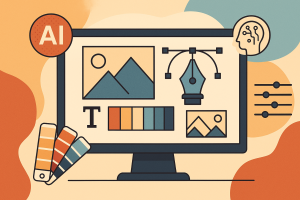
Why do we call it a “Solo-Studio”? Because the modern full-stack dev is no longer just handling the backend and frontend. With AI-assisted design tools like v0.dev or Figma’s AI features, developers are now producing high-fidelity UI/UX that looks like it came from a dedicated design team.
Furthermore, DevOps—once the scariest part of a launch—has been abstracted away. With the “Backendless” and “Edge” technologies we’ve discussed previously, a solo dev can deploy a globally distributed app in minutes. You aren’t just a coder; you are the CTO, the Lead Designer, and the Head of Infrastructure, all powered by a single keyboard.
The Human Element: Why Vision Still Wins
There is a common fear that AI will make developers obsolete. In reality, AI is making the uninspired obsolete.
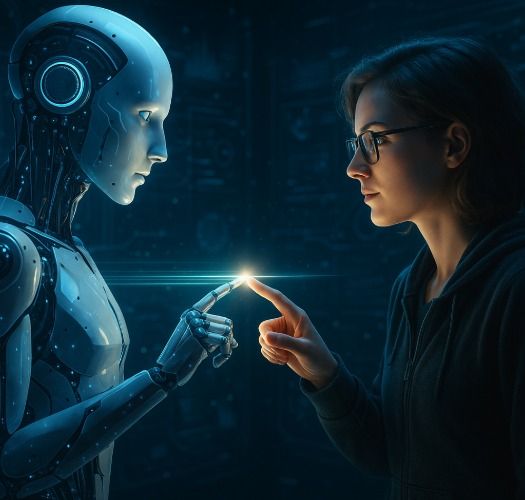
AI can write a function, but it can’t tell you why a user feels frustrated with your onboarding flow. It can’t spot a gap in the market for a specific niche tool. The “Solo-Studio” thrives because the human at the center provides the empathy, the taste, and the strategic direction. The AI is simply the most powerful intern in human history.
The Tech Stack of the Solo-Studio
If you’re looking to transition into this one-person agency model, your 2026 stack likely looks like this:
-
Backend/Database: Supabase for instant Auth and DB.
-
Design: v0.dev for generating React components from plain English.
Conclusion: It’s Time to Build
We are living through a “Renaissance” of individual creativity. The barriers to entry have vanished. The cost of failure is lower than ever, and the speed of execution is at an all-time high.
The “Solo-Studio” isn’t just a trend; it’s the future of how software is built. You don’t need a boardroom full of people to change an industry anymore. You just need a laptop, a few AI agents, and the courage to hit npm run dev.
How to Study Smarter, Not Harder, Using Online Education Apps