From Connectivity to Autonomy: The Evolution of IoT in 2026
For the past decade, the Internet of Things (IoT) was often described as a massive network of “talking devices.” We focused on the novelty of a fridge that could order milk or a thermostat controlled by a smartphone. But as we move through 2026, the conversation has changed. We are no longer just connecting devices; we are building Intelligent Ecosystems.
The IoT of 2026 is defined byAutonomy. It is the shift from a system that simplysenses the environment to one thatperceives, reasons, and acts upon it. This guide explores the massive disruptions occurring in the IoT landscape and how they are reshaping everything from the factory floor to the palm of your hand.
1. The Rise of AIoT: Intelligence at the Source
The most significant trend of 2026 is the total convergence of AI and IoT, commonly referred to asAIoT (Artificial Intelligence of Things). In earlier versions of IoT, devices were “dumb” sensors that sent raw data to the cloud for processing. This created massive latency and high bandwidth costs.
Today, we use Edge AI. Machine learning models are now small enough to run directly on the microcontroller of an IoT device.
-
Predictive Maintenance: In a smart factory, a sensor doesn’t just record vibration; it analyzes it in real-time to predict a bearing failure before it happens.
-
Smart Retail: AI-driven X-ray systems and spectral sensors can now “see” objects or contaminants that were once invisible, automating quality control in seconds.
2. Edge Computing as the New Standard
As billions of new devices come online, cloud-only architectures are hitting their limits. Edge Computing—processing data closer to where it is generated—has become the default architecture for 2026.
By processing data at the edge, companies are achieving near-zero latency. This is critical for applications likeAutonomous Vehicles andRemote Surgery, where a millisecond delay in data transmission can have life-altering consequences. For your Software development team, this means moving away from centralized databases toward distributed, mesh-like networks.
3. Sustainable IoT: Energy Harvesting and “Zero-Power” Devices
The environmental impact of billions of battery-powered devices is a major concern in 2026. The solution? Energy Harvesting.
We are seeing a massive shift toward “Zero-Power” IoT devices that draw energy from their surroundings—solar, thermal, vibrational, or even radio frequency (RF) waves. These devices don’t have fixed duty cycles; they are “adaptive,” waking up to sense and transmit only when they have harvested enough energy. This is a game-changer for Structural Monitoring (bridges/tunnels) and Wildlife Conservation, where replacing a battery is physically impossible.
4. Digital Twins: The Virtual Bridge
In 2026, every major physical asset has a Digital Twin. This is a virtual replica that lives in a Product Lifecycle Management (PLM) system.
IoT sensors feed real-world data into these virtual models, allowing engineers to simulate “what-if” scenarios. Want to know how a wind turbine will react to a hurricane? You don’t have to wait for the storm; you can simulate the stress on the Digital Twin and apply the fixes to the physical unit before the clouds even roll in.
5. IoMT: The Internet of Medical Things
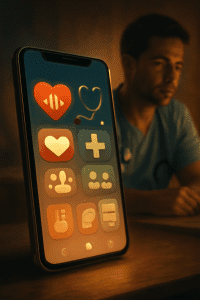
Healthcare has been revolutionized byIoMT. We have moved beyond basic fitness trackers to clinical-grade wearables like smart patches and sensor-embedded textiles.
-
Predictive Health: AI-enhanced sensors now monitor posture, hydration, and sleep quality to detect early signs of physiological changes or chronic conditions.
-
Continuous Care: Patients are no longer “discharged” into a vacuum; they are transitioned to a home-monitoring environment where their clinical team receives real-time alerts for any anomaly.
6. The “Secure by Design” Mandate
With the proliferation of connected devices, the attack surface for cybercriminals has expanded exponentially. In 2026, the industry has pivoted toward aZero-Trust security model.
-
Device Identity: Every sensor, from a smart meter to a factory PLC, must cryptographically verify its identity before connecting to the network.
-
Secure-by-Design: Security is no longer “bolted on” at the end; it is engineered into the hardware during the initial Software development lifecycle.
Conclusion: A World That Acts on Its Own
The IoT of 2026 is no longer a collection of gadgets; it is the invisible nervous system of our planet. As we integrate AI more deeply into our physical world, the line between the “digital” and “physical” continues to blur.