
Author name: Pushkar Pandey

Artificial Intelligence, Educational Technology

How Edge AI Is Powering the Next Generation of Smart Devices

How Edge AI Is Powering the Next Generation of Smart Devices Artificial Intelligence has become one of the most influential technologies of the modern digital era. Over the past few years, AI applications have evolved from cloud-based systems to more efficient and responsive solutions capable of operating directly on devices. This shift has given rise to Edge AI, a transformative technology that is changing the way smart devices function and interact with users. From smartphones and smart speakers to industrial robots and healthcare monitoring systems, Edge AI is enabling devices to process information locally instead of relying entirely on remote cloud servers. This approach is making devices faster, smarter, more secure, and capable of delivering real-time experiences that were previously difficult to achieve. As businesses and consumers continue to demand intelligent technologies that provide instant responses while protecting sensitive data, Edge AI is emerging as a critical component of next-generation smart devices. Understanding how this technology works and why it matters can help organizations and individuals prepare for the future of connected technology. What Is Edge AI? Edge AI refers to the deployment of artificial intelligence algorithms directly on hardware devices located at the “edge” of a network. Instead of sending data to cloud data centers for processing, the device itself performs AI computations locally. The term “edge” refers to devices positioned close to where data is generated. Examples include: Smartphones Smart cameras Smartwatches Industrial sensors Autonomous vehicles Medical devices Smart home appliances Retail monitoring systems By integrating AI capabilities directly into these devices, organizations can significantly reduce the need for constant cloud communication while improving performance and responsiveness. For example, when a smartphone uses facial recognition to unlock instantly, much of the processing happens directly on the device rather than being sent to a remote server. This local processing is a practical example of Edge AI in action. Why Edge AI Is Gaining Momentum Several technological developments are driving the rapid adoption of Edge AI across industries. The growth of Internet of Things (IoT) devices has resulted in billions of connected systems generating enormous amounts of data every day. Sending all this information to centralized cloud environments can create bandwidth limitations, increase costs, and introduce delays. At the same time, consumers have become more concerned about privacy and data security. Organizations are looking for ways to process information without exposing sensitive data to external servers. Advancements in AI chips, neural processing units (NPUs), and specialized hardware accelerators have also made it possible to run sophisticated AI models on compact devices with limited power consumption. These factors have created the ideal environment for Edge AI to flourish. How Edge AI Works Edge AI combines machine learning models with specialized hardware capable of performing complex calculations efficiently. The process generally follows these steps: Data Collection Sensors, cameras, microphones, and connected components collect information from the surrounding environment. Local Processing The device processes the data using embedded AI models. Instead of transmitting raw data to a cloud server, the analysis occurs locally. Decision Making Based on the processed information, the AI model makes decisions or predictions in real time. Action Execution The device performs the necessary action immediately, such as sending alerts, adjusting settings, recognizing objects, or responding to voice commands. Optional Cloud Synchronization Some devices periodically connect to cloud platforms for updates, training improvements, or data backups while keeping most real-time operations local. This architecture dramatically improves efficiency while reducing dependency on internet connectivity. Key Benefits of Edge AI The increasing popularity of Edge AI is largely driven by the advantages it offers over traditional cloud-based AI systems. Faster Response Times One of the biggest advantages of Edge AI is reduced latency. When data must travel to a cloud server and back, delays can occur. In applications such as autonomous vehicles or industrial automation, even a few milliseconds can be critical. By processing data directly on the device, Edge AI delivers immediate responses that improve user experiences and operational efficiency. Enhanced Privacy and Security Data privacy has become a major concern for businesses and consumers. Edge AI helps address these concerns by keeping sensitive information on the device rather than transmitting it across networks. For example: Medical devices can analyze patient data locally. Security cameras can identify threats without storing footage in the cloud. Smartphones can process biometric information without external servers. This approach reduces exposure to cyber threats and helps organizations comply with data protection regulations. Reduced Bandwidth Usage Transmitting large amounts of data to cloud platforms requires significant network resources. Edge AI minimizes bandwidth consumption because only relevant insights or summarized information need to be transmitted. This capability is particularly valuable in remote environments where network connectivity may be limited or expensive. Improved Reliability Many smart devices operate in environments where internet connectivity is inconsistent. Since Edge AI functions locally, devices can continue working even when network access is unavailable. This reliability is essential for industries such as manufacturing, transportation, healthcare, and defense. Lower Operational Costs Cloud computing costs can increase rapidly as organizations process larger volumes of data. By performing AI tasks at the edge, companies can reduce cloud storage, bandwidth expenses, and server processing requirements. This cost efficiency makes AI deployment more accessible for businesses of all sizes. Edge AI in Smartphones Modern smartphones are among the most common examples of Edge AI. Manufacturers increasingly incorporate AI accelerators that enable advanced features such as: Facial recognition Voice assistants Real-time translation Photography enhancement Predictive text suggestions Battery optimization Spam call detection Because these capabilities run directly on the device, users experience faster performance while maintaining greater privacy. The latest generation of smartphones continues to demonstrate how Edge AI can improve everyday digital experiences without relying heavily on cloud infrastructure. Smart Homes Powered by Edge AI The smart home ecosystem is rapidly evolving thanks to Edge AI technologies. Smart devices can now make intelligent decisions locally rather than waiting for cloud instructions. Examples include: Smart Security Systems AI-powered cameras can detect suspicious activities, recognize faces, and differentiate between

Artificial Intelligence, cybersecurity, Technology

The Future of Cybersecurity in the Age of Generative AI

The Future of Cybersecurity in the Age of Generative AI The cybersecurity landscape is undergoing a dramatic transformation. As organizations continue to embrace digital technologies, cloud computing, remote work, and interconnected systems, cyber threats are becoming increasingly sophisticated. At the same time, a new technological revolution is reshaping how businesses defend themselves against these threats: Generative Artificial Intelligence (Generative AI). Generative AI has rapidly evolved from a fascinating innovation into a powerful business tool capable of creating content, analyzing data, automating processes, and assisting with complex decision-making. While much of the public attention has focused on AI-generated text, images, and videos, one of its most significant impacts is emerging in the field of cybersecurity. Generative AI is creating both opportunities and challenges. On one hand, it enables organizations to detect threats faster, automate security operations, and strengthen defenses against cybercriminals. On the other hand, malicious actors are leveraging the same technology to launch more convincing phishing attacks, develop advanced malware, and exploit vulnerabilities at unprecedented speeds. As businesses prepare for the future, understanding the relationship between generative AI and cybersecurity has become essential. The future of digital security will be defined by how effectively organizations can harness AI while managing the risks it introduces. Understanding Generative AI in Cybersecurity Generative AI refers to artificial intelligence systems capable of creating new content, generating responses, producing code, and learning patterns from massive datasets. Unlike traditional AI systems that primarily analyze information, generative AI can actively create solutions, recommendations, and predictions based on its training. In cybersecurity, this capability opens new possibilities for threat detection, incident response, vulnerability management, and security automation. AI systems can analyze vast amounts of security data, identify suspicious activities, and provide actionable insights in real time. Security teams are increasingly overwhelmed by the volume of alerts generated by modern networks. Generative AI helps reduce this burden by filtering irrelevant alerts, prioritizing threats, and assisting analysts in understanding complex attack patterns. This shift allows security professionals to focus on strategic decision-making rather than spending valuable time on repetitive tasks. The Growing Complexity of Cyber Threats Cybercriminals continue to evolve their methods as organizations strengthen their defenses. Traditional cybersecurity approaches often struggle to keep pace with the scale and speed of modern attacks. Attack surfaces have expanded significantly due to cloud adoption, Internet of Things (IoT) devices, remote work environments, and digital transformation initiatives. Every connected device and application introduces potential vulnerabilities that attackers can exploit. Modern threats include: Advanced phishing campaigns Ransomware attacks Supply chain compromises Zero-day vulnerabilities Insider threats Credential theft Social engineering attacks The increasing sophistication of these threats requires equally advanced defense mechanisms. Generative AI provides organizations with the ability to analyze complex environments continuously and identify emerging risks before they become major incidents. AI-Powered Threat Detection and Prevention One of the most promising applications of generative AI in cybersecurity is threat detection. Traditional security systems often rely on predefined rules and known attack signatures. While effective against familiar threats, these systems may struggle to identify new or evolving attack techniques. Generative AI can analyze patterns across networks, endpoints, user behavior, and application activity to detect anomalies that may indicate malicious activity. For example, if an employee suddenly accesses sensitive data from an unusual location or begins transferring large volumes of information, AI systems can recognize the abnormal behavior and trigger alerts. The benefits include: Faster threat identification Reduced false positives Improved accuracy Real-time monitoring Continuous learning capabilities By identifying threats earlier in the attack lifecycle, organizations can minimize damage and reduce recovery costs. Automating Security Operations Security operations centers (SOCs) face significant challenges due to staffing shortages and increasing workloads. Many organizations struggle to hire enough cybersecurity professionals to manage growing security demands. Generative AI can help bridge this gap by automating routine tasks and supporting security teams. AI-driven automation can assist with: Log analysis Incident classification Threat intelligence gathering Vulnerability assessment Security reporting Compliance monitoring Instead of manually reviewing thousands of alerts each day, analysts can rely on AI-powered systems to summarize incidents, recommend actions, and prioritize critical threats. This automation improves efficiency while enabling security teams to respond more quickly to potential attacks. The Role of Generative AI in Incident Response When a cyberattack occurs, rapid response is critical. Every minute of delay can increase financial losses, operational disruptions, and reputational damage. Generative AI can significantly accelerate incident response processes. AI systems can analyze attack data, identify affected systems, determine the likely attack path, and generate recommended remediation steps. Security teams can use AI-generated insights to: Investigate incidents faster Contain threats more effectively Reduce downtime Improve recovery processes Document incidents automatically As AI technologies continue to mature, organizations may increasingly rely on autonomous response systems capable of taking immediate defensive actions without human intervention. Predictive Cybersecurity and Risk Assessment One of the most exciting developments in AI-driven security is predictive threat analysis. Rather than simply reacting to attacks after they occur, organizations can use generative AI to anticipate future threats. By analyzing historical attack data, vulnerability trends, industry intelligence, and global threat activity, AI systems can identify potential risks before they are exploited. Predictive cybersecurity enables businesses to: Prioritize security investments Patch vulnerabilities proactively Strengthen high-risk systems Improve risk management strategies Reduce attack exposure This proactive approach represents a significant shift from traditional reactive security models. How Cybercriminals Are Using Generative AI While generative AI offers powerful defensive capabilities, it also provides new tools for cybercriminals. Attackers are increasingly using AI technologies to enhance their operations and improve attack success rates. Some malicious applications include: AI-Generated Phishing Attacks Traditional phishing emails often contain grammatical errors and suspicious language. Generative AI can produce highly convincing messages that closely resemble legitimate communications. These personalized attacks can be tailored to specific individuals, making them significantly harder to detect. Advanced Social Engineering AI can generate realistic conversations, fake identities, and persuasive messages designed to manipulate victims into revealing sensitive information. Automated Malware Development Cybercriminals may use AI-assisted coding tools to create malware variants more quickly and

Data Privacy & Security, Technology

Quantum Computing: Are We Closer to a Commercial Breakthrough?

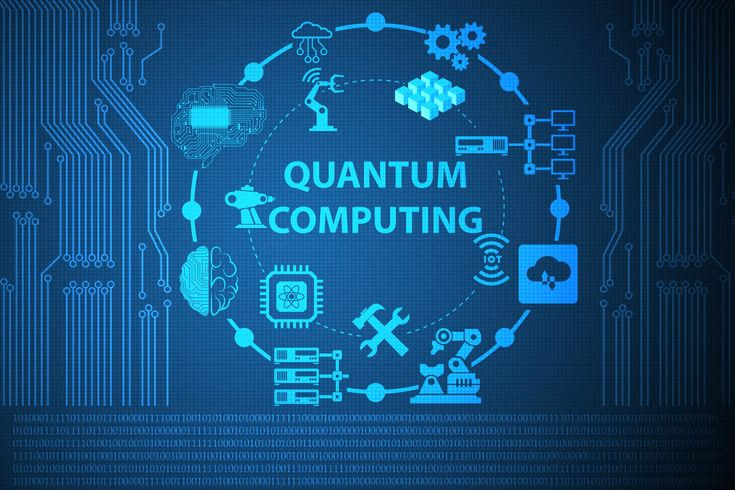
Quantum Computing: Are We Closer to a Commercial Breakthrough? For decades, quantum computing has been viewed as one of the most promising yet elusive technologies in the world. Scientists, researchers, and technology companies have invested billions of dollars into developing machines that can solve problems beyond the capabilities of traditional computers. While the concept sounds futuristic, the reality is that quantum computing is steadily moving closer to practical commercial use. In recent years, advancements in quantum hardware, error correction, and quantum algorithms have accelerated progress at an impressive pace. Major technology companies, startups, governments, and research institutions are racing to unlock the true potential of this revolutionary technology. As a result, businesses across industries are beginning to ask an important question: Are we finally approaching a commercial breakthrough in quantum computing? The answer is not entirely straightforward. While quantum computers are becoming more powerful and reliable, significant challenges still remain before they can deliver widespread commercial value. However, the progress achieved over the past few years suggests that the quantum era may arrive sooner than many experts originally expected. Understanding Quantum Computing Before discussing commercial breakthroughs, it is important to understand what makes quantum computing different from classical computing. Traditional computers process information using bits that exist in either a 0 or 1 state. Every application, website, software program, and digital service relies on billions of these bits performing calculations. Quantum computers, on the other hand, use quantum bits, commonly known as qubits. Unlike classical bits, qubits can exist in multiple states simultaneously through a phenomenon called superposition. They can also become interconnected through entanglement, allowing information to be processed in entirely new ways. These unique properties enable quantum computers to perform certain calculations exponentially faster than traditional systems. Problems that might take conventional supercomputers thousands of years to solve could potentially be completed within hours or minutes using a sufficiently advanced quantum computer. This extraordinary computational power is what makes quantum computing one of the most exciting technological frontiers of the 21st century. Why Quantum Computing Matters Quantum computing is not simply about making computers faster. Instead, it represents an entirely different approach to problem-solving. Many real-world challenges involve enormous numbers of variables and possible outcomes. Classical computers often struggle with these highly complex calculations because the number of possibilities grows exponentially. Quantum computers have the potential to tackle problems in areas such as: Drug discovery Materials science Financial modeling Supply chain optimization Artificial intelligence Climate simulation Cryptography Energy management Logistics planning Advanced manufacturing The ability to process vast combinations of data simultaneously could transform industries and create opportunities that are impossible with current computing systems. The Journey from Theory to Reality The concept of quantum computing originated in the 1980s when physicists began exploring how quantum mechanics could be applied to information processing. For many years, progress was largely theoretical. Researchers developed mathematical models and algorithms while struggling to build physical quantum systems capable of stable operation. Throughout the 1990s and early 2000s, scientific breakthroughs laid the foundation for modern quantum computing. However, practical implementations remained limited because qubits were extremely fragile and difficult to control. The past decade has seen remarkable advancements in hardware development. Companies and research institutions have significantly increased qubit counts while improving stability and computational performance. Today, quantum computers are no longer laboratory curiosities. Cloud-based quantum platforms allow developers, researchers, and businesses to experiment with quantum systems from virtually anywhere in the world. This accessibility has accelerated innovation and expanded interest in commercial applications. Major Players Driving Quantum Innovation The race toward commercial quantum computing involves a diverse ecosystem of technology giants, startups, governments, and academic institutions. Several organizations are leading the charge through significant investments in research and development. IBM IBM has emerged as one of the most influential companies in quantum computing. Through its quantum cloud services and roadmap for scalable quantum systems, the company continues to push the boundaries of quantum hardware and software development. IBM’s long-term vision focuses on creating fault-tolerant quantum computers capable of solving practical business problems. Google Google gained global attention when its researchers demonstrated a milestone known as quantum supremacy. The company showed that a quantum processor could perform a specific calculation faster than a traditional supercomputer. Although the demonstration had limited practical applications, it highlighted the growing capabilities of quantum systems. Microsoft Microsoft is pursuing a unique approach to quantum computing through its focus on topological qubits and quantum software development. The company’s strategy emphasizes building a complete quantum ecosystem that includes hardware, programming tools, and cloud-based services. Amazon Amazon provides quantum computing access through cloud platforms that allow businesses and researchers to experiment with multiple quantum technologies. This approach reduces barriers to entry and helps organizations explore quantum solutions without purchasing specialized hardware. Quantum Startups In addition to major technology companies, numerous startups are driving innovation. Organizations specializing in quantum hardware, software, networking, and security are attracting substantial investments from venture capital firms and governments. These startups are contributing fresh ideas and accelerating the development of commercial quantum applications. Recent Breakthroughs Accelerating Progress Several technological breakthroughs have significantly improved the prospects for commercial quantum computing. Improved Qubit Stability One of the biggest challenges in quantum computing is maintaining qubit stability. Quantum states are highly sensitive to environmental interference, leading to computational errors. Researchers have made substantial progress in extending coherence times, allowing qubits to remain operational for longer periods. Advancements in Error Correction Error correction is essential for building reliable quantum systems. Recent innovations have demonstrated more effective methods for detecting and correcting quantum errors. These advancements bring the industry closer to achieving fault-tolerant quantum computing. Scalable Architectures Developers are designing new architectures that enable larger quantum processors. Scalability is critical because practical commercial applications often require thousands or even millions of high-quality qubits. Progress in chip design, fabrication techniques, and quantum networking is helping researchers move toward this goal. Quantum Software Development The growth of quantum software frameworks has expanded access to quantum computing. Developers can now create and test quantum

Artificial Intelligence, cybersecurity, Educational Technology, Technology

The Rise of Personal AI Assistants: Beyond Chatbots

The Rise of Personal AI Assistants: Beyond Chatbots Artificial Intelligence has rapidly evolved over the last few years, moving far beyond simple chatbots that could only answer basic questions or follow scripted commands. In 2026, personal AI assistants are becoming smarter, more personalized, and significantly more capable than ever before. They are no longer limited to responding to text prompts; instead, they are transforming into intelligent digital companions that can understand user preferences, manage tasks, automate workflows, and even make recommendations based on individual needs. From helping professionals manage their schedules to assisting students with learning and supporting businesses with daily operations, personal AI assistants are becoming an integral part of modern life. As advancements in machine learning, natural language processing, and generative AI continue to accelerate, these assistants are reshaping the way people interact with technology. Understanding the Evolution of AI Assistants The first generation of AI assistants focused primarily on basic voice commands and simple information retrieval. Users could ask for weather updates, set reminders, or search the internet. While these features were useful, the assistants often struggled with context, personalization, and complex requests. Today’s AI assistants are vastly different. They can understand conversations, remember preferences, learn from user interactions, and provide more meaningful responses. Modern AI systems are capable of handling multiple tasks simultaneously, analyzing data, generating content, and assisting with decision-making. This evolution has transformed AI assistants from reactive tools into proactive digital partners that can anticipate user needs and provide relevant support before being asked. What Makes Modern AI Assistants Different? The biggest difference between traditional chatbots and modern AI assistants is personalization. Instead of treating every interaction as a separate conversation, advanced AI assistants build contextual understanding over time. They can remember preferred writing styles, frequently used applications, work schedules, and personal interests. This enables them to deliver responses and recommendations that feel more relevant and tailored to individual users. For example, an AI assistant helping a marketing professional might automatically suggest content ideas based on industry trends, schedule social media posts, and summarize important emails. Meanwhile, a student using the same assistant may receive personalized study plans, learning resources, and exam preparation support. The ability to adapt to individual needs is making AI assistants significantly more valuable across different use cases. The Shift from Chat to Action One of the most important developments in personal AI technology is the transition from conversation-based assistance to action-based assistance. Modern AI assistants are increasingly capable of performing tasks instead of merely providing instructions. Rather than explaining how to complete a process, they can often execute portions of the workflow directly. Examples include: Scheduling meetings automatically Managing emails Organizing files and documents Generating reports Creating presentations Drafting content Tracking project deadlines Managing customer interactions This shift allows users to focus on higher-value work while routine tasks are handled by AI systems. As integration with software platforms continues to improve, AI assistants are becoming capable of interacting with multiple applications simultaneously, creating seamless digital workflows. Personalized Productivity and Time Management Productivity is one of the areas where personal AI assistants are creating the greatest impact. Modern professionals often deal with information overload, endless notifications, and growing workloads. AI assistants help reduce this burden by organizing information and prioritizing tasks. Instead of manually reviewing hundreds of emails, users can receive AI-generated summaries highlighting only the most important messages. Meeting transcripts can be automatically generated and converted into actionable tasks. Calendar management can be optimized based on priorities and availability. These capabilities allow individuals to spend less time managing work and more time focusing on meaningful activities. As AI becomes more context-aware, productivity assistance will become increasingly proactive, helping users identify opportunities, risks, and deadlines before they become problems. AI Assistants in Education Education is another sector experiencing significant transformation through personal AI assistants. Students can now access personalized tutoring experiences that adapt to their learning pace and knowledge level. AI assistants can explain difficult concepts, generate practice questions, create study schedules, and provide instant feedback. Unlike traditional learning resources, AI-powered educational tools can adjust their teaching methods based on student performance. If a learner struggles with a specific topic, the assistant can provide additional explanations and targeted exercises. Teachers are also benefiting from AI technology. Administrative tasks such as grading, lesson planning, and content creation can be streamlined, allowing educators to spend more time supporting students. As educational AI systems continue to improve, personalized learning experiences are expected to become more accessible worldwide. The Role of AI Assistants in Business Businesses are increasingly deploying AI assistants to improve efficiency and reduce operational costs. Customer support teams use AI assistants to handle routine inquiries, allowing human agents to focus on more complex issues. Sales teams leverage AI to analyze customer behavior, generate leads, and personalize communication. Project managers benefit from AI-generated status reports, automated documentation, and workflow tracking. Human resources departments use AI assistants for recruitment support, employee onboarding, and internal communication. The growing ability of AI systems to interact with enterprise software platforms is enabling organizations to automate processes that previously required significant human effort. As a result, businesses can improve productivity while maintaining a high level of service quality. The Emergence of AI Agents A major trend driving the future of personal AI assistants is the rise of AI agents. Unlike traditional assistants that respond only when prompted, AI agents can independently perform tasks, monitor objectives, and take action within defined boundaries. For example, an AI agent might: Monitor market trends Track project progress Analyze customer feedback Generate reports automatically Schedule follow-up actions Coordinate multiple software tools These capabilities represent a significant step toward autonomous digital assistants capable of managing entire workflows. While human oversight remains essential, AI agents are increasingly functioning as virtual team members rather than simple software tools. Privacy and Data Security Challenges As AI assistants become more personalized, concerns regarding privacy and data security are becoming increasingly important. Personalized experiences require access to user information, including schedules, preferences, communication history, and behavioral patterns.

Artificial Intelligence, Business Analytics, Business Intelligence, Data Privacy & Security, Digital Transformation

AI Agents in 2026: How Autonomous Systems Are Transforming Business Operations

Introduction Artificial Intelligence has moved far beyond simple chatbots and recommendation engines. In 2026, AI agents are becoming one of the most influential technologies shaping modern businesses. These intelligent systems are capable of understanding goals, making decisions, performing tasks, and even coordinating with other software tools with minimal human intervention. What once required teams of employees and multiple software platforms can now be managed by autonomous AI systems that work continuously and efficiently. The rise of AI agents marks a significant shift in how organizations approach productivity, operations, and decision-making. Rather than serving only as assistants, AI systems are increasingly acting as digital workers that can execute complex workflows, analyze large volumes of information, and adapt to changing business conditions in real time. As companies continue to invest in automation and digital transformation, AI agents are emerging as a critical component of business strategy. Their ability to reduce operational costs, improve efficiency, and accelerate innovation is changing the way organizations operate across industries. What Are AI Agents? AI agents are autonomous software systems designed to perform tasks on behalf of users or organizations. Unlike traditional automation tools that follow predefined rules, AI agents can understand context, learn from interactions, make decisions, and take actions to achieve specific objectives. These systems combine advanced artificial intelligence technologies such as large language models, machine learning, natural language processing, and workflow automation. They can interact with applications, access databases, communicate with users, and execute tasks without requiring constant human supervision. For example, an AI agent can receive a request to prepare a market research report, gather information from multiple sources, analyze trends, generate insights, create a presentation, and deliver the final report automatically. Instead of performing one isolated function, it manages an entire process from start to finish. This capability is what makes AI agents fundamentally different from conventional software automation solutions. Why AI Agents Are Gaining Momentum in 2026 Several factors are contributing to the rapid adoption of AI agents across industries. Businesses are generating more data than ever before, creating a growing need for systems that can process and interpret information quickly. At the same time, organizations face increasing pressure to improve efficiency while reducing operational costs. Advancements in generative AI and large language models have significantly improved the reasoning and decision-making abilities of AI systems. Modern AI agents can understand complex instructions, maintain context across multiple tasks, and interact naturally with both humans and software applications. Cloud computing infrastructure has also made it easier for businesses to deploy and scale AI-powered solutions. Organizations no longer need extensive hardware investments to access advanced AI capabilities. The combination of these technological developments has created an environment where AI agents can deliver measurable business value across a wide range of functions. How AI Agents Work At their core, AI agents operate through a cycle of perception, reasoning, action, and learning. First, the agent gathers information from its environment. This may include user requests, business data, emails, documents, databases, or external sources. Next, the system analyzes the information and determines the best course of action based on predefined objectives. Advanced reasoning models help the agent evaluate different possibilities and choose appropriate responses. Once a decision is made, the AI agent executes the required actions. This may involve sending emails, updating records, generating reports, scheduling meetings, processing transactions, or interacting with other software systems. Finally, the agent learns from outcomes and feedback to improve future performance. Over time, this continuous learning process helps the system become more effective and accurate. This ability to independently manage workflows makes AI agents particularly valuable in complex business environments. Transforming Customer Service Operations Customer service is one of the areas experiencing the most significant impact from AI agents. Traditional customer support often involves long wait times, repetitive inquiries, and high operational costs. AI agents are helping organizations overcome these challenges by providing instant, personalized, and scalable support. Modern AI customer service agents can understand customer questions, access relevant information, resolve issues, process requests, and escalate complex cases when necessary. They operate around the clock, ensuring customers receive assistance whenever needed. Beyond answering questions, AI agents can proactively identify potential issues, recommend solutions, and follow up with customers to ensure satisfaction. Businesses using AI-powered customer support systems are reporting faster response times, improved customer experiences, and reduced service costs. Revolutionizing Human Resources Management Human Resources departments are increasingly adopting AI agents to streamline administrative tasks and improve employee experiences. Recruitment is one area where these systems are delivering significant benefits. AI agents can screen resumes, schedule interviews, communicate with candidates, and identify suitable applicants based on specific job requirements. Employee onboarding processes are also becoming more efficient. AI agents can guide new hires through documentation, answer common questions, provide training materials, and ensure compliance requirements are completed. In addition, AI systems can assist with performance evaluations, workforce planning, employee engagement initiatives, and professional development recommendations. By automating routine administrative work, HR teams can focus more on strategic initiatives and employee relationships. Enhancing Sales and Marketing Performance Sales and marketing teams are using AI agents to improve customer engagement, generate leads, and optimize campaigns. AI-powered sales agents can identify potential customers, analyze purchasing behavior, personalize outreach efforts, and recommend next steps for sales representatives. These capabilities help organizations improve conversion rates and accelerate revenue growth. Marketing teams benefit from AI agents that can create content, monitor campaign performance, analyze audience behavior, and adjust strategies based on real-time insights. For example, an AI agent may automatically identify underperforming advertisements, suggest improvements, allocate budgets more effectively, and generate detailed performance reports. This level of automation allows businesses to respond more quickly to market changes and customer preferences. Improving Financial Operations Financial management is another area where AI agents are creating substantial value. Organizations handle large volumes of financial data every day, making accuracy and efficiency critical. AI agents can automate invoice processing, expense management, budgeting, forecasting, and financial reporting. These systems can identify unusual transactions, detect potential fraud, and alert financial teams to

Manufacturing, Technology

Smart Factories and Industry 4.0: The Future of Manufacturing Operations

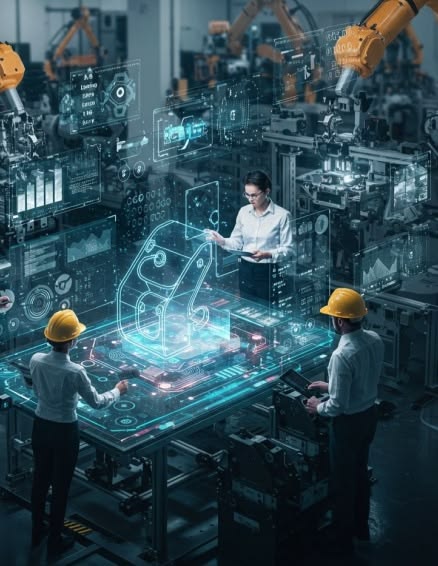
Smart Factories and Industry 4.0: The Future of Manufacturing Operations Manufacturing has always been a driving force behind economic growth and industrial development. From the steam-powered machines of the First Industrial Revolution to the computer-controlled production systems of the modern era, manufacturing has continuously evolved to meet changing market demands. Today, the industry is experiencing another major transformation known as Industry 4.0, a technological revolution that is redefining how factories operate, produce goods, and interact with supply chains. At the heart of this transformation lies the concept of the smart factory. Unlike traditional manufacturing facilities that rely heavily on manual monitoring and isolated systems, smart factories use interconnected technologies such as Artificial Intelligence (AI), the Internet of Things (IoT), cloud computing, robotics, and advanced analytics to create highly intelligent and automated production environments. As global competition intensifies and customer expectations continue to rise, manufacturers are under increasing pressure to improve efficiency, reduce costs, enhance product quality, and accelerate innovation. Smart factories provide a solution by enabling real-time visibility, predictive decision-making, and seamless communication across the entire production ecosystem. The combination of Industry 4.0 technologies and smart manufacturing practices is not simply improving existing processes; it is fundamentally changing how products are designed, manufactured, delivered, and maintained. Organizations that embrace this shift are positioning themselves for long-term success in an increasingly digital and connected world. Understanding Industry 4.0 Industry 4.0 represents the fourth industrial revolution, characterized by the integration of digital technologies into manufacturing and industrial operations. It connects machines, systems, and people through intelligent networks that enable autonomous decision-making and real-time data exchange. The first industrial revolution introduced mechanization through steam power. The second brought mass production through electricity and assembly lines. The third revolution introduced computers and automation. Industry 4.0 builds upon these developments by creating smart, connected, and data-driven manufacturing environments. The primary goal of Industry 4.0 is to create a seamless flow of information across all aspects of manufacturing operations. This allows organizations to respond quickly to changing conditions, optimize production processes, and improve overall performance. Smart factories serve as the practical implementation of Industry 4.0 principles. They combine digital technologies with traditional manufacturing processes to create adaptive and intelligent production systems capable of self-monitoring and self-optimization. What Is a Smart Factory? A smart factory is a highly digitized manufacturing facility where machines, sensors, software systems, and employees work together through connected networks to improve productivity and efficiency. In a smart factory, production equipment continuously generates data that is analyzed in real time. This information helps manufacturers identify inefficiencies, predict equipment failures, optimize workflows, and maintain consistent product quality. Unlike traditional factories where decisions often rely on manual intervention and historical reports, smart factories use real-time insights to support immediate action. Machines can communicate with each other, adjust production schedules automatically, and even detect potential issues before they impact operations. The result is a manufacturing environment that is more flexible, efficient, and responsive to customer needs. Key Technologies Powering Smart Factories The success of smart factories depends on several advanced technologies working together to create an interconnected manufacturing ecosystem. Internet of Things (IoT) The Internet of Things forms the foundation of Industry 4.0. IoT devices and sensors collect data from machines, production lines, and industrial equipment. These sensors monitor various parameters such as temperature, pressure, vibration, energy consumption, and machine performance. The collected data provides valuable insights into operational conditions and production efficiency. By connecting physical assets to digital systems, IoT enables real-time visibility across manufacturing operations and supports proactive decision-making. Artificial Intelligence and Machine Learning Artificial Intelligence plays a critical role in transforming raw manufacturing data into actionable insights. AI algorithms can analyze large volumes of information, identify patterns, and predict future outcomes. Machine learning systems continuously improve their accuracy by learning from historical and real-time data. Manufacturers use AI for predictive maintenance, quality control, demand forecasting, inventory optimization, and production planning. These capabilities help reduce downtime, improve product quality, and increase operational efficiency. Industrial Robotics Modern industrial robots have become increasingly intelligent, flexible, and collaborative. Unlike traditional robots designed for repetitive tasks, advanced robotic systems can adapt to changing production requirements and work alongside human employees. These collaborative robots, often called cobots, enhance productivity while improving workplace safety. Robots are widely used for assembly, welding, packaging, material handling, and inspection processes, allowing manufacturers to maintain high levels of accuracy and consistency. Cloud Computing Cloud computing provides the infrastructure needed to store, process, and analyze vast amounts of manufacturing data. By leveraging cloud platforms, manufacturers can access information from multiple locations, improve collaboration, and scale operations without significant infrastructure investments. Cloud-based systems also enable remote monitoring and management of manufacturing facilities, making it easier to oversee global production networks. Digital Twins A digital twin is a virtual representation of a physical asset, process, or production system. Digital twins allow manufacturers to simulate real-world conditions, test different scenarios, and evaluate potential improvements without disrupting actual operations. By creating accurate digital models of machines and production lines, organizations can optimize performance, reduce risks, and accelerate innovation. Big Data Analytics Manufacturing environments generate enormous volumes of data every day. Big data analytics helps organizations extract valuable insights from this information by identifying trends, detecting anomalies, and uncovering opportunities for improvement. Data-driven decision-making enables manufacturers to optimize production schedules, reduce waste, improve resource utilization, and enhance overall performance. Benefits of Smart Factories The adoption of smart factory technologies offers numerous advantages that extend across all aspects of manufacturing operations. Increased Operational Efficiency Automation and real-time monitoring help eliminate bottlenecks and streamline production processes. Manufacturers can identify inefficiencies quickly and make adjustments before they impact productivity. This leads to higher output and improved resource utilization. Reduced Downtime Unexpected equipment failures can result in costly production interruptions. Predictive maintenance solutions use AI and IoT data to identify potential issues before they cause breakdowns. Maintenance activities can be scheduled proactively, reducing downtime and extending equipment lifespan. Improved Product Quality Smart factories use advanced inspection systems, machine vision, and AI-powered analytics to detect

Digital Transformation, enterprise, Technology

The Role of Digital Trust in Modern Enterprise Technology

Introduction In today’s hyperconnected digital world, technology has become the foundation of almost every business operation. Organizations rely on cloud platforms, artificial intelligence, automation, data analytics, and digital communication tools to improve efficiency and deliver better customer experiences. While these technologies offer tremendous opportunities, they also introduce new challenges related to security, privacy, transparency, and accountability. As a result, digital trust has emerged as one of the most important assets for modern enterprises. Digital trust refers to the confidence that customers, employees, partners, and stakeholders place in an organization’s ability to protect data, secure systems, and use technology responsibly. It goes beyond traditional cybersecurity and encompasses ethical technology practices, transparent data management, regulatory compliance, and reliable digital experiences. In an era where data breaches, cyberattacks, and privacy concerns regularly make headlines, organizations that establish strong digital trust gain a significant competitive advantage. Modern consumers are more informed than ever before. They expect businesses to handle their personal information responsibly and provide secure digital interactions. A single security incident can damage a company’s reputation, reduce customer loyalty, and lead to substantial financial losses. On the other hand, organizations that prioritize trust can strengthen relationships, improve customer retention, and accelerate digital transformation initiatives. Understanding Digital Trust Digital trust is the assurance that technology systems, processes, and organizations operate securely, reliably, and ethically. It is built through a combination of technological safeguards, transparent business practices, and consistent user experiences. When customers interact with a company’s website, mobile application, or digital service, they expect their data to remain protected. They want to know how their information is collected, stored, and used. Similarly, employees rely on secure digital environments to perform their work effectively, while business partners need confidence that shared information will remain protected. Digital trust is not created overnight. It requires continuous investment in cybersecurity, data governance, compliance programs, and ethical technology practices. Organizations must demonstrate that they are committed to safeguarding stakeholder interests while leveraging technology for innovation and growth. Why Digital Trust Matters More Than Ever The rapid expansion of digital technologies has significantly increased the volume of sensitive information being generated and processed. Businesses collect customer data, financial records, operational metrics, and proprietary intellectual property on a massive scale. As digital ecosystems become more interconnected, the risks associated with data misuse and cyber threats continue to grow. Several factors have contributed to the growing importance of digital trust: Rising Cybersecurity Threats Cybercriminals are constantly developing sophisticated attack methods targeting businesses of all sizes. Ransomware attacks, phishing campaigns, identity theft, and data breaches have become common challenges across industries. Organizations that fail to implement adequate security measures risk losing customer confidence and facing severe financial consequences. Increasing Privacy Expectations Consumers are becoming more aware of how companies collect and use their personal information. They expect transparency and control over their data. Businesses that respect privacy preferences and communicate their practices clearly are more likely to earn customer trust. Expansion of Artificial Intelligence Artificial intelligence is transforming decision-making processes across industries. However, concerns about algorithmic bias, transparency, and accountability have raised questions about how AI systems should be deployed responsibly. Trustworthy AI practices are becoming essential for maintaining stakeholder confidence. Regulatory Compliance Requirements Governments and regulatory bodies worldwide have introduced stricter regulations related to data protection and cybersecurity. Compliance is no longer optional. Organizations must demonstrate responsible data management practices to avoid legal penalties and reputational damage. Remote and Hybrid Work Models The rise of remote work has expanded digital attack surfaces. Employees access corporate systems from multiple locations and devices, increasing security risks. Building digital trust requires ensuring secure access and protecting sensitive information regardless of where work takes place. Key Pillars of Digital Trust Building digital trust requires a comprehensive approach that addresses multiple aspects of enterprise technology. Cybersecurity Cybersecurity forms the foundation of digital trust. Organizations must protect their systems, networks, and data from unauthorized access and malicious attacks. This includes implementing advanced security technologies such as multi-factor authentication, endpoint protection, encryption, and continuous monitoring. A strong cybersecurity strategy not only reduces risk but also demonstrates a company’s commitment to protecting stakeholder information. Data Privacy Privacy has become a major concern for consumers and regulators alike. Businesses must clearly explain how data is collected, stored, shared, and processed. Transparent privacy policies and user consent mechanisms help establish confidence and foster trust. Organizations should adopt privacy-by-design principles, ensuring that privacy considerations are integrated into technology development from the beginning. Transparency Trust grows when organizations are open about their practices and decision-making processes. Transparency involves communicating clearly about data usage, security measures, AI-driven decisions, and incident response procedures. When issues occur, transparent communication helps maintain credibility and demonstrates accountability. Reliability and Performance Customers expect digital services to be available, responsive, and dependable. Frequent system outages, technical failures, or poor user experiences can quickly erode trust. Modern enterprises must invest in infrastructure resilience, disaster recovery planning, and performance optimization to ensure consistent service delivery. Ethical Technology Use The ethical use of technology is becoming increasingly important. Organizations must ensure that AI systems, automation tools, and analytics platforms operate fairly and responsibly. Ethical technology practices include addressing algorithmic bias, ensuring explainability, and preventing misuse of customer data. Businesses that prioritize ethics strengthen their reputation and foster long-term trust. The Relationship Between Digital Trust and Business Success Digital trust is no longer just a technology concern; it is a business strategy. Organizations that successfully build trust often experience measurable benefits across multiple areas. Enhanced Customer Loyalty Customers are more likely to engage with brands they trust. When users feel confident that their information is secure and handled responsibly, they are more willing to share data and use digital services. Trust creates stronger customer relationships, leading to increased retention and higher lifetime value. Competitive Differentiation In crowded markets, trust can become a powerful differentiator. Organizations that demonstrate superior security, transparency, and ethical practices stand out from competitors. Customers increasingly consider trustworthiness when choosing products, services, and business partners. Accelerated Digital Transformation Digital transformation initiatives

Cloud Computing and Technology, Digital Transformation

How Cloud-Native Technologies Are Accelerating Digital Transformation

How Cloud-Native Technologies Are Accelerating Digital Transformation Digital transformation is no longer just a strategic initiative—it has become a necessity for businesses that want to remain competitive in a rapidly evolving digital landscape. Organizations across industries are continuously seeking ways to improve efficiency, deliver better customer experiences, and adapt quickly to changing market demands. At the center of this transformation lies a powerful approach known as cloud-native technology. Cloud-native technologies are fundamentally changing how businesses develop, deploy, and manage applications. Unlike traditional IT infrastructures that often struggle with scalability and flexibility, cloud-native solutions are designed specifically for modern cloud environments. They allow organizations to innovate faster, respond to customer needs more effectively, and create digital experiences that drive business growth. As companies continue their digital transformation journeys, cloud-native technologies are becoming one of the most important enablers of innovation, agility, and long-term success. Understanding Cloud-Native Technologies Cloud-native technologies refer to a collection of practices, architectures, and tools that enable organizations to build and run applications optimized for cloud environments. Instead of relying on large, monolithic systems, cloud-native applications are built using smaller, independent components that can be developed, deployed, and updated separately. Key cloud-native principles include: Microservices architecture Containerization DevOps practices Continuous Integration and Continuous Deployment (CI/CD) Automation and orchestration Dynamic scalability Resilience and fault tolerance By leveraging these principles, organizations can create highly flexible systems capable of adapting to changing business requirements without disrupting operations. Why Digital Transformation Requires Cloud-Native Approaches Traditional technology infrastructures often create challenges for organizations attempting to modernize their operations. Legacy systems can be expensive to maintain, difficult to scale, and slow to adapt to new opportunities. Digital transformation demands speed, flexibility, and innovation. Businesses need technology environments that support rapid development cycles, seamless integration, and real-time responsiveness. Cloud-native technologies provide these capabilities by enabling organizations to move beyond the limitations of traditional infrastructure. Whether launching a new digital service, expanding into new markets, or improving customer experiences, cloud-native platforms allow businesses to respond faster and more efficiently. Faster Application Development and Deployment One of the most significant advantages of cloud-native technologies is the ability to accelerate software development and deployment. In traditional development environments, releasing new features or updates often requires extensive testing, infrastructure preparation, and lengthy deployment processes. This can delay innovation and reduce an organization’s ability to compete effectively. Cloud-native environments support automated development pipelines through CI/CD practices. Developers can write code, test applications, and deploy updates quickly and reliably. Automated workflows reduce manual effort while minimizing errors. As a result, businesses can: Deliver new features faster Respond quickly to market demands Improve product quality Reduce development bottlenecks Accelerate innovation cycles This speed enables organizations to maintain a competitive advantage in fast-moving industries. Enhanced Scalability for Growing Businesses Modern businesses often experience fluctuating workloads. Traffic spikes during promotional campaigns, seasonal events, or product launches can place enormous pressure on IT infrastructure. Cloud-native technologies address this challenge through dynamic scalability. Resources can automatically scale up or down based on demand, ensuring optimal performance without overprovisioning infrastructure. For example, an e-commerce platform experiencing a surge in online shoppers during a major sale can automatically allocate additional computing resources. Once demand decreases, resources can be scaled back to reduce costs. This flexibility provides several benefits: Improved application performance Better customer experiences Reduced infrastructure costs Efficient resource utilization Support for business growth Scalability becomes a strategic advantage rather than a technical challenge. Improved Business Agility In today’s business environment, agility is critical. Organizations must quickly adapt to changing customer expectations, market conditions, and technological advancements. Cloud-native architectures support agility by enabling independent development and deployment of services. Teams can update specific components without affecting the entire application. This modular approach allows businesses to: Experiment with new ideas faster Launch products more quickly Implement changes with minimal risk Respond rapidly to customer feedback Adapt to market opportunities Greater agility empowers organizations to innovate continuously rather than relying on lengthy development cycles. The Role of Microservices in Digital Transformation Microservices have become a cornerstone of cloud-native development. Instead of building a single large application, organizations divide applications into smaller, specialized services. Each service performs a specific function and operates independently. This architecture offers numerous advantages: Easier maintenance Faster development Better scalability Improved fault isolation Greater flexibility For example, an online banking application may have separate microservices for account management, payments, authentication, and customer support. Updates to one service can occur independently without impacting the others. This approach significantly enhances an organization’s ability to innovate and evolve digital services. Containerization Simplifies Modern Application Management Containers are another key component of cloud-native technology. Containerization packages applications along with their dependencies into lightweight, portable units that can run consistently across different environments. Benefits of containerization include: Faster deployment Consistent performance Improved portability Efficient resource usage Simplified infrastructure management Containers eliminate many of the compatibility issues that traditionally occur when moving applications between development, testing, and production environments. Popular orchestration platforms help organizations manage large numbers of containers efficiently, enabling reliable operation at scale. Strengthening DevOps Culture Digital transformation is not only about technology—it also involves organizational culture and processes. Cloud-native technologies strongly support DevOps practices by encouraging collaboration between development and operations teams. This collaborative approach improves communication, automation, and overall efficiency. Organizations adopting DevOps often experience: Faster release cycles Improved software quality Reduced operational costs Better incident response Higher customer satisfaction By integrating development and operational workflows, businesses can accelerate innovation while maintaining reliability and security. Enhancing Customer Experiences Customer expectations continue to rise in the digital era. Users demand fast, reliable, and personalized experiences across websites, mobile applications, and digital services. Cloud-native technologies help organizations meet these expectations by providing: Faster application performance Higher availability Improved reliability Real-time updates Personalized digital experiences Because cloud-native applications can be updated frequently without significant downtime, businesses can continuously improve user experiences based on customer feedback and analytics. Enhanced customer experiences often lead to greater engagement, loyalty, and revenue growth. Supporting Innovation Through Automation Automation is one of the most powerful drivers

Artificial Intelligence, Business Intelligence, Cloud Computing and Technology

AI-Powered Customer Experience: The Next Evolution of Personalization

Introduction Customer expectations have changed dramatically over the past decade. Modern consumers no longer want generic interactions, mass marketing campaigns, or one-size-fits-all services. They expect businesses to understand their preferences, anticipate their needs, and deliver personalized experiences across every touchpoint. In an increasingly digital world, personalization has become a key factor that influences purchasing decisions, customer loyalty, and brand perception. This shift in expectations has created new opportunities and challenges for organizations. While traditional personalization methods relied on basic customer data and manual segmentation, they often struggled to keep pace with evolving customer behaviors. Today, Artificial Intelligence (AI) is revolutionizing how businesses interact with customers by enabling real-time, intelligent, and highly personalized experiences at scale. AI-powered customer experience is no longer a futuristic concept. It is already transforming industries such as retail, banking, healthcare, telecommunications, travel, and e-commerce. From personalized recommendations and intelligent chatbots to predictive analytics and sentiment analysis, AI is helping organizations create deeper customer relationships while improving operational efficiency. As businesses compete for customer attention in an increasingly crowded marketplace, AI-driven personalization is becoming one of the most important competitive advantages. Organizations that successfully leverage AI can deliver experiences that feel more human, relevant, and valuable than ever before. Understanding AI-Powered Customer Experience AI-powered customer experience refers to the use of artificial intelligence technologies to enhance interactions between businesses and customers. These technologies analyze vast amounts of customer data, identify patterns, learn from user behavior, and generate insights that help organizations provide more personalized services. Unlike traditional systems that rely on predefined rules, AI continuously learns and adapts based on customer interactions. This allows businesses to deliver recommendations, support, and communications that align with individual customer preferences. The foundation of AI-powered customer experience includes technologies such as: Machine Learning Natural Language Processing (NLP) Predictive Analytics Computer Vision Generative AI Conversational AI Sentiment Analysis Together, these technologies enable businesses to understand customers more accurately and respond more effectively. Why Personalization Matters More Than Ever Customers today interact with brands through multiple channels including websites, mobile applications, social media platforms, emails, and physical stores. They expect seamless experiences regardless of where and how they engage with a business. Research consistently shows that customers are more likely to purchase from brands that provide personalized experiences. Personalized interactions make customers feel valued, understood, and appreciated, leading to stronger emotional connections and long-term loyalty. Some key benefits of personalization include: Increased customer satisfaction Higher conversion rates Improved customer retention Stronger brand loyalty Better customer engagement Increased revenue opportunities However, delivering personalized experiences to millions of customers simultaneously would be nearly impossible without AI. How AI Is Revolutionizing Personalization Intelligent Product Recommendations One of the most visible applications of AI is personalized product recommendations. AI systems analyze customer browsing history, purchase behavior, preferences, and interactions to suggest products that align with individual interests. Instead of showing the same products to every visitor, AI creates unique experiences for each customer. This not only improves user satisfaction but also increases sales and average order value. Modern recommendation engines can consider hundreds of variables simultaneously, allowing businesses to provide highly accurate suggestions that feel relevant and timely. Predictive Customer Insights AI enables businesses to move from reactive customer service to proactive customer engagement. By analyzing historical and real-time data, AI can predict: Future purchasing behavior Customer churn risks Product preferences Service requirements Potential complaints Customer lifetime value These insights allow businesses to take preventive actions before issues arise, improving overall customer satisfaction. For example, a subscription-based company can identify customers likely to cancel their membership and offer personalized incentives to retain them. Conversational AI and Virtual Assistants Customer support has undergone significant transformation through AI-powered chatbots and virtual assistants. Modern conversational AI systems can: Answer customer questions instantly Provide product recommendations Process transactions Resolve common issues Guide users through complex processes Offer multilingual support Unlike traditional support systems that require customers to wait for human agents, AI assistants provide immediate responses around the clock. As Natural Language Processing continues to improve, these interactions are becoming increasingly natural and human-like. Hyper-Personalized Marketing Campaigns Traditional marketing often targets broad audience segments. AI takes personalization much further by enabling one-to-one marketing. AI analyzes customer behavior, demographics, interests, and engagement patterns to create highly targeted campaigns. Businesses can automatically personalize: Email content Website experiences Product recommendations Promotional offers Social media advertisements Mobile app notifications This level of personalization significantly increases engagement rates while reducing marketing waste. Sentiment Analysis and Emotional Intelligence Understanding customer emotions has always been challenging for businesses. AI is changing that through sentiment analysis. AI systems can analyze: Customer reviews Social media posts Survey responses Support conversations Online feedback By identifying positive, negative, or neutral sentiments, businesses gain valuable insights into customer perceptions and experiences. This helps organizations respond quickly to emerging issues, improve services, and strengthen customer relationships. The Rise of Generative AI in Customer Experience Generative AI has become one of the most transformative technologies in recent years. Unlike traditional AI systems that primarily analyze data, generative AI can create content, conversations, recommendations, and solutions. Businesses are increasingly using generative AI to: Generate personalized email responses Create customized product descriptions Provide intelligent customer support Develop personalized shopping experiences Produce tailored content recommendations Customers benefit from faster responses and more relevant interactions, while organizations achieve greater efficiency and scalability. Generative AI also helps customer service teams by summarizing conversations, suggesting responses, and providing real-time assistance during customer interactions. Omnichannel Personalization Powered by AI Modern customers expect consistent experiences across multiple channels. They do not want to repeat information every time they switch from a website to a mobile app or contact customer support. AI enables omnichannel personalization by creating a unified customer profile that integrates data from various sources. This allows businesses to: Recognize customers across channels Maintain conversation continuity Deliver consistent recommendations Provide context-aware support Improve customer journey management As a result, customers experience smoother and more personalized interactions regardless of where they engage with a brand. AI and Customer Journey Optimization Every customer

Digital Transformation, Technology & Innovation, telecom

The Business Impact of 5G and the Road to 6G Connectivity

The Business Impact of 5G and the Road to 6G Connectivity The world is becoming increasingly connected, and the technologies that power this connectivity are evolving at an unprecedented pace. Over the past few years, 5G has emerged as one of the most transformative technological advancements, promising faster speeds, lower latency, and the ability to connect billions of devices simultaneously. While many businesses are still exploring the full potential of 5G, discussions about 6G are already gaining momentum. Connectivity has become the foundation of modern business operations. From cloud computing and remote work to artificial intelligence and the Internet of Things (IoT), organizations depend on reliable, high-speed networks to remain competitive. As industries continue their digital transformation journeys, both 5G and the future transition to 6G are expected to redefine how businesses operate, innovate, and serve customers. Understanding the impact of these technologies is essential for organizations that want to stay ahead in a rapidly evolving digital landscape. Understanding 5G Technology 5G, or fifth-generation wireless technology, represents a significant upgrade from previous mobile network generations. Unlike 4G, which primarily focused on improving mobile internet speeds, 5G is designed to support a wide range of advanced applications and connected ecosystems. One of the most notable features of 5G is its ability to deliver extremely high data transfer speeds. Businesses can transmit large volumes of information in real time, enabling smoother communication, faster cloud access, and improved operational efficiency. Another critical advantage is ultra-low latency, which reduces the delay between sending and receiving information. This capability is particularly important for applications that require real-time responsiveness, such as autonomous vehicles, remote surgery, and industrial automation. Additionally, 5G can support a significantly larger number of connected devices compared to previous generations. This makes it ideal for environments where thousands or even millions of sensors, machines, and smart devices need to communicate simultaneously. How 5G Is Transforming Businesses The impact of 5G extends far beyond faster smartphone internet. Businesses across various sectors are leveraging this technology to create new opportunities and improve existing operations. Enhanced Remote Work and Collaboration The shift toward hybrid and remote work has increased the demand for reliable connectivity. 5G enables seamless video conferencing, faster file sharing, and real-time collaboration regardless of location. Employees can access cloud-based applications more efficiently, reducing delays and improving productivity. As organizations continue to embrace flexible work models, 5G provides the infrastructure needed to support distributed teams and digital workplaces. Accelerating the Internet of Things (IoT) The Internet of Things is one of the biggest beneficiaries of 5G technology. Smart devices generate enormous amounts of data, and 5G networks provide the bandwidth and reliability required to manage these connections effectively. Businesses can deploy large-scale IoT ecosystems for applications such as: Smart manufacturing Asset tracking Supply chain monitoring Smart agriculture Energy management Connected healthcare devices The ability to process and transmit data in real time enables organizations to make faster and more informed decisions. Revolutionizing Manufacturing Manufacturing is undergoing a major transformation through Industry 4.0 initiatives, and 5G plays a central role in this evolution. Factories equipped with connected sensors, autonomous robots, and intelligent monitoring systems can achieve greater efficiency and productivity. Real-time communication between machines allows manufacturers to optimize production processes, reduce downtime, and improve quality control. Predictive maintenance powered by IoT sensors helps identify potential equipment failures before they occur, minimizing disruptions and reducing maintenance costs. Improving Customer Experiences Customer expectations continue to rise, and businesses are seeking innovative ways to deliver personalized and engaging experiences. Retailers can use 5G-powered technologies such as augmented reality (AR) and virtual reality (VR) to create immersive shopping experiences. Customers can virtually try products, explore digital showrooms, and receive personalized recommendations in real time. Similarly, entertainment companies can deliver high-quality streaming services with minimal buffering, enhancing user satisfaction and engagement. Driving Innovation in Healthcare Healthcare organizations are leveraging 5G to improve patient care and operational efficiency. Real-time data sharing enables healthcare providers to access patient information instantly, facilitating faster diagnosis and treatment decisions. Telemedicine services become more reliable and effective, allowing doctors to consult with patients remotely without connectivity limitations. Advanced applications such as remote robotic surgery and AI-assisted diagnostics also benefit from the low latency and high reliability offered by 5G networks. Supporting Smart Cities Cities around the world are investing in smart infrastructure to improve transportation, energy management, public safety, and environmental monitoring. 5G provides the connectivity foundation for smart city initiatives by enabling real-time communication between sensors, cameras, vehicles, and public services. This results in more efficient resource utilization and improved quality of life for residents. Economic Benefits of 5G Adoption The adoption of 5G is generating significant economic opportunities for businesses and governments alike. Organizations that invest in 5G-enabled solutions can experience: Increased operational efficiency Reduced infrastructure costs Faster innovation cycles Enhanced customer engagement Improved workforce productivity New revenue streams Many businesses are also developing entirely new products and services that were not feasible under previous network limitations. As 5G ecosystems continue to mature, the economic impact is expected to expand across virtually every industry. Challenges in 5G Implementation Despite its advantages, implementing 5G is not without challenges. One of the primary concerns is infrastructure investment. Deploying 5G networks requires significant upgrades to existing telecommunications infrastructure, including additional base stations and advanced networking equipment. Cybersecurity is another important consideration. As more devices become connected, the potential attack surface for cyber threats increases. Businesses must implement robust security measures to protect sensitive data and critical systems. There are also concerns related to spectrum availability, regulatory compliance, and interoperability between different technologies and vendors. Organizations must carefully plan their adoption strategies to maximize benefits while managing risks. Looking Beyond 5G: The Emergence of 6G While 5G is still being rolled out globally, researchers and technology companies are already exploring the possibilities of 6G. 6G is expected to represent the next major leap in wireless communication. Although commercial deployment may still be years away, early research suggests that 6G could deliver speeds up to 100 times faster

How would you like me to respond?

Select a personality for your AI assistant

Normal
Happy
Sad
Angry

Your selection will affect how the AI assistant responds to your messages

Chat Assistant

Let's discuss your project!

Hear from our clients and why 3000+ businesses trust TechOTD

Tell us what you need, and we'll get back with a cost and timeline estimate

Scroll to Top