Author name: Pushkar Pandey

Artificial Intelligence, Business Analytics, enterprice

The Impact of Agentic AI on Enterprise Productivity

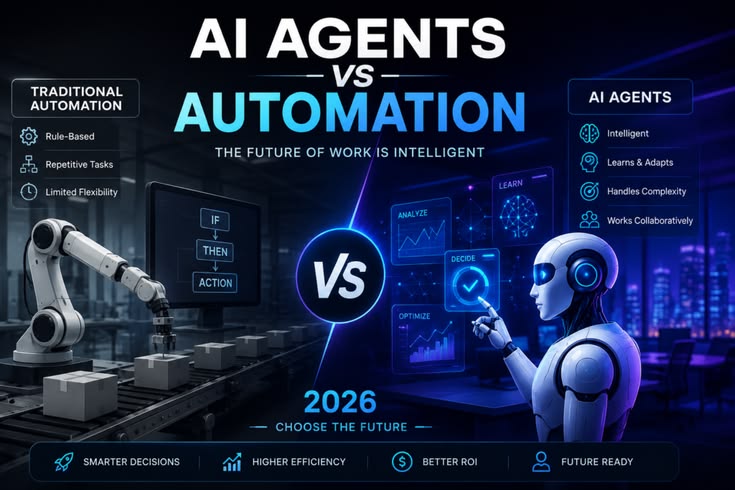
The Impact of Agentic AI on Enterprise Productivity Artificial Intelligence has evolved rapidly over the past few years. What started as chatbots, recommendation engines, and predictive analytics has now entered a new phase known as Agentic AI. Unlike traditional AI systems that primarily respond to commands or analyze data, Agentic AI can independently plan, execute, monitor, and optimize tasks to achieve specific goals. As organizations continue their digital transformation journeys, Agentic AI is emerging as one of the most influential technologies reshaping enterprise productivity. Businesses are no longer looking at AI merely as a tool that assists employees; instead, they are deploying AI agents capable of acting as digital workers that can handle complex workflows with minimal human intervention. From customer service and IT operations to finance, marketing, and supply chain management, Agentic AI is helping enterprises operate more efficiently, reduce costs, improve decision-making, and unlock new levels of productivity. As we move through 2026, companies across industries are recognizing that the future of work will involve close collaboration between humans and autonomous AI agents. Understanding Agentic AI Agentic AI refers to artificial intelligence systems that possess the ability to act autonomously toward achieving predefined objectives. Unlike conventional AI applications that require constant prompts or supervision, Agentic AI can make decisions, initiate actions, adapt to changing environments, and complete multi-step tasks independently. For example, a traditional AI chatbot may answer customer questions based on available information. An Agentic AI system, however, can handle an entire customer support process—from receiving the request and identifying the issue to processing refunds, updating records, and following up with customers. The key capabilities that distinguish Agentic AI include: Goal-oriented decision-making Autonomous workflow execution Continuous learning and adaptation Multi-step task management Context awareness Integration with enterprise systems Proactive problem-solving These characteristics enable Agentic AI to function more like a virtual employee rather than a simple software application. Why Enterprises Are Adopting Agentic AI Organizations are under increasing pressure to improve efficiency, reduce operational expenses, and maintain competitiveness in rapidly changing markets. Traditional automation solutions can handle repetitive tasks, but they often struggle with complex processes that require decision-making and adaptability. Agentic AI fills this gap by bringing intelligence and autonomy to business operations. Several factors are driving enterprise adoption: Growing Operational Complexity Modern businesses manage enormous volumes of data, processes, and interactions. Human teams often struggle to keep up with increasing complexity. Agentic AI can process information at scale and coordinate multiple tasks simultaneously. Demand for Faster Decision-Making Markets move quickly, and delays can be costly. AI agents analyze data in real time and provide immediate actions or recommendations, helping organizations respond more rapidly to opportunities and challenges. Workforce Productivity Challenges Many industries continue to face talent shortages and increasing workloads. Agentic AI helps organizations maximize productivity without significantly expanding headcount. Cost Optimization Businesses are continuously seeking ways to reduce expenses. AI agents can automate labor-intensive processes, reducing operational costs while maintaining service quality. Digital Transformation Initiatives Organizations investing in cloud computing, analytics, and automation increasingly view Agentic AI as a natural extension of their digital transformation strategies. Workflow Automation Beyond Traditional RPA Robotic Process Automation (RPA) has been used for years to automate repetitive tasks. However, RPA systems generally follow predefined rules and struggle when unexpected situations arise. Agentic AI enhances automation by introducing intelligence into workflows. For example, instead of simply processing invoices according to fixed rules, an AI agent can: Identify anomalies Communicate with vendors Request missing information Resolve exceptions Complete approvals automatically This significantly reduces manual intervention and accelerates business processes. Enhanced Employee Productivity One of the most important benefits of Agentic AI is its ability to augment human workers. Employees often spend significant time on administrative tasks such as: Data entry Scheduling Reporting Documentation Research Information retrieval AI agents can handle these responsibilities, allowing employees to focus on strategic, creative, and high-value work. Rather than replacing workers, Agentic AI often acts as a productivity multiplier, enabling teams to accomplish more with the same resources. Faster Decision-Making Data-driven decision-making has become essential for modern enterprises. However, analyzing large datasets can be time-consuming. Agentic AI systems continuously monitor: Market trends Customer behavior Operational performance Financial metrics Supply chain activities They can identify patterns, generate insights, and recommend actions in real time. Executives and managers benefit from faster access to actionable intelligence, improving organizational agility and responsiveness. Improved Customer Service Operations Customer experience has become a major competitive differentiator. Agentic AI is transforming customer support by enabling intelligent automation. AI agents can: Resolve support tickets Handle account updates Process refunds Schedule appointments Escalate complex issues Follow up with customers Because these systems operate around the clock, businesses can provide faster and more consistent service while reducing support costs. Knowledge Management and Information Access Large enterprises often struggle with fragmented information spread across multiple systems. Employees may spend considerable time searching for documents, policies, procedures, and data. Agentic AI can act as an intelligent knowledge assistant that: Retrieves relevant information Summarizes documents Generates reports Provides recommendations Answers internal queries This improves productivity by reducing time spent searching for information. Supply Chain Optimization Supply chain management involves numerous interconnected activities, making it an ideal environment for Agentic AI deployment. AI agents can: Monitor inventory levels Predict demand fluctuations Optimize procurement Coordinate logistics Identify supply chain risks Recommend corrective actions These capabilities help organizations improve efficiency while minimizing disruptions. Financial Operations Efficiency Finance departments often deal with repetitive and time-consuming processes. Agentic AI can streamline activities such as: Invoice processing Expense management Budget forecasting Financial reporting Compliance monitoring Fraud detection As a result, finance teams can focus more on strategic planning and business growth initiatives. IT Operations and Infrastructure Management Enterprise IT environments continue to grow in complexity. Agentic AI is increasingly being used to manage infrastructure and support operations. AI agents can: Detect system anomalies Monitor performance Resolve incidents Apply security updates Allocate resources Predict failures This proactive approach improves system reliability while reducing operational workloads. Marketing and Sales Productivity Marketing and sales teams are

Artificial Intelligence, Business Intelligence, Data Analytics

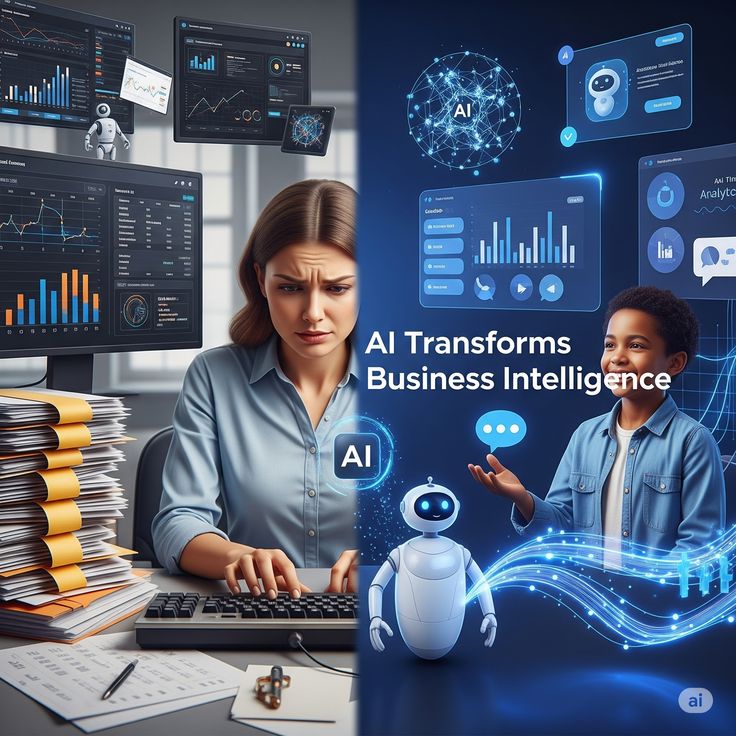
How AI Is Revolutionizing Business Intelligence and Analytics

Introduction In today’s digital economy, businesses generate massive amounts of data every second. From customer interactions and sales transactions to website activity and operational metrics, organizations have access to more information than ever before. However, collecting data alone is not enough. The real challenge lies in transforming that data into actionable insights that drive better business decisions. This is where Artificial Intelligence (AI) is changing the landscape of Business Intelligence (BI) and analytics. Traditional BI systems helped organizations analyze historical data and create reports. AI-powered BI takes this a step further by uncovering hidden patterns, predicting future outcomes, automating analysis, and providing real-time recommendations. As companies strive to remain competitive in rapidly changing markets, AI-driven business intelligence is becoming a critical tool for growth, efficiency, and innovation. What Is Business Intelligence? Business Intelligence refers to the technologies, processes, and strategies used to collect, analyze, and visualize business data. The primary goal of BI is to help organizations make informed decisions based on accurate information. Traditional BI solutions typically focus on: Data collection and storage Reporting and dashboards Performance monitoring Historical data analysis Trend identification While these capabilities remain valuable, modern businesses require deeper insights and faster decision-making. AI addresses these needs by enhancing the capabilities of conventional BI platforms. The Growing Role of AI in Business Intelligence Artificial Intelligence enables machines to analyze data, learn from patterns, and make predictions with minimal human intervention. When integrated with business intelligence systems, AI helps organizations move from descriptive analytics to predictive and prescriptive analytics. Instead of simply answering questions like: “What happened?” AI-powered systems can answer: “Why did it happen?” “What is likely to happen next?” “What actions should we take?” This shift allows businesses to become more proactive rather than reactive. Automated Data Analysis One of the biggest advantages of AI in business intelligence is automation. Traditional data analysis often requires teams of analysts to collect data, clean datasets, create reports, and identify trends manually. This process can take hours or even days. AI-powered analytics platforms can automate many of these tasks by: Cleaning and organizing data Detecting anomalies Identifying trends Generating reports Highlighting important insights Automation reduces human error and enables organizations to analyze larger volumes of data much faster. For example, a retail company can automatically monitor thousands of products and instantly identify unusual changes in sales patterns without requiring manual investigation. Predictive Analytics: Looking Into the Future Predictive analytics is one of the most impactful applications of AI in business intelligence. Using historical data and machine learning algorithms, AI can forecast future outcomes with impressive accuracy. Businesses use predictive analytics to: Forecast sales demand Predict customer behavior Estimate inventory requirements Identify market trends Reduce operational risks For instance, an e-commerce company can predict which products will experience increased demand during upcoming seasons and adjust inventory levels accordingly. This proactive approach helps organizations improve efficiency and reduce costs. Real-Time Decision Making Modern businesses operate in fast-moving environments where decisions often need to be made instantly. Traditional BI systems typically rely on periodic reports, which may already be outdated by the time they are reviewed. AI-driven analytics platforms continuously process incoming data and provide real-time insights. Benefits include: Faster response to market changes Improved customer service Immediate detection of operational issues Better financial monitoring Enhanced risk management For example, financial institutions can detect suspicious transactions in real time and prevent fraudulent activities before significant damage occurs. Enhanced Data Visualization Data visualization is a core component of business intelligence. AI is making dashboards smarter and easier to understand by automatically identifying key insights and presenting them in visually meaningful ways. Advanced BI tools can: Highlight critical trends automatically Generate dynamic charts and graphs Explain data patterns in plain language Customize dashboards for different users Instead of manually searching through hundreds of charts, decision-makers receive instant summaries of the most important business developments. This significantly improves productivity and decision quality. Natural Language Queries One of the most user-friendly innovations in AI-powered business intelligence is Natural Language Processing (NLP). NLP allows users to interact with BI systems using everyday language. Rather than writing complex database queries, users can simply ask questions such as: “What were our top-selling products last month?” “Why did sales decline in the northern region?” “Which customer segment generated the highest revenue?” The system then analyzes data and provides answers instantly. This capability makes data analysis accessible to employees without technical expertise, promoting a stronger data-driven culture throughout the organization. Improving Customer Insights Understanding customer behavior is essential for business success. AI-powered analytics helps organizations gain deeper insights into customer preferences, buying patterns, and engagement trends. Businesses can analyze: Purchase history Website interactions Social media activity Customer feedback Support requests By combining these data sources, AI creates a comprehensive customer profile that enables personalized experiences. Organizations can use these insights to: Improve marketing campaigns Increase customer retention Enhance product recommendations Deliver personalized services As a result, businesses can strengthen customer relationships and drive higher revenue. Fraud Detection and Risk Management Many industries face increasing challenges related to fraud and risk. AI significantly improves risk management by continuously monitoring transactions and identifying suspicious behavior. Machine learning algorithms can detect unusual patterns that may indicate: Financial fraud Cybersecurity threats Compliance violations Operational risks Unlike traditional rule-based systems, AI continuously learns and adapts to emerging threats. This capability helps organizations reduce financial losses and improve security. Supply Chain Optimization Supply chain management generates enormous amounts of operational data. AI-powered business intelligence solutions help companies optimize supply chains through advanced analytics and forecasting. Key benefits include: Demand prediction Inventory optimization Supplier performance monitoring Logistics planning Cost reduction For example, manufacturers can predict supply shortages before they occur and take preventive action to avoid production delays. This leads to greater efficiency and improved customer satisfaction. Personalized Business Strategies Every business operates under unique conditions and objectives. AI enables organizations to develop personalized strategies based on their specific data and performance metrics. Instead of relying solely on industry averages, companies can make decisions based on:

Artificial Intelligence, Digital Transformation, Educational Technology

Multimodal AI Explained: The Future of Human-Computer Interaction

Introduction Artificial Intelligence has evolved rapidly over the past decade, moving from simple rule-based systems to highly sophisticated models capable of understanding and generating human-like content. One of the most significant breakthroughs in recent years is the emergence of Multimodal AI, a technology that allows machines to process and understand multiple forms of data simultaneously, including text, images, audio, video, and even sensor inputs. Traditional AI systems typically specialize in a single type of input. For example, a chatbot processes text, while an image recognition system analyzes pictures. Multimodal AI changes this paradigm by combining different data types into a unified understanding. This advancement is paving the way for a new era of human-computer interaction where technology can communicate more naturally, understand context better, and provide richer experiences. As businesses, developers, and consumers increasingly adopt AI-powered tools, Multimodal AI is expected to become one of the defining technologies of the next decade. From virtual assistants and healthcare applications to autonomous vehicles and smart workplaces, its influence is already being felt across industries. What Is Multimodal AI? Multimodal AI refers to artificial intelligence systems that can process and interpret information from multiple sources or modalities simultaneously. These modalities include: Text Images Audio Video Sensor Data Gestures and Physical Inputs Humans naturally use multiple senses to understand the world. For example, during a conversation, we listen to words, observe facial expressions, and interpret body language at the same time. Multimodal AI aims to replicate this ability by integrating different forms of information into a single intelligent system. Instead of analyzing data in isolation, Multimodal AI combines various inputs to gain a deeper understanding of context and intent. This enables more accurate decision-making and more natural interactions between humans and machines. The Evolution of Human-Computer Interaction Human-computer interaction has undergone several major transformations over the years. Command-Line Interfaces Early computers relied on text-based commands. Users needed technical knowledge to communicate with machines effectively. Graphical User Interfaces The introduction of graphical interfaces made computers more accessible. Users could interact through windows, icons, and menus instead of memorizing commands. Touch-Based Interaction The rise of smartphones and tablets introduced touchscreens, making interaction more intuitive and mobile. Voice Assistants Virtual assistants brought voice recognition into mainstream technology, allowing users to perform tasks through spoken commands. Multimodal Interaction Today, AI systems are moving beyond single-input methods. Users can speak, type, upload images, share videos, and interact naturally with intelligent systems that understand all these inputs together. This shift represents one of the most significant changes in the history of computing. How Multimodal AI Works At its core, Multimodal AI combines information from different data sources and processes them through advanced machine learning models. The process generally involves several steps: Data Collection The AI gathers data from multiple sources such as text documents, images, microphones, cameras, and sensors. Data Processing Each data type undergoes specialized processing: Natural Language Processing for text Computer Vision for images and videos Speech Recognition for audio Sensor Analysis for environmental inputs Data Fusion The processed information is combined into a unified representation that allows the AI to understand relationships between different inputs. Contextual Understanding The AI analyzes the combined information to determine meaning, intent, and context. Response Generation Based on its understanding, the system generates an appropriate output, which could be text, speech, images, recommendations, or actions. This integrated approach enables more intelligent and context-aware interactions. Why Multimodal AI Is Important The significance of Multimodal AI lies in its ability to bridge the gap between human communication and machine understanding. Improved Accuracy Using multiple data sources reduces ambiguity and improves decision-making. For example, a voice command combined with visual context allows an AI assistant to better understand what a user is requesting. Better User Experiences Interactions become more natural because users can communicate in the way that feels most comfortable. Enhanced Context Awareness Multimodal systems understand situations more effectively by considering multiple signals simultaneously. Increased Accessibility People with different abilities can interact with technology using speech, images, gestures, or text. More Human-Like Communication By understanding various forms of input, AI systems can engage in conversations and interactions that closely resemble human communication. Key Technologies Powering Multimodal AI Several advanced technologies contribute to the development of multimodal systems. Natural Language Processing NLP enables machines to understand, interpret, and generate human language. Computer Vision Computer vision allows AI systems to analyze images, videos, objects, faces, and environments. Speech Recognition Speech technologies convert spoken language into machine-readable formats. Deep Learning Neural networks help identify complex patterns across multiple data types. Generative AI Models Modern generative models can create text, images, audio, and video content from various inputs. Large Language Models Advanced language models provide the reasoning and contextual understanding necessary for multimodal applications. Together, these technologies create AI systems capable of understanding and generating rich, multi-format content. Real-World Applications of Multimodal AI Healthcare Healthcare organizations are using Multimodal AI to analyze medical records, diagnostic images, laboratory reports, and physician notes simultaneously. Benefits include: Faster diagnosis Improved treatment planning Better patient monitoring Enhanced medical research Doctors can receive more comprehensive insights by combining information from multiple sources. Customer Service Businesses are implementing AI-powered support systems that understand: Customer messages Voice conversations Uploaded screenshots Product photos This allows customer service teams to resolve issues faster and improve customer satisfaction. Education Educational platforms use Multimodal AI to create personalized learning experiences. Students can: Ask questions verbally Submit handwritten assignments Upload images Receive customized explanations This makes learning more interactive and accessible. Autonomous Vehicles Self-driving vehicles rely heavily on multimodal intelligence. They combine information from: Cameras Radar systems LiDAR sensors GPS data Traffic information This comprehensive understanding helps vehicles navigate safely. Smart Assistants Next-generation AI assistants can process text, voice, images, and video simultaneously. Users may simply take a picture, ask a question, and receive an accurate response without needing to provide detailed descriptions. Retail and E-Commerce Retailers use Multimodal AI for: Visual product searches Personalized recommendations Inventory management Customer behavior analysis Shoppers can upload images of products they like

Artificial Intelligence, Business Intelligence

The Rise of AI Employees: Will Digital Workers Become Mainstream?

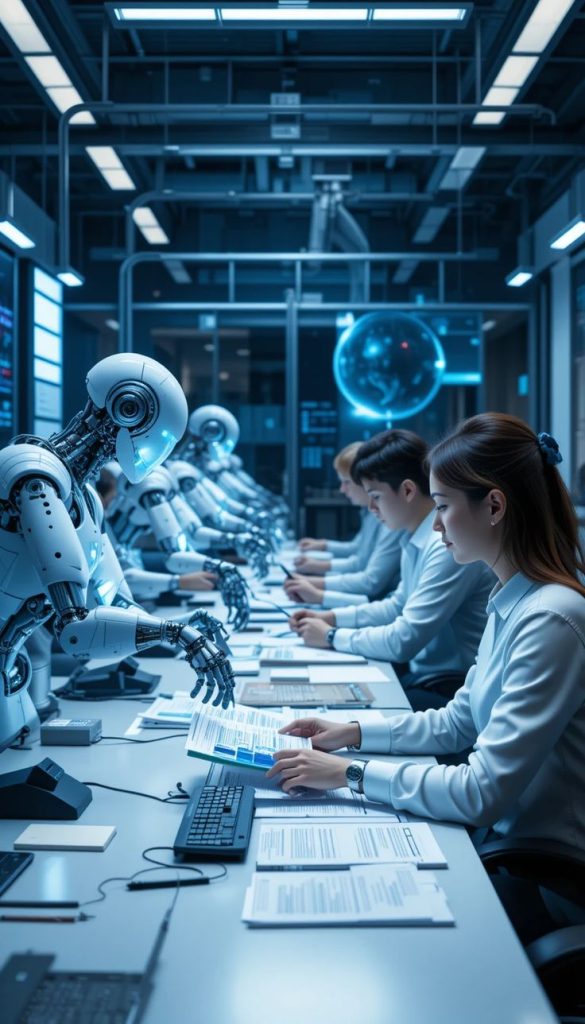
The Rise of AI Employees: Will Digital Workers Become Mainstream? Artificial Intelligence has already transformed the way businesses operate, from automating repetitive tasks to enhancing customer experiences. However, a new evolution in AI technology is beginning to reshape workplaces on a much larger scale: AI employees. Unlike traditional software tools that assist workers with specific tasks, AI employees are designed to function more like digital coworkers. They can manage workflows, communicate with customers, analyze data, make recommendations, and even execute complex business processes with minimal human intervention. As organizations continue to seek greater efficiency, lower operational costs, and improved productivity, AI employees are rapidly moving from experimental projects to practical business solutions. Technology leaders, startups, and enterprise organizations are investing heavily in AI-powered agents that can perform roles traditionally handled by humans. This shift raises important questions. Will digital workers become a standard part of every organization? How will they impact jobs and workplace dynamics? What benefits and challenges do they bring? Understanding the rise of AI employees provides valuable insight into the future of work and the next phase of digital transformation. Understanding AI Employees The term “AI employee” refers to an artificial intelligence system capable of performing work-related tasks autonomously or semi-autonomously. These systems go beyond simple automation tools because they can understand context, learn from interactions, make decisions, and adapt to changing business requirements. AI employees often leverage advanced technologies such as machine learning, natural language processing, large language models, and workflow automation platforms. They can interact with humans through chat interfaces, email, voice communication, and enterprise software systems. Unlike traditional automation software, AI employees can handle more dynamic responsibilities, including: Responding to customer inquiries Scheduling meetings Managing project workflows Conducting research Generating reports Processing business documents Supporting sales operations Assisting human resources teams Monitoring cybersecurity threats Managing inventory and supply chains The growing capabilities of AI systems are enabling businesses to treat them as active contributors rather than passive tools. Why Businesses Are Adopting AI Employees Organizations face increasing pressure to remain competitive while controlling costs and improving operational efficiency. AI employees offer several advantages that make them attractive to businesses of all sizes. Increased Productivity One of the primary reasons companies adopt AI employees is productivity improvement. Digital workers can operate continuously without breaks, allowing organizations to complete tasks faster and maintain around-the-clock operations. Routine administrative activities that once consumed significant employee time can now be handled automatically, enabling human workers to focus on strategic and creative responsibilities. Cost Efficiency Hiring, training, and retaining employees involves substantial expenses. While AI systems require investment, they can significantly reduce operational costs over time by automating repetitive processes and minimizing manual workloads. For businesses managing large volumes of customer interactions, transactions, or documentation, AI employees can provide substantial financial benefits. Faster Decision-Making AI employees can process vast amounts of data within seconds. This capability enables organizations to make informed decisions more quickly than traditional methods. From analyzing market trends to identifying operational bottlenecks, AI-powered systems can generate insights that help leaders respond to opportunities and challenges in real time. Improved Customer Service Modern consumers expect instant responses and personalized experiences. AI employees can deliver both. Digital customer service agents can answer questions, resolve common issues, and guide customers through processes at any time of day. This enhances customer satisfaction while reducing the workload on support teams. Scalability Human teams often require significant resources to expand operations. AI employees can scale much more efficiently. Whether a company experiences seasonal demand spikes or rapid business growth, AI-powered systems can often adapt without requiring large increases in staffing. The Evolution from Chatbots to Digital Workers Many people associate AI in business with chatbots, but AI employees represent a major advancement beyond traditional conversational systems. Early chatbots followed scripted workflows and could only answer predefined questions. Their capabilities were limited and often frustrating for users. Today’s AI employees can: Understand complex requests Maintain conversational context Access multiple business systems Complete multi-step tasks Generate original content Learn from interactions Collaborate with human employees This evolution has transformed AI from a customer support tool into a versatile workforce solution capable of contributing across entire organizations. Industries Leading the Adoption of AI Employees Several industries are already embracing AI employees and demonstrating how digital workers can create measurable value. Customer Service Customer support remains one of the largest areas for AI adoption. AI employees can manage inquiries, process requests, provide technical assistance, and resolve common issues without human intervention. This reduces response times and improves service availability. Healthcare Healthcare organizations use AI employees to support administrative operations, appointment scheduling, patient communication, and medical documentation. These systems help reduce administrative burdens and allow healthcare professionals to focus more on patient care. Financial Services Banks and financial institutions increasingly rely on AI employees for fraud detection, risk analysis, compliance monitoring, and customer assistance. The ability to analyze large datasets quickly makes AI particularly valuable in the financial sector. Human Resources Recruitment and employee management involve many repetitive tasks that AI employees can handle efficiently. Digital workers assist with resume screening, candidate communication, interview scheduling, onboarding, and employee support. Marketing Marketing teams are leveraging AI employees to create content, analyze campaign performance, conduct audience research, and personalize customer engagement strategies. These capabilities help organizations improve marketing effectiveness while reducing manual effort. Manufacturing Manufacturers use AI employees to monitor equipment performance, optimize production schedules, predict maintenance needs, and improve supply chain operations. The result is greater operational efficiency and reduced downtime. How AI Employees Are Changing Workplace Roles The introduction of AI employees does not necessarily mean the elimination of human workers. Instead, it often changes how work is performed. Employees increasingly spend less time on repetitive administrative tasks and more time on activities that require creativity, critical thinking, emotional intelligence, and strategic planning. Many organizations are adopting a collaborative model where humans and AI employees work together. For example: Sales representatives use AI to analyze customer data. Marketers use AI to generate campaign ideas. Project managers use

cybersecurity, Digital Transformation, Educational Technology, enterprise

Zero Trust Security: Why Organizations Are Adopting It Faster Than Ever

Zero Trust Security: Why Organizations Are Adopting It Faster Than Ever Cybersecurity has never been more important than it is today. Organizations across the globe are facing an unprecedented number of cyber threats, ranging from ransomware attacks and phishing campaigns to insider threats and sophisticated nation-state cyber operations. As businesses continue to embrace cloud computing, remote work, digital transformation, and interconnected technologies, traditional security models are proving increasingly inadequate. For decades, organizations relied on perimeter-based security strategies. The assumption was simple: anything inside the corporate network could be trusted, while anything outside should be treated as a potential threat. Firewalls, VPNs, and network segmentation formed the backbone of enterprise security. However, the modern digital environment has fundamentally changed this approach. Employees access company resources from multiple devices and locations. Applications reside in public and private clouds. Third-party vendors require network access. Sensitive data moves continuously between platforms and users. In this new reality, the concept of trust based solely on network location no longer works. This is where Zero Trust Security comes into the picture. Zero Trust has rapidly evolved from a cybersecurity concept into one of the most widely adopted security frameworks worldwide. Organizations of all sizes are investing heavily in Zero Trust architectures to protect their digital assets, strengthen compliance, and reduce cyber risks. But what exactly is Zero Trust Security, and why are organizations adopting it faster than ever before? Let’s explore. Understanding Zero Trust Security Zero Trust Security is a cybersecurity framework built on a simple but powerful principle: “Never Trust, Always Verify.” Unlike traditional security models that automatically trust users and devices inside a corporate network, Zero Trust assumes that every user, device, application, and connection could potentially be compromised. Under a Zero Trust model, no entity receives automatic trust, regardless of whether it is inside or outside the network perimeter. Every access request must be continuously verified before access is granted. This verification process typically includes: Identity verification Device authentication Access control policies User behavior analysis Multi-factor authentication Continuous monitoring The objective is to minimize risk by ensuring that only authorized users can access specific resources under predefined conditions. The Evolution of Cybersecurity Threats One of the biggest reasons organizations are embracing Zero Trust is the dramatic evolution of cyber threats. Modern cybercriminals have become more sophisticated than ever. Today’s attackers use advanced techniques such as: Ransomware-as-a-Service (RaaS) AI-powered phishing attacks Credential theft Supply chain attacks Insider threats Cloud account compromises Social engineering campaigns Many of these attacks bypass traditional security defenses because they exploit trusted accounts and legitimate access credentials. When attackers successfully steal login credentials, they can often move freely across traditional networks without triggering security alerts. Zero Trust eliminates this weakness by requiring verification at every stage of access. Even if an attacker compromises one account, they cannot automatically gain unrestricted access to sensitive systems. This significantly reduces the attack surface and limits potential damage. Why Traditional Security Models Are Failing The traditional “castle-and-moat” approach to cybersecurity was designed for a different era. In the past: Employees worked primarily from offices. Applications were hosted on-premises. Data remained within corporate networks. Devices were company-managed. Today, none of these assumptions consistently apply. Modern enterprises operate in highly distributed environments where: Employees work remotely. Applications run in multiple clouds. Data resides across various platforms. Contractors and vendors require access. Employees use personal devices. As a result, the network perimeter has effectively disappeared. Organizations can no longer rely solely on perimeter defenses because users and data exist far beyond traditional boundaries. Zero Trust addresses this challenge by focusing on identities, devices, and access rather than network location. The Core Principles of Zero Trust Security While Zero Trust implementations vary between organizations, most frameworks follow several key principles. Verify Every User Every user must authenticate before accessing resources. Authentication methods may include: Passwords Biometrics Security tokens Multi-factor authentication Identity verification is performed continuously rather than only during login. Least Privilege Access Users receive only the minimum access necessary to perform their tasks. This approach reduces risk because compromised accounts cannot access systems beyond their authorized permissions. Least privilege significantly limits lateral movement during cyberattacks. Continuous Monitoring Security teams continuously monitor user activities, devices, and network traffic. Behavior analytics help identify unusual patterns that may indicate malicious activity. Suspicious behavior triggers additional verification or access restrictions. Assume Breach Zero Trust operates under the assumption that breaches can occur at any time. Instead of focusing solely on prevention, organizations prioritize detection, containment, and response. This mindset improves resilience against sophisticated attacks. Device Security Verification Access decisions consider device health and security status. Devices may be evaluated based on: Operating system updates Antivirus status Encryption settings Security compliance Compromised or non-compliant devices may be denied access. The Remote Work Revolution Accelerated Adoption The global shift toward remote and hybrid work has dramatically accelerated Zero Trust adoption. Employees now access corporate resources from: Home offices Coffee shops Airports Co-working spaces Mobile devices Traditional VPN-based security approaches struggle to secure this distributed workforce effectively. Organizations need a security framework that protects users regardless of location. Zero Trust enables secure access by verifying users and devices rather than relying on network boundaries. As remote work becomes a permanent part of business operations, Zero Trust continues to gain momentum. Cloud Computing and Zero Trust Cloud adoption is another major driver behind the rise of Zero Trust Security. Modern organizations increasingly rely on: Software-as-a-Service (SaaS) Infrastructure-as-a-Service (IaaS) Platform-as-a-Service (PaaS) Cloud environments introduce new security challenges because resources are distributed across multiple providers and locations. Traditional security architectures often lack visibility and control in these environments. Zero Trust helps organizations secure cloud assets through: Strong identity management Granular access controls Continuous authentication Micro-segmentation Cloud workload protection This approach improves security without sacrificing flexibility. The Role of Multi-Factor Authentication Multi-factor authentication (MFA) has become a cornerstone of Zero Trust Security. Passwords alone are no longer sufficient. Attackers frequently obtain credentials through: Phishing attacks Data breaches Malware Credential stuffing MFA requires users to provide additional verification

Blockchain & Technology, Digital Transformation, Educational Technology, enterprise

Blockchain Beyond Cryptocurrency: Real-World Enterprise Applications

Introduction When most people hear the word blockchain, their minds immediately jump to cryptocurrencies like Bitcoin. While digital currencies played a significant role in introducing blockchain to the world, the technology has evolved far beyond its original purpose. Today, organizations across industries are leveraging blockchain to improve transparency, security, efficiency, and trust in business operations. From managing global supply chains to securing healthcare records and streamlining financial transactions, blockchain is emerging as a powerful tool for enterprise transformation. As businesses continue their digital transformation journeys, blockchain is increasingly becoming a strategic technology rather than merely a foundation for cryptocurrencies. This article explores how blockchain is being applied in real-world enterprise environments, the benefits it offers, the challenges organizations face, and what the future holds for this revolutionary technology. Understanding Blockchain Technology At its core, blockchain is a distributed digital ledger that records transactions across multiple computers. Unlike traditional databases controlled by a central authority, blockchain stores information in a decentralized manner. Each transaction is grouped into a block, and once verified, it becomes linked to the previous block, forming a chain of records. This structure creates an immutable and transparent history of transactions that cannot be altered without consensus from the network. Several characteristics make blockchain particularly valuable for enterprises: Transparency and auditability Enhanced security through cryptography Decentralized data management Reduced risk of fraud Improved trust among stakeholders Automation through smart contracts These capabilities have encouraged organizations to explore blockchain applications beyond digital currencies. Why Enterprises Are Investing in Blockchain Modern businesses operate in increasingly complex ecosystems involving suppliers, customers, partners, regulators, and service providers. Managing information across these networks often creates inefficiencies, duplication, and security risks. Blockchain addresses many of these challenges by providing a shared source of truth that all authorized participants can trust. Organizations are investing in blockchain because it can: Reduce operational costs Improve transaction speed Enhance transparency Strengthen cybersecurity Increase regulatory compliance Eliminate unnecessary intermediaries Improve customer trust As a result, blockchain adoption is growing across various sectors, including finance, healthcare, manufacturing, logistics, retail, and government services. Supply Chain Management and Traceability One of the most successful enterprise applications of blockchain is supply chain management. Traditional supply chains involve multiple parties, including manufacturers, distributors, suppliers, transportation providers, and retailers. Tracking products throughout this journey can be difficult, especially when data is stored in separate systems. Blockchain creates a shared ledger where every participant can record and verify information in real time. Product Traceability Companies can track products from raw material sourcing to final delivery. This visibility helps organizations verify authenticity, prevent counterfeiting, and ensure compliance with industry standards. For example, food producers can trace agricultural products back to their source within seconds. If contamination occurs, affected products can be identified and removed quickly, reducing risks and costs. Improved Transparency Customers increasingly demand information about where products originate and how they are manufactured. Blockchain enables businesses to provide transparent records regarding: Product origins Manufacturing processes Transportation history Sustainability practices Ethical sourcing standards This transparency strengthens consumer confidence and brand reputation. Reduced Fraud Counterfeit goods cost businesses billions of dollars annually. Blockchain records make it significantly more difficult for fraudulent products to enter legitimate supply chains. Smart Contracts and Business Automation Smart contracts are self-executing digital agreements stored on a blockchain. These contracts automatically perform actions when predefined conditions are met, reducing the need for manual intervention. Automating Payments Businesses can automate supplier payments when goods are delivered and verified. This eliminates delays and minimizes administrative overhead. Streamlining Procurement Procurement processes often involve extensive paperwork and approvals. Smart contracts can automatically: Verify purchase orders Confirm deliveries Trigger payments Update inventory systems This automation reduces processing time and human error. Insurance Claims Processing Insurance companies can use smart contracts to automatically process claims when specific conditions are verified. For example, travel insurance policies can issue compensation immediately when a flight delay is confirmed through trusted data sources. Blockchain in Financial Services Although blockchain originated within the financial sector, enterprise applications extend far beyond cryptocurrency trading. Cross-Border Payments Traditional international payments often involve multiple intermediaries and lengthy processing times. Blockchain networks can facilitate faster and more cost-effective cross-border transactions by reducing dependency on intermediary institutions. Trade Finance Trade finance processes frequently rely on paper-based documentation and manual verification. Blockchain helps digitize: Letters of credit Shipping documents Trade agreements Payment records This improves efficiency while reducing fraud and administrative costs. Fraud Prevention Financial institutions are adopting blockchain to strengthen transaction security and reduce fraudulent activities. The technology’s immutable records create reliable audit trails that make unauthorized alterations extremely difficult. Digital Identity Verification Banks and financial organizations can use blockchain-based identity systems to streamline customer verification procedures while enhancing privacy and security. Healthcare and Medical Records Management Healthcare organizations generate massive amounts of sensitive data. Managing patient records securely while ensuring accessibility remains a major challenge. Secure Patient Records Blockchain allows healthcare providers to store and share patient information securely. Authorized medical professionals can access accurate records while maintaining strict privacy controls. Improved Interoperability Medical records are often fragmented across multiple systems and providers. Blockchain can create unified patient histories accessible across healthcare networks, improving care coordination. Drug Supply Chain Verification Counterfeit medications represent a serious global concern. Blockchain enables pharmaceutical companies to track medications throughout the supply chain, ensuring authenticity and patient safety. Clinical Research Researchers can use blockchain to maintain transparent and tamper-proof records of clinical trial data, enhancing trust and regulatory compliance. Digital Identity and Access Management Identity verification is becoming increasingly important in the digital economy. Traditional identity systems often expose users to data breaches and identity theft. Blockchain-based identity solutions allow individuals to maintain greater control over their personal information. Self-Sovereign Identity Users can manage and share verified credentials without relying entirely on centralized databases. Benefits include: Enhanced privacy Reduced identity fraud Simplified verification processes Better user control Enterprise Access Control Organizations can use blockchain to manage employee credentials, system access permissions, and authentication processes more securely. Blockchain in Real Estate Real estate transactions typically

Software development, Technology, Technology & Innovation

The Future of Wearable Technology: Beyond Smartwatches

The Future of Wearable Technology: Beyond Smartwatches Wearable technology has become a major part of modern life. Just a decade ago, wearable devices were mostly limited to fitness bands that counted steps and tracked basic activity. Today, smartwatches can monitor heart rates, detect falls, measure blood oxygen levels, and even perform electrocardiograms. However, the wearable technology industry is rapidly moving beyond smartwatches. In 2026, the next generation of wearable devices is transforming how people interact with technology, manage their health, communicate, and experience the digital world. From smart glasses and AI-powered assistants to smart clothing and health-monitoring patches, wearable technology is becoming more intelligent, less intrusive, and more integrated into everyday life. As advancements in artificial intelligence, sensors, connectivity, and materials science continue to accelerate, the future of wearable technology promises experiences that were once considered science fiction. The Evolution of Wearable Technology The journey of wearable technology began with simple devices designed to track physical activity. Over time, improvements in miniaturization, battery efficiency, and wireless communication allowed manufacturers to create more sophisticated products. The first wave of wearables focused on fitness tracking. The second wave introduced smartwatches capable of delivering notifications, supporting mobile payments, and monitoring health metrics. Today, the industry is entering its third wave, where wearable devices are becoming proactive companions rather than passive tools. Modern wearables are increasingly capable of understanding user behavior, predicting needs, and providing personalized recommendations through artificial intelligence. Instead of simply collecting data, future wearables will help users make informed decisions about their health, productivity, and daily routines. Why the Smartwatch Is No Longer the Center of Innovation Although smartwatches remain popular, they face several limitations. Small screens restrict user interactions, battery life remains a challenge, and constant notifications can contribute to digital fatigue. Technology companies are now exploring alternative wearable formats that provide richer experiences while reducing dependence on smartphones and traditional screen-based interfaces. The goal is not to replace smartwatches entirely but to create an ecosystem of specialized wearable devices that work together seamlessly. Smart Glasses: The Next Major Computing Platform One of the most promising developments in wearable technology is the rise of smart glasses. Unlike traditional screens that require users to look down at a phone or smartwatch, smart glasses place information directly within the user’s field of vision. This creates a more natural and immersive way of interacting with digital content. Future smart glasses are expected to offer: Real-time navigation overlays Instant language translation Hands-free communication AI-powered personal assistance Enhanced workplace productivity Augmented reality experiences Advancements in display technology are making smart glasses lighter, more stylish, and more practical for everyday use. As battery performance improves and artificial intelligence becomes more capable, smart glasses could eventually become the primary interface for digital interactions. AI-Powered Wearables Are Becoming Personal Assistants Artificial intelligence is rapidly becoming the driving force behind wearable innovation. Future wearable devices will do far more than collect information. They will analyze behavior patterns, understand user preferences, and proactively offer assistance. Imagine a wearable device that: Detects signs of stress before you notice them Suggests breaks during long work sessions Provides personalized fitness coaching Recommends dietary adjustments Schedules meetings based on energy levels Offers contextual information during conversations These capabilities are becoming possible through advanced machine learning models that process data directly on devices or through secure cloud platforms. AI-powered wearables are transforming technology from a reactive tool into a proactive companion. The Rise of Smart Clothing Smart clothing is emerging as one of the most exciting areas of wearable technology. Instead of wearing separate devices, users may soon wear garments embedded with intelligent sensors. These textiles can continuously monitor various physiological and environmental conditions without requiring additional accessories. Potential applications include: Heart rate monitoring Respiratory tracking Muscle activity analysis Posture correction Temperature regulation Athletic performance optimization For athletes, smart clothing can provide detailed performance insights. For healthcare providers, it can enable continuous patient monitoring. For everyday users, it can offer health tracking without the inconvenience of multiple devices. As flexible electronics become more affordable, smart clothing could become a mainstream technology over the next decade. Wearable Health Technology Is Revolutionizing Healthcare Healthcare remains one of the most impactful applications of wearable technology. Current wearable devices already track: Heart rate Sleep quality Blood oxygen levels Physical activity Stress indicators Future generations of wearables are expected to monitor even more advanced health metrics, including: Continuous blood pressure tracking Non-invasive glucose monitoring Hydration levels Early disease detection Respiratory health indicators Mental wellness metrics Continuous monitoring allows healthcare professionals to identify health risks before symptoms become severe. This shift from reactive healthcare to preventive healthcare has the potential to improve outcomes while reducing medical costs. Wearable health technology could become a critical component of personalized medicine in the coming years. Smart Rings Are Gaining Popularity Smart rings represent another growing category within wearable technology. These compact devices provide many of the same benefits as smartwatches while offering a more discreet form factor. Modern smart rings can track: Sleep patterns Activity levels Heart rate variability Stress levels Recovery metrics Because they are lightweight and comfortable, smart rings appeal to users who prefer minimalistic technology. As sensor technology continues to improve, smart rings may become powerful health-monitoring tools capable of delivering highly accurate biometric data. Brain-Computer Interfaces and Neural Wearables Perhaps the most futuristic area of wearable technology involves brain-computer interfaces (BCIs). These systems allow direct communication between the human brain and digital devices. Although still in the early stages of development, neural wearables could eventually enable: Hands-free device control Enhanced accessibility for people with disabilities Faster communication Advanced gaming experiences Cognitive monitoring Personalized learning systems Researchers and technology companies are investing heavily in this field because of its potential to redefine human-computer interaction. While widespread adoption may still be years away, neural wearables represent one of the most transformative possibilities for the future. Wearable Technology in the Workplace Businesses are increasingly adopting wearable technology to improve productivity, safety, and efficiency. Industrial wearables can help workers by: Providing real-time instructions

Artificial Intelligence, Software development, Technology & Innovation

Green AI: Making Artificial Intelligence More Sustainable

Green AI: Making Artificial Intelligence More Sustainable Artificial Intelligence (AI) has become one of the most transformative technologies of the modern era. From powering virtual assistants and recommendation systems to driving autonomous vehicles and advanced medical diagnostics, AI is changing the way individuals, businesses, and governments operate. However, as AI systems become more powerful and widespread, concerns about their environmental impact are growing. Training and operating large AI models require significant computing power, which in turn consumes vast amounts of electricity. Data centers housing AI infrastructure operate around the clock, contributing to energy consumption and carbon emissions. As organizations increasingly adopt AI solutions, the need for sustainable practices has become more important than ever. This is where Green AI comes into the picture. Green AI focuses on developing, deploying, and maintaining artificial intelligence systems in ways that minimize environmental impact while maximizing efficiency. It represents a growing movement within the technology industry aimed at balancing innovation with sustainability. What Is Green AI? Green AI refers to the practice of designing artificial intelligence systems that prioritize energy efficiency, resource optimization, and environmental sustainability. Unlike traditional AI development, which often focuses solely on achieving higher performance and accuracy, Green AI also considers the environmental costs associated with training and running AI models. The concept encourages researchers and organizations to measure not only the effectiveness of AI systems but also the resources required to build and operate them. This includes factors such as electricity consumption, carbon emissions, hardware utilization, and computational efficiency. Green AI promotes the idea that technological progress should not come at the expense of the environment. Instead, innovation should be aligned with sustainable development goals. Why Sustainability Matters in AI Artificial intelligence models are becoming increasingly complex. Modern generative AI systems often require enormous datasets and thousands of powerful processors to train effectively. Training a single large-scale AI model can consume as much electricity as hundreds of households use over several months. As AI adoption accelerates across industries, energy demand is expected to rise significantly. Without sustainable practices, the environmental footprint of AI could become a major concern. Several factors highlight the importance of sustainability in AI: Rising Energy Consumption AI workloads demand substantial computing resources. Large language models, image generation systems, and deep learning networks require extensive processing power that translates directly into increased energy usage. Growing Data Center Footprint Data centers serve as the backbone of AI infrastructure. These facilities consume massive amounts of electricity for both computing and cooling systems. As AI applications expand, data center energy requirements continue to increase. Carbon Emissions In regions where electricity is generated from fossil fuels, AI operations contribute to greenhouse gas emissions. Reducing these emissions is critical to achieving global climate goals. Resource Utilization Manufacturing AI hardware such as GPUs and specialized chips requires valuable natural resources. Sustainable AI practices help maximize the lifespan and efficiency of these technologies. The Evolution of Green AI The discussion around Green AI gained momentum as researchers began examining the environmental costs of training increasingly large machine learning models. While advancements in AI delivered impressive results, many experts questioned whether the pursuit of marginal performance improvements justified the significant increase in computational requirements. As awareness grew, researchers started advocating for greater transparency regarding the energy consumption and carbon footprint of AI systems. This shift encouraged organizations to consider efficiency as a key performance metric alongside accuracy. Today, Green AI has evolved into a broader movement that includes sustainable infrastructure, energy-efficient algorithms, responsible hardware design, and environmentally conscious deployment strategies. Key Principles of Green AI Energy Efficiency One of the primary goals of Green AI is reducing the amount of energy required to train and operate AI models. Developers achieve this through optimized algorithms, efficient architectures, and improved hardware utilization. Resource Optimization Green AI encourages maximizing the use of existing computational resources. Instead of constantly scaling infrastructure, organizations focus on improving efficiency and eliminating waste. Transparency Researchers are increasingly reporting computational costs alongside model performance metrics. This transparency helps stakeholders make informed decisions about AI development practices. Sustainable Infrastructure Green AI supports the use of renewable energy sources, efficient cooling systems, and environmentally friendly data center designs. Long-Term Environmental Responsibility The movement promotes balancing technological innovation with ecological responsibility, ensuring that future AI advancements remain sustainable. How Green AI Reduces Environmental Impact Efficient Model Design Developers are creating AI architectures that achieve comparable results with fewer parameters and lower computational requirements. Smaller and more efficient models consume less energy during both training and inference. Model Compression Techniques Techniques such as pruning, quantization, and knowledge distillation help reduce model size while maintaining performance. These methods decrease computational demands and energy consumption. Transfer Learning Rather than training models from scratch, transfer learning allows developers to build upon existing pre-trained models. This significantly reduces training time and resource requirements. Optimized Training Processes Advanced training strategies improve efficiency by reducing unnecessary computations. Better scheduling and workload management contribute to lower energy usage. Edge Computing Running AI applications closer to users through edge devices reduces the need for constant communication with centralized data centers. This can lower network energy consumption and improve efficiency. The Role of Renewable Energy in Green AI Renewable energy plays a crucial role in making AI more sustainable. Many technology companies are investing heavily in solar, wind, and hydroelectric power to support their AI operations. By powering data centers with renewable energy, organizations can significantly reduce the carbon footprint associated with AI workloads. Some companies are even designing data centers in locations where renewable energy resources are abundant. The integration of clean energy sources allows AI innovation to continue while minimizing environmental impact. Green Data Centers: The Foundation of Sustainable AI Data centers are at the heart of modern AI systems. Making these facilities more sustainable is essential for achieving Green AI objectives. Energy-Efficient Cooling Cooling systems often account for a significant portion of data center energy consumption. Modern facilities use advanced cooling technologies, including liquid cooling and intelligent climate control systems. Smart Energy Management

Cloud Computing and Technology, Educational Technology, Technology

The Evolution of Smart Factories: Industry 5.0 and Human-Machine Collaboration

Introduction The manufacturing industry has experienced several technological revolutions over the past century. From the introduction of mechanized production systems during the First Industrial Revolution to the emergence of automation and digital technologies in Industry 4.0, each phase has fundamentally changed how products are designed, manufactured, and delivered. Today, the world is entering a new era known as Industry 5.0. Unlike Industry 4.0, which primarily focused on automation, connectivity, and efficiency, Industry 5.0 places humans back at the center of industrial operations. It emphasizes collaboration between people and advanced technologies such as artificial intelligence, robotics, machine learning, digital twins, and the Industrial Internet of Things (IIoT). Smart factories are no longer designed to replace human workers. Instead, they are evolving into intelligent environments where humans and machines work together to achieve greater productivity, creativity, sustainability, and innovation. This shift is reshaping the future of manufacturing and creating opportunities for organizations to build more resilient, adaptive, and human-centric production systems. Understanding the Journey from Industry 4.0 to Industry 5.0 Industry 4.0 introduced technologies that transformed traditional factories into highly connected digital ecosystems. Sensors, cloud computing, big data analytics, and autonomous machines enabled manufacturers to automate repetitive tasks and optimize production processes. While Industry 4.0 delivered significant efficiency improvements, many organizations discovered that complete automation was not always the ideal solution. Human expertise, creativity, problem-solving abilities, and emotional intelligence remained essential in many industrial environments. Industry 5.0 emerged as a response to this realization. Rather than focusing solely on automation, Industry 5.0 aims to create a balanced relationship between human workers and intelligent machines. The goal is not to replace people but to empower them with advanced technologies that enhance their capabilities and improve decision-making. This approach recognizes that the most successful factories of the future will combine the strengths of both humans and machines. What Is a Smart Factory? A smart factory is a manufacturing facility that uses digital technologies to monitor, analyze, and optimize production processes in real time. Unlike traditional factories, smart factories can continuously collect data from machines, equipment, and production lines. This data is then processed using AI and analytics tools to improve efficiency, reduce downtime, and support better decision-making. Key characteristics of a smart factory include: Real-time data collection and monitoring Connected machines and devices Predictive maintenance systems Automated production workflows AI-powered analytics Digital twins and simulations Advanced robotics Cloud-based manufacturing platforms With the introduction of Industry 5.0, smart factories are becoming more human-centric, enabling workers to collaborate effectively with intelligent systems. The Core Principles of Industry 5.0 Industry 5.0 is built around three major principles: Human-Centric Manufacturing The human-centric approach focuses on improving the role of workers within industrial environments. Technology is designed to support people rather than replace them. Employees are empowered with AI-driven tools, augmented reality systems, and collaborative robots that assist them in performing complex tasks more efficiently. This creates a workplace where technology enhances human capabilities while improving job satisfaction and workplace safety. Sustainability Sustainability has become a critical priority for modern manufacturers. Industry 5.0 encourages organizations to reduce waste, optimize resource consumption, and minimize environmental impact. Smart factories can use AI and analytics to monitor energy usage, reduce emissions, and improve production efficiency. Sustainable manufacturing practices help businesses meet regulatory requirements while supporting global environmental goals. Resilience Recent global disruptions have highlighted the importance of resilient supply chains and manufacturing systems. Industry 5.0 emphasizes adaptability and flexibility, enabling factories to respond quickly to changing market conditions, supply chain disruptions, and customer demands. Advanced analytics and digital technologies allow manufacturers to identify potential risks and take proactive measures before problems escalate. Human-Machine Collaboration: The Foundation of Industry 5.0 One of the most significant aspects of Industry 5.0 is the concept of human-machine collaboration. Instead of operating independently, humans and machines work together as partners. Machines excel at tasks involving speed, precision, data processing, and repetitive operations. Humans contribute creativity, innovation, critical thinking, and emotional intelligence. When combined, these strengths create a highly efficient and adaptable manufacturing environment. Examples of human-machine collaboration include: Robots assisting workers with heavy lifting AI systems supporting quality control inspections Augmented reality guiding technicians during maintenance Machine learning tools providing production recommendations Digital assistants helping operators make informed decisions This collaborative approach enables organizations to achieve higher productivity while maintaining human oversight and expertise. The Rise of Collaborative Robots (Cobots) Collaborative robots, commonly known as cobots, are among the most important technologies driving Industry 5.0. Unlike traditional industrial robots that operate within isolated safety cages, cobots are designed to work directly alongside human employees. Cobots can perform repetitive, physically demanding, or dangerous tasks while allowing workers to focus on higher-value activities. Benefits of cobots include: Improved worker safety Increased productivity Reduced physical strain Faster production cycles Greater operational flexibility Easier deployment and programming Manufacturers across industries are adopting cobots to create safer and more efficient work environments. As technology continues to advance, cobots are becoming more intelligent and capable of adapting to changing production requirements. Artificial Intelligence in Smart Factories Artificial intelligence serves as the brain of modern smart factories. AI systems can analyze massive amounts of operational data and identify patterns that would be difficult for humans to detect. Applications of AI in manufacturing include: Predictive Maintenance AI algorithms can predict equipment failures before they occur. By analyzing machine performance data, manufacturers can schedule maintenance proactively, reducing downtime and repair costs. Quality Control Computer vision systems powered by AI can inspect products with remarkable accuracy. Defects can be identified in real time, ensuring higher product quality and reducing waste. Production Optimization AI can continuously evaluate production processes and recommend improvements. This helps manufacturers maximize efficiency while minimizing resource consumption. Demand Forecasting Machine learning models can predict market demand and optimize production schedules accordingly. This reduces inventory costs and improves supply chain management. AI is becoming an essential component of Industry 5.0, helping organizations make smarter and faster decisions. Digital Twins and Virtual Manufacturing Digital twin technology is transforming how manufacturers design and manage industrial operations.

Data Privacy & Security, Digital Transformation, Technology

Digital Sovereignty: Why Countries Want Greater Control Over Their Data

Digital Sovereignty: Why Countries Want Greater Control Over Their Data The digital economy has become one of the most valuable assets of the modern world. Every day, governments, businesses, and individuals generate enormous amounts of data through online transactions, cloud applications, social media platforms, connected devices, and artificial intelligence systems. Data now drives decision-making, economic growth, innovation, and national security. As technology becomes increasingly integrated into every aspect of society, many countries are asking a critical question: Who controls the data? This question has led to the rise of a concept known as digital sovereignty, a growing movement that seeks to give nations greater authority over their digital assets, infrastructure, and data. Governments worldwide are introducing policies and regulations designed to ensure that sensitive information remains protected and accessible according to national laws and interests. In 2026, digital sovereignty is no longer a niche policy discussion. It has become a central issue shaping technology strategies, international relations, cloud computing investments, and cybersecurity initiatives around the globe. What Is Digital Sovereignty? Digital sovereignty refers to a country’s ability to control its digital infrastructure, data, technologies, and online activities according to its own laws and regulations. The concept extends beyond simple data storage. It encompasses: Data ownership and governance Cloud infrastructure control Cybersecurity management Artificial intelligence regulation Digital identity systems Critical technology supply chains National internet policies In practical terms, digital sovereignty means ensuring that a country’s most important digital resources are not entirely dependent on foreign companies or governments. As digital technologies become essential to national economies, countries increasingly view data as a strategic resource similar to energy, natural resources, or critical infrastructure. Why Data Has Become a Strategic National Asset For decades, oil was often described as the world’s most valuable resource. Today, many experts argue that data has taken its place. Data powers: Artificial intelligence models Financial systems Healthcare innovation Smart city initiatives National defense systems E-commerce platforms Public services The more data organizations collect, the more effectively they can optimize operations, understand customer behavior, and develop new technologies. Because of its value, governments are becoming increasingly concerned about where data is stored, who has access to it, and how it is used. Countries recognize that losing control over critical data could create economic, political, and security vulnerabilities. The Growing Importance of Data Localization One of the most visible aspects of digital sovereignty is data localization. Data localization policies require certain types of information to be stored and processed within national borders. Governments implement these policies for several reasons: National Security Protection Sensitive government information, military data, and critical infrastructure records must remain protected from external threats. Storing such information domestically allows governments to apply local security standards and oversight. Regulatory Compliance Countries often require businesses to comply with local privacy laws and regulations. Domestic data storage simplifies enforcement and legal accountability. Economic Development Local data centers create jobs, attract technology investments, and strengthen national digital ecosystems. As a result, many nations are investing heavily in domestic cloud infrastructure. Cybersecurity Concerns Are Driving Sovereignty Efforts Cyberattacks continue to grow in both frequency and sophistication. Governments face threats from: State-sponsored hackers Cybercriminal organizations Ransomware groups Espionage operations Supply chain attacks When critical systems rely heavily on foreign technology providers, governments may have limited visibility into potential risks. Digital sovereignty initiatives help countries strengthen cybersecurity by: Building secure national infrastructure Developing local cybersecurity expertise Establishing stronger data protection controls Reducing dependency on external providers As cyber warfare becomes an increasingly important national security issue, governments view digital control as a strategic necessity. The Role of Cloud Computing in Digital Sovereignty Cloud computing has transformed the way organizations store and process data. Major cloud providers offer scalability, reliability, and cost efficiency that many organizations cannot achieve independently. However, cloud adoption has also raised concerns about sovereignty. Many governments worry about: Foreign jurisdiction over stored data Cross-border data transfers Access requests from foreign authorities Dependence on a small number of global providers To address these concerns, cloud vendors are introducing sovereign cloud solutions that provide greater transparency, local control, and compliance capabilities. These offerings are becoming increasingly attractive to governments, healthcare organizations, financial institutions, and regulated industries. Artificial Intelligence and Sovereign Data Artificial intelligence has added a new dimension to digital sovereignty discussions. AI systems rely heavily on data for training and operation. Governments are concerned about several issues: Control of Training Data Countries want assurance that sensitive national data is not being used without permission to train foreign AI models. AI Governance Governments seek to establish rules regarding how AI systems are developed, deployed, and monitored. National Competitiveness Access to high-quality data can influence a country’s ability to compete in AI innovation. As AI becomes a key driver of economic growth, digital sovereignty strategies increasingly include AI infrastructure and data governance frameworks. How Different Regions Are Approaching Digital Sovereignty Countries are pursuing digital sovereignty in different ways based on their priorities and regulatory environments. Europe European nations have emphasized privacy protection, data governance, and regulatory compliance. The region has introduced comprehensive regulations designed to strengthen control over personal data while promoting transparency and accountability. European policymakers often focus on reducing strategic dependence on non-European technology providers. Asia-Pacific Many countries in the Asia-Pacific region are investing heavily in domestic cloud infrastructure, cybersecurity programs, and AI development. Several governments have introduced data localization requirements to enhance national security and economic resilience. North America While cloud adoption remains widespread, discussions around critical infrastructure protection, cybersecurity, and AI governance continue to influence digital sovereignty initiatives. Governments increasingly recognize the importance of maintaining control over strategic digital assets. Middle East The Middle East has become a major hub for digital transformation projects. Many countries are building advanced data centers and cloud ecosystems to support economic diversification and strengthen national digital capabilities. The Economic Impact of Digital Sovereignty Digital sovereignty is creating significant economic opportunities. Growth of Local Data Centers Demand for domestic data storage is driving investments in: Data center construction Renewable energy integration Cloud infrastructure

How would you like me to respond?

Select a personality for your AI assistant

Normal
Happy
Sad
Angry

Your selection will affect how the AI assistant responds to your messages

Chat Assistant

Let's discuss your project!

Hear from our clients and why 3000+ businesses trust TechOTD

Tell us what you need, and we'll get back with a cost and timeline estimate

Scroll to Top