Smart Factories and Industry 4.0: The Future of Manufacturing Operations
Manufacturing has always been a driving force behind economic growth and industrial development. From the steam-powered machines of the First Industrial Revolution to the computer-controlled production systems of the modern era, manufacturing has continuously evolved to meet changing market demands. Today, the industry is experiencing another major transformation known as Industry 4.0, a technological revolution that is redefining how factories operate, produce goods, and interact with supply chains.
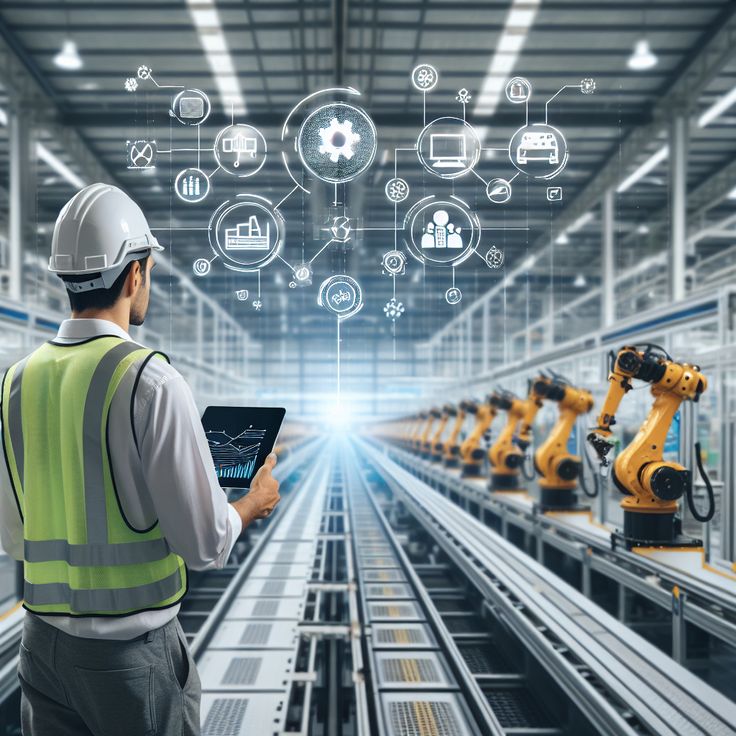
At the heart of this transformation lies the concept of the smart factory. Unlike traditional manufacturing facilities that rely heavily on manual monitoring and isolated systems, smart factories use interconnected technologies such as Artificial Intelligence (AI), the Internet of Things (IoT), cloud computing, robotics, and advanced analytics to create highly intelligent and automated production environments.
As global competition intensifies and customer expectations continue to rise, manufacturers are under increasing pressure to improve efficiency, reduce costs, enhance product quality, and accelerate innovation. Smart factories provide a solution by enabling real-time visibility, predictive decision-making, and seamless communication across the entire production ecosystem.
The combination of Industry 4.0 technologies and smart manufacturing practices is not simply improving existing processes; it is fundamentally changing how products are designed, manufactured, delivered, and maintained. Organizations that embrace this shift are positioning themselves for long-term success in an increasingly digital and connected world.
Understanding Industry 4.0
Industry 4.0 represents the fourth industrial revolution, characterized by the integration of digital technologies into manufacturing and industrial operations. It connects machines, systems, and people through intelligent networks that enable autonomous decision-making and real-time data exchange.
The first industrial revolution introduced mechanization through steam power. The second brought mass production through electricity and assembly lines. The third revolution introduced computers and automation. Industry 4.0 builds upon these developments by creating smart, connected, and data-driven manufacturing environments.
The primary goal of Industry 4.0 is to create a seamless flow of information across all aspects of manufacturing operations. This allows organizations to respond quickly to changing conditions, optimize production processes, and improve overall performance.
Smart factories serve as the practical implementation of Industry 4.0 principles. They combine digital technologies with traditional manufacturing processes to create adaptive and intelligent production systems capable of self-monitoring and self-optimization.
What Is a Smart Factory?
A smart factory is a highly digitized manufacturing facility where machines, sensors, software systems, and employees work together through connected networks to improve productivity and efficiency.
In a smart factory, production equipment continuously generates data that is analyzed in real time. This information helps manufacturers identify inefficiencies, predict equipment failures, optimize workflows, and maintain consistent product quality.
Unlike traditional factories where decisions often rely on manual intervention and historical reports, smart factories use real-time insights to support immediate action. Machines can communicate with each other, adjust production schedules automatically, and even detect potential issues before they impact operations.
The result is a manufacturing environment that is more flexible, efficient, and responsive to customer needs.
Key Technologies Powering Smart Factories
The success of smart factories depends on several advanced technologies working together to create an interconnected manufacturing ecosystem.
Internet of Things (IoT)
The Internet of Things forms the foundation of Industry 4.0. IoT devices and sensors collect data from machines, production lines, and industrial equipment.
These sensors monitor various parameters such as temperature, pressure, vibration, energy consumption, and machine performance. The collected data provides valuable insights into operational conditions and production efficiency.
By connecting physical assets to digital systems, IoT enables real-time visibility across manufacturing operations and supports proactive decision-making.
Artificial Intelligence and Machine Learning
Artificial Intelligence plays a critical role in transforming raw manufacturing data into actionable insights.
AI algorithms can analyze large volumes of information, identify patterns, and predict future outcomes. Machine learning systems continuously improve their accuracy by learning from historical and real-time data.
Manufacturers use AI for predictive maintenance, quality control, demand forecasting, inventory optimization, and production planning. These capabilities help reduce downtime, improve product quality, and increase operational efficiency.
Industrial Robotics
Modern industrial robots have become increasingly intelligent, flexible, and collaborative.
Unlike traditional robots designed for repetitive tasks, advanced robotic systems can adapt to changing production requirements and work alongside human employees. These collaborative robots, often called cobots, enhance productivity while improving workplace safety.
Robots are widely used for assembly, welding, packaging, material handling, and inspection processes, allowing manufacturers to maintain high levels of accuracy and consistency.
Cloud Computing
Cloud computing provides the infrastructure needed to store, process, and analyze vast amounts of manufacturing data.
By leveraging cloud platforms, manufacturers can access information from multiple locations, improve collaboration, and scale operations without significant infrastructure investments.
Cloud-based systems also enable remote monitoring and management of manufacturing facilities, making it easier to oversee global production networks.
Digital Twins
A digital twin is a virtual representation of a physical asset, process, or production system.
Digital twins allow manufacturers to simulate real-world conditions, test different scenarios, and evaluate potential improvements without disrupting actual operations.
By creating accurate digital models of machines and production lines, organizations can optimize performance, reduce risks, and accelerate innovation.
Big Data Analytics
Manufacturing environments generate enormous volumes of data every day.
Big data analytics helps organizations extract valuable insights from this information by identifying trends, detecting anomalies, and uncovering opportunities for improvement.
Data-driven decision-making enables manufacturers to optimize production schedules, reduce waste, improve resource utilization, and enhance overall performance.
Benefits of Smart Factories
The adoption of smart factory technologies offers numerous advantages that extend across all aspects of manufacturing operations.
Increased Operational Efficiency
Automation and real-time monitoring help eliminate bottlenecks and streamline production processes.
Manufacturers can identify inefficiencies quickly and make adjustments before they impact productivity. This leads to higher output and improved resource utilization.
Reduced Downtime
Unexpected equipment failures can result in costly production interruptions.
Predictive maintenance solutions use AI and IoT data to identify potential issues before they cause breakdowns. Maintenance activities can be scheduled proactively, reducing downtime and extending equipment lifespan.
Improved Product Quality
Smart factories use advanced inspection systems, machine vision, and AI-powered analytics to detect defects during production.
Real-time quality monitoring ensures consistent standards and reduces the likelihood of defective products reaching customers.
Greater Flexibility
Modern consumers increasingly demand customized products and shorter delivery times.
Smart factories enable manufacturers to adapt quickly to changing customer requirements without sacrificing efficiency. Production lines can be reconfigured rapidly to accommodate different products and specifications.
Enhanced Safety
Connected technologies help create safer work environments by monitoring hazardous conditions and reducing human exposure to dangerous tasks.
Robotics and automation can handle repetitive or high-risk activities, allowing employees to focus on higher-value responsibilities.
Sustainability and Energy Efficiency
Environmental sustainability has become a major priority for manufacturers worldwide.
Smart factories use intelligent energy management systems to monitor and optimize resource consumption. This helps reduce energy costs, minimize waste, and lower carbon emissions.
The Role of Data in Smart Manufacturing
Data serves as the backbone of every smart factory initiative.
Every machine, sensor, and connected device generates valuable information that can be used to improve decision-making and operational performance.
Manufacturers can use data analytics to:
- Monitor equipment health in real time
- Track production performance
- Improve supply chain visibility
- Optimize inventory management
- Enhance quality control processes
- Predict customer demand
- Reduce operational costs
Organizations that effectively leverage manufacturing data gain a significant competitive advantage by making faster and more informed decisions.
Industry 4.0 and Supply Chain Transformation
The impact of Industry 4.0 extends beyond factory walls and into the broader supply chain.
Connected systems provide end-to-end visibility across suppliers, manufacturers, logistics providers, and customers. This transparency helps organizations identify disruptions, improve forecasting accuracy, and optimize inventory levels.
Real-time data sharing allows supply chain partners to collaborate more effectively and respond quickly to changing market conditions.
As a result, businesses can improve delivery performance, reduce inventory costs, and enhance customer satisfaction.
Challenges in Implementing Smart Factories
While the benefits are significant, transitioning to a smart factory model presents several challenges.
High Initial Investment
Implementing Industry 4.0 technologies often requires substantial investments in hardware, software, networking infrastructure, and employee training.
Organizations must carefully evaluate costs and develop long-term strategies to maximize return on investment.
Cybersecurity Risks
As manufacturing systems become increasingly connected, cybersecurity becomes a critical concern.
Industrial networks must be protected against cyber threats that could disrupt operations or compromise sensitive data.
Strong security frameworks, regular monitoring, and employee awareness programs are essential for maintaining operational resilience.
Skills Gap
The shift toward digital manufacturing requires employees with expertise in data analytics, AI, automation, cybersecurity, and digital technologies.
Manufacturers must invest in workforce development and training programs to prepare employees for evolving job roles.
Integration Complexity
Many organizations operate legacy systems that were not designed to work with modern digital technologies.
Integrating older equipment with Industry 4.0 solutions can be complex and may require significant planning and customization.
Real-World Applications of Smart Factories
Smart factory technologies are already being used across various industries.
In the automotive sector, manufacturers use robotics, AI, and digital twins to improve production efficiency and product quality.
Electronics manufacturers rely on advanced automation and machine vision systems to achieve precision assembly and defect detection.
Food and beverage companies use IoT sensors to monitor production conditions, ensure quality standards, and optimize supply chain operations.
Pharmaceutical manufacturers leverage smart factory technologies to maintain regulatory compliance, improve traceability, and enhance production efficiency.
These examples demonstrate how Industry 4.0 is delivering measurable value across diverse manufacturing environments.
The Future of Smart Manufacturing
The future of manufacturing will be increasingly intelligent, connected, and autonomous.
Emerging technologies such as advanced AI, 5G connectivity, edge computing, and autonomous robotics will further enhance smart factory capabilities. Manufacturers will gain even greater visibility into operations, enabling faster decision-making and more precise process optimization.
As digital transformation accelerates, smart factories will become essential rather than optional. Organizations that embrace Industry 4.0 today will be better equipped to compete in a rapidly evolving global marketplace.
Future manufacturing facilities will not only produce goods more efficiently but also adapt dynamically to customer demands, market conditions, and operational challenges. This level of agility will redefine how products are created and delivered across industries.
Conclusion
Smart factories and Industry 4.0 are reshaping the manufacturing landscape by combining automation, connectivity, artificial intelligence, and data analytics into a unified ecosystem. These technologies enable manufacturers to improve efficiency, reduce costs, enhance quality, and respond more effectively to changing market demands.
While implementation challenges exist, the long-term benefits far outweigh the obstacles. Companies that invest in smart manufacturing technologies today are building the foundation for future growth, innovation, and competitiveness.