Author name: Pushkar Pandey

Artificial Intelligence, Data Analytics, data science, Digital Transformation, Gaming, Graphic Designing

What is Agentforce? Unveiling Salesforce’s Game-Changing AI Platform

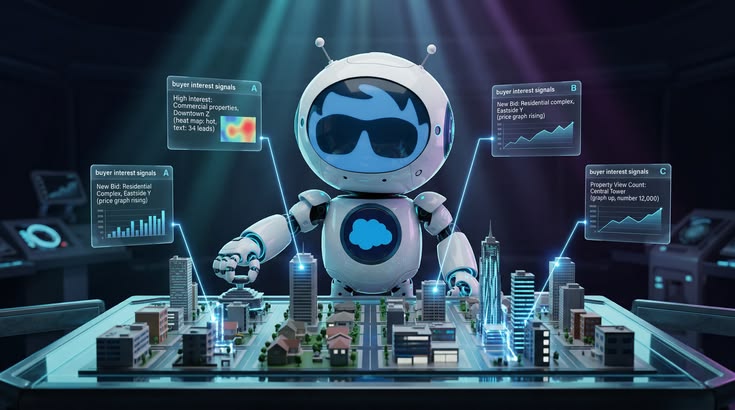
What is Agentforce? Unveiling Salesforce’s Game-Changing AI Platform The End of the “Copilot” Era For the last two years, the tech world has been obsessed with “assistants.” We’ve all used them: the little chat bubbles that help us summarize a long email or draft a polite rejection note. But in 2026, the novelty of the assistant is wearing off. Business leaders are no longer asking for a tool that tells them what to do; they are demanding a platform that simply does it. Salesforce’s answer to this demand is Agentforce. If the previous generation of AI (Einstein Copilot) was a co-pilot sitting in the passenger seat giving directions, Agentforce is the autonomous vehicle that drives the route itself. It represents a fundamental shift from “Predictive AI” and “Generative AI” to “Agentic AI.” This platform allows organizations to build, customize, and deploy autonomous agents that handle tasks end-to-end, across every department from Sales and Service to Marketing and Commerce. 1. The Secret Sauce: The Atlas Reasoning Engine The most frequent question technical teams ask is: “How does it actually make decisions?” The answer lies in the Atlas Reasoning Engine. Unlike standard LLMs that simply predict the next word in a sentence, Atlas is designed to reason through complex business logic. It operates on a continuous loop of: Evaluation: Analyzing the user’s intent and the current state of the CRM data. Refinement: Breaking down a vague request (e.g., “Fix this shipping delay”) into granular steps. Execution: Selecting the right “tools”—whether that’s a Salesforce Flow, an Apex class, or a MuleSoft API call—to resolve the issue. This reasoning engine ensures the agent doesn’t just “hallucinate” a solution; it follows the strict business processes already defined in your Salesforce environment. 2. Data Cloud: The Nervous System of the Agent An agent is only as smart as the data it can access. This is why Agentforce is inextricably linked to Salesforce Data Cloud. In many organizations, customer data is “trapped” in silos—emails, PDFs, legacy databases, and call transcripts. Data Cloud acts as the nervous system, harmonizing this unstructured data and feeding it to the agent in real-time. This allows an Agentforce service agent to know that a customer just complained on Twitter, opened a high-priority ticket ten minutes ago, and has a contract expiring next month—all before the conversation even begins. 3. Building Without Code: The Agent Builder Salesforce has always championed the “low-code” revolution, and Agentforce continues that legacy. Through the Agent Builder, admins can create a digital worker as easily as they would create a custom object. The builder focuses on four key pillars: Role: Defining exactly what the agent does (e.g., “Tier 1 Support Concierge”). Knowledge: Pointing the agent to the right documentation and data sources. Actions: Giving the agent “hands” to perform tasks like processing refunds or scheduling meetings. Guardrails: Setting the ethical and operational boundaries the agent must never cross. 4. Real-World Impact: Beyond the Hype The true value of Agentforce isn’t in its code, but in the hours it returns to human employees. Consider these 2026 benchmarks: Customer Service: Early adopters are seeing agents resolve up to 75% of common inquiries autonomously, from password resets to complex troubleshooting. Sales Qualification: AI agents are now performing 100% of initial lead follow-ups within minutes, ensuring that human sales reps only step in when a deal is “warm.” Operational Efficiency: In manufacturing, agents are being used to detect anomalies in field service data and automatically trigger repair workflows before a machine even fails. 5. The “Human-in-the-Loop” Security Model Autonomy often triggers anxiety about security. Salesforce addresses this through the Einstein Trust Layer. This security framework ensures that sensitive customer data (like PII) is stripped away before being processed by an LLM and that every autonomous action leaves a clear audit trail. Furthermore, Agentforce is built with a “Handoff Logic.” If the agent detects frustration in a customer’s tone or encounters a problem it isn’t authorized to solve, it seamlessly transfers the case to a human, providing a full summary of the interaction so the customer never has to repeat themselves. 6. Pricing and The “Consumption” Revolution Moving into mid-2026, Salesforce has shifted its pricing model to match the agentic era. Instead of just paying “per seat,” many organizations are moving toward a consumption-based model. * Flex Credits: Enterprises can purchase credits that are consumed as agents perform specific actions. Conversation-Based Pricing: For customer-facing bots, a flat rate (typically around $2 per conversation) allows for predictable scaling without adding headcount. Conclusion: Writing the Next Chapter of CRM Salesforce Agentforce is more than just a new feature; it is the blueprint for the future of work. By moving from “assistants” to “agents,” Salesforce is allowing businesses to scale their operations at a rate previously thought impossible. The companies that will win in the coming years are those that view AI not as a threat to their workforce, but as an expansion of it. Agentforce provides the platform to make that expansion safe, data-driven, and—most importantly—deeply human. We are no longer just managing relationships; we are orchestrating a symbiotic team of humans and agents, working together to drive success. The Digital Colleague: How Agentic AI Will Work as a Coworker Alongside Your Team

Artificial Intelligence, Business Intelligence, cybersecurity, data science, Digital Transformation, Education

The Digital Colleague: How Agentic AI Will Work as a Coworker Alongside Your Team

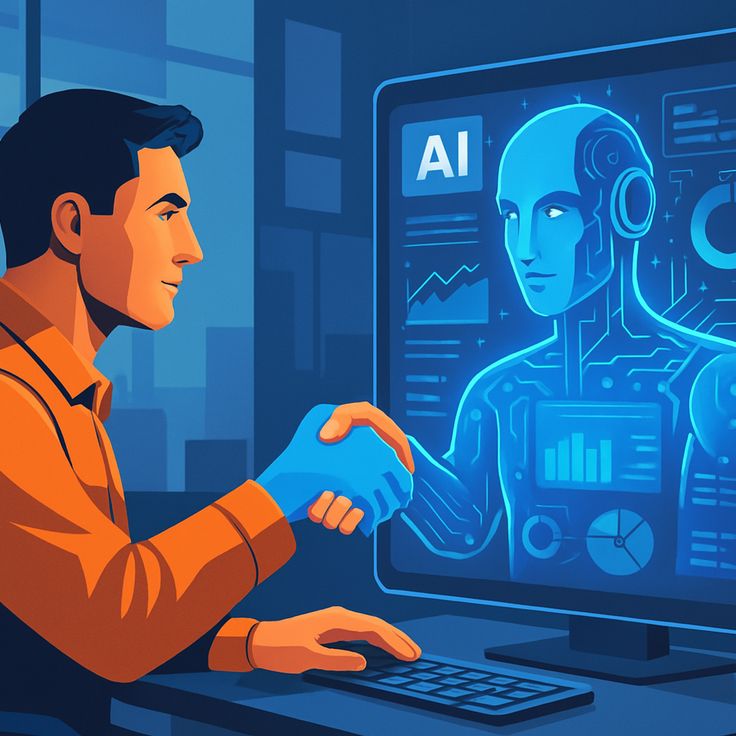
The Digital Colleague: How Agentic AI Will Work as a Coworker Alongside Your Team The Great Shift: From Tools to Teammates For years, we’ve treated Artificial Intelligence like a high-powered calculator or a sophisticated filing cabinet. We gave it a command, it gave us an output. But as we move through 2026, that relationship is fundamentally changing. We are no longer just “using” AI; we are “working with” it. Enter Agentic AI. Unlike the generative AI of 2023 or 2024, which waited for a prompt to act, Agentic AI has agency. It understands goals, plans multi-step processes, and executes them with minimal hand-holding. It doesn’t just write an email; it researches the recipient, checks your calendar for meeting times, drafts the invite, and follows up if there’s no response. This isn’t just automation—it’s a new kind of social contract in the workplace. It’s about moving from “Software as a Service” to “Service as a Colleague.” 1. Understanding the “Agency” in Agentic AI To work effectively with a new coworker, you have to understand how they think. Agentic AI operates on a loop of Reasoning, Planning, and Execution. Reasoning: If you tell a digital colleague, “We need to prep for the Q3 board meeting,” it doesn’t just search for “Q3.” It reasons that a board meeting requires financial reports, project updates, and a slide deck. Planning: It breaks the massive goal into bite-sized tasks. First, it pings the finance agent for the latest spreadsheets. Second, it summarizes the last three months of Jira tickets. Execution: It uses tools. It opens PowerPoint, populates the charts, and leaves a draft in your inbox with a note: “I’ve noticed a slight dip in August productivity—should I add a slide exploring why?” This level of initiative is what transforms AI from a “search bar” into a “seat at the table.” 2. The Human-AI Handshake: Who Does What? The most common fear is replacement, but the reality of 2026 is Augmentation. Think of your team as an orchestra. In the past, the human was the conductor and every single musician. Now, the Agentic AI takes over the “rhythm section”—the repetitive, high-volume, and data-heavy tasks—leaving the human to be the true conductor, focusing on interpretation, emotion, and strategy. Human Strengths (The “Director”): Contextual Nuance: Knowing that a client is going through a merger and needs a softer tone. Ethical Judgment: Deciding if a specific data-driven decision aligns with the company’s core values. Empathy: Managing the morale of the human team. AI Strengths (The “Operator”): Data Synthesis: Reading 1,000 pages of legal documents in seconds to find a single conflict. 24/7 Monitoring: Checking supply chains for disruptions while the rest of the team sleeps. Pattern Recognition: Identifying that a specific software bug always appears when three specific conditions are met. 3. Real-World Scenarios: A Day in the Life of a Hybrid Team Imagine a Marketing Team in 2026. Instead of a manager spending six hours a week on “admin,” they have an AI Agent named “Link.” 9:00 AM: Link scans the morning’s industry news and identifies a trending topic relevant to the brand. 9:30 AM: Link drafts three social media posts and a brief blog outline based on the trend. 10:00 AM: The Human Creative Director reviews Link’s work. They like the data but find the “voice” a bit dry. They ask Link to “Make it more adventurous and focus on the sustainability angle.” 10:05 AM: Link regenerates the content perfectly. It then schedules the posts and begins monitoring engagement in real-time. 4. The Architecture of Trust: How Teams Manage Autonomous Agents One of the biggest hurdles in integrating a digital coworker is the “Trust Gap.” If an agent can make decisions, how do we ensure it doesn’t go rogue or misinterpret a brand’s values? In 2026, this is managed through Instructional Guardrails and Feedback Loops. Defining the Sandbox: Just as you wouldn’t give a new human intern the keys to the corporate bank account on day one, Agentic AI operates within a defined “sandbox.” Managers set spending limits, API access permissions, and approval triggers. The “Human-in-the-Loop” (HITL) Model: This is the gold standard for coworker collaboration. The agent performs the heavy lifting—researching, drafting, and organizing—but pauses for a “Human Handshake” before any external-facing action. Transparent Reasoning: Modern agents now provide a “Chain of Thought.” Instead of just delivering a finished report, your AI coworker can show its work: “I prioritized Project X over Project Y because the Q2 deadline is closer and the resource gap is 15% higher.” This transparency is the foundation of a healthy team dynamic. 5. Re-architecting the Workflow: From “Doing” to “Reviewing” The arrival of Agentic AI requires a fundamental shift in how we structure our workdays. We are moving from a Task-Based Economy to an Outcome-Based Economy. In a traditional setup, a worker’s value was often measured by the hours spent “doing”—typing, coding, or filing. With an agentic coworker, the human’s value shifts toward: Objective Setting: Clearly defining what “success” looks like for the agent. Strategic Refinement: Taking the 80% finished work from the AI and adding the final 20% of “human soul”—the creativity, the empathy, and the unique brand voice. Cross-Functional Orchestration: Coordinating between different AI agents and human departments to ensure everyone is moving toward the same North Star. 6. Overcoming the “Black Box” and Ethical Challenges We cannot talk about AI coworkers without addressing the elephant in the room: Accountability. When an AI agent makes a mistake—perhaps it accidentally uses copyrighted material or misinterprets a data privacy regulation—who is responsible? The 2026 workplace solves this through Algorithmic Accountability Frameworks. Companies are now appointing “AI Orchestrators”—humans whose entire job is to audit, tune, and mentor the company’s fleet of AI agents. This ensures that while the AI has agency, the human remains the ultimate moral and legal authority. 7. The Socio-Economic Impact: Will We Work Less? The goal of the agentic coworker isn’t necessarily to make us work fewer hours, but to make those hours more meaningful. By offloading

Cloud Computing and Technology, DEVOPs, Digital Transformation

The Ultimate Guide to Migrating PeopleSoft to Oracle Cloud Infrastructure (OCI): A Human-Centered Approach

Migrating PeopleSoft to Oracle Cloud Infrastructure: The Path Forward Introduction: Why Now? If you’ve been managing an on-premise PeopleSoft environment for a while, you know the routine. The late-night patching sessions, the constant worry about hardware refresh cycles every 4-5 years, and the creeping feeling that your agility is being held back by a physical server rack in a basement somewhere. As we navigate 2026, the question for IT leaders has shifted from “Should we move to the cloud?” to “How fast can we get there without breaking our business?” Migrating PeopleSoft to Oracle Cloud Infrastructure (OCI) isn’t just about moving data; it’s about giving your organization the room to breathe, scale, and innovate. In this guide, we’re going to strip away the dense corporate jargon and look at the real-world mechanics of this migration. We’ll cover the “why,” the “how,” and the “what’s next,” ensuring you have a roadmap that prioritizes your people and your processes. Section 1: The Case for OCI (The “Why”) You might be wondering, “Why OCI specifically? Can’t I just put PeopleSoft on AWS or Azure?” While you can, Oracle has built specific “unfair advantages” for PeopleSoft on its own cloud. 1. Performance and “Bare Metal” Power PeopleSoft is a resource-intensive application. OCI offers “Bare Metal” instances where you aren’t sharing resources with a “noisy neighbor.” This leads to performance gains of 30-50% for many users. Imagine your heaviest payroll batches finishing in half the time—that’s the OCI difference. 2. PeopleSoft Cloud Manager This is the “secret weapon.” Available only on OCI, Cloud Manager is a tool that automates lifecycle management. It can automate PUM (PeopleSoft Update Manager) images, one-click patching, and environment cloning. It essentially acts as a highly skilled DBA that never sleeps. 3. Financial Predictability On-premise costs are often hidden: cooling, physical security, specialized talent, and depreciation. OCI moves these to a predictable OpEx model. In fact, many enterprises report saving up to 43% compared to on-premise deployments. Section 2: The Migration Roadmap (Step-by-Step) Migrating a massive ERP system is like performing heart surgery while the patient is running a marathon. You need a plan. Phase 1: Assessment and Discovery Before moving a single byte, you need to understand your current “customization debt.” Audit your customizations: What can be retired? Check dependencies: Which third-party apps talk to your PeopleSoft? Define your “Target State”: Are you doing a simple “Lift and Shift” or a “Move and Improve”? Phase 2: Setting the Foundation on OCI This is where you build your virtual home. VCN (Virtual Cloud Network): Design your subnets, firewalls (Security Lists), and gateways. IAM (Identity and Access Management): Who gets access? Use the principle of least privilege. Vault: Securely store your credentials and encryption keys. Phase 3: The Migration (The Move) This usually involves Lift and Shift via PeopleSoft Cloud Manager or Zero Downtime Migration (ZDM) for the database. Replicate Data: Use block volume replication to move your data without impacting production. Launch Instances: Spin up the compute power that matches your on-premise performance (or exceeds it). Phase 4: Testing (The Most Critical Step) Don’t rush this. UAT (User Acceptance Testing): Have your finance and HR teams verify the “new” system feels like the “old” one. Performance Testing: Run your heaviest reports to ensure OCI handles the load. Section 3: Strategic Comparison Feature On-Premise PeopleSoft PeopleSoft on OCI Patching/Updates Manual, Weeks of Work Automated (One-Click) Scaling Limited by Physical Hardware Elastic (Instant Scale Up/Down) Security Perimeter-based (Hard shell) Zero-Trust Architecture Disaster Recovery Expensive, Complex Built-in, Geo-redundant Performance Degrading over time High-performance (NVMe SSDs) Section 4: Common Pitfalls to Avoid 1. Ignoring Data Residency Even in the cloud, location matters. If your company operates in Europe or India, ensure your OCI region complies with local data sovereignty laws (like GDPR or the DPDP Act). 2. Underestimating Integration Complexity PeopleSoft doesn’t live on an island. It’s connected to your bank, your benefits providers, and your internal reporting tools. Mapping these integrations to the cloud requires a detailed networking plan. 3. The “Lift and Shift” Trap If you just move your mess from on-premise to the cloud, you still have a mess—it’s just in someone else’s data center. Use the migration as an opportunity to clean up old data and decommission unused modules. Section 5: Humanizing the Change (Change Management) The biggest hurdle isn’t technical—it’s human. Your DBAs and Sysadmins might feel threatened by the “automation” of OCI. Re-skilling: Position the migration as an opportunity for your team to become Cloud Architects rather than just “Server Maintainers.” Transparency: Keep the end-users (HR and Finance) informed. If the UI is changing (e.g., moving to Fluid UI), provide training early. Section 6: Post-Migration Optimization Once you’re live, the work isn’t done. AIOps Integration: Use OCI’s built-in AI to monitor system health and predict failures before they happen. Cost Management: Use OCI Budgets and Forecasting tools. Since you pay for what you use, make sure you aren’t paying for “Zombie Instances” (servers left running for no reason). Security Health Checks: Regularly run the OCI Security Advisor to ensure no new vulnerabilities have been introduced. Conclusion: Embracing the Future Migrating PeopleSoft to Oracle Cloud Infrastructure is more than a technical upgrade; it’s a commitment to staying relevant in an AI-driven world. By offloading the “drudge work” of infrastructure management to Oracle, you free your IT team to focus on what actually drives value: data insights, better user experiences, and business agility. The Rise of Industry-Specific Clouds: Why “Generic” is No Longer Enough in 2026

Cloud Computing and Technology, Digital Transformation, Software development, Technology

The Rise of Industry-Specific Clouds: Why “Generic” is No Longer Enough in 2026

Introduction: The End of the “One-Size-Fits-All” Era For over a decade, the cloud was a giant, amorphous utility. We talked about it in broad strokes: storage, compute, and networking. Whether you were a high-frequency trading firm in London or a boutique bakery in Paris, you essentially used the same “Lego bricks” provided by the big three hyperscalers. You took a general-purpose virtual machine, added your own layers of security, spent months configuring compliance frameworks, and hoped for the best. But as we move through 2026, that era is officially over. We are witnessing the Rise of Industry-Specific Clouds—often called “Vertical Clouds.” Imagine walking into a tailor. In the old days of cloud, you bought a “large” shirt and spent weeks sewing on extra pockets, shortening the sleeves, and adding a reinforced collar yourself. Today, the cloud provider hands you a custom-fitted suit designed specifically for your profession. If you’re a doctor, it has pockets for your stethoscope; if you’re an architect, it’s reinforced for the job site. This is the fundamental shift from General Cloud to Purpose-Built Cloud. What Exactly is an Industry-Specific Cloud? At its core, an industry-specific cloud is a cloud platform that has been pre-configured with the software, compliance standards, and data models unique to a specific sector. Instead of just giving you a database, a Healthcare Cloud gives you a HIPAA-compliant environment with pre-built connectors for Electronic Health Records (EHR) and medical imaging AI. It’s not just a marketing wrapper. It’s a deep architectural integration that addresses the “last mile” of digital transformation. Section 1: The Catalysts of the Vertical Shift Why is this happening now? Three major forces have converged to make generic clouds feel outdated: 1. The Compliance Nightmare In 2026, data sovereignty isn’t just a suggestion; it’s a legal minefield. With the expansion of regulations like India’s DPDP Act and Europe’s evolving GDPR, businesses are terrified of misconfiguration. Industry clouds bake these regulations into the infrastructure. When you spin up a server in a Financial Services Cloud, it already “knows” how to handle anti-money laundering (AML) data residency. 2. The AI “Data Hunger” Generic AI is impressive, but specialized AI is profitable. To train a model that predicts equipment failure in a factory, you need data structured for manufacturing (Industrial IoT). Vertical clouds provide these industry-standard data schemas out of the box, allowing companies to deploy AI agents in weeks rather than years. 3. The Complexity Gap Most companies are not tech companies. A hospital wants to heal patients, not manage Kubernetes clusters. Industry clouds abstract the technical “noise,” allowing professionals to focus on their actual work. Section 2: Deep Dive into the “Big Three” Verticals I. The Healthcare Cloud: From Records to Real-Time Care In healthcare, the stakes are literal life and death. The move to specialized clouds has allowed for: Interoperability: Finally, different hospitals can “talk” to each other because the cloud uses standardized FHIR (Fast Healthcare Interoperability Resources) data models. Imaging at Scale: Modern Healthcare Clouds include specialized GPU clusters for rendering 3D MRIs in real-time, allowing specialists to collaborate globally. Predictive Diagnostics: By pooling anonymized data across a vertical cloud, AI can identify a potential outbreak or a patient’s declining health before a human monitor catches it. II. The Financial Services Cloud: Security as a Feature Finance was long the “cloud holdout” due to security fears. Vertical clouds changed the narrative by offering: Confidential Computing: Processing data in “enclaves” where even the cloud provider can’t see it. Automated Auditing: Instead of a yearly audit, the cloud provides a real-time dashboard of compliance health for regulators. Fraud Detection Nets: Pre-built machine learning models trained specifically on global transaction patterns. III. The Manufacturing (Industry 4.0) Cloud This is where the physical meets the digital. The Manufacturing Cloud focuses on: Digital Twins: Creating a virtual replica of a factory floor in the cloud to test changes without stopping production. Edge Integration: Seamlessly connecting thousands of sensors on a factory floor to a central cloud brain. Section 3: The Technical Blueprint (Humanized) If you’re a developer or a CTO, you might ask: “Isn’t this just SaaS with a different name?” Not quite. The Architecture of a Vertical Cloud: The Foundation: Standard IaaS (Servers and Storage). The Compliance Layer: Pre-configured firewalls, encryption standards, and residency locks. The Data Schema: This is the secret sauce. It’s a “blueprint” for how data should be organized for that specific industry. The API Marketplace: A library of pre-certified third-party tools (e.g., a payment gateway for retail or a lab-result parser for healthcare). Section 4: The Benefits – Why Businesses are Switching Benefit General Purpose Cloud Industry-Specific Cloud Time to Market 6–12 Months (Custom Setup) 1–3 Months (Template Based) Compliance Responsibility of the User Shared/Built-in AI Integration Build from scratch Pre-trained Industry Models Cost Lower upfront, high dev cost Higher upfront, lower dev cost Section 5: Challenges and “The Catch” It’s not all sunshine and rainbows. There are significant risks to consider: Vendor Lock-in: When your entire data model is built on a specific provider’s Healthcare Cloud, moving to a competitor becomes incredibly difficult. The Premium Price: Specialized services come with specialized price tags. You pay for the convenience. Flexibility vs. Standards: By following a “standard” industry path, you might find it harder to innovate outside those boundaries. Section 6: The Future – Sovereign and Personal AI Clouds As we look toward 2027 and beyond, the “Vertical” trend will likely split into even more granular niches. We are already seeing the emergence of “Sovereign Clouds” where the “industry” is actually a specific nation’s legal framework. Furthermore, we are moving toward Personal AI Clouds. For developers, this means the environment will adapt not just to your industry, but to your specific coding style and project history—a concept that fits perfectly with the Backendless and AIOps trends we see today. Conclusion: Should You Make the Move? The rise of industry-specific clouds represents the maturity of the internet. We no longer just want “online space”; we want “digital workplaces” that understand

App Development, Digital Transformation, Software development, Technology

The Future of FinTech: A Comprehensive Guide to Mobile Payment App Development in 2026

Introduction:- We are living in an era where the physical wallet is becoming a relic of the past. As we move through 2026, the smartphone has officially become the primary financial hub for the global population. From tap-to-pay transit systems in London to QR-code street vendors in Mumbai, mobile payment apps are the invisible engine of modern commerce. For developers and entrepreneurs at techotd.com, building a mobile payment app is no longer just about moving money from Point A to Point B. It is about creating a secure, frictionless, and intelligent financial ecosystem. 1. The 2026 Mobile Payment Landscape: More Than Just “Tap-to-Pay” In 2026, the market has moved beyond basic NFC (Near Field Communication) transactions. We are seeing a convergence of traditional banking and decentralized finance. Super-Apps: Influenced by platforms like WeChat and AliPay, Western apps are now integrating social messaging, e-commerce, and bill payments into a single interface. Biometric Dominance: Passwords are dead. 2026 payment apps rely on “continuous biometrics,” using palm-vein scanning or iris recognition to authorize high-value transfers instantly. 2. Key Features of a Successful Payment App To compete in the current market, your app needs to offer more than the standard “send and receive” functionality. Virtual Card Provisioning: Allow users to generate one-time-use virtual cards for online shopping to prevent fraud. Real-Time Analytics: Use AI to categorize spending and provide users with “Financial Health” scores. Cross-Border Remittance: Integration with blockchain rails for near-instant, low-fee international transfers. 3. The Tech Stack: Building for Speed and Scale In 2026, React Native and Flutter remain the dominant choices for cross-platform development, but the backend is where the real innovation happens. Microservices Architecture: Ensure your app can scale by breaking down functions (authentication, transaction processing, notifications) into independent services. Cloud-Native Databases: Use distributed databases like CockroachDB or AWS Aurora to ensure 99.999% uptime, as even a minute of downtime in a payment app is a disaster. 4. Security: The Non-Negotiable Pillar As you’ve seen in our cybersecurity section, threats are more sophisticated than ever. Tokenization: Never store actual card numbers. Replace sensitive data with unique “tokens” that are useless to hackers if intercepted. Zero-Trust Identity: Every transaction must be verified through multi-factor authentication (MFA) and device fingerprinting. AI Fraud Detection: Implement machine learning models that analyze user behavior (like typing rhythm or typical location) to flag suspicious activity before a transaction is even completed. 5. Regulatory Compliance and PCI-DSS You cannot build a payment app in a vacuum. You must navigate a complex web of regulations: PCI-DSS Level 1: The gold standard for handling credit card data. GDPR/CCPA: Strict adherence to data privacy laws is essential, especially when handling financial records. PSD2/Open Banking: In 2026, apps must be built to share data securely with other financial institutions via standardized APIs. 6. Conclusion: Winning the FinTech Race The success of a mobile payment app in 2026 depends on one thing: Trust. By combining a “Security-First” mindset with a “User-First” design, you can build an app that doesn’t just process payments, but becomes an indispensable part of your user’s daily life. From Connectivity to Autonomy: The Evolution of IoT in 2026  

cybersecurity, Digital Transformation, Software development, Technology

From Connectivity to Autonomy: The Evolution of IoT in 2026

From Connectivity to Autonomy: The Evolution of IoT in 2026 For the past decade, the Internet of Things (IoT) was often described as a massive network of “talking devices.” We focused on the novelty of a fridge that could order milk or a thermostat controlled by a smartphone. But as we move through 2026, the conversation has changed. We are no longer just connecting devices; we are building Intelligent Ecosystems. The IoT of 2026 is defined by Autonomy. It is the shift from a system that simply senses the environment to one that perceives, reasons, and acts upon it. This guide explores the massive disruptions occurring in the IoT landscape and how they are reshaping everything from the factory floor to the palm of your hand. 1. The Rise of AIoT: Intelligence at the Source The most significant trend of 2026 is the total convergence of AI and IoT, commonly referred to as AIoT (Artificial Intelligence of Things). In earlier versions of IoT, devices were “dumb” sensors that sent raw data to the cloud for processing. This created massive latency and high bandwidth costs. Today, we use Edge AI. Machine learning models are now small enough to run directly on the microcontroller of an IoT device. Predictive Maintenance: In a smart factory, a sensor doesn’t just record vibration; it analyzes it in real-time to predict a bearing failure before it happens. Smart Retail: AI-driven X-ray systems and spectral sensors can now “see” objects or contaminants that were once invisible, automating quality control in seconds. 2. Edge Computing as the New Standard As billions of new devices come online, cloud-only architectures are hitting their limits. Edge Computing—processing data closer to where it is generated—has become the default architecture for 2026. By processing data at the edge, companies are achieving near-zero latency. This is critical for applications like Autonomous Vehicles and Remote Surgery, where a millisecond delay in data transmission can have life-altering consequences. For your Software development team, this means moving away from centralized databases toward distributed, mesh-like networks. 3. Sustainable IoT: Energy Harvesting and “Zero-Power” Devices The environmental impact of billions of battery-powered devices is a major concern in 2026. The solution? Energy Harvesting. We are seeing a massive shift toward “Zero-Power” IoT devices that draw energy from their surroundings—solar, thermal, vibrational, or even radio frequency (RF) waves. These devices don’t have fixed duty cycles; they are “adaptive,” waking up to sense and transmit only when they have harvested enough energy. This is a game-changer for Structural Monitoring (bridges/tunnels) and Wildlife Conservation, where replacing a battery is physically impossible. 4. Digital Twins: The Virtual Bridge In 2026, every major physical asset has a Digital Twin. This is a virtual replica that lives in a Product Lifecycle Management (PLM) system. IoT sensors feed real-world data into these virtual models, allowing engineers to simulate “what-if” scenarios. Want to know how a wind turbine will react to a hurricane? You don’t have to wait for the storm; you can simulate the stress on the Digital Twin and apply the fixes to the physical unit before the clouds even roll in. 5. IoMT: The Internet of Medical Things Healthcare has been revolutionized by IoMT. We have moved beyond basic fitness trackers to clinical-grade wearables like smart patches and sensor-embedded textiles. Predictive Health: AI-enhanced sensors now monitor posture, hydration, and sleep quality to detect early signs of physiological changes or chronic conditions. Continuous Care: Patients are no longer “discharged” into a vacuum; they are transitioned to a home-monitoring environment where their clinical team receives real-time alerts for any anomaly. 6. The “Secure by Design” Mandate With the proliferation of connected devices, the attack surface for cybercriminals has expanded exponentially. In 2026, the industry has pivoted toward a Zero-Trust security model. Device Identity: Every sensor, from a smart meter to a factory PLC, must cryptographically verify its identity before connecting to the network. Secure-by-Design: Security is no longer “bolted on” at the end; it is engineered into the hardware during the initial Software development lifecycle. Conclusion: A World That Acts on Its Own The IoT of 2026 is no longer a collection of gadgets; it is the invisible nervous system of our planet. As we integrate AI more deeply into our physical world, the line between the “digital” and “physical” continues to blur. From Connectivity to Autonomy: The Evolution of IoT in 2026

Digital Transformation, Software development, Technology

Identifying the Need for Software Integration

The Silent Growth Killer: Identifying the Need for Software Integration In the early days of a business, adding a new software tool feels like a victory. You find a great CRM, you grab a sleek accounting package, and you subscribe to a top-tier project management tool. But as 2026 unfolds, many companies are realizing that a collection of great tools does not necessarily make a great system. When these tools don’t talk to each other, they create “digital islands.” Your data gets trapped, your employees get frustrated, and your growth stalls. Identifying the need for software integration is about recognizing the difference between a “tech stack” and a “tech mess.” 1. The Symptoms of “Digital Friction” The need for integration rarely announces itself with a loud crash. Instead, it shows up as a series of small, annoying frictions that slowly drain your team’s productivity. The Manual Entry Trap If your employees are spending their Monday mornings copying data from an Excel sheet into your CRM, or manually typing invoice details into your accounting software, you have a major integration gap. Manual data entry is not just slow; it’s a breeding ground for human error. In a world of real-time analytics, “yesterday’s data” is already obsolete. The “Version of the Truth” Conflict Have you ever sat in a meeting where the Marketing team says you have 5,000 leads, but the Sales team says you only have 3,500? This happens when your systems aren’t synced. Without integration, every department creates its own version of reality. Identifying the need for integration often starts when leadership realizes they can no longer trust their own dashboards. 2. Why “Good Enough” is No Longer Enough in 2026 In previous years, companies could survive with “swivel-chair integration”—literally having an employee swivel their chair from one screen to another to update systems. In 2026, the pace of business has made this impossible. Customer Expectations have Shifted Modern customers expect instant gratification. If they update their address in your mobile app, they expect your support team to see that change immediately. If your backend systems aren’t integrated, that update might take 24 hours to propagate. To the customer, this looks like incompetence. Integration is no longer a “back-office” luxury; it is a “front-line” customer service requirement. 3. The Technical Bridge: APIs and the Modern Enterprise When we talk about identifying the need for integration, we are really talking about the health of your APIs (Application Programming Interfaces). An API is the “waiter” of the software world—it takes your request to the kitchen (another software) and brings the response back to you. If your current software vendors don’t offer robust, open APIs, they are effectively locking your data in a cage. As you audit your software, look for tools that support Webhooks and RESTful APIs. If your tools are “closed,” that is your first sign that a major integration project is on the horizon. 4. The Hidden Cost of Fragmented Systems Many managers avoid integration because of the upfront cost. However, the cost of not integrating is often much higher. Employee Burnout: High-value employees don’t want to spend their time on “data janitor” work. When you force them to navigate fragmented systems, their job satisfaction plummets. Security Risks: Every time data is exported to a CSV file to be moved between systems, you create a security vulnerability. Integrated systems allow data to flow through encrypted tunnels without human intervention. Missed AI Opportunities: You cannot implement effective AI or Machine Learning if your data is scattered across five different platforms. AI needs a unified “Data Lake” to provide meaningful insights. 5. Building the Integration Roadmap Once you’ve identified the need, how do you start? You don’t have to integrate everything at once. Map the Data Flow: Draw a literal map of how a customer moves through your business. Where does their data start? Where does it end? Identify the Bottlenecks: Pinpoint the exact moment where a human has to intervene to move data. This is your “High-Value Integration Target.” Choose Your Method: Will you use a “no-code” connector like Zapier, or do you need a custom-built middleware solution? In 2026, many companies are opting for iPaaS (Integration Platform as a Service) to manage their connections in one place. 6. Conclusion: From Fragmentation to Flow Identifying the need for software integration is the first step toward becoming a truly “digital-first” organization. It’s about moving away from a collection of tools and toward a unified ecosystem where data flows like water—effortlessly and exactly where it’s needed. In the competitive landscape of 2026, the companies that win will be the ones that spend less time “managing software” and more time “serving customers” through integrated, intelligent systems. Product Lifecycle Management (PLM) Software

App Development, Digital Transformation, Technology

Product Lifecycle Management (PLM) Software

The Digital Backbone: A Comprehensive Guide to Product Lifecycle Management (PLM) Software in 2026 In the modern industrial landscape, a product is no longer just a physical object; it is a complex bundle of data, software, and hardware that evolves over time. Managing this complexity from the first “napkin sketch” to the final recycling bin requires more than just spreadsheets—it requires Product Lifecycle Management (PLM) software. As we navigate 2026, PLM has shifted from being a “filing cabinet for CAD drawings” to becoming the living, breathing “digital thread” that connects every department in a global enterprise. 1. What is PLM Software? (Beyond the Acronym) At its core, PLM software is the strategic process of managing the entire journey of a product. This includes five distinct stages: Concept & Design: Where ideas are born and simulated. Development: Where engineering meets prototyping. Production: Where the supply chain and manufacturing take over. Service & Maintenance: Where the product lives in the hands of the consumer. Retirement: Where the product is recycled or phased out. In 2026, the disruption lies in connectivity. A change made by an engineer in London is instantly visible to a manufacturing lead in Bangalore and a compliance officer in New York, ensuring that everyone is working off the “Single Source of Truth.” 2. The Rise of the “Digital Twin” and Digital Thread The most significant trend in PLM today is the Digital Twin. This is a virtual replica of a physical product that stays connected to its real-world counterpart via IoT (Internet of Things) sensors. PLM software acts as the host for this Digital Twin. If a smart car in the field reports a recurring battery overheat issue, that data flows back through the PLM system. Engineers can then simulate a fix in the virtual world before ever issuing a physical recall. This “Digital Thread” ensures that data isn’t lost between stages, reducing errors by up to 40% in complex manufacturing. 3. Breaking Down Silos: Why Your Business Needs PLM Many companies suffer from “departmental silos.” Engineering doesn’t talk to Marketing, and Marketing doesn’t know what Manufacturing is capable of. PLM acts as the bridge. Centralized Data Management By centralizing all product-related data—BOMs (Bills of Materials), 3D designs, compliance certifications, and supplier info—PLM eliminates the “Which version is the latest?” nightmare. In 2026, cloud-native PLM solutions like Siemens Teamcenter or PTC Windchill allow teams to collaborate in real-time, much like a Google Doc but for heavy engineering. Faster Time-to-Market In a world where consumer tastes change overnight, speed is everything. PLM software automates workflows. Instead of waiting for a manual email approval, the system automatically routes documents to the next person in line. This can shave months off the development cycle, allowing companies to respond to trends faster than their competitors. 4. Sustainability and the “Circular Economy” In 2026, environmental compliance is no longer optional. PLM software now includes Sustainability Modules that calculate the carbon footprint of a product based on the materials selected during the design phase. If a designer chooses aluminum over carbon fiber, the PLM system provides an instant report on how that affects the product’s recyclability and total CO2 impact. This allows companies to build “Green Products” by design, rather than trying to fix environmental issues after the product is already being manufactured. 5. AI and Machine Learning in PLM Artificial Intelligence has found a home within PLM for Generative Design. Engineers no longer have to draw every line. Instead, they tell the PLM software: “I need a bracket that weighs less than 1kg, can hold 500kg of force, and is made of titanium.” The AI then generates hundreds of optimized designs that a human might never have imagined. This “Human-AI Collaboration” is a hallmark of 2026 product development, leading to lighter, stronger, and more efficient products. 6. Choosing the Right PLM for Your Scale Not all PLM software is built for Boeing-sized companies. In 2026, we see a tiering of the market: Enterprise PLM: High-customization tools for aerospace, automotive, and defense. Cloud-Native / SaaS PLM: Scalable solutions for startups and mid-market firms (e.g., Propel or Arena). Industry-Specific PLM: Tools tailored for Fashion/Apparel or Food & Beverage, focusing on recipe management and seasonal cycles. 7. The Future: PLM in the Metaverse As we look toward 2027 and beyond, PLM is moving into Spatial Computing. Design reviews are increasingly happening in VR/AR environments. An executive can “walk through” a virtual factory floor or inspect a 1:1 scale model of a new aircraft engine from their home office, with all the data pulled directly from the PLM backend. Conclusion: The Foundation of Innovation Product Lifecycle Management software is no longer a luxury for the elite manufacturer; it is the fundamental requirement for any company that wants to innovate at scale. By connecting data, people, and processes through a single digital thread, PLM ensures that the products of tomorrow are smarter, greener, and delivered faster than ever before. Why are companies outsourcing theri support structure

App Development, Artificial Intelligence

Why are companies outsourcing theri support structure

Introduction In 2026, the trend of outsourcing support structures—especially customer service and technical help desks—has shifted from a simple “cost-cutting” measure to a strategic necessity. While saving money remains a major driver (roughly 70% of companies still list it as a primary goal), modern businesses are increasingly focused on scalability and access to AI-driven expertise. Here are the primary reasons why companies are outsourcing their support structures: 1. Cost Efficiency and Predictability Building an in-house support team involves significant overhead, including office space, hardware, software licenses, benefits, and training. Variable Cost Structure: Outsourcing converts fixed costs into variable expenses. Companies pay for the “seats” or ticket volume they actually use, which is much more efficient than paying idle staff during slow periods. Infrastructure Sharing: Specialized providers spread the cost of high-end CRM and AI tools across multiple clients, giving you access to technology you might not be able to afford independently. 2. 24/7 Global Availability Customers in 2026 expect immediate responses, regardless of time zones. Follow-the-Sun Model: Outsourced teams in different geographic regions (like India, the Philippines, or Latin America) allow for seamless 24/7 coverage without the logistical headache of managing night shifts in a single location. Multilingual Support: It is often easier to hire a specialized firm with a diverse talent pool than to recruit and retain multilingual agents locally. 3. Rapid Scalability In-house recruitment can take months. Outsourced providers, however, maintain “bench strength”—a pool of trained agents ready to jump in. Seasonal Spikes: Retailers can double their support capacity for the holidays in weeks rather than months. Growth Sprints: Startups that go viral or launch new products can scale their support structure overnight to prevent a backlog of tickets from damaging their reputation. 4. Access to Specialized Tech & AI Expertise The support landscape is being disrupted by Generative AI and Semantic Intelligence. AI-Human Hybrid Models: Modern outsourcing firms like Teleperformance or TaskUs are experts at blending human agents with AI chatbots. They handle the complex task of training LLMs (Large Language Models) on your company data so that the AI can resolve simple queries, leaving humans for the “high-empathy” cases. Predictive Analytics: These firms use data to solve issues before they happen (proactive support), which significantly reduces customer churn. 5. Focus on Core Competencies For many tech or product-focused companies, managing a call center is a distraction. Internal Bandwidth: By offloading support, leadership can focus internal resources on R&D, product innovation, and strategic growth. Expertise Gap: Companies recognize that customer experience (CX) is a specific skill set. Partnering with a firm whose entire business is CX ensures a higher level of professionalism and process maturity. 6. Navigating the Security and Compliance Minefield In 2026, data is more than just information; it is a liability. When companies outsource their support, they are essentially handing over the “keys” to their customer data. This is where many businesses fail if they don’t have a rigorous vetting process. The Rise of Sovereign Data Requirements Many regions, especially the EU with evolved GDPR standards, now require that data be handled within specific jurisdictions. A disruptive trend in outsourcing is the emergence of “Geo-Specific Support Hubs.” These are outsourcing partners that guarantee data residency, ensuring that even though the service is outsourced, the data never leaves a specific legal boundary. Zero Trust Support Architecture Modern outsourcing partners are now implementing Zero Trust protocols. This means that an outsourced support agent in a different country doesn’t have “open access” to a customer’s full profile. Instead, they are granted “Just-In-Time” (JIT) access to only the specific data points needed to solve the current ticket. This technology significantly reduces the risk of massive data breaches originating from third-party call centers. 7. The “Human-in-the-Loop” (HITL) Training Model One of the least understood reasons for outsourcing in 2026 is AI Training. Large tech companies aren’t just outsourcing to answer phones; they are outsourcing to “label” and “train” their internal AI systems. Turning Agents into AI Educators When a customer interacts with an AI bot and the bot gets stuck, it “hands off” the conversation to a human agent. In an optimized outsourced structure, that human agent isn’t just solving the customer’s problem; they are tagging the interaction. They tell the AI, “This is where you went wrong, and this was the correct empathetic response.” This feedback loop is why outsourcing has become a core part of product development. Companies are using outsourced labor to build proprietary intelligence that will eventually automate 80% of their simple tasks, allowing the company to stay lean while their “Digital Brain” grows smarter every day. 8. Avoiding the “Ghost Brand” Syndrome While the benefits of outsourcing are numerous, there is a dangerous pitfall: losing the soul of your brand. When every interaction is handled by a third party, the company can become a “Ghost Brand”—a business that exists on paper but has no real connection to its users. The Solution: Embedded Culture Training To combat this, leading companies are moving away from traditional “Vendor” relationships and toward “Partnership” models. This involves: Brand Immersion: Outsourced agents undergo the same cultural onboarding as internal employees. Direct Feedback Channels: Using Slack or Teams to link outsourced leads directly with internal product designers. Performance Metrics Beyond “Speed”: In 2026, companies are ditching “Average Handle Time” (AHT) in favor of “Sentiment Analysis Scores.” They care less about how fast the call was and more about whether the customer’s emotional state improved during the interaction. Summary of Major Players (2026) Company Best Known For Accenture Deep enterprise-level digital transformation. Teleperformance Massive global scale and omnichannel solutions. Foundever Blending human empathy with sophisticated AI tools. SupportYourApp Popular with tech startups and fast-growing apps. The Digital Vet: How Technology is Disrupting Veterinary Medicine and Practice Management  

Healthcare & Fitness, Technology, Technology & Innovation

The Digital Vet: How Technology is Disrupting Veterinary Medicine and Practice Management

Introduction For decades, the local veterinary clinic looked much the same: a waiting room filled with anxious paws, a wall of paper files, and a stethoscope as the primary tool of the trade. But as we move through 2026, the “white coat” profession is undergoing a digital renaissance. Technology isn’t just making the job faster; it’s fundamentally changing how we understand the silent patients who cannot tell us where it hurts. From Artificial Intelligence that “reads” X-rays to wearable collars that act as 24/7 nurses, the disruption is real, humanized, and—most importantly—saving lives. The AI Radiologist: Beyond the Human Eye One of the most significant disruptions in modern veterinary medicine is the integration of AI-driven diagnostics. In the past, a vet might wait days for a specialist to review a complex set of radiographs. Today, AI algorithms trained on millions of clinical images can provide a preliminary analysis in under sixty seconds. These systems aren’t replacing veterinarians; they are providing a powerful “second set of eyes.” By highlighting subtle shadows in a lung lobe or detecting early-stage heart enlargement that might be missed by a tired human eye at the end of a long shift, AI is ensuring that “proactive care” isn’t just a buzzword. It allows the practitioner to discuss treatment options with the owner immediately, while the pet is still on the exam table. Wearable Tech: Giving a Voice to the Silent Patient The biggest challenge in veterinary medicine has always been the communication gap. Animals are masters at hiding pain—an evolutionary trait designed to protect them from predators. In 2026, wearable technology has finally closed this gap. Smart collars and harnesses now monitor much more than just GPS location. They track respiratory rates, sleep quality, scratching frequency, and even “pulse wave velocity” to detect early cardiac distress. When this data is synced with practice management software, it creates a “biometric baseline” for the pet. If a senior dog’s activity level drops by 15% over a week, the clinic’s system can automatically flag this for a follow-up, often catching arthritis or metabolic issues months before the owner notices a limp. Telemedicine and the “Hybrid Clinic” Model The pandemic-era pivot to Zoom calls has evolved into a sophisticated “Hybrid Clinic” model. We’ve moved past the clunky video calls of the early 2020s. Today’s veterinary telemedicine platforms integrate directly with home-use diagnostic kits. Owners can now use smartphone-connected otoscopes to show a vet the inside of an inflamed ear or use AI-powered urine analysis strips that send results directly to the clinic’s database. This disruption saves the “stress-sensitive” pets—like cats who loathe the carrier—from unnecessary travel, while allowing veterinarians to reserve their physical exam rooms for surgical cases and emergencies. It’s a win-win for clinic efficiency and animal welfare. Revolutionizing Practice Management: The Paperless Heart Behind the scenes, the “brain” of the clinic—the Practice Management Software (PMS)—has seen the most drastic overhaul. Gone are the days of clunky, on-premise servers. The 2026 veterinary practice is cloud-native and automated. Automated Workflow and Client Communication Modern PMS platforms now handle the “invisible work” that used to burn out veterinary staff. Automated systems handle appointment reminders, post-operative check-in texts, and even laboratory result deliveries. When a blood panel is completed by the lab, the software can automatically draft a summary for the vet to approve and send to the owner’s app instantly. This reduces the “phone tag” that has historically plagued the industry. Inventory Intelligence Inventory is often the largest expense for a vet practice. Disruptive technology now uses predictive analytics to manage pharmacy stocks. By analyzing local disease trends (like a spike in heartworm cases in a specific zip code), the software can automatically order the necessary medications before the clinic runs out, ensuring that life-saving treatments are always on the shelf. 3D Printing and Personalized Surgery We are entering an era where “one size fits all” no longer applies to surgery. 3D printing technology is being used to create patient-specific surgical guides and implants. If a dog has a complex bone fracture or a tumor, surgeons can now print a 3D model of that specific animal’s bone structure to practice the surgery before the first incision is made. This leads to shorter anesthesia times, smaller incisions, and significantly faster recovery periods. In 2026, we are even seeing the rise of 3D-printed prosthetic limbs that are custom-contoured to a pet’s gait, giving mobility back to animals that previously would have had no options. The Ethical Frontier: Data Privacy and the Human Touch With all this data comes a new responsibility. As veterinary clinics become data hubs, cybersecurity has become a top priority. Protecting the “digital identity” of the pet and the financial data of the owner is now a core part of practice management. However, the most important trend in 2026 is the “Humanization of Tech.” Developers have realized that the more tech we add, the more we need to preserve the human-animal bond. The best technologies are those that stay in the background—handling the data and the paperwork—so that the veterinarian can spend more time sitting on the floor with the patient, offering a treat and a comforting hand. Conclusion: A Future Focused on Longevity Technology in veterinary medicine is no longer about “gadgets.” It is about a fundamental shift from reactive medicine (fixing what is broken) to preventative medicine (keeping the pet healthy longer). As these disruptions become the standard, the role of the veterinarian is evolving into that of a “Data Interpreter” and a “Compassionate Guide.” By embracing AI, wearables, and cloud-based management, the veterinary profession is ensuring that our pets don’t just live longer, but that their extra years are filled with quality, comfort, and the best care that human (and machine) intelligence can provide. Unity 2D Game Development: The Ultimate Guide to Building Your Custom Games

How would you like me to respond?

Select a personality for your AI assistant

Normal
Happy
Sad
Angry

Your selection will affect how the AI assistant responds to your messages

Chat Assistant

Let's discuss your project!

Hear from our clients and why 3000+ businesses trust TechOTD

Tell us what you need, and we'll get back with a cost and timeline estimate

Scroll to Top